
ELIZABETH I aka The virgin queen and Gloriana
ELIZABETH I aka “The virgin queen” and “Gloriana”
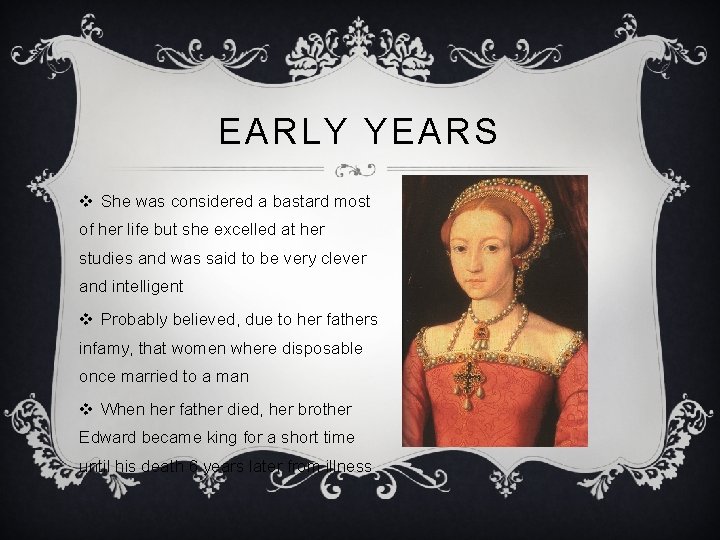
EARLY YEARS v She was considered a bastard most of her life but she excelled at her studies and was said to be very clever and intelligent v Probably believed, due to her fathers infamy, that women where disposable once married to a man v When her father died, her brother Edward became king for a short time until his death 6 years later from illness
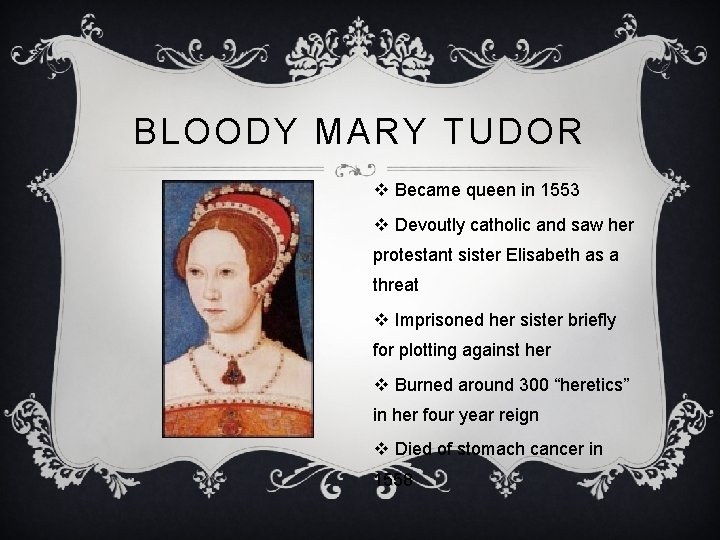
BLOODY MARY TUDOR v Became queen in 1553 v Devoutly catholic and saw her protestant sister Elisabeth as a threat v Imprisoned her sister briefly for plotting against her v Burned around 300 “heretics” in her four year reign v Died of stomach cancer in 1558
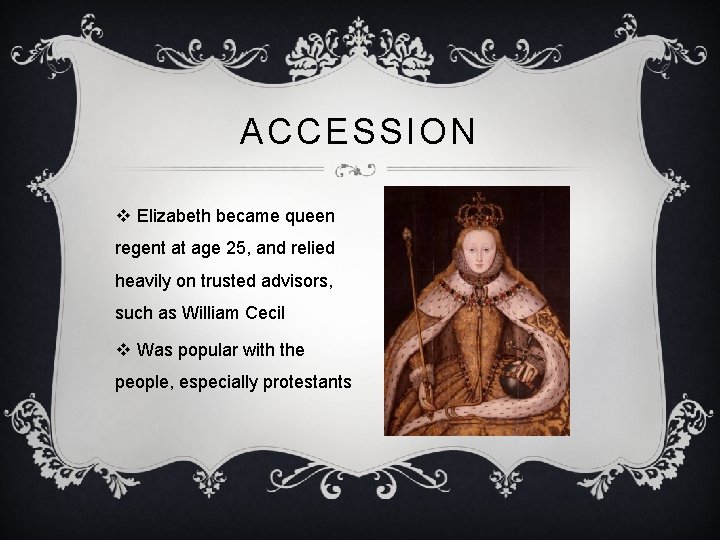
ACCESSION v Elizabeth became queen regent at age 25, and relied heavily on trusted advisors, such as William Cecil v Was popular with the people, especially protestants
RELIGION v Headed the English Protestant church and was more tolerant of other religious believes than her sister Mary v Thought Catholicism would die out eventually on its own v Made church attendance and reading of the bible mandatory
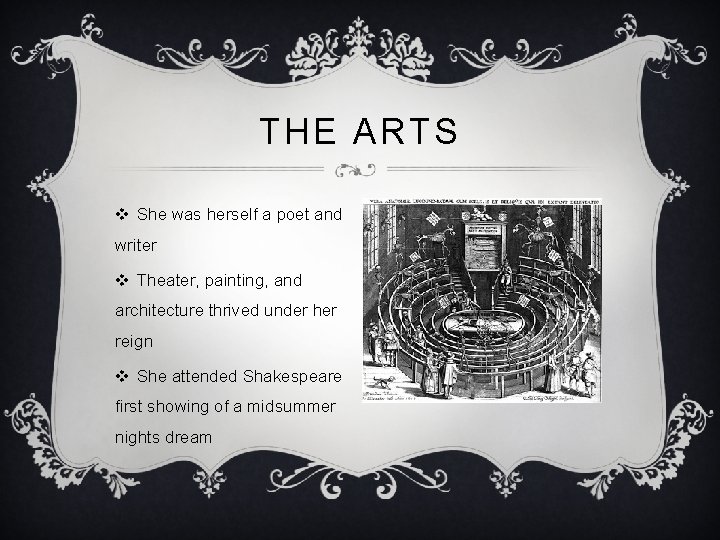
THE ARTS v She was herself a poet and writer v Theater, painting, and architecture thrived under her reign v She attended Shakespeare first showing of a midsummer nights dream
SUITORS v Was expected and pressured to marry by common and noble alike v Although she had many suitors, she never married. v Her husband would have been made king, and she would have no longer been ruler of her country v Some speculated she was infertile, sick, or psychologically averse to a sexual relationship v She never had an heir and was the last Tudor to rule England
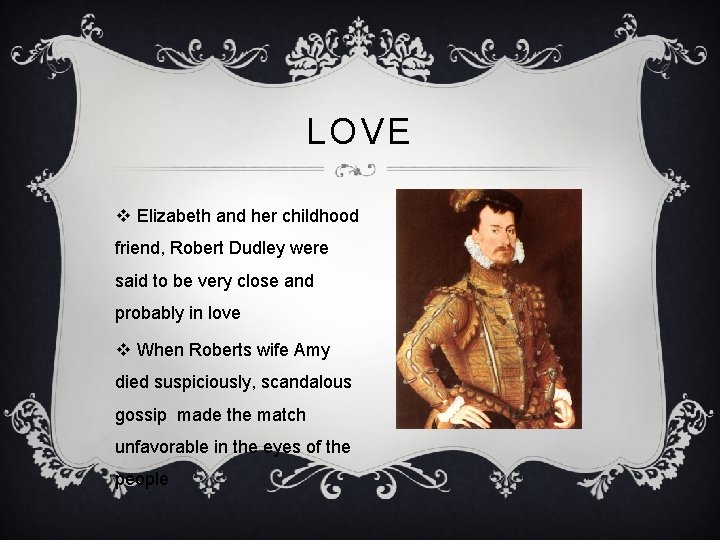
LOVE v Elizabeth and her childhood friend, Robert Dudley were said to be very close and probably in love v When Roberts wife Amy died suspiciously, scandalous gossip made the match unfavorable in the eyes of the people
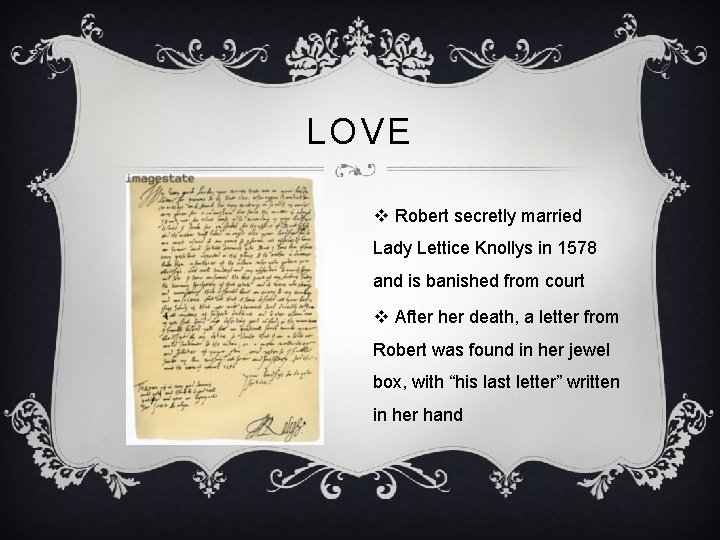
LOVE v Robert secretly married Lady Lettice Knollys in 1578 and is banished from court v After her death, a letter from Robert was found in her jewel box, with “his last letter” written in her hand
VOYAGES AND TRADE v Elizabeth sanctioned voyages to the Americans, often benefiting from the pirating of Spanish ships v Established the East India trading company v She herself never stepped outside of England v Advocated the slave trade and sent Captains to acquire them
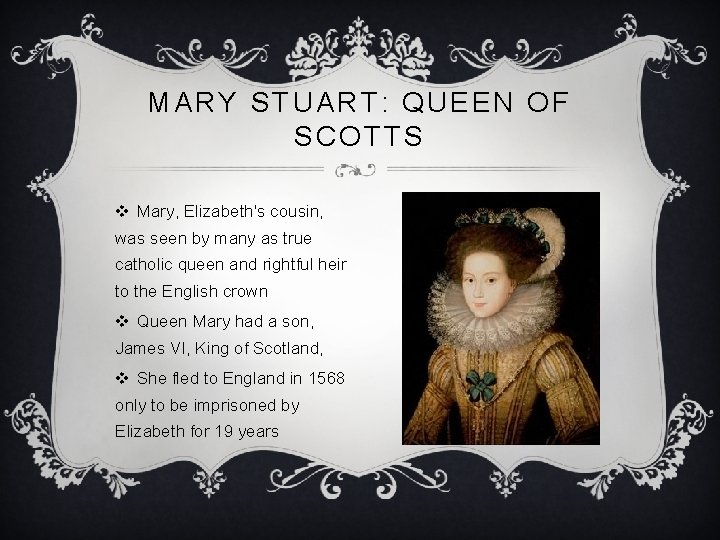
MARY STUART: QUEEN OF SCOTTS v Mary, Elizabeth's cousin, was seen by many as true catholic queen and rightful heir to the English crown v Queen Mary had a son, James VI, King of Scotland, v She fled to England in 1568 only to be imprisoned by Elizabeth for 19 years
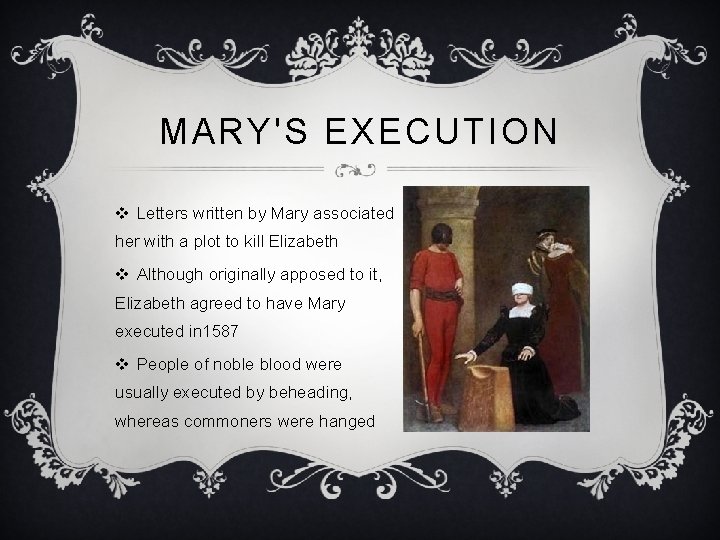
MARY'S EXECUTION v Letters written by Mary associated her with a plot to kill Elizabeth v Although originally apposed to it, Elizabeth agreed to have Mary executed in 1587 v People of noble blood were usually executed by beheading, whereas commoners were hanged
WAR v There were many unsuccessful plots to over through and assassinate the queen v War with Spain and dissension throughout France, Scotland, Ireland, and the Netherlands v Northern England was in rebellion v Poverty and sickness were prevalent at times, especially in the country
SPANISH ARMADA v England was weak militarily and needed the heir and alliance that a marriage would provide v Instead of fleeing for safety when the Spanish sailed to defeat England kill her, she addressed her troops on the front lines v The Spanish Armada of 132 ships was defeated by the English fleet of 34 ships and 163 armed merchant vessels in 1588
POOR LAWS v In 1601 the queen established poor laws that charges parishes for providing for the deserving poor (widows, orphans, disabled, blind, and elderly) v The undeserving poor (beggars, stealers, vagrants) could be whipped or forced into a workhouse
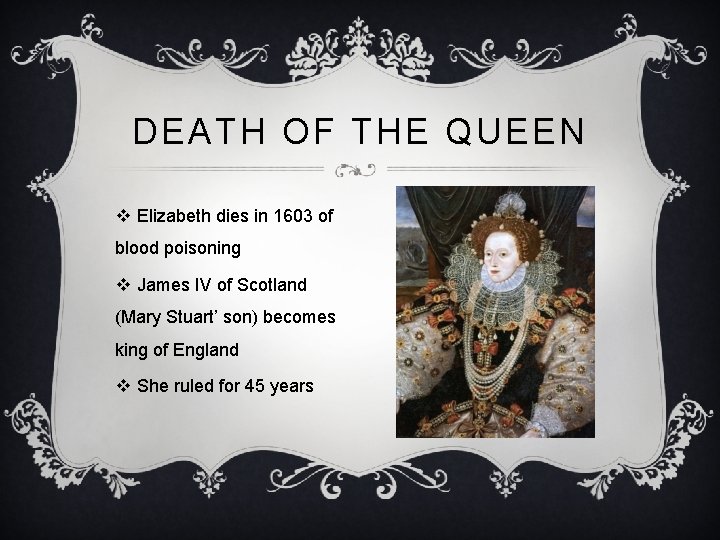
DEATH OF THE QUEEN v Elizabeth dies in 1603 of blood poisoning v James IV of Scotland (Mary Stuart’ son) becomes king of England v She ruled for 45 years
- Slides: 16