
Elevation Data Modelling Variable Resolution Surfaces Variable Resolution

Elevation Data Modelling Variable Resolution Surfaces
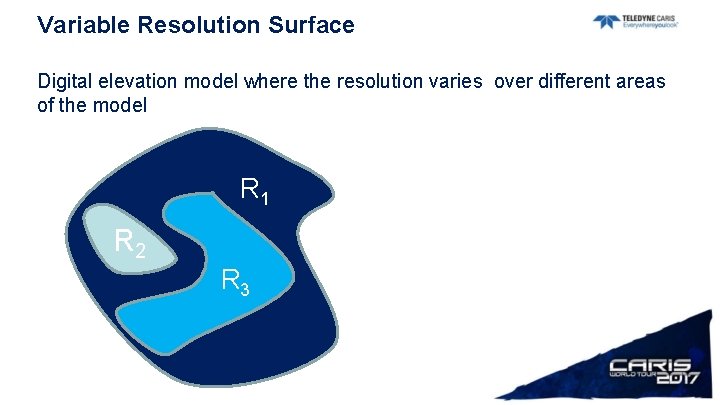
Variable Resolution Surface Digital elevation model where the resolution varies over different areas of the model R 1 R 2 R 3
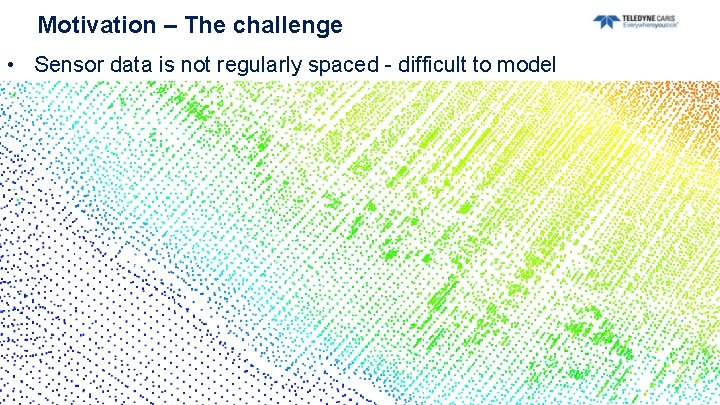
Motivation – The challenge • Sensor data is not regularly spaced - difficult to model

Motivation – Current solution • Divide model into depth range and resolution – Have to manage multiple models – Discontinuity near boundaries • Use a TIN – – – Limited by size Holidays Edge removal
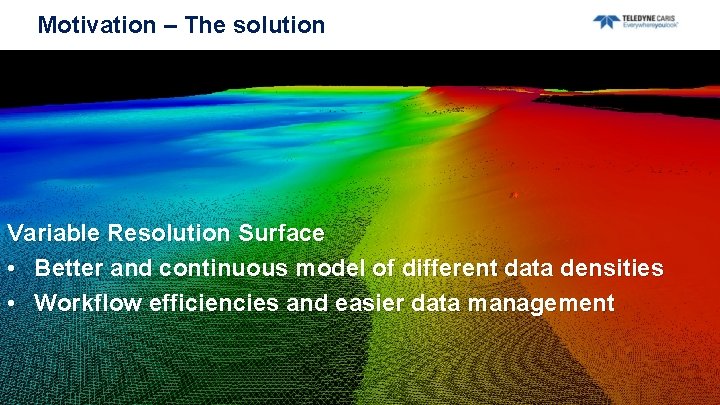
Motivation – The solution Variable Resolution Surface • Better and continuous model of different data densities • Workflow efficiencies and easier data management
What is a Variable Resolution Surface? • Defines every value within a continuous area • Surface values are explicitly defined at nodes • Variable Resolution surface has regularly spaced nodes within a tile with resolution defining spacing between nodes for that tile • A mesh defines values everywhere else
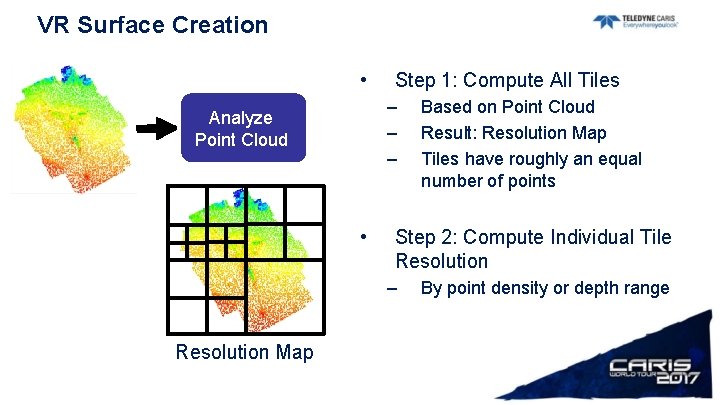
VR Surface Creation • Step 1: Compute All Tiles – – – Analyze Point Cloud • Step 2: Compute Individual Tile Resolution – Resolution Map Based on Point Cloud Result: Resolution Map Tiles have roughly an equal number of points By point density or depth range
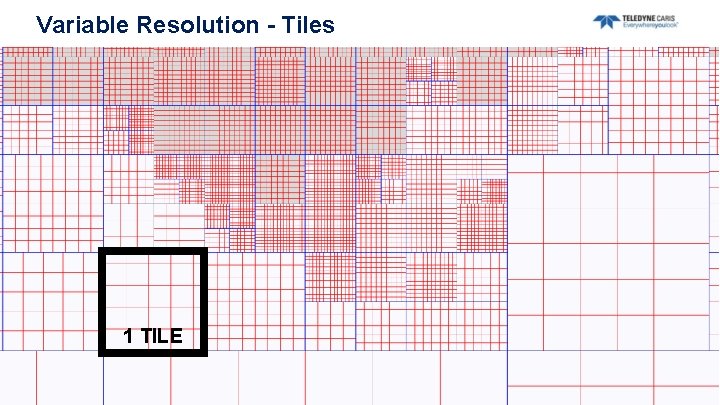
Variable Resolution - Tiles 1 TILE
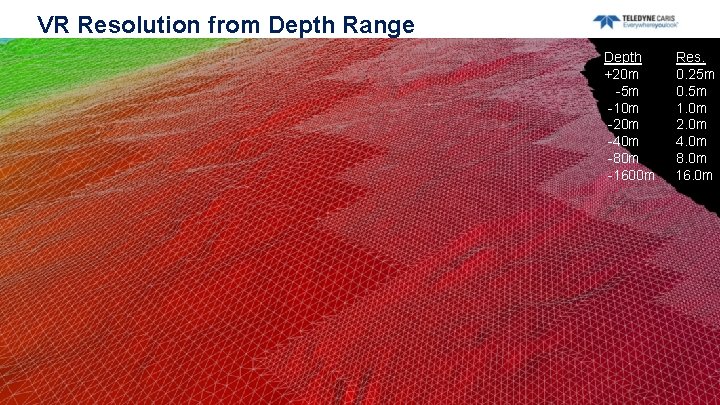
VR Resolution from Depth Range Depth +20 m -5 m -10 m -20 m -40 m -80 m -1600 m Res. 0. 25 m 0. 5 m 1. 0 m 2. 0 m 4. 0 m 8. 0 m 16. 0 m
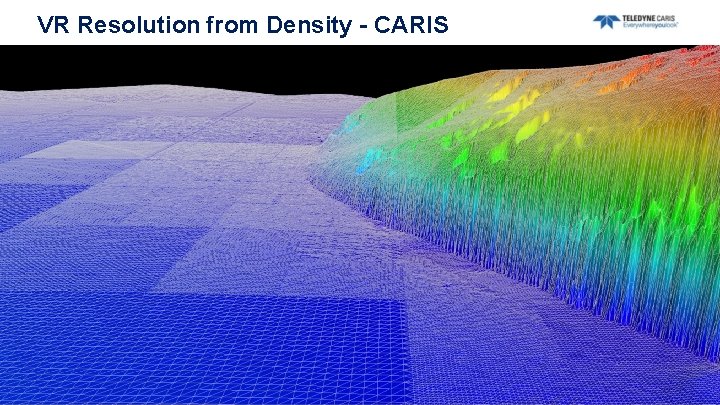
VR Resolution from Density - CARIS
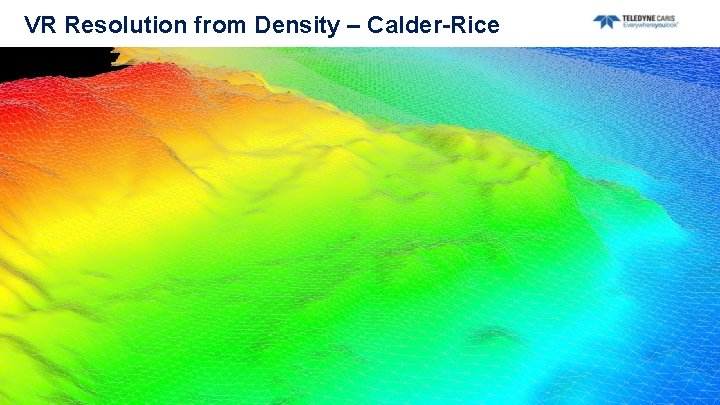
VR Resolution from Density – Calder-Rice
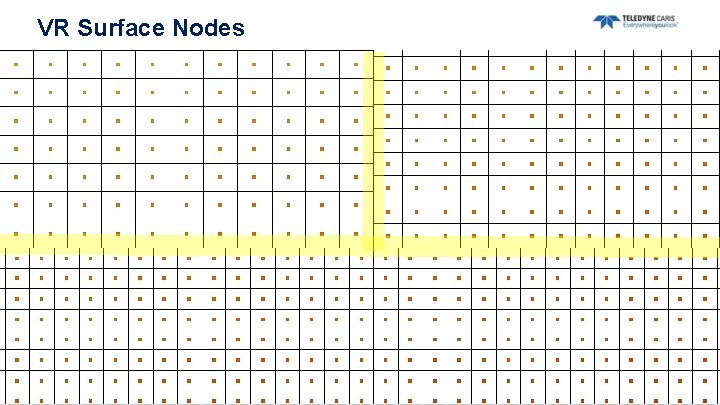
VR Surface Nodes
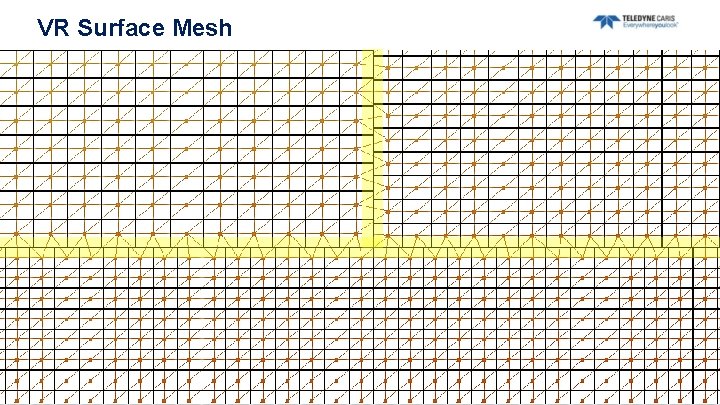
VR Surface Mesh
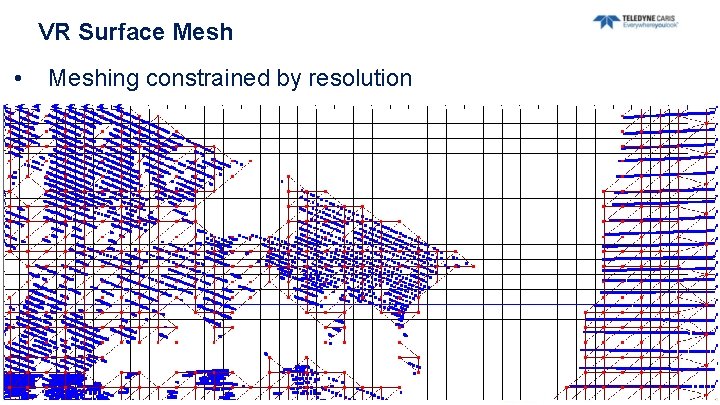
How to Compute a VR VR Surface Mesh • Meshing constrained by resolution
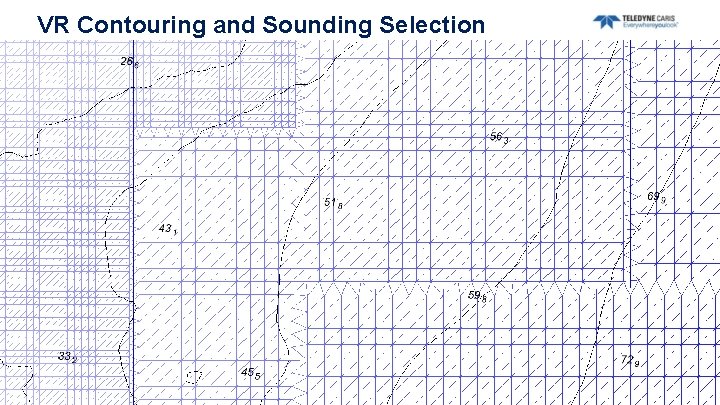
VR Contouring and Sounding Selection
VR First release • First release in CARIS HIPS and SIPS 10 – Released October 2016 • Includes: – – Depth/density creation tools Standard node computation (gridding) techniques Contouring/sounding selection Several raster tools (difference, shift, compute layer, etc. ) • CARIS Bathy Data. BASE – 4. 3 release in February 2017
VR Future Considerations • VR built on a flexible framework, ready for the future • Ideas: – Alternative methods to define resolution – Alternative tile schemes – Alternative node placement methods • VR is a new technique developed based on a need in the hydrographic community – Offers time/cost savings in data modelling and product creation • Further development also depends on user input
All written and image content in this document not protected by the copyrights of others is Copyright © 2016 Teledyne CARIS. All rights reserved. Reproduction and redistribution is strictly prohibited without the express prior written consent of Teledyne CARIS.
- Slides: 18