
ELEMENTS PRINCIPLES OF LANDSCAPE DESIGN ELEMENTS OF LANDSCAPE


- Slides: 51
ELEMENTS & PRINCIPLES OF LANDSCAPE DESIGN
ELEMENTS OF LANDSCAPE DESIGN The directly observable components, ingredients, and physical characteristics of a design.
ELEMENTS OF LANDSCAPE DESIGN Line Pattern Form Size Space Texture Color
LINE The visual pathway that directs eye movement through a composition • Distance between two points
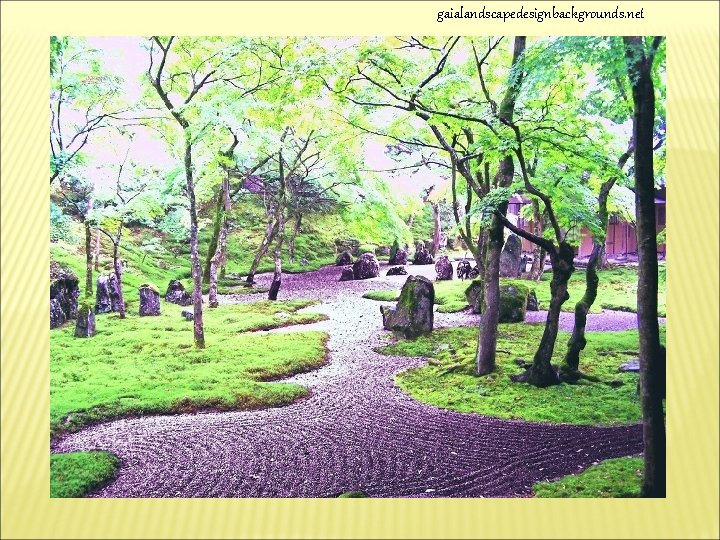
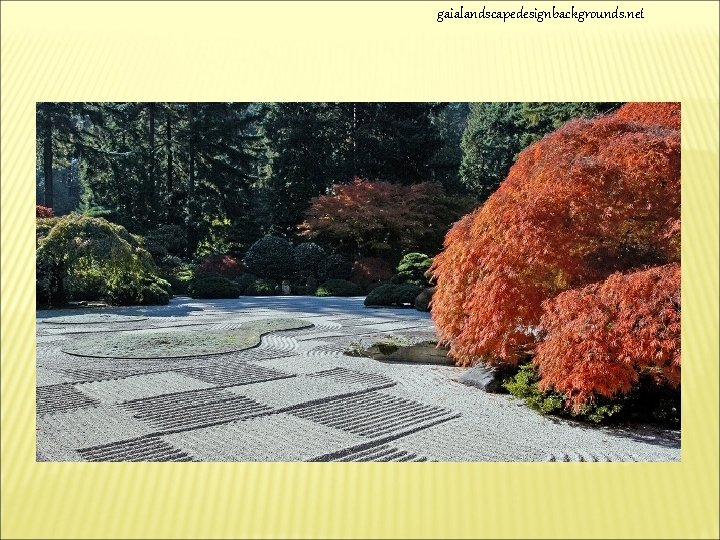
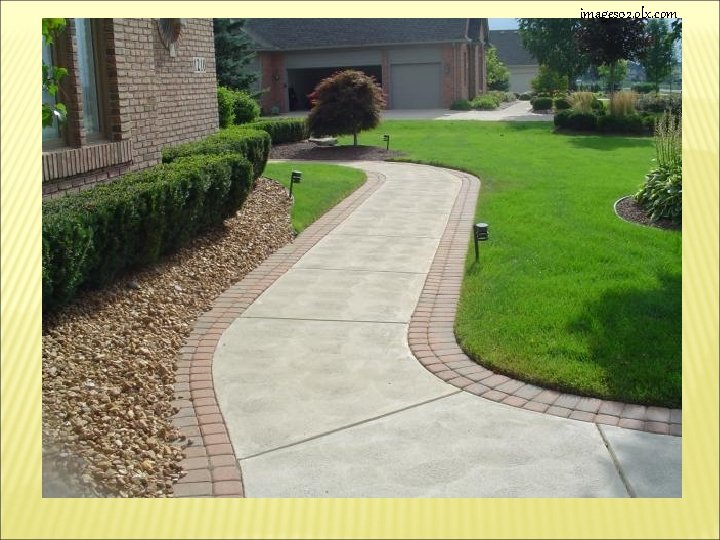
LINE DIRECTIONS: Vertical lines—stress height and suggest power and strength Horizontal lines—stress width and are peaceful and calm, provide a sense of stability Diagonal line—dynamically energetic, causing more eye movement, use sparingly. Curved line—suggest motion, but are softer, more comforting.
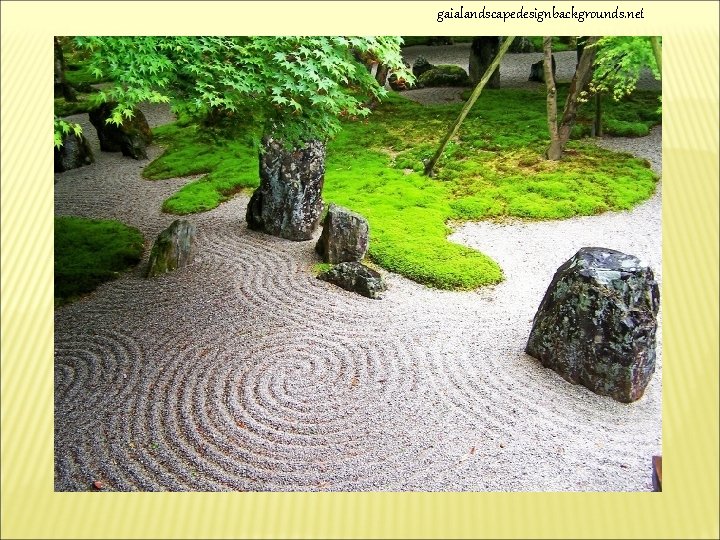
gaialandscapedesignbackgrounds. net
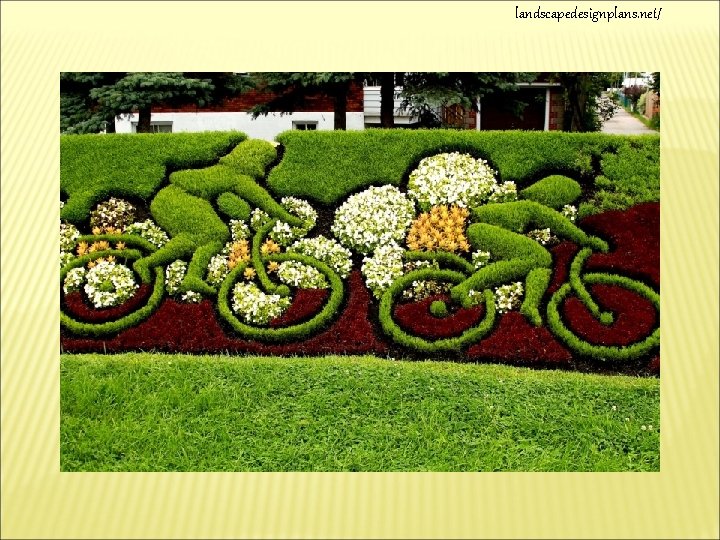
FORM the shape or configuration of an individual component of the composition. The overall, three-dimensional, geometric shape or configuration of a floral composition.
landscapedesignplans. net/
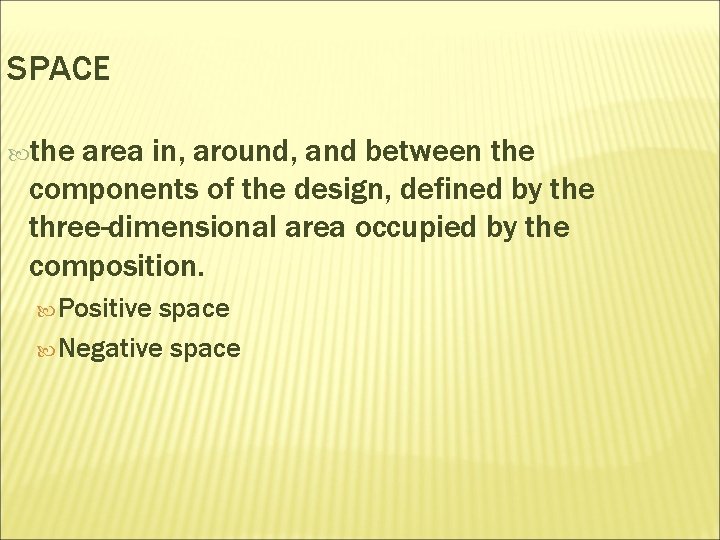
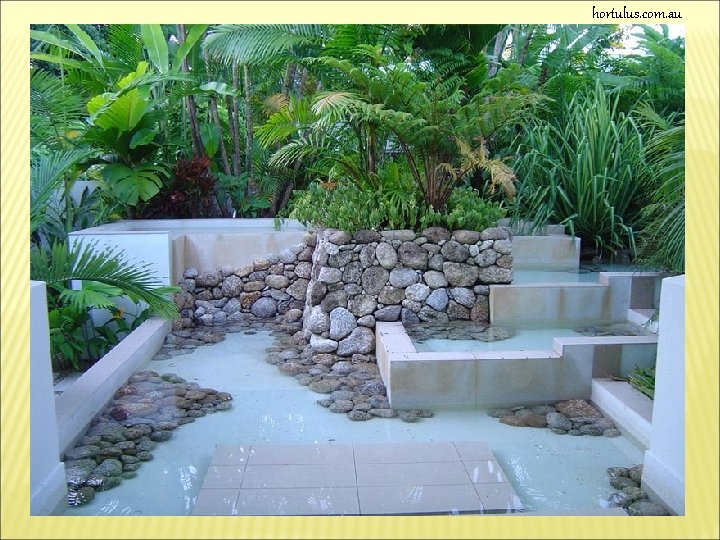
SPACE the area in, around, and between the components of the design, defined by the three-dimensional area occupied by the composition. Positive space Negative space
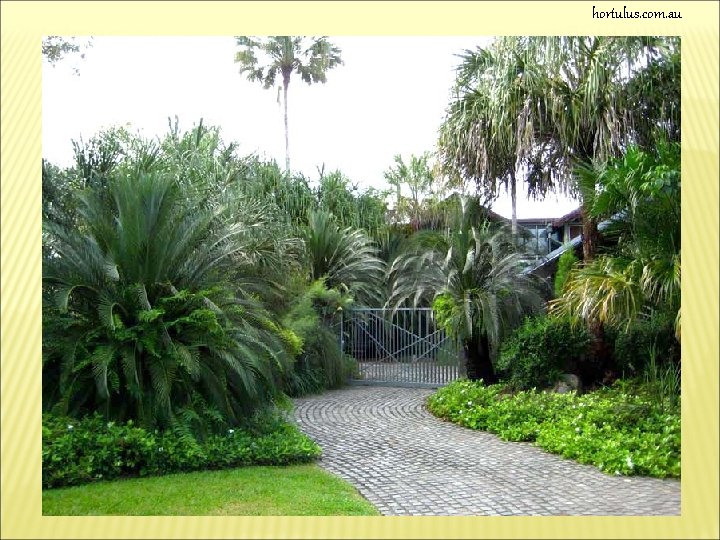
hortulus. com. au
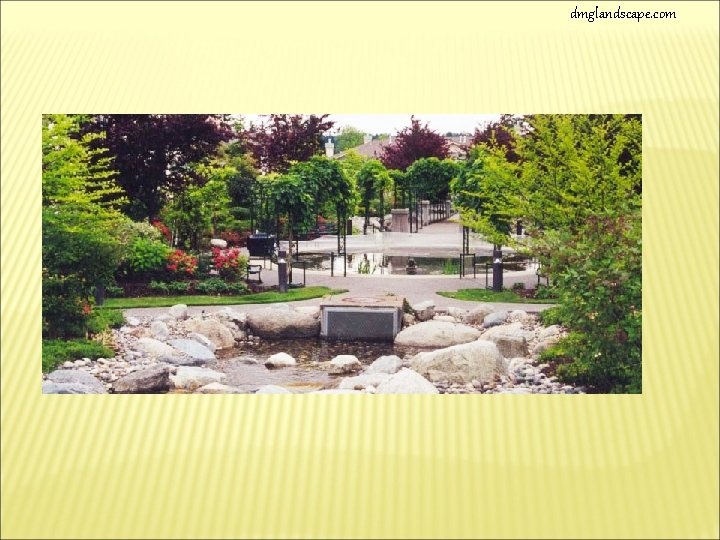
TEXTURE The surface quality of a material, as perceived by sight or touch Smooth, coarse, waxy, rough, delicate, velvety
dmglandscape. com
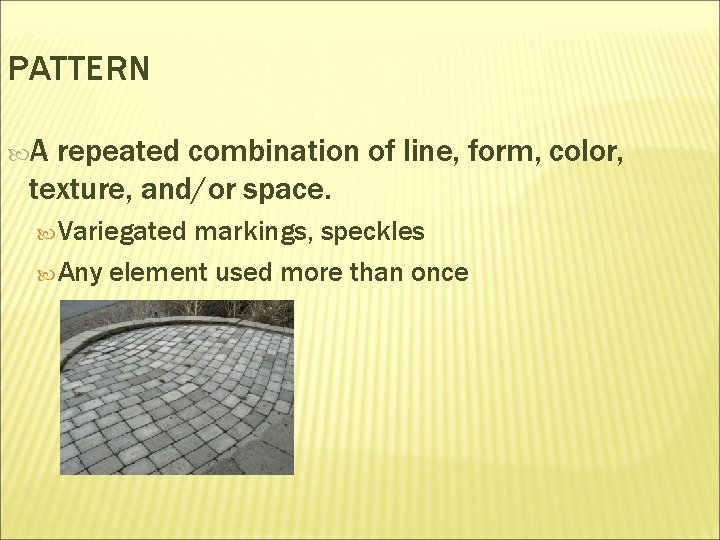
PATTERN A repeated combination of line, form, color, texture, and/or space. Variegated markings, speckles Any element used more than once
gaialandscapedesignbackgrounds. net
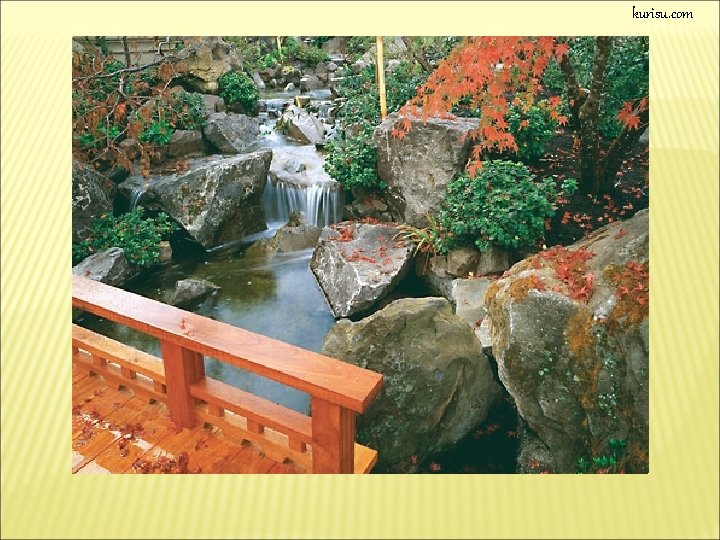
COLOR The visual response of the eye to reflected rays of light most important design element Optical sensation, originating in the brain’s perception of light energy reflected to the eye from a pigmented surface. Emotional response
COLOR
kurisu. com
PRINCIPLES OF LANDSCAPE DESIGN Principles of design-fundamental guidelines to aesthetic design that govern the organization of the elements and materials in accordance with the laws of nature.
PRINCIPLES OF LANDSCAPE DESIGN Balance Variation Proportion Simplicity Scale Rhythm Focal Area Repetition Opposition Transition Unity
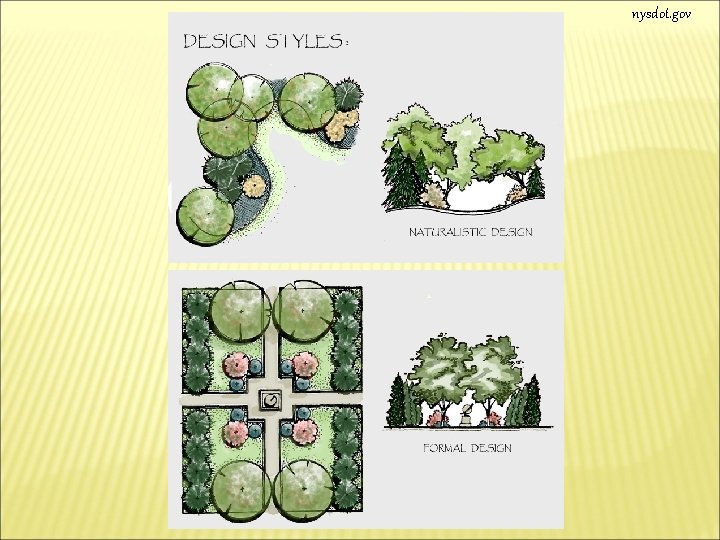
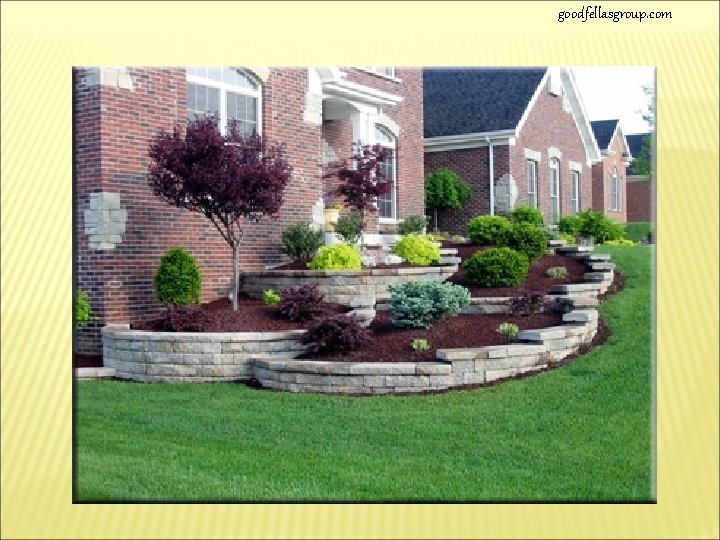
BALANCE gives a sense of equilibrium and repose, a feeling of three-dimensional stability. Symmetrical balance—known as formal balance, forms are repeated on opposite sides of the design. Using an imaginary central axis, one side of the design is the mirror image of the other. Asymmetrical balance—known as informal balance. Formed by placing unequal visual weight on each side of a central vertical axis.
nysdot. gov
goodfellasgroup. com
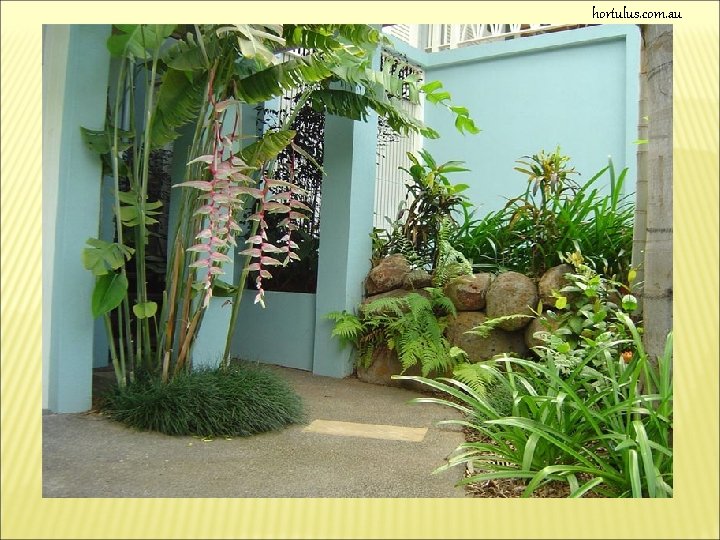
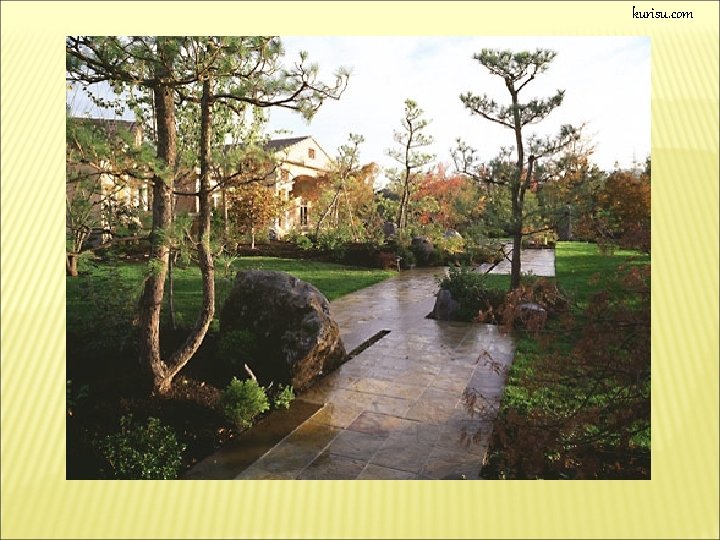
PROPORTION The relationship of one portion to another, or of one portion to the whole.
hortulus. com. au
kurisu. com
SCALE The relative ratio of size, or the relationship of the size of a composition to the surrounding area or environment.
hortulus. com. au
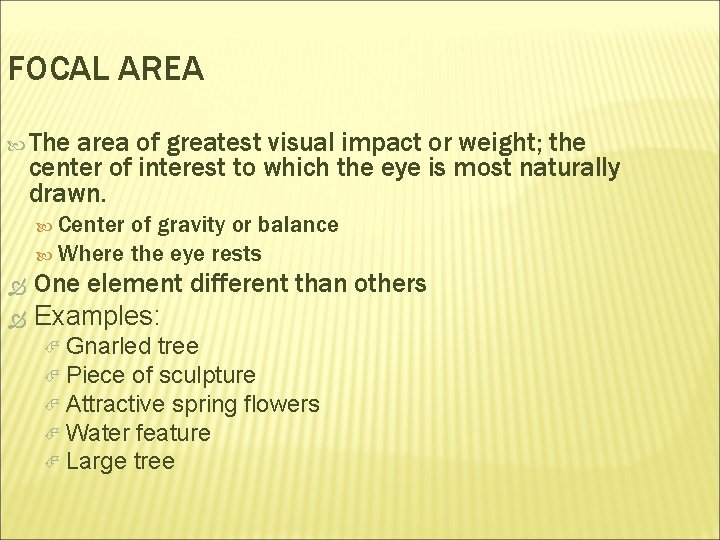
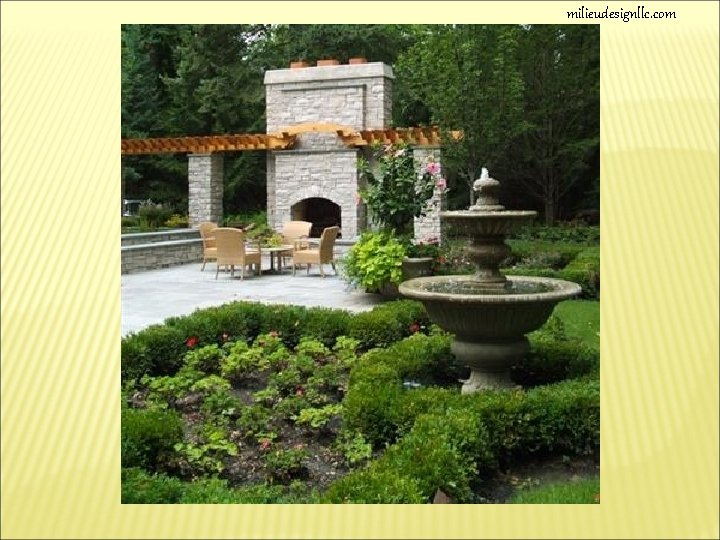
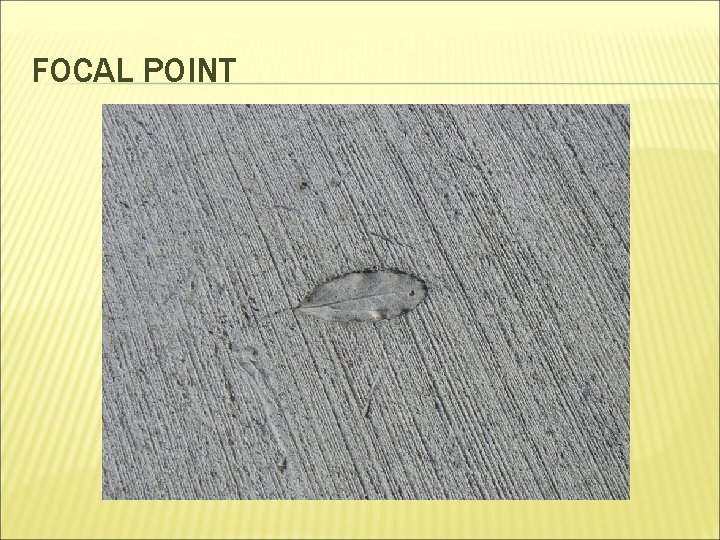
FOCAL AREA The area of greatest visual impact or weight; weight the center of interest to which the eye is most naturally drawn. Center of gravity or balance Where the eye rests One element different than others Examples: Gnarled tree Piece of sculpture Attractive spring flowers Water feature Large tree
milieudesignllc. com
gaialandscapedesignbackgrounds. net
FOCAL POINT
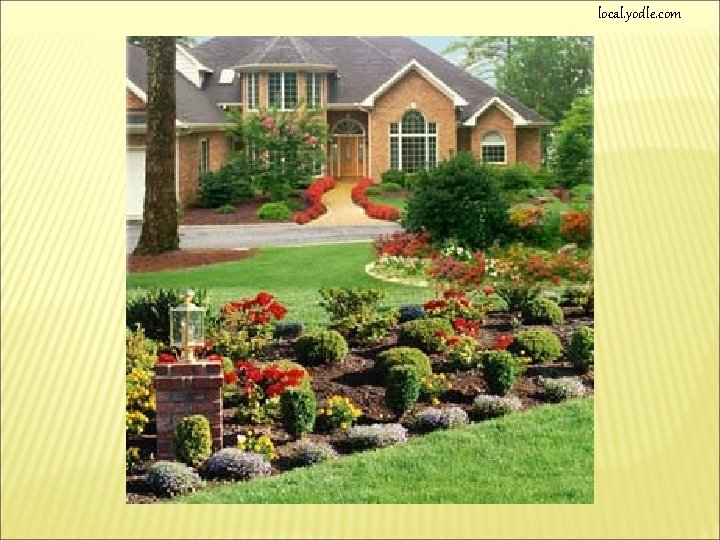
RHYTHM Flow or movement characterized by regular recurrence of elements or features Use repeated patterns and graceful spacing. The goal is to create a visual pathway that leads the viewer’s eye around and through the design, then back to the focal point.
local. yodle. com
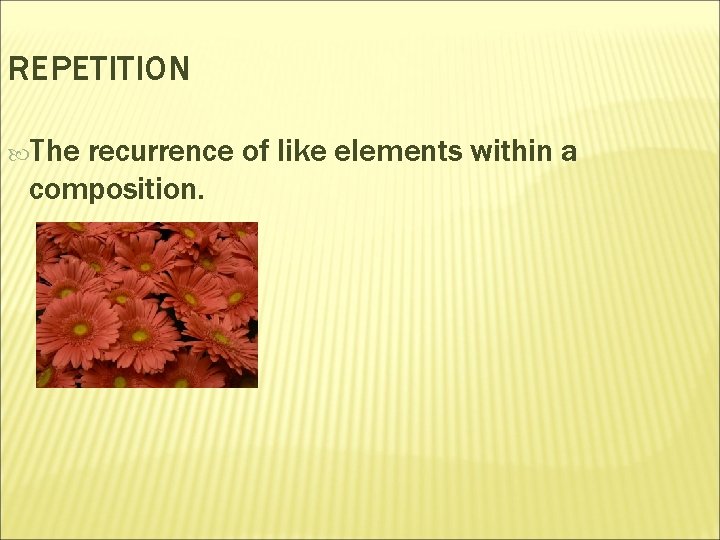
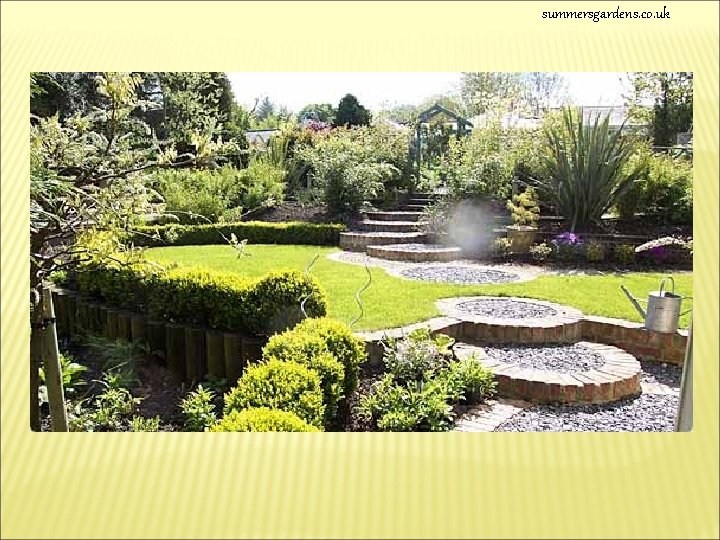
REPETITION The recurrence of like elements within a composition.
summersgardens. co. uk
hortulus. com. au
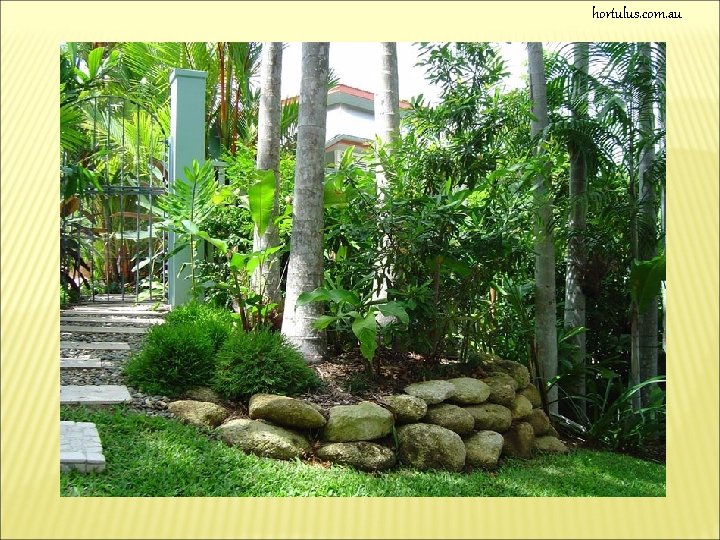
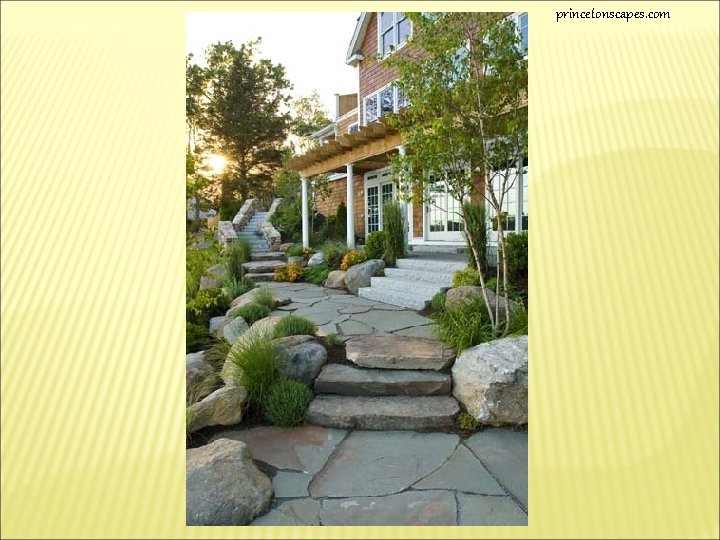
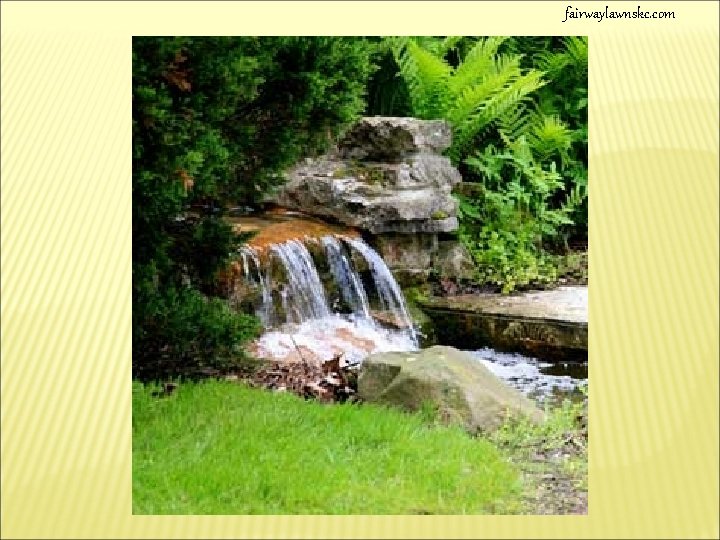
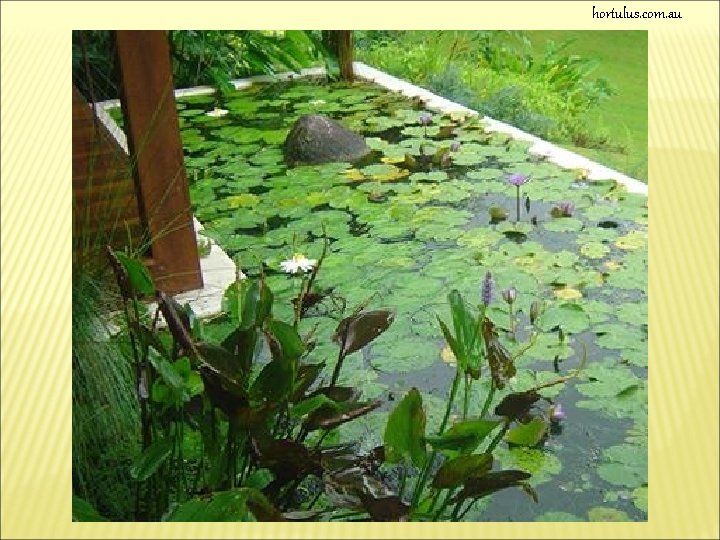
TRANSITION The ease of visual movement which results from gradual degrees of change among one or more of the elements
princetonscapes. com
fairwaylawnskc. com
hortulus. com. au
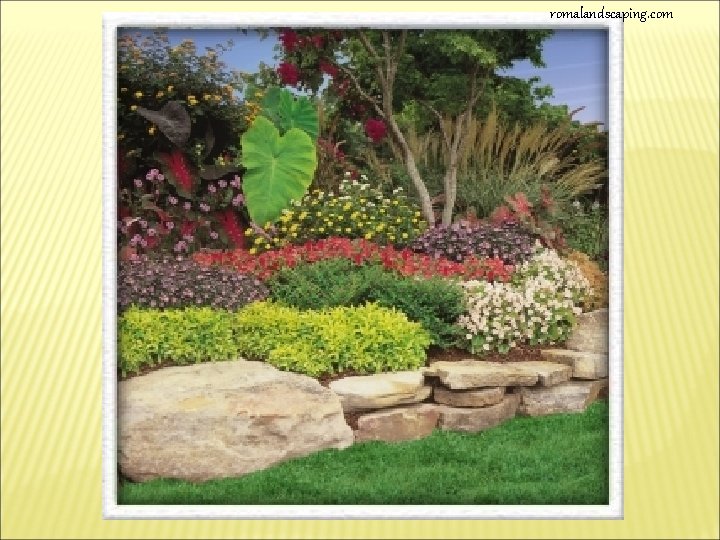
OPPOSITION Contrast between elements which are counterpoint in relation to each other. Call attention to each other by being opposite whereas contrast is simply different from each other
romalandscaping. com
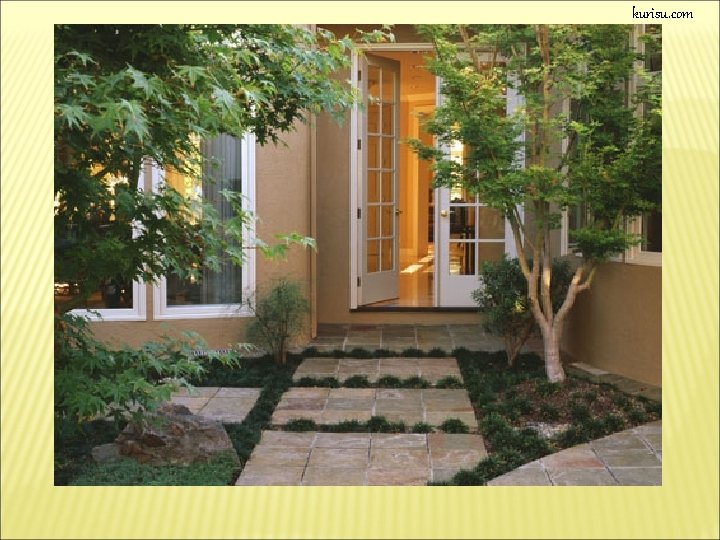
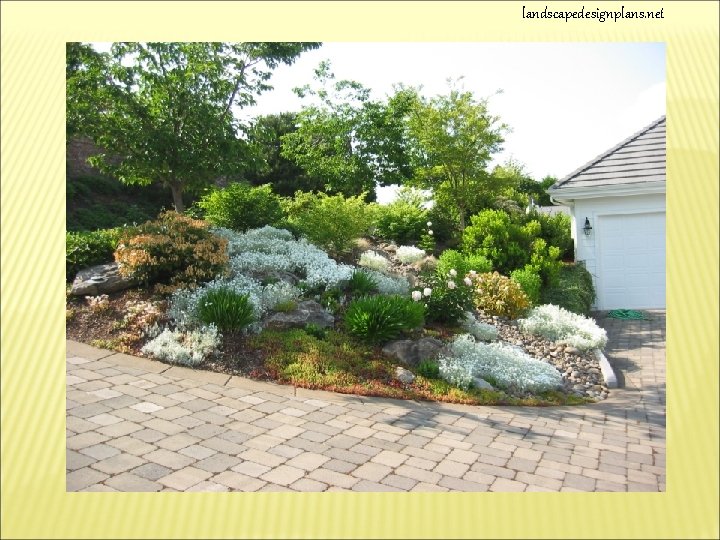
VARIATION Dissimilarity among attributes or characteristics. Diversity among elements Vary stages of development All one color of flower, but different flowers
kurisu. com
landscapedesignplans. net
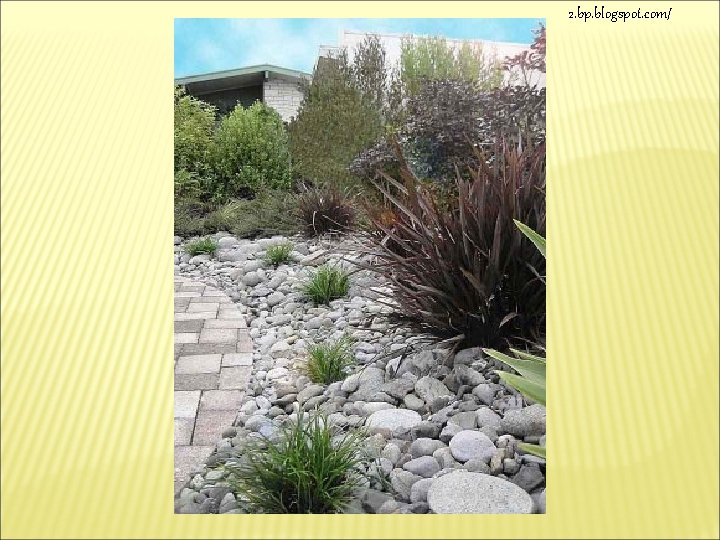
SIMPLICITY elimination too of unnecessary detail much variety or detail creates confusion of perception reduction of a design to its simplest, functional form avoids unnecessary cost and maintenance
2. bp. blogspot. com/
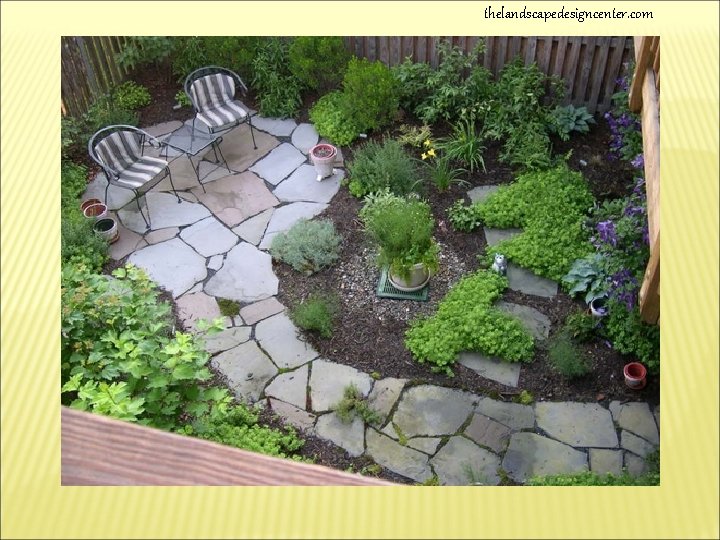
UNITY Oneness of purpose, thought, style, and spirit.
thelandscapedesigncenter. com
images 02. olx. com