
Elements of the Immune System Complement S Barbour
Elements of the Immune System: Complement S. Barbour 03. 31. 09
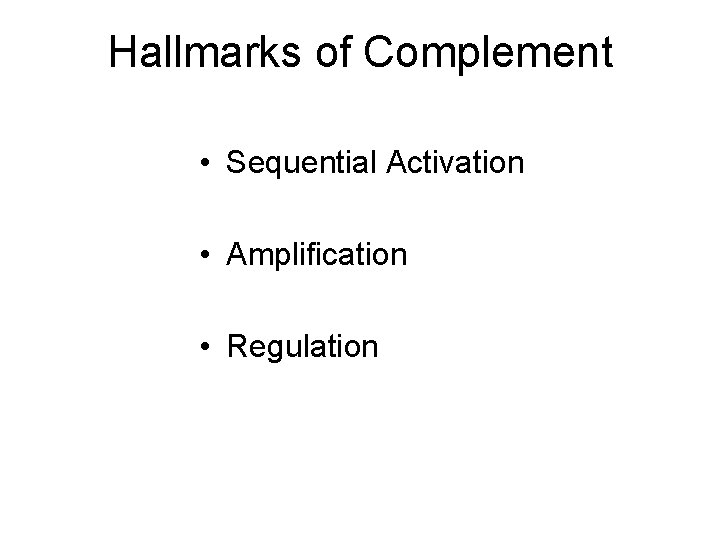
Hallmarks of Complement • Sequential Activation • Amplification • Regulation
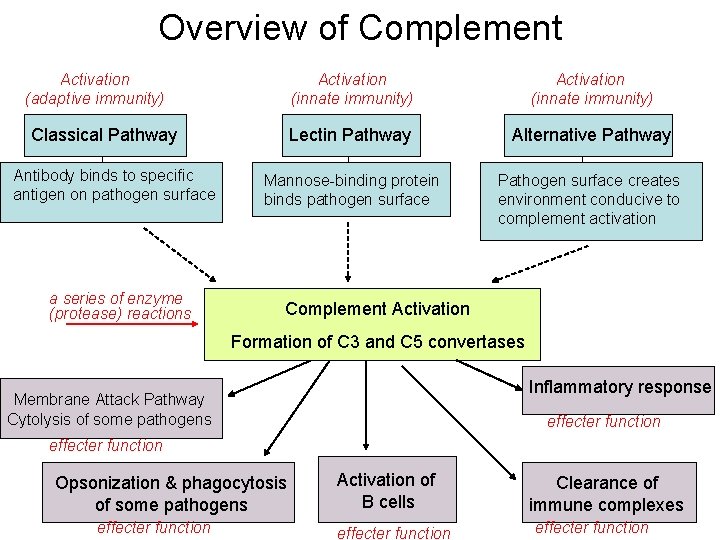
Overview of Complement Activation (adaptive immunity) Activation (innate immunity) Lectin Pathway Alternative Pathway Mannose-binding protein binds pathogen surface Pathogen surface creates environment conducive to complement activation Classical Pathway Antibody binds to specific antigen on pathogen surface a series of enzyme (protease) reactions Complement Activation Formation of C 3 and C 5 convertases Inflammatory response Membrane Attack Pathway Cytolysis of some pathogens effecter function Opsonization & phagocytosis of some pathogens effecter function Activation of B cells effecter function Clearance of immune complexes effecter function
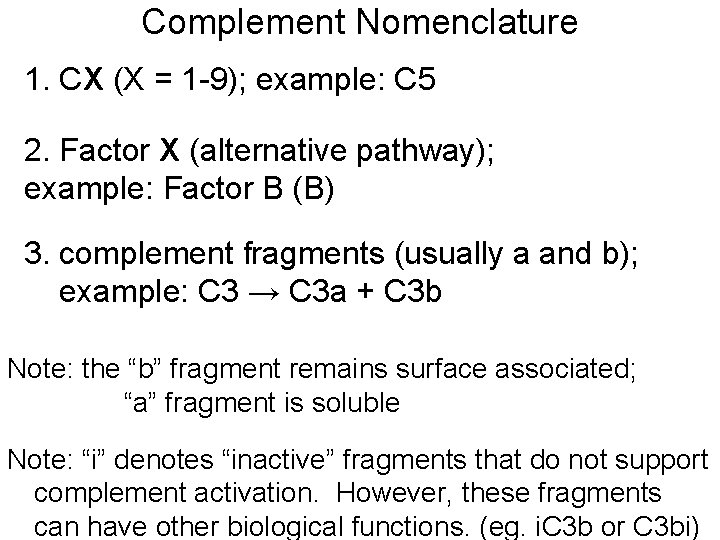
Complement Nomenclature 1. CX (X = 1 -9); example: C 5 2. Factor X (alternative pathway); example: Factor B (B) 3. complement fragments (usually a and b); example: C 3 → C 3 a + C 3 b Note: the “b” fragment remains surface associated; “a” fragment is soluble Note: “i” denotes “inactive” fragments that do not support complement activation. However, these fragments can have other biological functions. (eg. i. C 3 b or C 3 bi)
Complement Activation
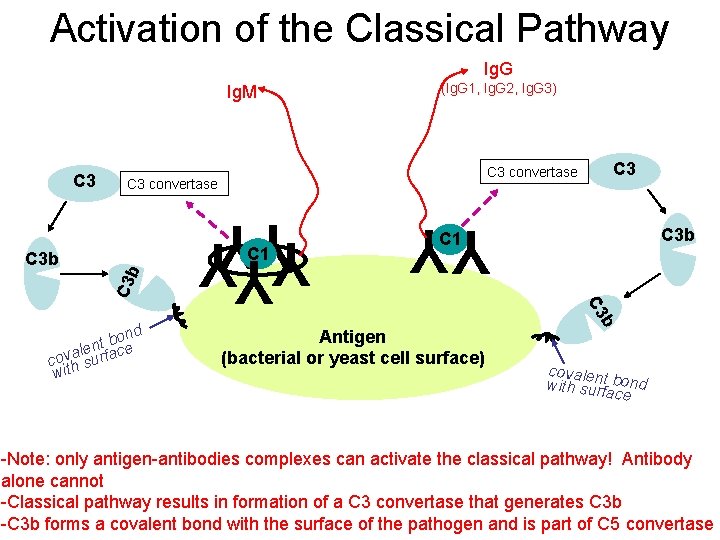
Activation of the Classical Pathway Ig. G Ig. M C 3 convertase C 3 b C 1 Antigen (bacterial or yeast cell surface) b d bon t n ce ale covth surfa wi C 3 b C 1 C 3 YYY Y Y C 3 b C 3 convertase YY C 3 (Ig. G 1, Ig. G 2, Ig. G 3) covale with sunrft bond ace -Note: only antigen-antibodies complexes can activate the classical pathway! Antibody alone cannot -Classical pathway results in formation of a C 3 convertase that generates C 3 b -C 3 b forms a covalent bond with the surface of the pathogen and is part of C 5 convertase
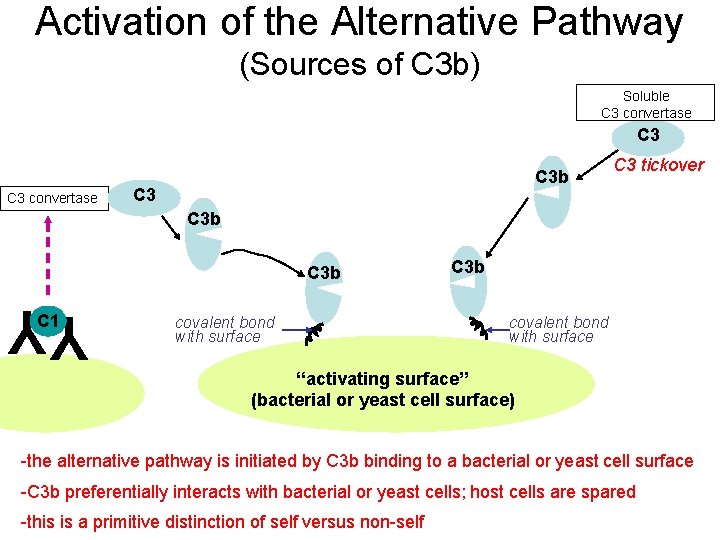
Activation of the Alternative Pathway (Sources of C 3 b) Soluble C 3 convertase C 3 b C 3 tickover C 3 b YY C 1 covalent bond with surface C 3 b covalent bond with surface “activating surface” (bacterial or yeast cell surface) -the alternative pathway is initiated by C 3 b binding to a bacterial or yeast cell surface -C 3 b preferentially interacts with bacterial or yeast cells; host cells are spared -this is a primitive distinction of self versus non-self

Activation of the Alternative Pathway (C 3 Convertase) Soluble C 3 convertase C 3 b C 3 tickover C 3 convertase C 3 b covalent bond with surface “activating surface” (bacterial or yeast cell surface) -alternative pathway results in the formation of a C 3 convertase that generates C 3 b -C 3 b forms a covalent bond with the surface of the pathogen and is part of C 5 convertase
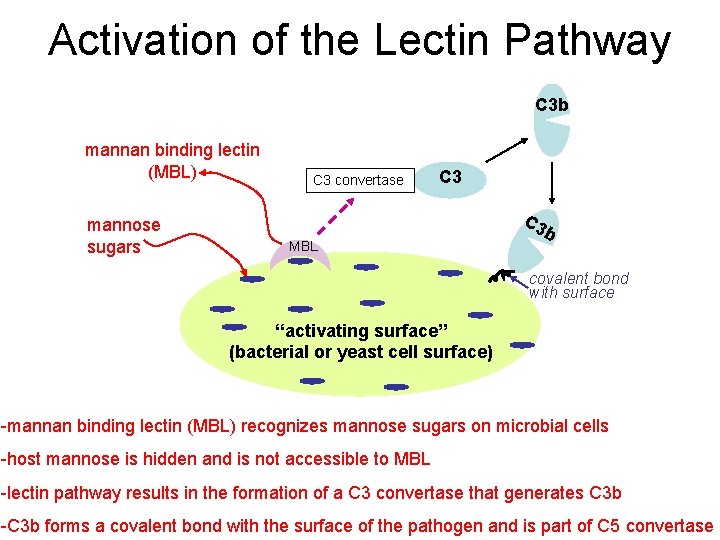
Activation of the Lectin Pathway C 3 b mannan binding lectin (MBL) mannose sugars C 3 convertase C 3 MBL C 3 b covalent bond with surface “activating surface” (bacterial or yeast cell surface) -mannan binding lectin (MBL) recognizes mannose sugars on microbial cells -host mannose is hidden and is not accessible to MBL -lectin pathway results in the formation of a C 3 convertase that generates C 3 b -C 3 b forms a covalent bond with the surface of the pathogen and is part of C 5 convertase
Regulation of Complement
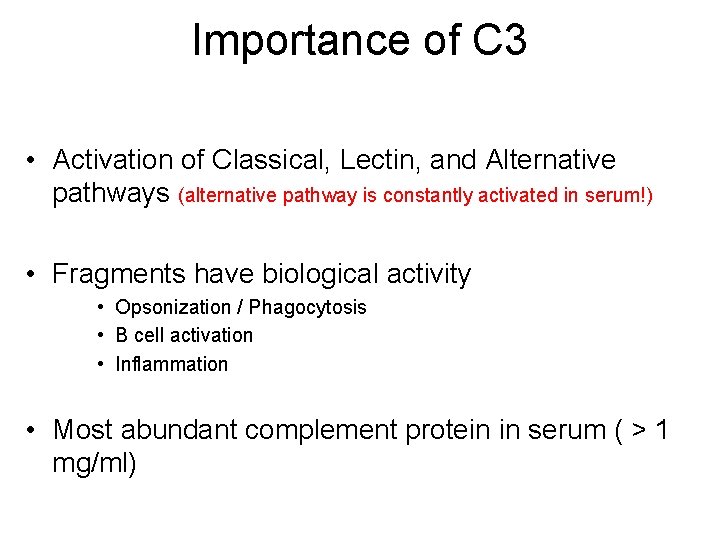
Importance of C 3 • Activation of Classical, Lectin, and Alternative pathways (alternative pathway is constantly activated in serum!) • Fragments have biological activity • Opsonization / Phagocytosis • B cell activation • Inflammation • Most abundant complement protein in serum ( > 1 mg/ml)
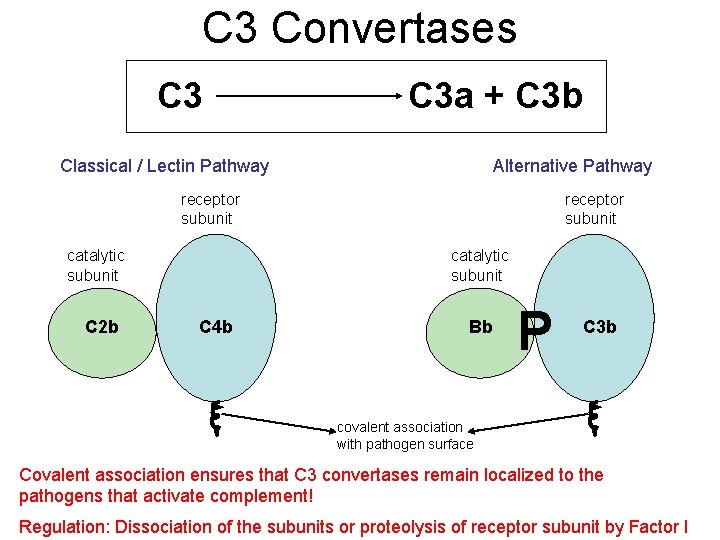
C 3 Convertases C 3 a + C 3 b Classical / Lectin Pathway Alternative Pathway receptor subunit catalytic subunit C 2 b receptor subunit catalytic subunit C 4 b Bb P C 3 b covalent association with pathogen surface Covalent association ensures that C 3 convertases remain localized to the pathogens that activate complement! Regulation: Dissociation of the subunits or proteolysis of receptor subunit by Factor I
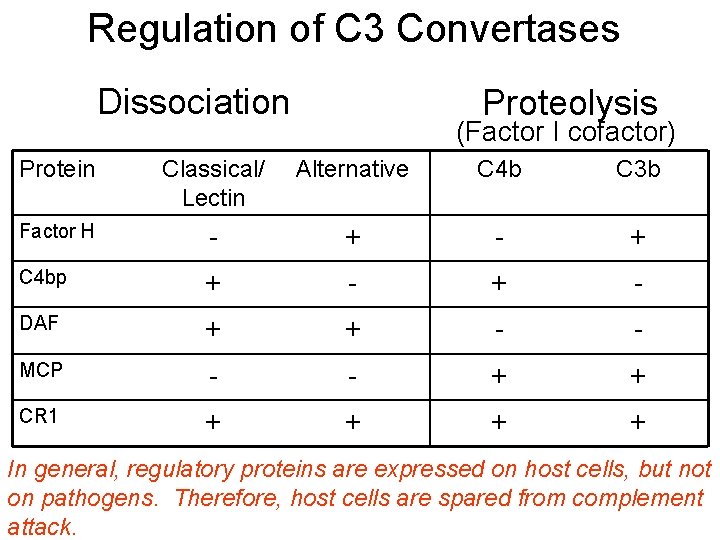
Regulation of C 3 Convertases Dissociation Proteolysis (Factor I cofactor) Protein Classical/ Lectin Alternative C 4 b C 3 b Factor H - + C 4 bp + - DAF + + - - MCP - - + + CR 1 + + In general, regulatory proteins are expressed on host cells, but not on pathogens. Therefore, host cells are spared from complement attack.
Effecter Functions of Complement
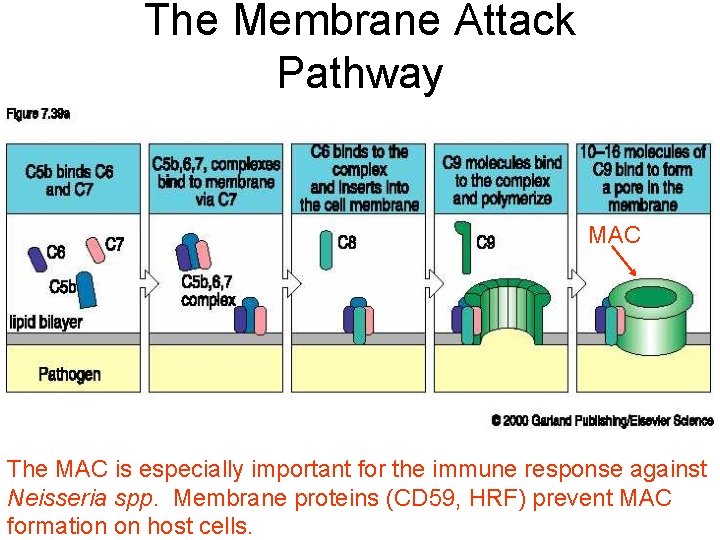
The Membrane Attack Pathway MAC The MAC is especially important for the immune response against Neisseria spp. Membrane proteins (CD 59, HRF) prevent MAC formation on host cells.
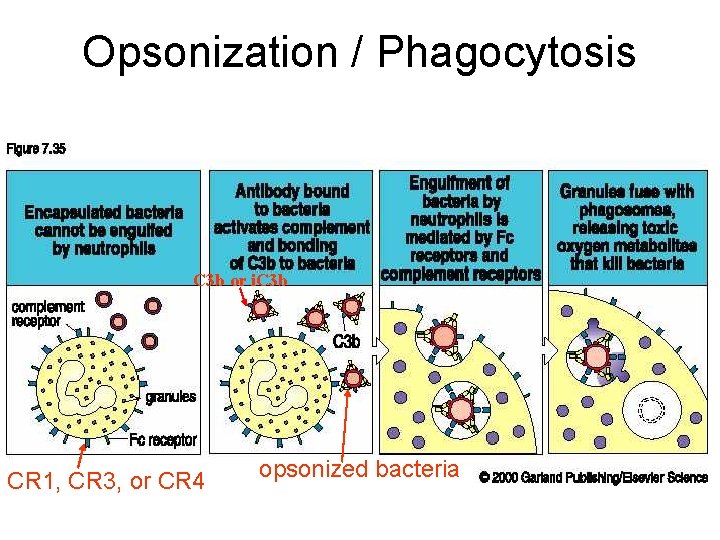
Opsonization / Phagocytosis C 3 b or i. C 3 b CR 1, CR 3, or CR 4 opsonized bacteria
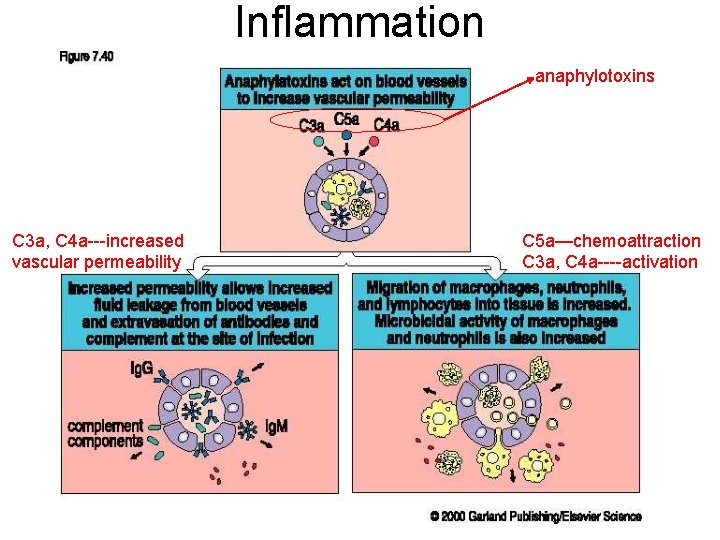
Inflammation anaphylotoxins C 3 a, C 4 a---increased vascular permeability C 5 a—chemoattraction C 3 a, C 4 a----activation
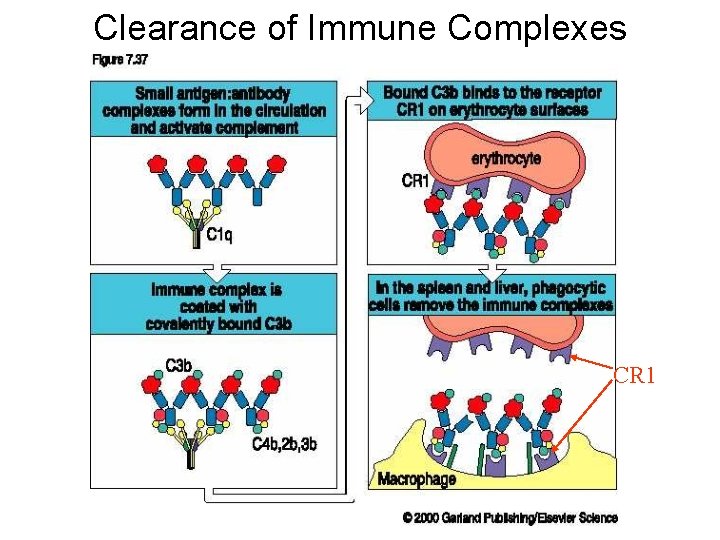
Clearance of Immune Complexes CR 1
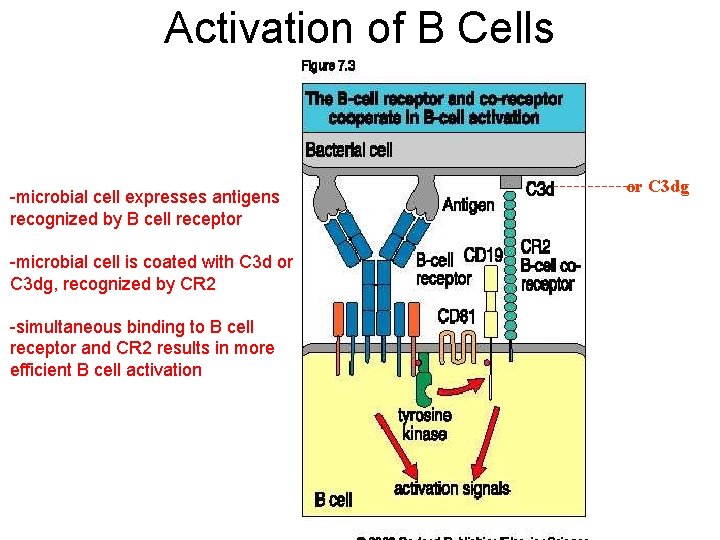
Activation of B Cells -microbial cell expresses antigens recognized by B cell receptor -microbial cell is coated with C 3 d or C 3 dg, recognized by CR 2 -simultaneous binding to B cell receptor and CR 2 results in more efficient B cell activation or C 3 dg
Complement: Disease Correlations
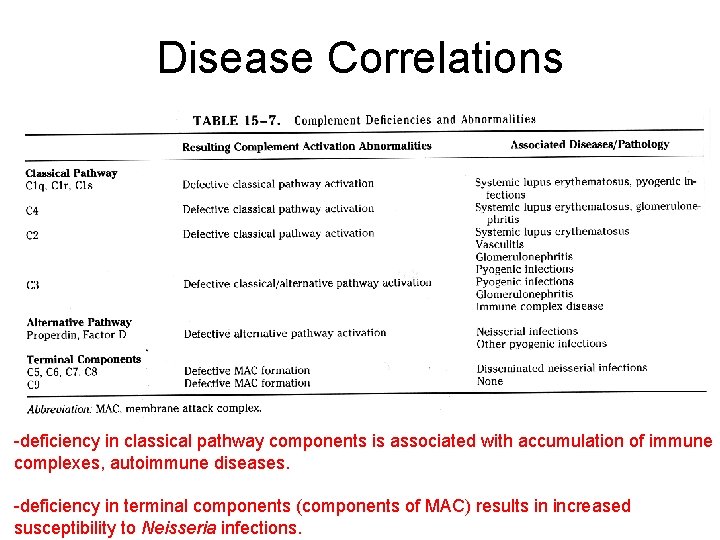
Disease Correlations -deficiency in classical pathway components is associated with accumulation of immune complexes, autoimmune diseases. -deficiency in terminal components (components of MAC) results in increased susceptibility to Neisseria infections.
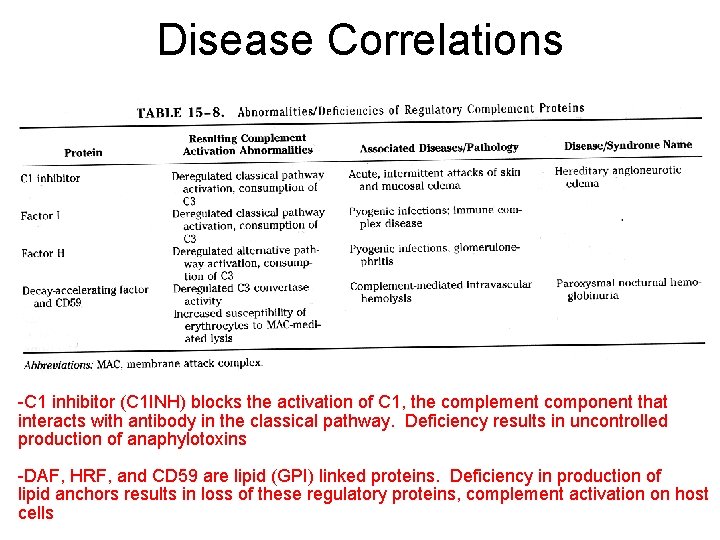
Disease Correlations -C 1 inhibitor (C 1 INH) blocks the activation of C 1, the complement component that interacts with antibody in the classical pathway. Deficiency results in uncontrolled production of anaphylotoxins -DAF, HRF, and CD 59 are lipid (GPI) linked proteins. Deficiency in production of lipid anchors results in loss of these regulatory proteins, complement activation on host cells
Deficiencies in Complement Receptors • CR 3, CR 4 are integrins • Loss of these proteins compromises functions of phagocytes (LAD) • Result is increased susceptibility to infection • CR 1 • Most CR 1 is expressed by erythrocytes • Loss of this protein is associated with accumulation of immune complexes (similar to deficiencies in classical pathway components)
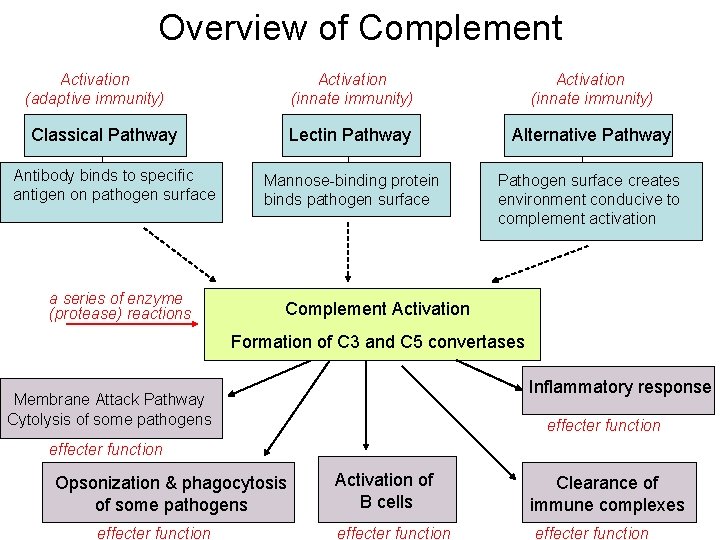
Overview of Complement Activation (adaptive immunity) Activation (innate immunity) Lectin Pathway Alternative Pathway Mannose-binding protein binds pathogen surface Pathogen surface creates environment conducive to complement activation Classical Pathway Antibody binds to specific antigen on pathogen surface a series of enzyme (protease) reactions Complement Activation Formation of C 3 and C 5 convertases Inflammatory response Membrane Attack Pathway Cytolysis of some pathogens effecter function Opsonization & phagocytosis of some pathogens effecter function Activation of B cells effecter function Clearance of immune complexes effecter function
- Slides: 24