
Elements of story Plot Setting Character Point of

- Slides: 9
Elements of story: • • • Plot Setting Character Point of View Theme
The setting of a story is the place and time in which the story happens. The setting is described by the author so the reader can more clearly get a mental picture of the scene, and enter “the world” of the story.
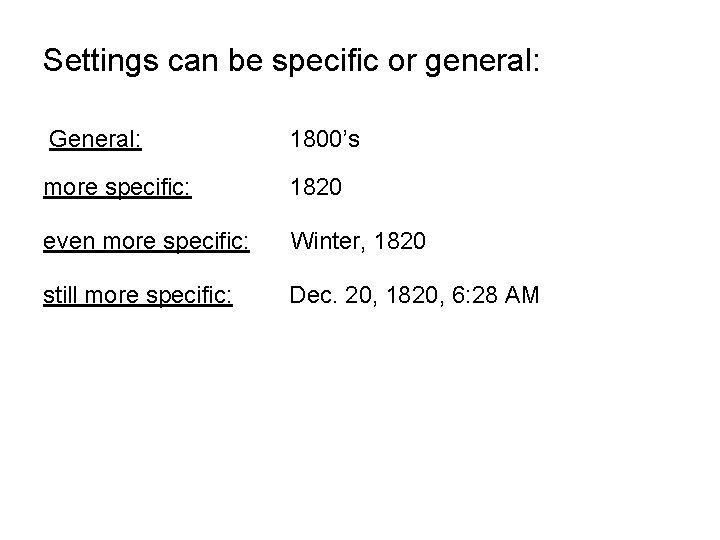
Settings can be specific or general: General: 1800’s more specific: 1820 even more specific: Winter, 1820 still more specific: Dec. 20, 1820, 6: 28 AM
Setting can include not just time and place, but also general locations, such as outside or inside, or in a specific room, such as a kitchen or an operating room. Also, weather, when mentioned, is a part of a story’s setting.
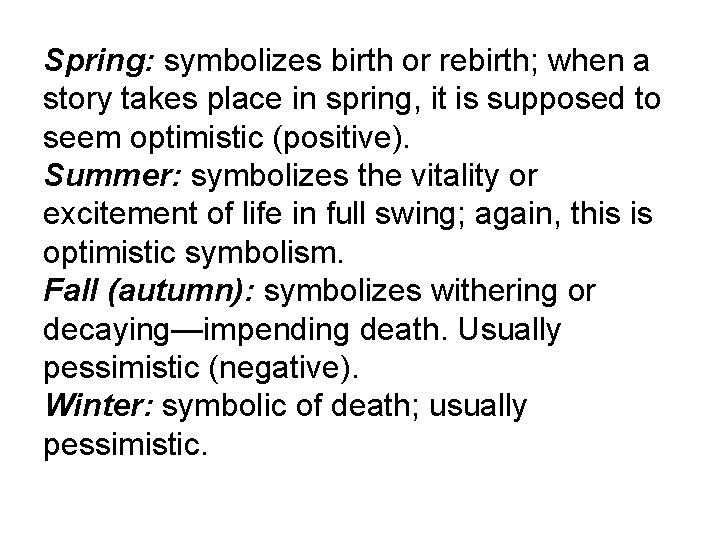
Certain aspects of setting are included to give the reader a clearer picture what the author has in mind. Seasons—spring, summer, fall (autumn), winter—often suggest, symbolically, how a reader should feel about the subject.
Spring: symbolizes birth or rebirth; when a story takes place in spring, it is supposed to seem optimistic (positive). Summer: symbolizes the vitality or excitement of life in full swing; again, this is optimistic symbolism. Fall (autumn): symbolizes withering or decaying—impending death. Usually pessimistic (negative). Winter: symbolic of death; usually pessimistic.
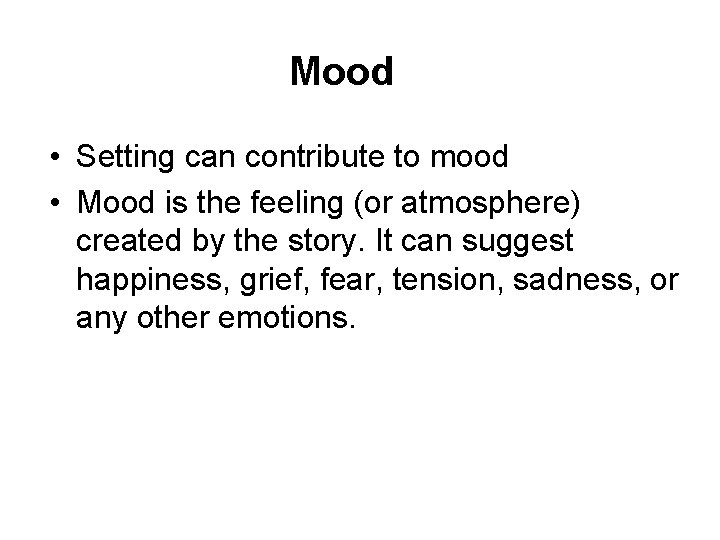
Mood • Setting can contribute to mood • Mood is the feeling (or atmosphere) created by the story. It can suggest happiness, grief, fear, tension, sadness, or any other emotions.
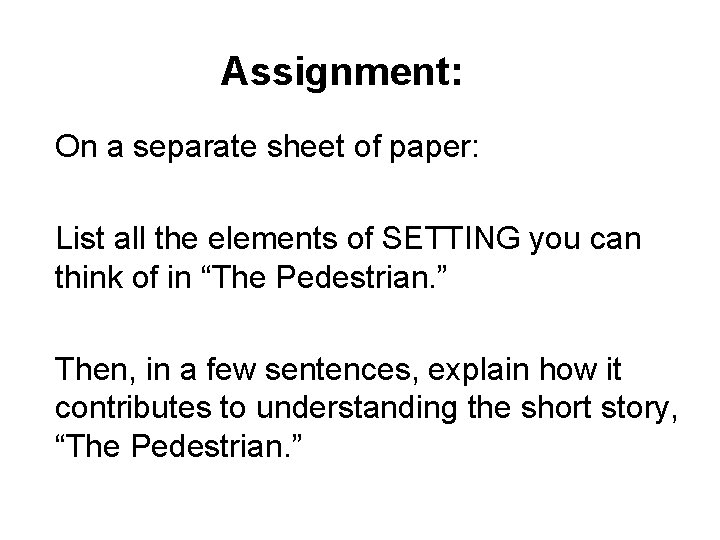
Assignment: On a separate sheet of paper: List all the elements of SETTING you can think of in “The Pedestrian. ” Then, in a few sentences, explain how it contributes to understanding the short story, “The Pedestrian. ”
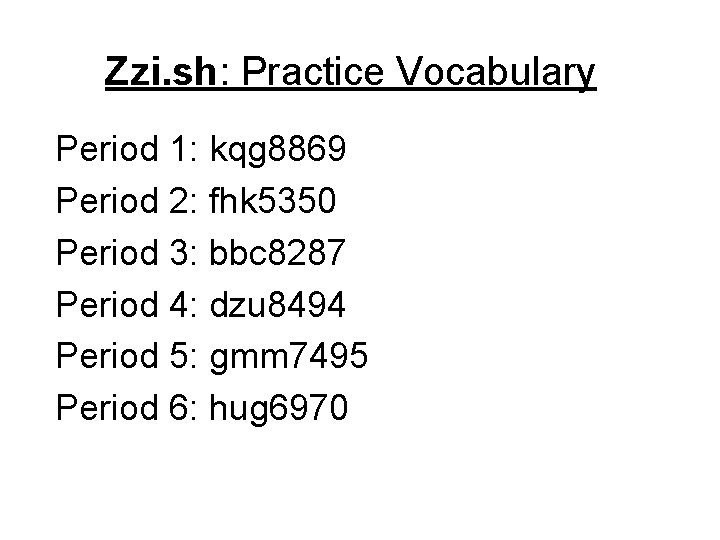
Zzi. sh: Practice Vocabulary Period 1: kqg 8869 Period 2: fhk 5350 Period 3: bbc 8287 Period 4: dzu 8494 Period 5: gmm 7495 Period 6: hug 6970