
Elements of Literature Types of Characters Conflict Plot
- Slides: 12
Elements of Literature Types of Characters Conflict Plot Elements and Plot Line
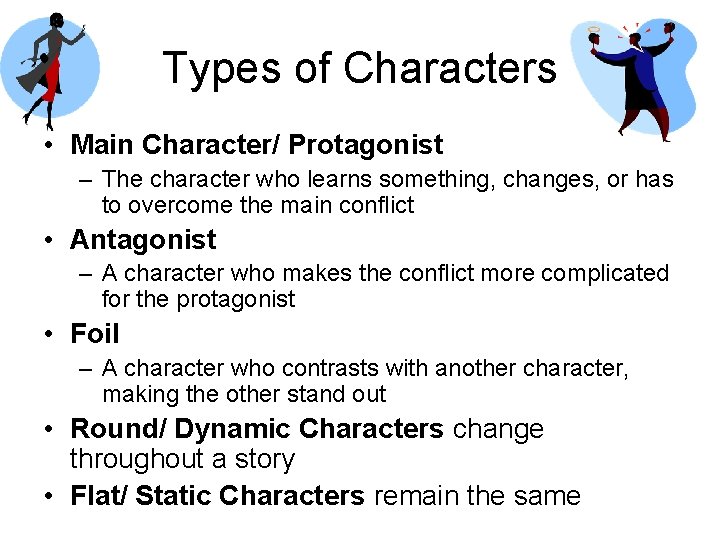
Types of Characters • Main Character/ Protagonist – The character who learns something, changes, or has to overcome the main conflict • Antagonist – A character who makes the conflict more complicated for the protagonist • Foil – A character who contrasts with another character, making the other stand out • Round/ Dynamic Characters change throughout a story • Flat/ Static Characters remain the same
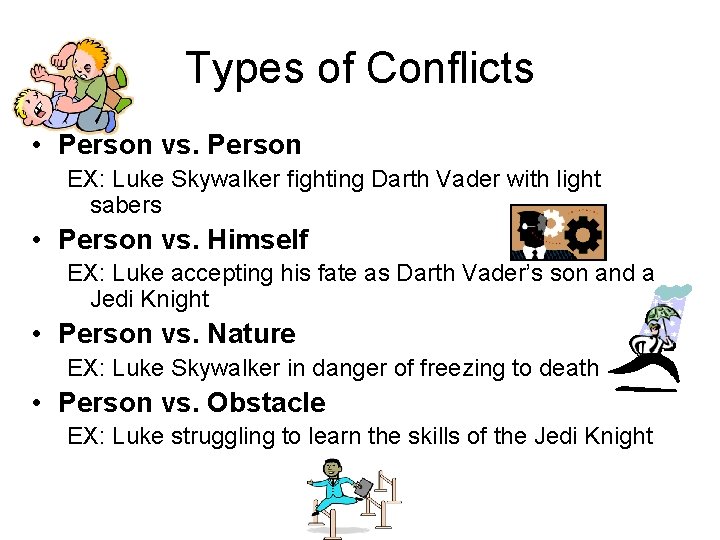
Types of Conflicts • Person vs. Person EX: Luke Skywalker fighting Darth Vader with light sabers • Person vs. Himself EX: Luke accepting his fate as Darth Vader’s son and a Jedi Knight • Person vs. Nature EX: Luke Skywalker in danger of freezing to death • Person vs. Obstacle EX: Luke struggling to learn the skills of the Jedi Knight
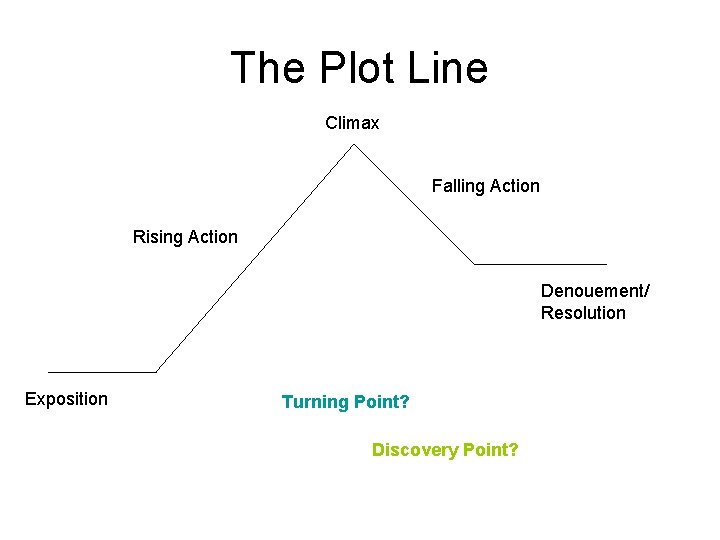
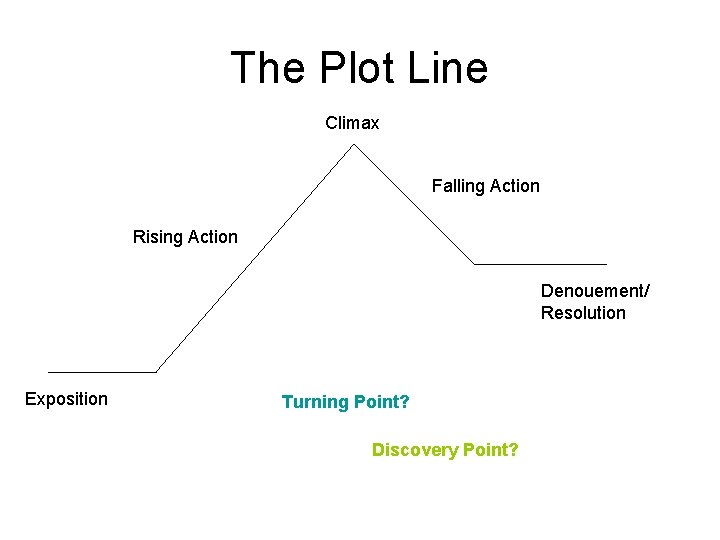
The Plot Line Climax Falling Action Rising Action Denouement/ Resolution Exposition Turning Point? Discovery Point?
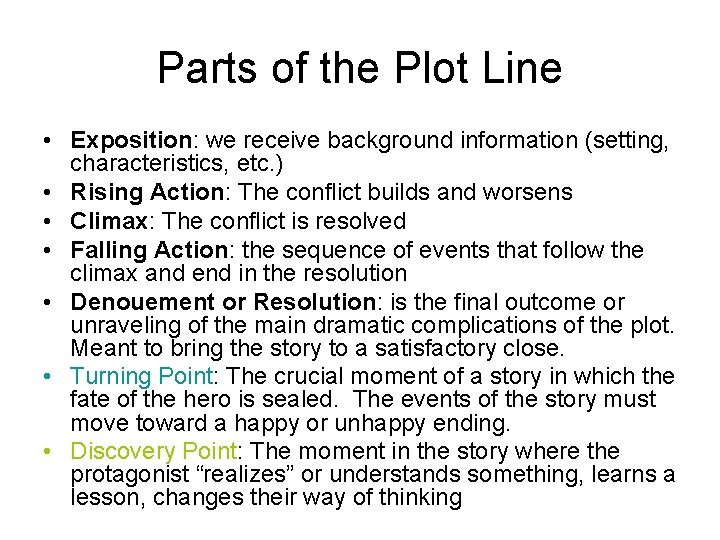
Parts of the Plot Line • Exposition: we receive background information (setting, characteristics, etc. ) • Rising Action: The conflict builds and worsens • Climax: The conflict is resolved • Falling Action: the sequence of events that follow the climax and end in the resolution • Denouement or Resolution: is the final outcome or unraveling of the main dramatic complications of the plot. Meant to bring the story to a satisfactory close. • Turning Point: The crucial moment of a story in which the fate of the hero is sealed. The events of the story must move toward a happy or unhappy ending. • Discovery Point: The moment in the story where the protagonist “realizes” or understands something, learns a lesson, changes their way of thinking
The Plot Line Climax Falling Action Rising Action Denouement/ Resolution Exposition Turning Point? Discovery Point?
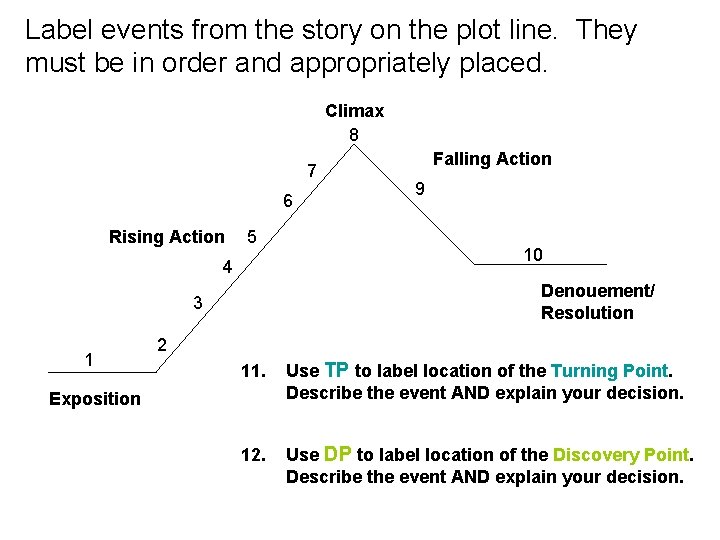
Label events from the story on the plot line. They must be in order and appropriately placed. Climax 8 7 6 Rising Action 5 4 9 10 Denouement/ Resolution 3 1 Falling Action 2 11. Use TP to label location of the Turning Point. Describe the event AND explain your decision. 12. Use DP to label location of the Discovery Point. Describe the event AND explain your decision. Exposition
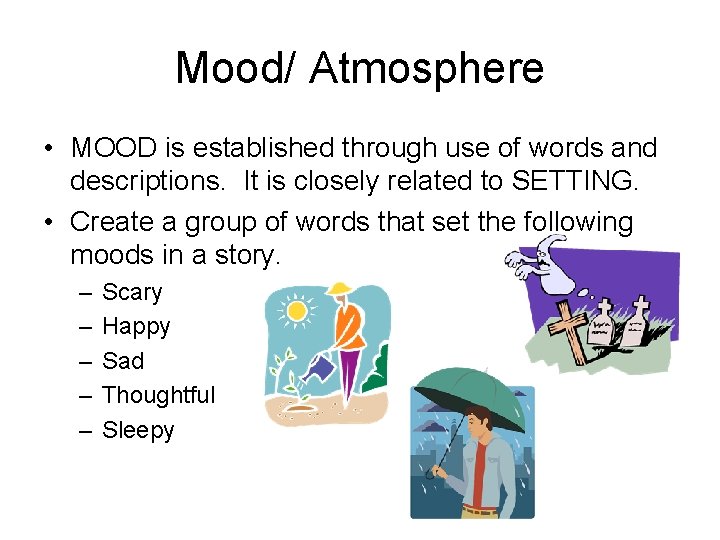
Mood/ Atmosphere • MOOD is established through use of words and descriptions. It is closely related to SETTING. • Create a group of words that set the following moods in a story. – – – Scary Happy Sad Thoughtful Sleepy
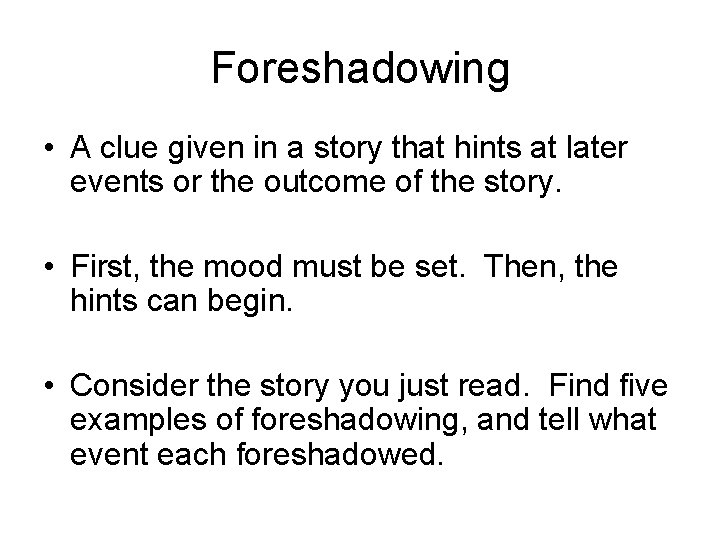
Foreshadowing • A clue given in a story that hints at later events or the outcome of the story. • First, the mood must be set. Then, the hints can begin. • Consider the story you just read. Find five examples of foreshadowing, and tell what event each foreshadowed.
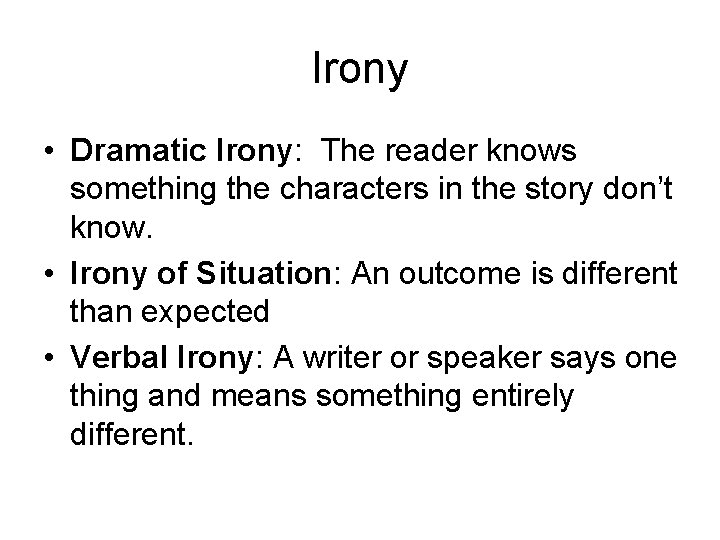
Irony • Dramatic Irony: The reader knows something the characters in the story don’t know. • Irony of Situation: An outcome is different than expected • Verbal Irony: A writer or speaker says one thing and means something entirely different.
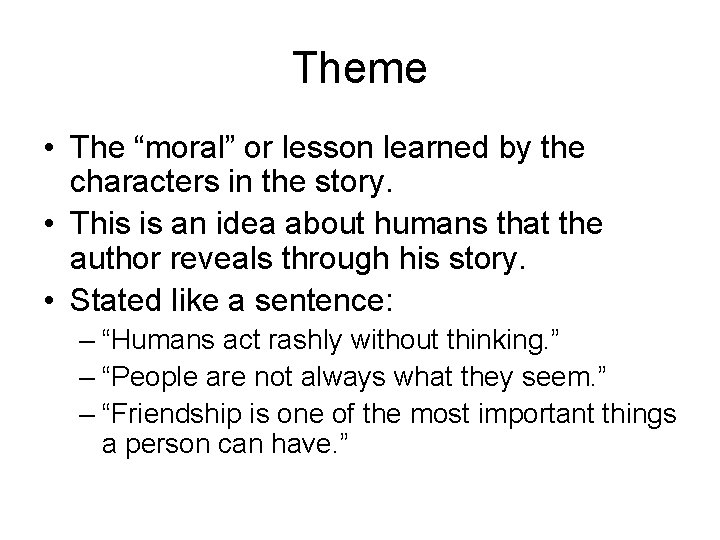
Theme • The “moral” or lesson learned by the characters in the story. • This is an idea about humans that the author reveals through his story. • Stated like a sentence: – “Humans act rashly without thinking. ” – “People are not always what they seem. ” – “Friendship is one of the most important things a person can have. ”
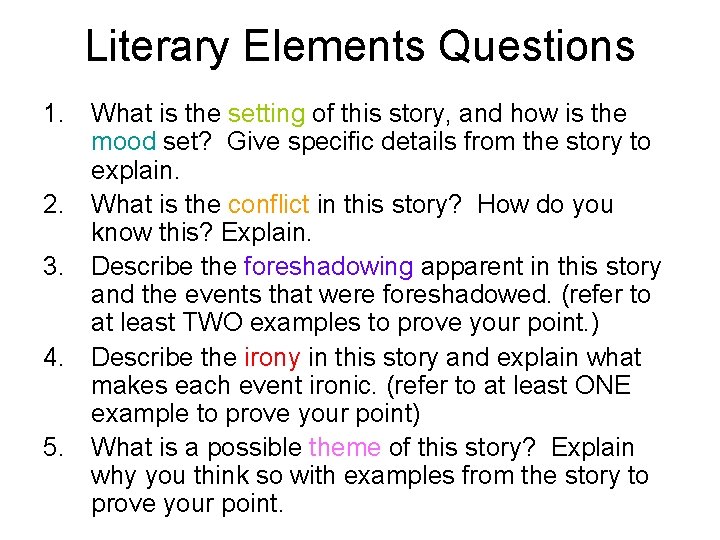
Literary Elements Questions 1. What is the setting of this story, and how is the mood set? Give specific details from the story to explain. 2. What is the conflict in this story? How do you know this? Explain. 3. Describe the foreshadowing apparent in this story and the events that were foreshadowed. (refer to at least TWO examples to prove your point. ) 4. Describe the irony in this story and explain what makes each event ironic. (refer to at least ONE example to prove your point) 5. What is a possible theme of this story? Explain why you think so with examples from the story to prove your point.