
Elements of Fiction What is fiction What types
- Slides: 21
Elements of Fiction What is fiction?
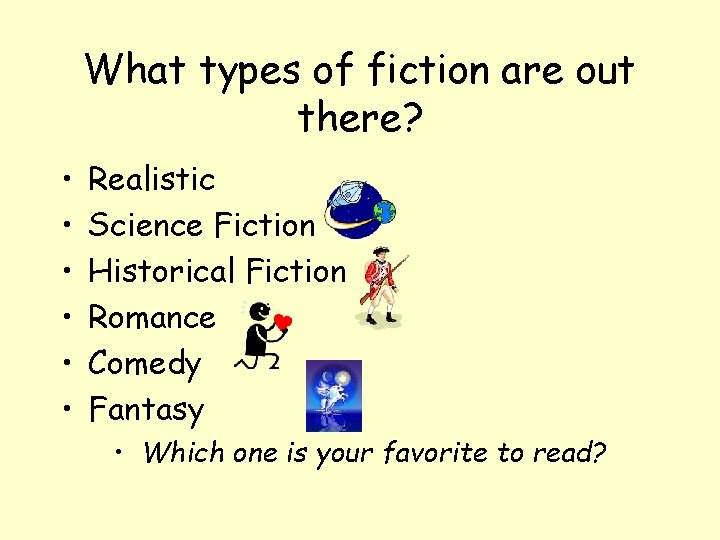
What types of fiction are out there? • • • Realistic Science Fiction Historical Fiction Romance Comedy Fantasy • Which one is your favorite to read?
What are the elements of fiction? • • • Setting Character Plot Conflict Theme
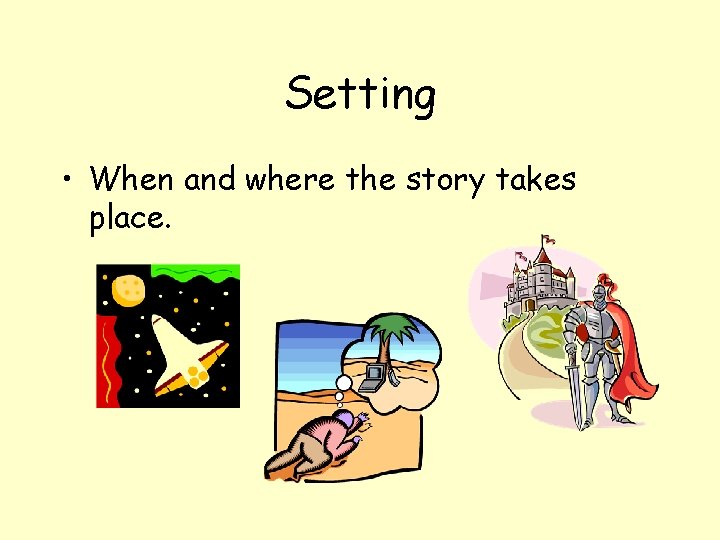
Setting • When and where the story takes place.
Character • Two types of characters: – Protagonist : The main character – Antagonist: The character that works against the protagonist Is the protagonist always a good person?
Take a Note • Think of your favorite character in a book or movie……. • How does the author reveal what type of person this character is? Jot it down……
Character Development • An author can develop a character through: – – – Dialogue Description Point of View Actions Body Language
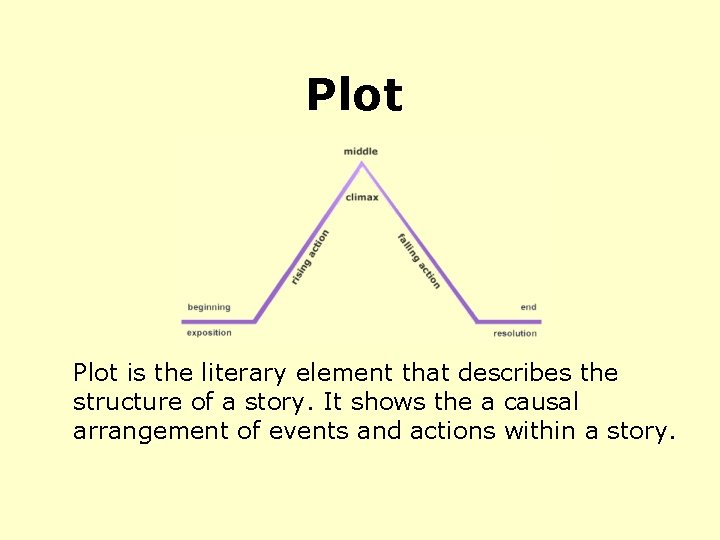
Plot is the literary element that describes the structure of a story. It shows the a causal arrangement of events and actions within a story.
Organization of Plots can be told in Chronological order Flashback In media res (in the middle of things) when the story starts in the middle of the action without exposition
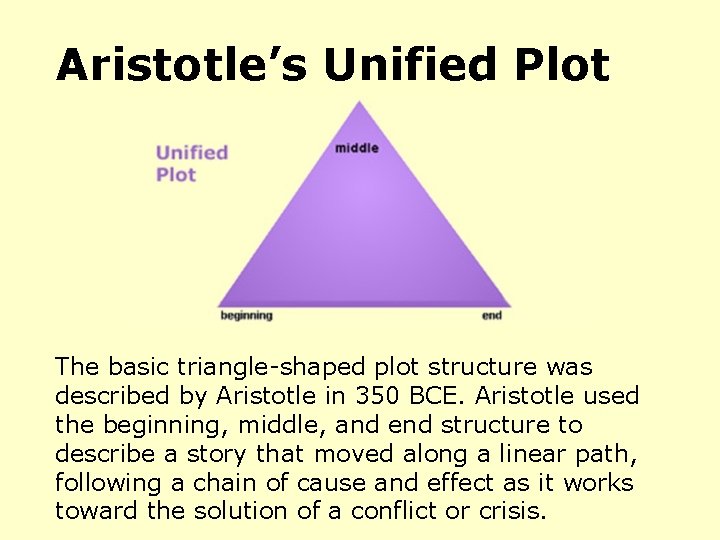
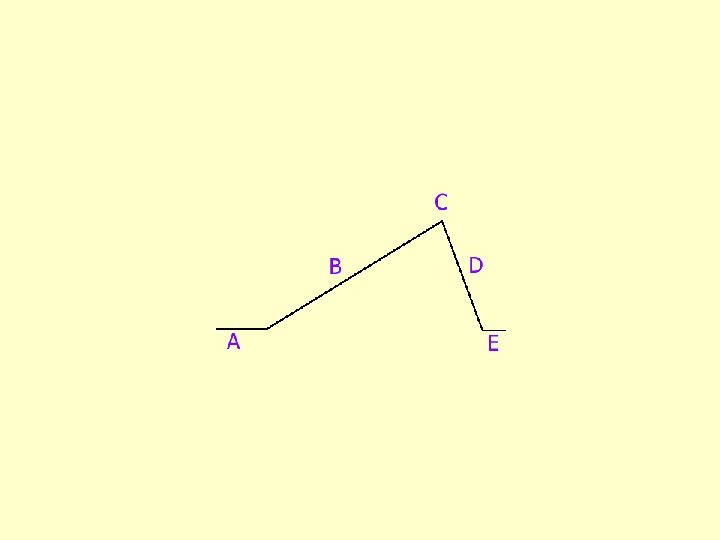
Aristotle’s Unified Plot The basic triangle-shaped plot structure was described by Aristotle in 350 BCE. Aristotle used the beginning, middle, and end structure to describe a story that moved along a linear path, following a chain of cause and effect as it works toward the solution of a conflict or crisis.
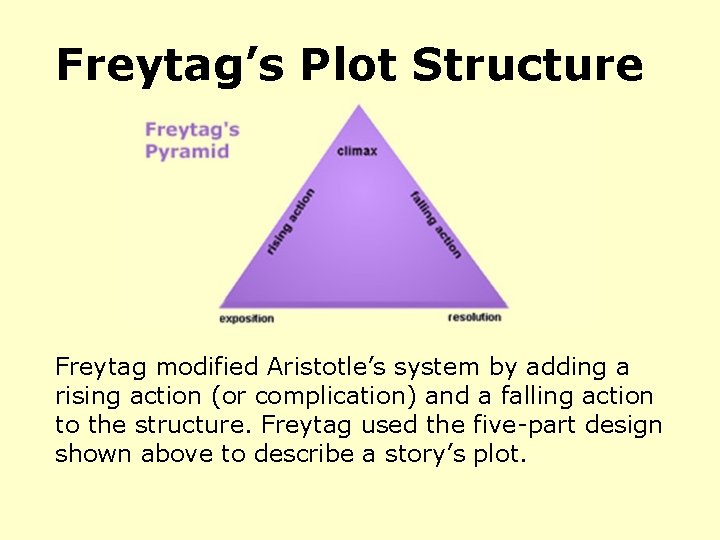
Freytag’s Plot Structure Freytag modified Aristotle’s system by adding a rising action (or complication) and a falling action to the structure. Freytag used the five-part design shown above to describe a story’s plot.
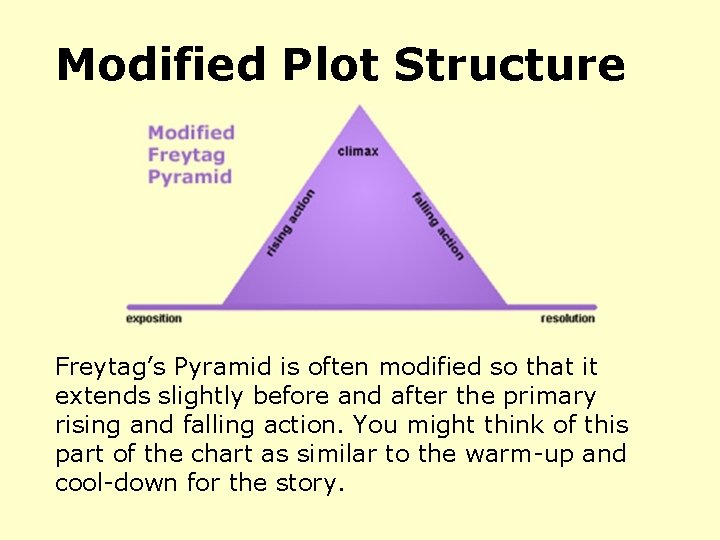
Modified Plot Structure Freytag’s Pyramid is often modified so that it extends slightly before and after the primary rising and falling action. You might think of this part of the chart as similar to the warm-up and cool-down for the story.
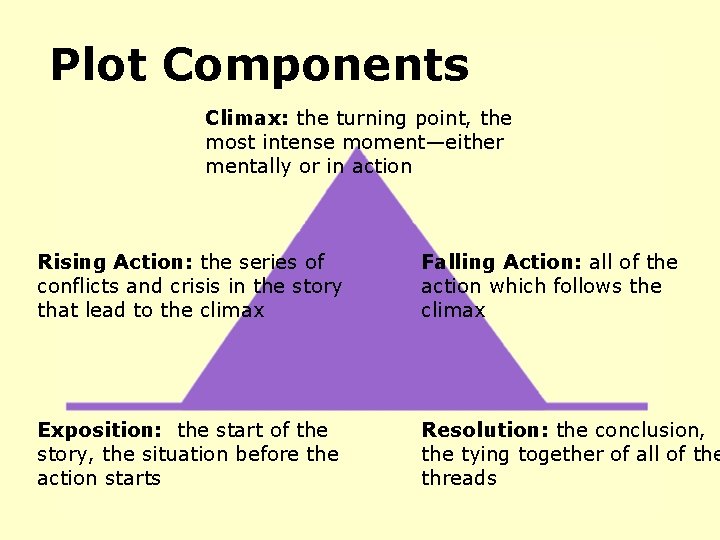
Plot Components Climax: the turning point, the most intense moment—either mentally or in action Rising Action: the series of conflicts and crisis in the story that lead to the climax Falling Action: all of the action which follows the climax Exposition: the start of the story, the situation before the action starts Resolution: the conclusion, the tying together of all of the threads
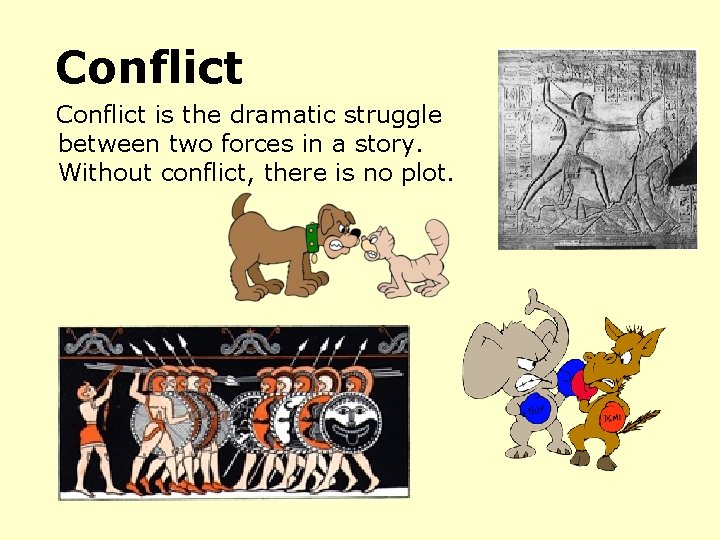
Conflict is the dramatic struggle between two forces in a story. Without conflict, there is no plot.
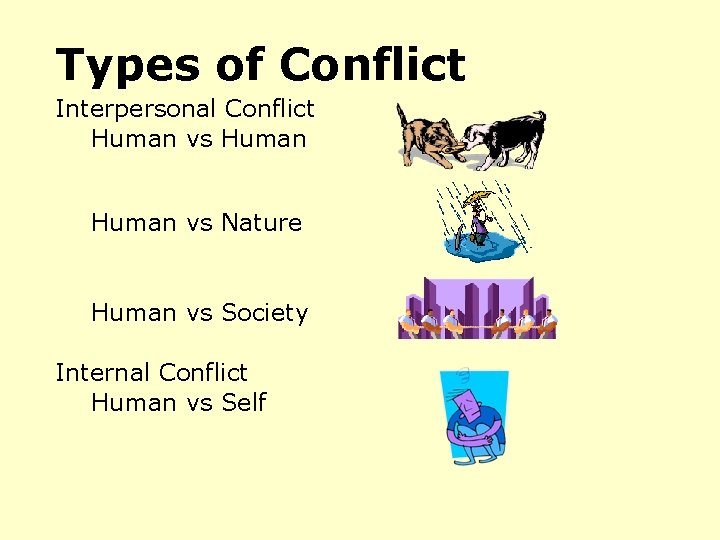
Types of Conflict Interpersonal Conflict Human vs Nature Human vs Society Internal Conflict Human vs Self
Theme • AKA: Moral • The lesson the characters and readers learn from the story. • To discover theme think about what the character has learned through his/her conflict. • PS. There can be more than one!
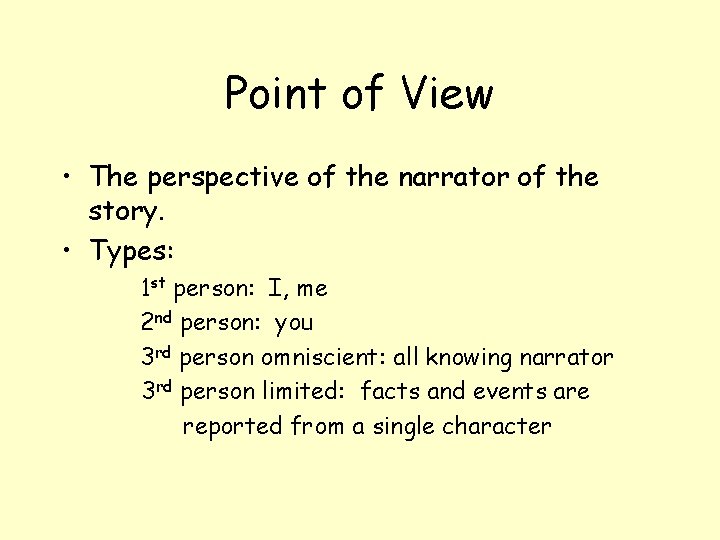
Point of View • The perspective of the narrator of the story. • Types: 1 st person: I, me 2 nd person: you 3 rd person omniscient: all knowing narrator 3 rd person limited: facts and events are reported from a single character
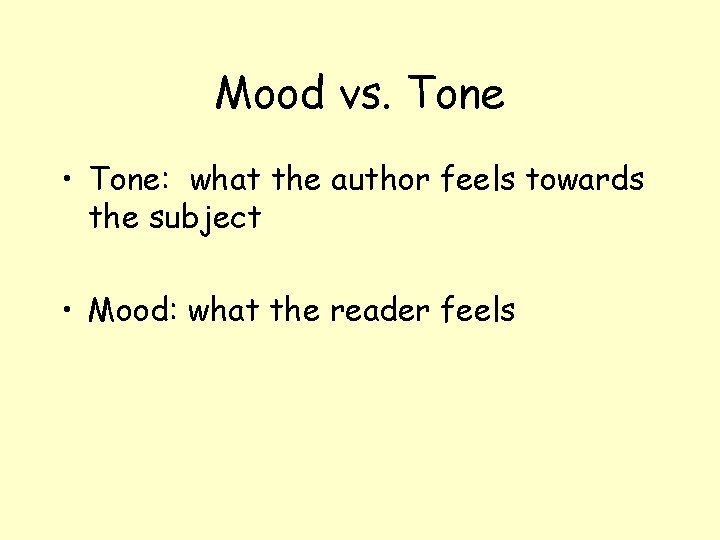
Mood vs. Tone • Tone: what the author feels towards the subject • Mood: what the reader feels
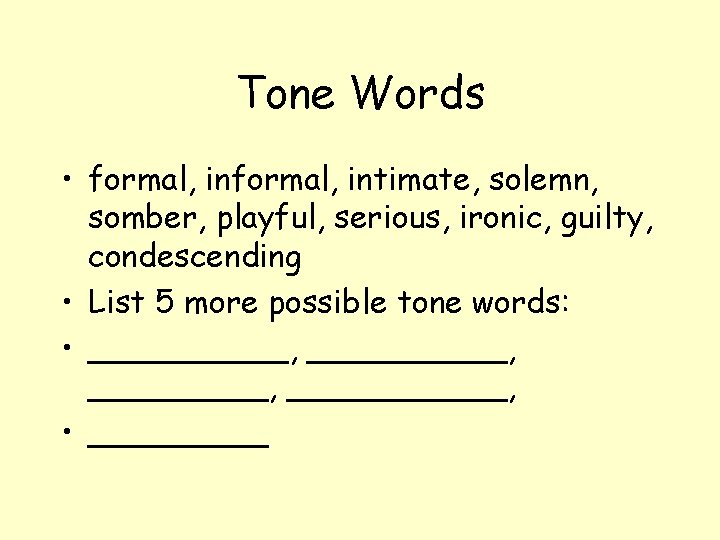
Tone Words • formal, intimate, solemn, somber, playful, serious, ironic, guilty, condescending • List 5 more possible tone words: • __________, ______, • _____