
ELEMENTS OF DRAMA Drama The word drama comes
![Stage Directions • Found in brackets [ ] • Describe scenery and how characters](https://slidetodoc.com/presentation_image_h2/eca19e581daeb15c67905df40ebeea21/image-11.jpg "Stage Directions • Found in brackets [ ] • Describe scenery and how characters")
![There are two [main] types of plays • Tragedies • Comedies](https://slidetodoc.com/presentation_image_h2/eca19e581daeb15c67905df40ebeea21/image-12.jpg "There are two [main] types of plays • Tragedies • Comedies")
- Slides: 22
ELEMENTS OF DRAMA
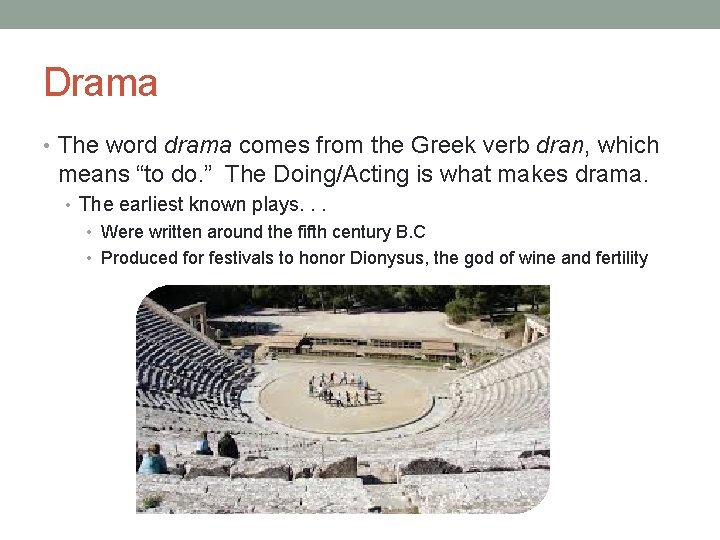
Drama • The word drama comes from the Greek verb dran, which means “to do. ” The Doing/Acting is what makes drama. • The earliest known plays. . . • Were written around the fifth century B. C • Produced for festivals to honor Dionysus, the god of wine and fertility
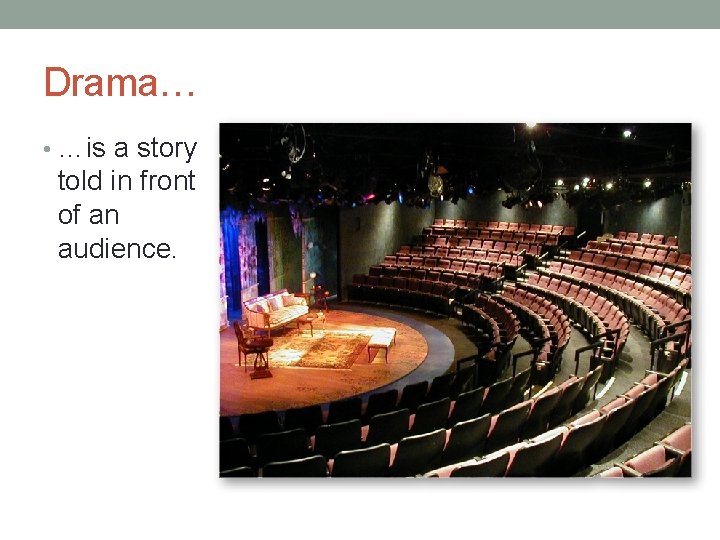
Drama… • …is a story told in front of an audience.
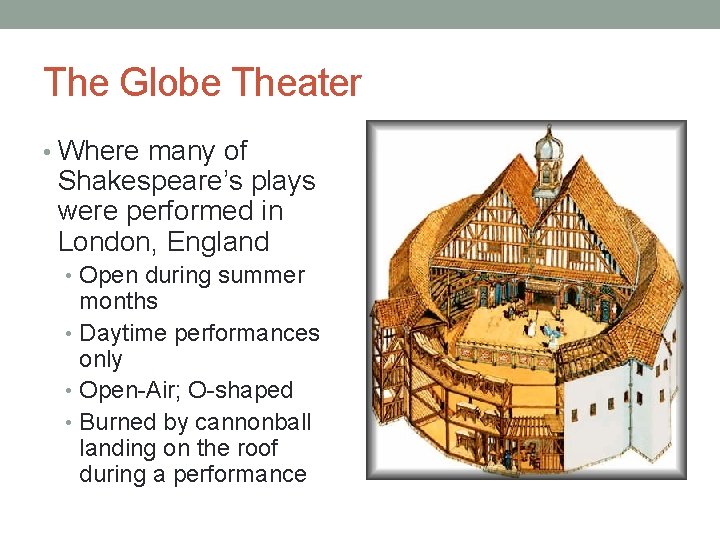
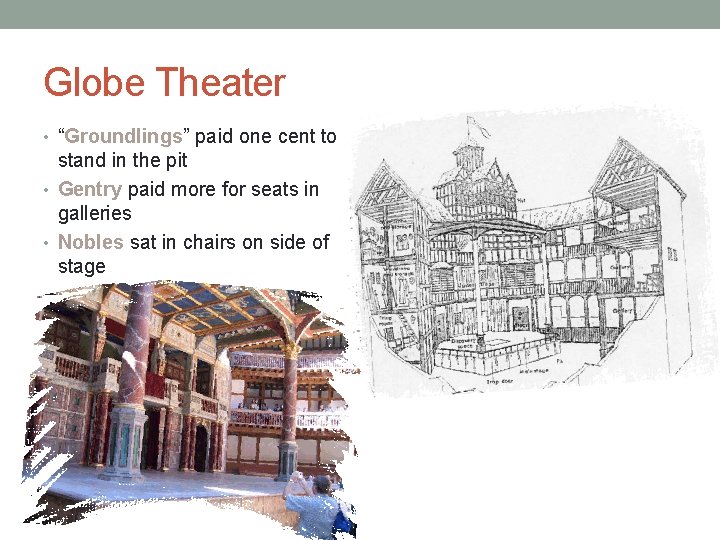
The Globe Theater • Where many of Shakespeare’s plays were performed in London, England • Open during summer months • Daytime performances only • Open-Air; O-shaped • Burned by cannonball landing on the roof during a performance
Globe Theater • “Groundlings” paid one cent to stand in the pit • Gentry paid more for seats in galleries • Nobles sat in chairs on side of stage
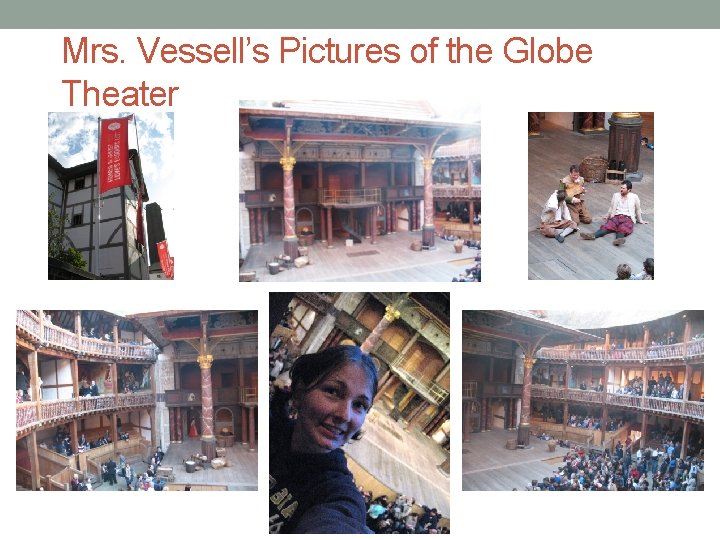
Mrs. Vessell’s Pictures of the Globe Theater
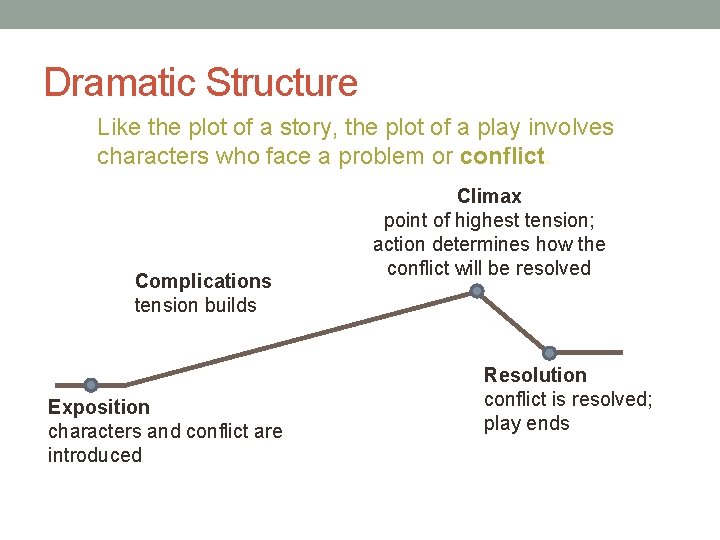
Dramatic Structure Like the plot of a story, the plot of a play involves characters who face a problem or conflict. Complications tension builds Exposition characters and conflict are introduced Climax point of highest tension; action determines how the conflict will be resolved Resolution conflict is resolved; play ends
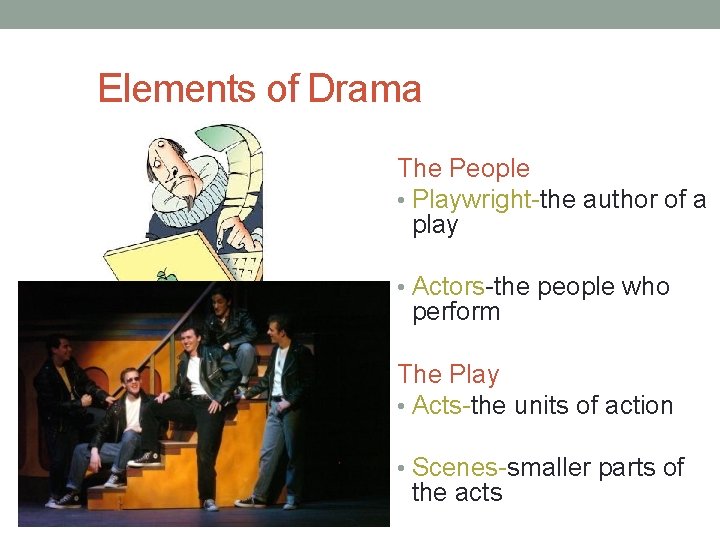
Elements of Drama The People • Playwright-the author of a play • Actors-the people who perform The Play • Acts-the units of action • Scenes-smaller parts of the acts
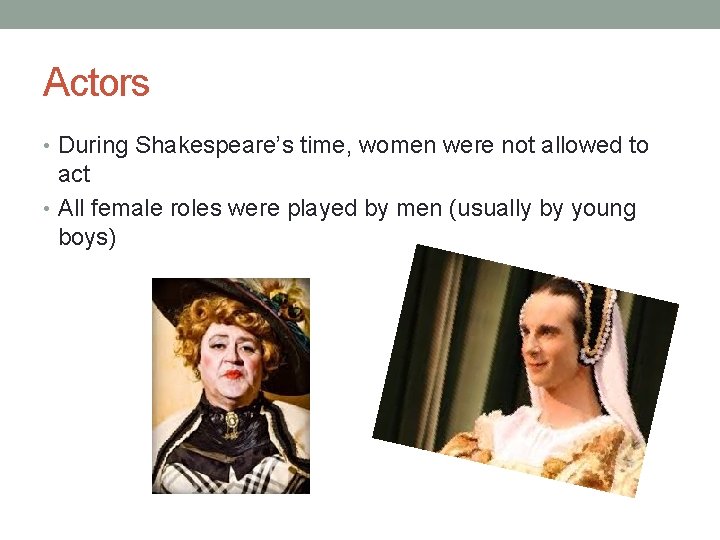
Actors • During Shakespeare’s time, women were not allowed to act • All female roles were played by men (usually by young boys)
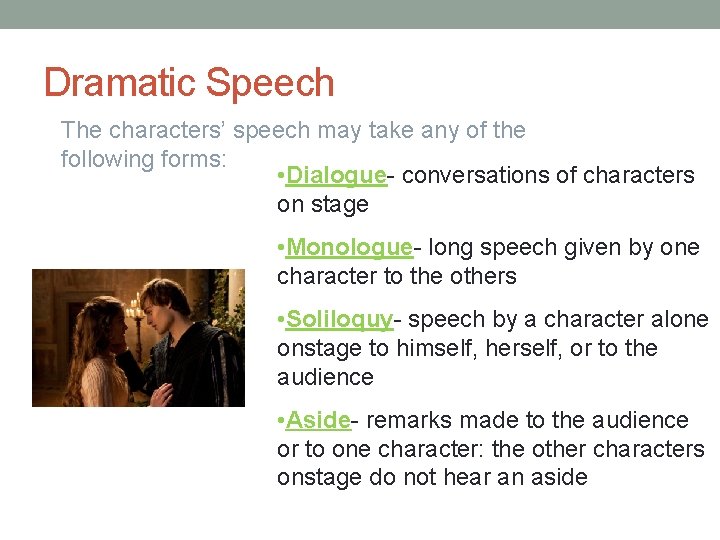
Dramatic Speech The characters’ speech may take any of the following forms: • Dialogue- conversations of characters on stage • Monologue- long speech given by one character to the others • Soliloquy- speech by a character alone onstage to himself, herself, or to the audience • Aside- remarks made to the audience or to one character: the other characters onstage do not hear an aside
Stage Directions • Found in brackets [ ] • Describe scenery and how characters speak • From the viewpoint of the actor looking at the audience • • • C, Center Stage L, Stage Left R, Stage Right U, Upstage or Rear D, Downstage or Front
There are two [main] types of plays • Tragedies • Comedies
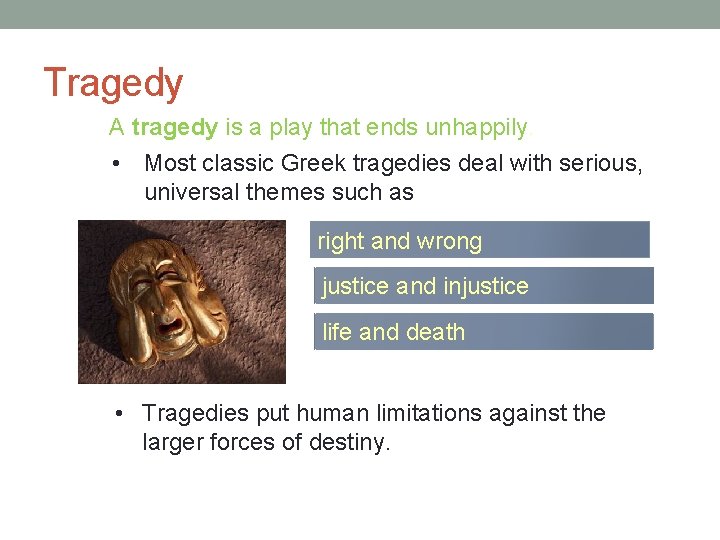
Tragedy A tragedy is a play that ends unhappily. • Most classic Greek tragedies deal with serious, universal themes such as right and wrong justice and injustice life and death • Tragedies put human limitations against the larger forces of destiny.
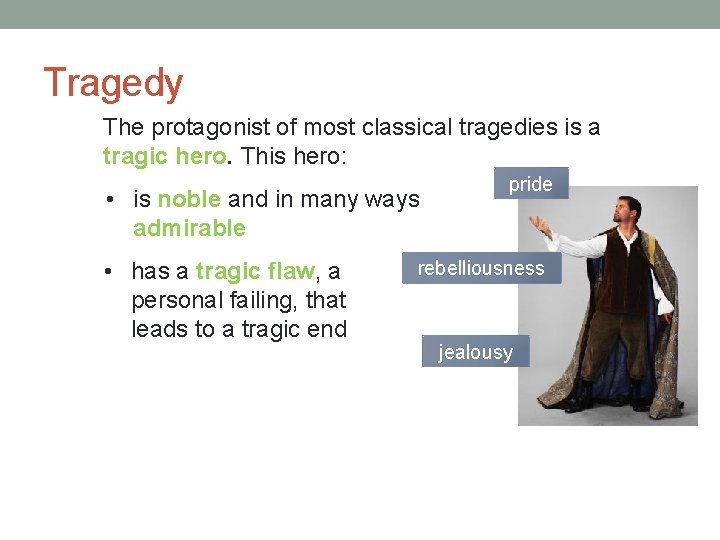
Tragedy The protagonist of most classical tragedies is a tragic hero. This hero: • is noble and in many ways admirable • has a tragic flaw, a personal failing, that leads to a tragic end pride rebelliousness jealousy
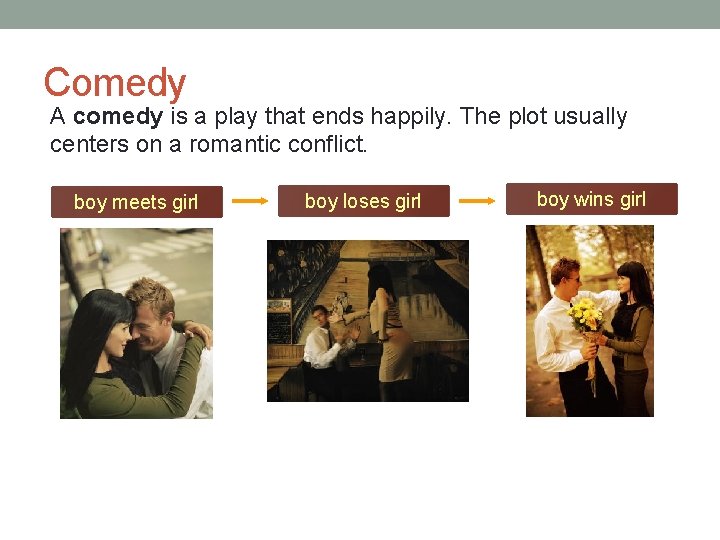
Comedy A comedy is a play that ends happily. The plot usually centers on a romantic conflict. boy meets girl boy loses girl boy wins girl
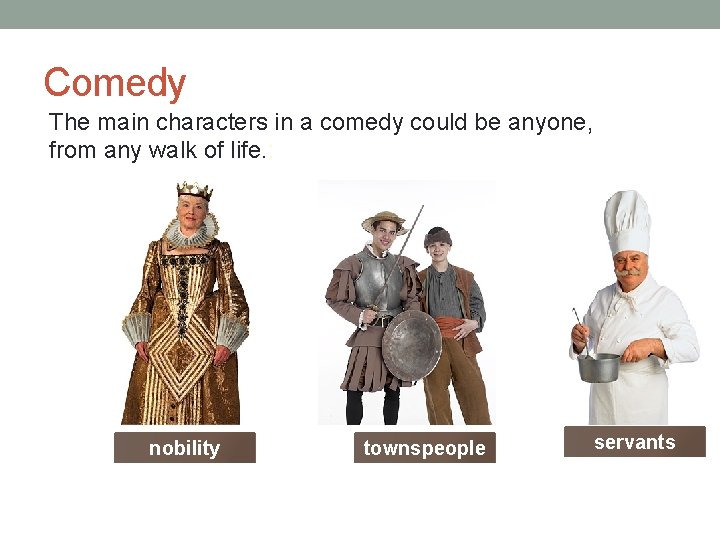
Comedy The main characters in a comedy could be anyone, from any walk of life. : nobility townspeople servants
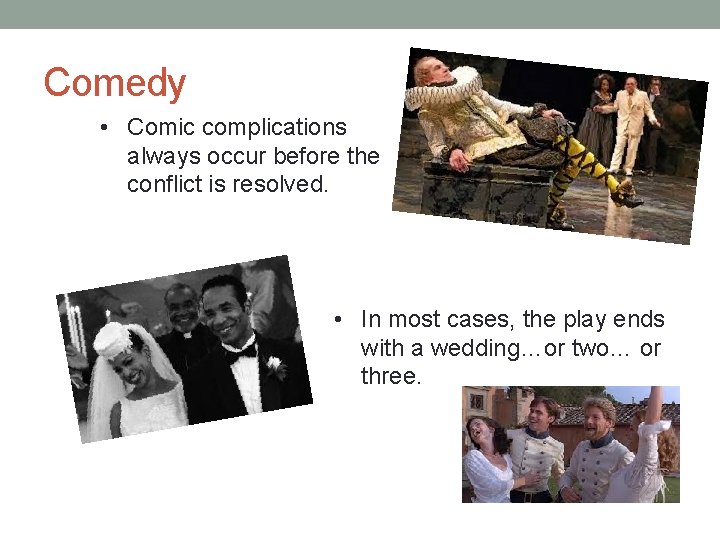
Comedy • Comic complications always occur before the conflict is resolved. • In most cases, the play ends with a wedding…or two… or three.
Language of Shakespeare • Meter is a rhythm of accented and unaccented syllables which are organized into patterns, called feet. • Using the same meter throughout a play helped actors memorize their lines. • Shakespeare used iambic pentameter as his meter.
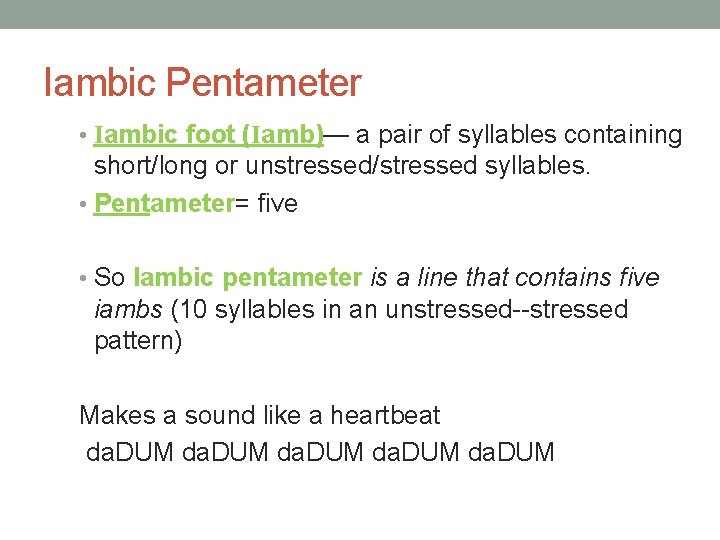
Iambic Pentameter • Iambic foot (Iamb)— a pair of syllables containing short/long or unstressed/stressed syllables. • Pentameter= five • So Iambic pentameter is a line that contains five iambs (10 syllables in an unstressed--stressed pattern) Makes a sound like a heartbeat da. DUM
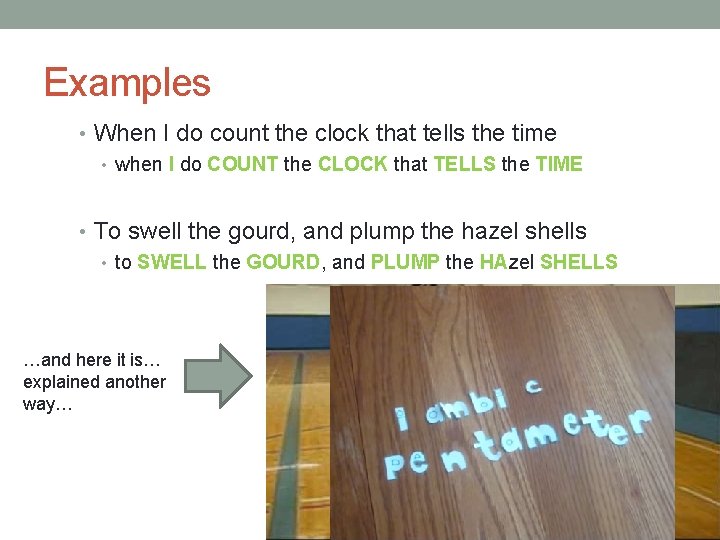
Examples • When I do count the clock that tells the time • when I do COUNT the CLOCK that TELLS the TIME • To swell the gourd, and plump the hazel shells • to SWELL the GOURD, and PLUMP the HAzel SHELLS …and here it is… explained another way…
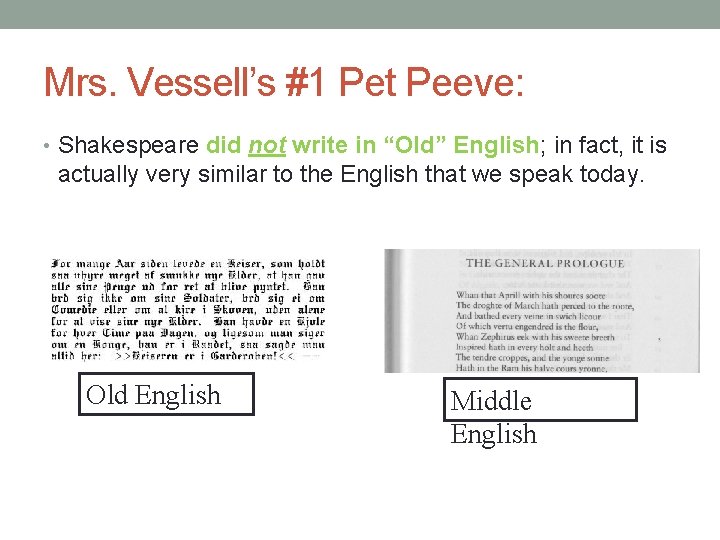
Mrs. Vessell’s #1 Pet Peeve: • Shakespeare did not write in “Old” English; in fact, it is actually very similar to the English that we speak today. Old English Middle English
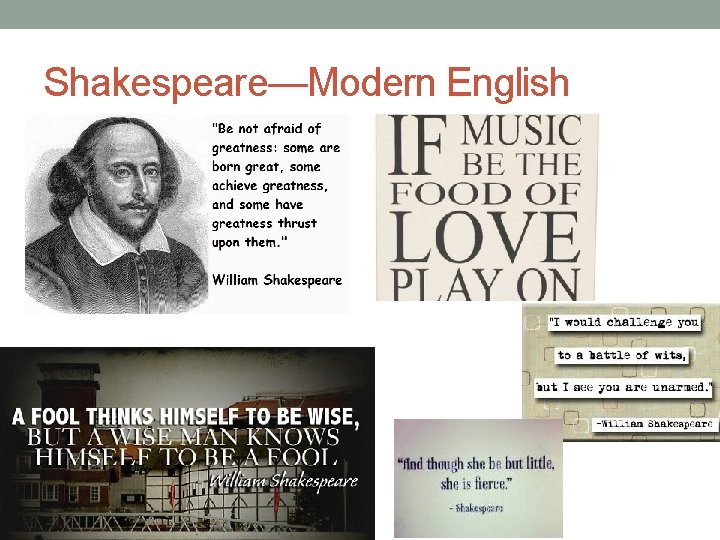
Shakespeare—Modern English