
Elements of Design What are the Elements of


- Slides: 47
Elements of Design
What are the Elements of Design? 1. 2. 3. 4. 5. 6. Space Line Shape Form Texture Color Each of these elements plays an important role in the overall success of a design, whether it is created for a home’s exterior, a specific room, or a piece of furniture.
SPACE
Space is the area provided for a particular purpose. It may have two dimensions (length and width) such as a floor, or it may have three dimensions (length, width, and height), such as a room or dwelling.
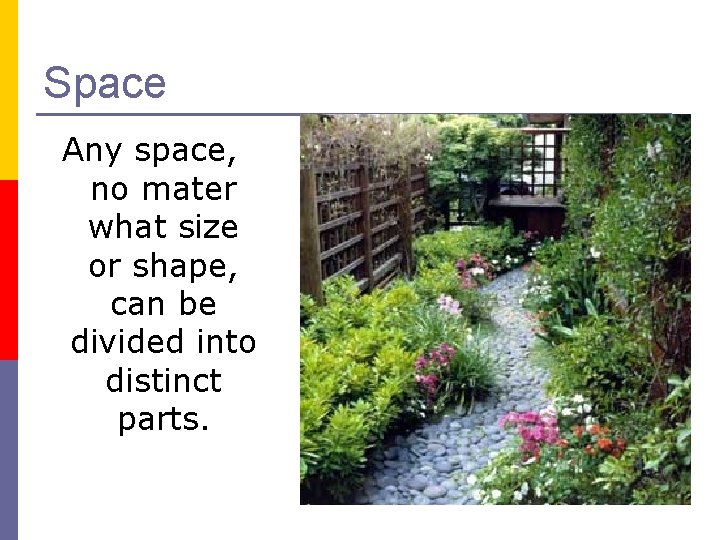
Space Any space, no mater what size or shape, can be divided into distinct parts.
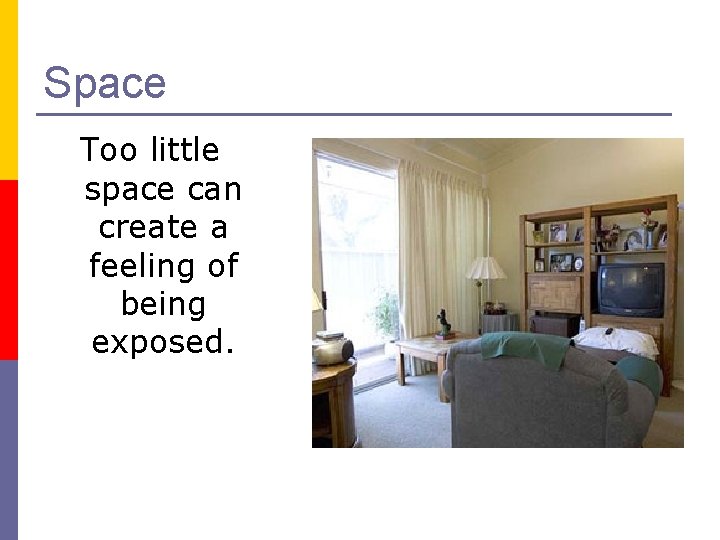
Space Too little space can create a feeling of being exposed.
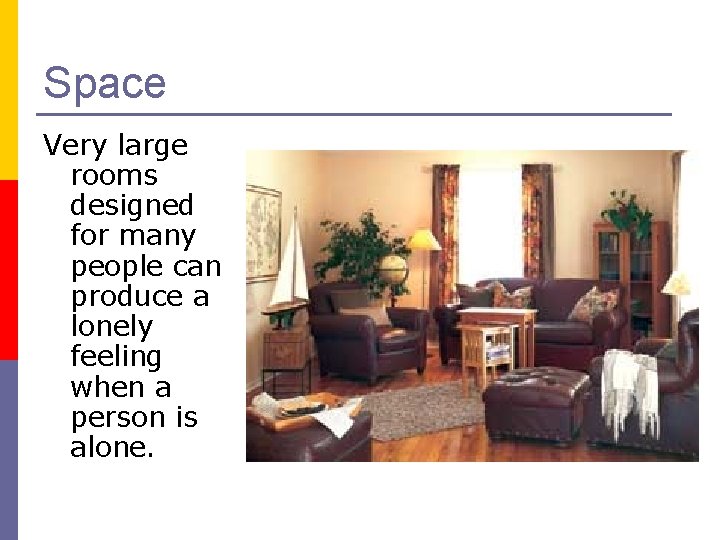
Space Very large rooms designed for many people can produce a lonely feeling when a person is alone.
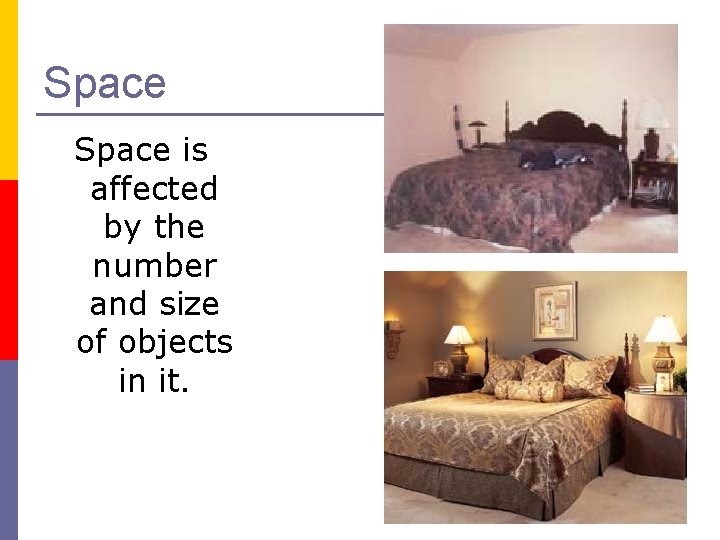
Space is affected by the number and size of objects in it.
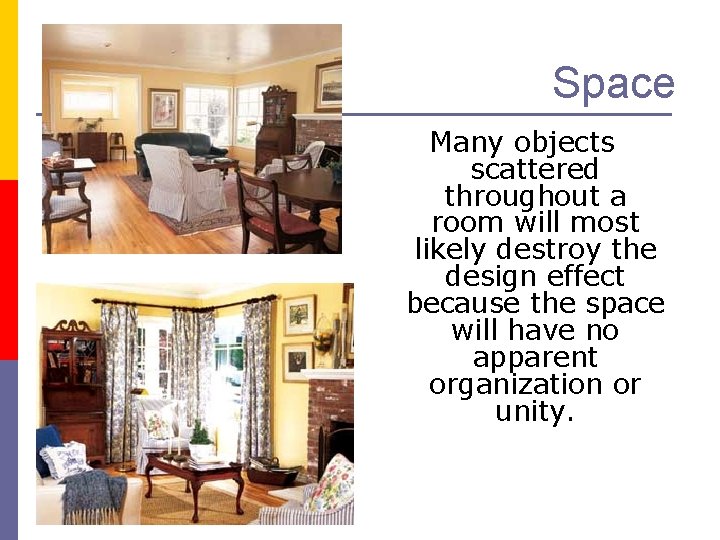
Space Many objects scattered throughout a room will most likely destroy the design effect because the space will have no apparent organization or unity.
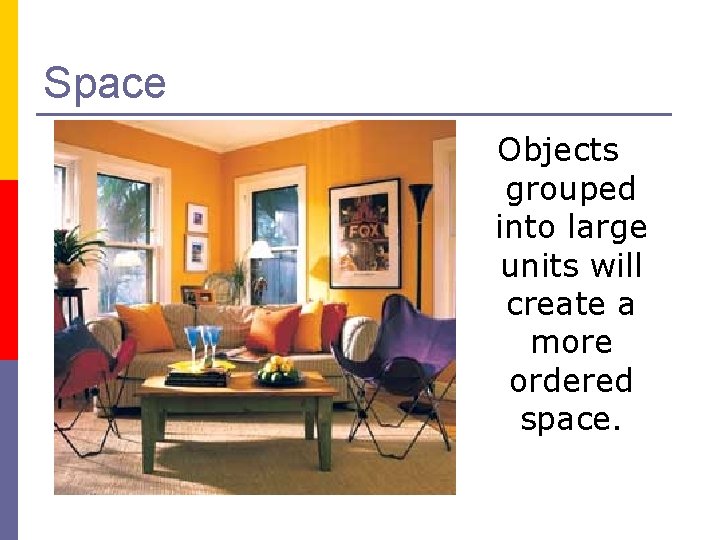
Space Objects grouped into large units will create a more ordered space.
Space When space changes gradually, it is more pleasing than when it changes abruptly. When space changes suddenly, the eye shifts from one view to the other without making a smooth transition.
LINE
Line is the visual direction of a design. It can be used to emphasize a pleasing element or disguise an undesirable one. Different types of lines have different effects on design.
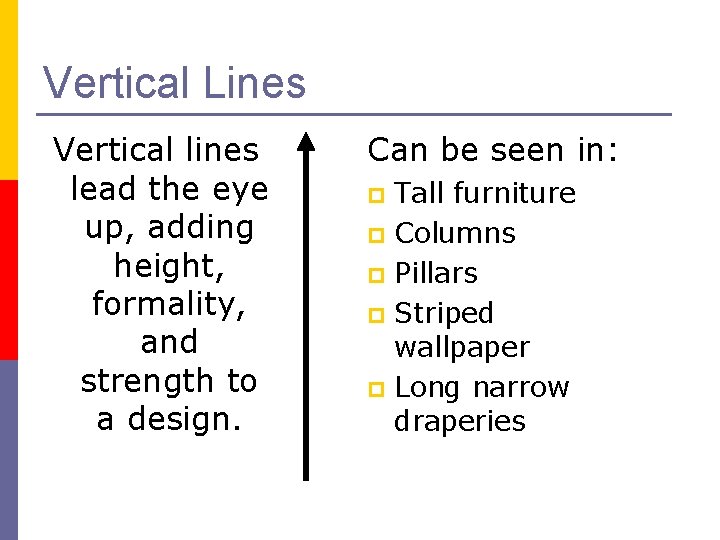
Vertical Lines Vertical lines lead the eye up, adding height, formality, and strength to a design. Can be seen in: Tall furniture p Columns p Pillars p Striped wallpaper p Long narrow draperies p
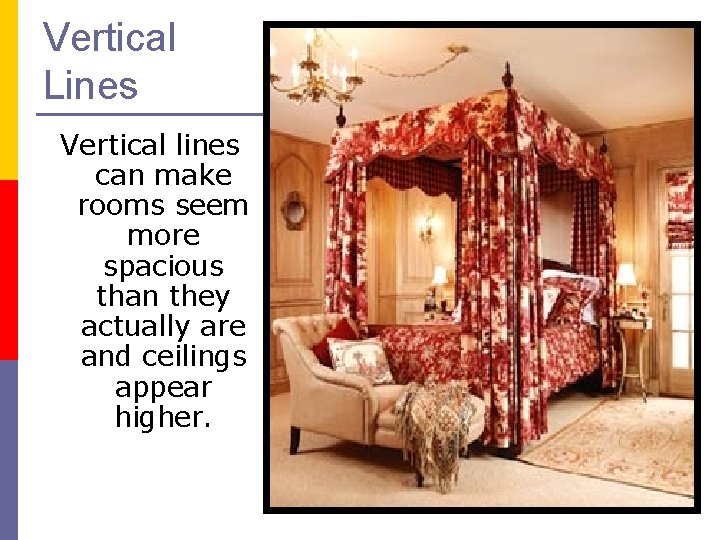
Vertical Lines Vertical lines can make rooms seem more spacious than they actually are and ceilings appear higher.
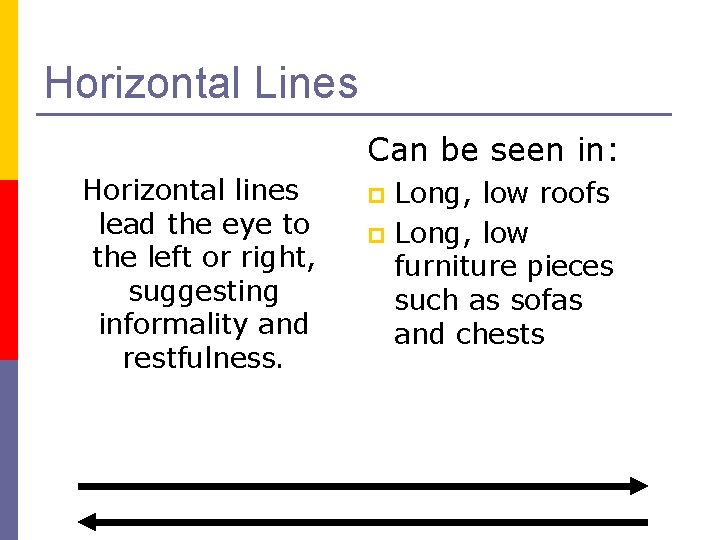
Horizontal Lines Can be seen in: Horizontal lines lead the eye to the left or right, suggesting informality and restfulness. Long, low roofs p Long, low furniture pieces such as sofas and chests p
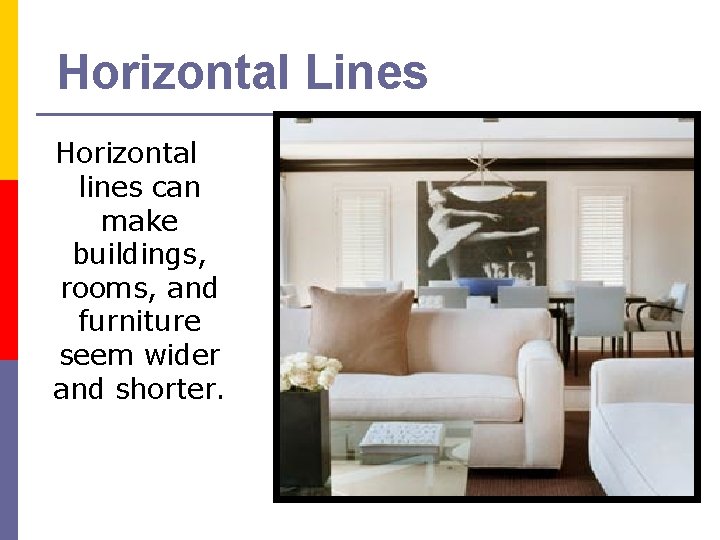
Horizontal Lines Horizontal lines can make buildings, rooms, and furniture seem wider and shorter.
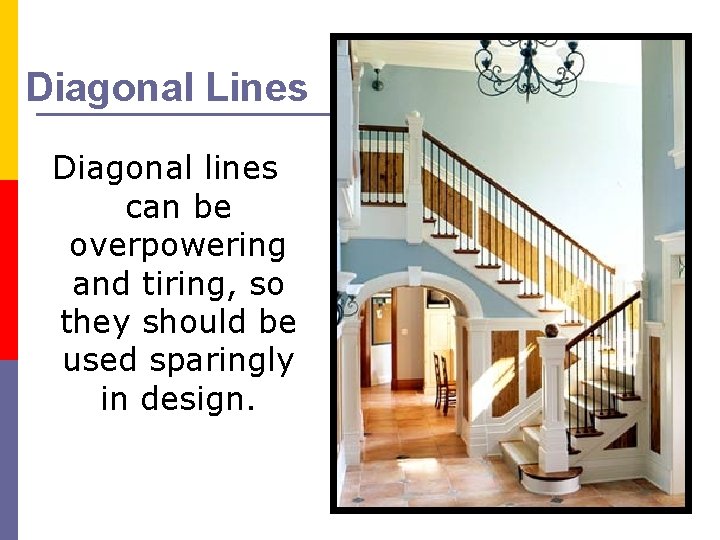
Diagonal Lines Diagonal lines suggest action, movement and excitement. Can be seen in: Staircases p Cathedral ceilings p Gable Roofs p
Diagonal Lines Diagonal lines can be overpowering and tiring, so they should be used sparingly in design.
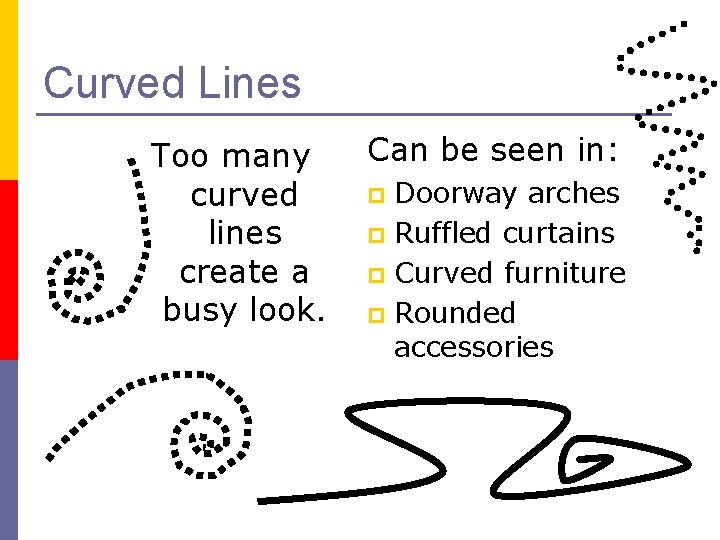
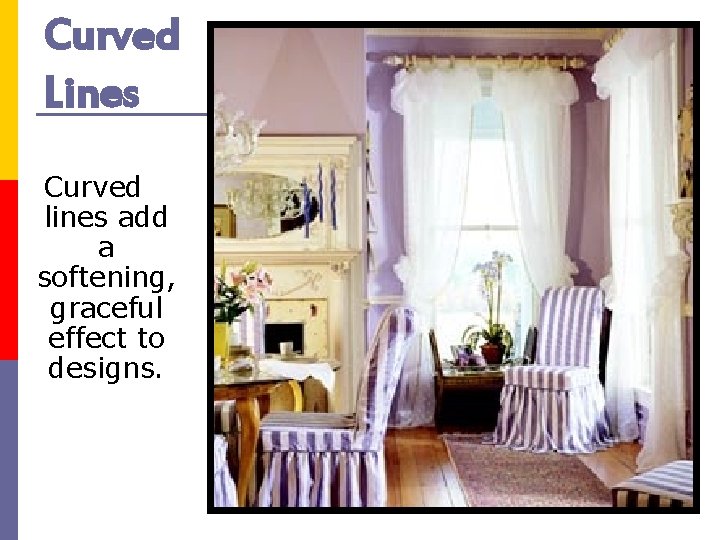
Curved Lines Too many curved lines create a busy look. Can be seen in: Doorway arches p Ruffled curtains p Curved furniture p Rounded accessories p
Curved Lines Curved lines add a softening, graceful effect to designs.
Line In design, one type of line should dominate. Others can be added for interest. For example, if horizontal lines dominate a room, accessories with diagonal or curved lines may be added.
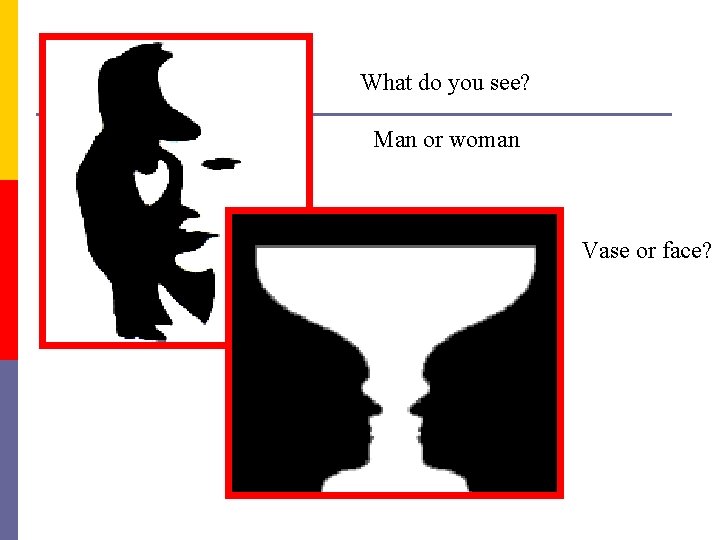
What do you see? Man or woman Vase or face?
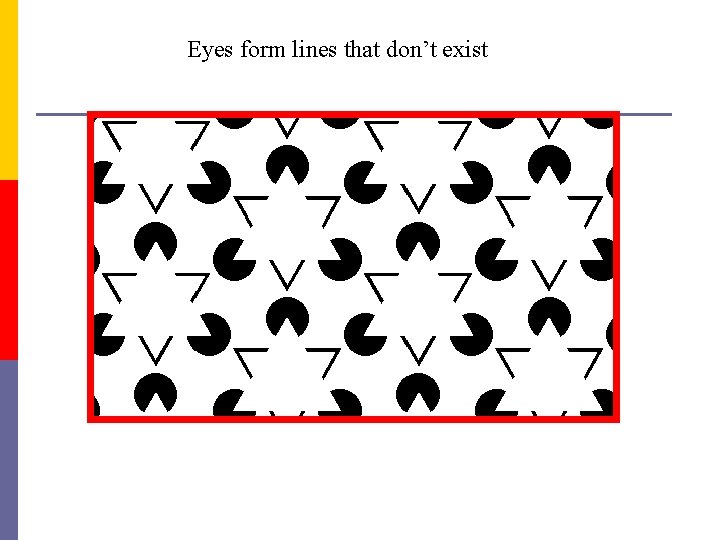
Eyes form lines that don’t exist
SHAPE
Shape is a flat image with two dimensions: Length and Width.
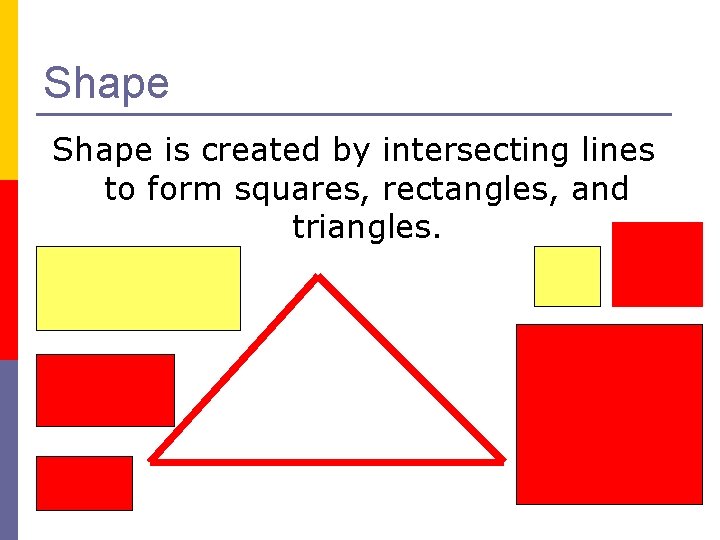
Shape is created by intersecting lines to form squares, rectangles, and triangles.
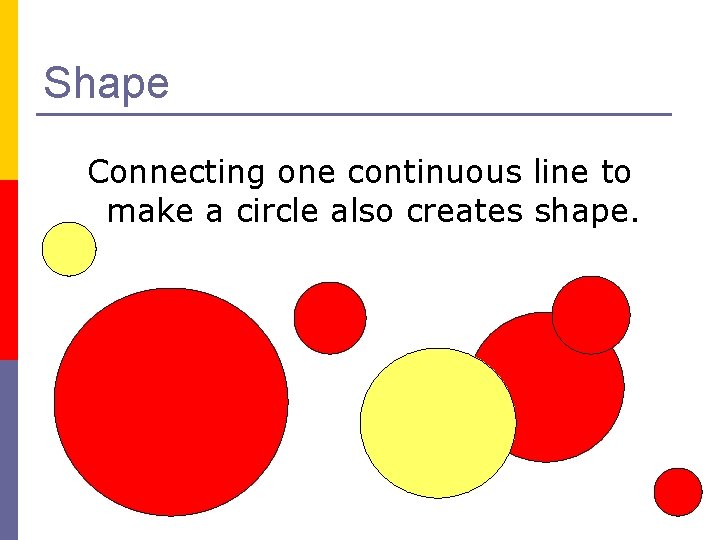
Shape Connecting one continuous line to make a circle also creates shape.
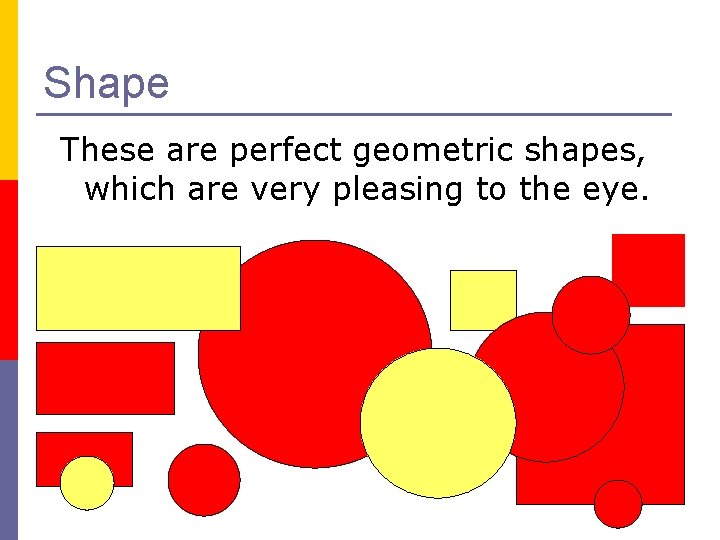
Shape These are perfect geometric shapes, which are very pleasing to the eye.
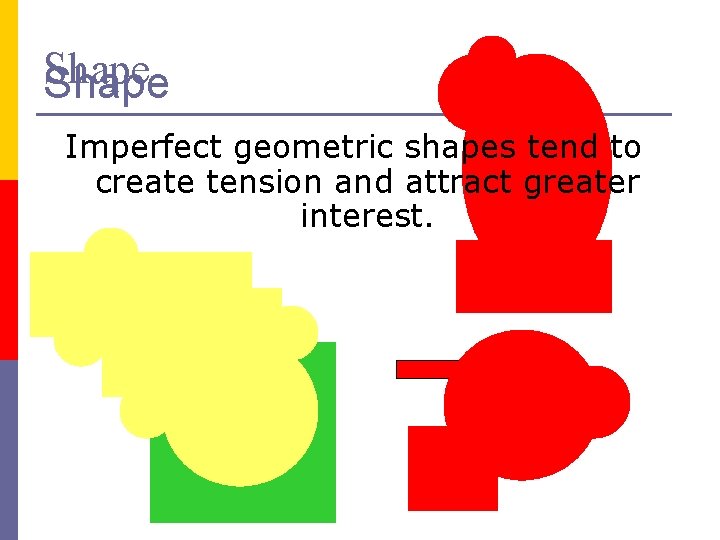
Shape Imperfect geometric shapes tend to create tension and attract greater interest.
Shape may be: p Shiny and reflect images- mirrors p Transparent and create visual effects window glass p Textured and absorb light and sound window treatments and carpeting p Hard or Soft p Plain or patterned p Colored light or dark
FORM
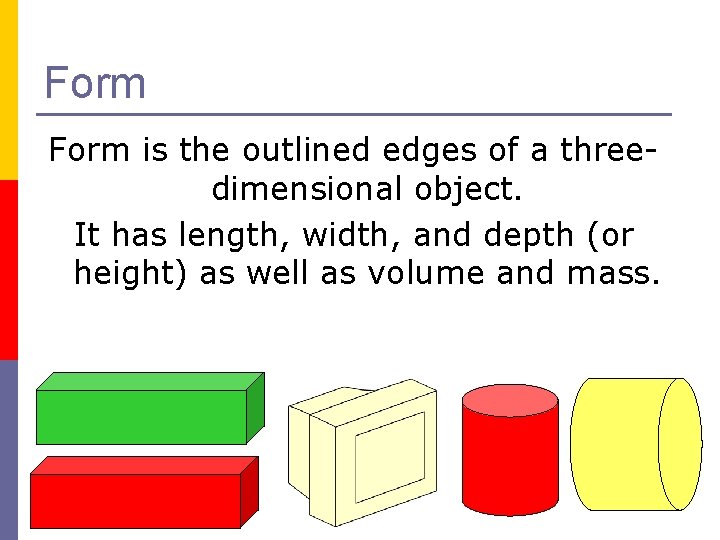
Form is the outlined edges of a threedimensional object. It has length, width, and depth (or height) as well as volume and mass.
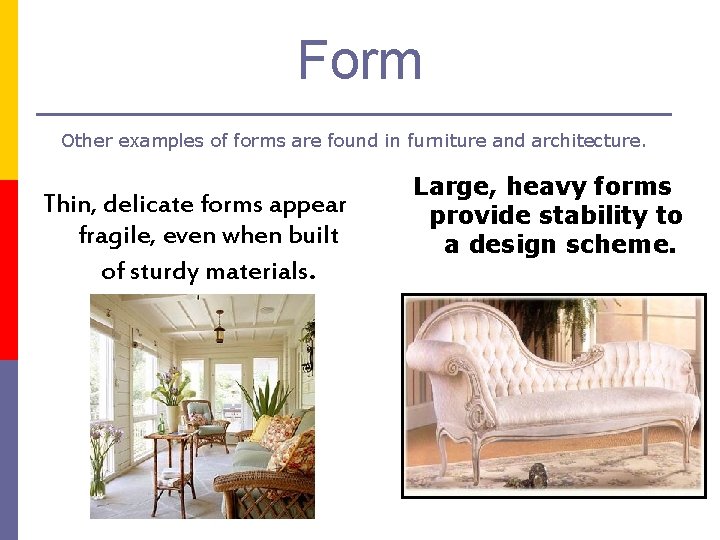
Form Other examples of forms are found in furniture and architecture. Thin, delicate forms appear fragile, even when built of sturdy materials. Large, heavy forms provide stability to a design scheme.
Form Related forms tend to look better together than unrelated forms. A room is more pleasing if the form of the dominate piece is repeated in minor pieces and accessories in a room. The same is true for architectural features.
TEXTURE
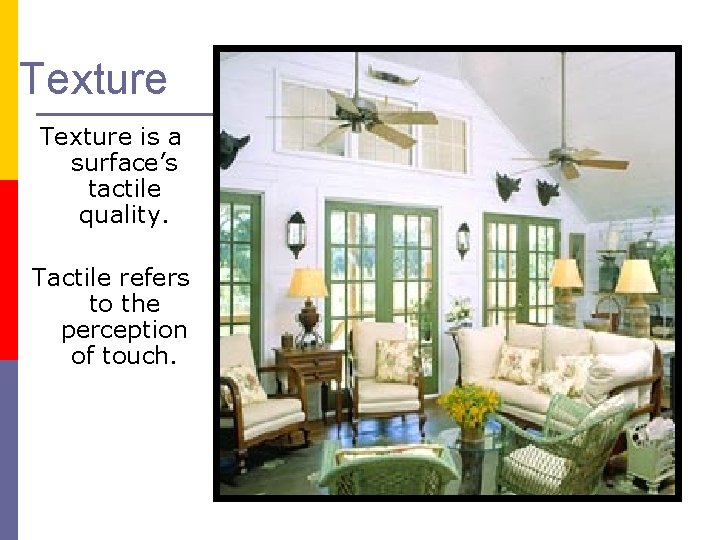
Texture is a surface’s tactile quality. Tactile refers to the perception of touch.
Texture In design, texture appeals to sight as well as touch. Words used to describe textures: Ribbed Crinkled Rough Smooth
Texture Often patterns or colors are used to create the illusion of texture. Smooth surfaces reflect more light than rough surfaces, making them look lighter and brighter. Rough surfaces absorb more light, making them look darker and less intense.
Texture A room with the same texture throughout is monotonous, but too many different textures can appear disjointed and distracting. Most well-designed rooms have a dominate texture with accents of contrasting textures.
COLOR
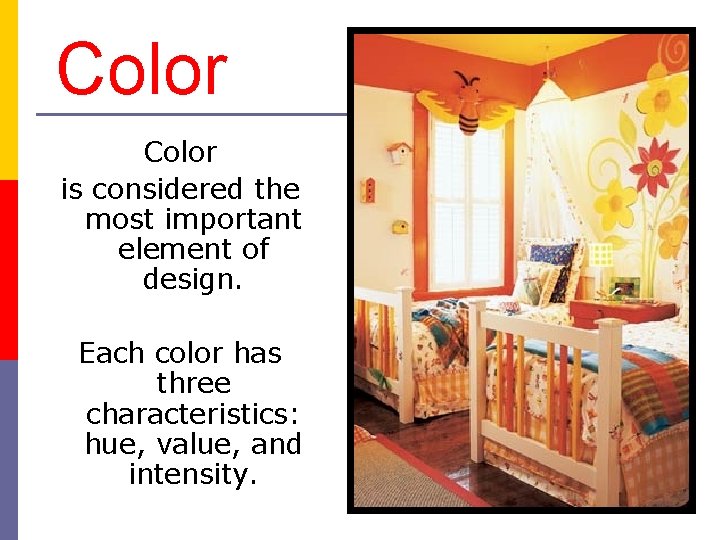
Color is considered the most important element of design. Each color has three characteristics: hue, value, and intensity.
Color Hue is the name of a color. Red, green and blue-violet are examples of hues. A color may be lightened or darkened, brightened or dulled, but the hue will remain the same.
Color Value is the lightness or darkness of a hue. The value of a hue can be made lighter by adding white. This produces a tint. Pink is a tint of red, made by adding white to red. A hue can be made darker by adding black. This produces a shade. Maroon is a shade of red.
Color Intensity is the brightness or dullness of a hue. Adding some of its compliment can lower the intensity of a hue. The compliment of a hue is the color directly opposite it on a standard color wheel. Examples of high intensity colors include hot pink and fire-engine red. Low intensity colors include rust and smoky blue.
The Six Elements of Design SPACE LINE SHAPE FORM TEXTURE COLOR
Resources p Better Homes and Garden Website bhg. com p Residential Housing & Interiors Clois E. Kicklighter Joan C. Kicklighter