
Elements of Design Interior Design I Elements of
- Slides: 23
Elements of Design Interior Design I
Elements of Design The tools of designer n Can be manipulated n ¨ Space ¨ Line ¨ Form and shape ¨ Texture ¨ Color ¨ Pattern
Space (the final frontier JK! : )
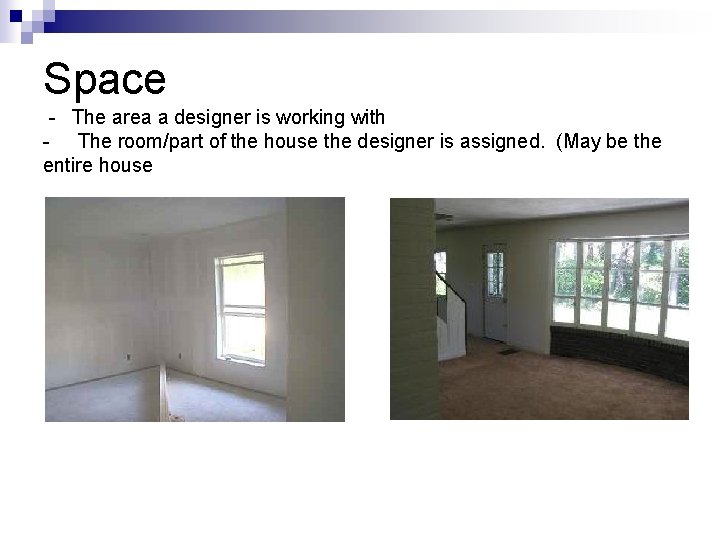
Space - The area a designer is working with - The room/part of the house the designer is assigned. (May be the entire house
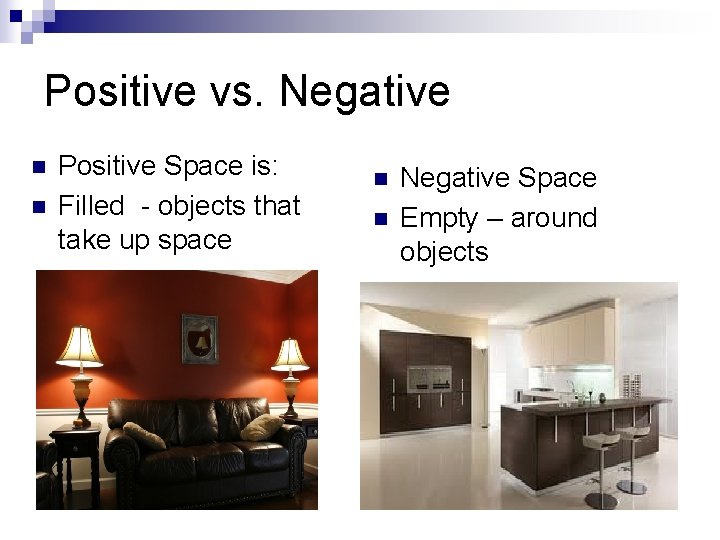
Positive vs. Negative n n Positive Space is: Filled - objects that take up space n n Negative Space Empty – around objects
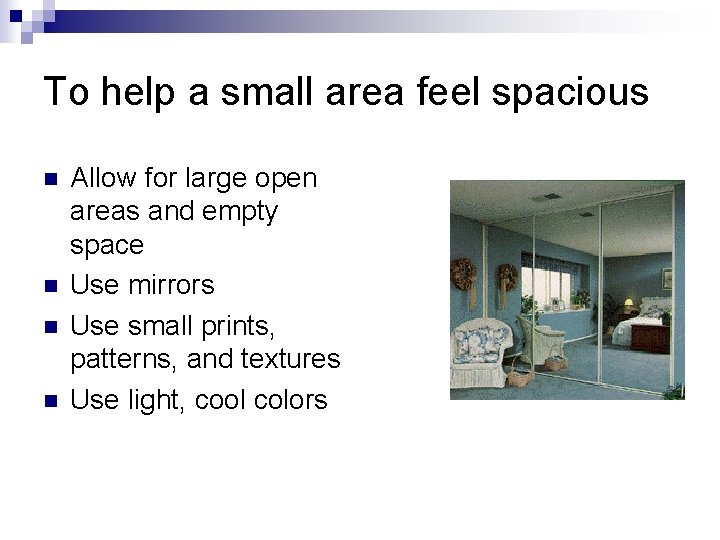
To help a small area feel spacious n n Allow for large open areas and empty space Use mirrors Use small prints, patterns, and textures Use light, cool colors
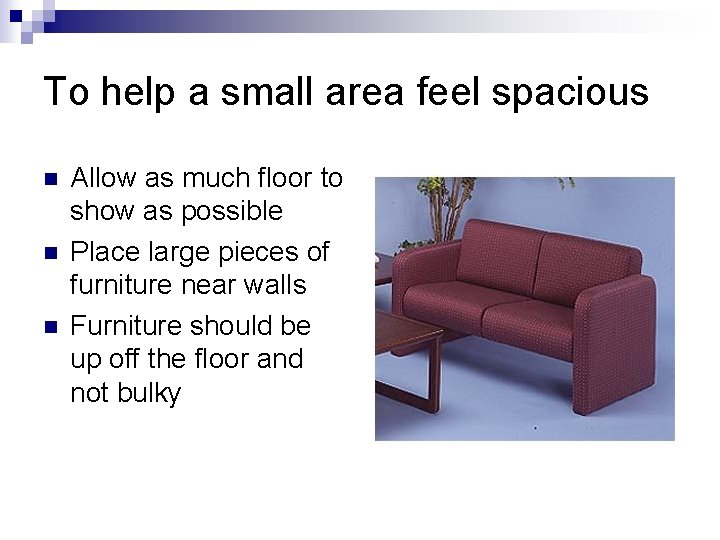
To help a small area feel spacious n n n Allow as much floor to show as possible Place large pieces of furniture near walls Furniture should be up off the floor and not bulky
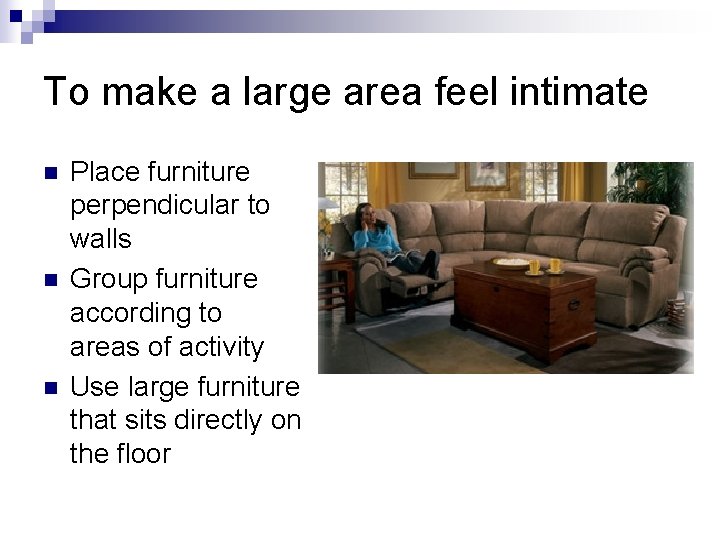
To make a large area feel intimate n n n Place furniture perpendicular to walls Group furniture according to areas of activity Use large furniture that sits directly on the floor
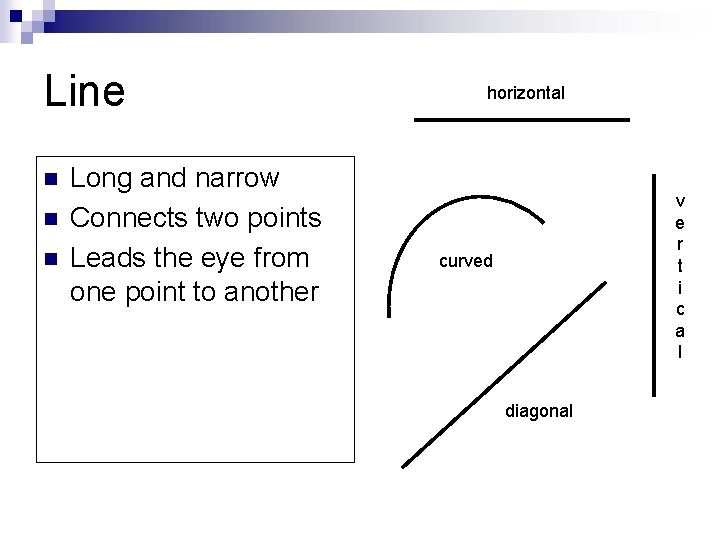
Line n n n Long and narrow Connects two points Leads the eye from one point to another horizontal v e r t i c a l curved diagonal
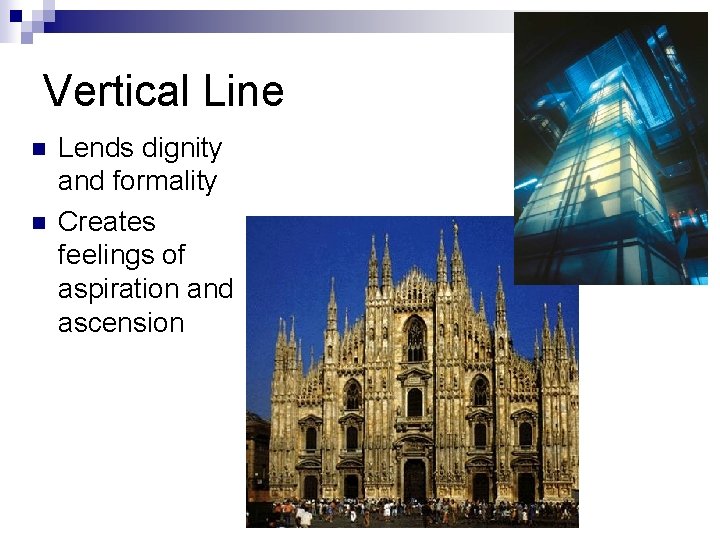
Vertical Line n n Lends dignity and formality Creates feelings of aspiration and ascension
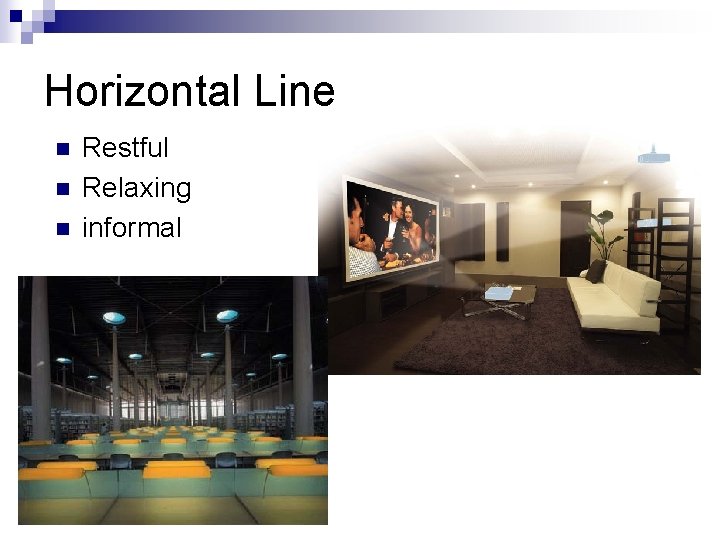
Horizontal Line n n n Restful Relaxing informal
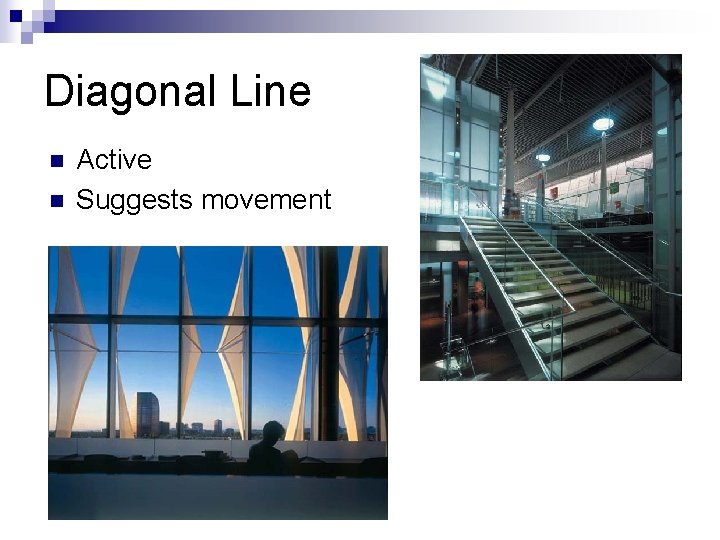
Diagonal Line n n Active Suggests movement
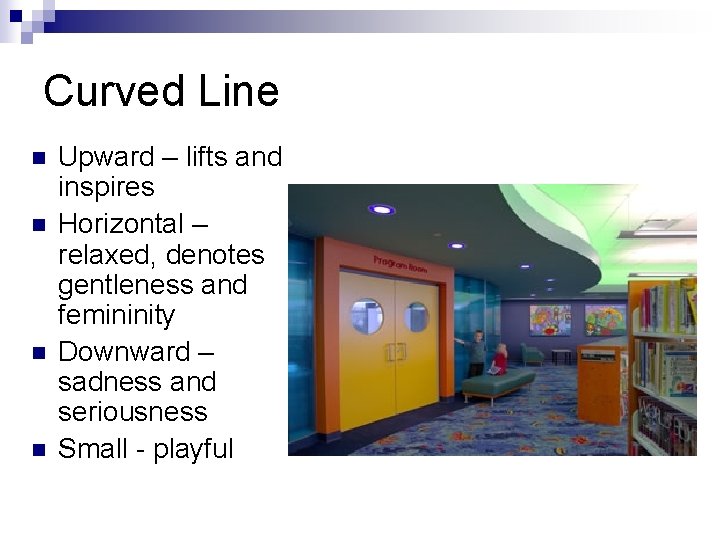
Curved Line n n Upward – lifts and inspires Horizontal – relaxed, denotes gentleness and femininity Downward – sadness and seriousness Small - playful
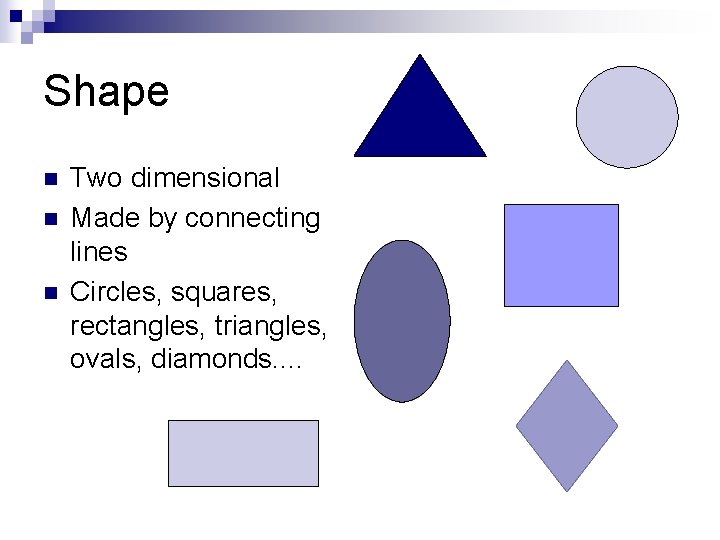
Shape n n n Two dimensional Made by connecting lines Circles, squares, rectangles, triangles, ovals, diamonds. .
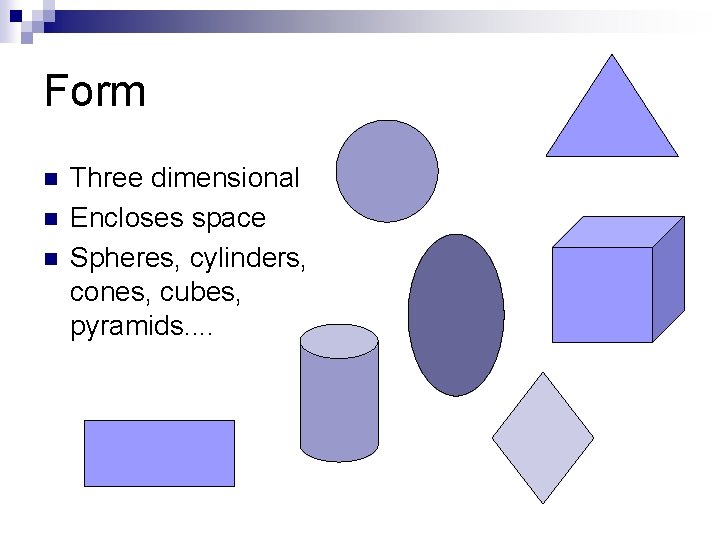
Form n n n Three dimensional Encloses space Spheres, cylinders, cones, cubes, pyramids. .
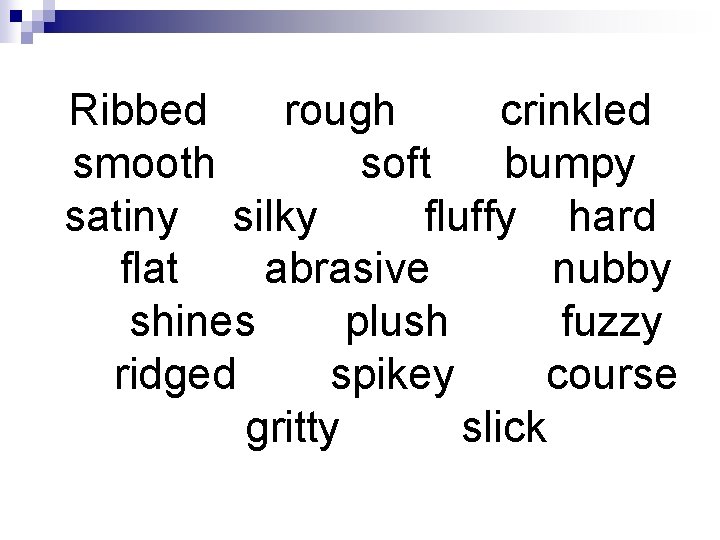
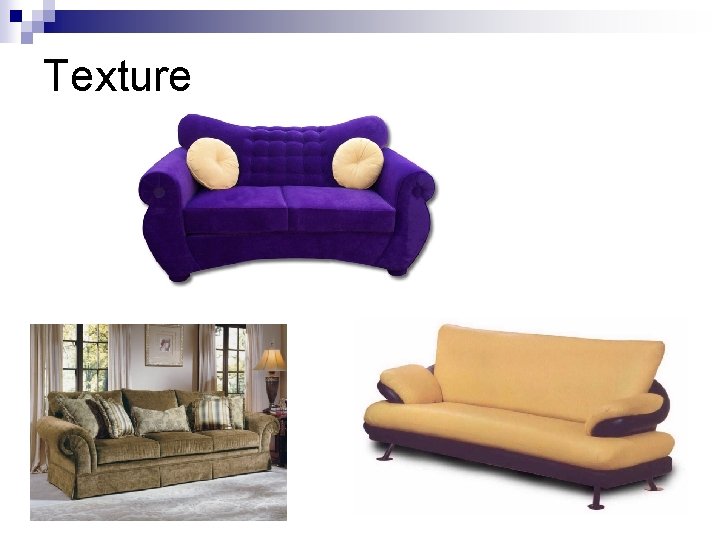
Texture The surface quality of an object or item n Tactile n ¨ How the object feels to the touch ¨ Can feel the variation in the surface n Visual ¨ An illusion - how the object appears to feel ¨ Applied using line, color, & shading
Ribbed rough crinkled smooth soft bumpy satiny silky fluffy hard flat abrasive nubby shines plush fuzzy ridged spikey course gritty slick
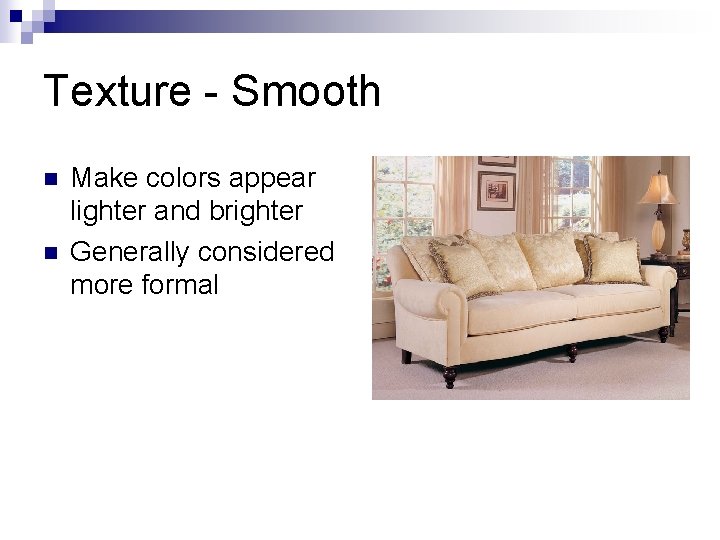
Texture - Smooth n n Make colors appear lighter and brighter Generally considered more formal
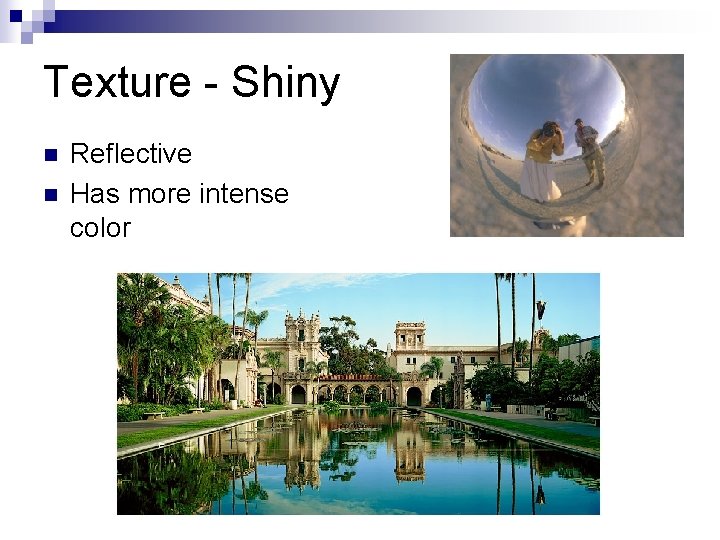
Texture - Shiny n n Reflective Has more intense color
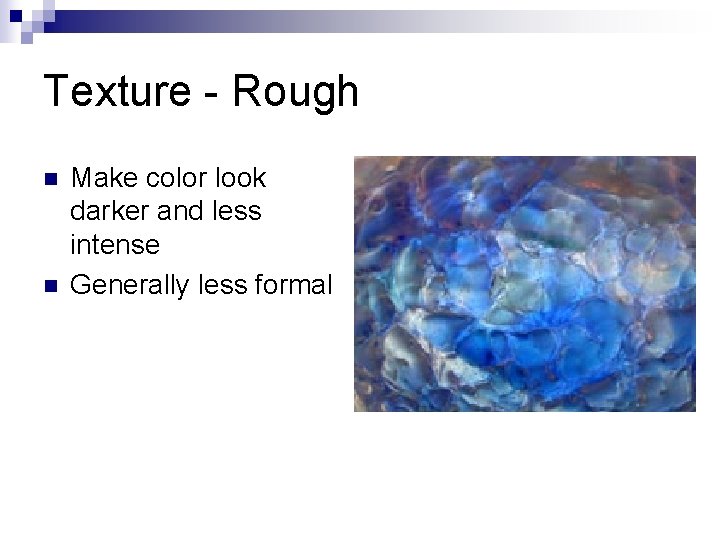
Texture - Rough n n Make color look darker and less intense Generally less formal
Texture
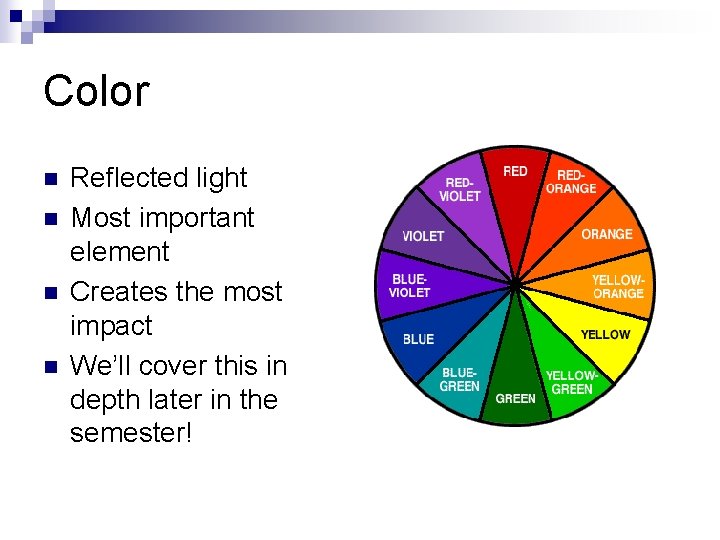
Color n n Reflected light Most important element Creates the most impact We’ll cover this in depth later in the semester!
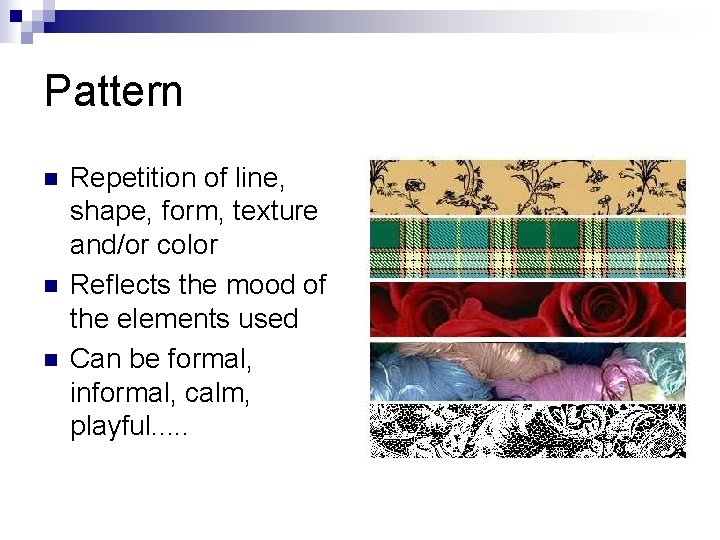
Pattern n Repetition of line, shape, form, texture and/or color Reflects the mood of the elements used Can be formal, informal, calm, playful. . .