
Elements of Design Form Line Shape Value Texture

- Slides: 20
Elements of Design Form Line Shape Value Texture Color Space Principals of Design Balance Contrast Emphasis Movement Pattern Rhythm Unity Studio: History: Criticism: Four drawings Life and work of Rembrandt Students will hang and discuss work Art I Drawing Fundamentals Unit Contour Line drawing 1 -2 days Negative Space 3 -4 days Value 4 -5 days Proportion 5 days Lesson by Content standards 1. Students will understand use visual arts as means for creative self-expression and interpersonal communication. 2. Students will understand the media, techniques and processes used in the production of visual arts. 3. Students will understand the relationship between visual arts and history, culture, and society. 4. Students will demonstrate a capacity for critical and sensitive response to various visual arts experiences Revised 8 -9 -12 Chad Nelson BVHS Art Dept.
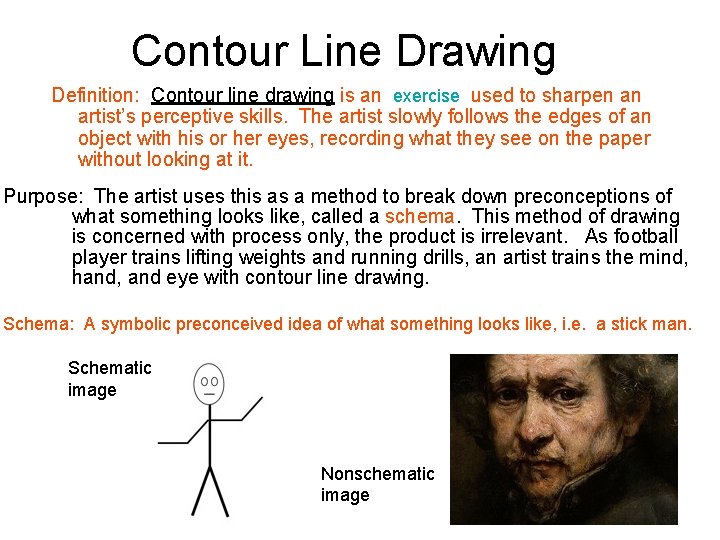
Contour Line Drawing Definition: Contour line drawing is an exercise used to sharpen an artist’s perceptive skills. The artist slowly follows the edges of an object with his or her eyes, recording what they see on the paper without looking at it. Purpose: The artist uses this as a method to break down preconceptions of what something looks like, called a schema. This method of drawing is concerned with process only, the product is irrelevant. As football player trains lifting weights and running drills, an artist trains the mind, hand, and eye with contour line drawing. Schema: A symbolic preconceived idea of what something looks like, i. e. a stick man. Schematic image Nonschematic image
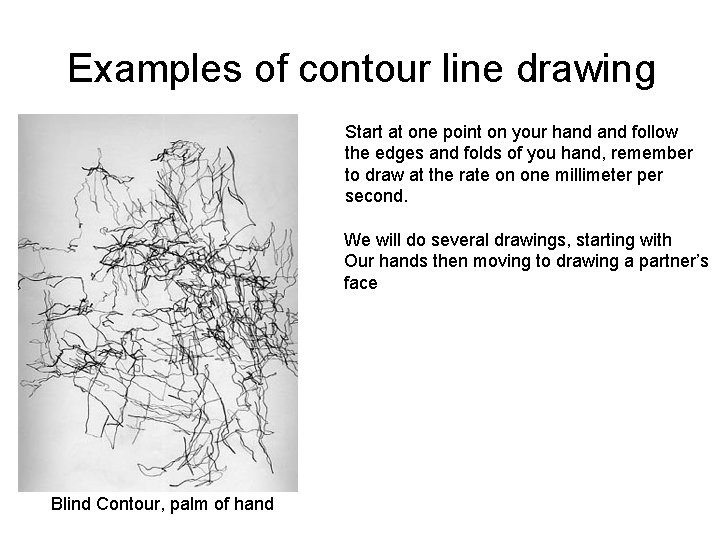
Examples of contour line drawing Start at one point on your hand follow the edges and folds of you hand, remember to draw at the rate on one millimeter per second. We will do several drawings, starting with Our hands then moving to drawing a partner’s face Blind Contour, palm of hand
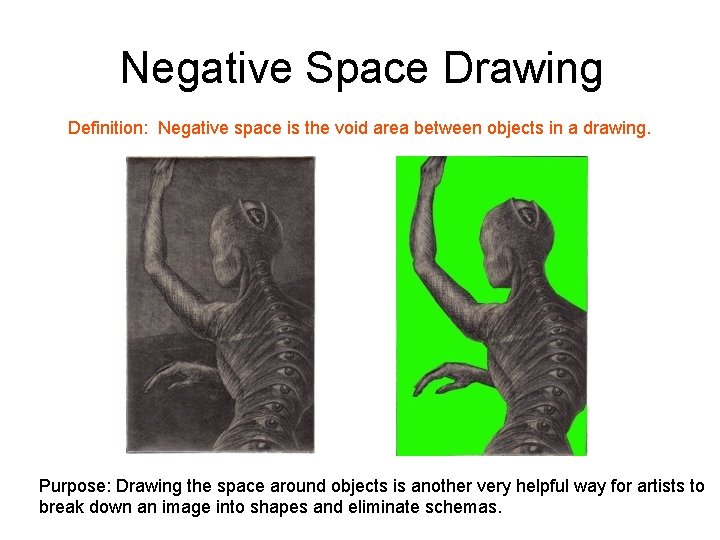
Negative Space Drawing Definition: Negative space is the void area between objects in a drawing. Purpose: Drawing the space around objects is another very helpful way for artists to break down an image into shapes and eliminate schemas.
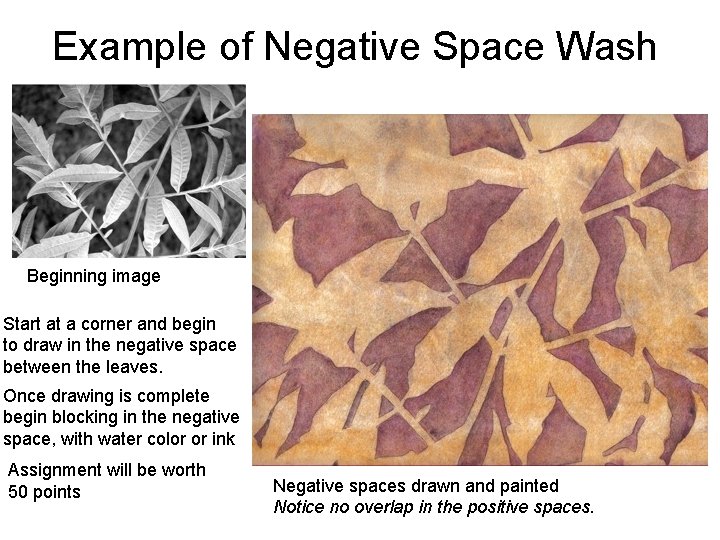
Example of Negative Space Wash Beginning image Start at a corner and begin to draw in the negative space between the leaves. Once drawing is complete begin blocking in the negative space, with water color or ink Assignment will be worth 50 points Negative spaces drawn and painted Notice no overlap in the positive spaces.
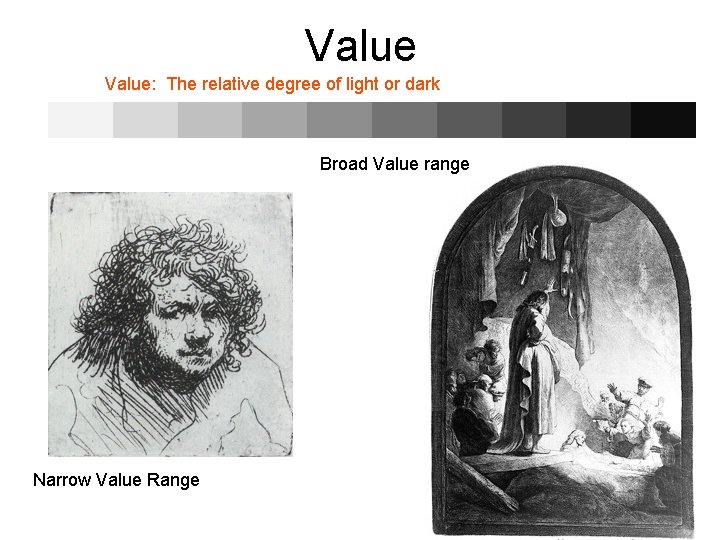
Value: The relative degree of light or dark Broad Value range Narrow Value Range
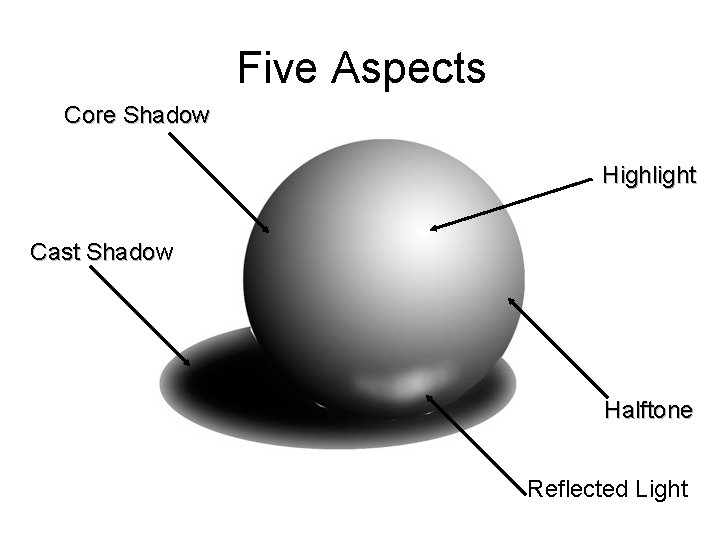
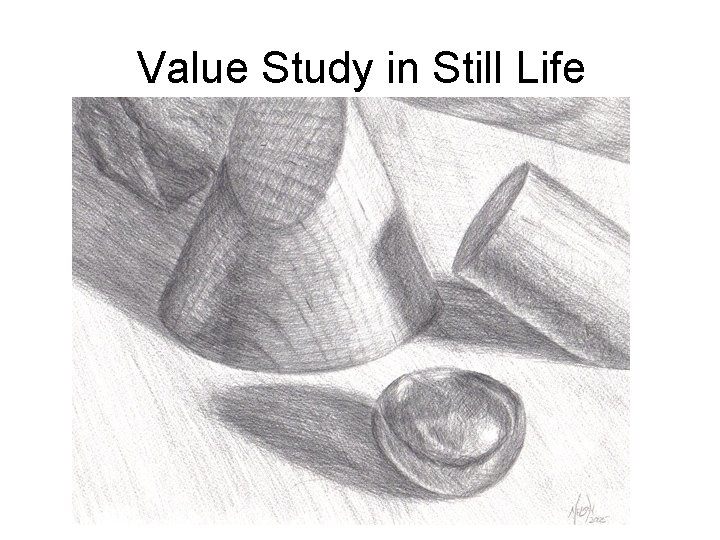
Five Aspects Core Shadow Highlight Cast Shadow Halftone Reflected Light
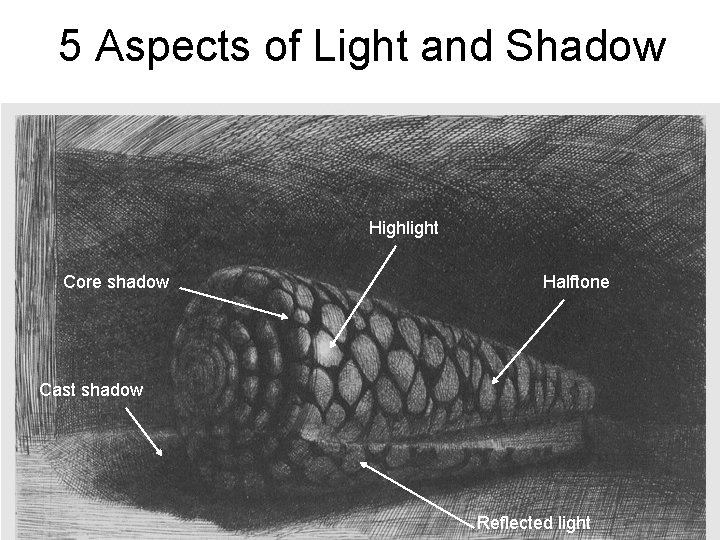
5 Aspects of Light and Shadow Highlight Core shadow Halftone Cast shadow Reflected light
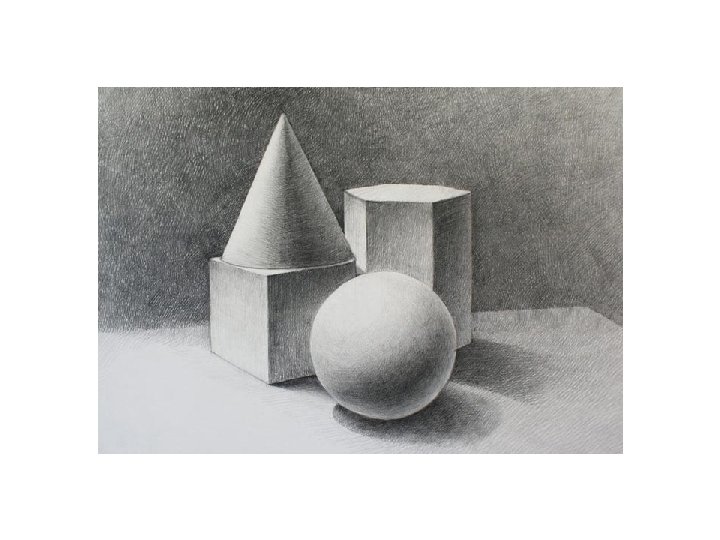
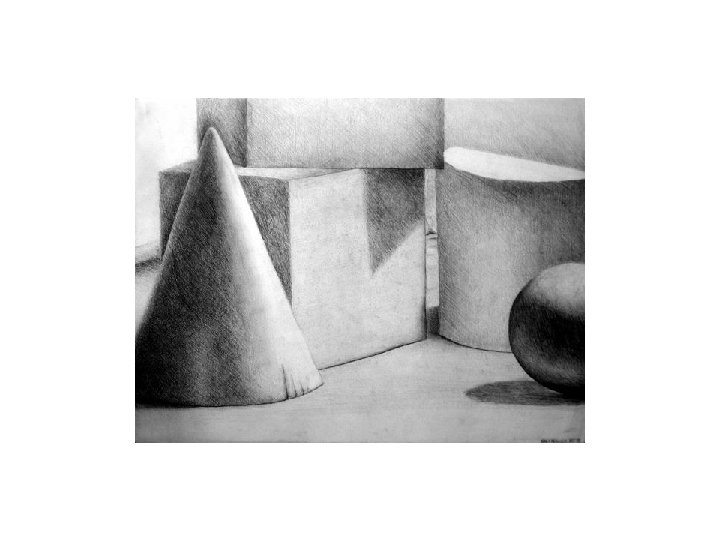
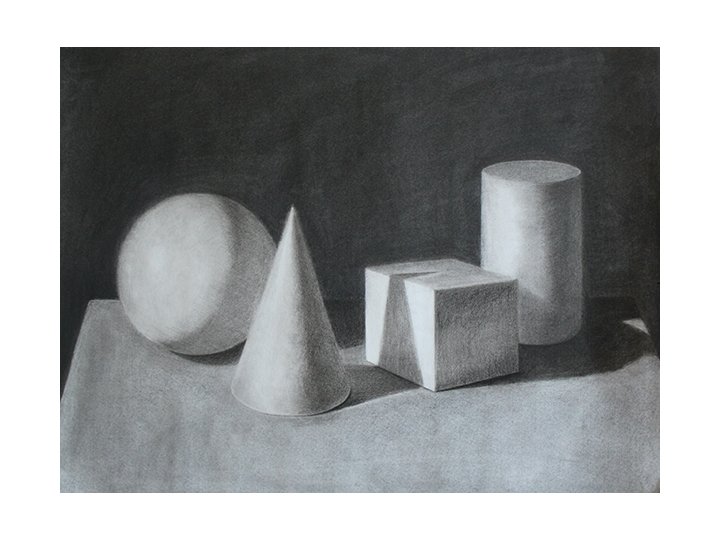
Value Study in Still Life
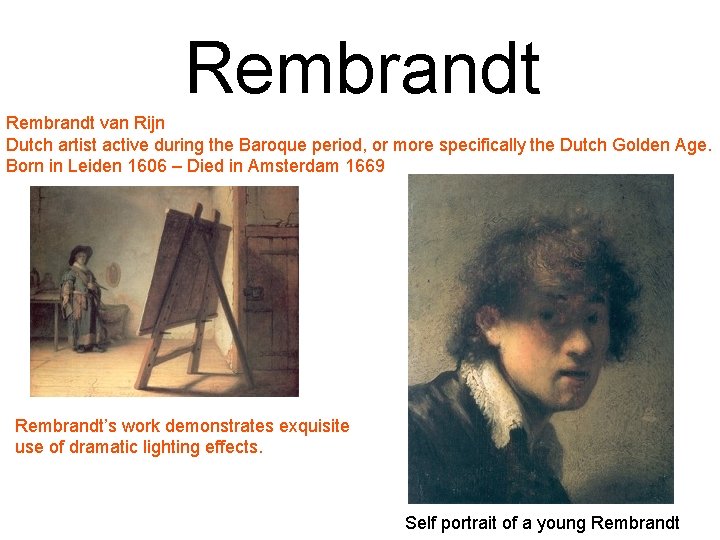
Rembrandt van Rijn Dutch artist active during the Baroque period, or more specifically the Dutch Golden Age. Born in Leiden 1606 – Died in Amsterdam 1669 Rembrandt’s work demonstrates exquisite use of dramatic lighting effects. Self portrait of a young Rembrandt
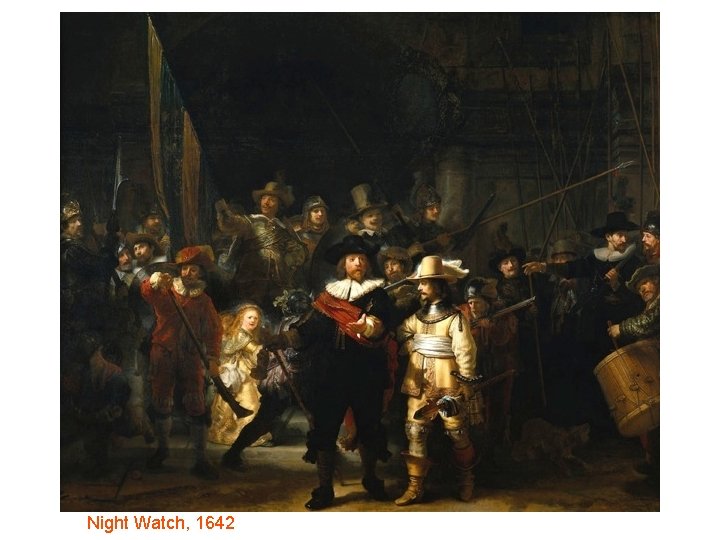
Night Watch, 1642
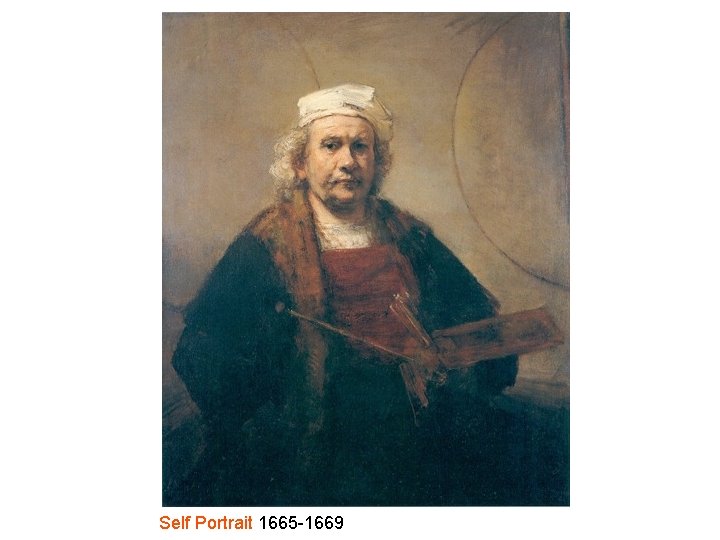
Self Portrait 1665 -1669
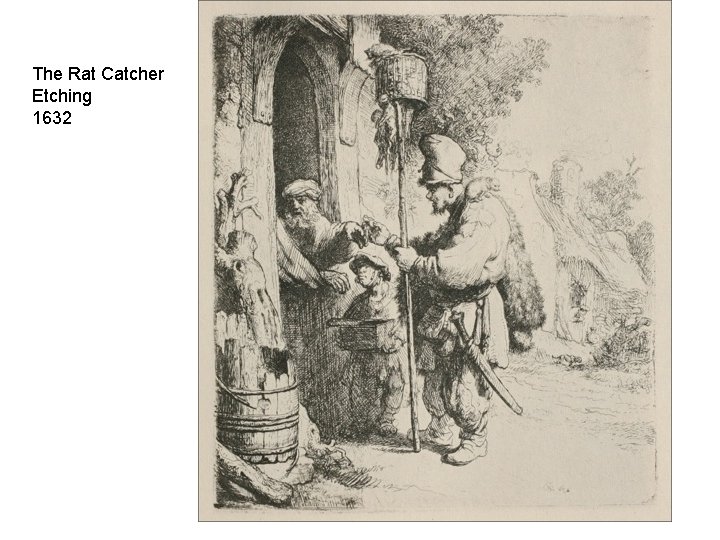
The Rat Catcher Etching 1632
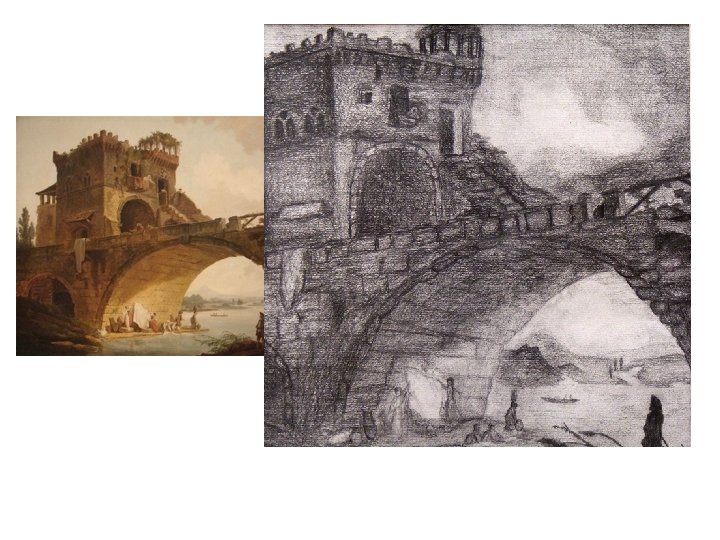
Final Drawing: A Master Study A master study is one of the oldest forms of art education, it is one of the best ways to learn from an artist and understand their techniques and styles. For this assignment we will pull all of what we learned so far together Each student will receive an image created by Rembrandt. The image will be divided into four quadrants. Students will measure and divide their drawing paper into four quadrants. When drawing in the dividing lines keep in mind that they need to be drawn in very light, just dark enough to know they are there. Use the guide lines to gage the position of objects in image, then transfer those the objects to the same relative position on your drawing paper. Using tools like quadrants or grids help learning artists to master proportion. Proportion: Comparison of the elements, in terms of their properties of size and quantity. Once your line drawing is done erase the guide lines and consult with Mr. Iverson before proceeding to shading. When you are clear to start shading remember to begin with slowly building value, you can always get darker. Save the darkest values to last to prevent smears and save your neatness grade.
19
References “The Power of Art: Rembrandt”, The BBC rembrandtpainting. net “Drawing from Observation”, by Brian Curtis “Art Fundamentals” , by Otto Ocvirk “Let There be Light…. and Shadow”, by Robert Barrett from Drawing Board magazine July 2005