
Elements of Design Color Graphic Design Color Color
- Slides: 59
Elements of Design: Color Graphic Design
Color • Color is not essential to a good design. • Black and white and shades of gray can create 'color' that is just as effective as reds, blues, and greens. • However, color is an added dimension that can evoke moods and make powerful statements when used wisely.
Value • Value is present in all design. • It is the lightness or darkness of an object, regardless of color. • Value is relative to the background color and other items on the page.
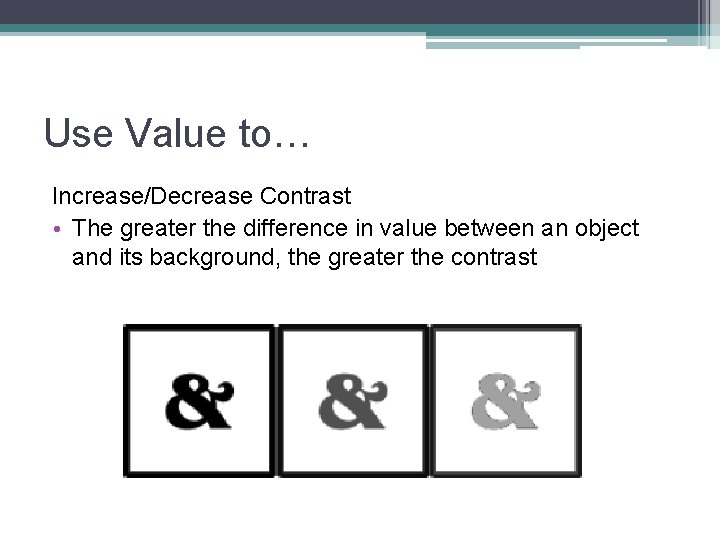
Use Value to… Increase/Decrease Contrast • The greater the difference in value between an object and its background, the greater the contrast
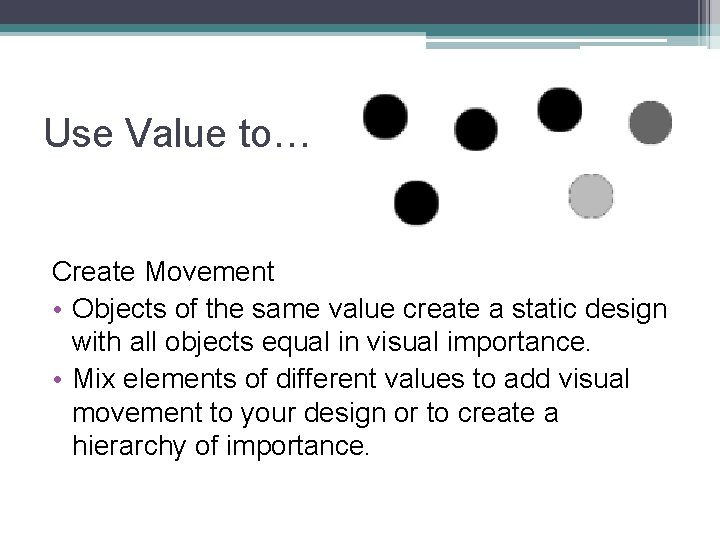
Use Value to… Create Movement • Objects of the same value create a static design with all objects equal in visual importance. • Mix elements of different values to add visual movement to your design or to create a hierarchy of importance.
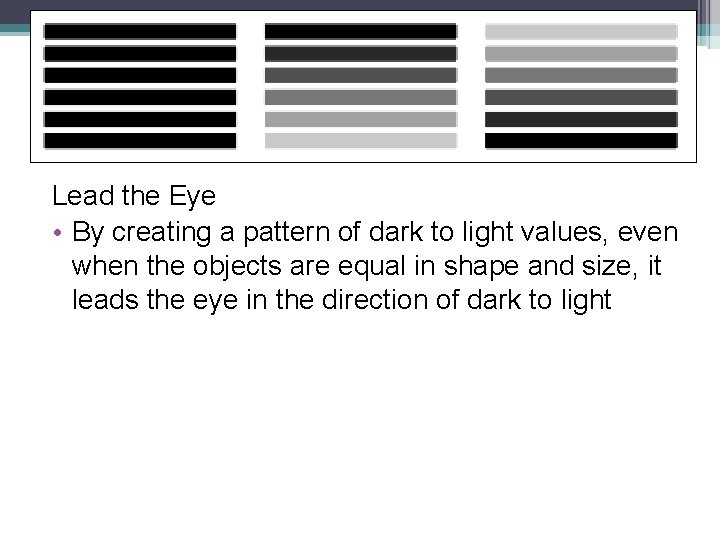
Use value to… Lead the Eye • By creating a pattern of dark to light values, even when the objects are equal in shape and size, it leads the eye in the direction of dark to light
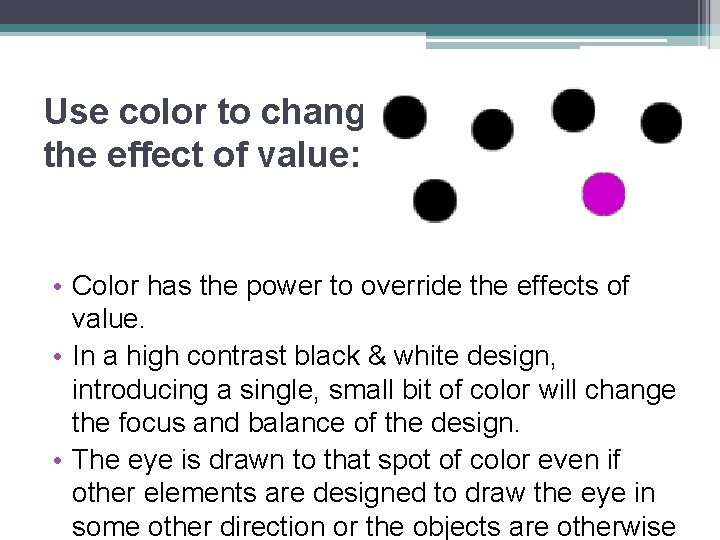
Use color to change the effect of value: • Color has the power to override the effects of value. • In a high contrast black & white design, introducing a single, small bit of color will change the focus and balance of the design. • The eye is drawn to that spot of color even if other elements are designed to draw the eye in some other direction or the objects are otherwise
Technical Aspects of Color • Color works differently in print and digital displays
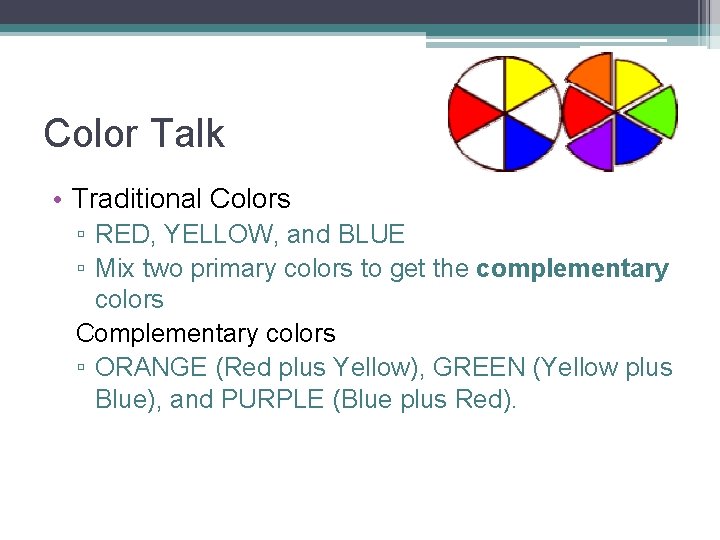
Color Talk • Traditional Colors ▫ RED, YELLOW, and BLUE ▫ Mix two primary colors to get the complementary colors Complementary colors ▫ ORANGE (Red plus Yellow), GREEN (Yellow plus Blue), and PURPLE (Blue plus Red).
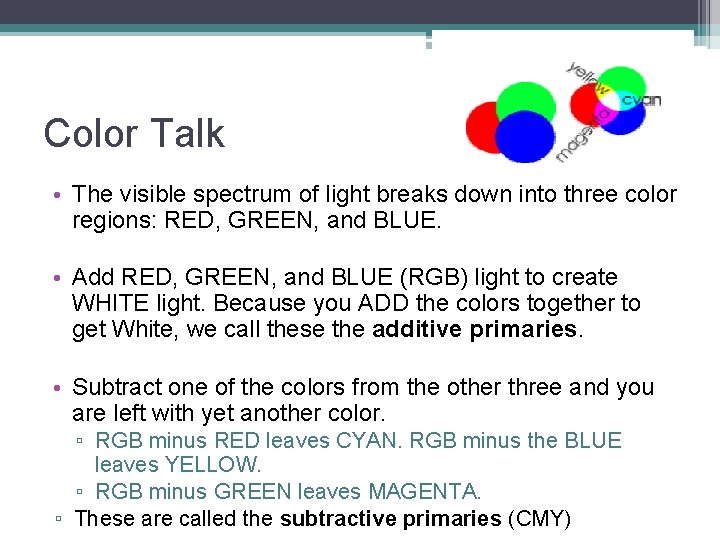
Color Talk • The visible spectrum of light breaks down into three color regions: RED, GREEN, and BLUE. • Add RED, GREEN, and BLUE (RGB) light to create WHITE light. Because you ADD the colors together to get White, we call these the additive primaries. • Subtract one of the colors from the other three and you are left with yet another color. ▫ RGB minus RED leaves CYAN. RGB minus the BLUE leaves YELLOW. ▫ RGB minus GREEN leaves MAGENTA. ▫ These are called the subtractive primaries (CMY)
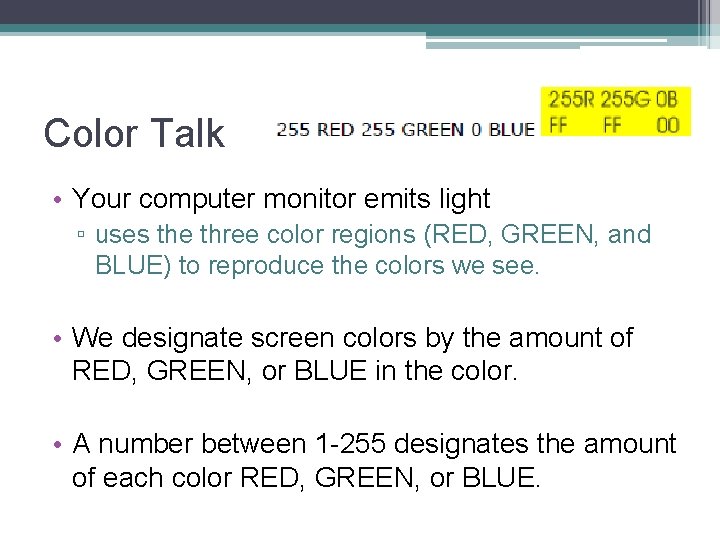
Color Talk • Your computer monitor emits light ▫ uses the three color regions (RED, GREEN, and BLUE) to reproduce the colors we see. • We designate screen colors by the amount of RED, GREEN, or BLUE in the color. • A number between 1 -255 designates the amount of each color RED, GREEN, or BLUE.
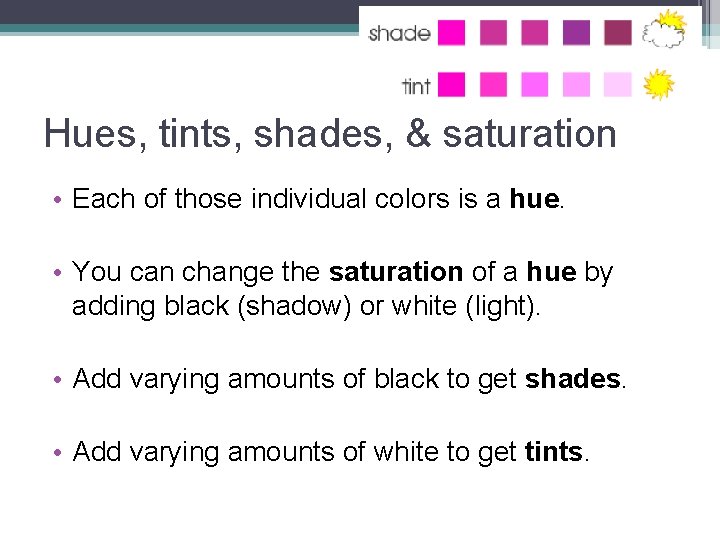
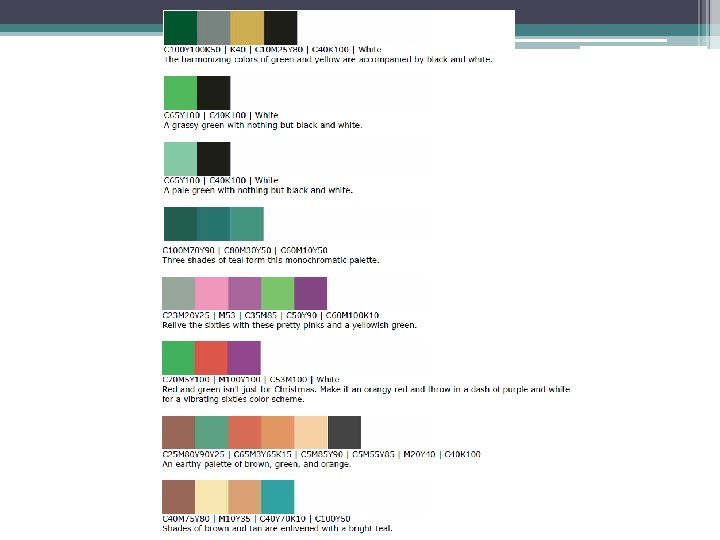
Hues, tints, shades, & saturation • Each of those individual colors is a hue. • You can change the saturation of a hue by adding black (shadow) or white (light). • Add varying amounts of black to get shades. • Add varying amounts of white to get tints.
Combining/Contrasting Color • http: //www. jellocube. com/screendesign/harmoni es. swf
Part II: Our perception of color
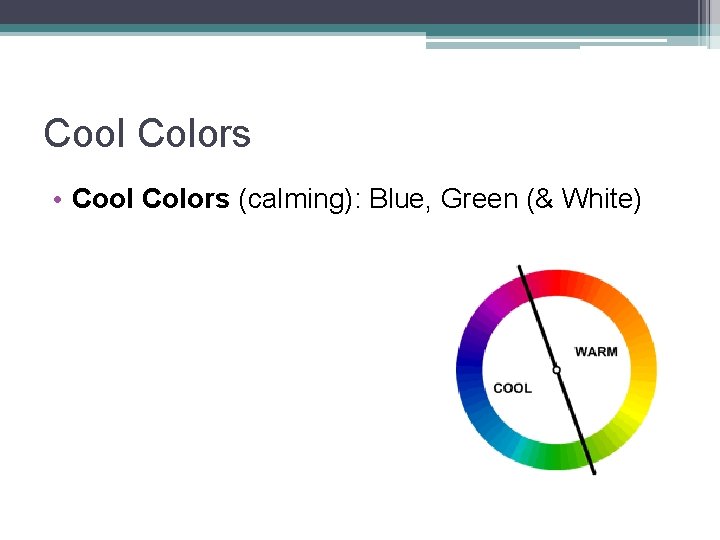
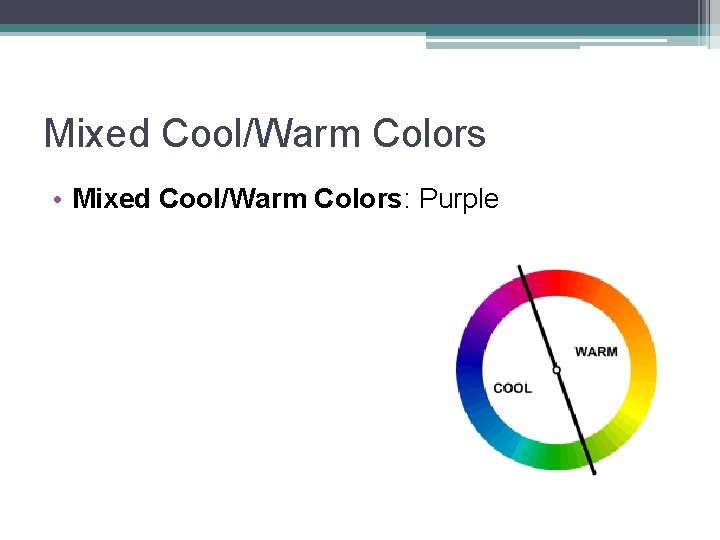
Our perception of color • The right colors can bring a design to life, or destroy an otherwise excellent piece. However, color can't rescue a piece that isn't well-designed in the first place. • Colors fall into three general categories: warm, cool, and neutral.
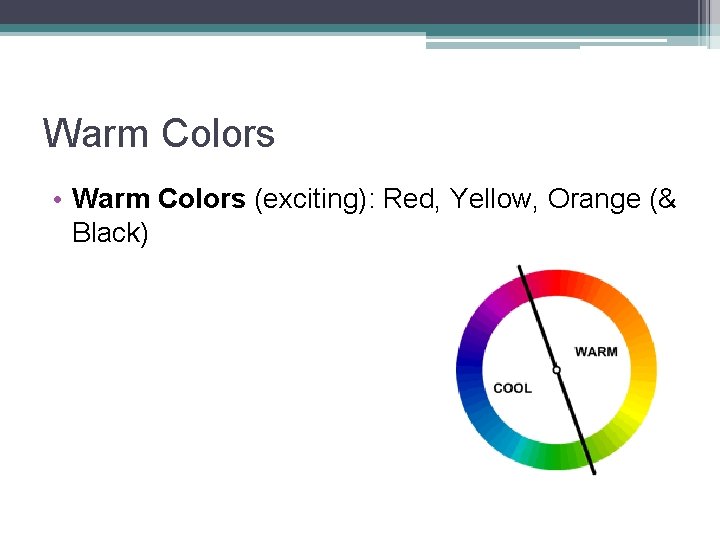
Warm Colors • Warm Colors (exciting): Red, Yellow, Orange (& Black)
Cool Colors • Cool Colors (calming): Blue, Green (& White)
Mixed Cool/Warm Colors • Mixed Cool/Warm Colors: Purple
Natural Colors • Neutral Colors (good for backgrounds): Brown, Tan, Beige, Gray, Silver, Black, White
Color perception • Color is non-verbal communication. • Colors have symbolism and meanings that go beyond ink • the eye and the mind perceive certain colors differently • Sometimes colors create ▫ a physical reaction (red has been shown to raise blood pressure) ▫ a cultural reaction (in the U. S. white is for weddings, in some Eastern cultures, white is the color for mourning and funerals). • Colors follow trends as well. Avocado, a shade of green, is synonymous with the 60 s and 70 s in the
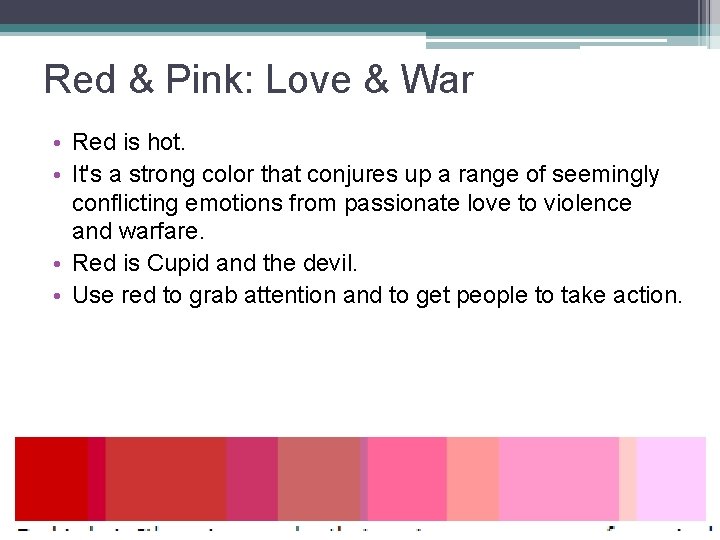
Red & Pink: Love & War • Red is hot. • It's a strong color that conjures up a range of seemingly conflicting emotions from passionate love to violence and warfare. • Red is Cupid and the devil. • Use red to grab attention and to get people to take action.
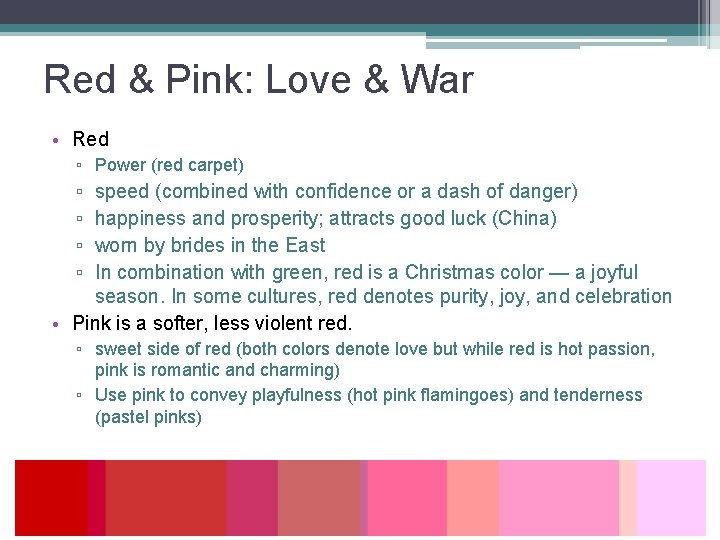
Red & Pink: Love & War • Red ▫ Power (red carpet) ▫ ▫ speed (combined with confidence or a dash of danger) happiness and prosperity; attracts good luck (China) worn by brides in the East In combination with green, red is a Christmas color — a joyful season. In some cultures, red denotes purity, joy, and celebration • Pink is a softer, less violent red. ▫ sweet side of red (both colors denote love but while red is hot passion, pink is romantic and charming) ▫ Use pink to convey playfulness (hot pink flamingoes) and tenderness (pastel pinks)
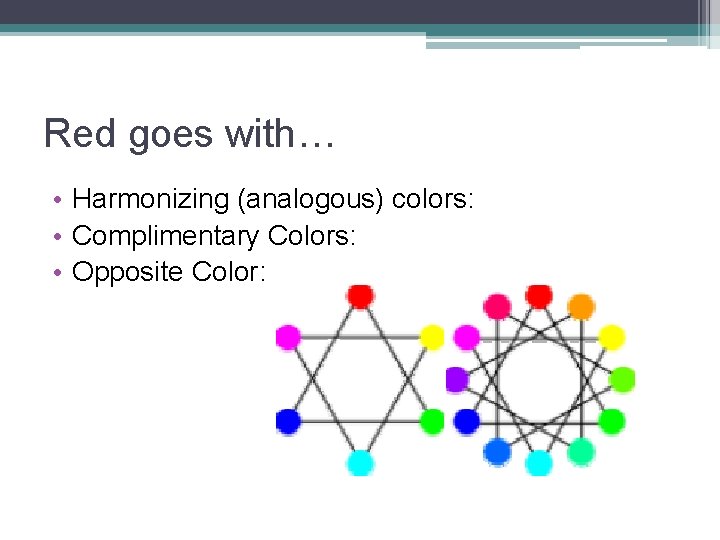
Red goes with… • Harmonizing (analogous) colors: • Complimentary Colors: • Opposite Color:
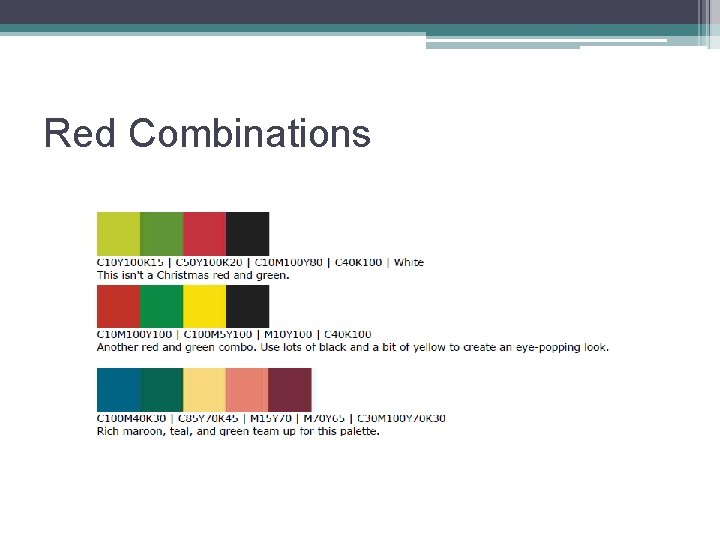
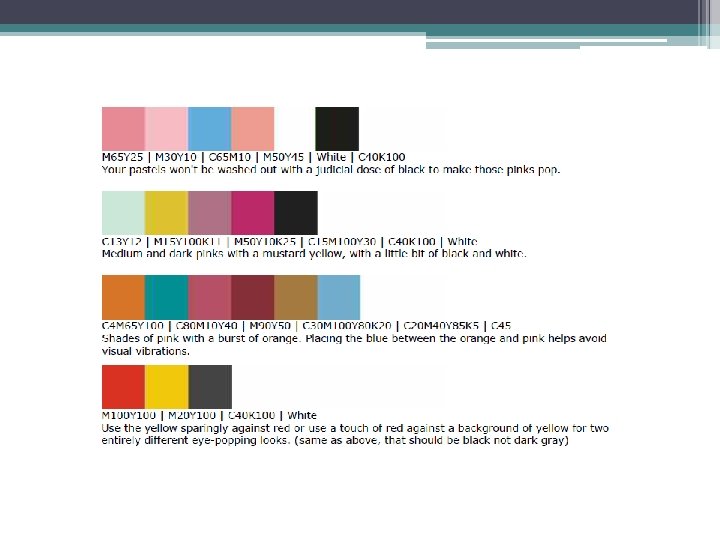
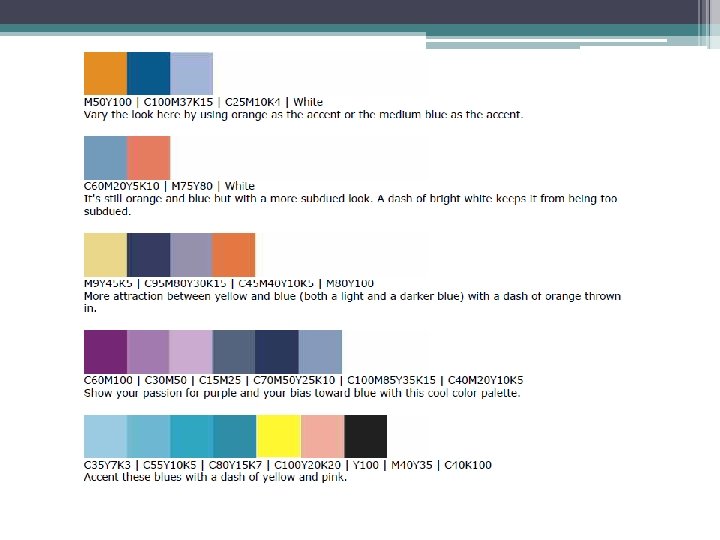
Red Combinations
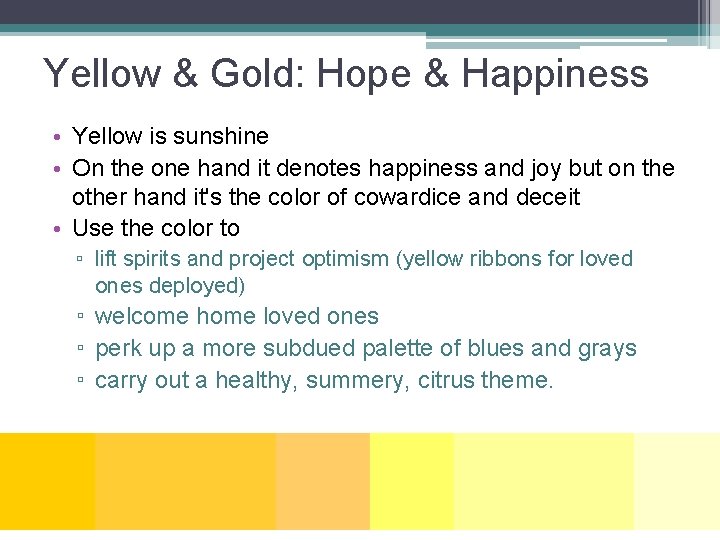
Yellow & Gold: Hope & Happiness • Yellow is sunshine • On the one hand it denotes happiness and joy but on the other hand it's the color of cowardice and deceit • Use the color to ▫ lift spirits and project optimism (yellow ribbons for loved ones deployed) ▫ welcome home loved ones ▫ perk up a more subdued palette of blues and grays ▫ carry out a healthy, summery, citrus theme.
Yellow & Gold: Hope & Happiness • Because of the high visibility of bright yellow, it is often used for hazard signs and some emergency vehicles. • A cousin to yellow (and orange and brown) is gold. While green may be the color of money (U. S. money, that is) gold is the color of riches. While 'all that glitters is not gold' the color gold still suggests grandeur, and perhaps on the downside, the excesses of the rich. Glittery gold denotes richness from money while an earthy, orange gold can suggest more emotional riches from family and friends
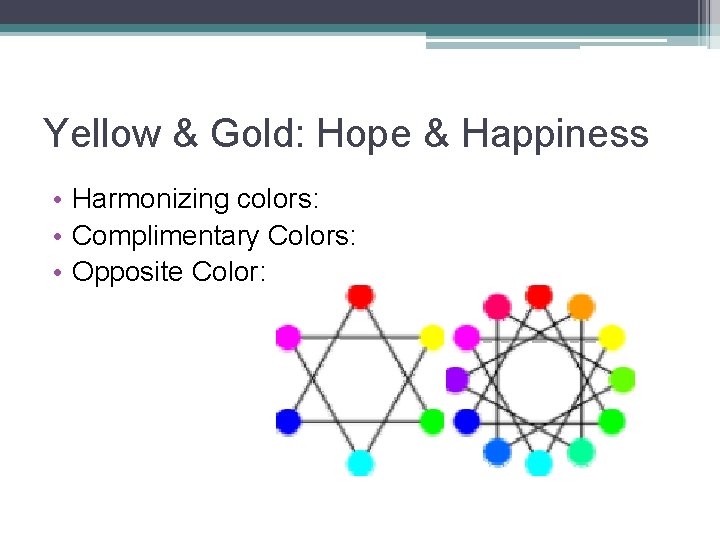
Yellow & Gold: Hope & Happiness • Harmonizing colors: • Complimentary Colors: • Opposite Color:
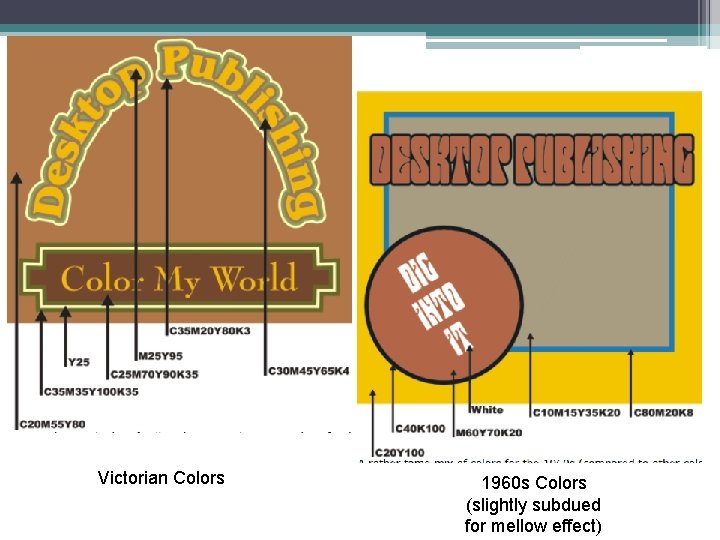
Victorian Colors 1960 s Colors (slightly subdued for mellow effect)
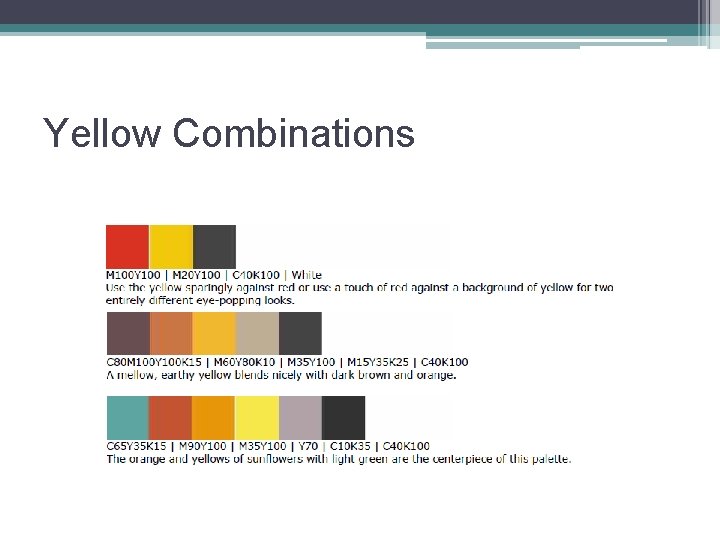
Yellow Combinations
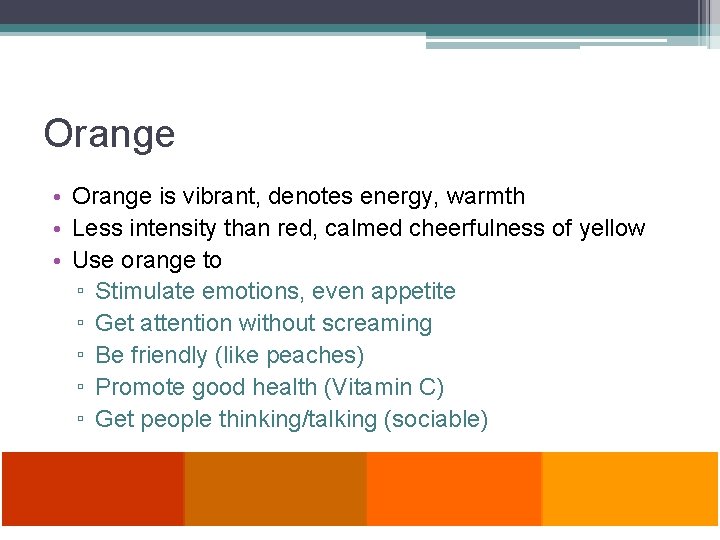
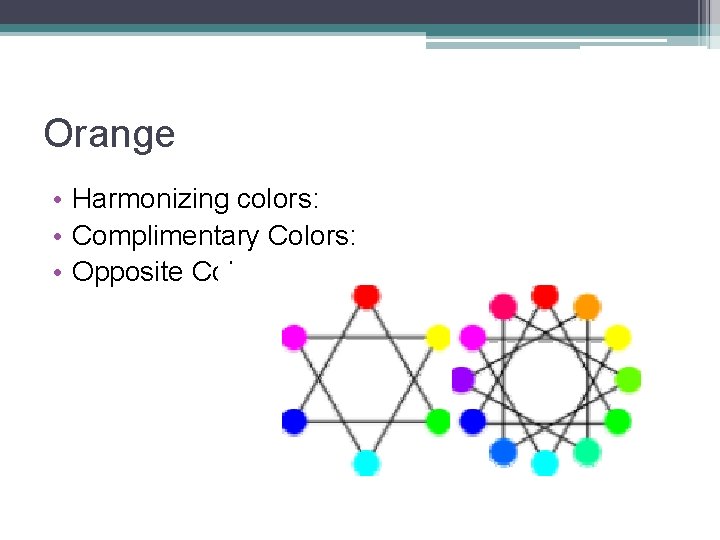
Orange • Orange is vibrant, denotes energy, warmth • Less intensity than red, calmed cheerfulness of yellow • Use orange to ▫ Stimulate emotions, even appetite ▫ Get attention without screaming ▫ Be friendly (like peaches) ▫ Promote good health (Vitamin C) ▫ Get people thinking/talking (sociable)
Orange • Harmonizing colors: • Complimentary Colors: • Opposite Color:
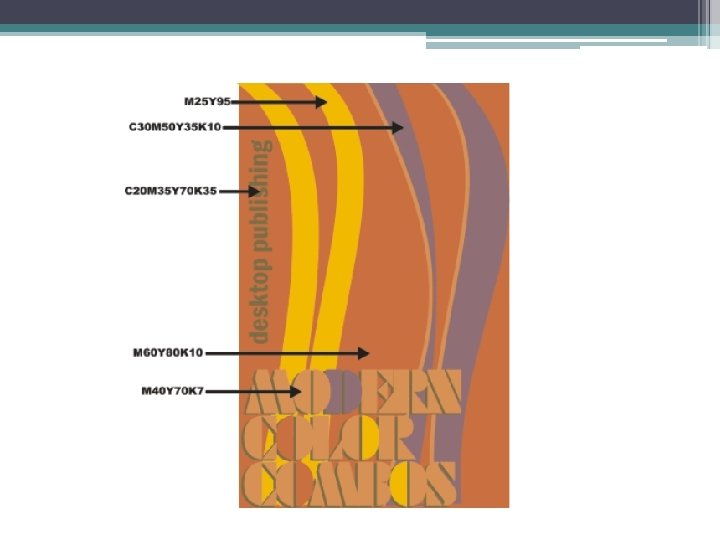
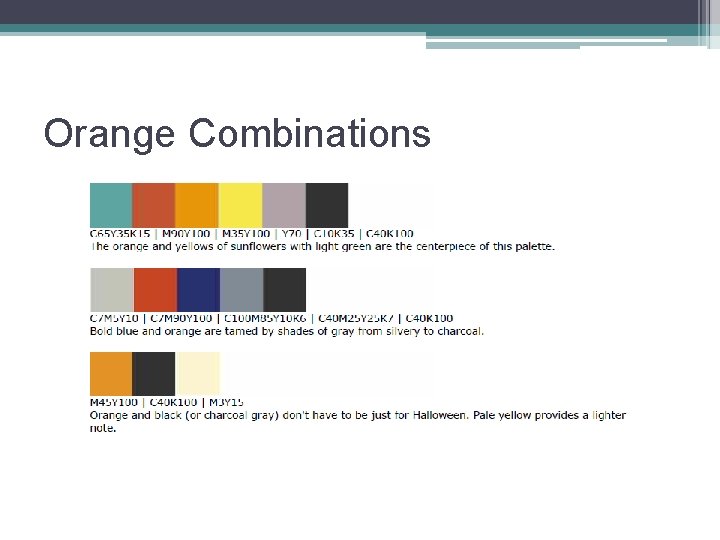
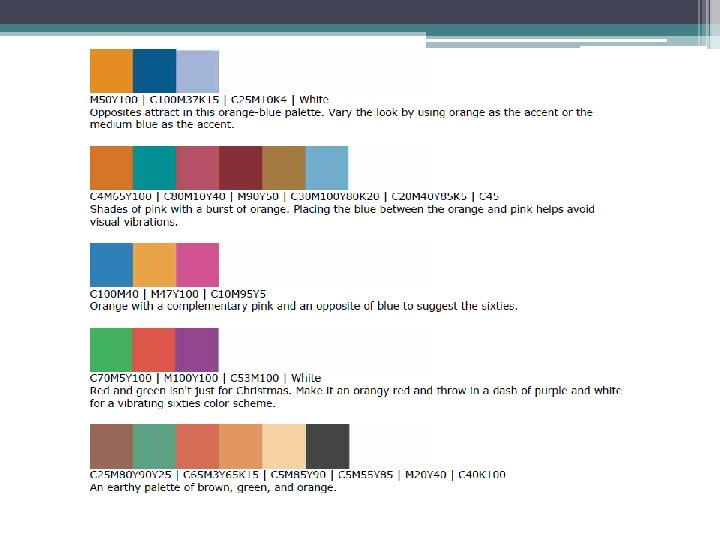
Orange Combinations
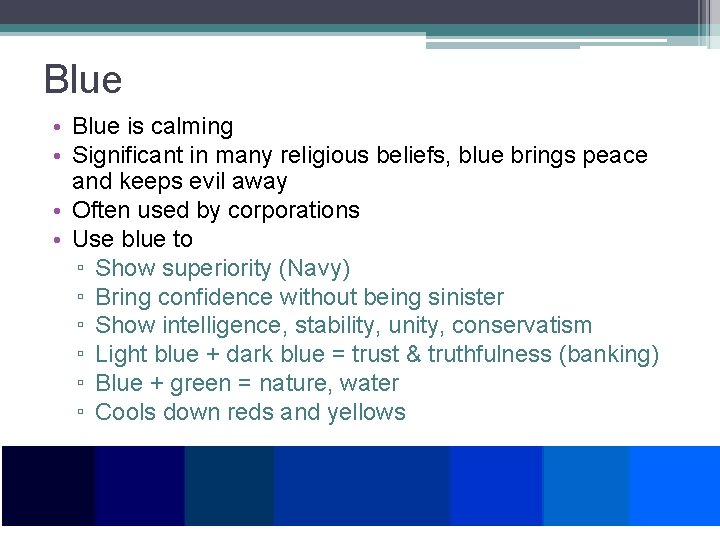
Blue • Blue is calming • Significant in many religious beliefs, blue brings peace and keeps evil away • Often used by corporations • Use blue to ▫ Show superiority (Navy) ▫ Bring confidence without being sinister ▫ Show intelligence, stability, unity, conservatism ▫ Light blue + dark blue = trust & truthfulness (banking) ▫ Blue + green = nature, water ▫ Cools down reds and yellows
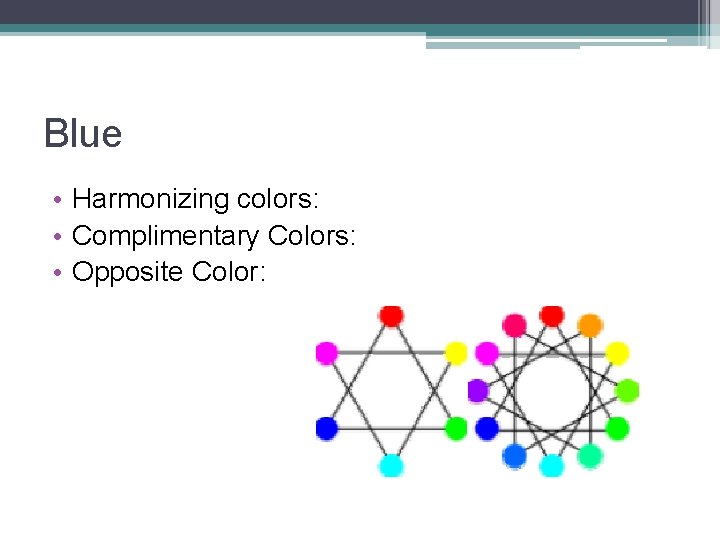
Blue • Harmonizing colors: • Complimentary Colors: • Opposite Color:
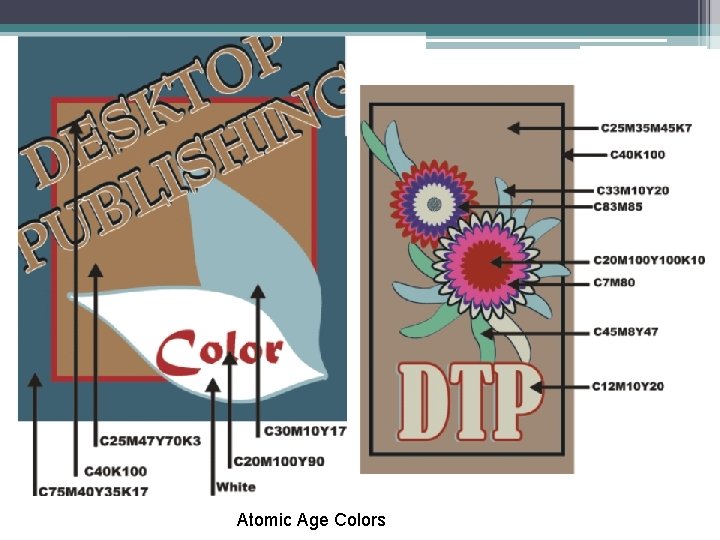
Atomic Age Colors
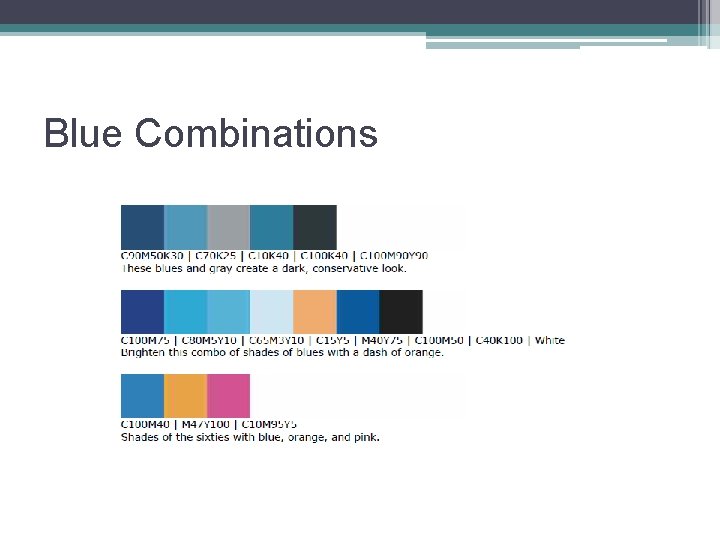
Blue Combinations
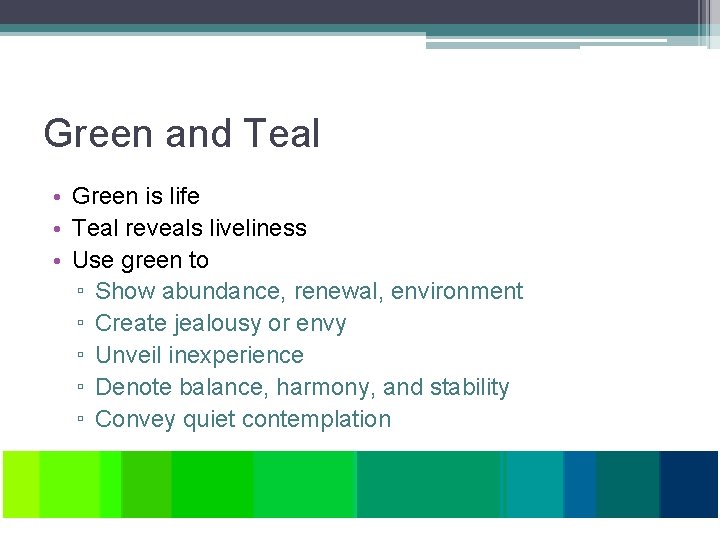
Green and Teal • Green is life • Teal reveals liveliness • Use green to ▫ Show abundance, renewal, environment ▫ Create jealousy or envy ▫ Unveil inexperience ▫ Denote balance, harmony, and stability ▫ Convey quiet contemplation
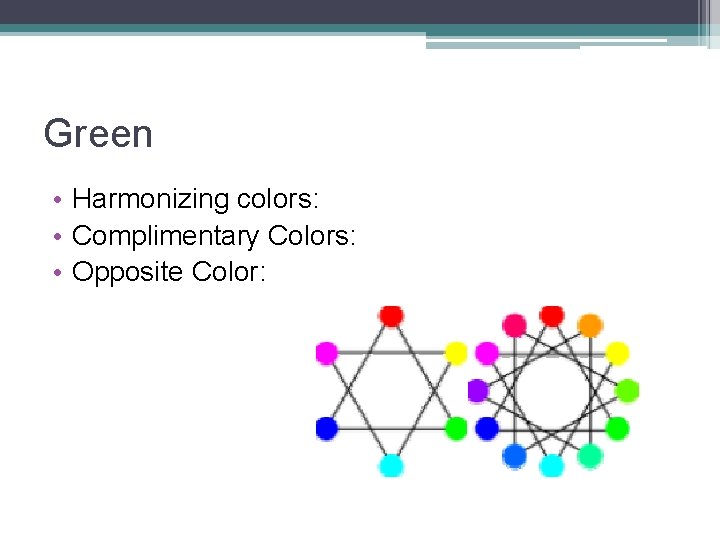
Green • Harmonizing colors: • Complimentary Colors: • Opposite Color:
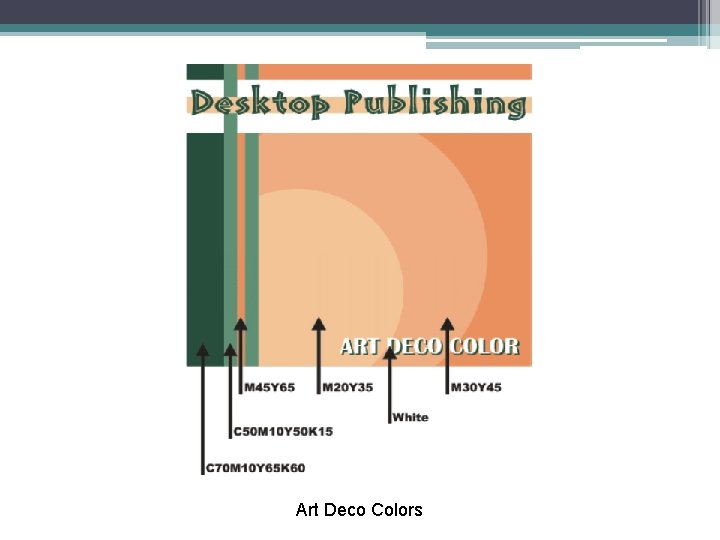
Art Deco Colors
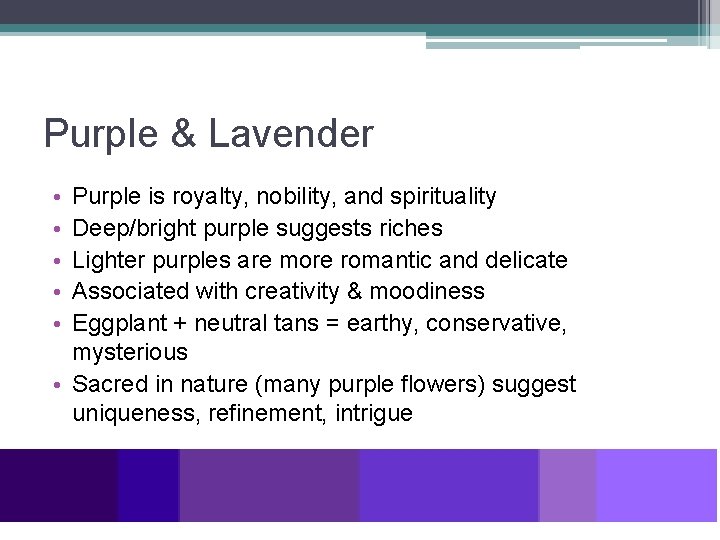
Purple & Lavender • • • Purple is royalty, nobility, and spirituality Deep/bright purple suggests riches Lighter purples are more romantic and delicate Associated with creativity & moodiness Eggplant + neutral tans = earthy, conservative, mysterious • Sacred in nature (many purple flowers) suggest uniqueness, refinement, intrigue
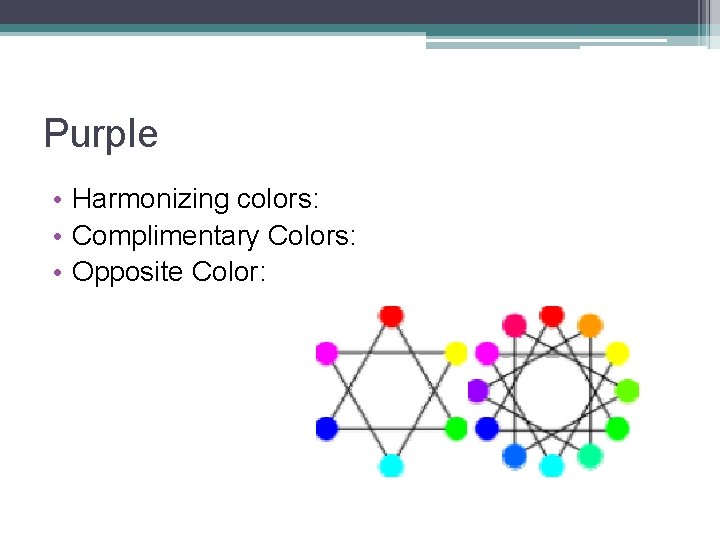
Purple • Harmonizing colors: • Complimentary Colors: • Opposite Color:
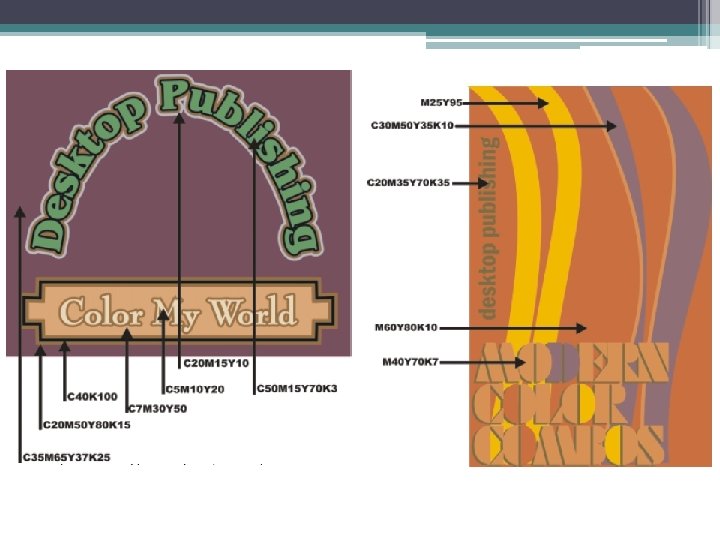
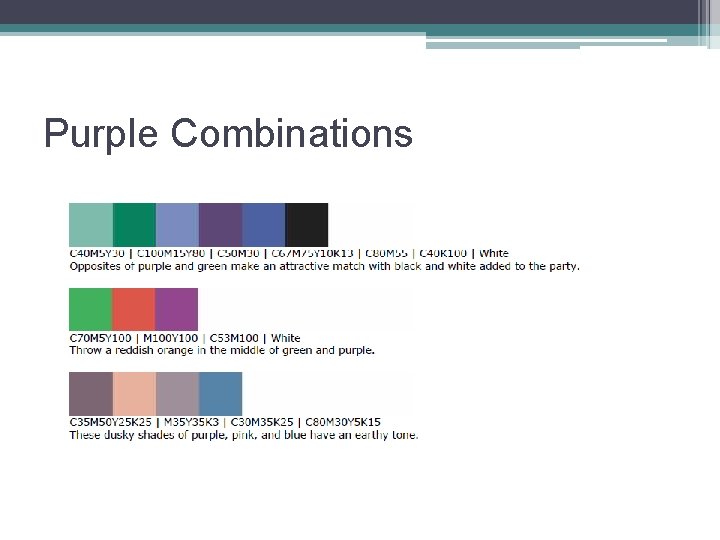
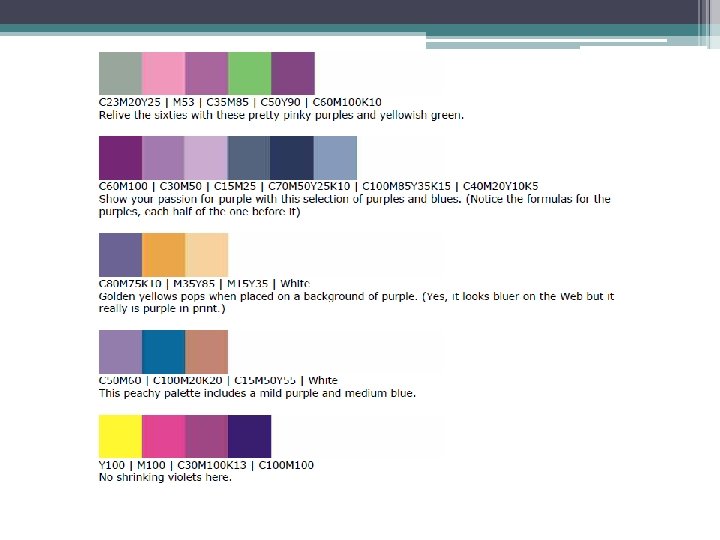
Purple Combinations
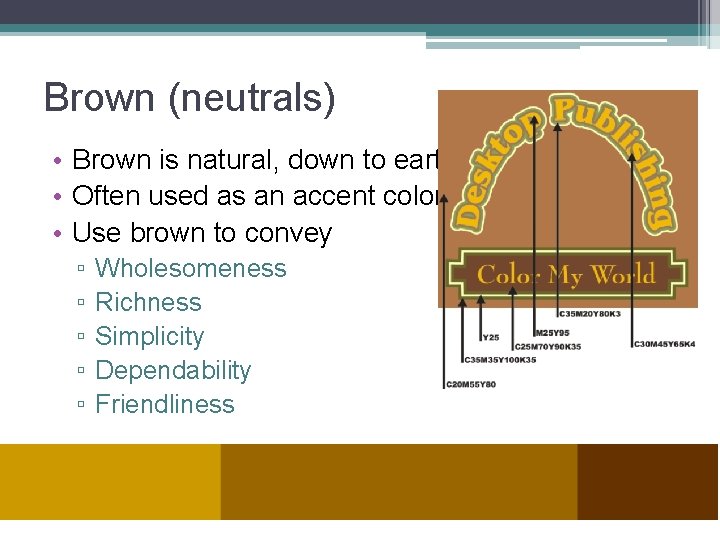
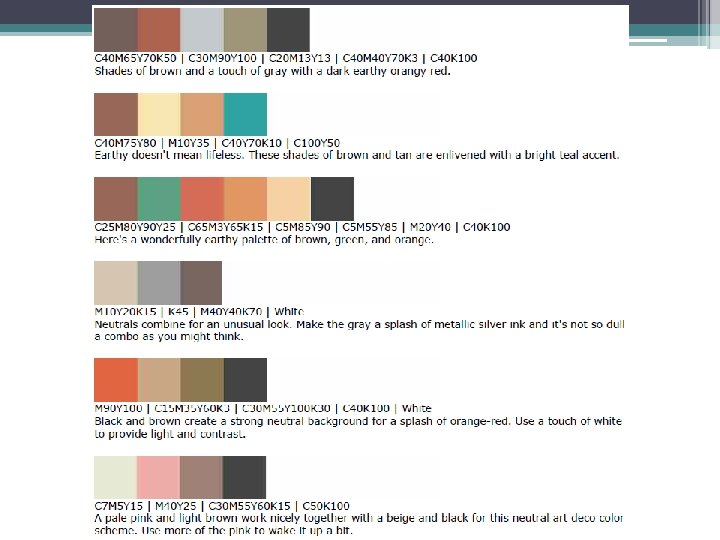
Brown (neutrals) • Brown is natural, down to earth • Often used as an accent color • Use brown to convey ▫ ▫ ▫ Wholesomeness Richness Simplicity Dependability Friendliness
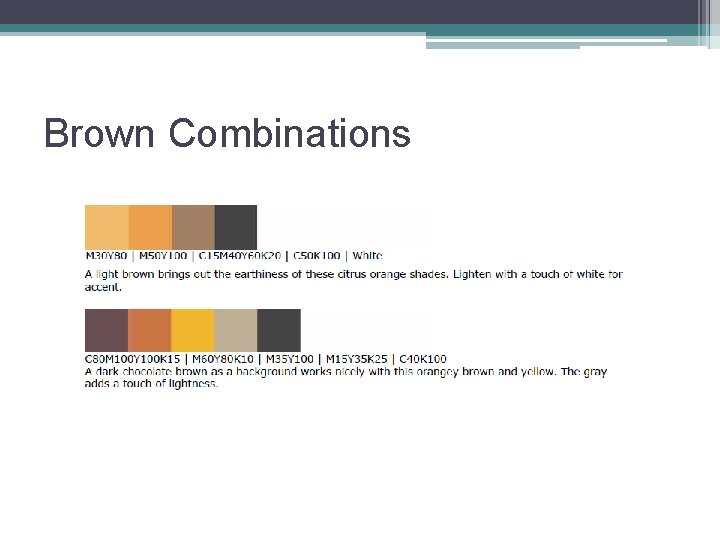
Brown Combinations
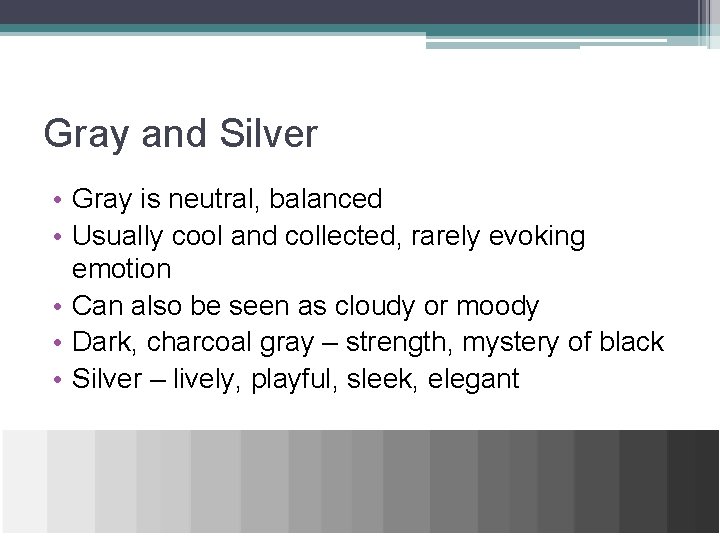
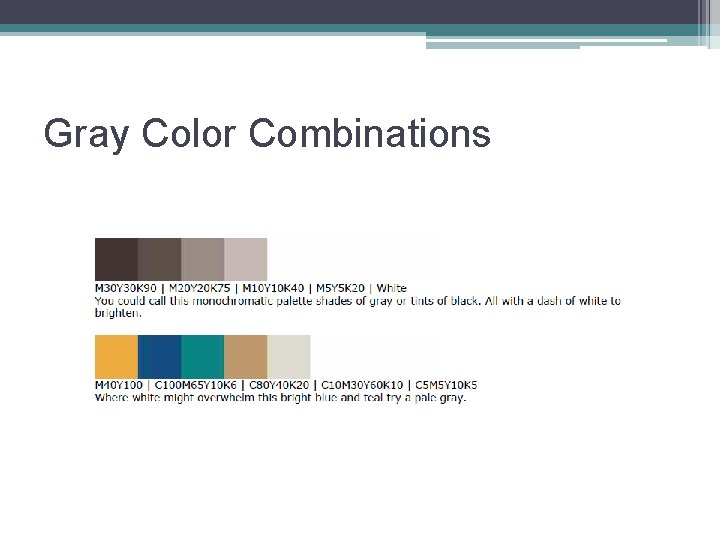
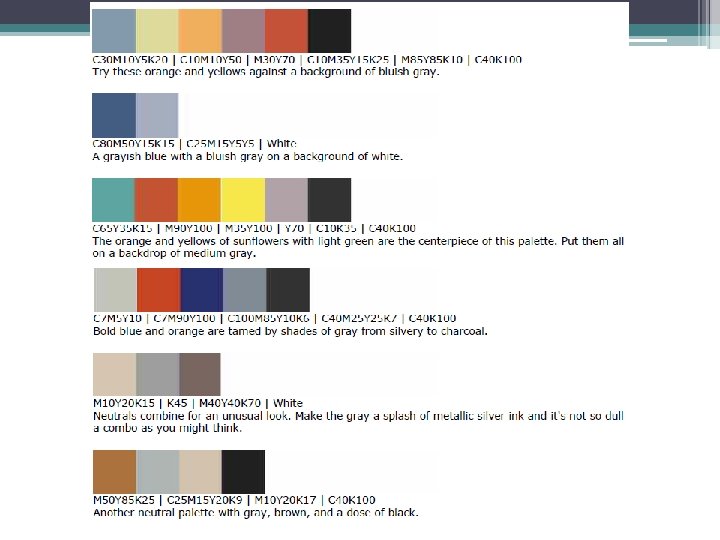
Gray and Silver • Gray is neutral, balanced • Usually cool and collected, rarely evoking emotion • Can also be seen as cloudy or moody • Dark, charcoal gray – strength, mystery of black • Silver – lively, playful, sleek, elegant
Gray Color Combinations
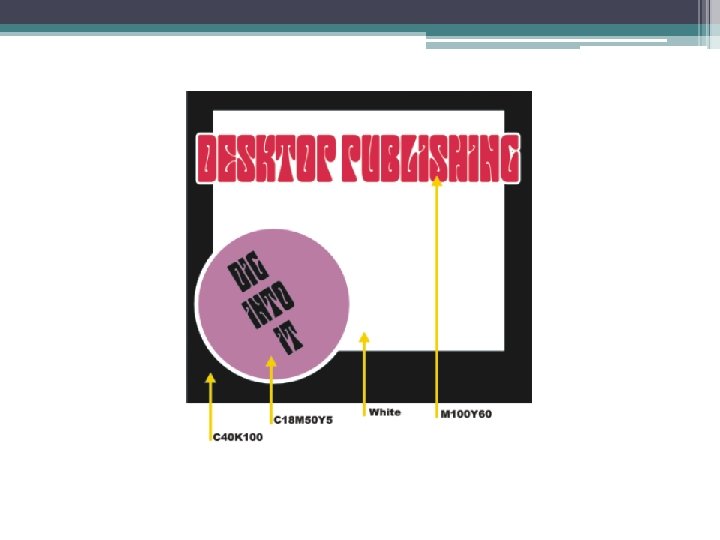
Dark & Light • Black and white are opposites, but share neutrality • Black is conservative (goes with every color except very dark) • Black is… serious, conventional, mysterious, sexy, sophisticated, both positive and negative • In the West, it is the color of mourning • Among youth, it is seen as rebellious • Makes lighter colors pop out
Dark & Light • White is purity, cleanliness, innocent • Also goes with any color • In West, color for brides; In East, color funerals • Often associated with hospitals, esp doctors, nurses, and dentists • Light beiges and creams carry the same attributes as white, but are less blinding, more subdued