
Elements of Design Chapter 10 FORM SHAPE Shape
- Slides: 19
Elements of Design Chapter 10
FORM & SHAPE
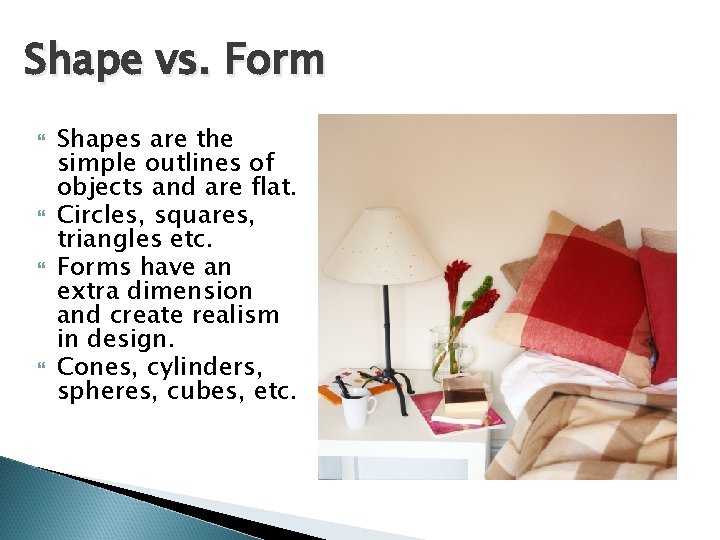
Shape vs. Form Shapes are the simple outlines of objects and are flat. Circles, squares, triangles etc. Forms have an extra dimension and create realism in design. Cones, cylinders, spheres, cubes, etc.
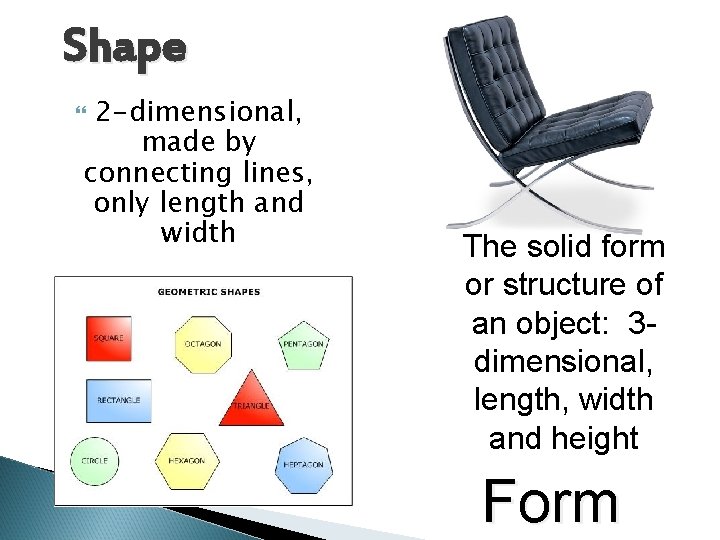
Shape 2 -dimensional, made by connecting lines, only length and width The solid form or structure of an object: 3 dimensional, length, width and height Form
Shape Shape may be: Shiny and reflect images- mirrors Transparent and create visual effects window glass Textured and absorb light and sound window treatments and carpeting Hard or Soft Plain or patterned Colored light or dark
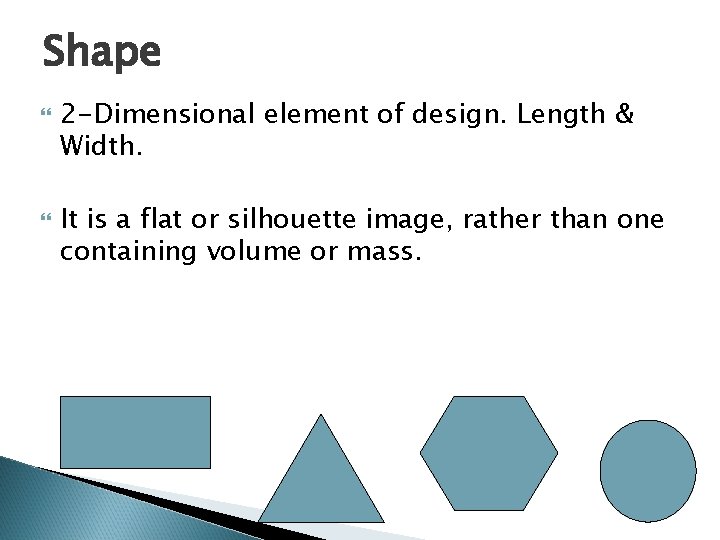
Shape 2 -Dimensional element of design. Length & Width. It is a flat or silhouette image, rather than one containing volume or mass.
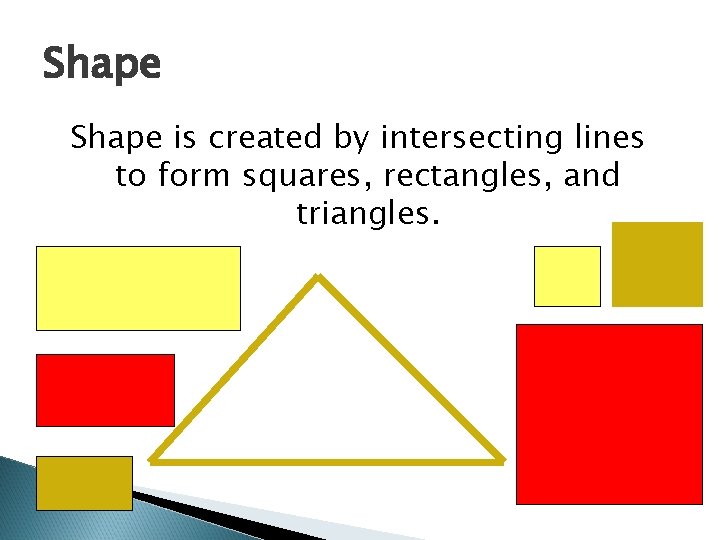
Shape is created by intersecting lines to form squares, rectangles, and triangles.
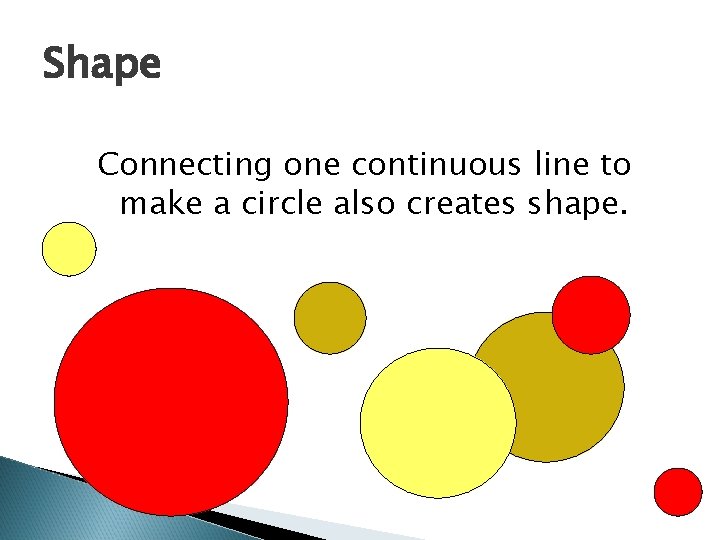
Shape Connecting one continuous line to make a circle also creates shape.
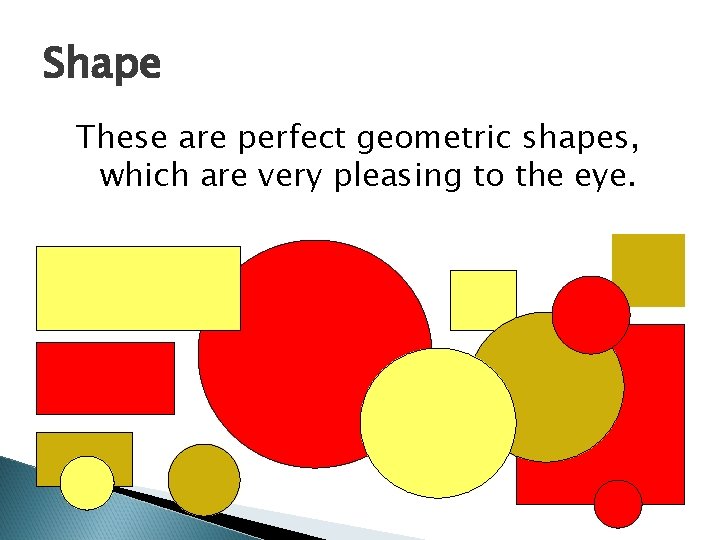
Shape These are perfect geometric shapes, which are very pleasing to the eye.
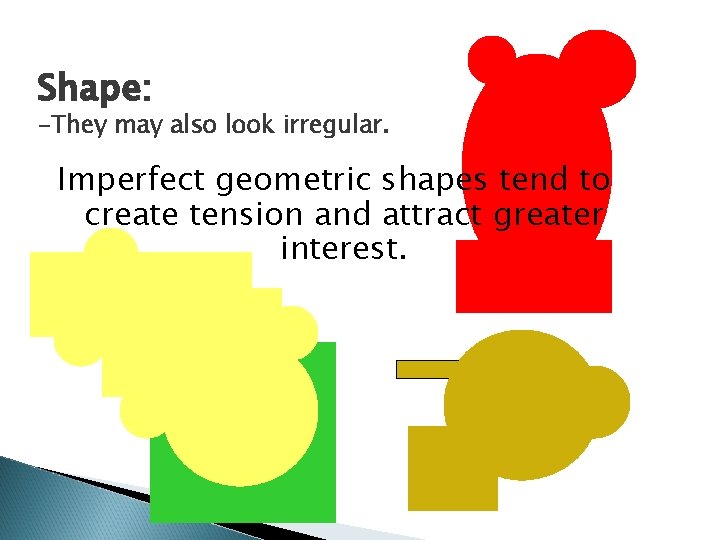
Shape: -They may also look irregular. Imperfect geometric shapes tend to create tension and attract greater interest.
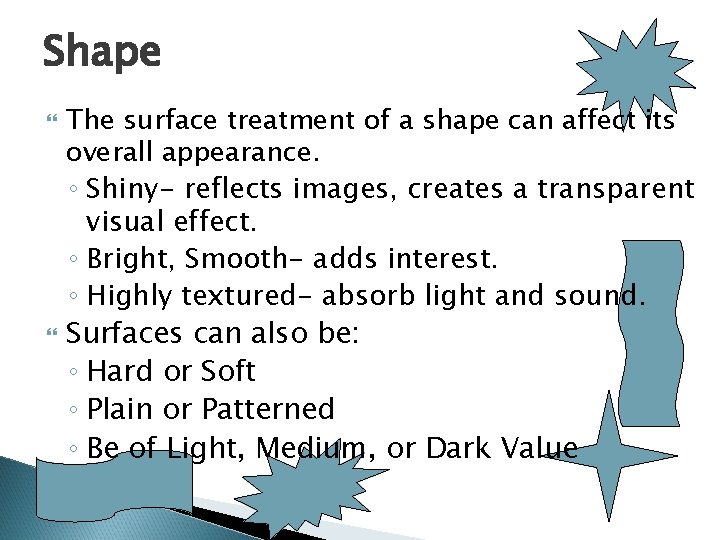
Shape The surface treatment of a shape can affect its overall appearance. ◦ Shiny- reflects images, creates a transparent visual effect. ◦ Bright, Smooth- adds interest. ◦ Highly textured- absorb light and sound. Surfaces can also be: ◦ Hard or Soft ◦ Plain or Patterned ◦ Be of Light, Medium, or Dark Value
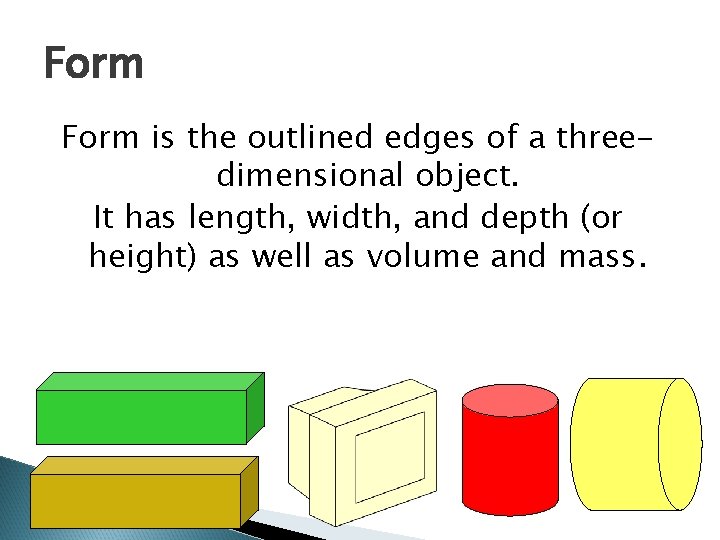
Form is the outlined edges of a threedimensional object. It has length, width, and depth (or height) as well as volume and mass.
Form 3 -dimensional Length x Width x Depth x Volume x Mass Cubes, pyramids, cones, and spheres are common forms. Other examples of form can be found in furniture and architecture. Forms, such as furniture should be chosen after considering how they relate to the interior space.
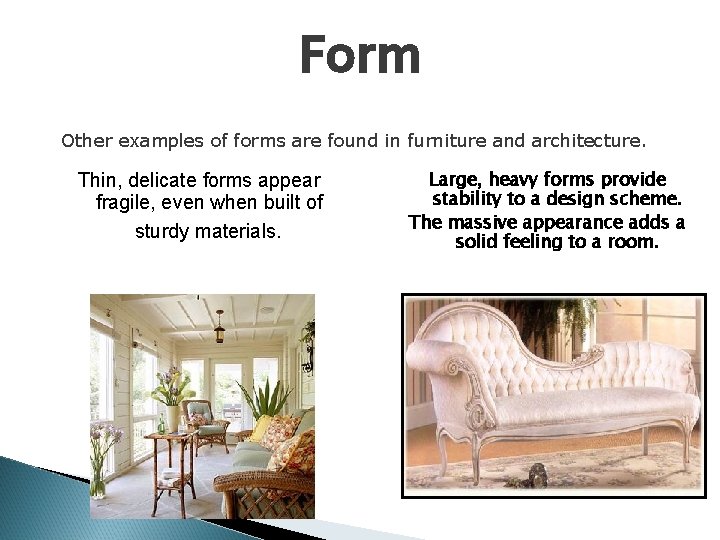
Form Other examples of forms are found in furniture and architecture. Thin, delicate forms appear fragile, even when built of sturdy materials. Large, heavy forms provide stability to a design scheme. The massive appearance adds a solid feeling to a room.
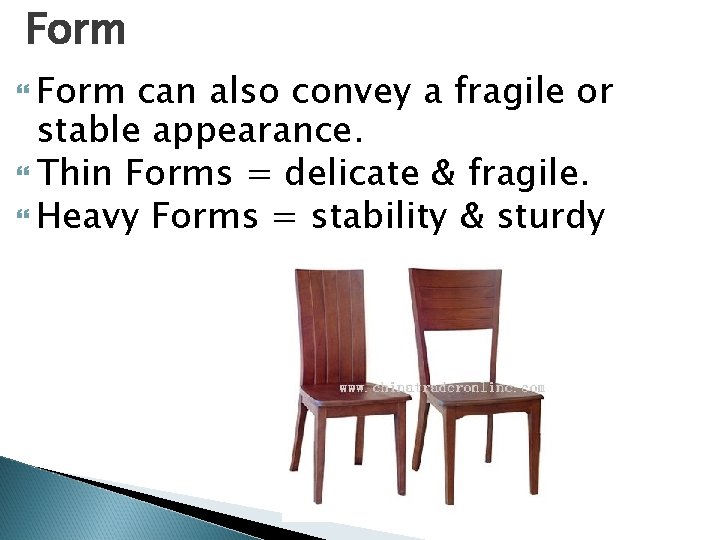
Form can also convey a fragile or stable appearance. Thin Forms = delicate & fragile. Heavy Forms = stability & sturdy
Instability Placement of form can also create the appearance of instability. When the bottom of an object is too small in proportion to the top, the object looks as if it might topple over. A triangle balanced on one of its 3 points is a classic example of top heavy form. The base is too small.
Apparent Weight is an interesting factor in considering form. A designer is more concerned with an objects “apparent weight” than its actual weight. Color and texture can make form appear lighter or heavier. Ex: the form of a beige couch against a beige wall may not appear especially heavy. That same couch with a denim slip cover against the beige wall would have more “apparent weight”
Form Related forms tend to look better together than unrelated forms. A room is more pleasing if the form of the dominate piece is repeated in minor pieces and accessories in a room. The same is true for architectural features.
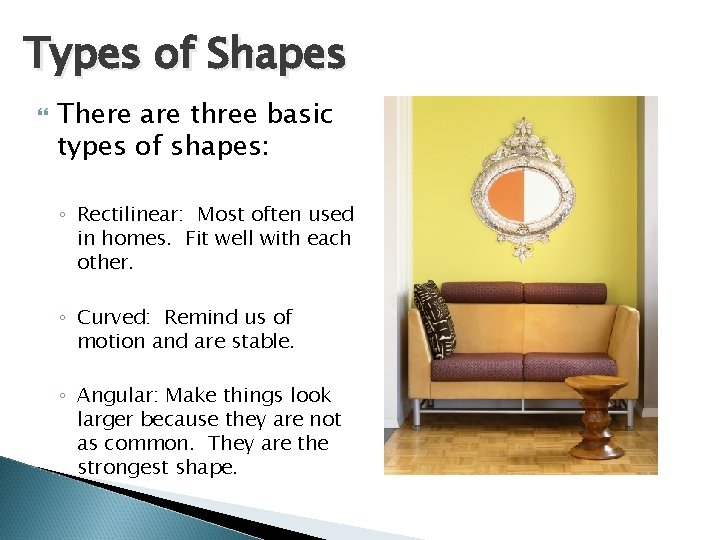
Types of Shapes There are three basic types of shapes: ◦ Rectilinear: Most often used in homes. Fit well with each other. ◦ Curved: Remind us of motion and are stable. ◦ Angular: Make things look larger because they are not as common. They are the strongest shape.