
ELEMENTS OF DESIGN A Brief Overview The path
ELEMENTS OF DESIGN A Brief Overview
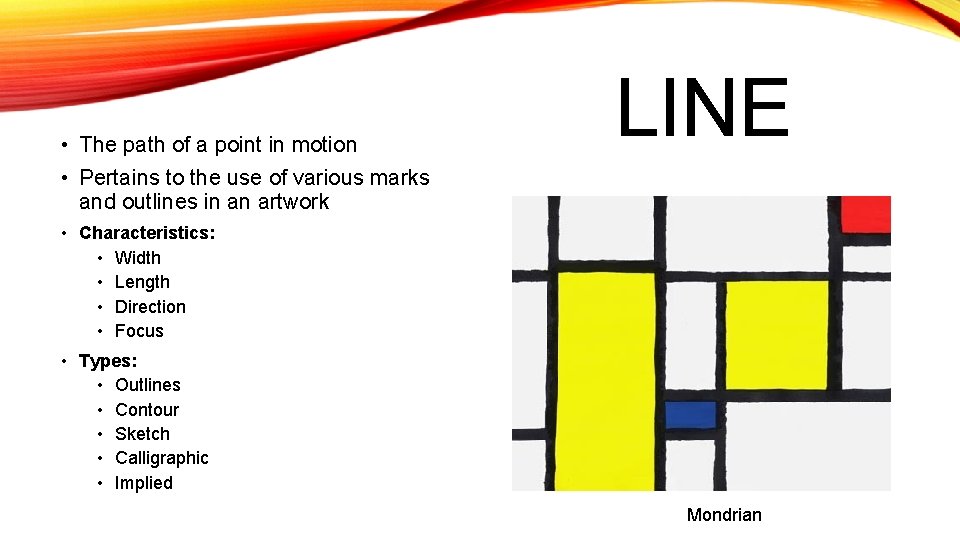
• The path of a point in motion LINE • Pertains to the use of various marks and outlines in an artwork • Characteristics: • Width • Length • Direction • Focus • Types: • Outlines • Contour • Sketch • Calligraphic • Implied Mondrian

LIN E 1. Draw 5 boxes. 2. Create a different kind of line inside each box. 3. Label them.
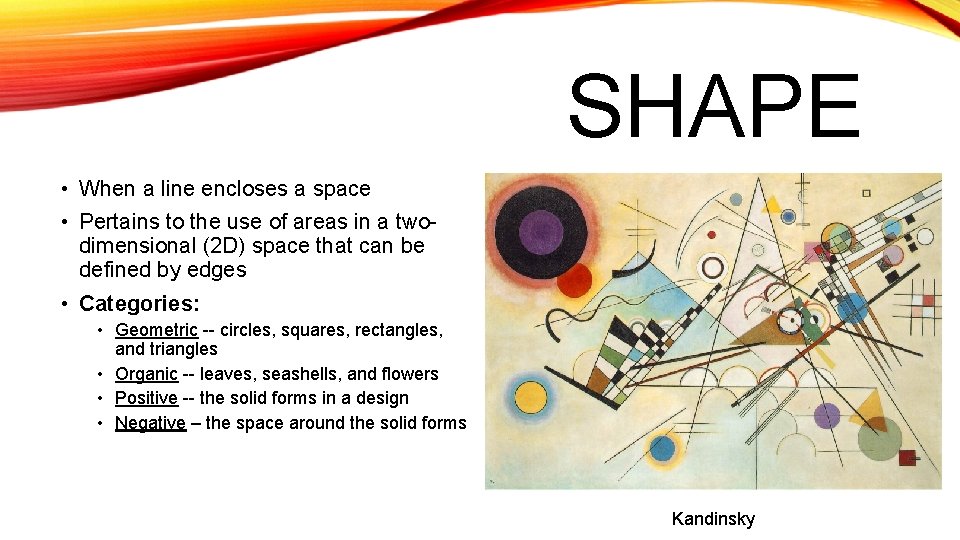
SHAPE • When a line encloses a space • Pertains to the use of areas in a twodimensional (2 D) space that can be defined by edges • Categories: • Geometric -- circles, squares, rectangles, and triangles • Organic -- leaves, seashells, and flowers • Positive -- the solid forms in a design • Negative – the space around the solid forms Kandinsky
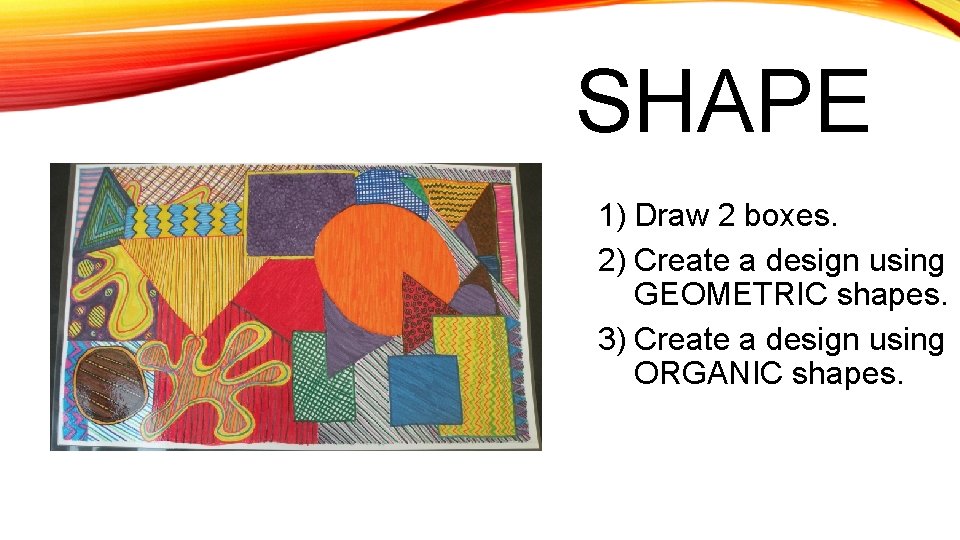
SHAPE 1) Draw 2 boxes. 2) Create a design using GEOMETRIC shapes. 3) Create a design using ORGANIC shapes.
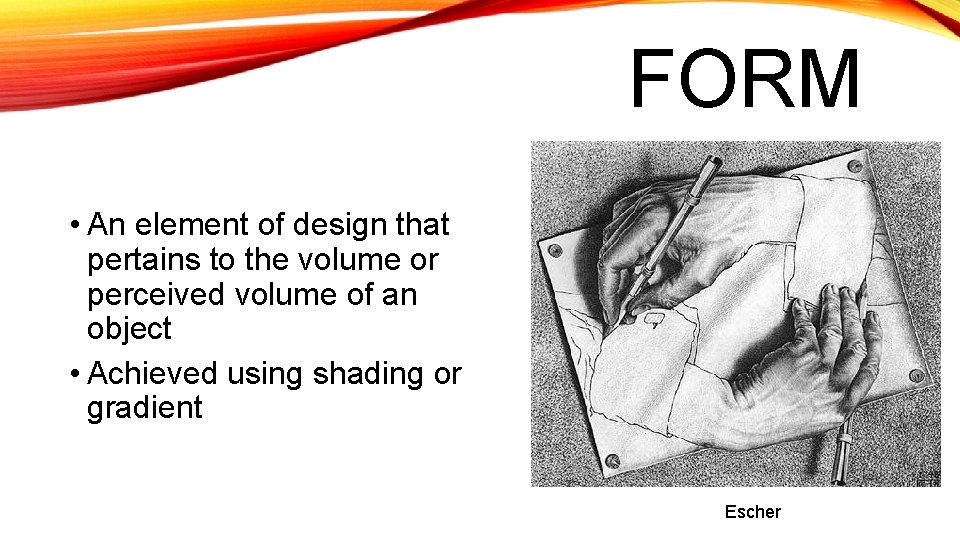
FORM • An element of design that pertains to the volume or perceived volume of an object • Achieved using shading or gradient Escher
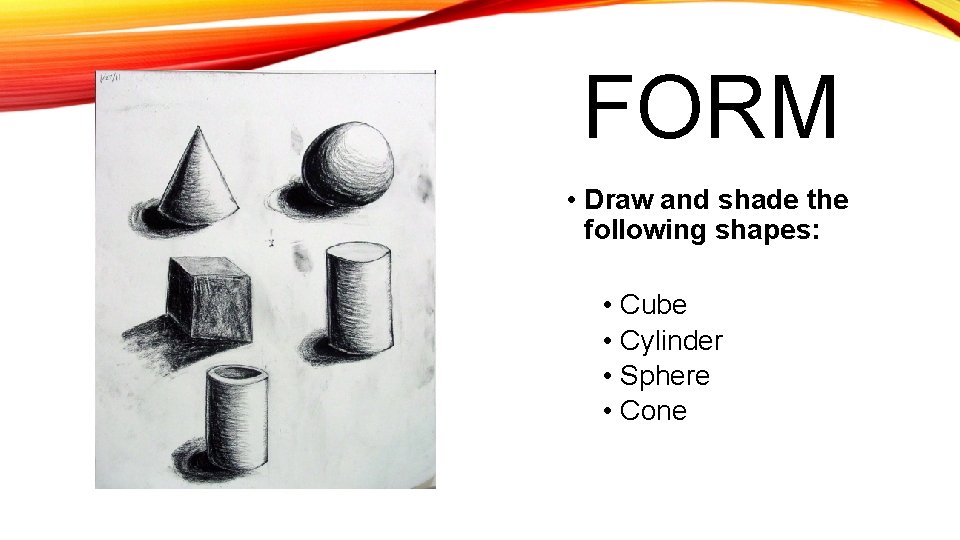
FORM • Draw and shade the following shapes: • Cube • Cylinder • Sphere • Cone
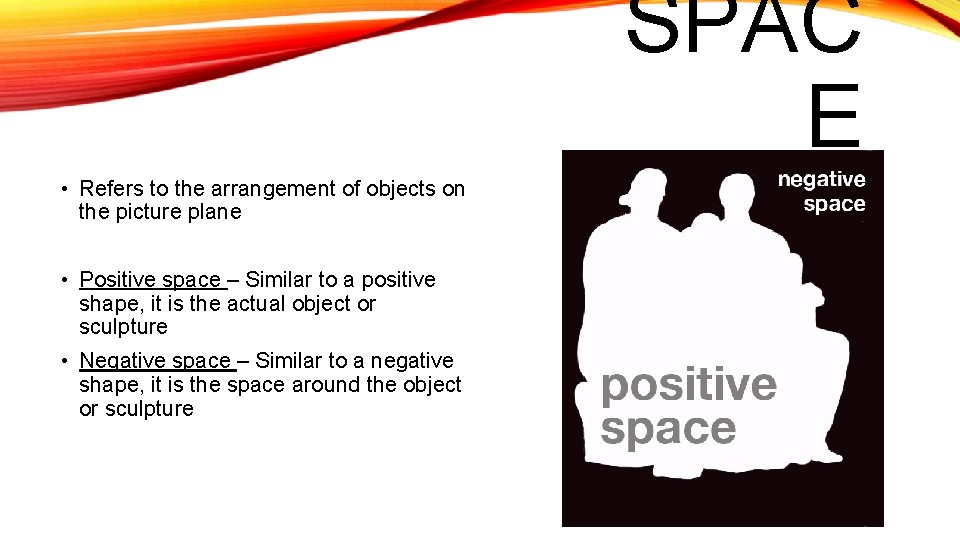
SPAC E • Refers to the arrangement of objects on the picture plane • Positive space – Similar to a positive shape, it is the actual object or sculpture • Negative space – Similar to a negative shape, it is the space around the object or sculpture
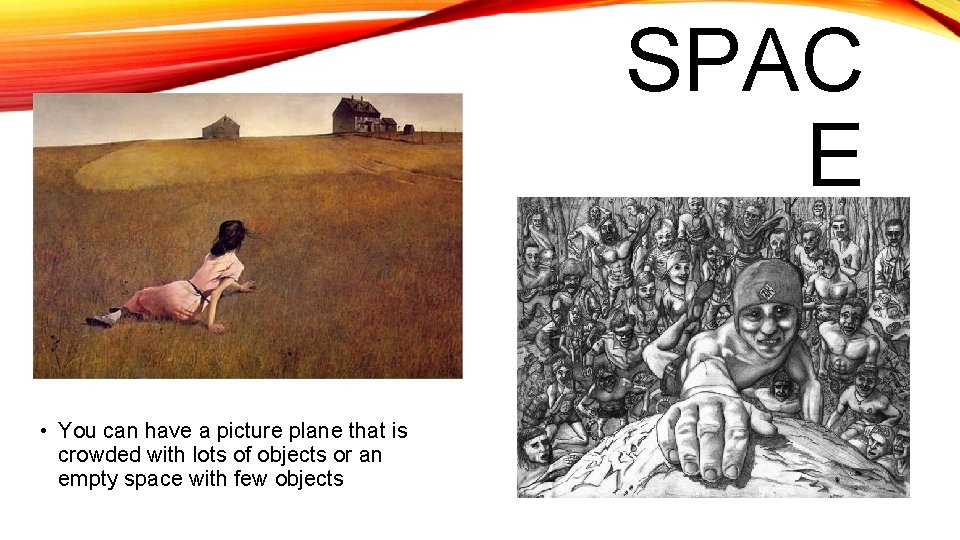
SPAC E • You can have a picture plane that is crowded with lots of objects or an empty space with few objects
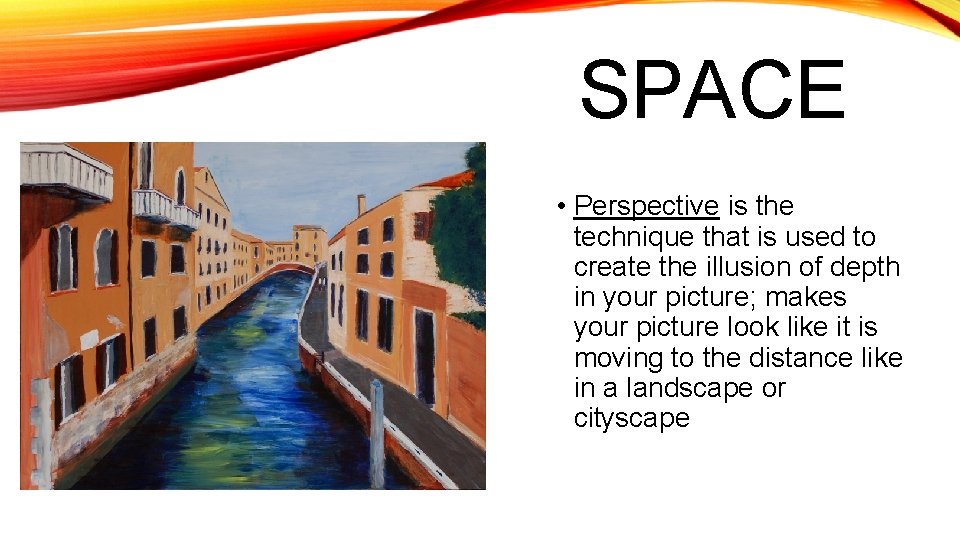
SPACE • Perspective is the technique that is used to create the illusion of depth in your picture; makes your picture look like it is moving to the distance like in a landscape or cityscape
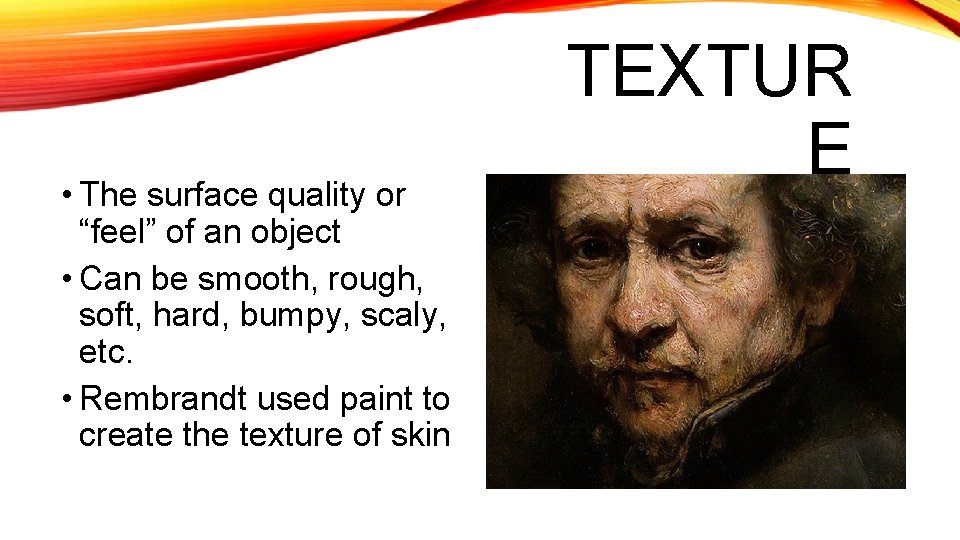
• The surface quality or “feel” of an object • Can be smooth, rough, soft, hard, bumpy, scaly, etc. • Rembrandt used paint to create the texture of skin TEXTUR E
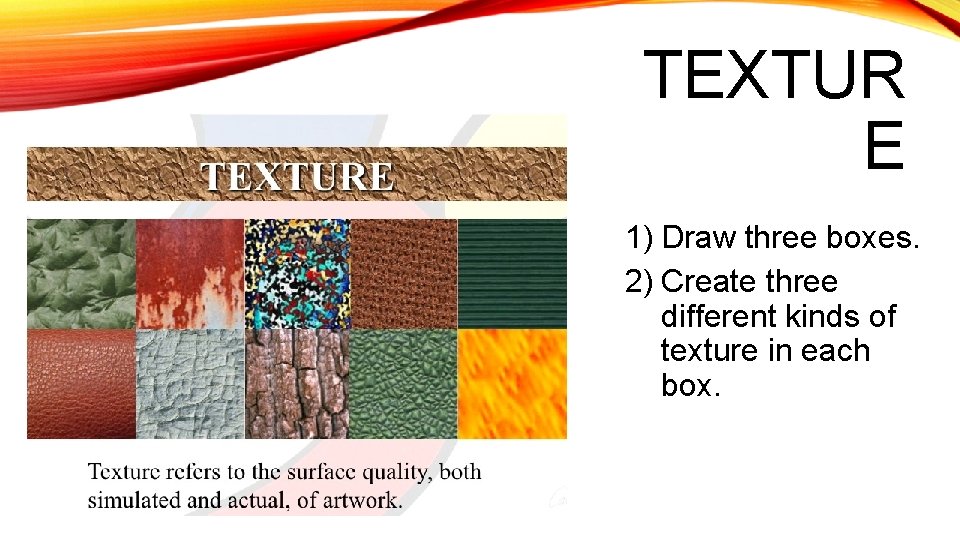
TEXTUR E 1) Draw three boxes. 2) Create three different kinds of texture in each box.
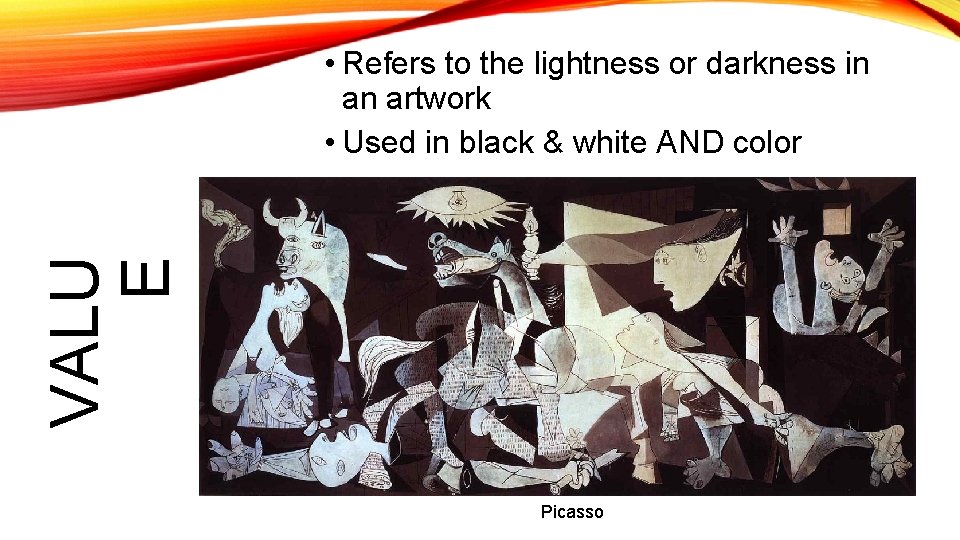
VALU E • Refers to the lightness or darkness in an artwork • Used in black & white AND color Picasso
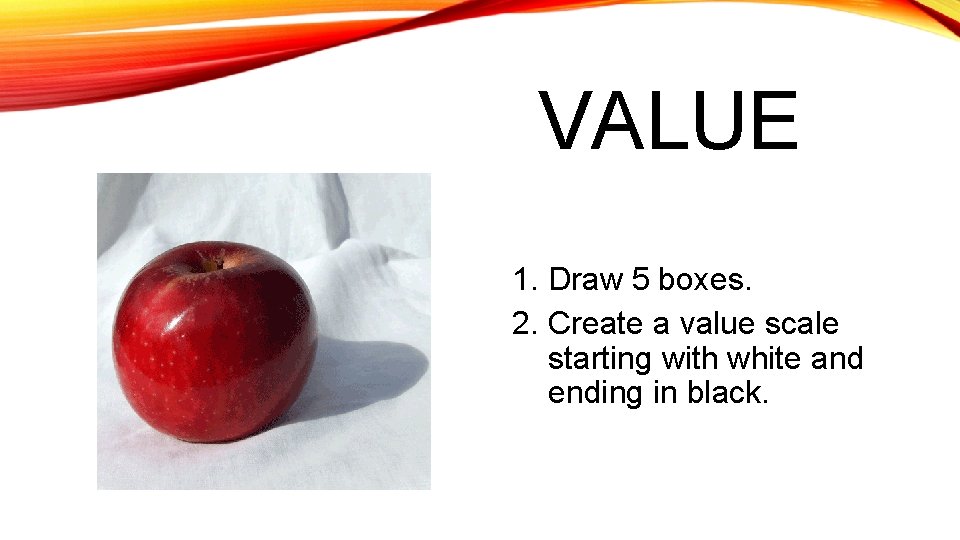
VALUE 1. Draw 5 boxes. 2. Create a value scale starting with white and ending in black.
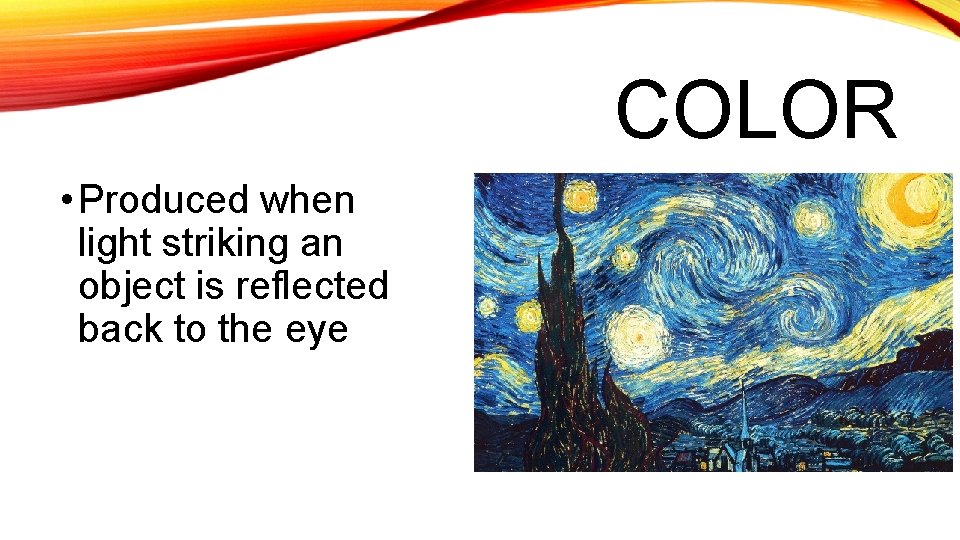
COLOR • Produced when light striking an object is reflected back to the eye
COLOR • Color harmonies are certain combinations of colors that create positive looks or feelings (ex. Analogous) • Categories in color refer to terms like primary, secondary, tertiary, complementary, warm, cool, etc. • Properties: • Hue -- the name we give to a color • Intensity -- vividness of the color • Value -- how light or dark it is
- Slides: 16