
Elements of Design 1 Prepared by Dr Ahmed
Elements of Design 1 Prepared by Dr. Ahmed Azmy
What are Elements of Design? � The elements of design are the basic components used as part of any composition. In most situations the elements of design build upon one another, the former element helping to create the latter
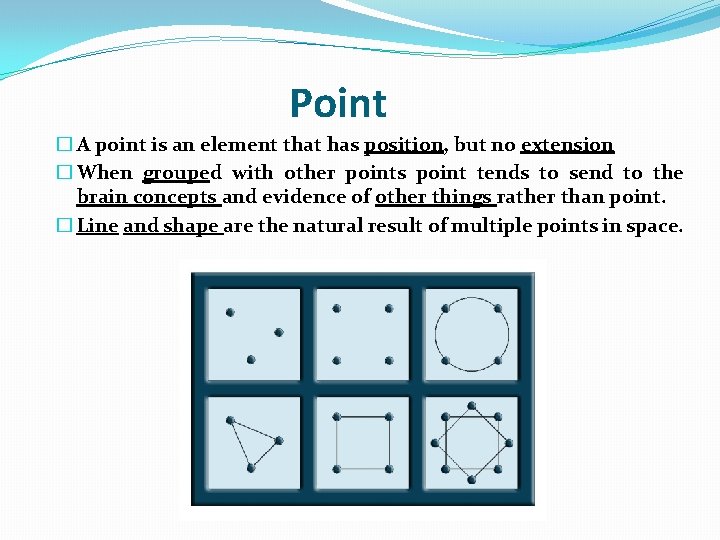
Point � A point is an element that has position, but no extension � When grouped with other points point tends to send to the brain concepts and evidence of other things rather than point. � Line and shape are the natural result of multiple points in space.
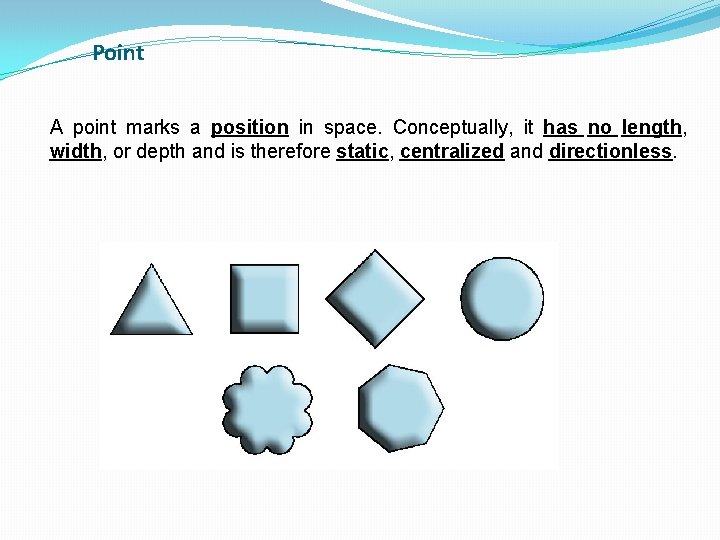
Point A point marks a position in space. Conceptually, it has no length, width, or depth and is therefore static, centralized and directionless.
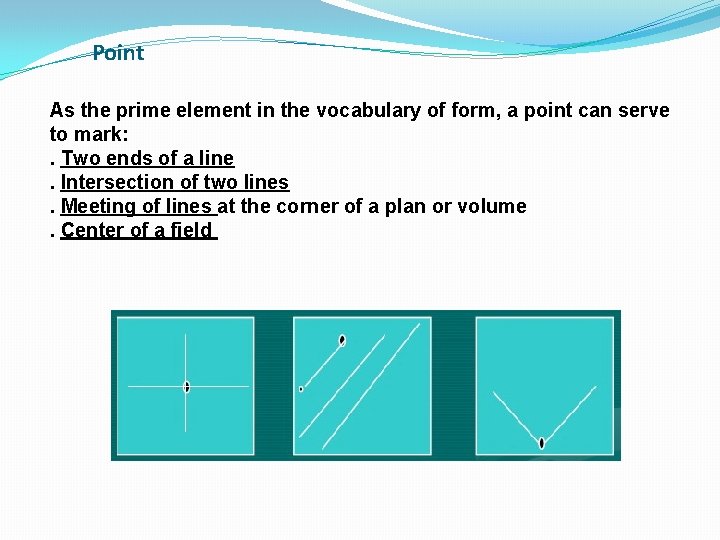
Point As the prime element in the vocabulary of form, a point can serve to mark: . Two ends of a line. Intersection of two lines. Meeting of lines at the corner of a plan or volume. Center of a field
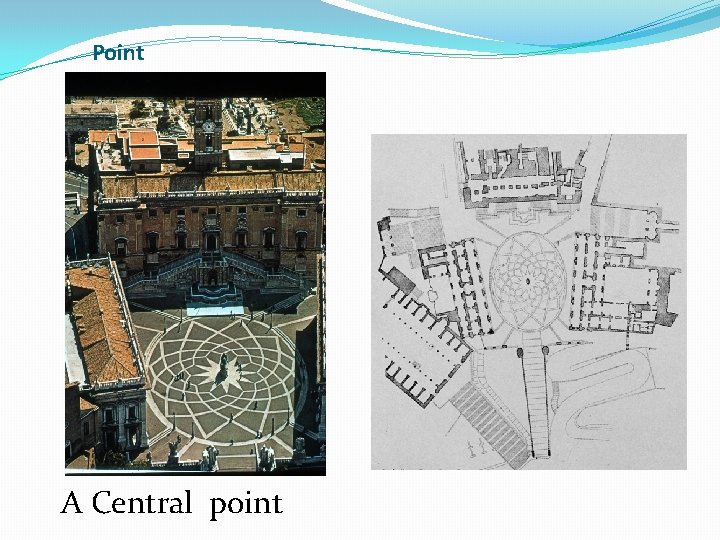
Point A Central point
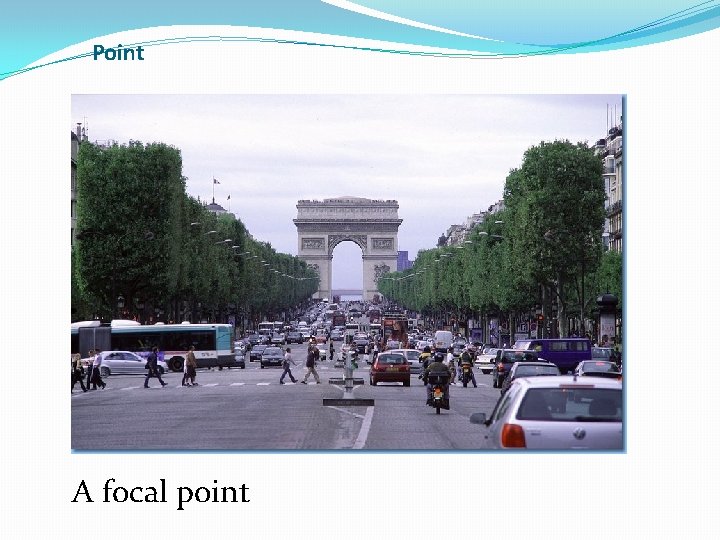
Point A focal point
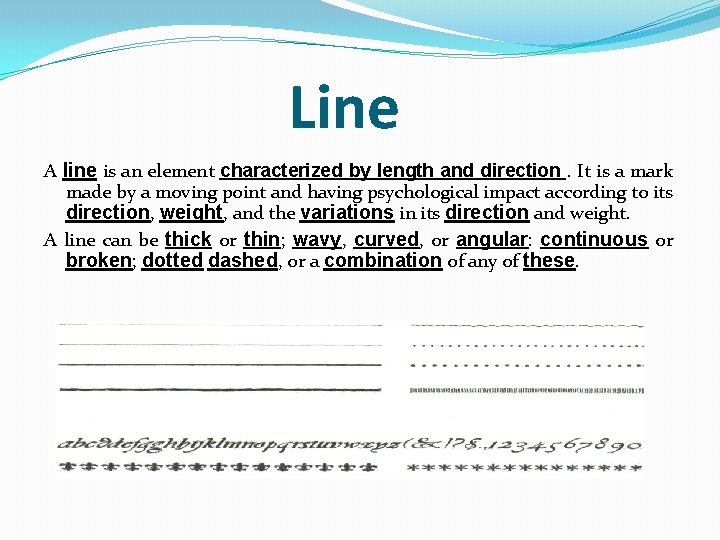
Line A line is an element characterized by length and direction. It is a mark made by a moving point and having psychological impact according to its direction, weight, and the variations in its direction and weight. A line can be thick or thin; wavy, curved, or angular: continuous or broken; dotted dashed, or a combination of any of these.
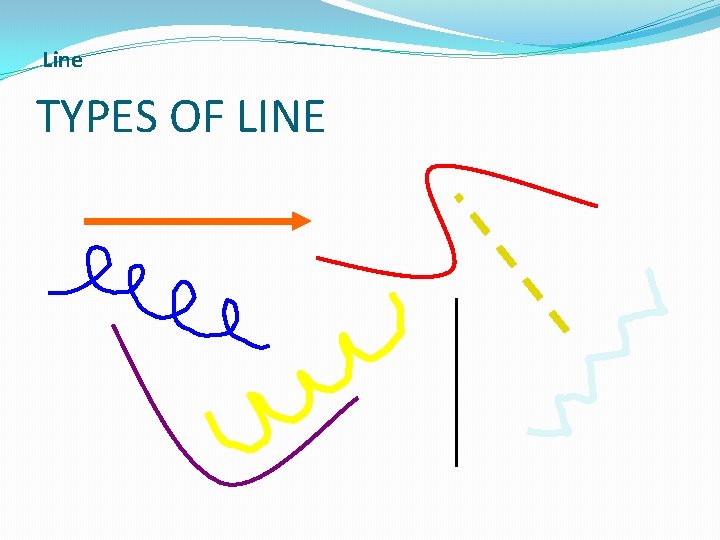
Line TYPES OF LINE
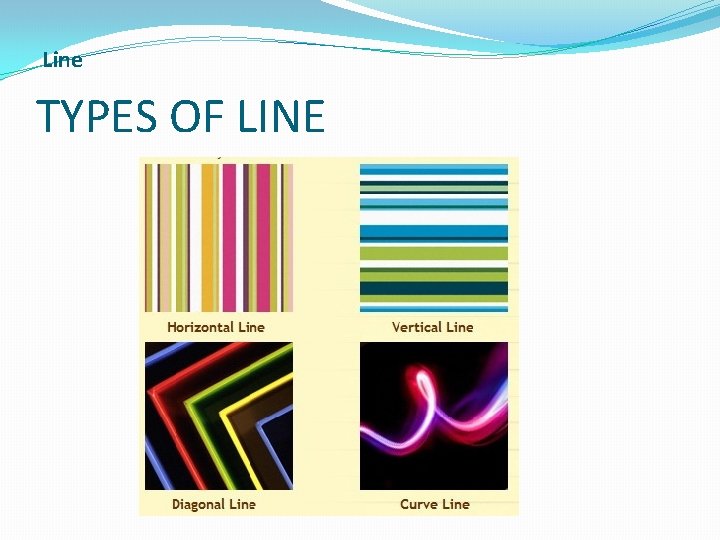
Line TYPES OF LINE
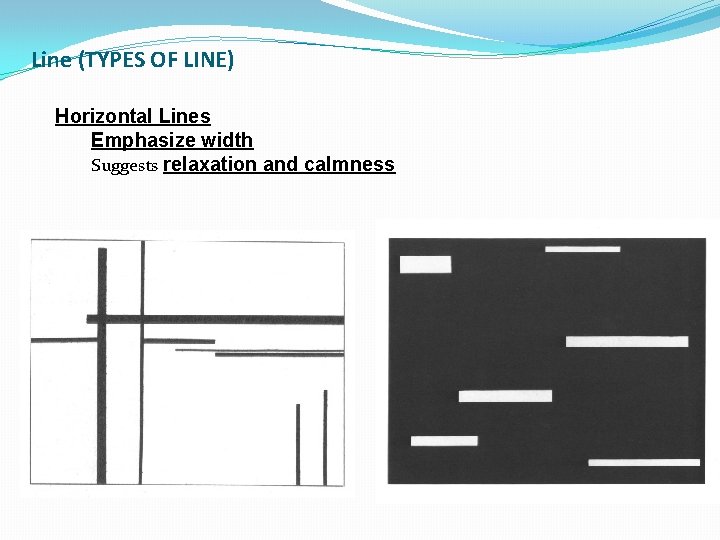
Line (TYPES OF LINE) Horizontal Lines Emphasize width Suggests relaxation and calmness
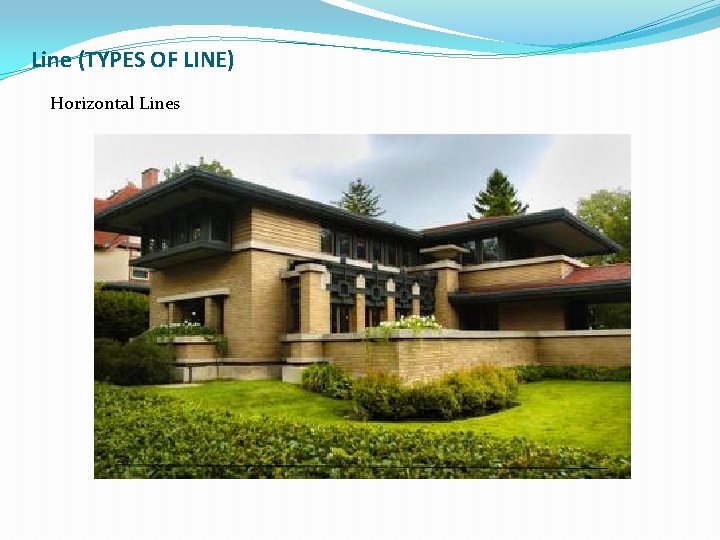
Line (TYPES OF LINE) Horizontal Lines
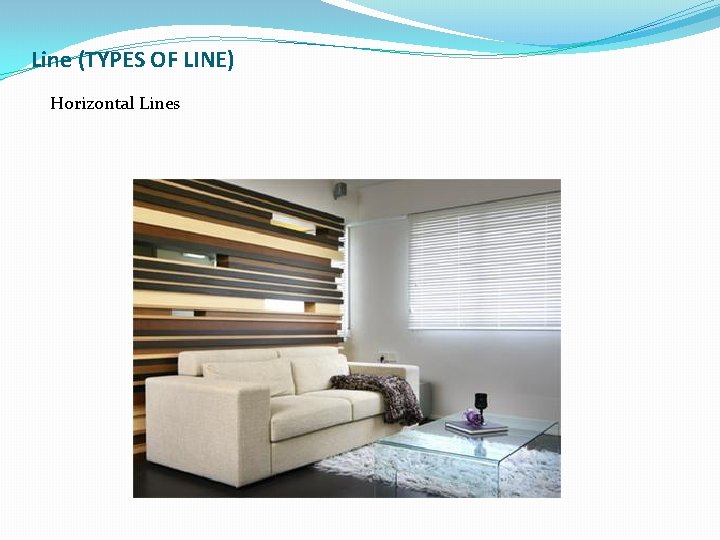
Line (TYPES OF LINE) Horizontal Lines
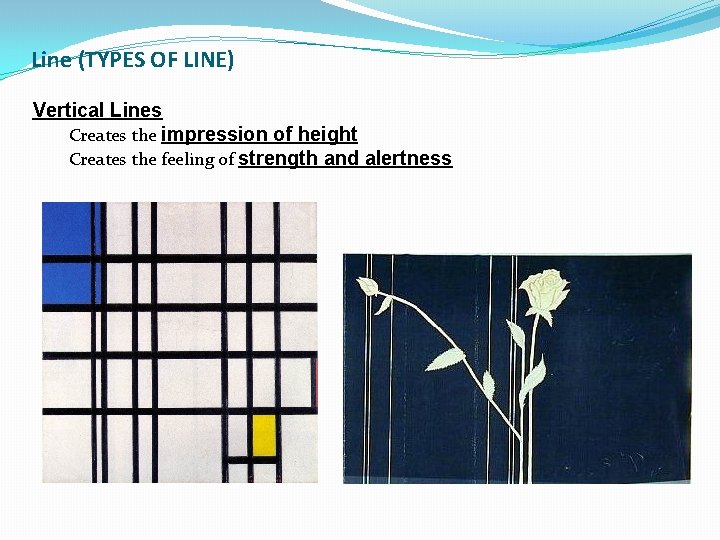
Line (TYPES OF LINE) Vertical Lines Creates the impression of height Creates the feeling of strength and alertness
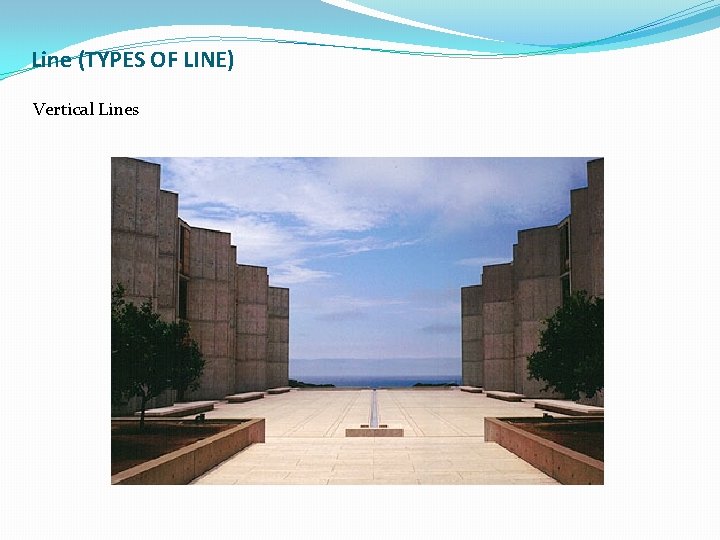
Line (TYPES OF LINE) Vertical Lines
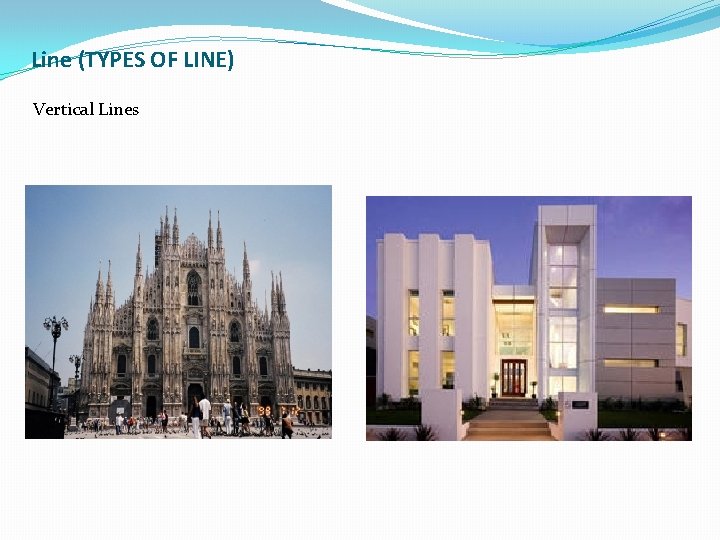
Line (TYPES OF LINE) Vertical Lines
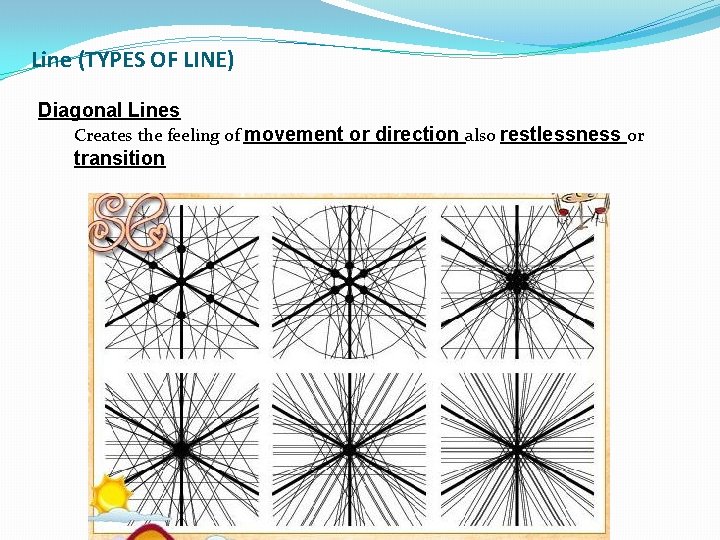
Line (TYPES OF LINE) Diagonal Lines Creates the feeling of movement or direction also restlessness or transition
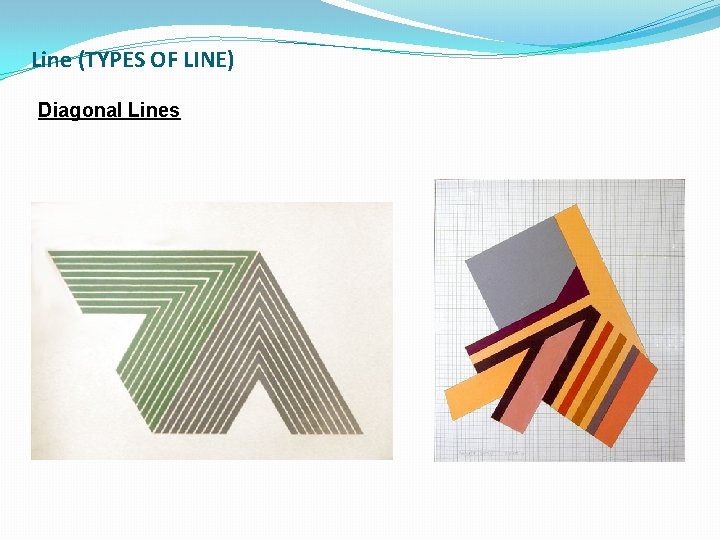
Line (TYPES OF LINE) Diagonal Lines
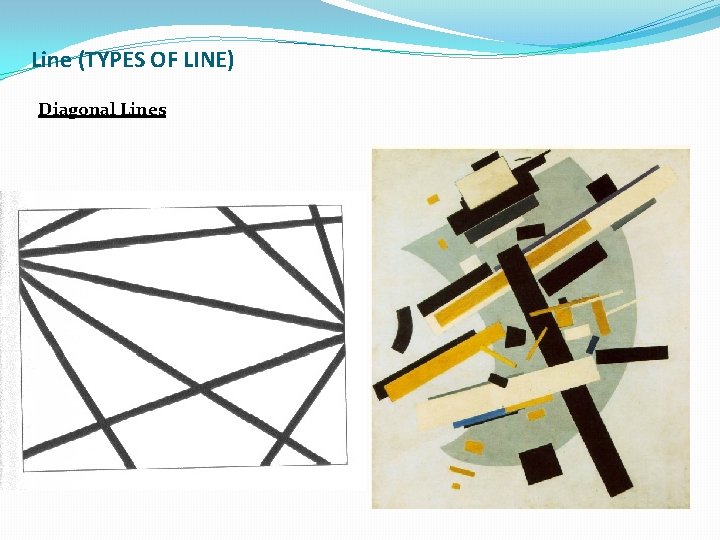
Line (TYPES OF LINE) Diagonal Lines
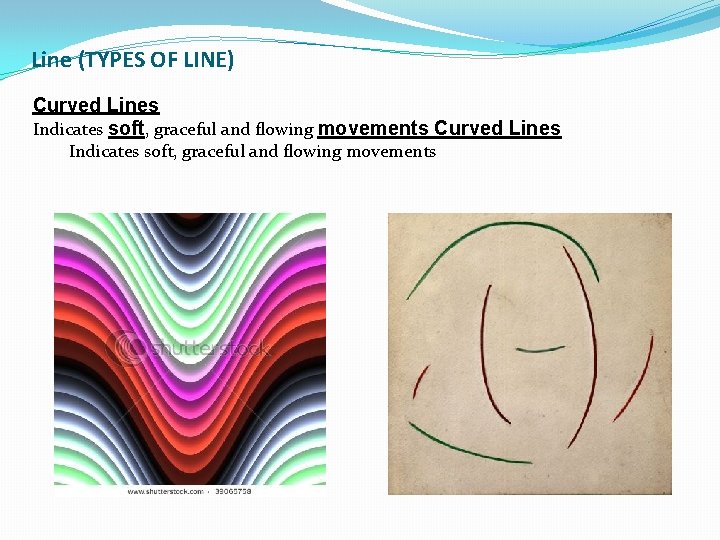
Line (TYPES OF LINE) Curved Lines Indicates soft, graceful and flowing movements
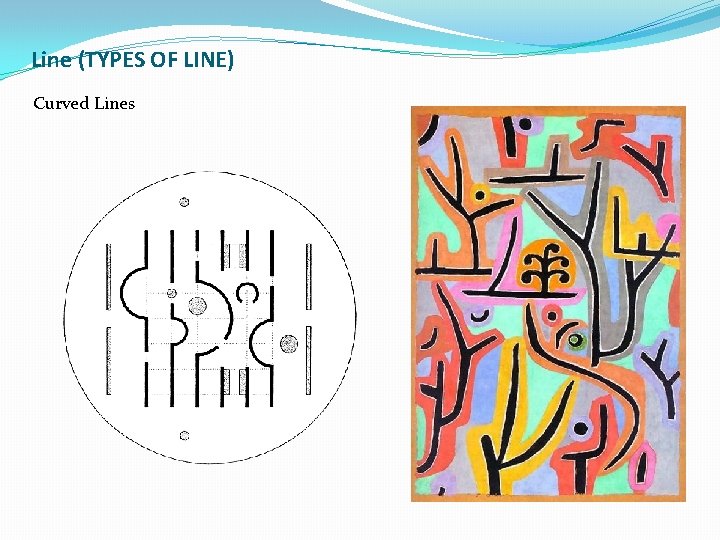
Line (TYPES OF LINE) Curved Lines
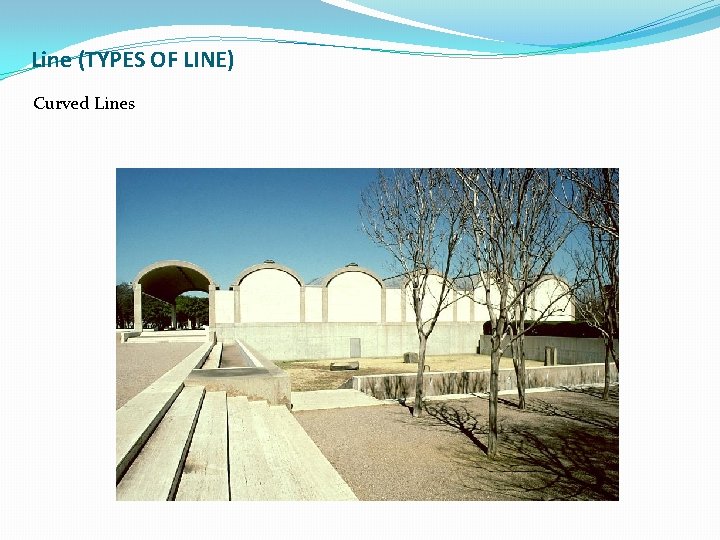
Line (TYPES OF LINE) Curved Lines
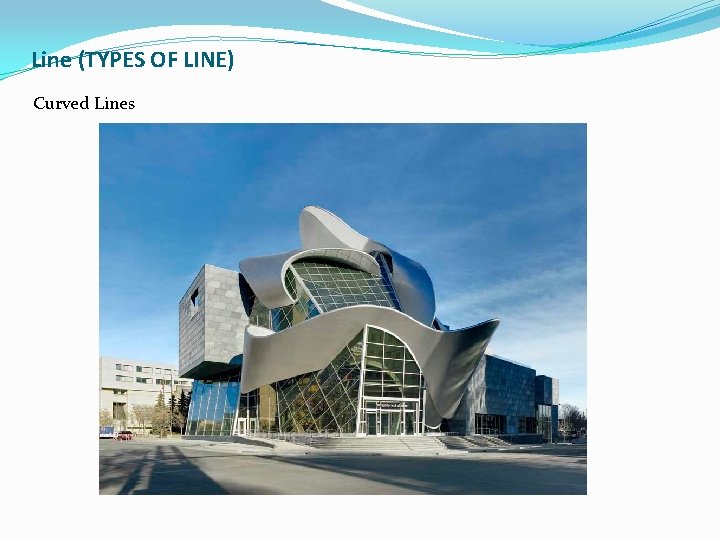
Line (TYPES OF LINE) Curved Lines
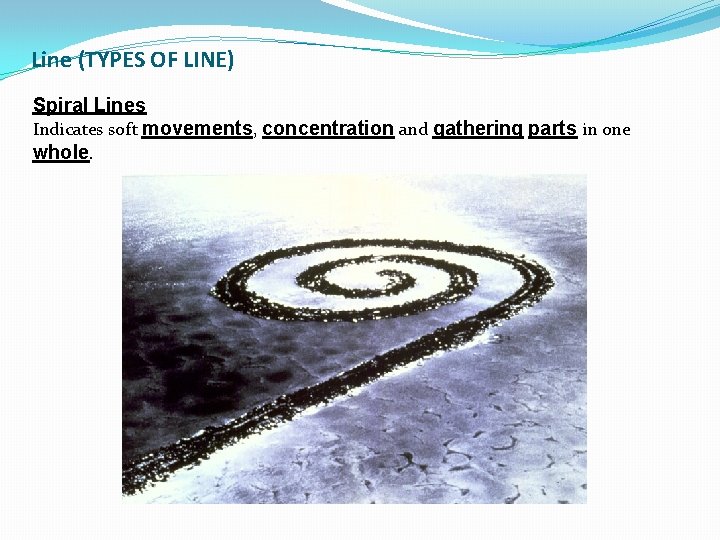
Line (TYPES OF LINE) Spiral Lines Indicates soft movements, concentration and gathering parts in one whole.
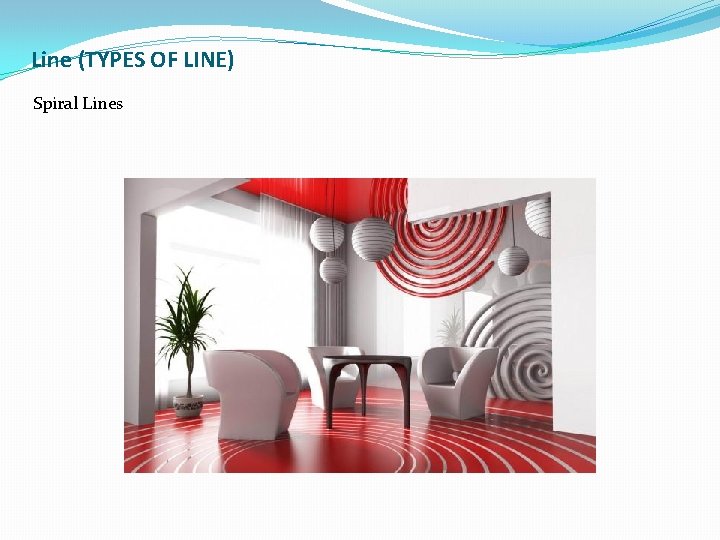
Line (TYPES OF LINE) Spiral Lines
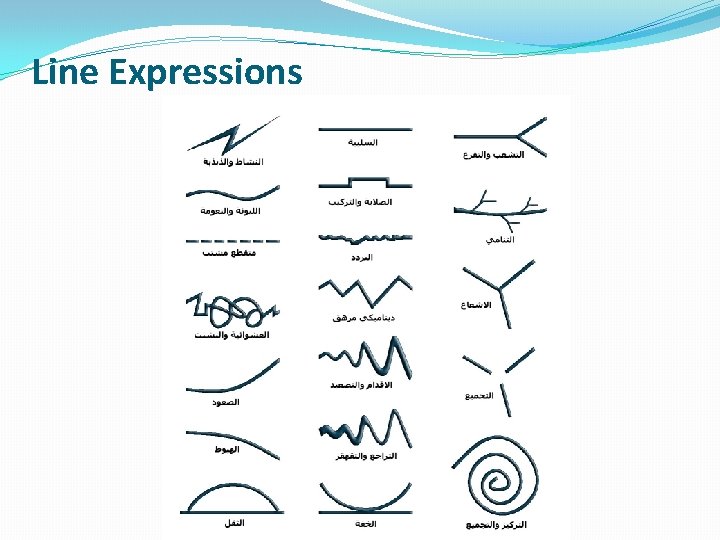
Line Expressions
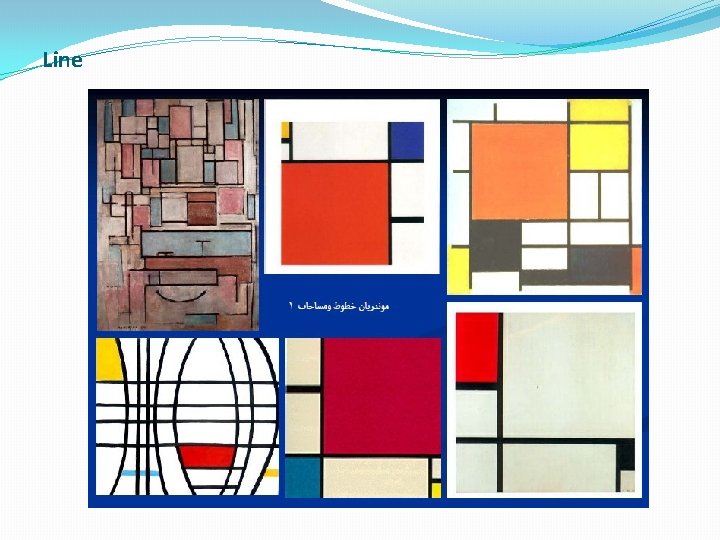
Line
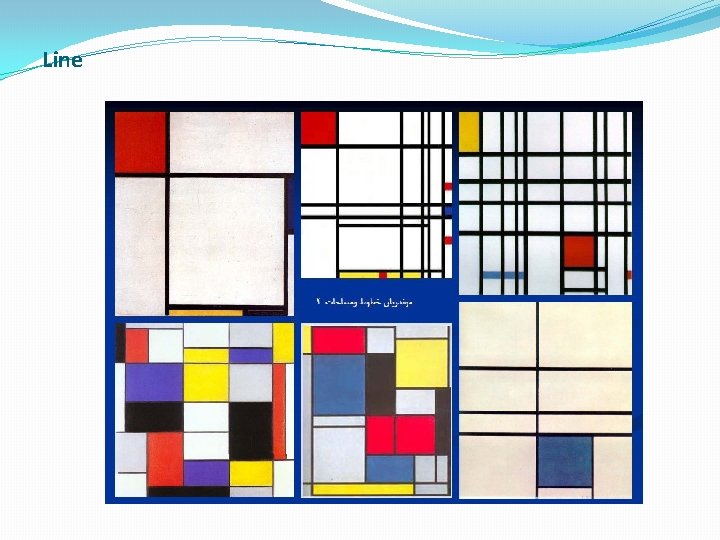
Line
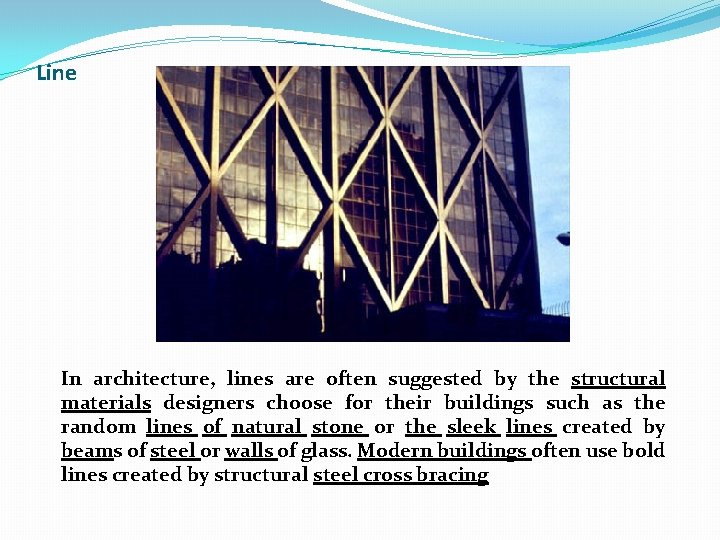
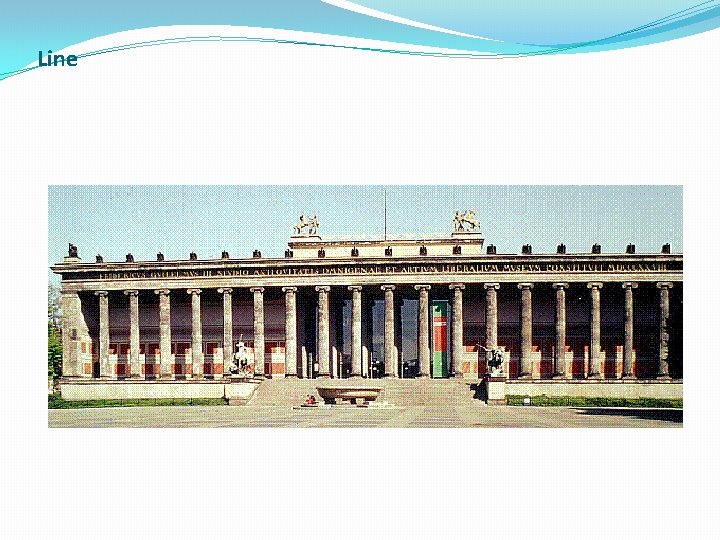
Line In architecture, lines are often suggested by the structural materials designers choose for their buildings such as the random lines of natural stone or the sleek lines created by beams of steel or walls of glass. Modern buildings often use bold lines created by structural steel cross bracing
Line
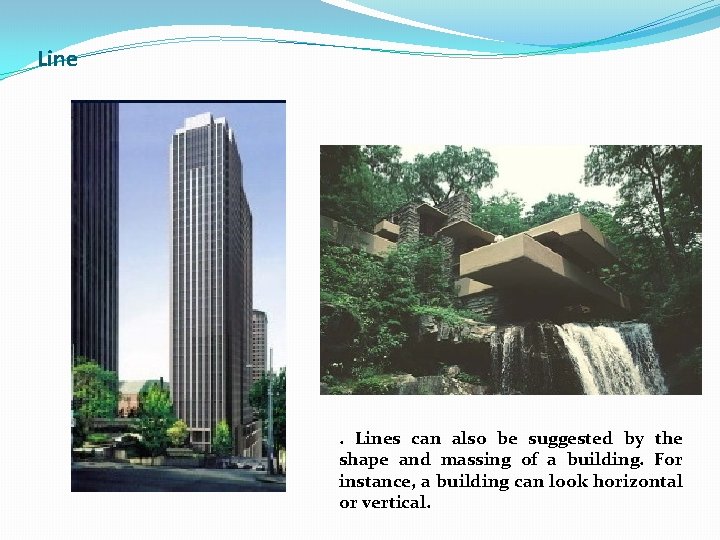
Line . Lines can also be suggested by the shape and massing of a building. For instance, a building can look horizontal or vertical.
Line
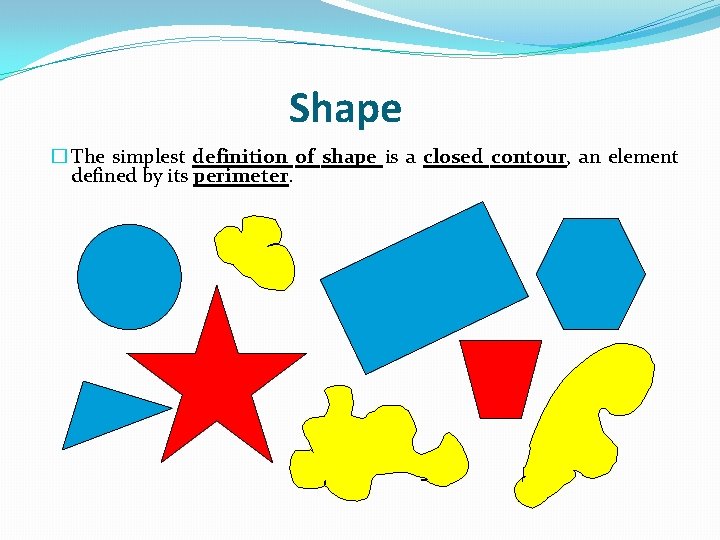
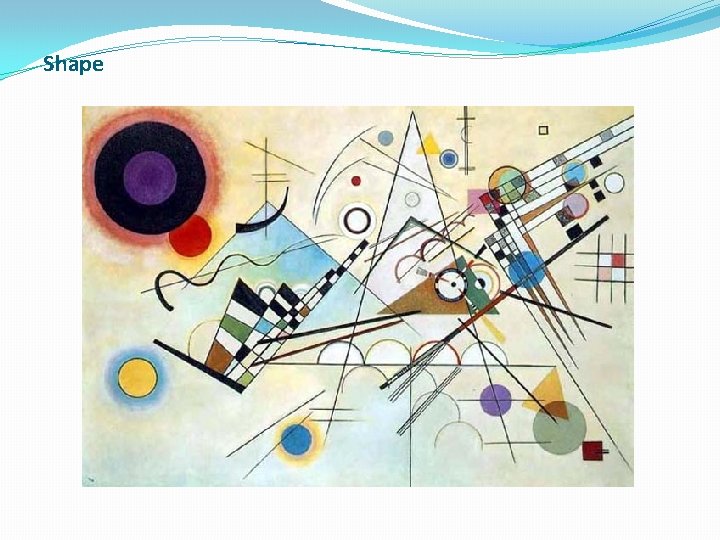
Shape � The simplest definition of shape is a closed contour, an element defined by its perimeter.
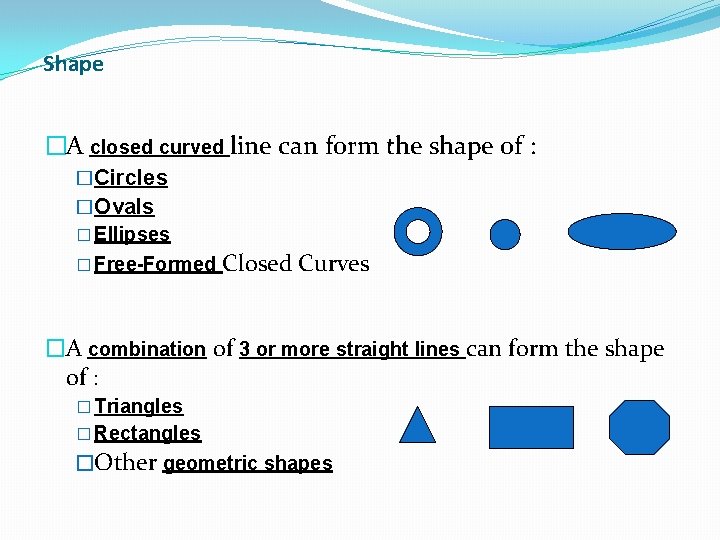
Shape �A closed curved line can form the shape of : �Circles �Ovals � Ellipses � Free-Formed Closed Curves �A combination of 3 or more straight lines can form the shape of : � Triangles � Rectangles �Other geometric shapes
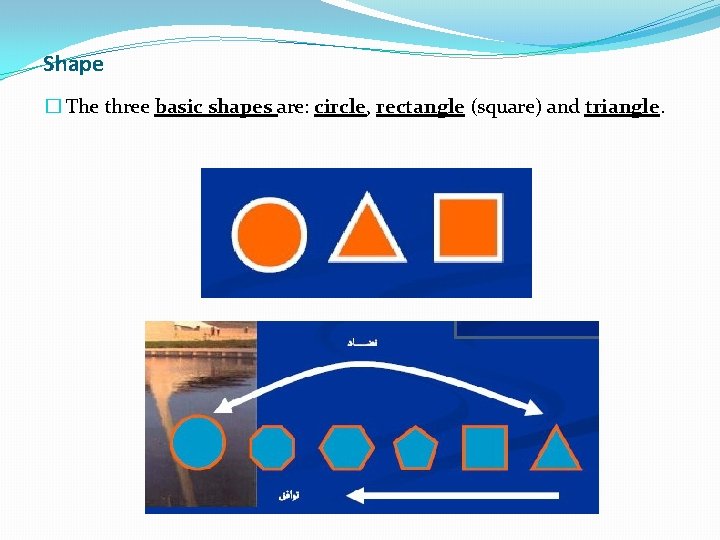
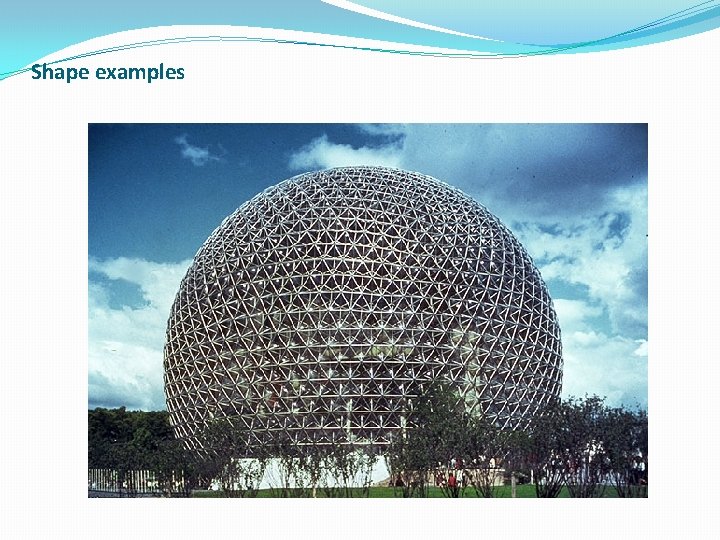
Shape � The three basic shapes are: circle, rectangle (square) and triangle.
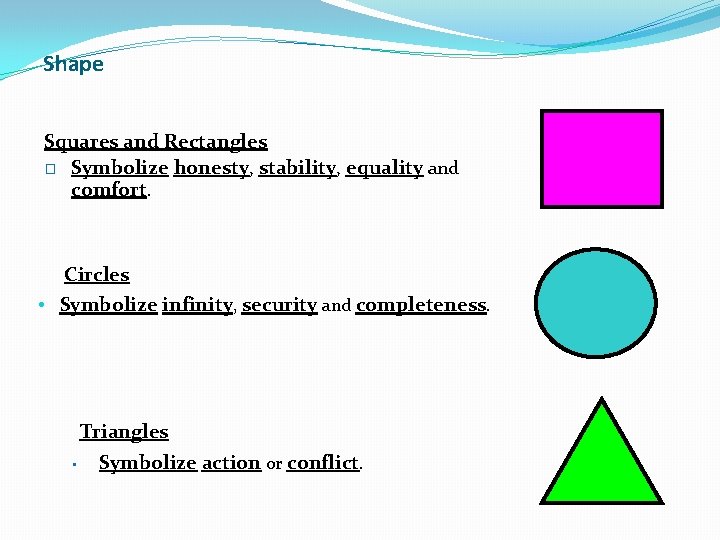
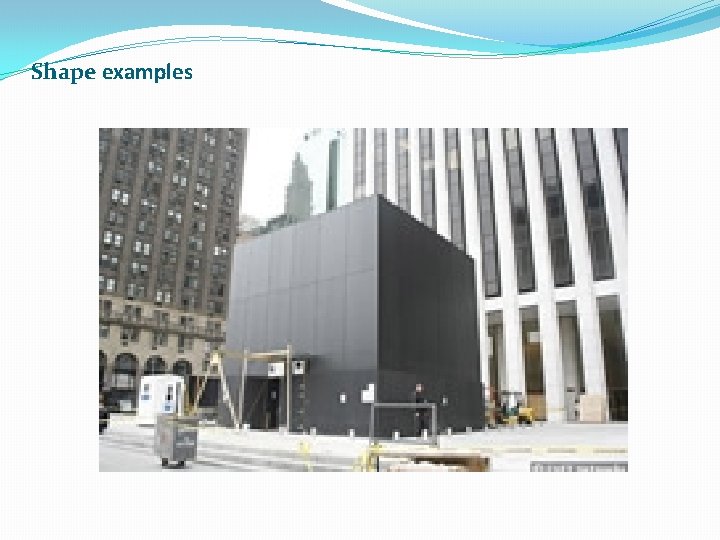
Shape Squares and Rectangles � Symbolize honesty, stability, equality and comfort. Circles • Symbolize infinity, security and completeness. Triangles • Symbolize action or conflict.
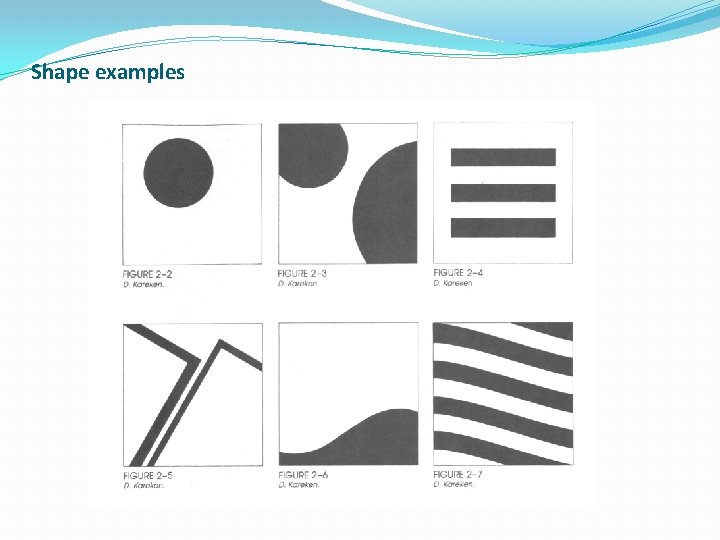
Shape examples
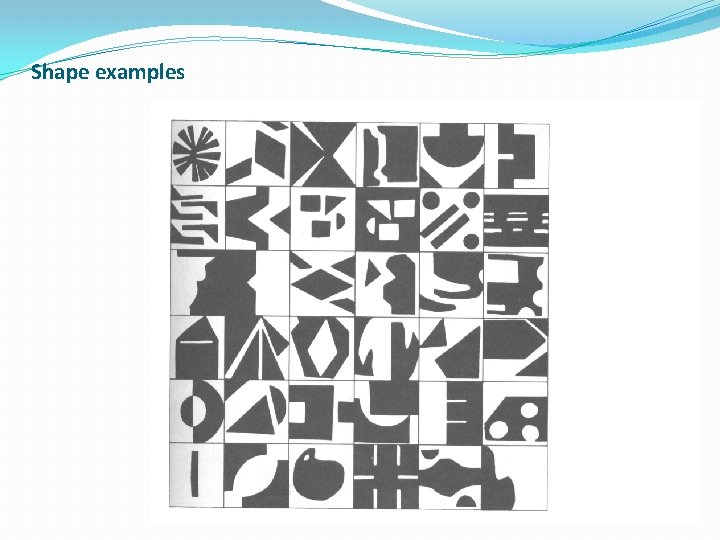
Shape examples
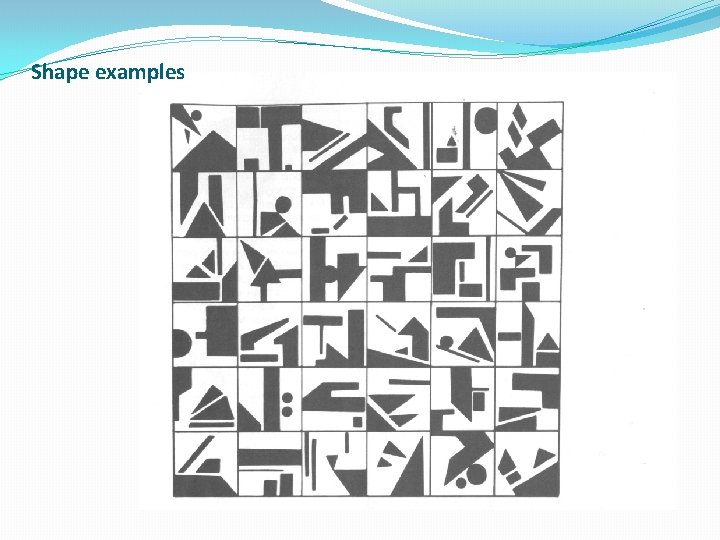
Shape examples
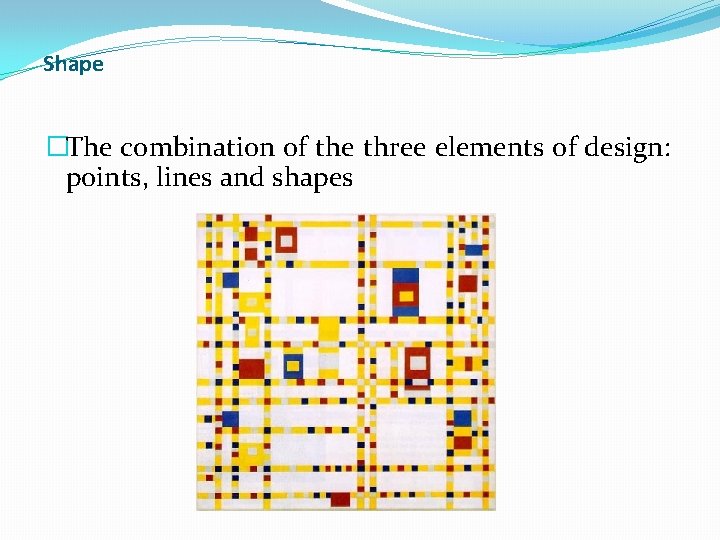
Shape �The combination of the three elements of design: points, lines and shapes
Shape
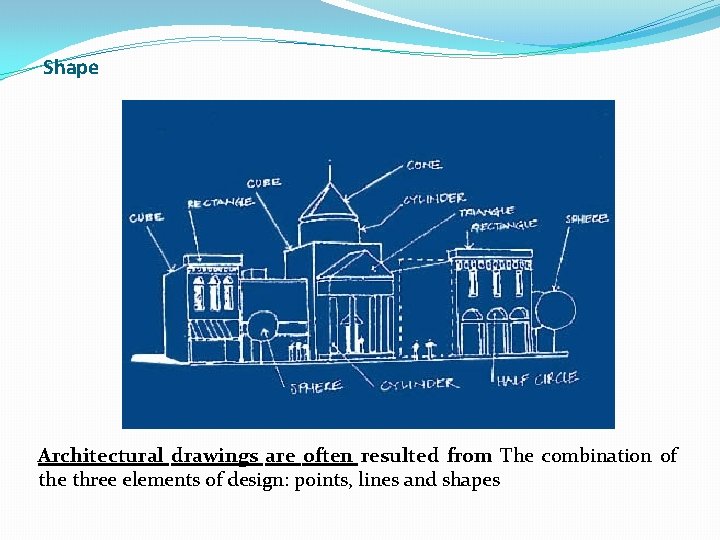
Shape Architectural drawings are often resulted from The combination of the three elements of design: points, lines and shapes
Shape examples
Shape examples
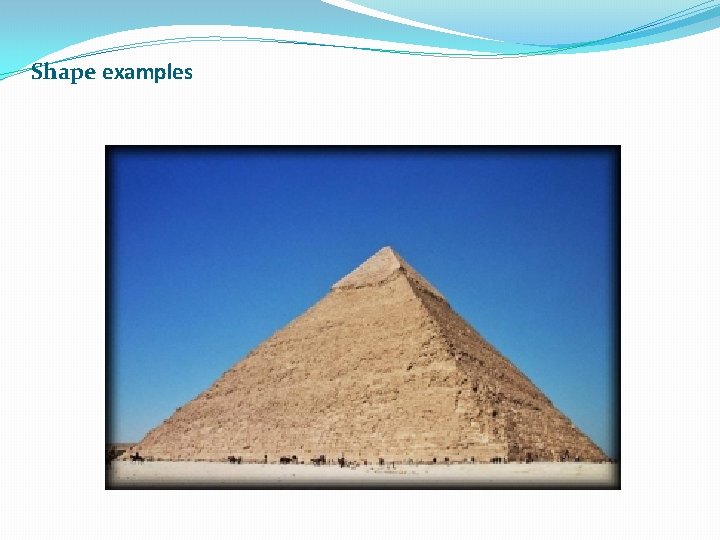
Shape examples
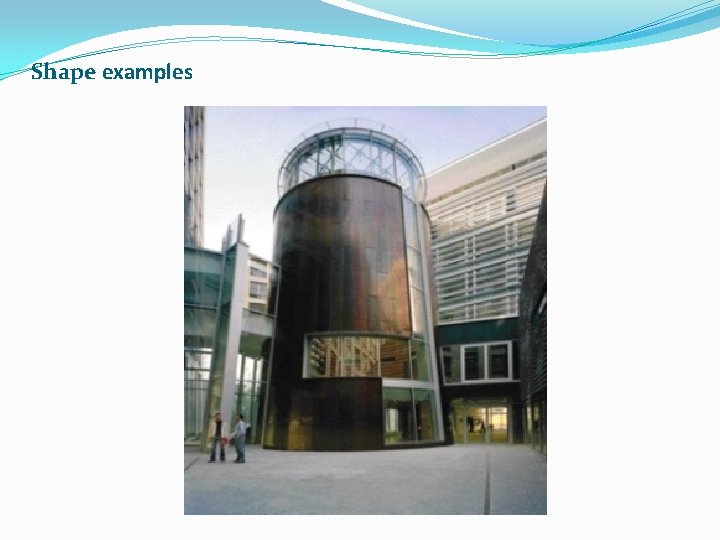
Shape examples
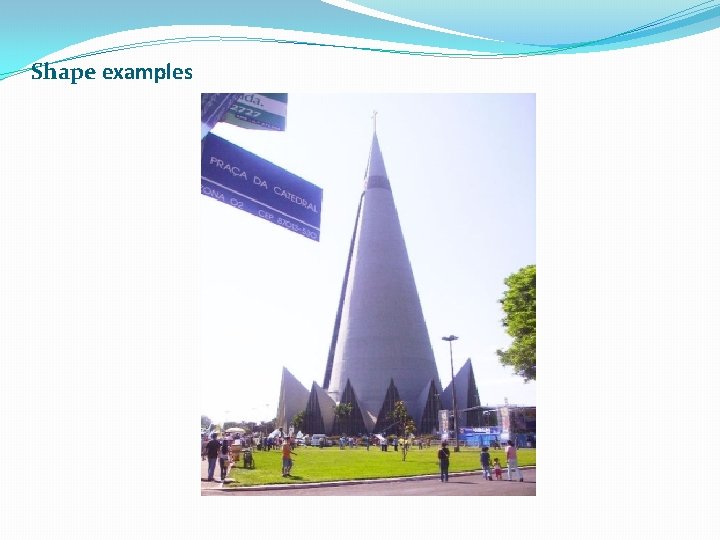
Shape examples
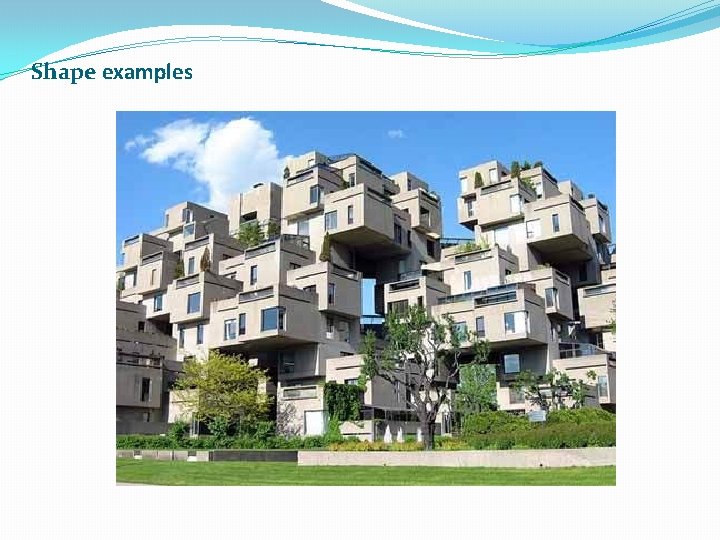
Shape examples
Shape examples
- Slides: 49