
Elements of Communication Forensics Speech and Debate Warm
Elements of Communication Forensics (Speech and Debate)
Warm Up � Give a 1 -minute impromptu speech about the topic you’ve been given. � You have five minutes to prepare… � Outline or notecards not required, but may be helpful.

The Communication Process 1. SENDER delivers message with certain intention (encoding) MESSAGE (Verbal and Nonverbal) RECEIVER gets message RECEIVER SENDER 4. Receiver responds to sender’s message and makes it known how they decoded it (feedback) 2. 3. FEEDBACK (Verbal and Nonverbal) Receiver makes sense of message and assigns meaning to it (decoding)
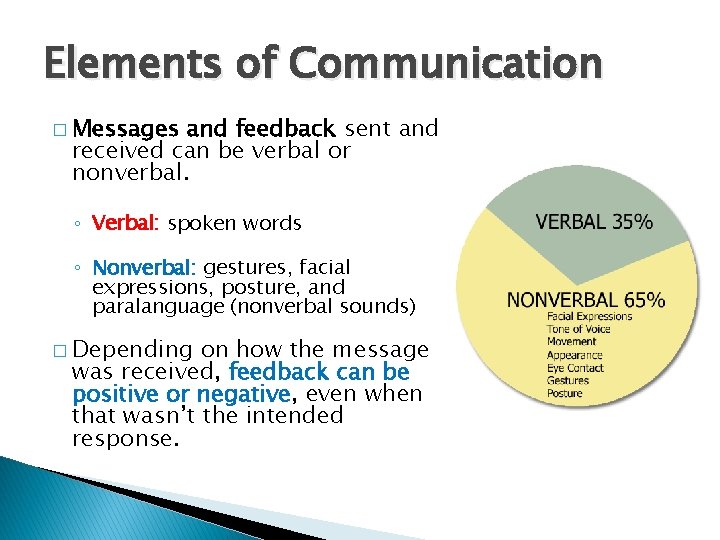
Elements of Communication � Messages and feedback sent and received can be verbal or nonverbal. ◦ Verbal: spoken words ◦ Nonverbal: gestures, facial expressions, posture, and paralanguage (nonverbal sounds) � Depending on how the message was received, feedback can be positive or negative, even when that wasn’t the intended response.
Nonverbal Communication: Body Language Communicate these moods without using words… Coy Confident Cocky Disgusted Doubtful/worried Sneaky Defeated Deep in thought Defensive Scared Shocked Excited Disinterested/bored Depressed Nervous Impatient
What Verbal and Nonverbal Messages Do You See? � Politician Speaks About…Something: https: //www. youtube. com/watch? v=IPIvwu 573 Y
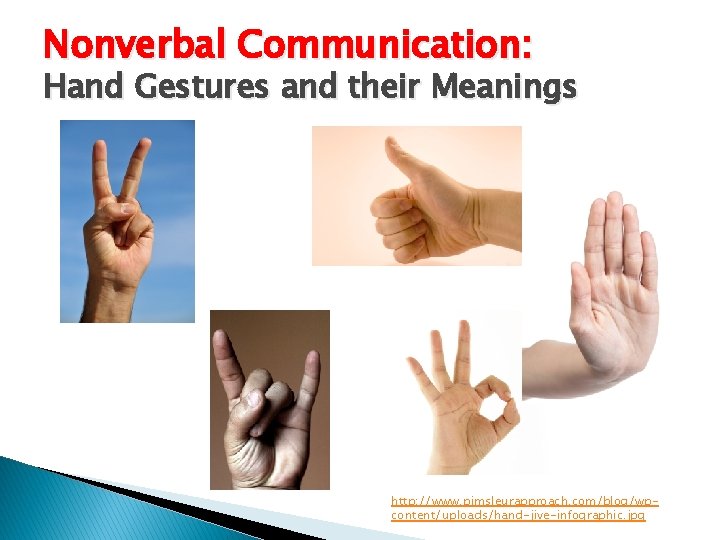
Nonverbal Communication: Hand Gestures and their Meanings http: //www. pimsleurapproach. com/blog/wpcontent/uploads/hand-jive-infographic. jpg
How Important is Nonverbal Communication? � Nonverbal communication has four purposes: ◦ ◦ To To complement (agree with) verbal messages emphasize verbal messages replace verbal messages contradict (disagree with) verbal messages Ever notice… ◦ …how hard it is to know someone’s mood if you can’t see them while having a conversation? ◦ …how the “intent” behind text messages is sometimes misunderstood? ◦ …how can you tell if someone is lying by the way they look when saying something?
Watch “Skwerl” (short film by Karl Eccleston and Brian Fairbairn) � https: //www. youtube. com/watch? v=Vt 4 Dfa 4 f OEY � What happened? � Why did it happen? � How do you know?
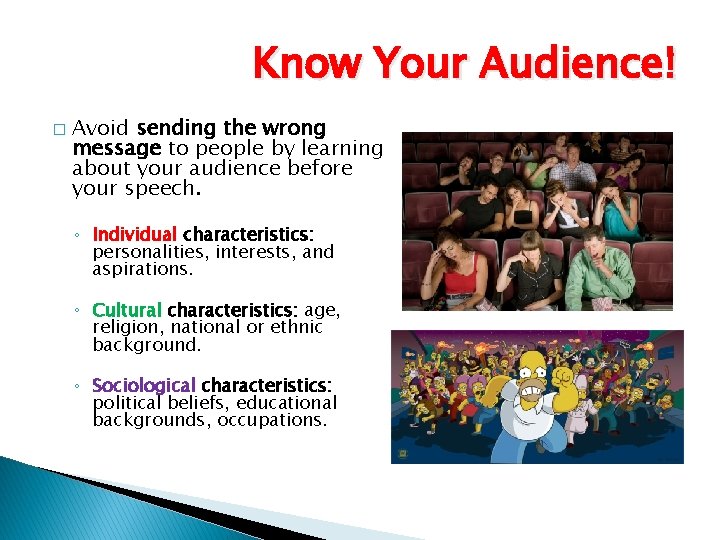
Know Your Audience! � Avoid sending the wrong message to people by learning about your audience before your speech. ◦ Individual characteristics: personalities, interests, and aspirations. ◦ Cultural characteristics: age, religion, national or ethnic background. ◦ Sociological characteristics: political beliefs, educational backgrounds, occupations.
Audience Feedback � KNOW YOUR AUDIENCE– use their nonverbal feedback to see if your message is received, understood, and accepted. Positive Nonverbal Feedback: • • • Clapping Cheering Nodding Smiling Non-threatening eye contact Other signs of approval, acceptance, or interest Negative Nonverbal Feedback: • • • Booing Yawning Shaking head Head down Eye-rolling Sucking your teeth Threatening eye contact or “mean -mugging” Getting up and leaving Looking at clock, phone, watch Other signs of inattention, boredom, or disapproval
Interference � Interference: anything that gets in the way of clear communication. ◦ Physical noise: any sound that prevents a person from being heard. � Example: An electric fan blowing loudly makes it harder to hear someone talking. ◦ Psychological noise: thoughts and feelings that distract people from listening to what is said. � Example: A student is having a bad day and can’t concentrate on what the teacher is saying. ◦ Semantic noise: speaker’s words trigger strong negative feelings against the speaker or the content of the speech. � Example: When a speaker offends the audience with something they say, the audience may not listen further.
What Kinds of Feedback and Interference Do You See? � Don Knotts in “The Ghost and Mr. Chicken”: https: //www. youtube. com/watch? v=in. Df 6 TUq 5 s � President Obama: https: //www. youtube. com/watch? v=Xm. BYu. E UBs. Ko
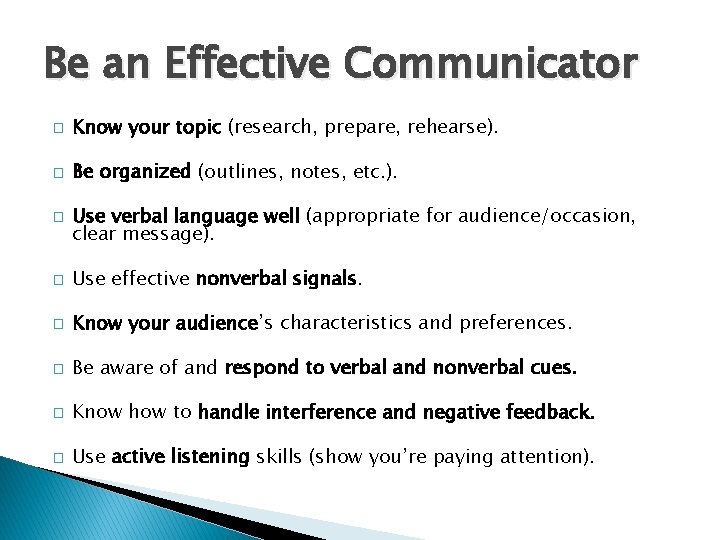
Be an Effective Communicator � Know your topic (research, prepare, rehearse). � Be organized (outlines, notes, etc. ). � Use verbal language well (appropriate for audience/occasion, clear message). � Use effective nonverbal signals. � Know your audience’s characteristics and preferences. � Be aware of and respond to verbal and nonverbal cues. � Know how to handle interference and negative feedback. � Use active listening skills (show you’re paying attention).
- Slides: 14