
Elements of Civilization Villages grow into cities Agriculture
- Slides: 7
Elements of Civilization
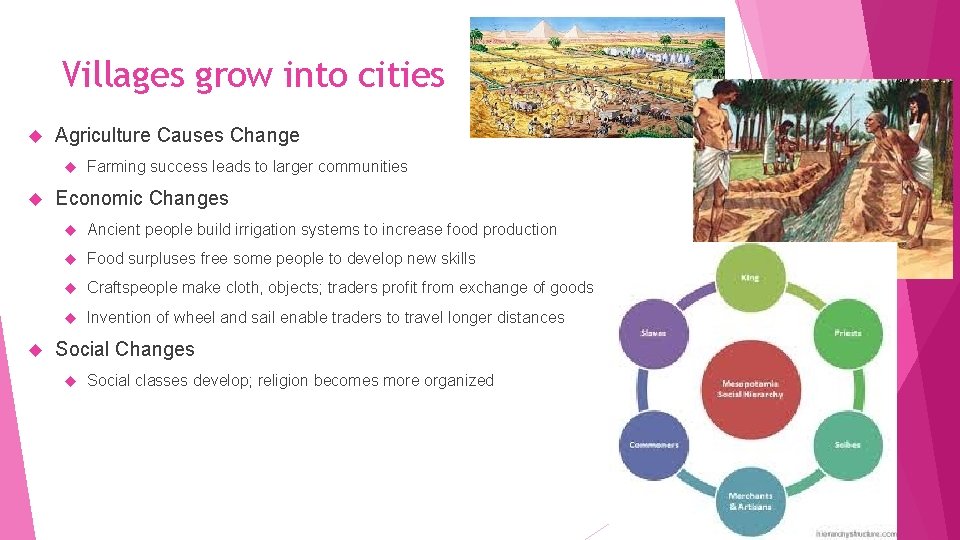
Villages grow into cities Agriculture Causes Change Farming success leads to larger communities Economic Changes Ancient people build irrigation systems to increase food production Food surpluses free some people to develop new skills Craftspeople make cloth, objects; traders profit from exchange of goods Invention of wheel and sail enable traders to travel longer distances Social Changes Social classes develop; religion becomes more organized
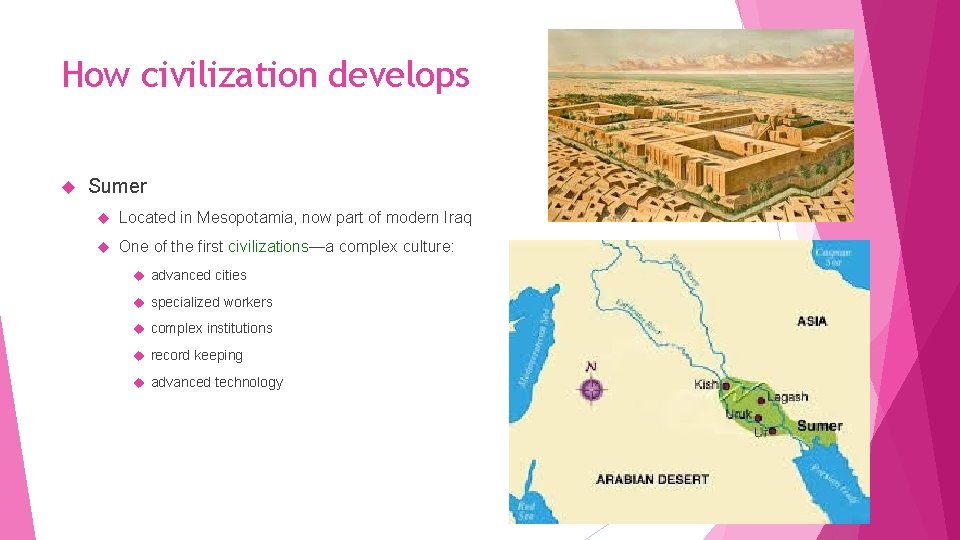
How civilization develops Sumer Located in Mesopotamia, now part of modern Iraq One of the first civilizations—a complex culture: advanced cities specialized workers complex institutions record keeping advanced technology
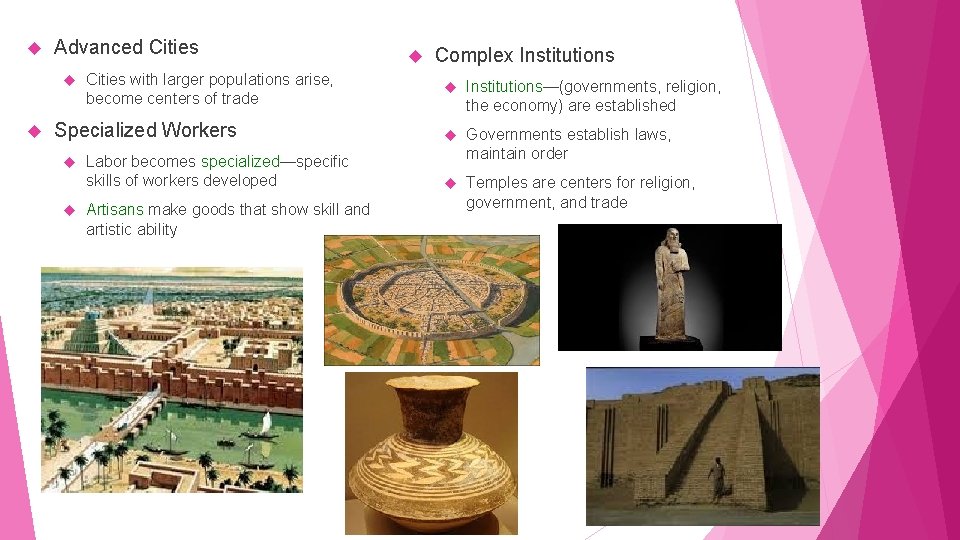
Advanced Cities with larger populations arise, become centers of trade Specialized Workers Labor becomes specialized—specific skills of workers developed Artisans make goods that show skill and artistic ability Complex Institutions—(governments, religion, the economy) are established Governments establish laws, maintain order Temples are centers for religion, government, and trade
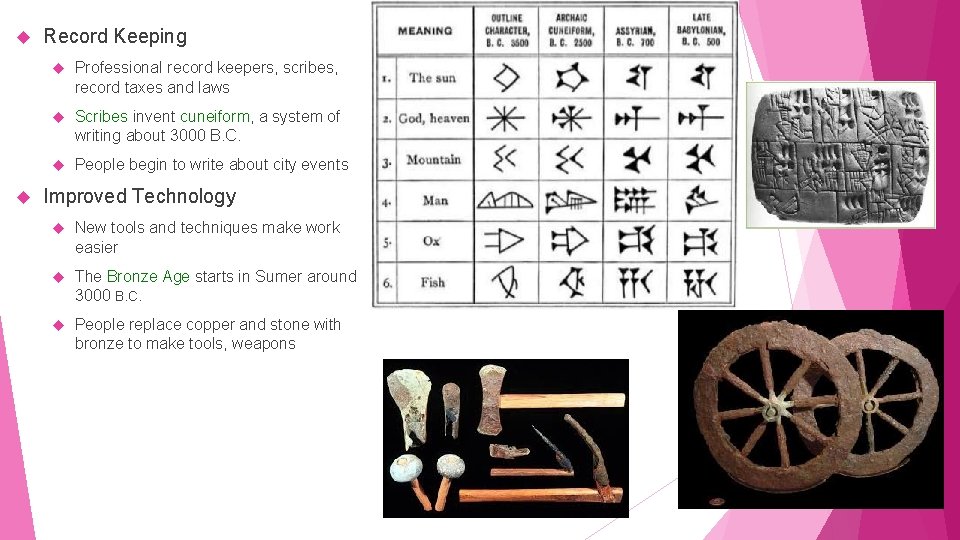
Record Keeping Professional record keepers, scribes, record taxes and laws Scribes invent cuneiform, a system of writing about 3000 B. C. People begin to write about city events Improved Technology New tools and techniques make work easier The Bronze Age starts in Sumer around 3000 B. C. People replace copper and stone with bronze to make tools, weapons
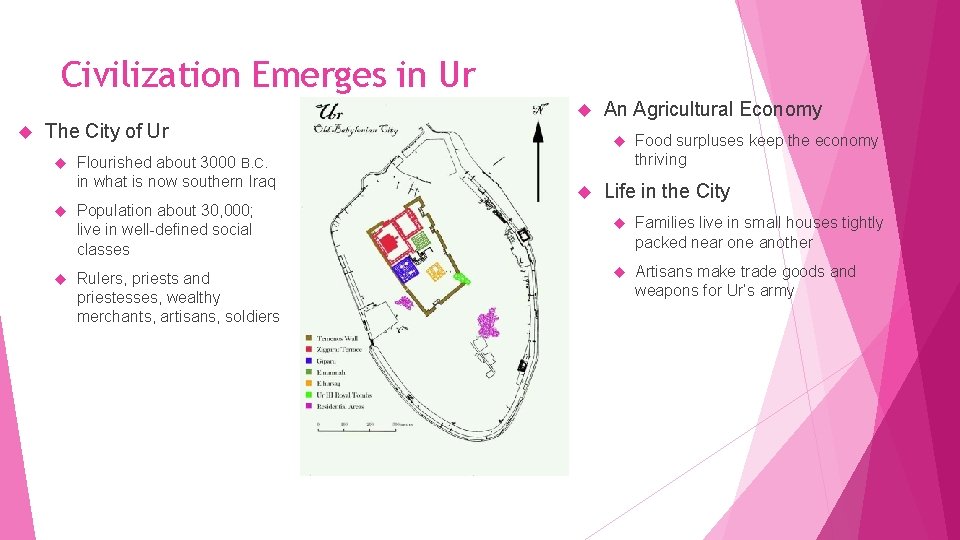
Civilization Emerges in Ur The City of Ur Flourished about 3000 B. C. in what is now southern Iraq Population about 30, 000; live in well-defined social classes Rulers, priests and priestesses, wealthy merchants, artisans, soldiers An Agricultural Economy Food surpluses keep the economy thriving Life in the City Families live in small houses tightly packed near one another Artisans make trade goods and weapons for Ur’s army
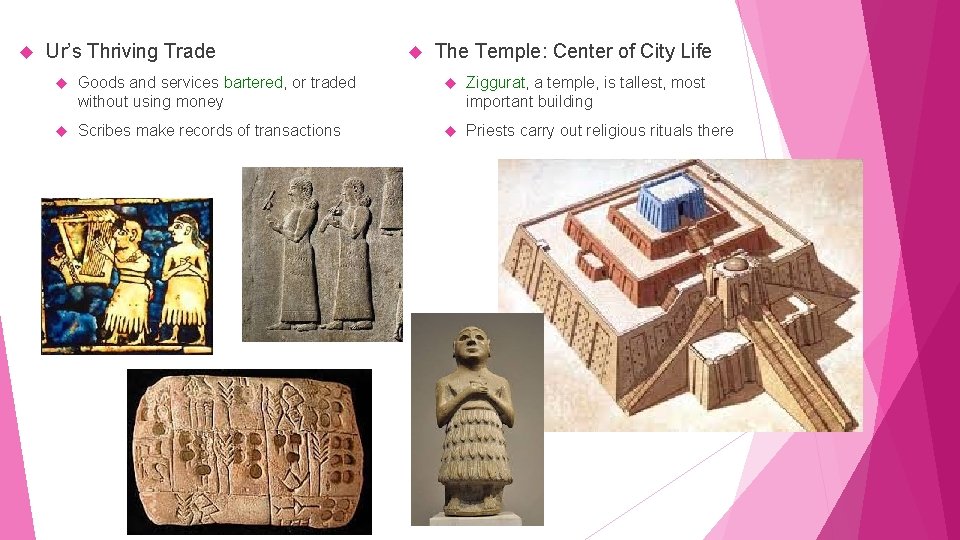
Ur’s Thriving Trade The Temple: Center of City Life Goods and services bartered, or traded without using money Ziggurat, a temple, is tallest, most important building Scribes make records of transactions Priests carry out religious rituals there