
Elements of Characterization What makes a good character
- Slides: 7
Elements of Characterization What makes a good character?
Characterization • • • The main character involved in the main conflict and its resolution is called the protagonist. The person opposing the protagonist is called the antagonist. Characters come in multiple forms: 1. flat 2. round 3. dynamic 4. static
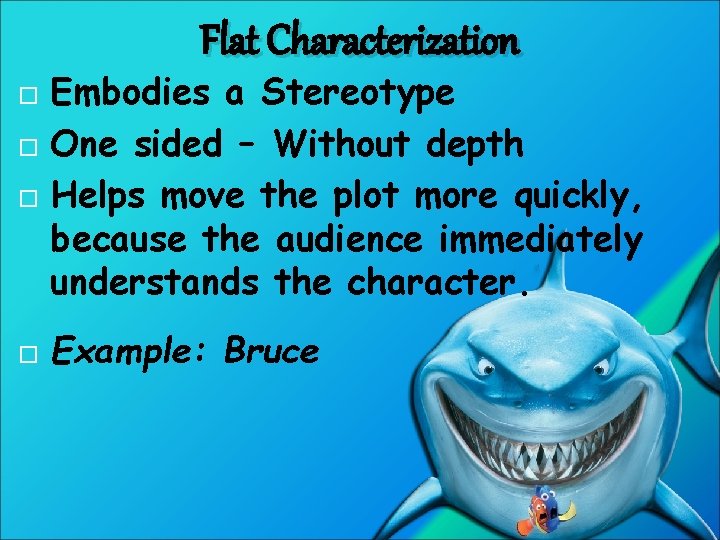
Flat Characterization Embodies a Stereotype One sided – Without depth Helps move the plot more quickly, because the audience immediately understands the character. Example: Bruce
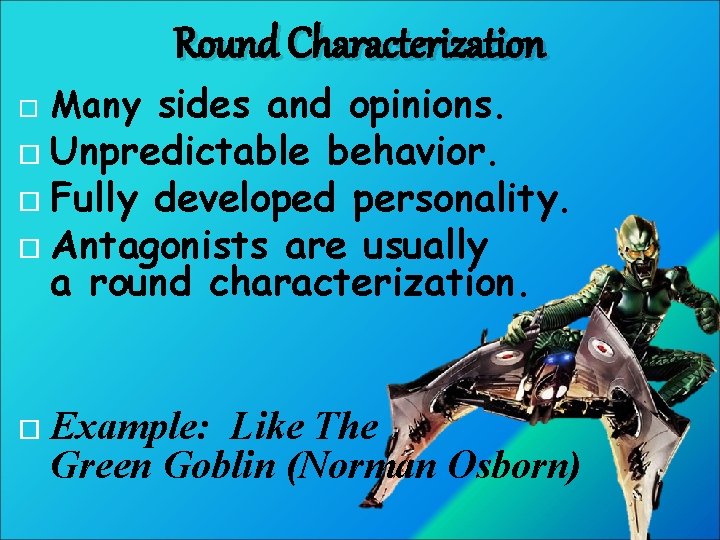
Round Characterization Many sides and opinions. Unpredictable behavior. Fully developed personality. Antagonists are usually a round characterization. Example: Like The Green Goblin (Norman Osborn)
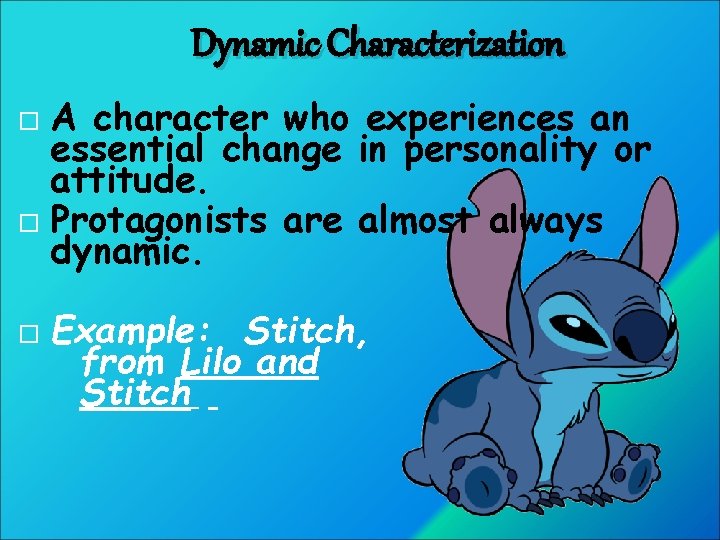
Dynamic Characterization A character who experiences an essential change in personality or attitude. Protagonists are almost always dynamic. Example: Stitch, from Lilo and Stitch
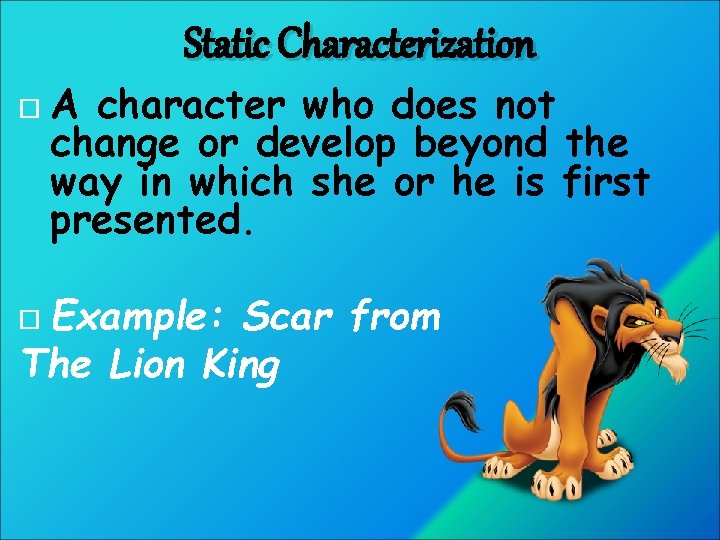
Static Characterization A character who does not change or develop beyond the way in which she or he is first presented. Example: Scar from The Lion King
Identify/Check What kind of character would the following be characterized as: Frodo Baggins 2. Shrek 3. Red Shirt in Star Trek 4. Atticus Finch 1. Types: 1. Flat 2. Round 3. Dynamic 4. Static