
Elements of Art Principles of Design DESIGN SPRING
- Slides: 20
Elements of Art & Principles of Design DESIGN – SPRING 2016 FOSSIL RIDGE ART DEPARTMENT
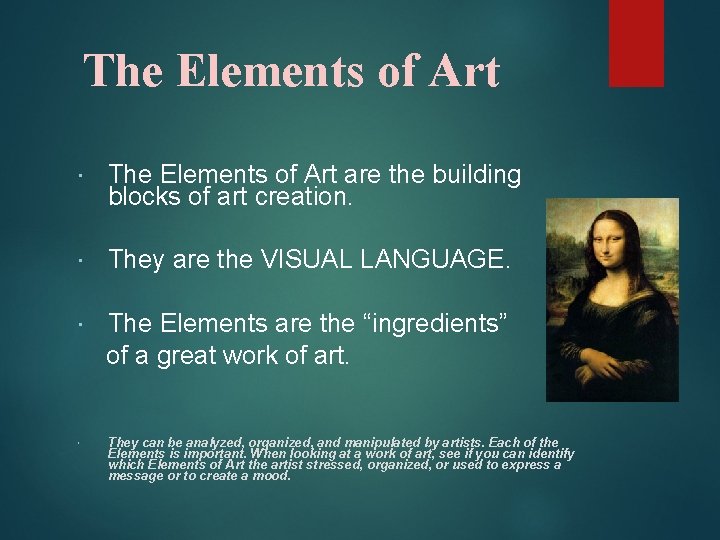
The Elements of Art are the building blocks of art creation. They are the VISUAL LANGUAGE. The Elements are the “ingredients” of a great work of art. They can be analyzed, organized, and manipulated by artists. Each of the Elements is important. When looking at a work of art, see if you can identify which Elements of Art the artist stressed, organized, or used to express a message or to create a mood.
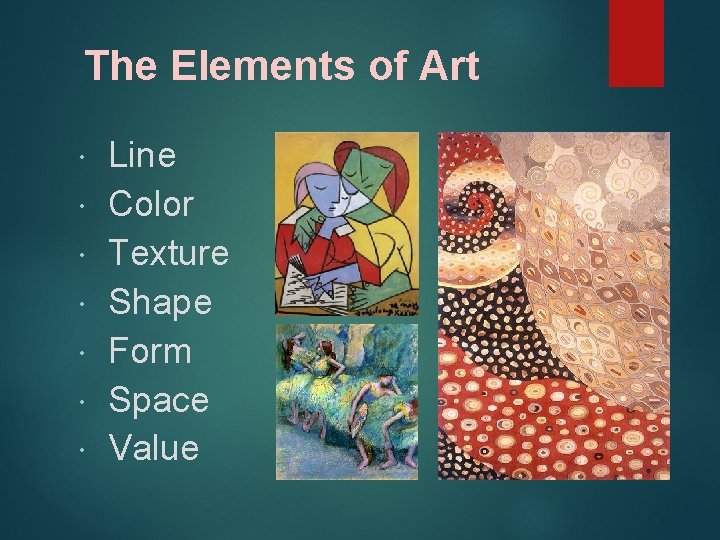
The Elements of Art Line Color Texture Shape Form Space Value
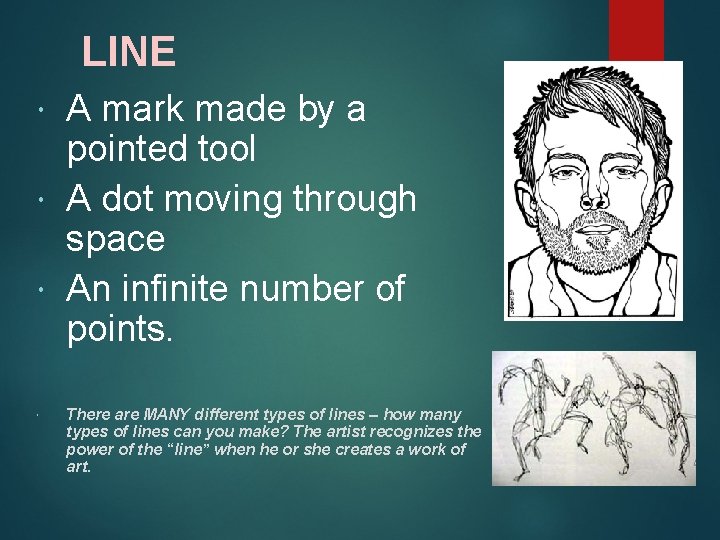
LINE A mark made by a pointed tool A dot moving through space An infinite number of points. There are MANY different types of lines – how many types of lines can you make? The artist recognizes the power of the “line” when he or she creates a work of art.
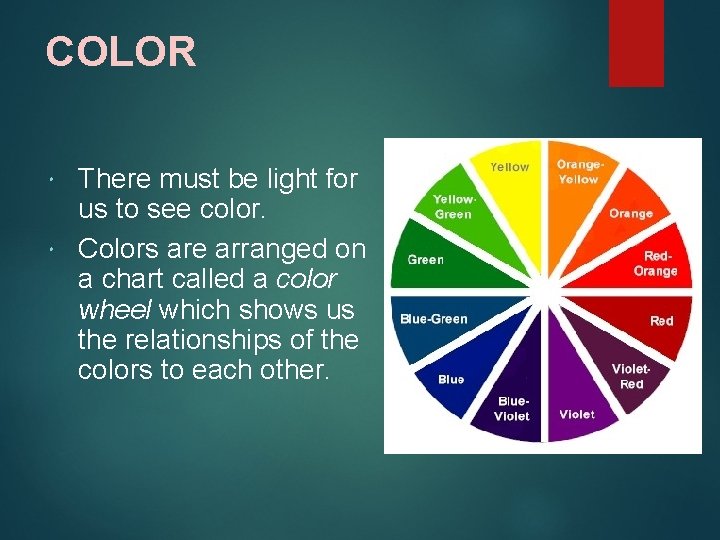
COLOR There must be light for us to see color. Colors are arranged on a chart called a color wheel which shows us the relationships of the colors to each other.
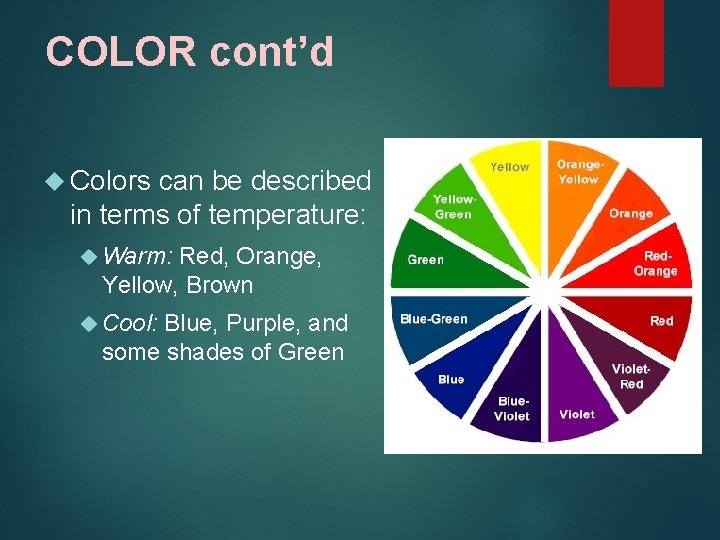
COLOR cont’d Colors can be described in terms of temperature: Warm: Red, Orange, Yellow, Brown Cool: Blue, Purple, and some shades of Green
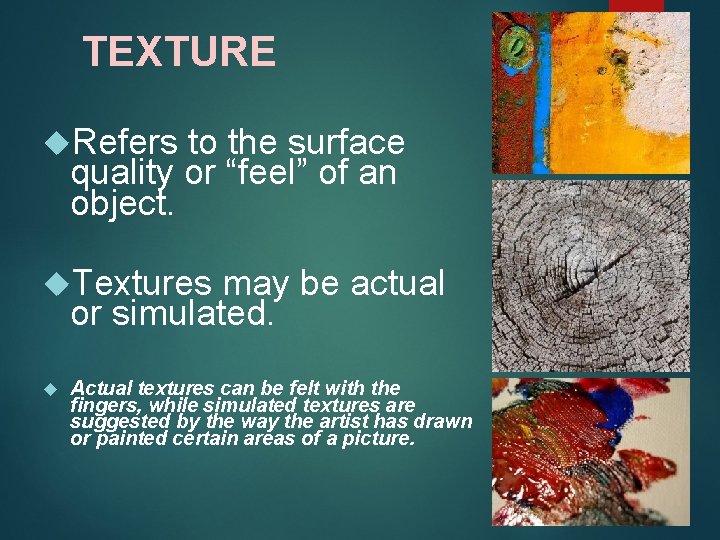
TEXTURE Refers to the surface quality or “feel” of an object. Textures may be actual or simulated. Actual textures can be felt with the fingers, while simulated textures are suggested by the way the artist has drawn or painted certain areas of a picture.
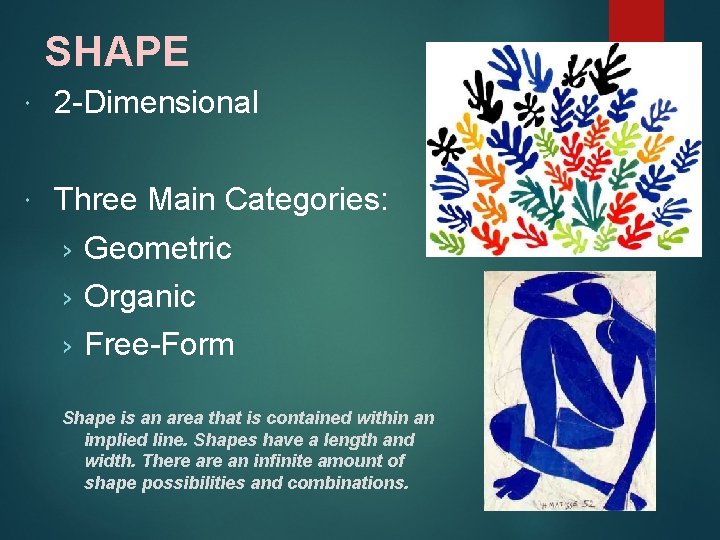
SHAPE 2 -Dimensional Three Main Categories: › Geometric › Organic › Free-Form Shape is an area that is contained within an implied line. Shapes have a length and width. There an infinite amount of shape possibilities and combinations.
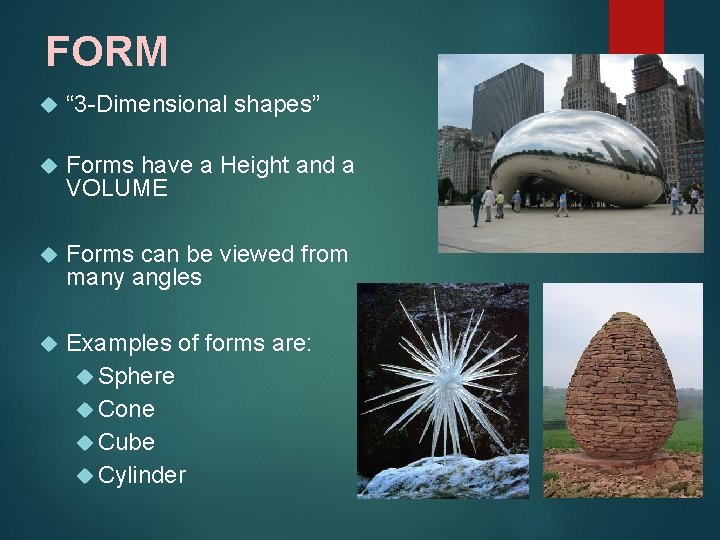
FORM “ 3 -Dimensional shapes” Forms have a Height and a VOLUME Forms can be viewed from many angles Examples of forms are: Sphere Cone Cube Cylinder
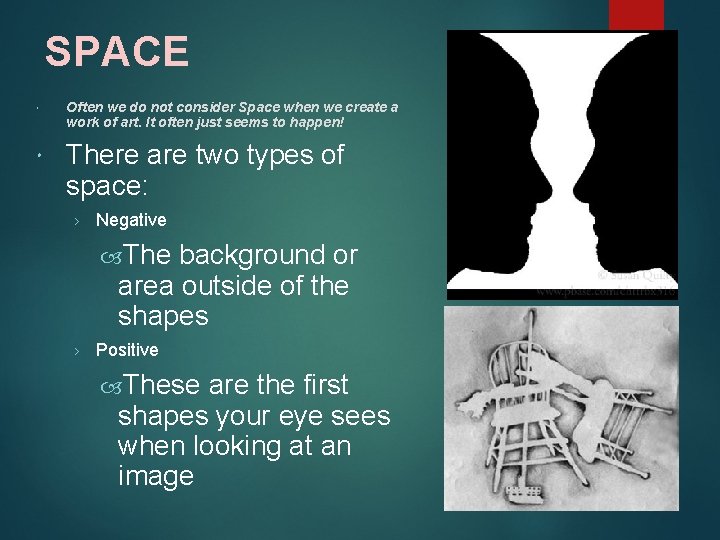
SPACE Often we do not consider Space when we create a work of art. It often just seems to happen! There are two types of space: › Negative The background or area outside of the shapes › Positive These are the first shapes your eye sees when looking at an image
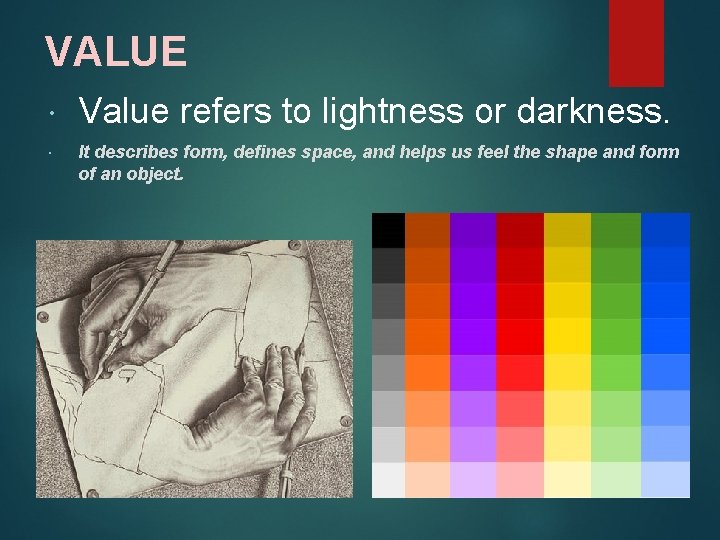
VALUE Value refers to lightness or darkness. It describes form, defines space, and helps us feel the shape and form of an object.
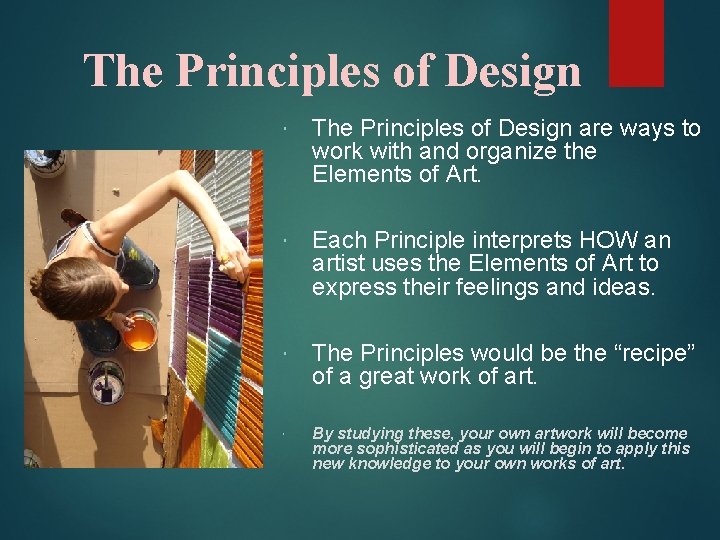
The Principles of Design are ways to work with and organize the Elements of Art. Each Principle interprets HOW an artist uses the Elements of Art to express their feelings and ideas. The Principles would be the “recipe” of a great work of art. By studying these, your own artwork will become more sophisticated as you will begin to apply this new knowledge to your own works of art.
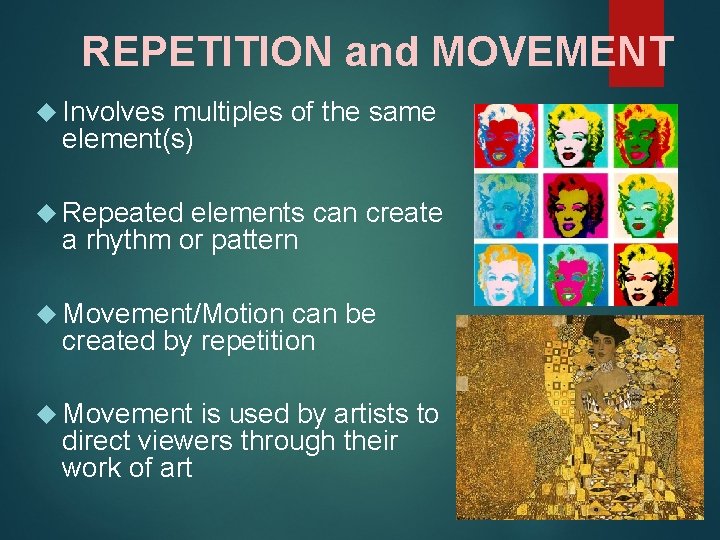
REPETITION and MOVEMENT Involves multiples of the same element(s) Repeated elements can create a rhythm or pattern Movement/Motion can be created by repetition Movement is used by artists to direct viewers through their work of art
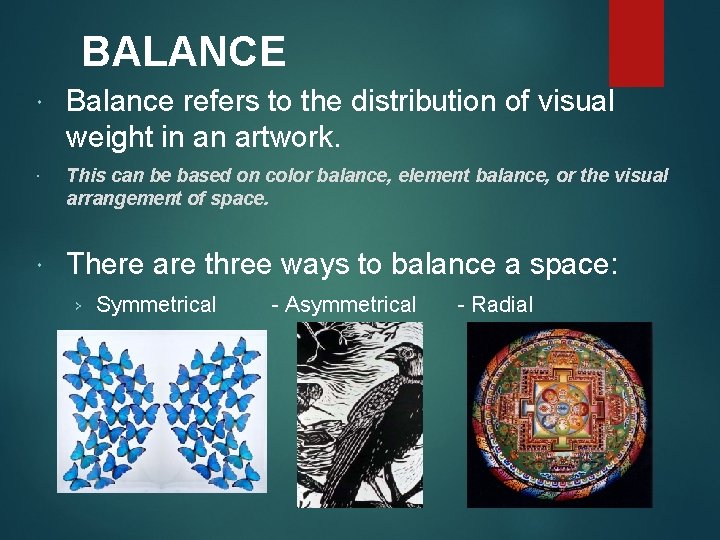
BALANCE Balance refers to the distribution of visual weight in an artwork. This can be based on color balance, element balance, or the visual arrangement of space. There are three ways to balance a space: › Symmetrical - Asymmetrical - Radial
Balance defined… symmetrical balance, objects are repeated or mirrored along a central axis asymmetrically balanced spaces have different objects of equal visual weight on either side of the line. Radial balance occurs when all the elements radiate out from a central point and the visual weight is distributed equally. Radial balance creates a strong focal point in the center of the design. Clock faces and daisies are examples of radial balance.
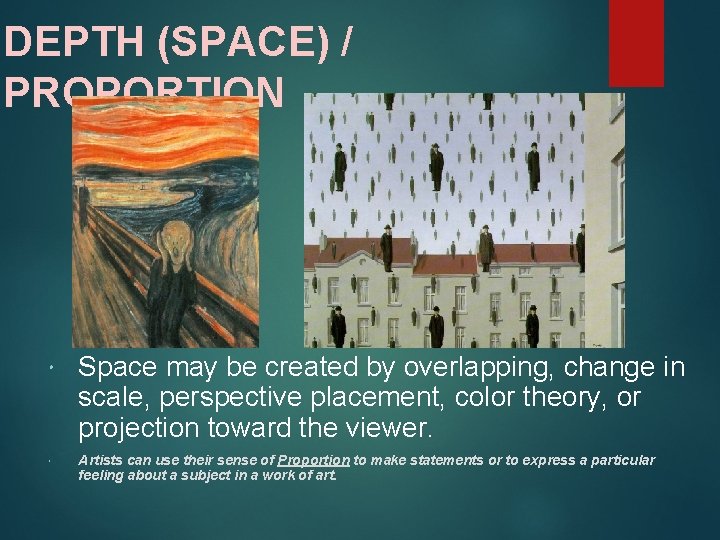
DEPTH (SPACE) / PROPORTION Space may be created by overlapping, change in scale, perspective placement, color theory, or projection toward the viewer. Artists can use their sense of Proportion to make statements or to express a particular feeling about a subject in a work of art.
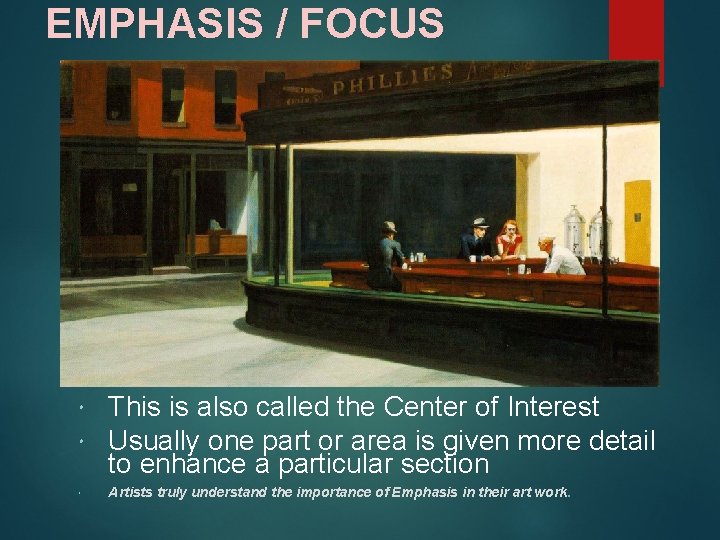
EMPHASIS / FOCUS This is also called the Center of Interest Usually one part or area is given more detail to enhance a particular section Artists truly understand the importance of Emphasis in their art work.
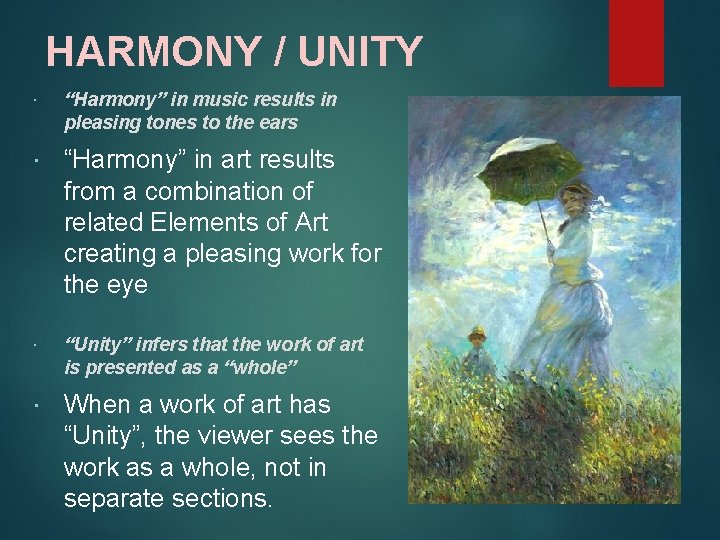
HARMONY / UNITY “Harmony” in music results in pleasing tones to the ears “Harmony” in art results from a combination of related Elements of Art creating a pleasing work for the eye “Unity” infers that the work of art is presented as a “whole” When a work of art has “Unity”, the viewer sees the work as a whole, not in separate sections.
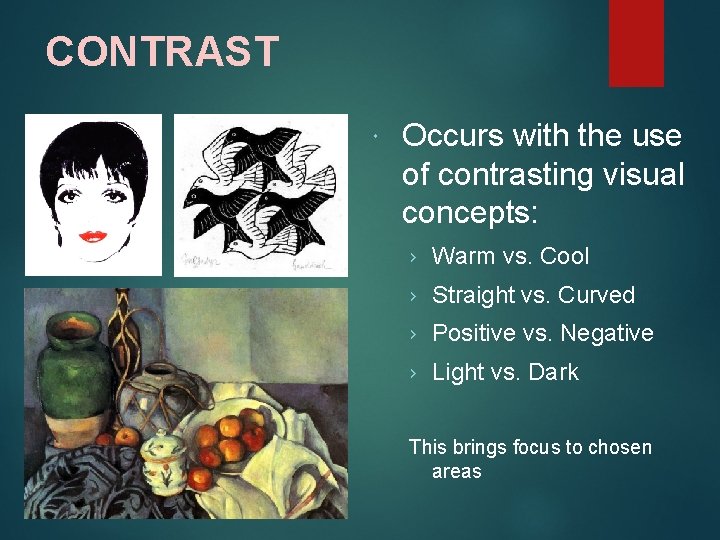
CONTRAST Occurs with the use of contrasting visual concepts: › Warm vs. Cool › Straight vs. Curved › Positive vs. Negative › Light vs. Dark This brings focus to chosen areas
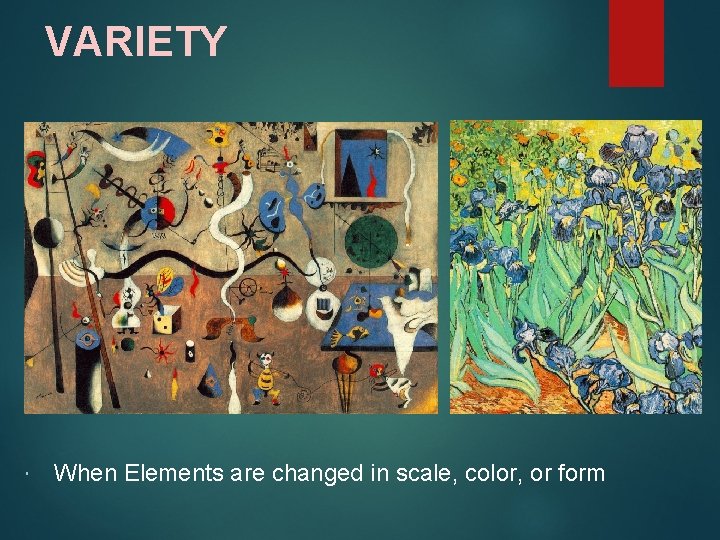
VARIETY When Elements are changed in scale, color, or form