
Elements of Art Line A continuous mark with
- Slides: 31
Elements of Art
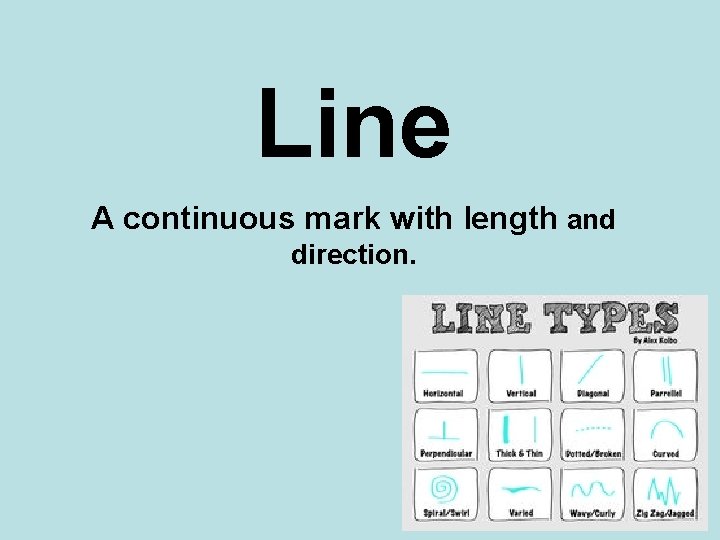
Line A continuous mark with length and direction.
Words to Describe Types of Line Horizontal, vertical, diagonal, soft, hard, short, medium, long, heavy, thick, thin, curved, dark, light, straight, outlining, broken, continuous, peaceful, energetic, nervous, soothing, frantic
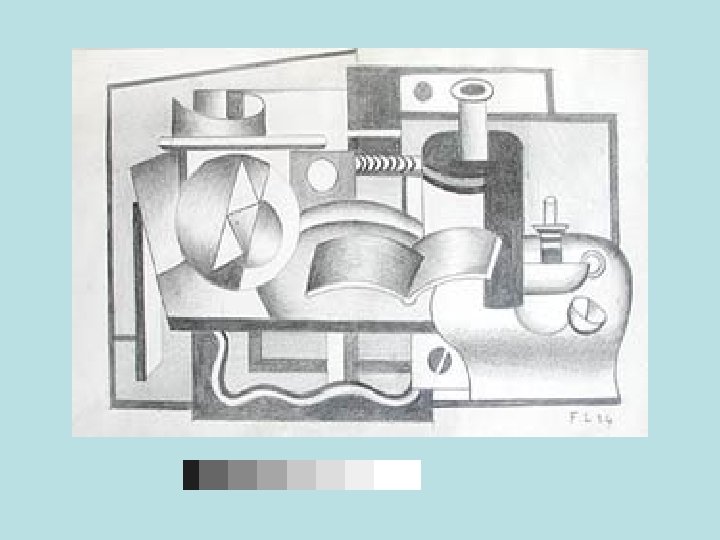
Value The darkness or lightness of a surface.
• Light to Dark • Tint or Shade • Shading can add mystery, sadness, darkness, happiness, lightness • Shading can lend contrast, subtleness, excitement or calm
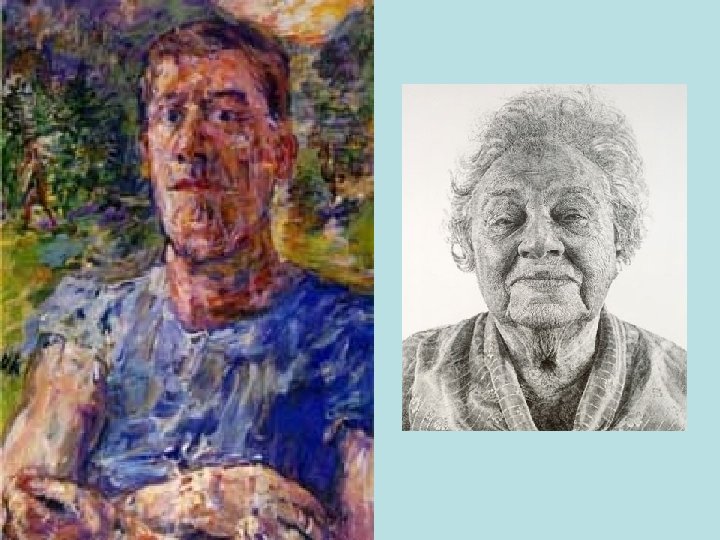
Texture The way a surface feels to the touch or how a surface appears to feel.
Real Texture – You can feel it. Implied Texture – It appears to have a texture. Rough, smooth, glassy, coarse, pebbled, soft, grainy, bumpy, etc.
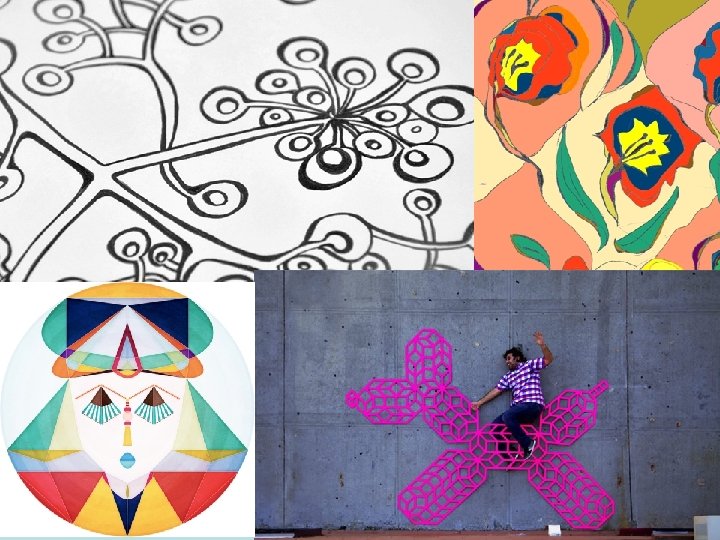
Shape A 2 Dimensional (2 D) object with Length and width When lines meet to enclose a space.
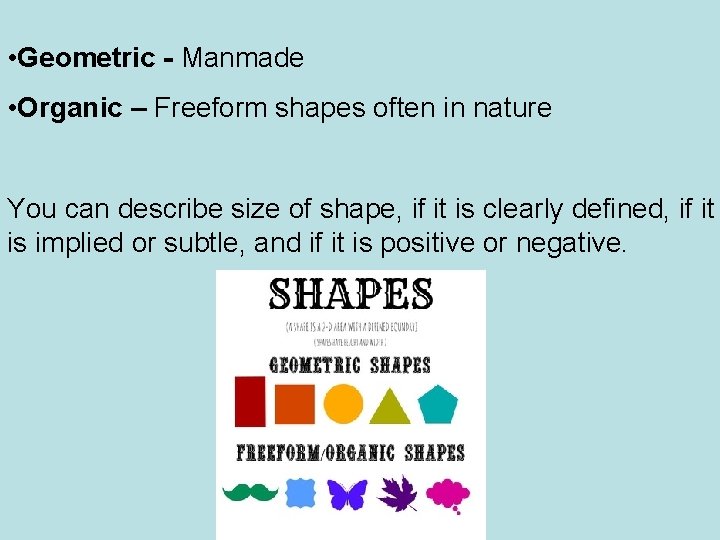
• Geometric - Manmade • Organic – Freeform shapes often in nature You can describe size of shape, if it is clearly defined, if it is implied or subtle, and if it is positive or negative.
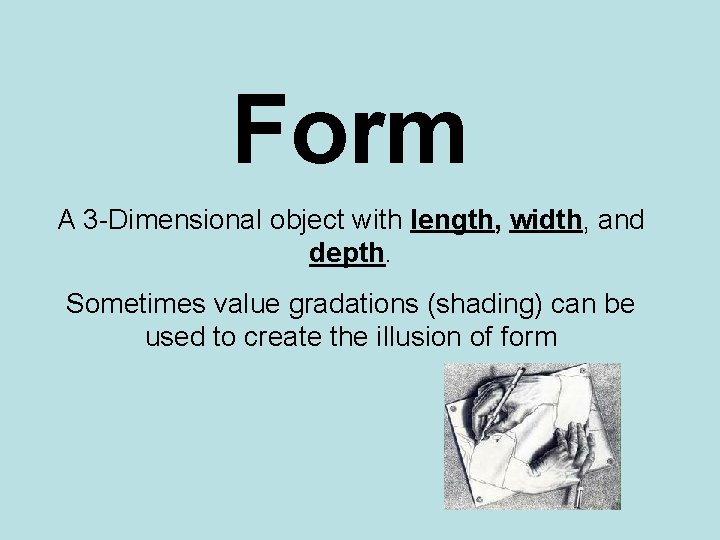
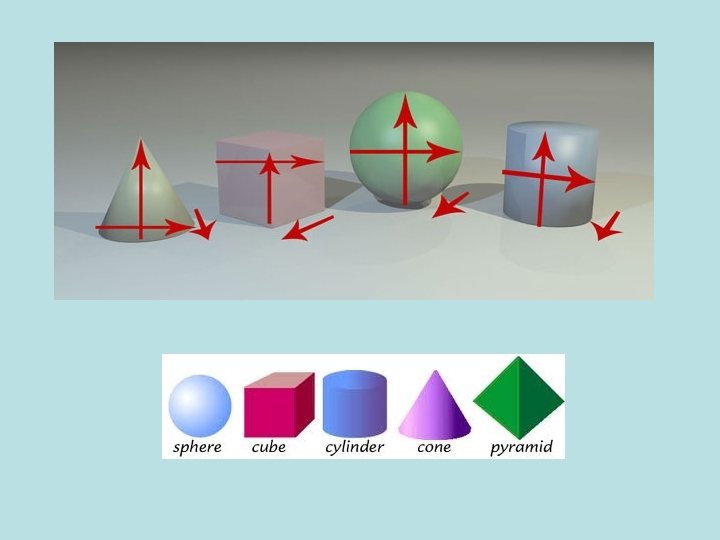
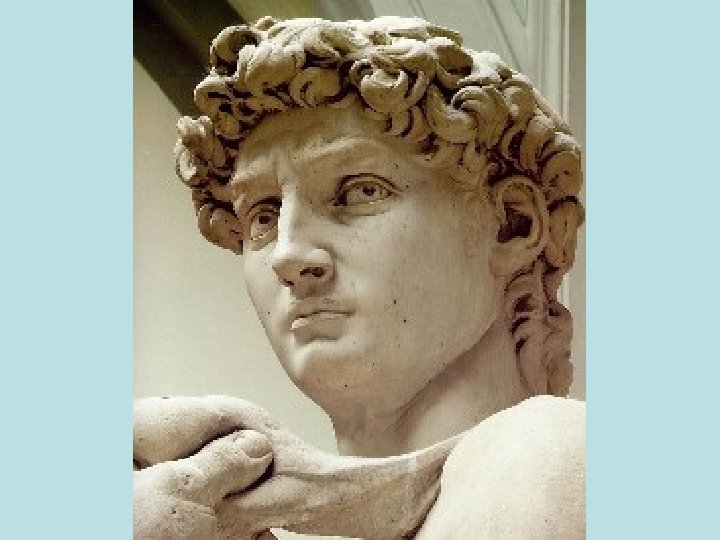
Form A 3 -Dimensional object with length, width, and depth. Sometimes value gradations (shading) can be used to create the illusion of form
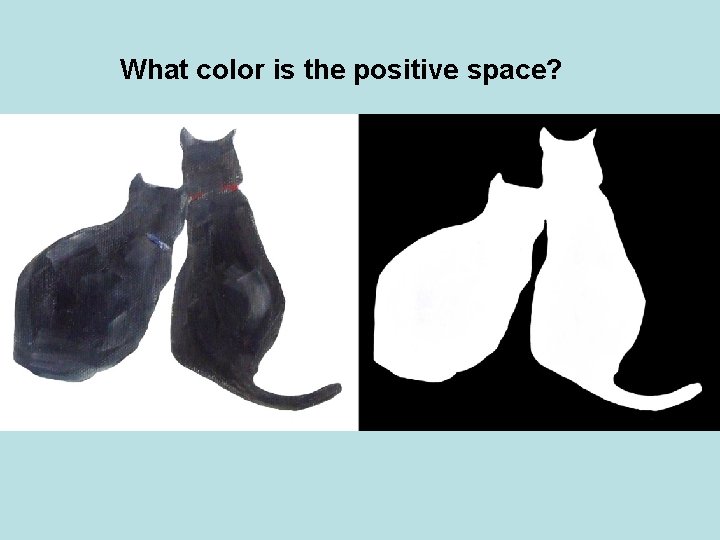
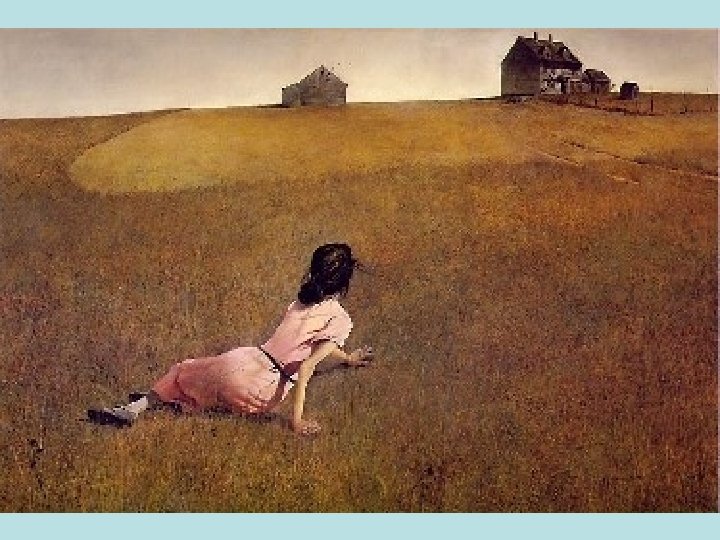
Space is the area within and around a work of art. It can be the way an artist creates the illusion of 3 D on a 2 D surface. Within an image there is Positive Space: the space created by an image or a sculpture, and Negative Space: the Space around and between parts of an image or a sculpture. Background!
What color is the positive space?
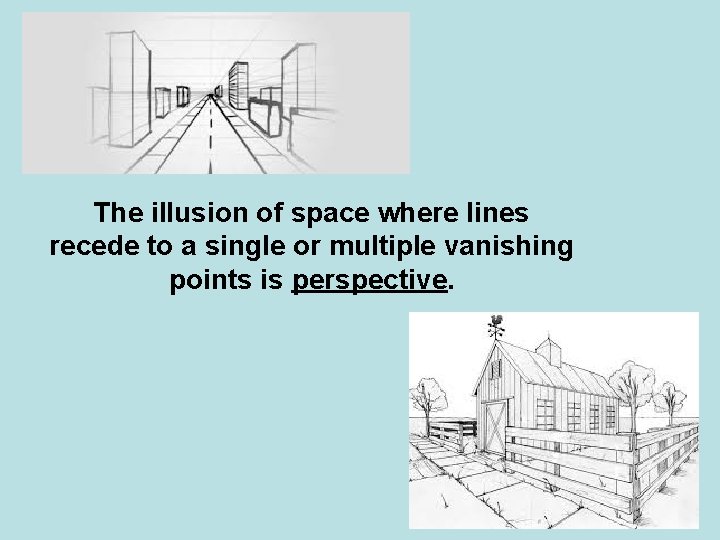
The illusion of space where lines recede to a single or multiple vanishing points is perspective.
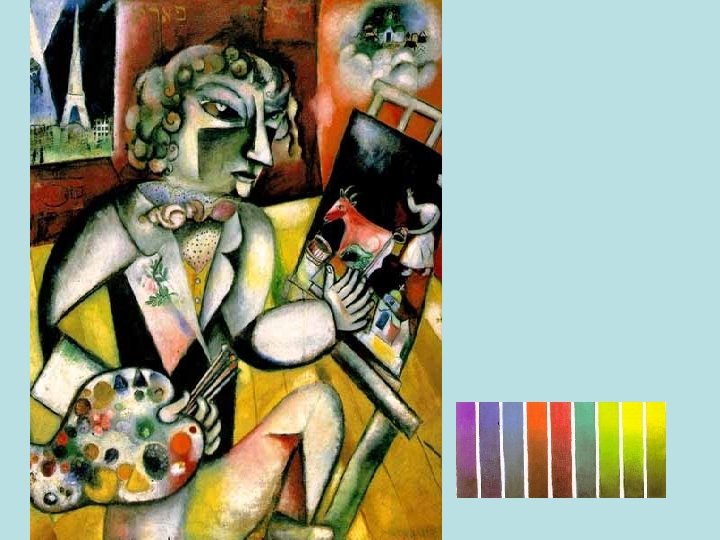
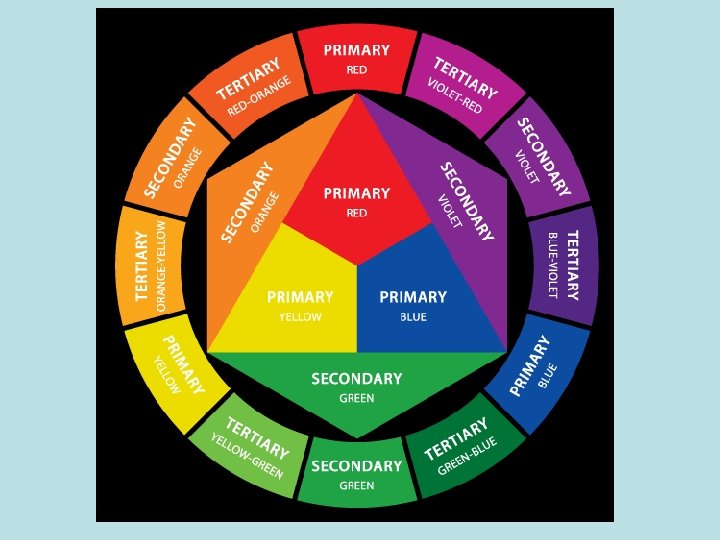
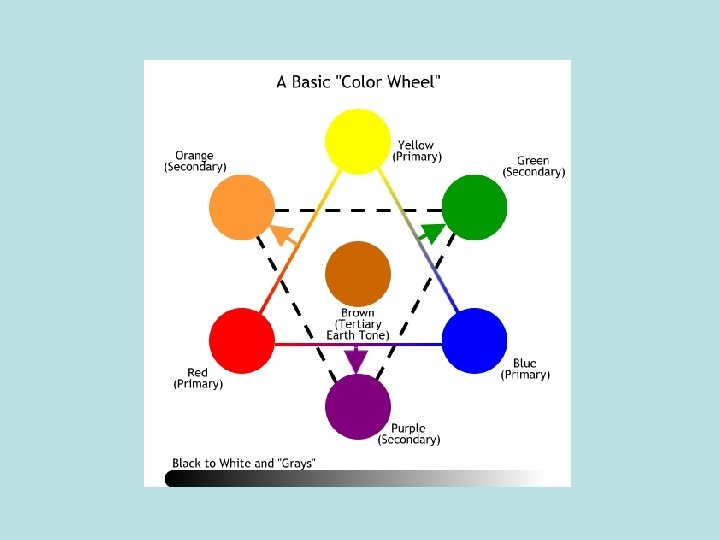
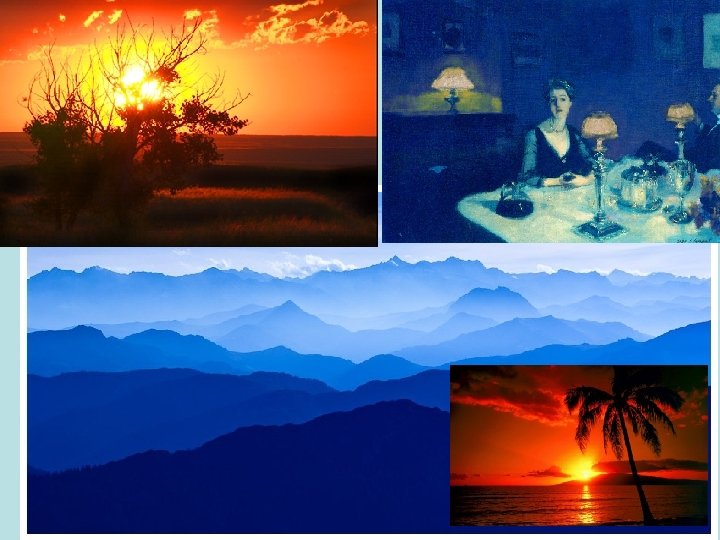
Color The spectrum of light you can see • There are many names for the groups of colors • Warm or cool • Primary or Secondary • Complementary Colors • Shades and Tints • Intense or dull
Elements of Art • Line • Value • Texture • Shape • Form • Space • Color