
Elements of Art and Principles of Design ThinkPairShare

- Slides: 45
Elements of Art and Principles of Design
Think-Pair-Share What are the Elements of Art?
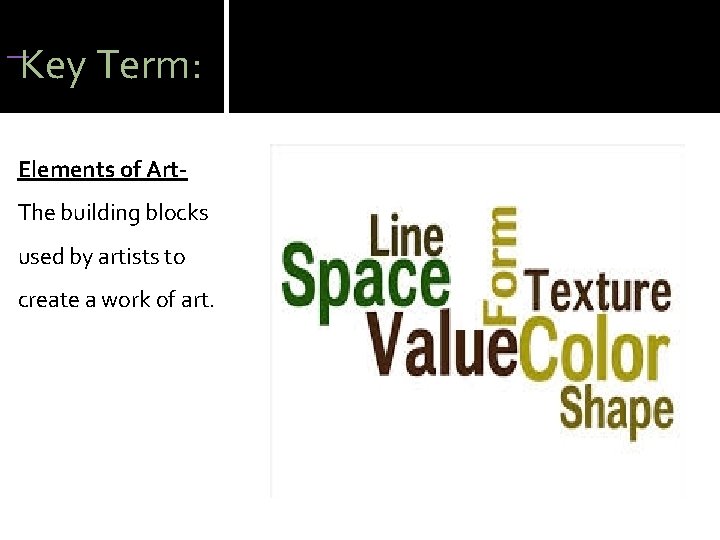
Think-Pair-Share What are the Elements of Art? The building blocks used by artists to create a work of art. 1. 2. 3. 4. 5. 6. 7. Line Shape Space Form Value Color Texture
Think-Pair-Share What are the Principles of Design?
Think-Pair-Share What are the Principles of Design? It describes the ways that artists use the elements of art in a work of art. 1. 2. 3. 4. 5. 6. 7. Balance Pattern Movement Rhythm Contrast Emphasis Unity
Key Term: Elements of Art. The building blocks used by artists to create a work of art.
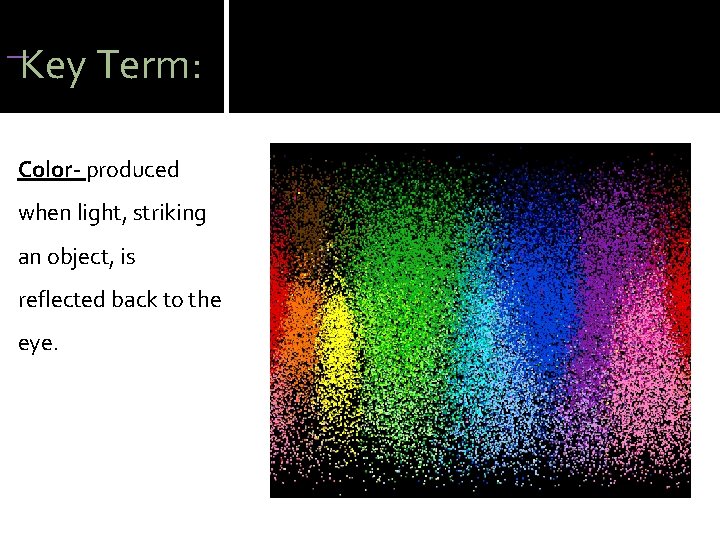
Key Term: Color- produced when light, striking an object, is reflected back to the eye.
Color There are many different color theories in art. List 5 color theories.
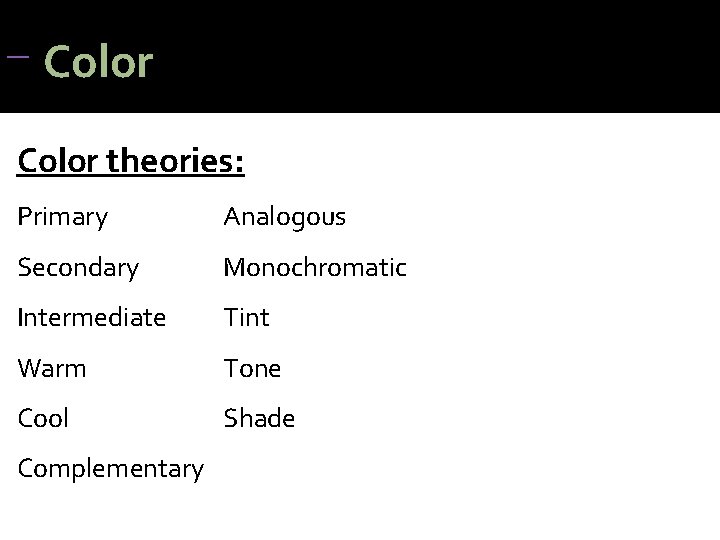
Color Color theories: Primary Analogous Secondary Monochromatic Intermediate Tint Warm Tone Cool Shade Complementary
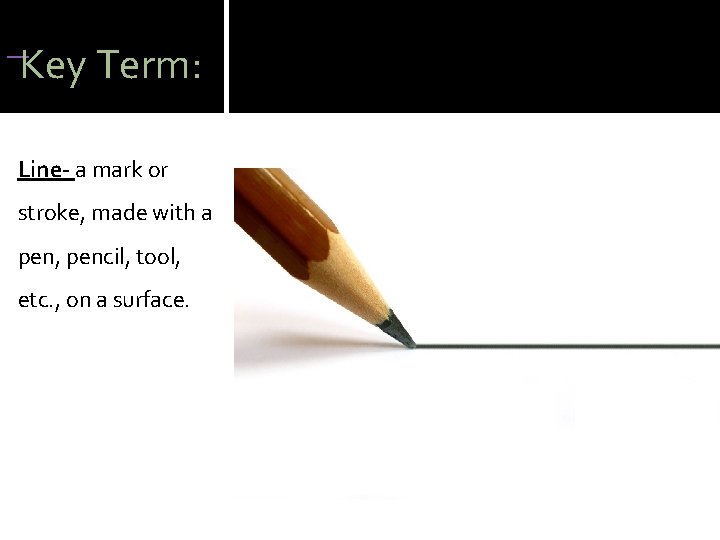
Key Term: Line- a mark or stroke, made with a pen, pencil, tool, etc. , on a surface.
Line There are many different kinds of lines in art. List 5 different kinds of lines.
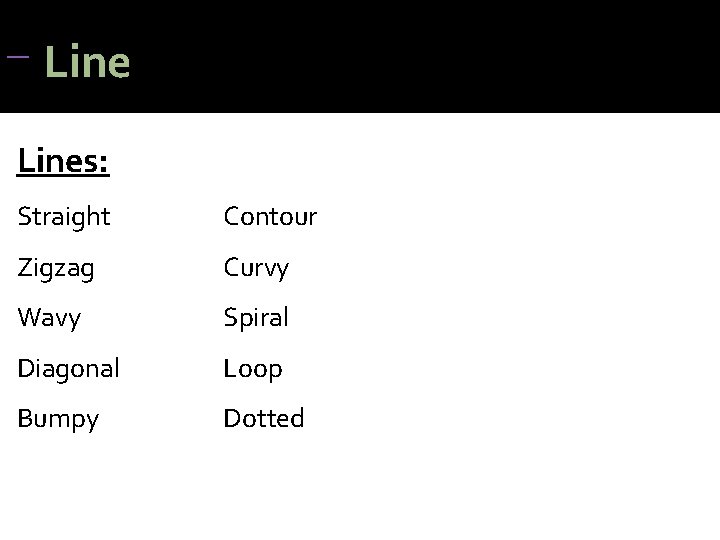
Line Lines: Straight Contour Zigzag Curvy Wavy Spiral Diagonal Loop Bumpy Dotted
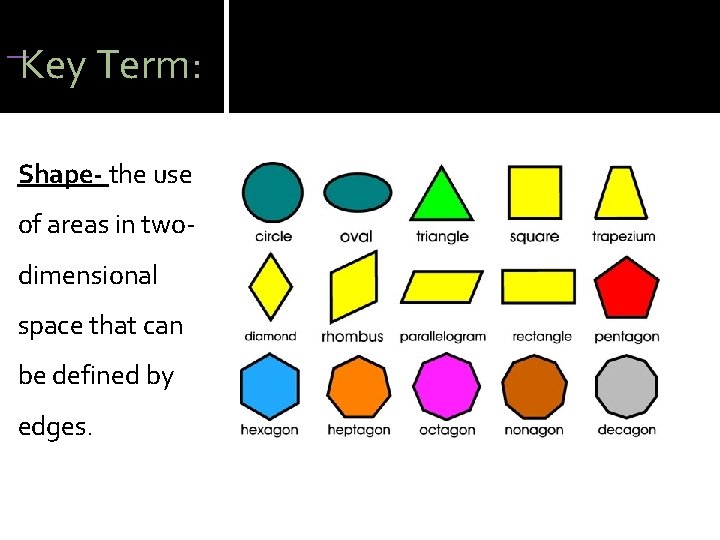
Key Term: Shape- the use of areas in twodimensional space that can be defined by edges.
Shape There are many different kinds of shapes in art. List 5 different kinds of shapes.
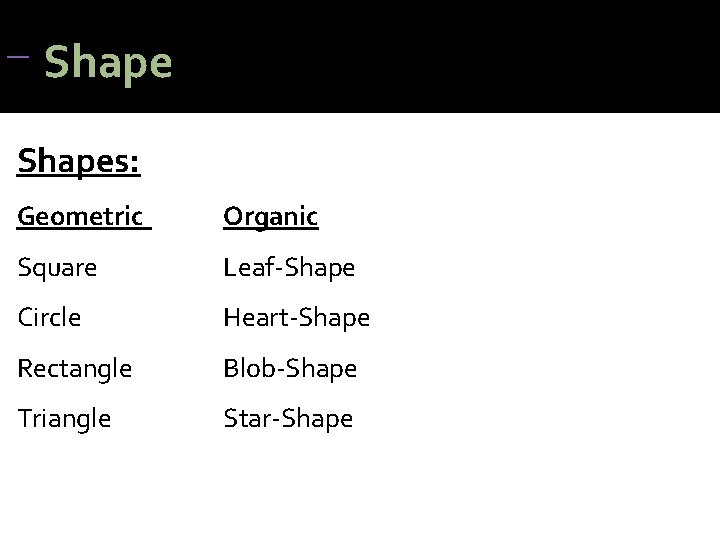
Shape Shapes: Geometric Organic Square Leaf-Shape Circle Heart-Shape Rectangle Blob-Shape Triangle Star-Shape
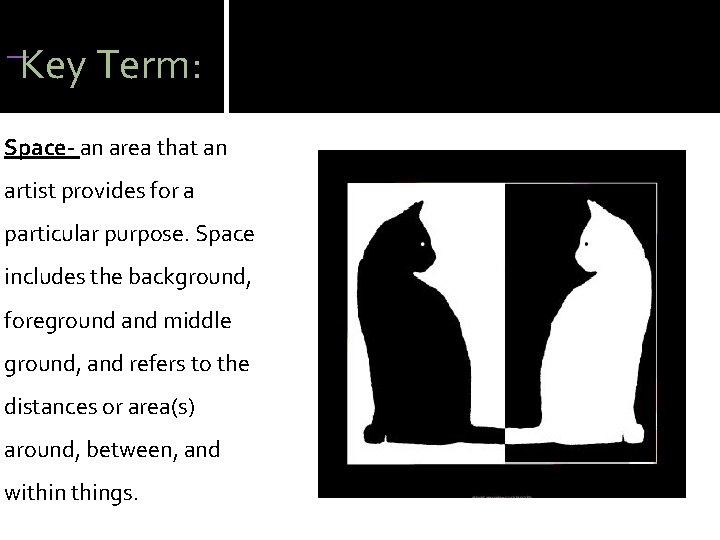
Key Term: Spacean area that an artist provides for a particular purpose. Space includes the background, foreground and middle ground, and refers to the distances or area(s) around, between, and withings.
Space There are 2 different kinds of space in art. List the 2 different kinds.
Space Space: Positive Space Negative Space
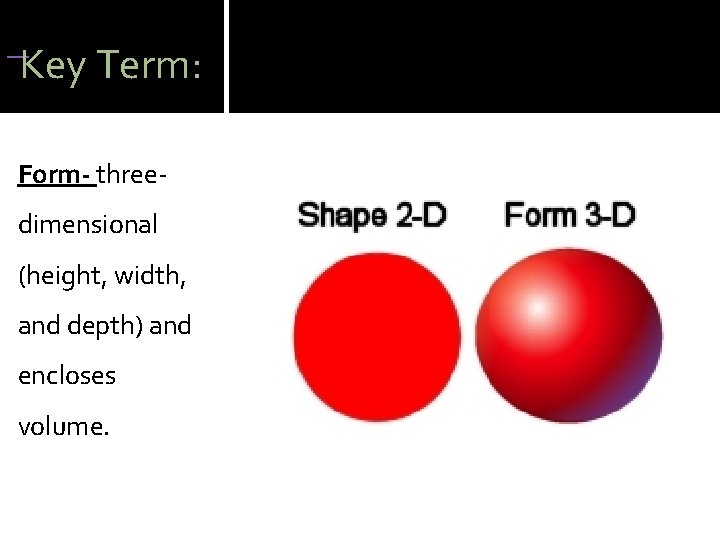
Key Term: Form- threedimensional (height, width, and depth) and encloses volume.
Form There are many different kinds of form in art. List 3 different kinds of form.
Form Forms: Sphere Cone Cube Cylinder Pyramid
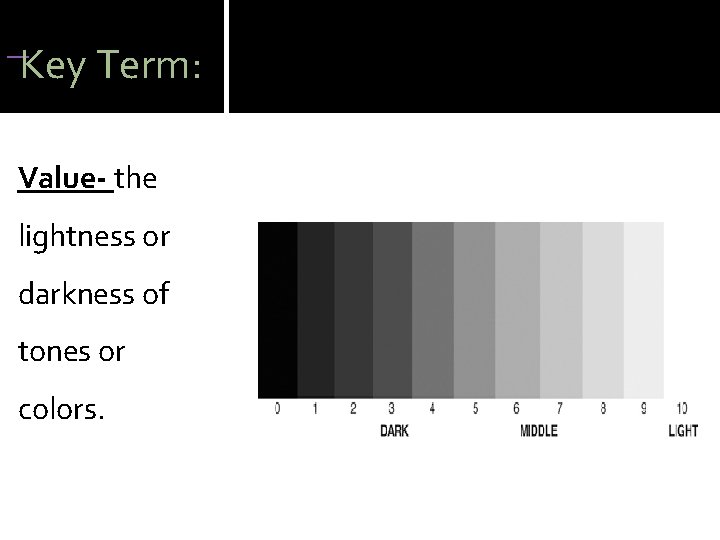
Key Term: Value- the lightness or darkness of tones or colors.
Value Why would an artist want to use value in their artwork?
Value Artists use value to show form. Artists use value to make things more realistic. Artists use value to show shadows.
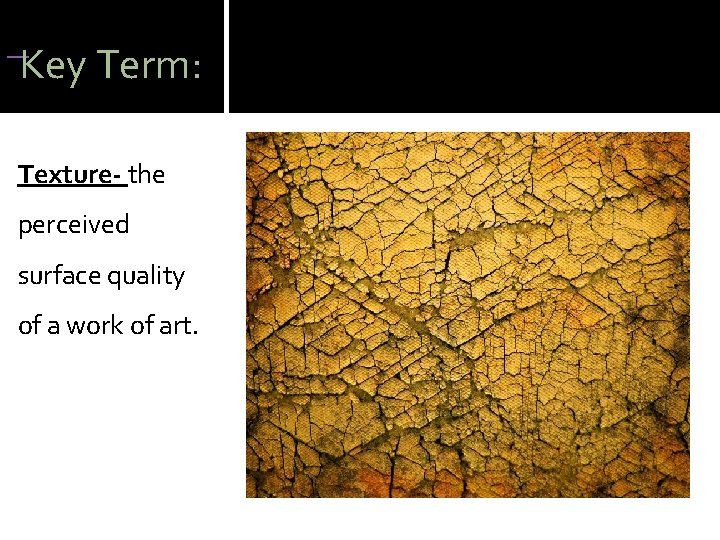
Key Term: Texture- the perceived surface quality of a work of art.
Texture There are many different kinds of texture in art. List 5 different kinds of texture.
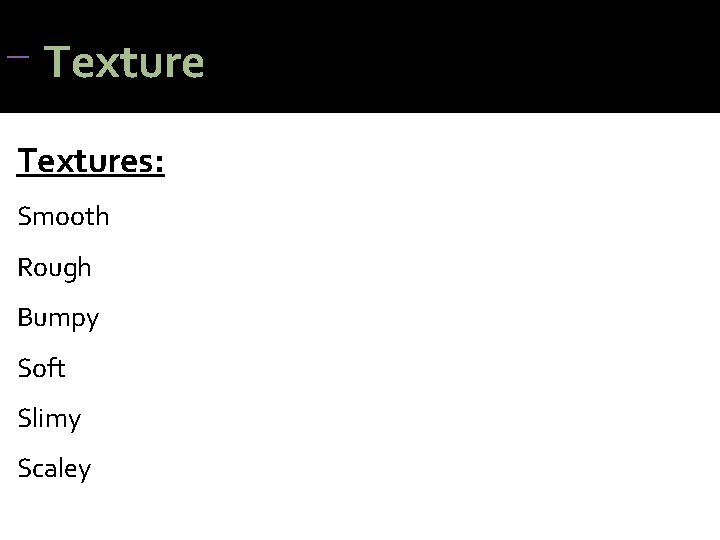
Texture Textures: Smooth Rough Bumpy Soft Slimy Scaley
Elements of Artist choose which Elements they want to use in their work. Not every piece of art has all the Elements of Art. Most artists focus on one or two Elements in their works.
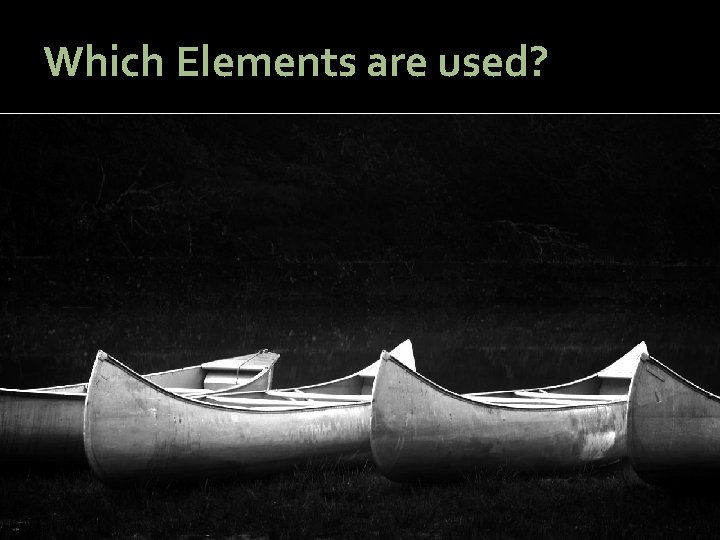
Which Elements are used?
Key Term: Principles of Design- describe the ways that artists use the elements of art in a work of art.
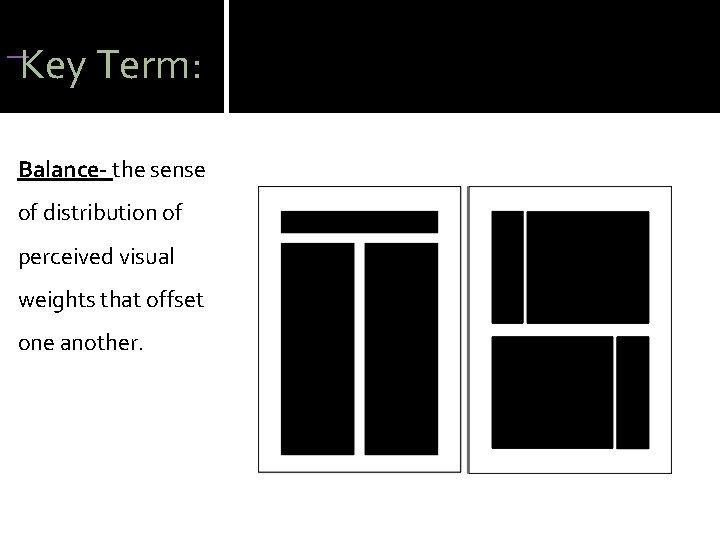
Key Term: Balance- the sense of distribution of perceived visual weights that offset one another.
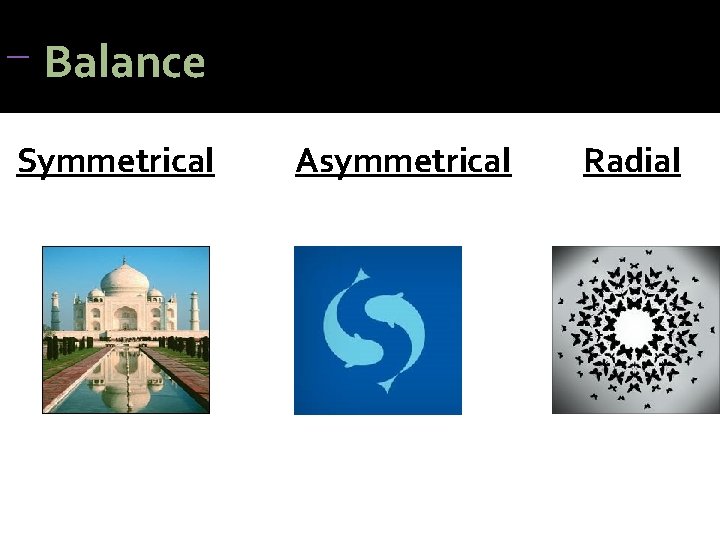
Balance There are 3 different kinds of balance in art. What are the 3 kinds of balance?
Balance Symmetrical Asymmetrical Radial
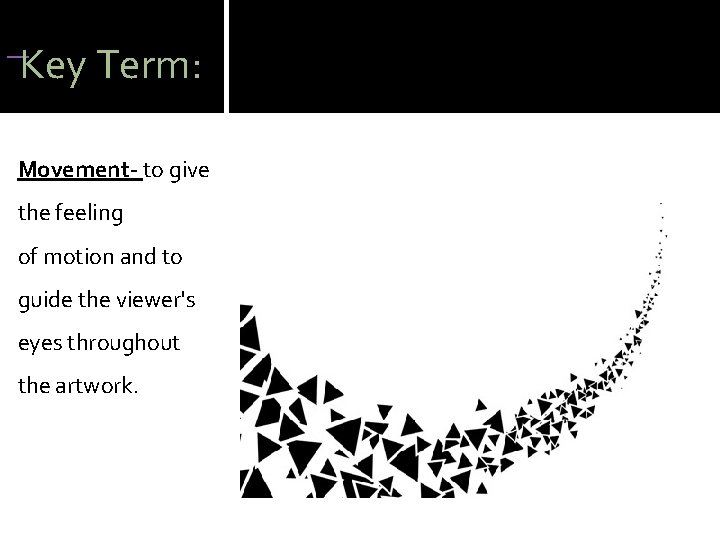
Key Term: Movement- to give the feeling of motion and to guide the viewer's eyes throughout the artwork.
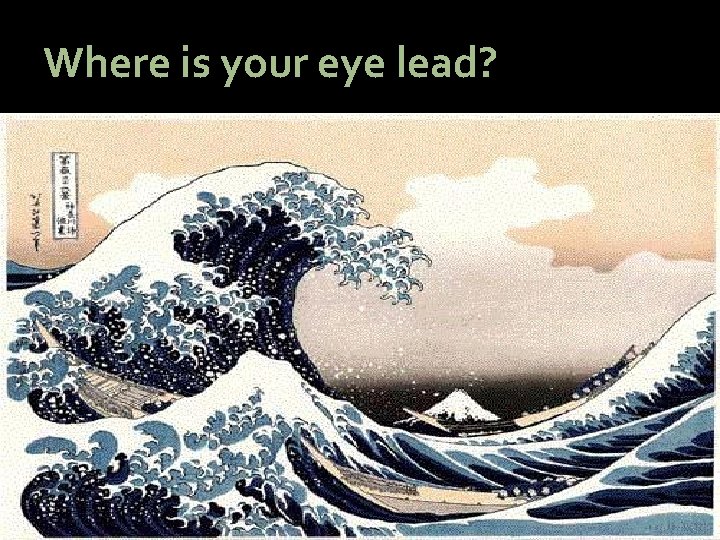
Where is your eye lead?
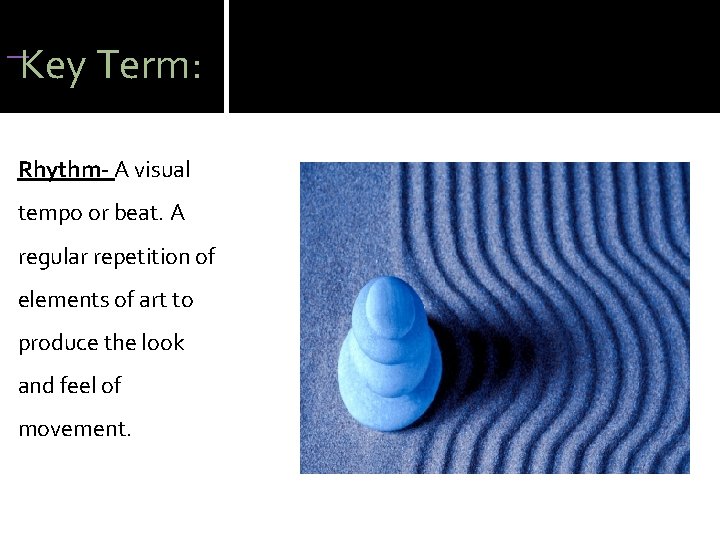
Key Term: Rhythm- A visual tempo or beat. A regular repetition of elements of art to produce the look and feel of movement.
Where is the rhythm?
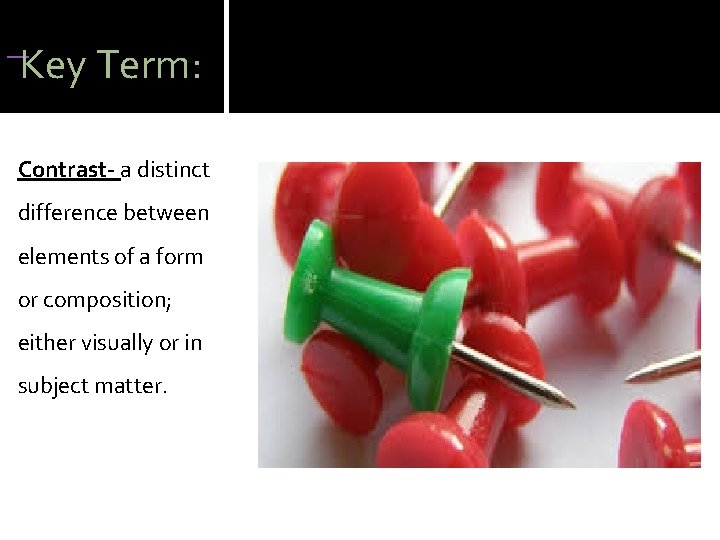
Key Term: Contrast- a distinct difference between elements of a form or composition; either visually or in subject matter.
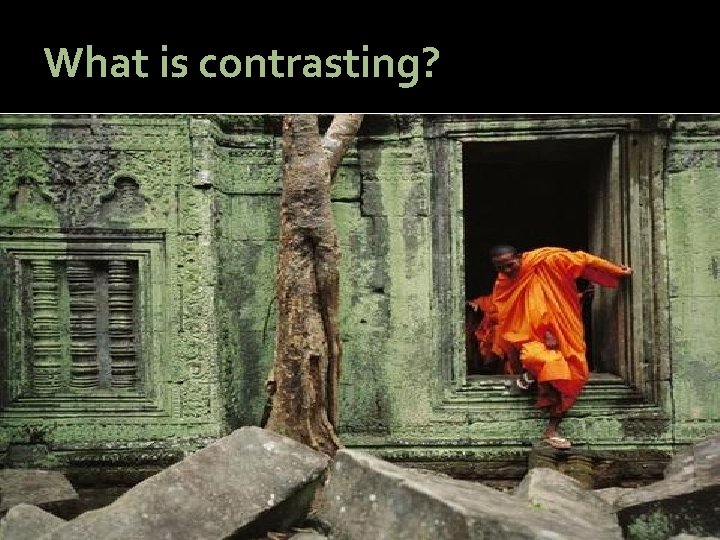
What is contrasting?
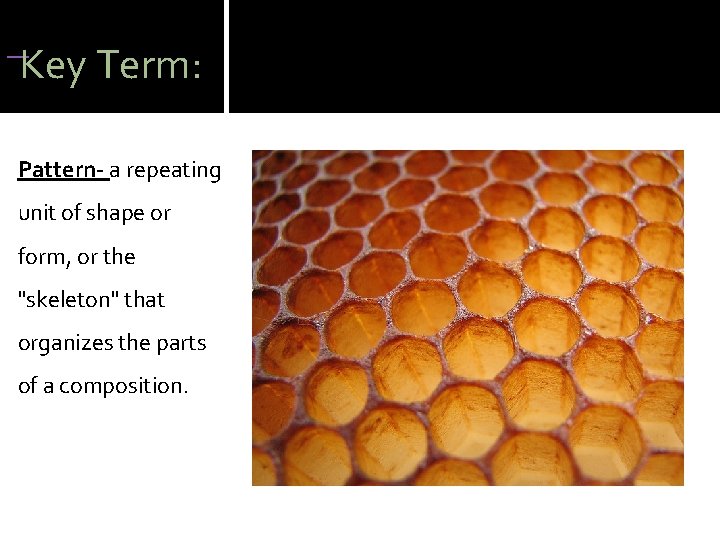
Key Term: Pattern- a repeating unit of shape or form, or the "skeleton" that organizes the parts of a composition.
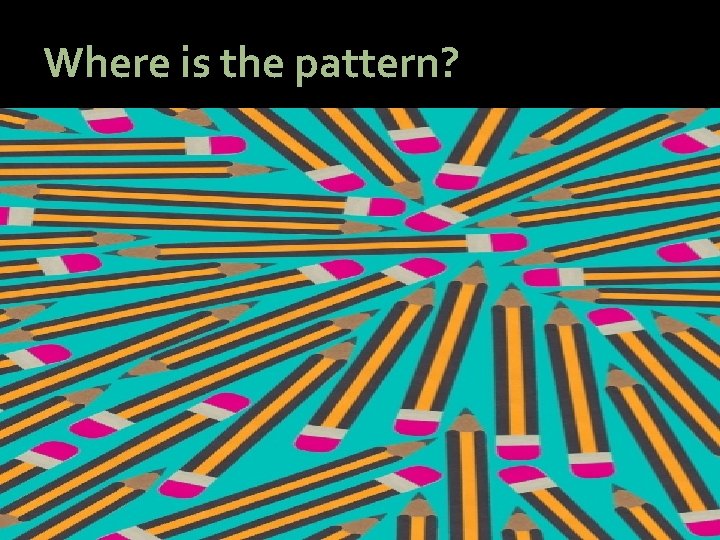
Where is the pattern?
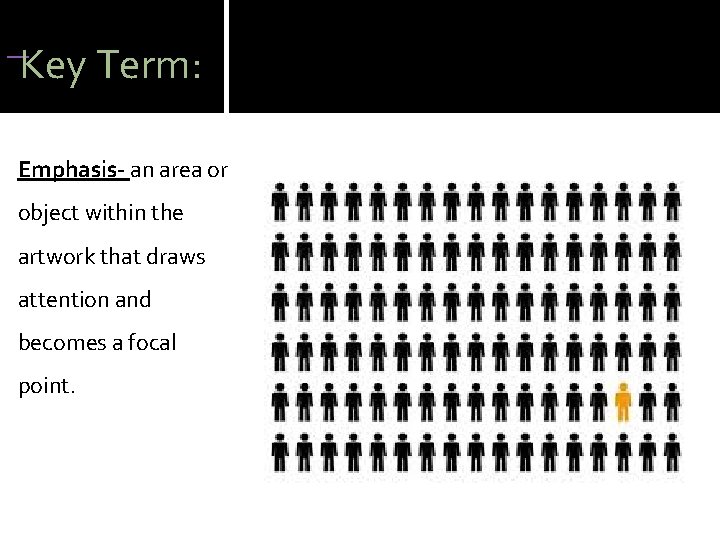
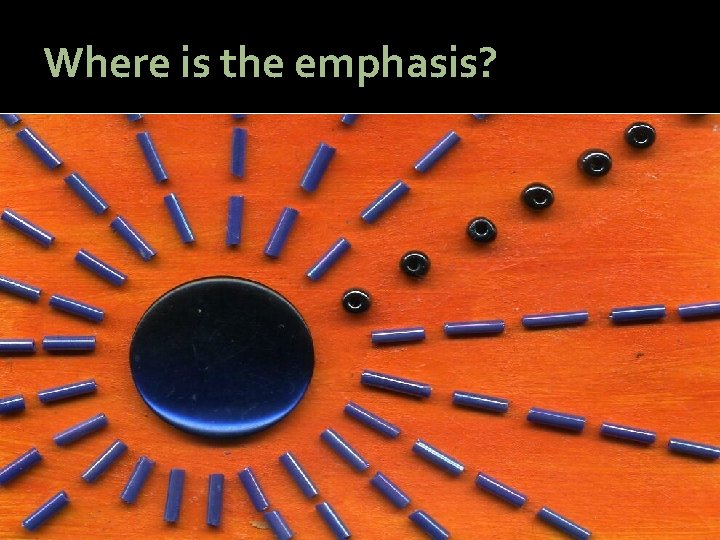
Key Term: Emphasis- an area or object within the artwork that draws attention and becomes a focal point.
Where is the emphasis?
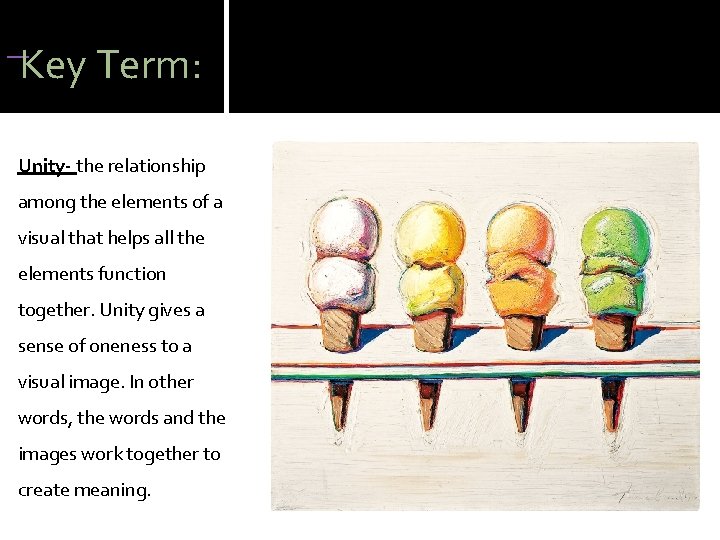
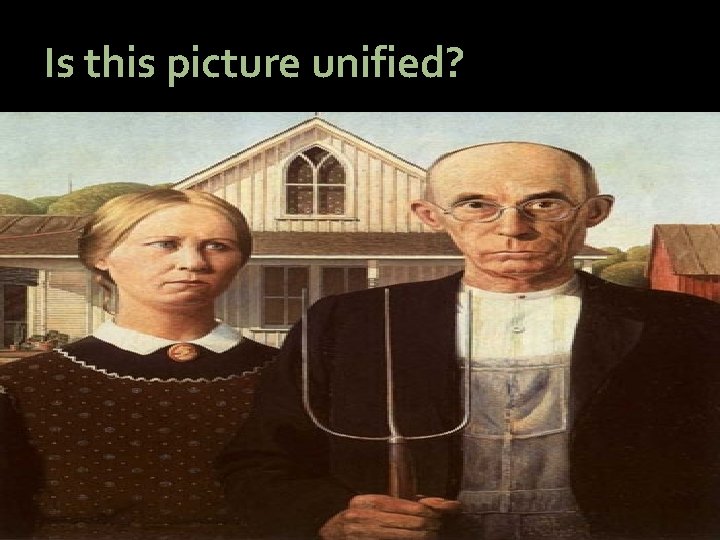
Key Term: Unity- the relationship among the elements of a visual that helps all the elements function together. Unity gives a sense of oneness to a visual image. In other words, the words and the images work together to create meaning.
Is this picture unified?