
Elements of a Story Parts of a Book
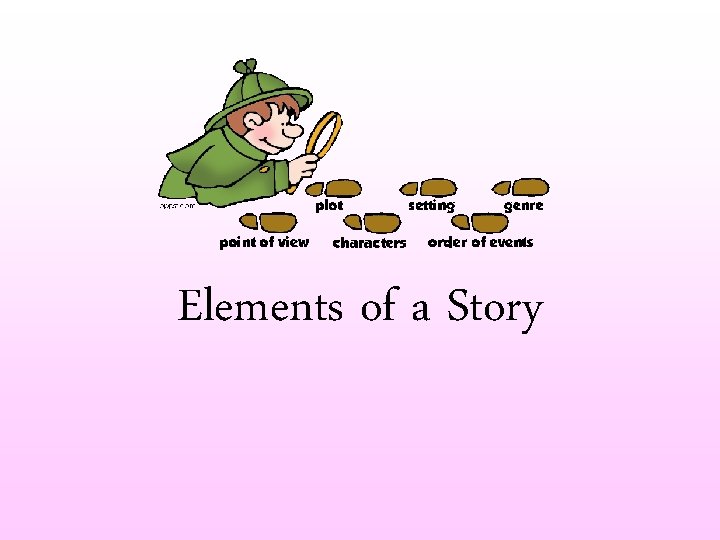
Elements of a Story
Parts of a Book Front Cover: Back Cover: End and Front Title Author Illustrator Summary Blank Pages Title Page Dedication Page Publisher Information Table of Contents Story Illustrations Critic’s Quotes

Front of the Book
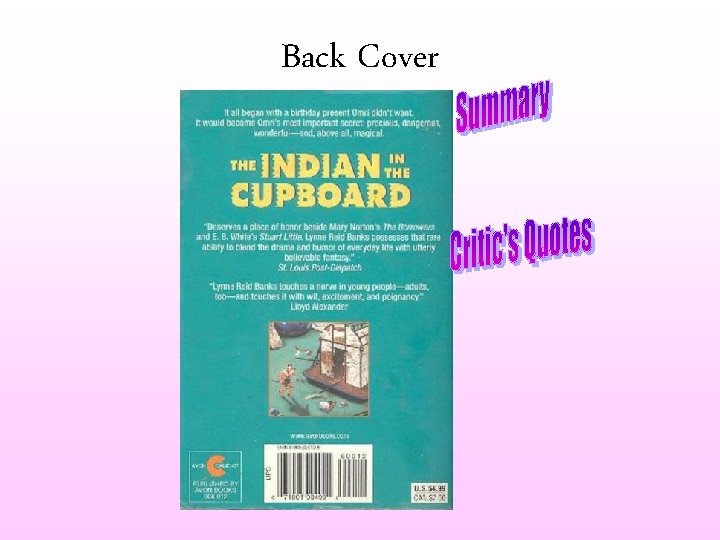
Back Cover
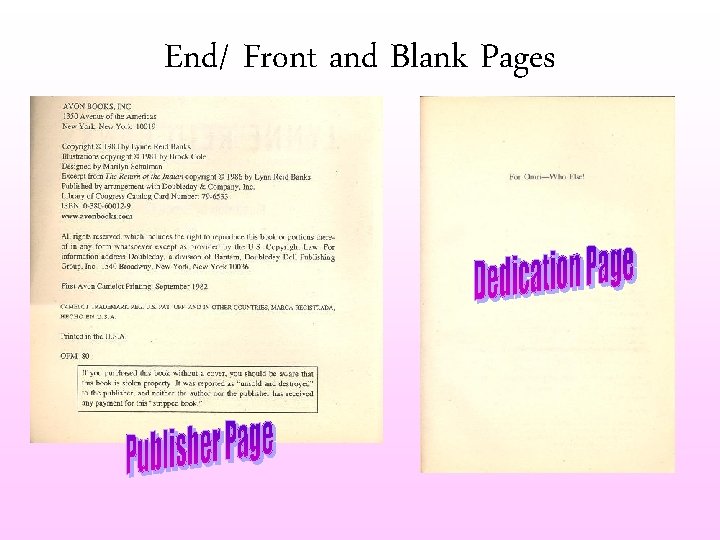
End/ Front and Blank Pages
Characters are the people, personified animals, or things that are involved in a story. Could you have a story without characters? NO! Characters are the most important element of the story structure because the plot the author creates is centered on a character or group of characters.
Character Continued Personification: giving human-like qualities to non-human things. Character Development: Develops in two ways • Physical Traits: how they look, appearance • Personality Traits: how they act, what kind of person they are inside. 1. by their actions 2. dialogue-conversations with others (what they say and how they say it) 3. monologue-what the character thinks or writes
Character Continued Main Character: The main person, animal or thing the story centers around Minor Characters: All other characters involved in the story Protagonist: The hero/heroine of the story (the good guy) Antagonist: The person or thing opposing the main character (the bad guy) Static: One who never changes throughout the story Dynamic: One who changes throughout the story
Setting is where the story takes place. Four parts of the Setting: • Location • Time of Day • Time Period • Weather
Plot is the sequence of events involving characters in conflict situations. A story’s plot is based on the goals of one or more characters and the process they go through to achieve these goals. The events in the story occur as the character(s) attempt to solve their problem (conflict) and reach their goal.
Plot Continued Four steps to Plot development: 1. Introduce the problem 2. The character tries to solve the problems and faces road blocks 3. The climax occurs when the problem is about the solved 4. The problem is solved, goal is achieved, and story is concluded.
Plot…. Last Day! Exposition gives information about the characters and their problems Rising Action is the central part of the story during which various problems arise after a conflict is introduced. Climax is the peak or turning point conflict. The point of which the reader knows the outcome of the action. Falling Action is the action and dialogue following the climax that leads the reader into the story’s end. The resolution is the end of the story and the conflict is solved. These are the elements on a story mountain!
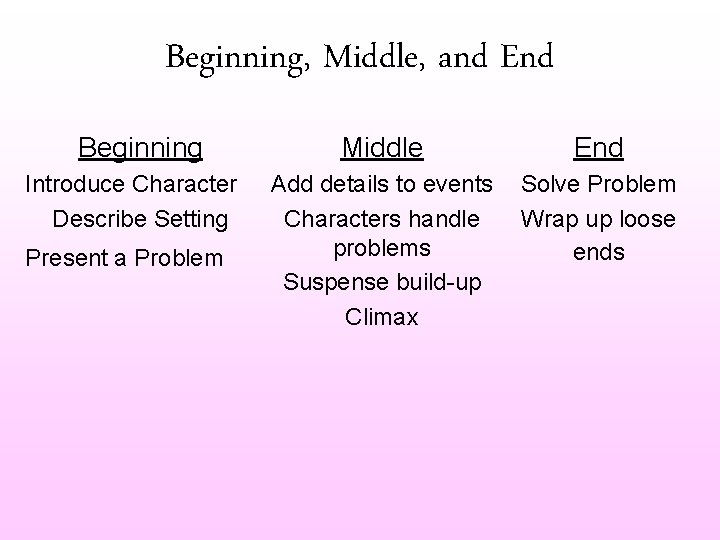
Beginning, Middle, and End Beginning Introduce Character Describe Setting Present a Problem Middle End Add details to events Characters handle problems Suspense build-up Climax Solve Problem Wrap up loose ends
Theme is the message about life or human nature that is the “focus” of the story. Theme is a literature idea the holds the story together, such as a comment about society, human nature or condition. The main idea or central meaning. Theme is the idea that holds the other elements of a good story together
First Person • Narrator is a character in the story and uses the words “I” and “We” Point of View Third Person • Narrator is outside the story; uses words “He” “She” “They” Third Person Limited • Narrator tells only what one character perceives Third-Person Omniscient • Narrator can see into the minds of all characters
- Slides: 15