
Elements of a Story I Plot The series
- Slides: 16
Elements of a Story
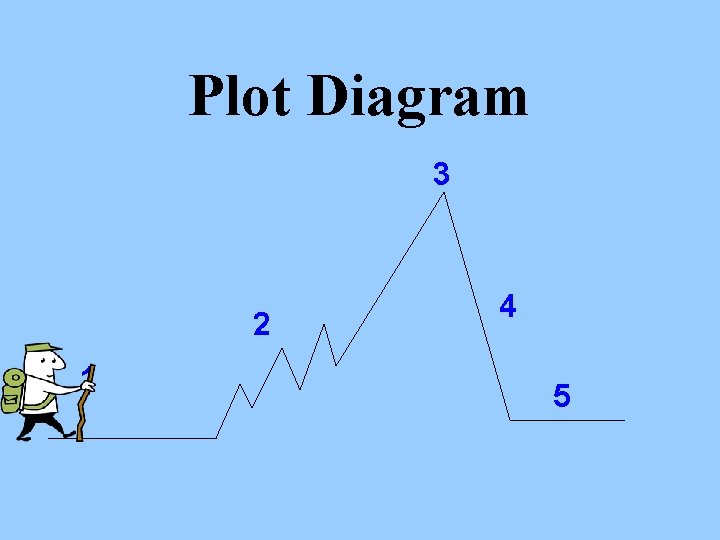
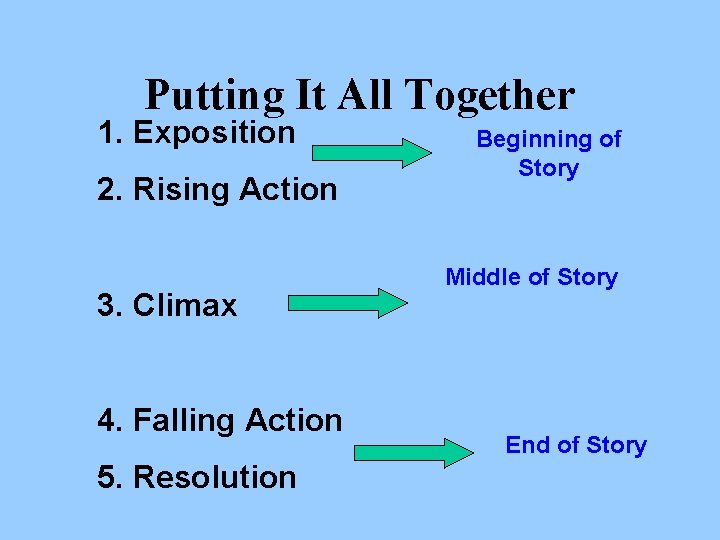
I. Plot • The series of events that make up a story • Usually built around a central conflict (problem or struggles) Four Stages of Plot • 1 -Exposition • 2 -Rising Action • 3 -Climax • 4 -Falling Action • 5 -Resolution
Plot Diagram 3 2 1 4 5
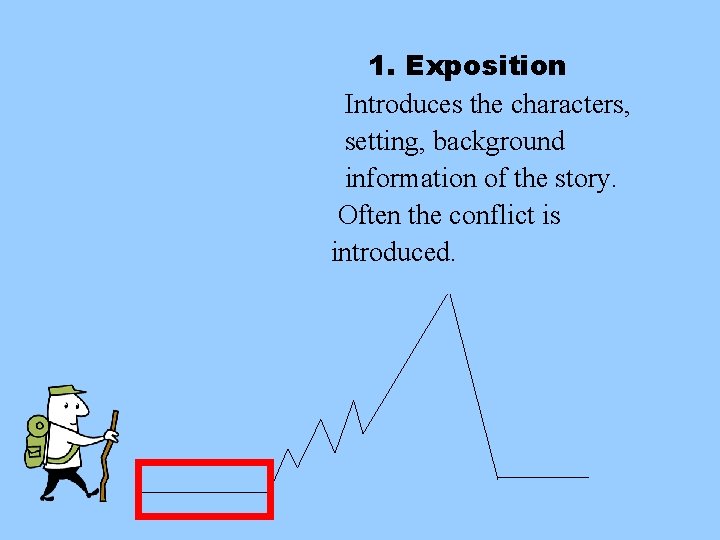
1. Exposition Introduces the characters, setting, background information of the story. Often the conflict is introduced.
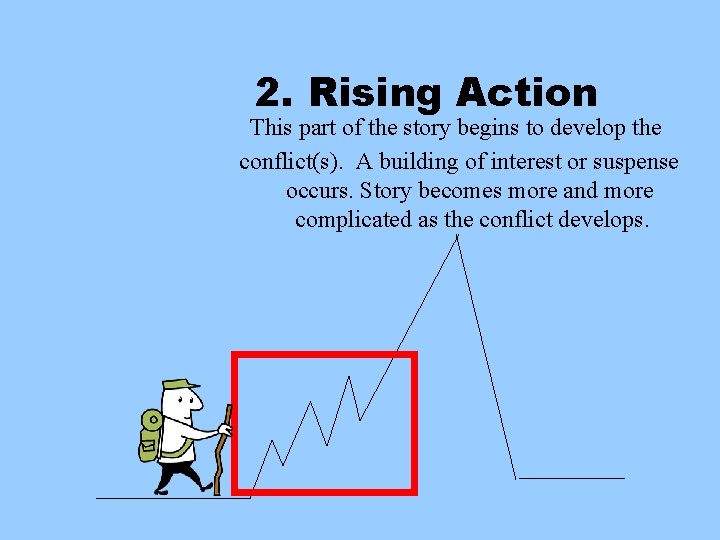
2. Rising Action This part of the story begins to develop the conflict(s). A building of interest or suspense occurs. Story becomes more and more complicated as the conflict develops.
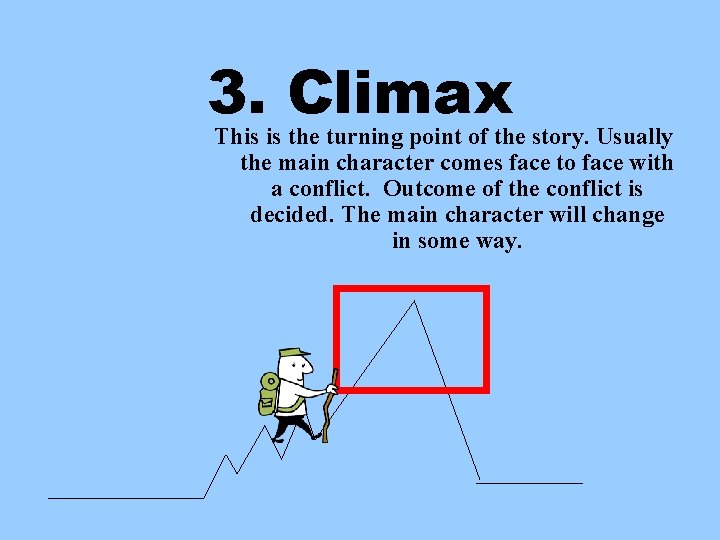
3. Climax This is the turning point of the story. Usually the main character comes face to face with a conflict. Outcome of the conflict is decided. The main character will change in some way.
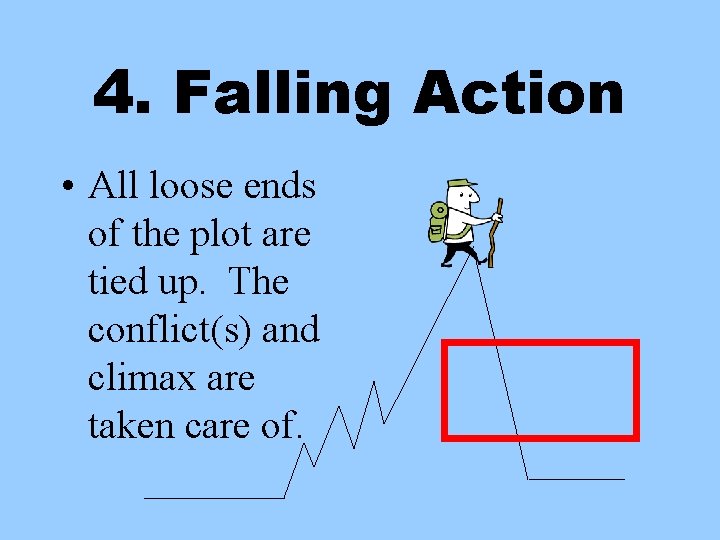
4. Falling Action • All loose ends of the plot are tied up. The conflict(s) and climax are taken care of.
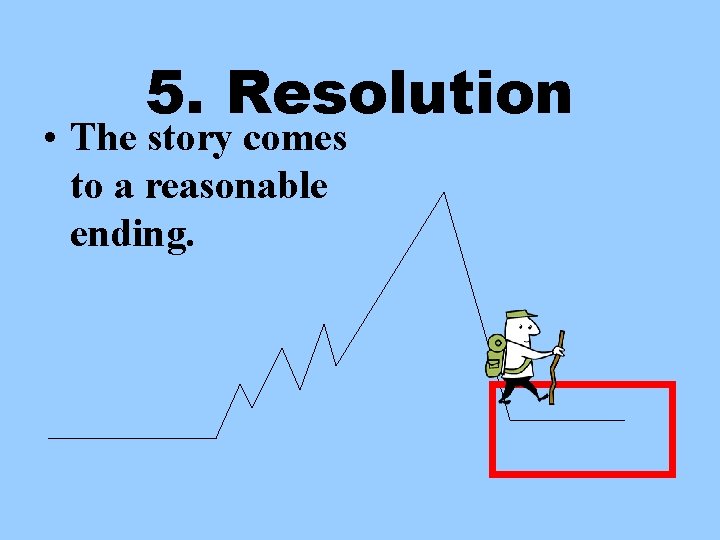
5. Resolution • The story comes to a reasonable ending.
Putting It All Together 1. Exposition 2. Rising Action 3. Climax 4. Falling Action 5. Resolution Beginning of Story Middle of Story End of Story
II. Characters • People, animals and imaginary creatures who take part in the action of the story. • Main Characters- action centered on one important character, also called the Protagonistpushes toward something. • Minor Characters- Less important charactersthey interact with main character and help the story move along. Could be the antagonist- “bad guy” pushes against the protagonist and tries to block him/her from reaching his goal. • Traits- Characters are revealed by their traits or qualities. You can learn about the character’s traits by paying attention to their speech, thoughts, actions of other characters, writer’s direct statements, and their physical characteristics.
III. Setting • The time and place in which a story occurs. • Ex. Past, present, future, day or night, may be imaginary or real. • A writer’s vivid and descriptions help readers picture the setting. The setting can influence characters’ actions, and often plays the role of the conflicts that develop and how they are resolved.
VI. Theme • The meaning or moral of a story. • Writer’s create themes to express their ideas about life and human nature. Most themes are not stated openly. Some clues to a story’s theme: -the title -the actions, thoughts, and words of the characters -the conflicts in the story -the setting and the images the writer creates
VII. Reading Strategies • Inferences is a reading strategy (also used in the real world) An educated guess formed by using background knowledge and personal experiences to draw conclusions not explicitly stated. • Questioning • Predicting • Visualizing • Connecting
VIII. Figurative Language • Figurative language is a tool that an author employs (or uses) to help the reader visualize (or see) what is happening in a story or poem. Some common types of figurative language are: simile, metaphor, alliteration, onomatopoeia, idiom, puns, and sensory language. In this class, we will cover imagery, simile, metaphor, personification and idioms.
• Imagery is when the reader uses descriptive words that appeal to the reader’s senses. • A simile is a comparison using like or as. It usually compares 2 dissimilar objects • EXAMPLE: • His feet were as big as boats • We are comparing _______ to _______, which means they are probably _______!!! • A metaphor states that one thing IS something else. It is a comparison, but it does NOT use like or as to make the comparison. • EXAMPLE: • Her hair is silk. The sentence is comparing (or stating) that hair is silk.
• Personification-giving objects human characteristics • EXAMPLE: The sun wrapped its arms around my shoulders. (The sun does not really have arms, but I using personification to express how hot my shoulders feel. ) • Symbolism- person, place or object that stands for something other than itself • Idioms-an expression that has a meaning different from its individual words.