
Elements of a Short Story Story Short Story
- Slides: 27
Elements of a Short Story
Story & Short Story Elements ØSetting ØCharacters ØPlot ØConflict ØResolution ØPoint of View ØTheme
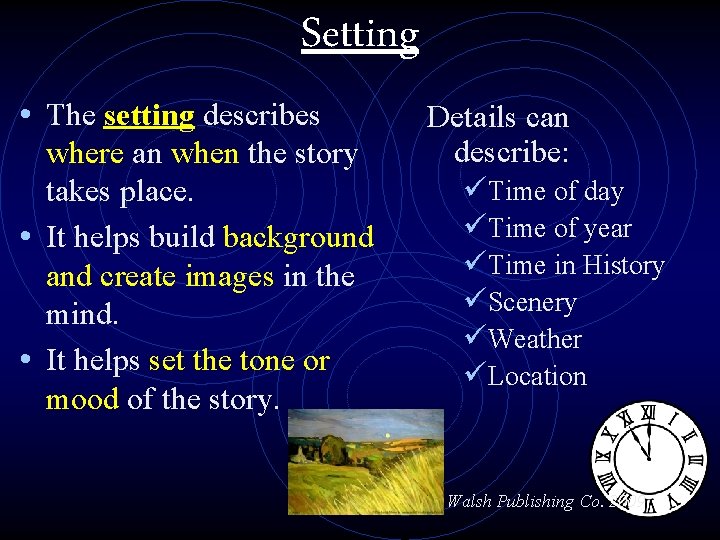
Setting • The setting describes where an when the story takes place. • It helps build background and create images in the mind. • It helps set the tone or mood of the story. Details can describe: üTime of day üTime of year üTime in History üScenery üWeather üLocation Walsh Publishing Co. 2009
The Functions of a Setting Ø To create a mood or atmosphere Ø To show a reader a different way of life Ø To make action seem more real Ø To be the source of conflict or struggle Ø To symbolize an idea
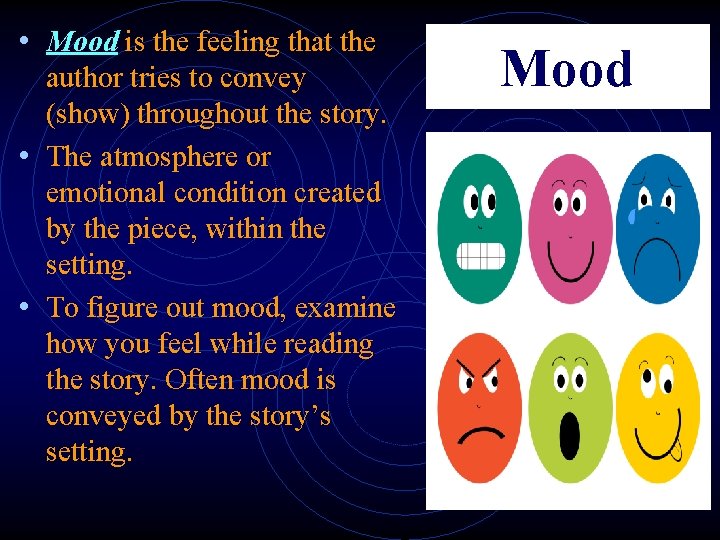
• Mood is the feeling that the author tries to convey (show) throughout the story. • The atmosphere or emotional condition created by the piece, within the setting. • To figure out mood, examine how you feel while reading the story. Often mood is conveyed by the story’s setting. Mood
Characters • The person, animals, and things participating in a story
Characters • The protagonist is the main character of the story, the one with whom the reader identifies. This person is not necessary “good”. • The antagonist is the force in opposition (against) of the protagonist; this person may not be “bad” or “evil”, but he/she opposes the protagonist in a significant (important) way
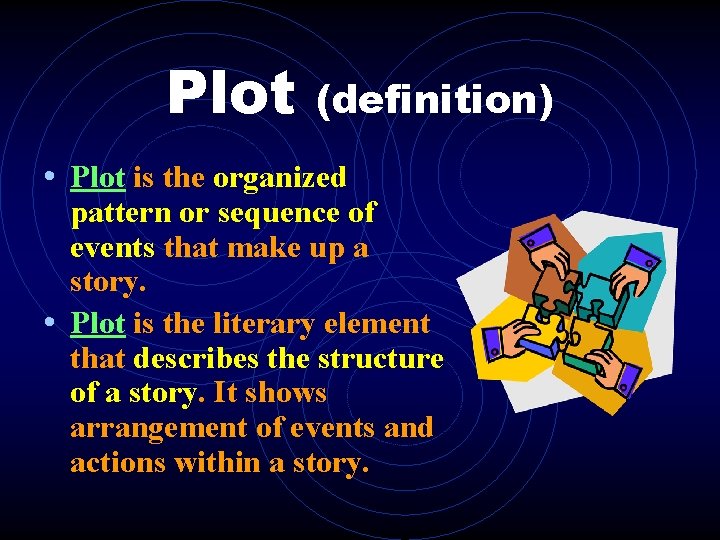
Plot (definition) • Plot is the organized pattern or sequence of events that make up a story. • Plot is the literary element that describes the structure of a story. It shows arrangement of events and actions within a story.
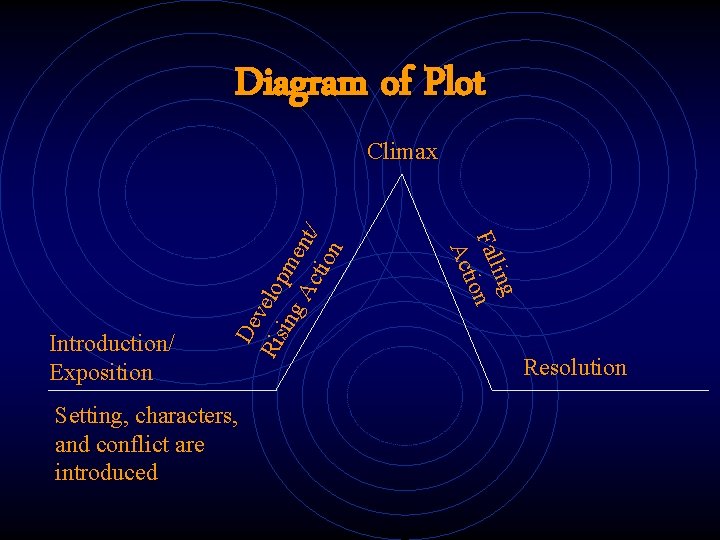
Parts of a Plot Ø Exposition - introduction; characters, setting and conflict (problem) are introduced Ø Rising Action- events that occur as result of a central conflict Ø Climax- highest point of interest, action, or suspense of a story Ø Falling Action - tension eases; events show the results of how the main character begins to resolve the conflict Ø Resolution- the conflict is solved
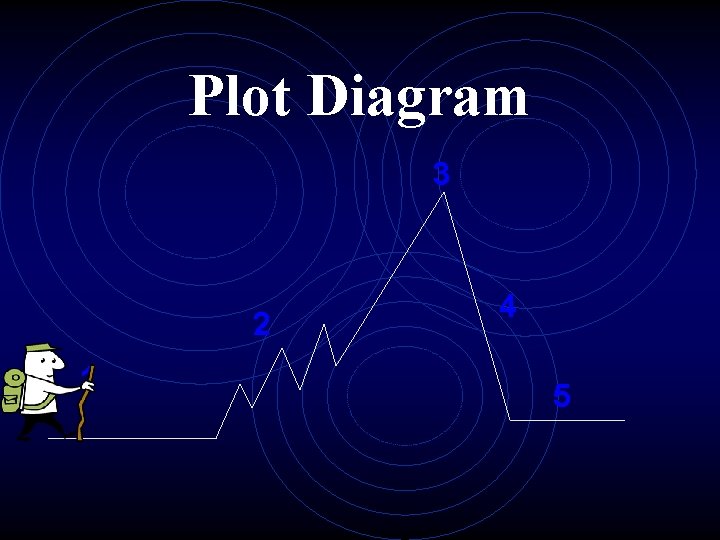
Plot Diagram 3 2 1 4 5
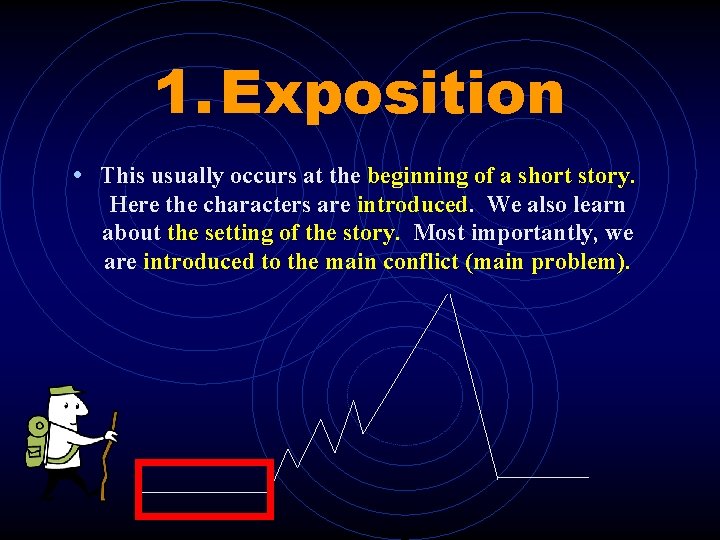
1. Exposition • This usually occurs at the beginning of a short story. Here the characters are introduced. We also learn about the setting of the story. Most importantly, we are introduced to the main conflict (main problem).
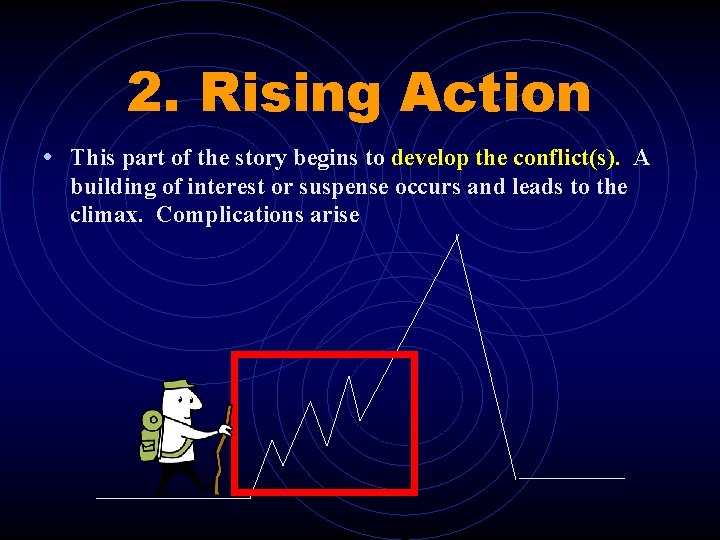
2. Rising Action • This part of the story begins to develop the conflict(s). A building of interest or suspense occurs and leads to the climax. Complications arise
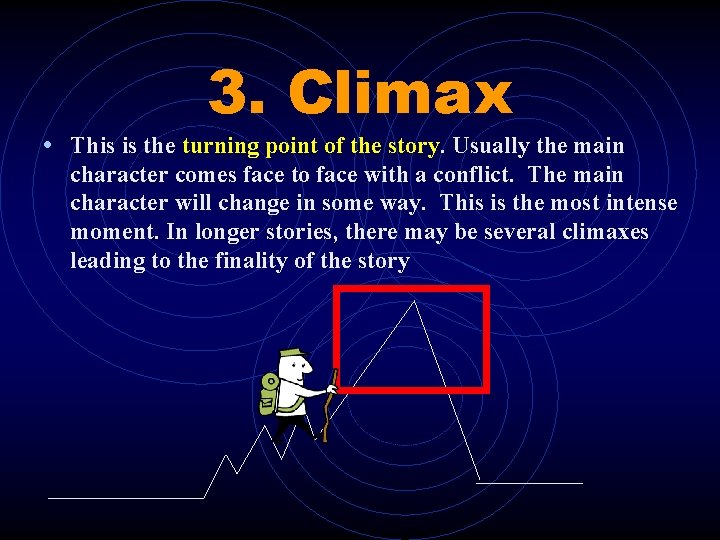
3. Climax • This is the turning point of the story. Usually the main character comes face to face with a conflict. The main character will change in some way. This is the most intense moment. In longer stories, there may be several climaxes leading to the finality of the story
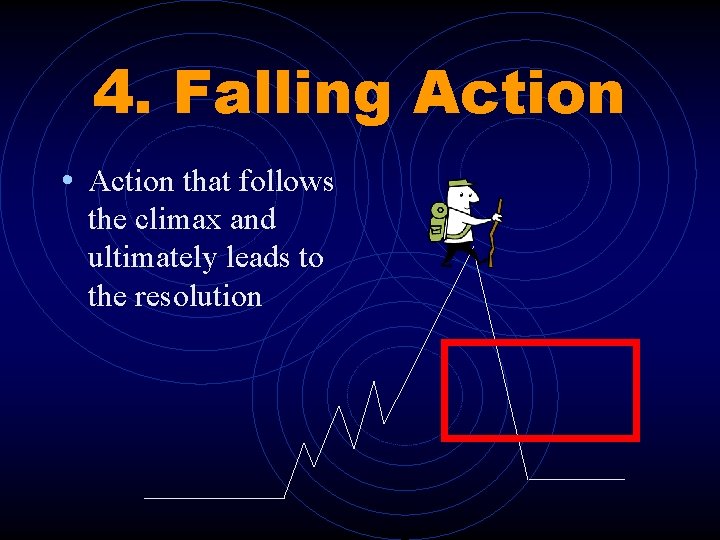
4. Falling Action • Action that follows the climax and ultimately leads to the resolution
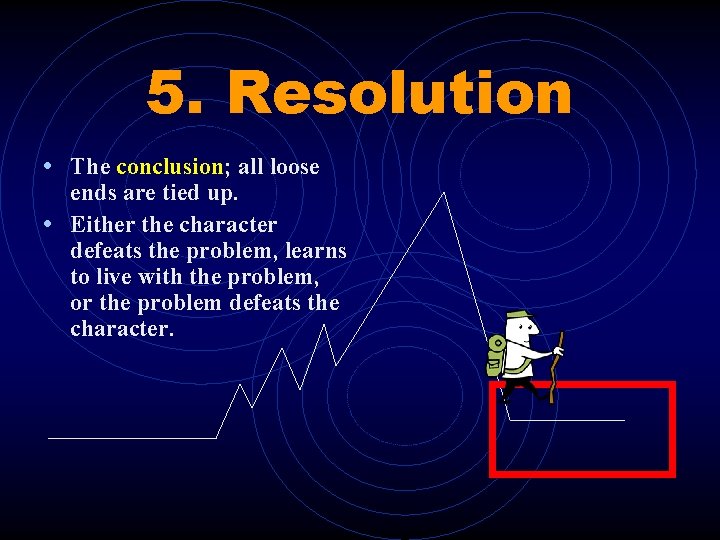
5. Resolution • The conclusion; all loose ends are tied up. • Either the character defeats the problem, learns to live with the problem, or the problem defeats the character.
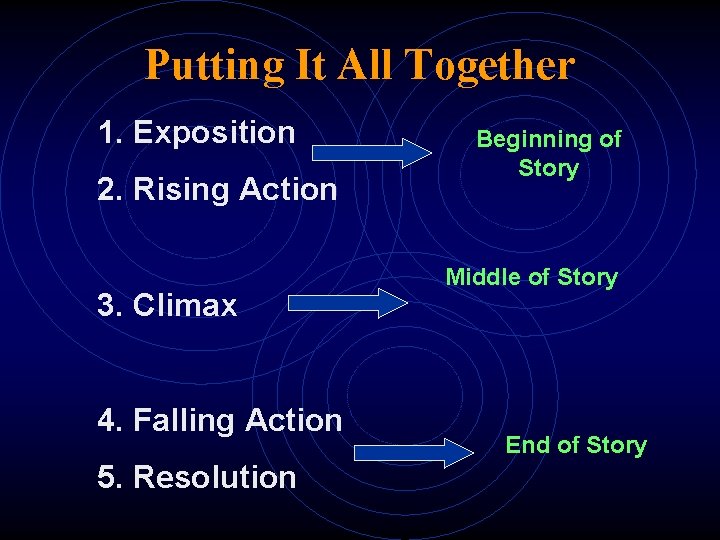
Putting It All Together 1. Exposition 2. Rising Action 3. Climax 4. Falling Action 5. Resolution Beginning of Story Middle of Story End of Story
Diagram of Plot Setting, characters, and conflict are introduced ling Fal ion Act Introduction/ Exposition De Ris velo ing pme Ac nt/ tio n Climax Resolution
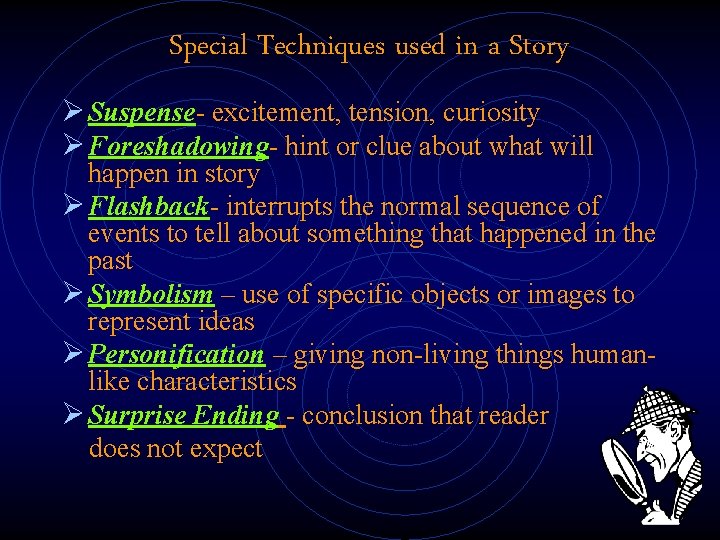
Special Techniques used in a Story Ø Suspense- excitement, tension, curiosity Ø Foreshadowing- hint or clue about what will happen in story Ø Flashback- interrupts the normal sequence of events to tell about something that happened in the past Ø Symbolism – use of specific objects or images to represent ideas Ø Personification – giving non-living things humanlike characteristics Ø Surprise Ending - conclusion that reader does not expect
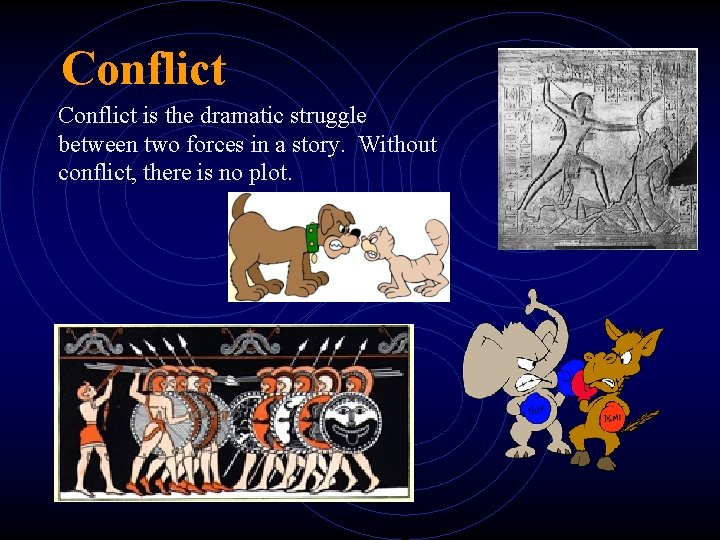
Conflict is the dramatic struggle between two forces in a story. Without conflict, there is no plot.
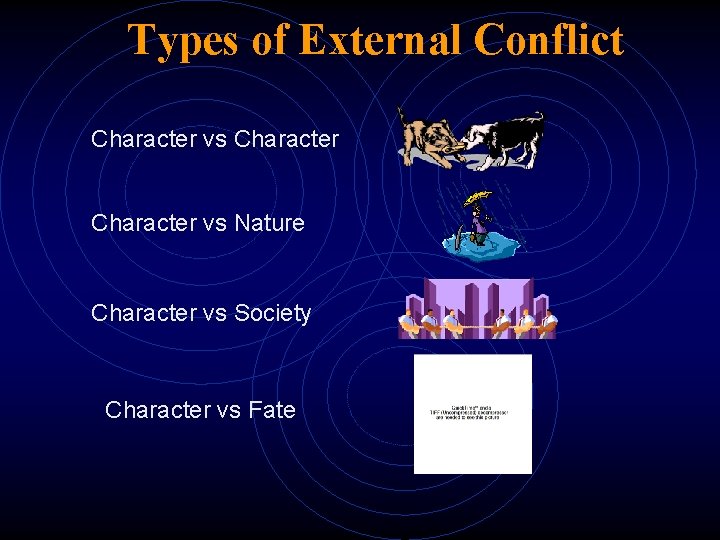
Conflict ØConflict is a problem that must be solved; an issue between the protagonist and antagonist forces. It forms the basis of the plot. ØConflicts can be external or internal üExternal conflict- outside force may be person, group, animal, nature, or a nonhuman obstacle üInternal conflict- takes place in a character’s mind
Types of External Conflict Character vs Nature Character vs Society Character vs Fate
Type of Internal Conflict Character vs. Self
Point of View • First Person Point of View- a character from the story is telling the story; uses the pronouns “I” and “me” • Third Person Point of View- an outside narrator is telling the story; uses the pronouns “he”, “she”, “they”
Types of Third-Person Point of View • Third-Person Limited • Third-Person Omniscient • The narrator knows the thoughts and feelings on only ONE character in a story. thoughts and feeling of ALL the characters in a story.
Theme ØThe theme is the central, general message, the main idea, the controlling topic about life or people the author wants to get across through a literary work ØTo discover theme of a story, think big. What big message is the author trying to say about the world in which we live? ØWhat is this story telling me about how life works, or how people behave?
The Theme is also • the practical lesson ( moral) that we learn from a story after we read it. The lesson that teaches us what to do or how to behave after you have learned something from a story or something that has happened to you. Example: The lesson or teaching of the story is be careful when you’re offered something for nothing.
Any questions?