
Elements of a Short Story GRADE 9 ELA

- Slides: 23
Elements of a Short Story GRADE 9 ELA
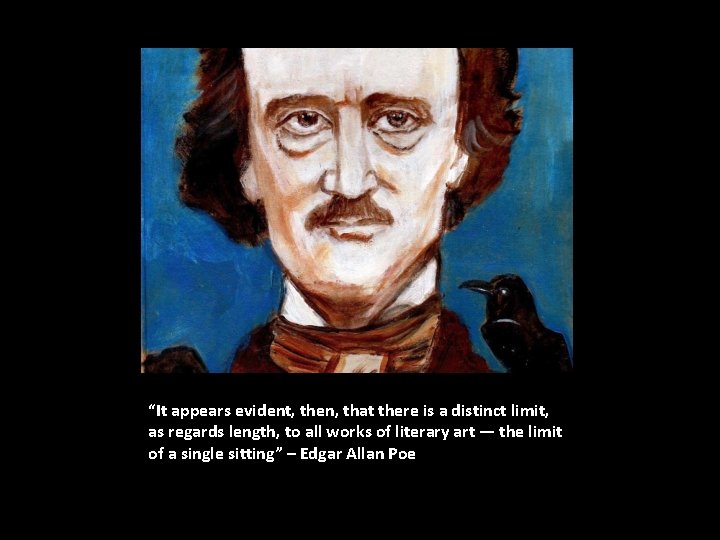
“It appears evident, then, that there is a distinct limit, as regards length, to all works of literary art — the limit of a single sitting” – Edgar Allan Poe
What is a Short Story? • A form of prose writing that is often fictional and which is shorter than the novel, and novella • Shorter Length = More Investigative Reading • Requires the reader to think inferentially • Make judgments about character based on something like: How they act, How they dress
ELEMENTS OF A SHORT STORY
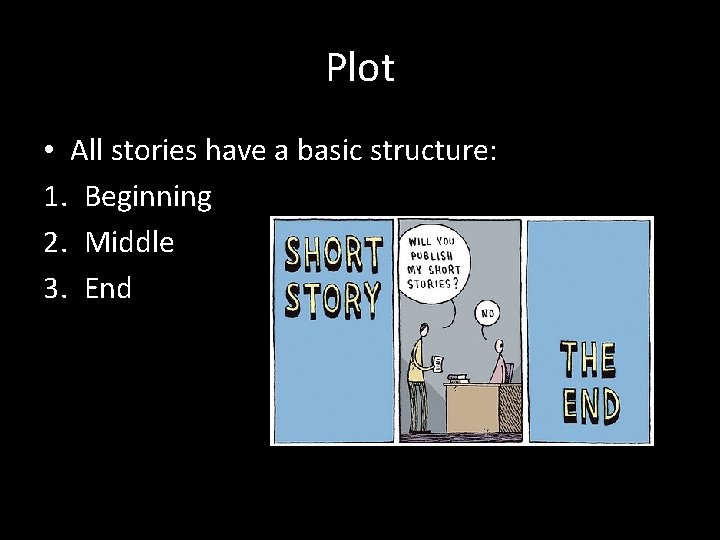
Plot • All stories have a basic structure: 1. Beginning 2. Middle 3. End
Plot • In literary texts, such as short stories, a story is crafted upon a plot. • Plot – the author’s arrangement of events that make up the action of the story.
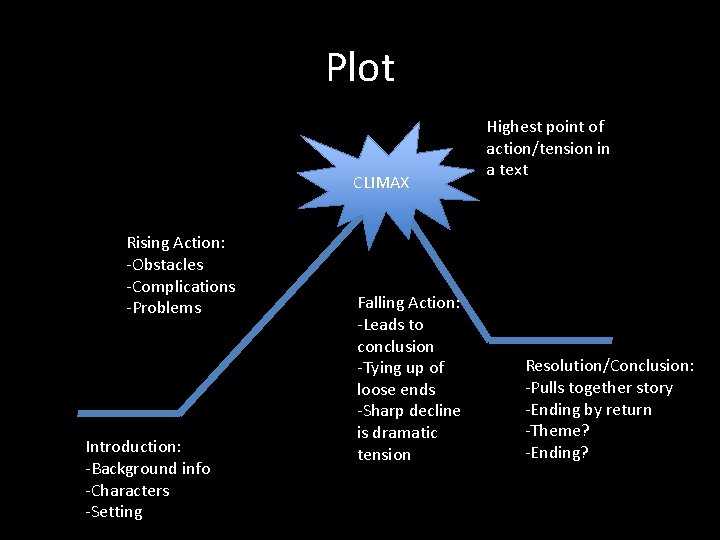
Plot CLIMAX Rising Action: -Obstacles -Complications -Problems Introduction: -Background info -Characters -Setting Falling Action: -Leads to conclusion -Tying up of loose ends -Sharp decline is dramatic tension Highest point of action/tension in a text Resolution/Conclusion: -Pulls together story -Ending by return -Theme? -Ending?
Setting The time of a story: Think: ERA (Ex: 1940 s) (PAST, PRESENT, FUTURE) Place(s) of a story: Where is the story set? Remember, setting can be very helpful in establishing mood and tone: • Think: An island setting can create a sense of loneliness, and isolation. • Setting may also be a factor in the conflict • •
Characters • • • Stories need characters Major Characters: Protagonist – good guy/gal Antagonist – bad guy/gal/force Minor Characters (Supporting Actors!) How are characters developed?
Characterization • Characterization – the way an author describes the characters in his or her story • Direct characterization – when the author tells you something directly about the character: • “She has icy blue eyes” • Indirect characterization – when the reader must infer details based on characters’ thoughts, actions, and appearance. • “He wore a leather jacket with a skull on the back”
Conflict • Conflict is necessary in a short story • Conflict is what moves a story ahead • Creates tension, obstacles, problems for the story’s protagonist • 2 types of conflict: Internal and External
Internal Conflict • Intrapersonal • Character vs. Self • Characters are often faced with internal struggles based on choices and actions • Point of View can be very helpful to remember for this type of conflict.
External Conflict • • Interpersonal (Character vs. Character) Batman vs. Joker Character vs. Nature Brian vs. Boreal Forest/Bears etc. in Hatchet Character vs. Society Katniss vs. The Capitol Think of social injustices here
Point of View • • Who is telling the story? Who is the narrator? 1 st person: Use of pronoun “I” Benefits: Intimate Trust with reader Feel like an accomplice Common
Point of View • 3 rd person limited: Think – Observer/Bystander • Second hand account • Sometimes from a minor character’s perspective • Hard to distinguish • Limited to one character’s thoughts • Use of “he, she, they”
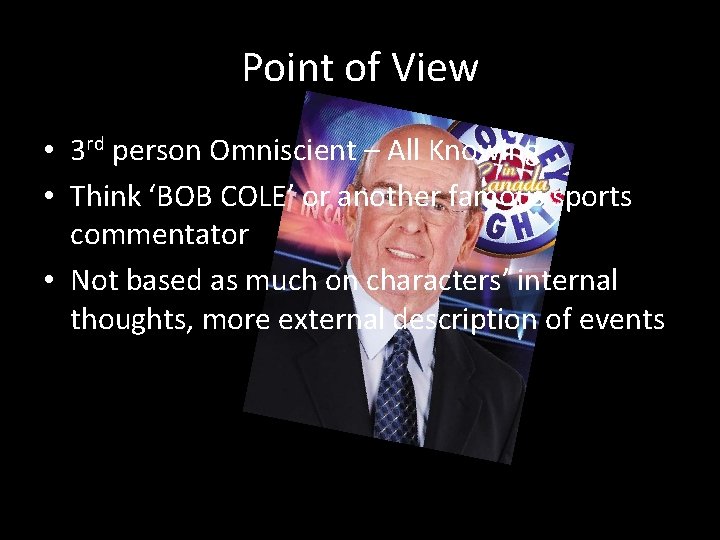
Point of View • 3 rd person Omniscient – All Knowing • Think ‘BOB COLE’ or another famous sports commentator • Not based as much on characters’ internal thoughts, more external description of events
Point of View • A common question in ELA is: • Is the point of view effective? • How would we answer that?
Theme • Theme – the main message, or idea, in a text. • Always look for clues for a potential theme in the story • Universal Ideas: • Good and Evil • Love and Hate • Relationships • Struggles for Surivial • Etc.
Writing Dialogue • One of the important aspects of narrative writing is dialogue. • Remember, dialogue is a conversation between 2 characters. • Skilled writers use dialogue to portray character and to dramatize conflict • It’s important to remember that a change in the person speaking, also means a NEW paragraph.
Sample Dialogue Mr. Churchill said to Nolan, “That was a hard loss for the Leafs last night. ” “Yes, Mr. Churchill, they didn’t play very well. ” “I think they can still beat Boston. Perhaps they will play better on Saturday night. ” “I hope so Mr. Churchill. Well, I better get going for lunch. ”
Dialogue • Notice how there is a new paragraph each time the speaker changes. • Notice the use of quotation marks for what the characters are saying. • It’s important to distinguish when to use quotation marks depending on your choice of Point of View.
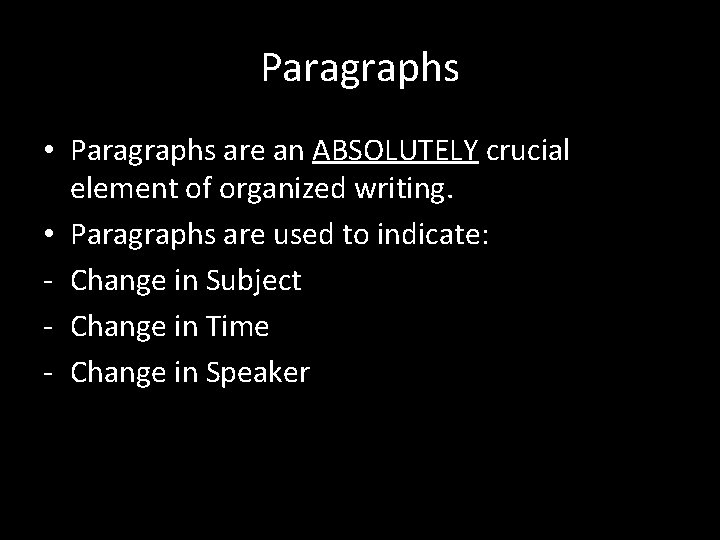
Paragraphs • Paragraphs are an ABSOLUTELY crucial element of organized writing. • Paragraphs are used to indicate: - Change in Subject - Change in Time - Change in Speaker
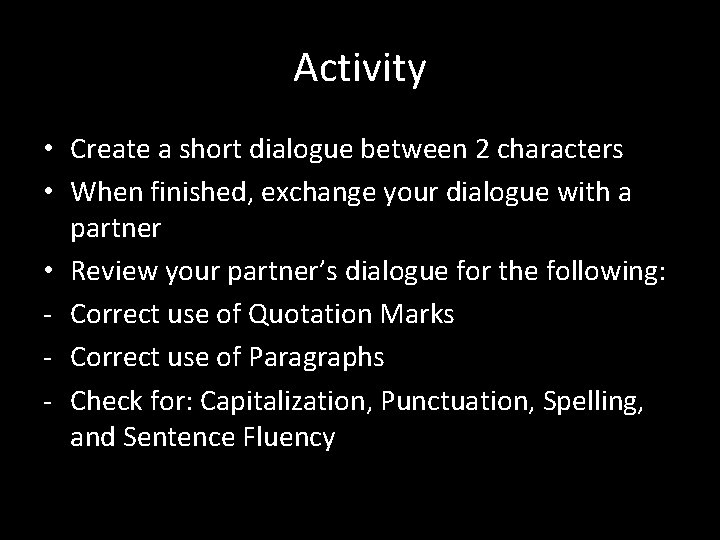
Activity • Create a short dialogue between 2 characters • When finished, exchange your dialogue with a partner • Review your partner’s dialogue for the following: - Correct use of Quotation Marks - Correct use of Paragraphs - Check for: Capitalization, Punctuation, Spelling, and Sentence Fluency