
Elements of A Short Story Conflict and Narration
- Slides: 10
Elements of A Short Story Conflict and Narration
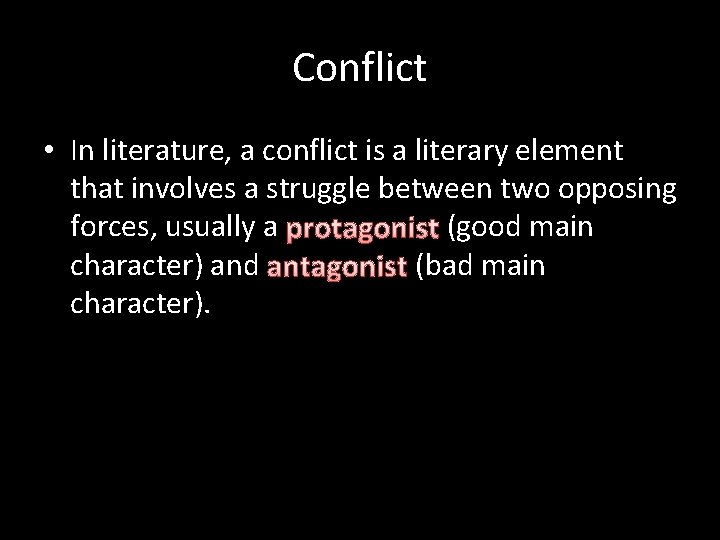
Conflict • In literature, a conflict is a literary element that involves a struggle between two opposing forces, usually a protagonist (good main character) and antagonist (bad main character).
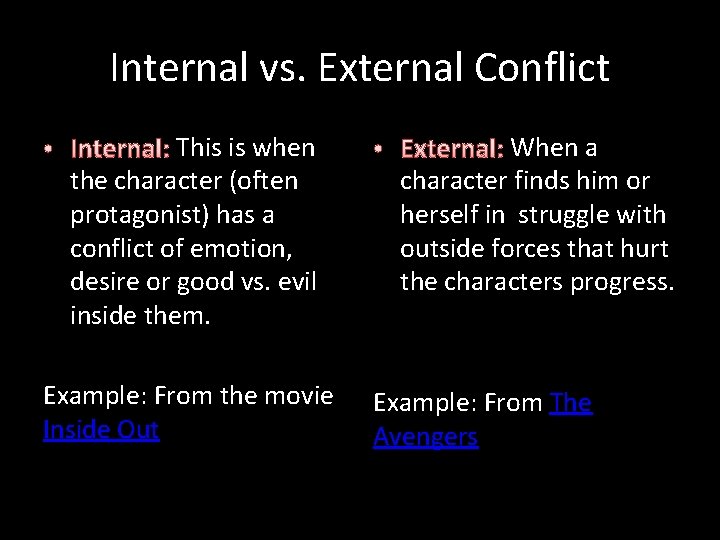
Internal vs. External Conflict • Internal: This is when the character (often protagonist) has a conflict of emotion, desire or good vs. evil inside them. • External: When a character finds him or herself in struggle with outside forces that hurt the characters progress. Example: From the movie Inside Out Example: From The Avengers
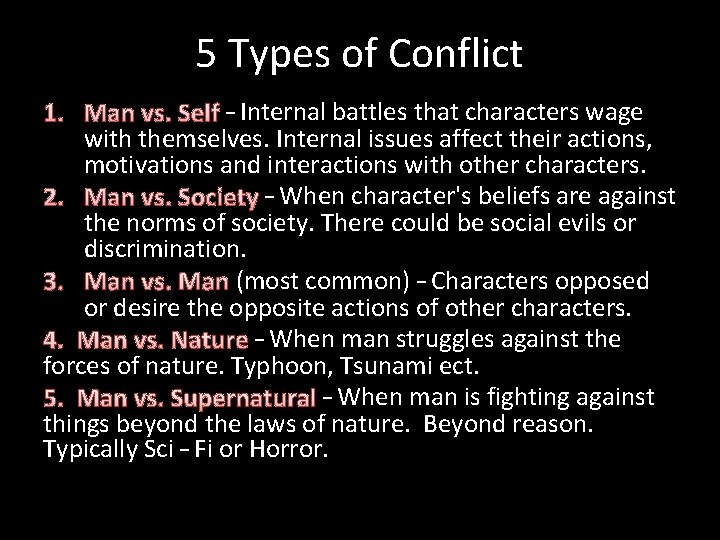
5 Types of Conflict 1. Man vs. Self – Internal battles that characters wage with themselves. Internal issues affect their actions, motivations and interactions with other characters. 2. Man vs. Society – When character's beliefs are against the norms of society. There could be social evils or discrimination. 3. Man vs. Man (most common) – Characters opposed or desire the opposite actions of other characters. 4. Man vs. Nature – When man struggles against the forces of nature. Typhoon, Tsunami ect. 5. Man vs. Supernatural – When man is fighting against things beyond the laws of nature. Beyond reason. Typically Sci – Fi or Horror.
Types of Conflict Comprehension Questions: 1. What type of conflict is represnted by the Inside Out Clip? 2. What type of conflict is represented by the Avengers clip? 3. What type of conflict was represented in Lamb to the Slaughter?
Narration • An author creates a pesron to tell the story. That person is called the narrator. • The narrator gives their point of view of the story. There can be more than one narrator. Remember: The narrator’s point of view matters! Imagine if Harry Potter was only told by Drako? How would the story be different?
5 Types of Narrators 1 - 2 1. Frist Person – The narrator will use “I” to tell the story and can be either a major or minor character. In a first person narrator, they can only tell the story from their point of view. They know nothing of what goes on inside any other character’s head. 2. Second Person – Uses the word “you” often and it makes the reader a participant in the story.
Types of Narrators 4 & 5 Third Person – Uses the pronoun “he” or “she” often. Does not take part in the story. 3. Objective Narrator – 3 rd person, describes only what they see. They cannot see inside any of the character’s heads. Can interpret or describe feelings and events. 4. Omniscient – 3 rd person. The narrator knows all. Can tell everything that is happening inside all character’s heads and interprets the story as well. 5. Limited – 3 rd person. Narrator does not know the whole story, but can see inside SOME character’s heads and know their feelings.
Questions: • To find out what type of narrator you have, you can ask these questions: 1. How much does the narrator know? 2. Time? When do the events take place? 3. Is the narrator a participant in, or wittiness to, the actions? 4. Why is the story being told? Ask these questions to Lamb to the Slaughter, what are the answers? What type of narrator does it have? How can the answers to these questions support your answer?
Complete the Quiz 1. T here is a narrator quiz on the website. Complete it for review. 2. If you have not yet, complete your full Story Map for Lamb to the Slaughter.