
Elements of a Short Story Characters setting and
- Slides: 7
Elements of a Short Story
Characters, setting, and plot Characters are the people or animals who take part in the action of the story. ● ● They have character traits: qualities They have motives: reasons for acting Setting ● ● Time and place of the story and action Helps create the story’s mood: general feeling the story conveys. Plot is the sequence of events
Characterization Dialogue is key to characterization. Direct characterization ● The narrator makes a direct statement about a character’s personality. Indirect characterization ● ● Writer shows what characters are like by providing details about what the characters say and do, what other characters say about them, and how the other characters respond to them. Infer.
Conflict, theme, and symbol Conflict is a struggle between two opposing forces. ● ● Internal conflict takes place in the mind of a character External conflict takes place between a character and an outside force. Theme and symbols ● ● A theme combines the elements of a story to create an insight into life. Symbol is an object of a story element that stands for a larger meaning.
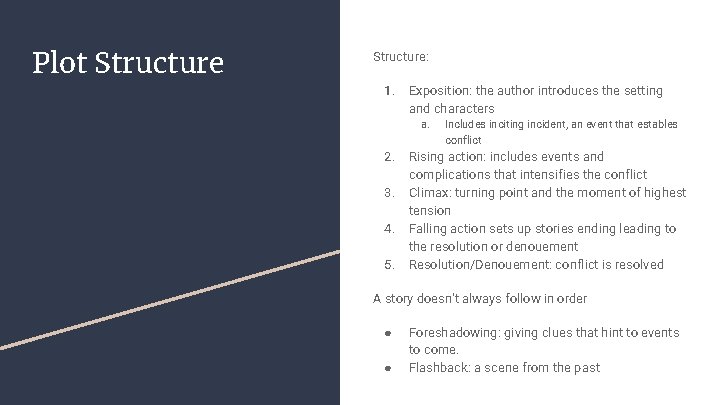
Plot Structure: 1. Exposition: the author introduces the setting and characters a. 2. 3. 4. 5. Includes inciting incident, an event that estables conflict Rising action: includes events and complications that intensifies the conflict Climax: turning point and the moment of highest tension Falling action sets up stories ending leading to the resolution or denouement Resolution/Denouement: conflict is resolved A story doesn’t always follow in order ● ● Foreshadowing: giving clues that hint to events to come. Flashback: a scene from the past
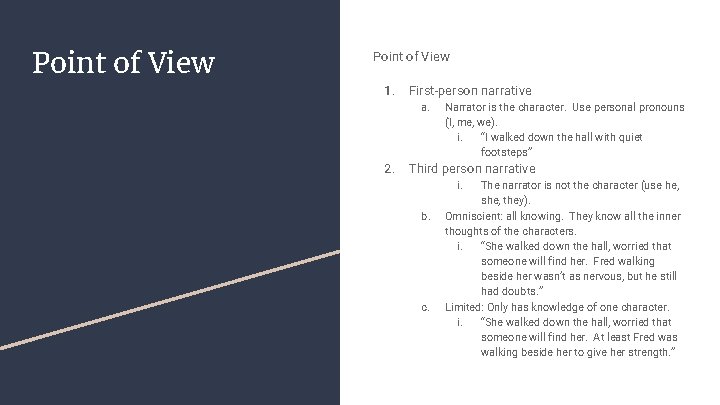
Point of View 1. First-person narrative a. 2. Narrator is the character. Use personal pronouns (I, me, we). i. “I walked down the hall with quiet footsteps” Third person narrative i. b. c. The narrator is not the character (use he, she, they). Omniscient: all knowing. They know all the inner thoughts of the characters. i. “She walked down the hall, worried that someone will find her. Fred walking beside her wasn’t as nervous, but he still had doubts. ” Limited: Only has knowledge of one character. i. “She walked down the hall, worried that someone will find her. At least Fred was walking beside her to give her strength. ”
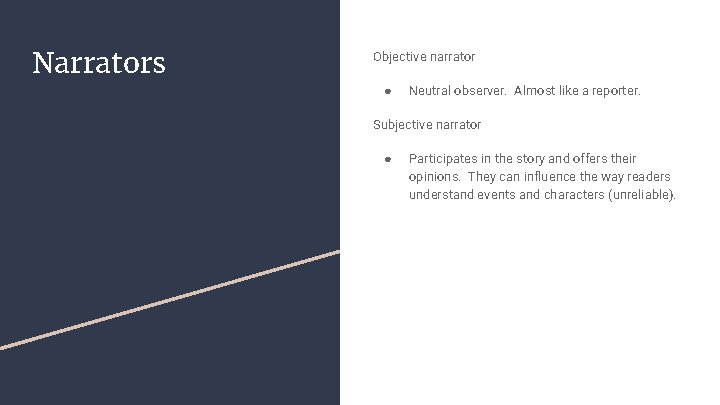
Narrators Objective narrator ● Neutral observer. Almost like a reporter. Subjective narrator ● Participates in the story and offers their opinions. They can influence the way readers understand events and characters (unreliable).