
Elements of a Microfiction English 9 Silent Reading



- Slides: 19
Elements of a Microfiction English 9
Silent Reading (15 Minutes) Agenda Elements of a Microfiction Notes (10 Minutes) Practice Sheet (10 Minutes) Story Map/Brainstorm Microfiction (25 Minutes)
Silent Reading 15 Minutes
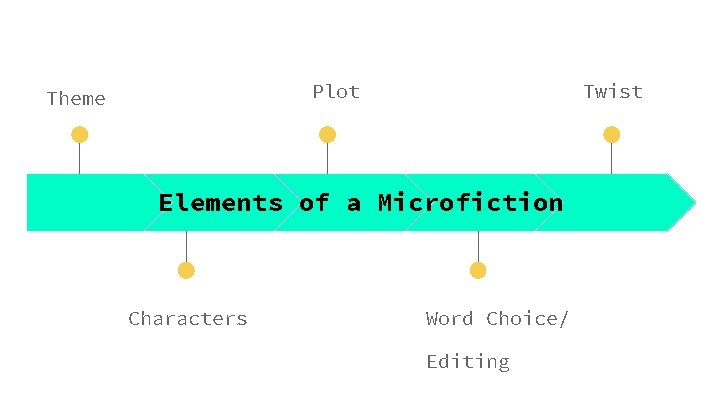
Plot Theme Twist Elements of a Microfiction Characters Word Choice/ Editing
1. Before you write, know what your story is going to be about. You should have a clear theme in your mind while you are writing. Choose a theme that will emphasize your fortune.
2. Keep the number of characters down to the bare minimum Every new character adds a new dimension to your tale and will require words to introduce, describe and resolve any conflicts. Remember, you have to write a story in less than 500 words.
3. Focus your story plot along one subject. Write theme of your tale down and keep it near you while you write.
4. Focus on one powerful image. Effective microfictions deal with one event or time period in a character’s life.
5. The small idea. Look for the smaller ideas in larger ones.
6. Pick words carefully. You do not need a long, involved description of the character’s bedroom in a microfiction.
7. Do not forget to use emotions to move your plot forward. Emotion is a powerful writing tool, one that writers often forget about.
8. Bury the preamble in the opening. When you write your story, don’t take two pages to explain all the pre-story.
9. In medias res. Start the story in the middle of the action.
10. Make the reader guess until the end. A little mystery goes a long way.
11. Use a twist. The twist ending allows the writer to pack some punch at the end of the story.
12. When you edit, do so with a sharp eye. Now is not the time to become sentimental about your words, now is the time to cut the ones that are not expressing your story theme.
The Flannel Shirt by Kris Estebo Here’s how it started: I see myself cross the room, impassive, showing no outward concern or anger. I maintain eye contact with him as I reach over and pull a book of matches from the pocket of his worn red and black checked flannel shirt. He doesn’t move or blink when I strike the match, but when I set fire to the inflammable cotton of his shirt tail, his eyes open wide in surprise and shock. As the flames grow, I watch him through the smoke and realize that soon the screams will begin. . . but not mine.
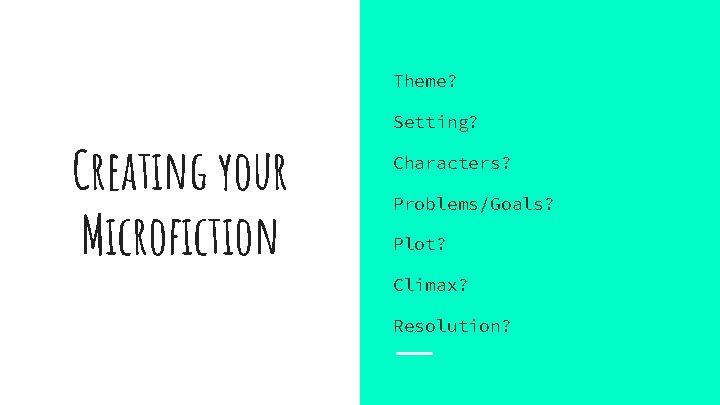
Theme? Creating your Microfiction Setting? Characters? Problems/Goals? Plot? Climax? Resolution?
Homework For Friday’s Class (March 31 st): Complete the Elements of a Micro Fiction handout. Begin writing your Micro Fiction. Come to class prepared to write.