
Elements are any single thing found in the

- Slides: 42
Elements are any single thing found in the periodic table (often called the periodic table of elements) Examples of elements: Au, Gold; S, Sulfur; Pb, Lead; Na, Sodium… In 1803, Dalton proposed an atomic theory that is still the basis for many of our theories about the atom.
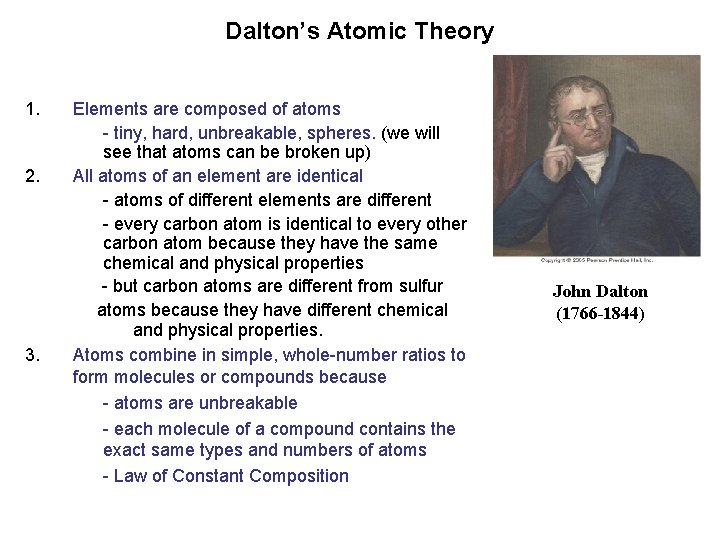
Dalton’s Atomic Theory 1. 2. 3. Elements are composed of atoms - tiny, hard, unbreakable, spheres. (we will see that atoms can be broken up) All atoms of an element are identical - atoms of different elements are different - every carbon atom is identical to every other carbon atom because they have the same chemical and physical properties - but carbon atoms are different from sulfur atoms because they have different chemical and physical properties. Atoms combine in simple, whole-number ratios to form molecules or compounds because - atoms are unbreakable - each molecule of a compound contains the exact same types and numbers of atoms - Law of Constant Composition John Dalton (1766 -1844)
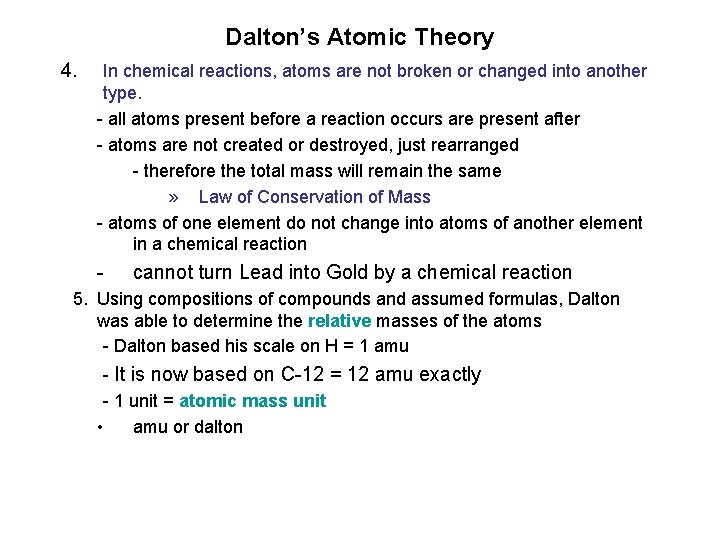
Dalton’s Atomic Theory 4. In chemical reactions, atoms are not broken or changed into another type. - all atoms present before a reaction occurs are present after - atoms are not created or destroyed, just rearranged - therefore the total mass will remain the same » Law of Conservation of Mass - atoms of one element do not change into atoms of another element in a chemical reaction - cannot turn Lead into Gold by a chemical reaction 5. Using compositions of compounds and assumed formulas, Dalton was able to determine the relative masses of the atoms - Dalton based his scale on H = 1 amu - It is now based on C-12 = 12 amu exactly - 1 unit = atomic mass unit • amu or dalton
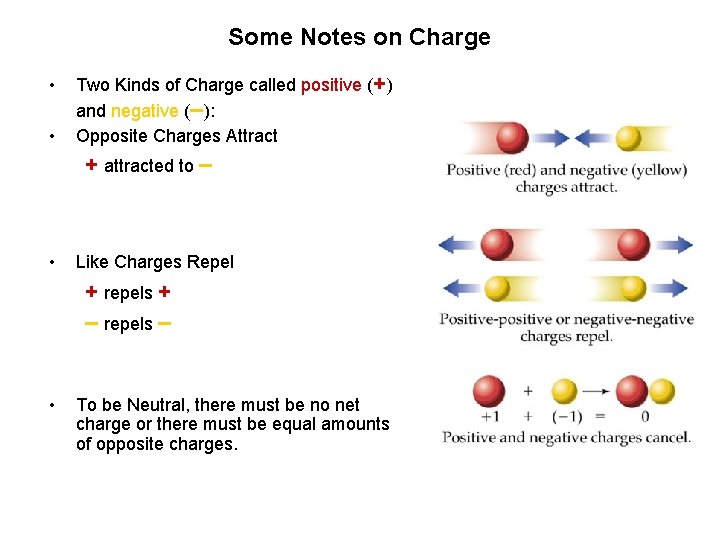
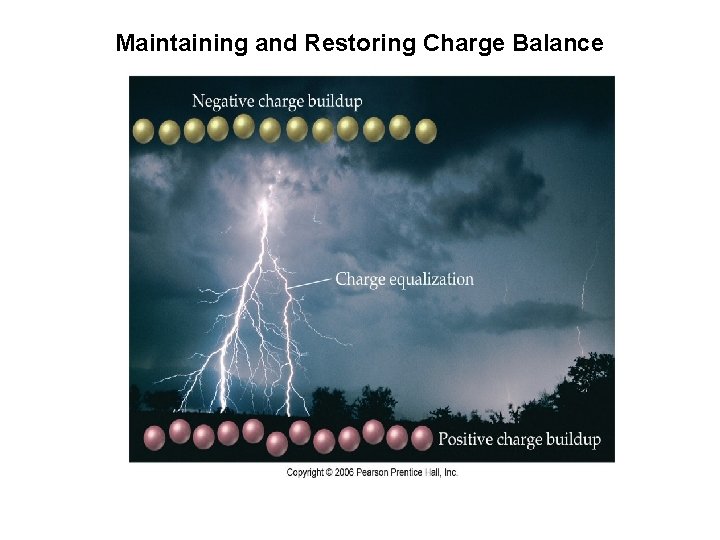
Some Notes on Charge • • Two Kinds of Charge called positive (+) and negative (–): Opposite Charges Attract + attracted to – • Like Charges Repel + repels + – repels – • To be Neutral, there must be no net charge or there must be equal amounts of opposite charges.
Maintaining and Restoring Charge Balance
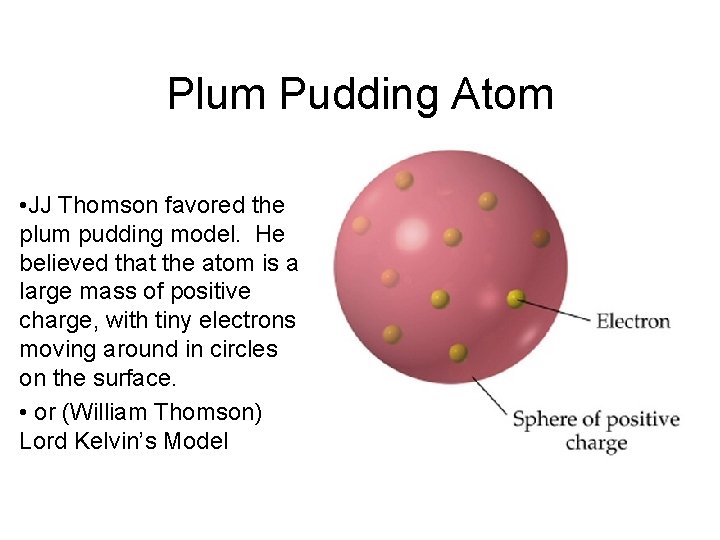
Plum Pudding Atom • JJ Thomson favored the plum pudding model. He believed that the atom is a large mass of positive charge, with tiny electrons moving around in circles on the surface. • or (William Thomson) Lord Kelvin’s Model
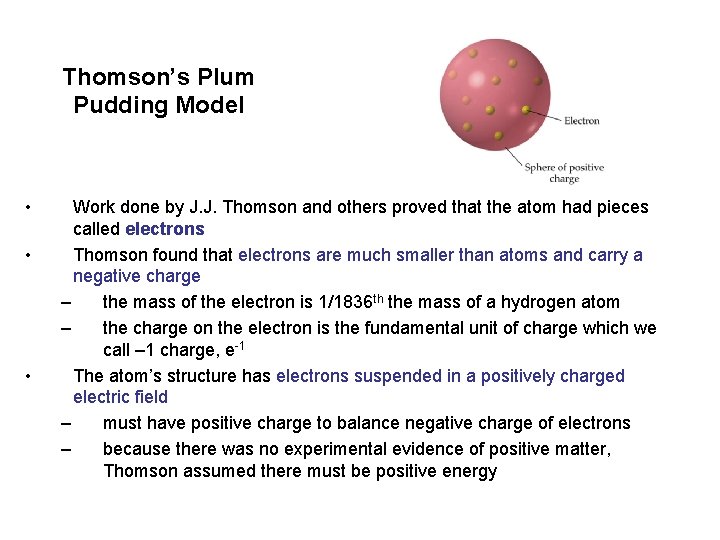
Thomson’s Plum Pudding Model • • • Work done by J. J. Thomson and others proved that the atom had pieces called electrons Thomson found that electrons are much smaller than atoms and carry a negative charge – the mass of the electron is 1/1836 th the mass of a hydrogen atom – the charge on the electron is the fundamental unit of charge which we call – 1 charge, e-1 The atom’s structure has electrons suspended in a positively charged electric field – must have positive charge to balance negative charge of electrons – because there was no experimental evidence of positive matter, Thomson assumed there must be positive energy
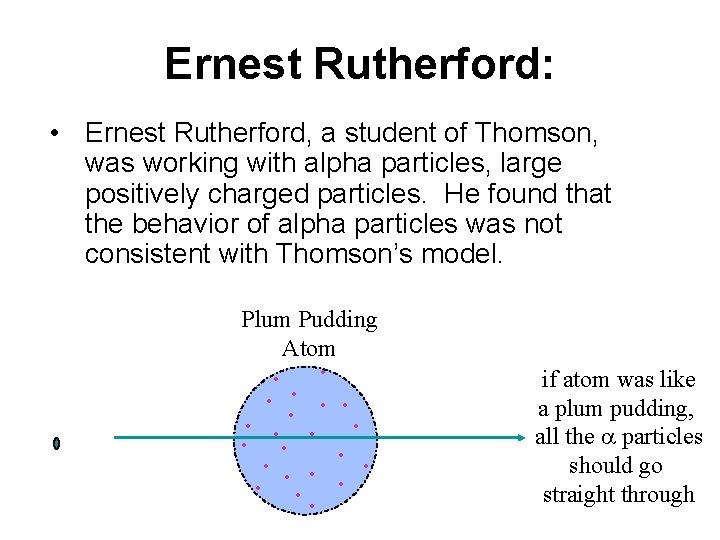
Ernest Rutherford: • Ernest Rutherford, a student of Thomson, was working with alpha particles, large positively charged particles. He found that the behavior of alpha particles was not consistent with Thomson’s model. Plum Pudding Atom • • • • • • if atom was like a plum pudding, all the a particles should go straight through
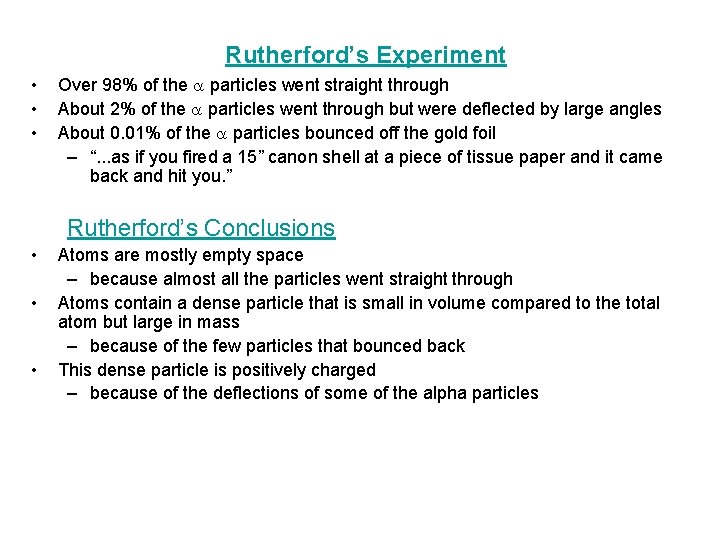
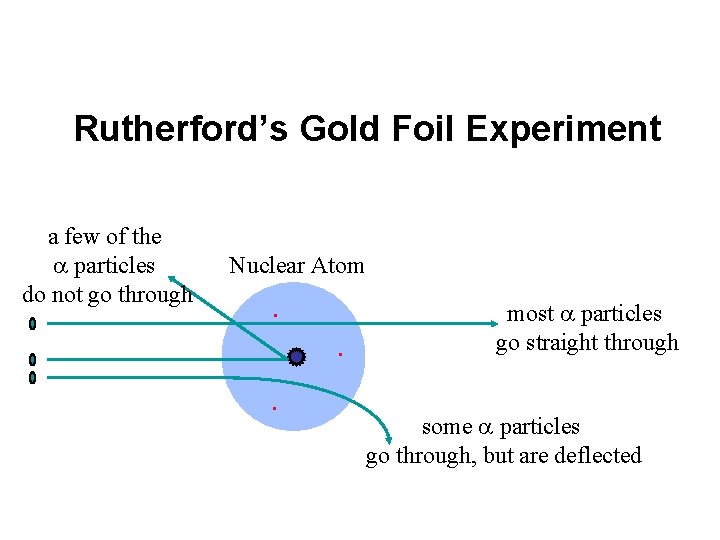
Rutherford’s Experiment • • • Over 98% of the a particles went straight through About 2% of the a particles went through but were deflected by large angles About 0. 01% of the a particles bounced off the gold foil – “. . . as if you fired a 15” canon shell at a piece of tissue paper and it came back and hit you. ” Rutherford’s Conclusions • • • Atoms are mostly empty space – because almost all the particles went straight through Atoms contain a dense particle that is small in volume compared to the total atom but large in mass – because of the few particles that bounced back This dense particle is positively charged – because of the deflections of some of the alpha particles
Rutherford’s Gold Foil Experiment a few of the a particles do not go through Nuclear Atom . . . most a particles go straight through some a particles go through, but are deflected
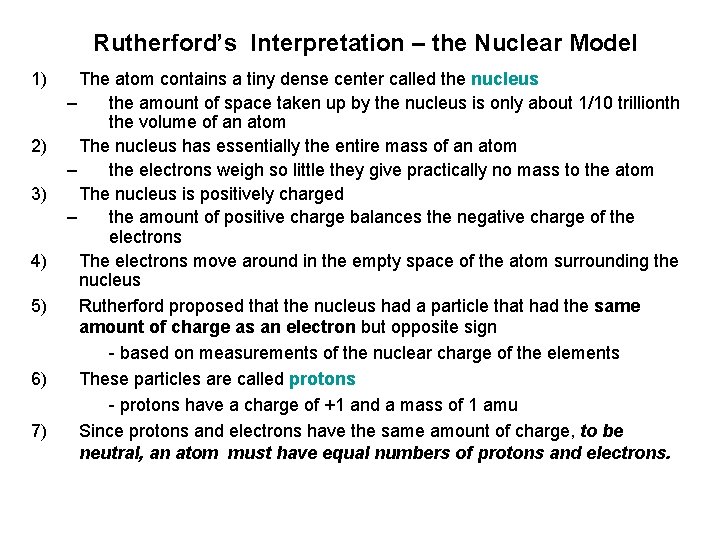
Rutherford’s Interpretation – the Nuclear Model 1) 2) 3) 4) 5) 6) 7) The atom contains a tiny dense center called the nucleus – the amount of space taken up by the nucleus is only about 1/10 trillionth the volume of an atom The nucleus has essentially the entire mass of an atom – the electrons weigh so little they give practically no mass to the atom The nucleus is positively charged – the amount of positive charge balances the negative charge of the electrons The electrons move around in the empty space of the atom surrounding the nucleus Rutherford proposed that the nucleus had a particle that had the same amount of charge as an electron but opposite sign - based on measurements of the nuclear charge of the elements These particles are called protons - protons have a charge of +1 and a mass of 1 amu Since protons and electrons have the same amount of charge, to be neutral, an atom must have equal numbers of protons and electrons.
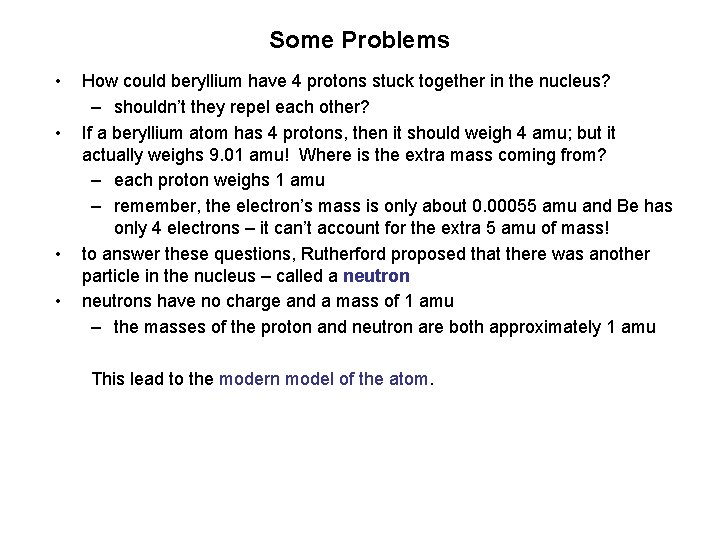
Some Problems • • How could beryllium have 4 protons stuck together in the nucleus? – shouldn’t they repel each other? If a beryllium atom has 4 protons, then it should weigh 4 amu; but it actually weighs 9. 01 amu! Where is the extra mass coming from? – each proton weighs 1 amu – remember, the electron’s mass is only about 0. 00055 amu and Be has only 4 electrons – it can’t account for the extra 5 amu of mass! to answer these questions, Rutherford proposed that there was another particle in the nucleus – called a neutrons have no charge and a mass of 1 amu – the masses of the proton and neutron are both approximately 1 amu This lead to the modern model of the atom.
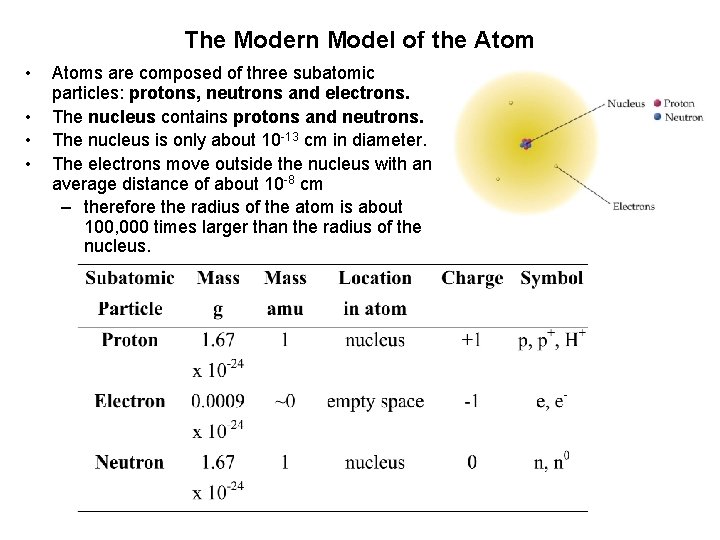
The Modern Model of the Atom • • Atoms are composed of three subatomic particles: protons, neutrons and electrons. The nucleus contains protons and neutrons. The nucleus is only about 10 -13 cm in diameter. The electrons move outside the nucleus with an average distance of about 10 -8 cm – therefore the radius of the atom is about 100, 000 times larger than the radius of the nucleus.
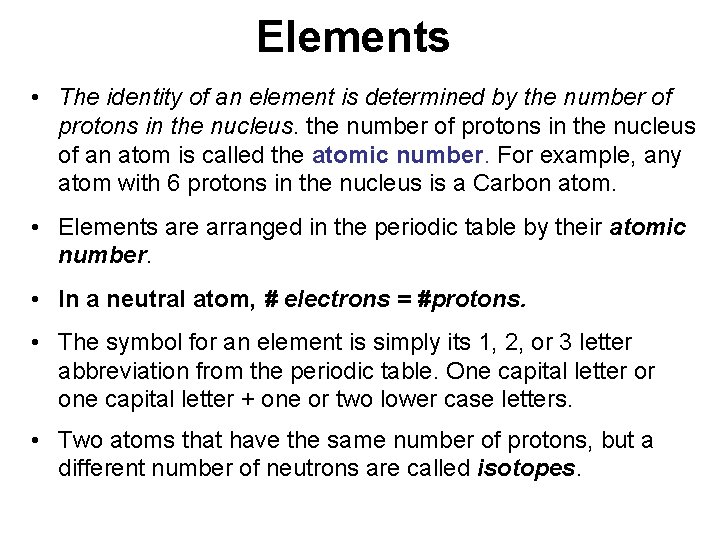
Elements • The identity of an element is determined by the number of protons in the nucleus of an atom is called the atomic number. For example, any atom with 6 protons in the nucleus is a Carbon atom. • Elements are arranged in the periodic table by their atomic number. • In a neutral atom, # electrons = #protons. • The symbol for an element is simply its 1, 2, or 3 letter abbreviation from the periodic table. One capital letter or one capital letter + one or two lower case letters. • Two atoms that have the same number of protons, but a different number of neutrons are called isotopes.
Isotopes • Isotopes are atoms of the same element with different numbers of neutrons. • Most elements have atoms of more than one isotope. • Isotopes of an element are very similar and have nearly identical properties. The number of protons and electrons has much more to do with the properties of an element. • However, the number of neutrons may vary for atoms of the same element.
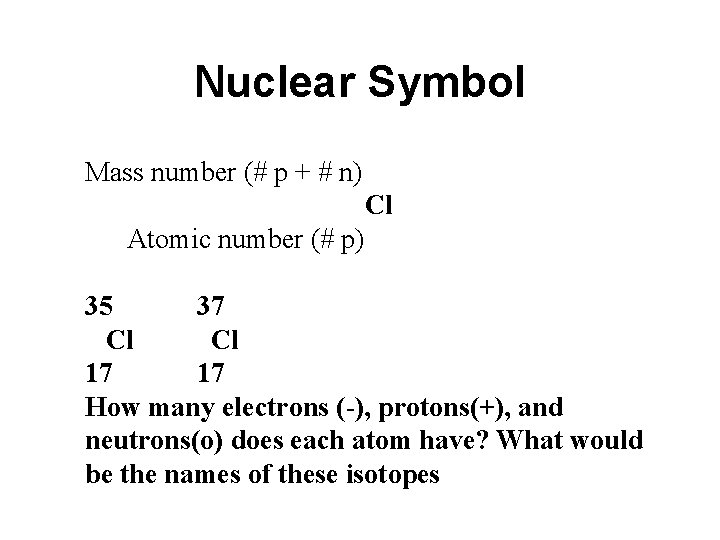
Mass Number • The mass number is the sum of the number of protons and the number of neutrons in the nucleus of an atom. mass number = # protons + # neutrons • The symbol for an isotope is its element symbol along with its mass number (A) and atomic number (Z). • The name for an isotope of an element is the element name followed by the mass number.
Mass Number (cont. ) • Consider the symbol: 31 (mass number = the sum of protons and neutrons) 15 (atomic number = protons ) • The name of the isotope is Phosphorus-31. • In order to determine how many neutrons are in the nucleus of an atom simply subtract: • # neutrons = mass number – atomic number = 31 – 15 = 16 neutrons
Nuclear Symbol Mass number (# p + # n) Cl Atomic number (# p) 35 37 Cl Cl 17 17 How many electrons (-), protons(+), and neutrons(o) does each atom have? What would be the names of these isotopes
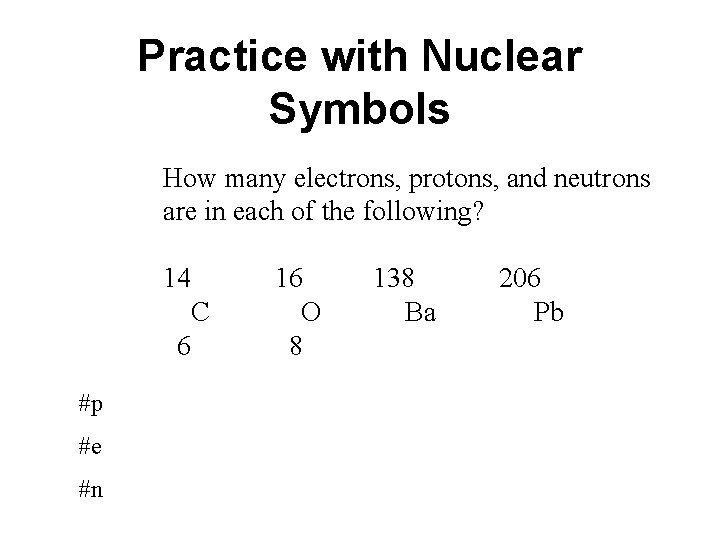
Practice with Nuclear Symbols How many electrons, protons, and neutrons are in each of the following? 14 C 6 #p #e #n 16 O 8 138 Ba 206 Pb
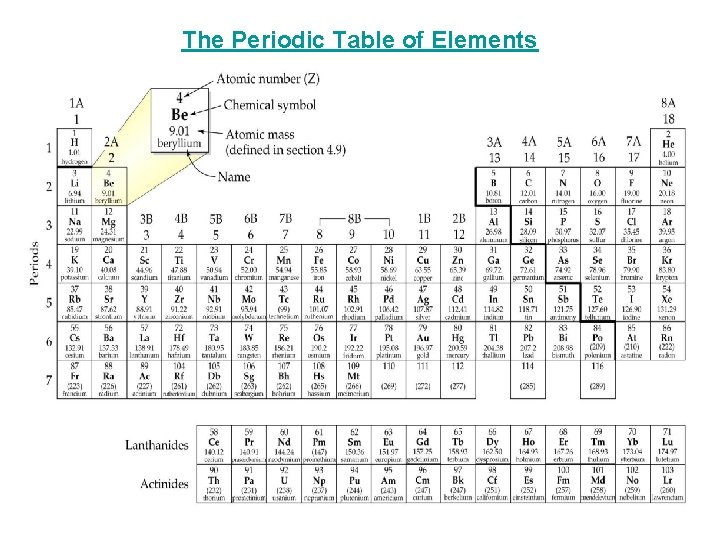
The Periodic Table of Elements
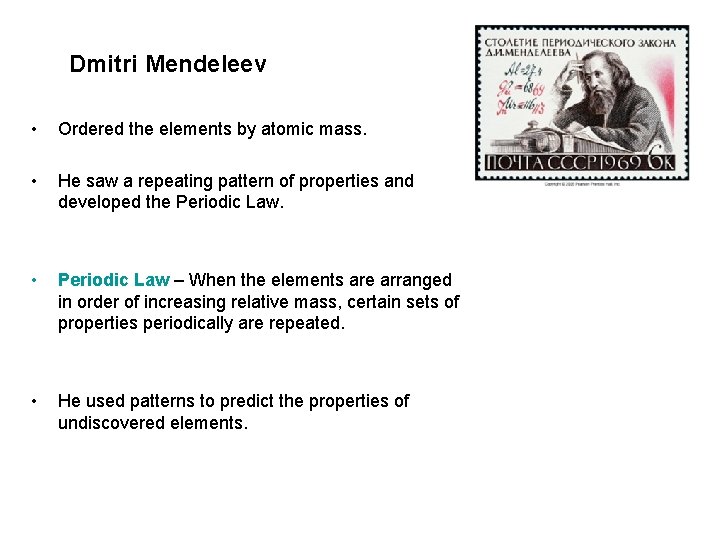
Dmitri Mendeleev • Ordered the elements by atomic mass. • He saw a repeating pattern of properties and developed the Periodic Law. • Periodic Law – When the elements are arranged in order of increasing relative mass, certain sets of properties periodically are repeated. • He used patterns to predict the properties of undiscovered elements.
The Modern Periodic Table • Elements with similar chemical and physical properties are in the same column. - Columns are called Groups or Families and are designated by a number and letter at the top of the column. • Rows are called Periods. - each period shows a pattern of properties repeated in the next period (row) below.
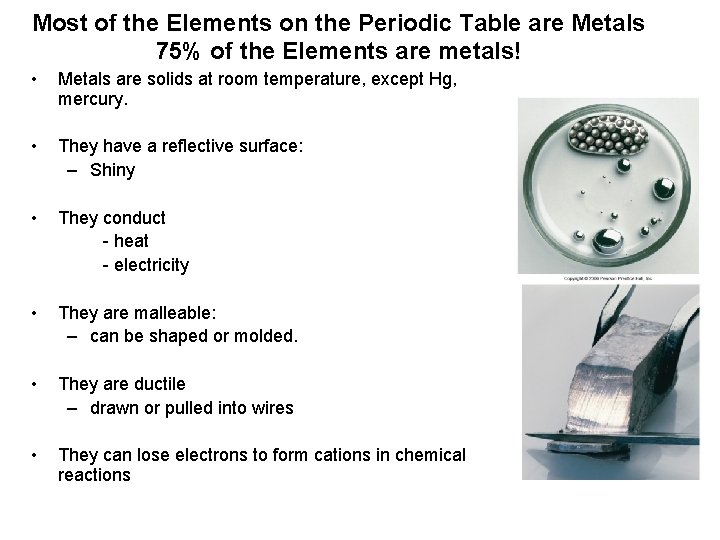
Most of the Elements on the Periodic Table are Metals 75% of the Elements are metals! • Metals are solids at room temperature, except Hg, mercury. • They have a reflective surface: – Shiny • They conduct - heat - electricity • They are malleable: – can be shaped or molded. • They are ductile – drawn or pulled into wires • They can lose electrons to form cations in chemical reactions
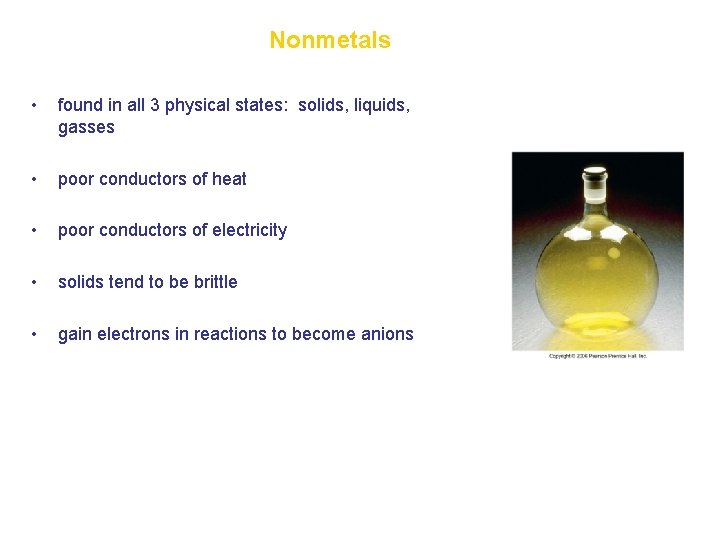
Nonmetals • found in all 3 physical states: solids, liquids, gasses • poor conductors of heat • poor conductors of electricity • solids tend to be brittle • gain electrons in reactions to become anions
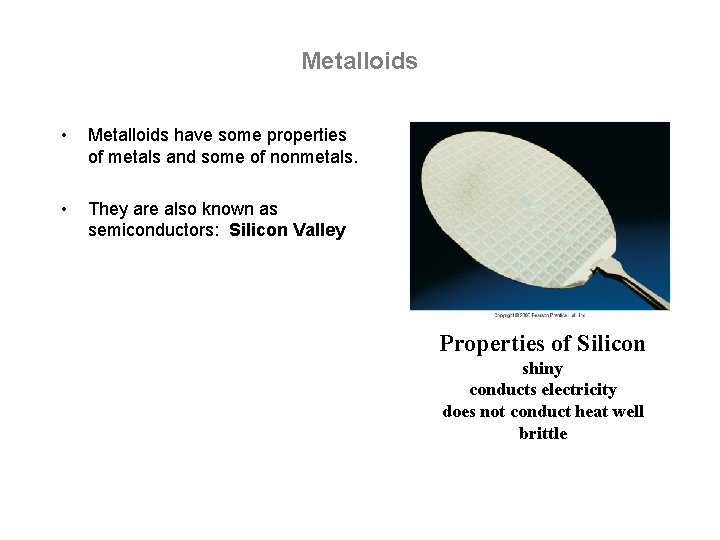
Metalloids • Metalloids have some properties of metals and some of nonmetals. • They are also known as semiconductors: Silicon Valley Properties of Silicon shiny conducts electricity does not conduct heat well brittle
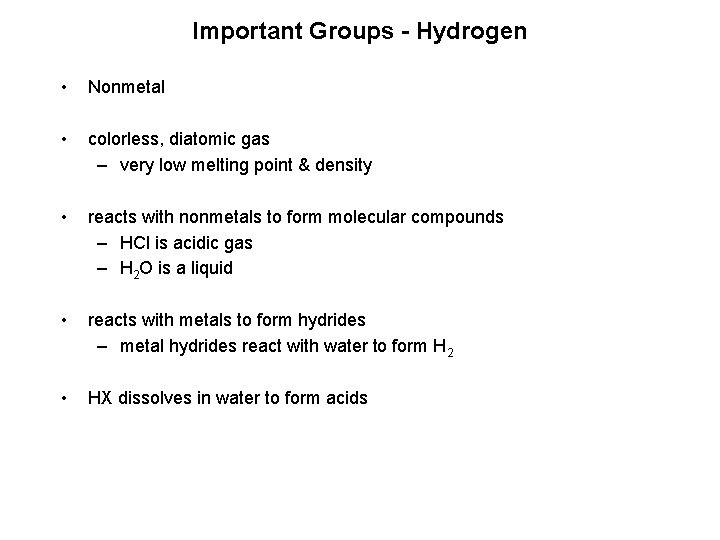
Important Groups - Hydrogen • Nonmetal • colorless, diatomic gas – very low melting point & density • reacts with nonmetals to form molecular compounds – HCl is acidic gas – H 2 O is a liquid • reacts with metals to form hydrides – metal hydrides react with water to form H 2 • HX dissolves in water to form acids
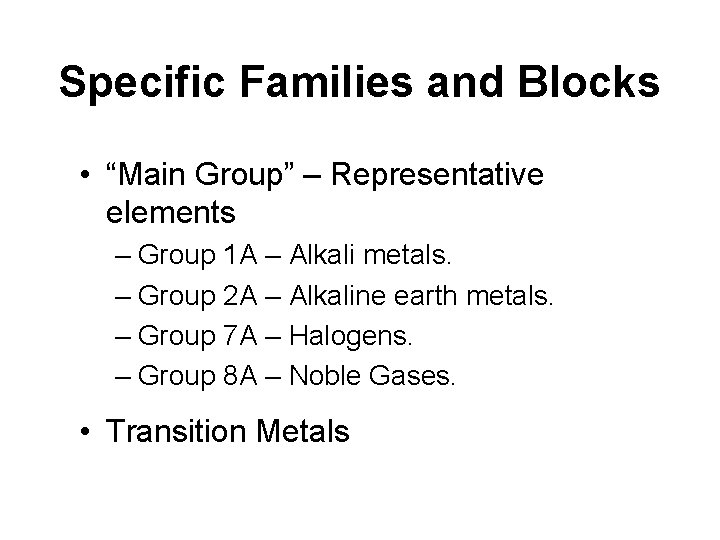
Specific Families and Blocks • “Main Group” – Representative elements – Group 1 A – Alkali metals. – Group 2 A – Alkaline earth metals. – Group 7 A – Halogens. – Group 8 A – Noble Gases. • Transition Metals
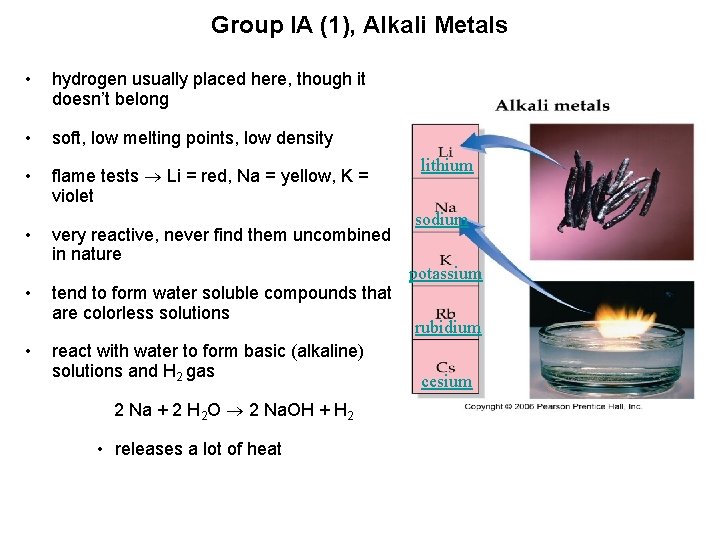
Group IA (1), Alkali Metals • hydrogen usually placed here, though it doesn’t belong • soft, low melting points, low density • flame tests Li = red, Na = yellow, K = violet • • • very reactive, never find them uncombined in nature tend to form water soluble compounds that are colorless solutions react with water to form basic (alkaline) solutions and H 2 gas 2 Na + 2 H 2 O 2 Na. OH + H 2 • releases a lot of heat lithium sodium potassium rubidium cesium
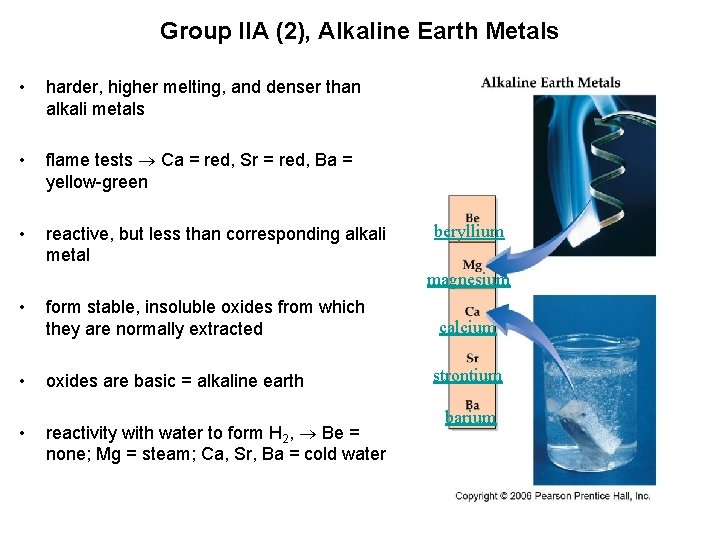
Group IIA (2), Alkaline Earth Metals • harder, higher melting, and denser than alkali metals • flame tests Ca = red, Sr = red, Ba = yellow-green • reactive, but less than corresponding alkali metal beryllium magnesium • form stable, insoluble oxides from which they are normally extracted • oxides are basic = alkaline earth • reactivity with water to form H 2, Be = none; Mg = steam; Ca, Sr, Ba = cold water calcium strontium barium
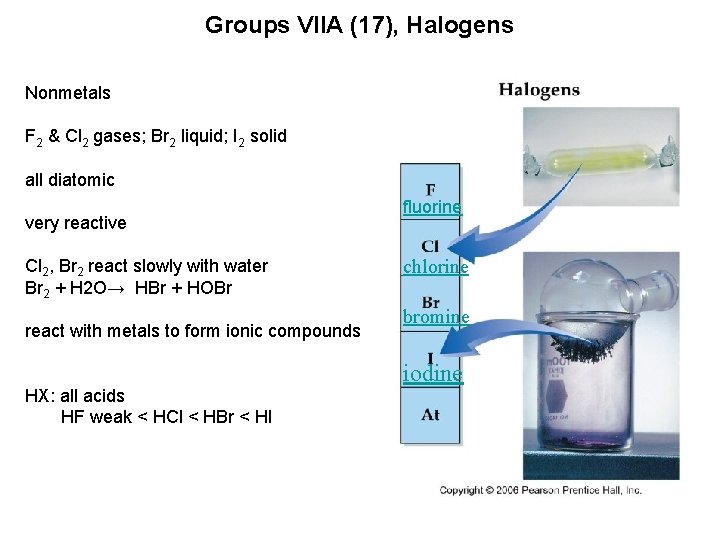
Groups VIIA (17), Halogens Nonmetals F 2 & Cl 2 gases; Br 2 liquid; I 2 solid all diatomic very reactive Cl 2, Br 2 react slowly with water Br 2 + H 2 O→ HBr + HOBr react with metals to form ionic compounds HX: all acids HF weak < HCl < HBr < HI fluorine chlorine bromine iodine
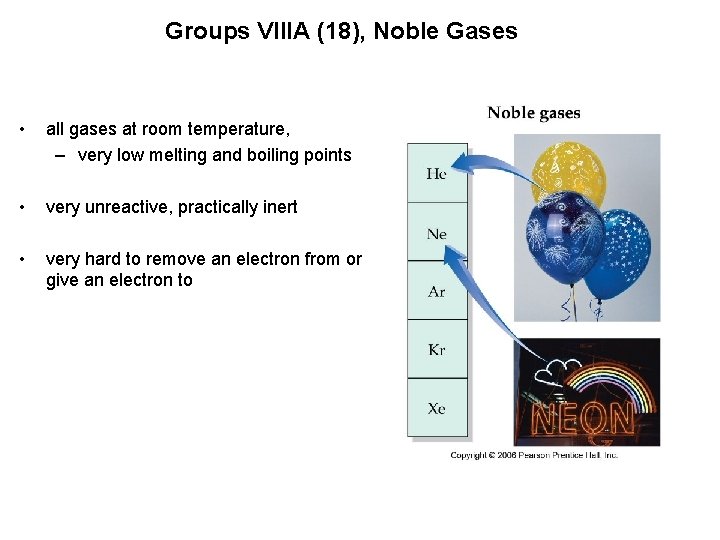
Groups VIIIA (18), Noble Gases • all gases at room temperature, – very low melting and boiling points • very unreactive, practically inert • very hard to remove an electron from or give an electron to
Selected Element Properties • Diatomic molecules: The following elements are diatomic in their standard elemental form: H 2, N 2, O 2, F 2, Cl 2, Br 2, I 2 (Horses Need Oats For Clear Brown Is) • Some elements may have more than one elemental form (Allotropes). Consider carbon: – Diamond – Graphite – Buckminsterfullerene (from soot)
More Selected Elements • Noble Metals: Pt, Au, and Ag are found in their pure form in nature – uncombined with other elements. • The non-metal Bromine and the metal Mercury are the only two liquid elements in their elemental forms at 25 0 C • Gases found in the periodic table include the following: Hydrogen, Oxygen, Nitrogen, Fluorine, Chlorine and the Noble Gases.
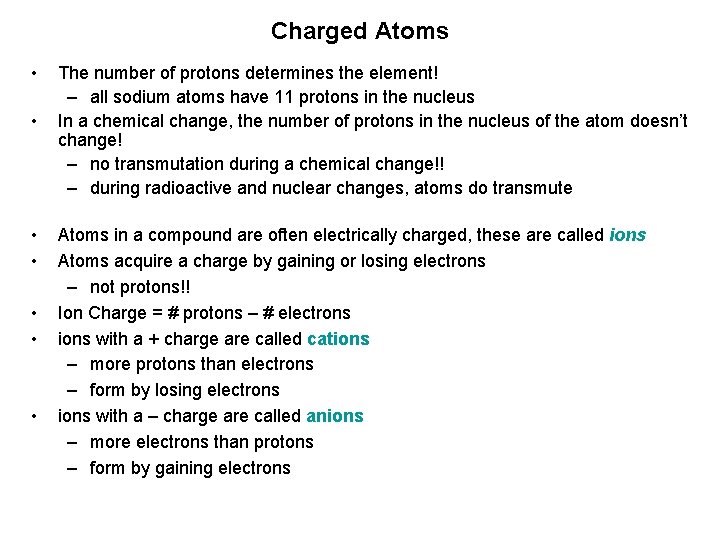
Charged Atoms • • The number of protons determines the element! – all sodium atoms have 11 protons in the nucleus In a chemical change, the number of protons in the nucleus of the atom doesn’t change! – no transmutation during a chemical change!! – during radioactive and nuclear changes, atoms do transmute Atoms in a compound are often electrically charged, these are called ions Atoms acquire a charge by gaining or losing electrons – not protons!! Ion Charge = # protons – # electrons ions with a + charge are called cations – more protons than electrons – form by losing electrons ions with a – charge are called anions – more electrons than protons – form by gaining electrons
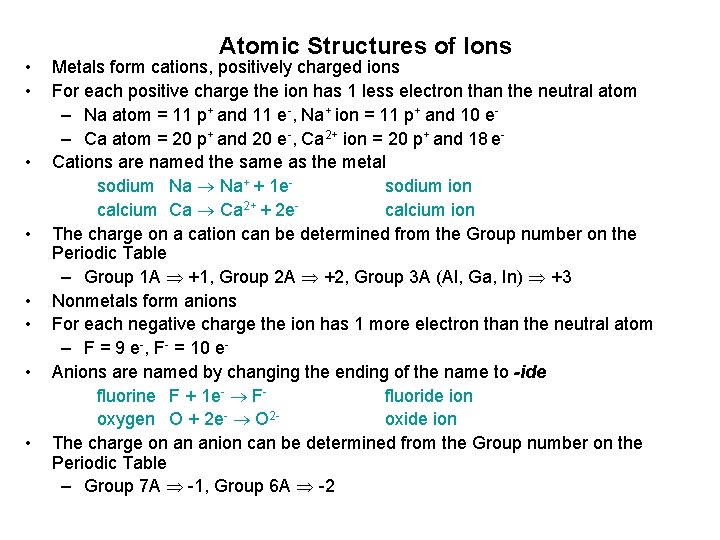
• • Atomic Structures of Ions Metals form cations, positively charged ions For each positive charge the ion has 1 less electron than the neutral atom – Na atom = 11 p+ and 11 e-, Na+ ion = 11 p+ and 10 e– Ca atom = 20 p+ and 20 e-, Ca 2+ ion = 20 p+ and 18 e. Cations are named the same as the metal sodium Na Na+ + 1 esodium ion calcium Ca 2+ + 2 ecalcium ion The charge on a cation can be determined from the Group number on the Periodic Table – Group 1 A +1, Group 2 A +2, Group 3 A (Al, Ga, In) +3 Nonmetals form anions For each negative charge the ion has 1 more electron than the neutral atom – F = 9 e-, F- = 10 e. Anions are named by changing the ending of the name to -ide fluorine F + 1 e- Ffluoride ion oxygen O + 2 e- O 2 oxide ion The charge on an anion can be determined from the Group number on the Periodic Table – Group 7 A -1, Group 6 A -2
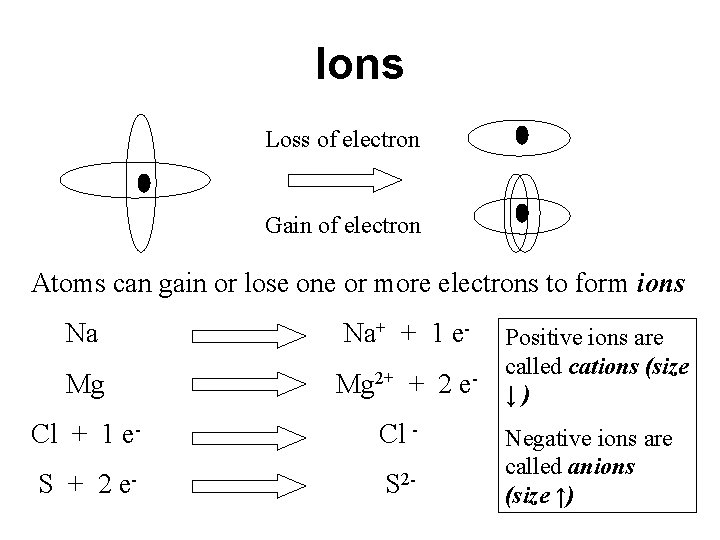
Ions Loss of electron Gain of electron Atoms can gain or lose one or more electrons to form ions Na Na+ + 1 e- Mg Mg 2+ + 2 e- Cl + 1 e- Cl - S + 2 e- S 2 - Positive ions are called cations (size ↓) Negative ions are called anions (size ↑)
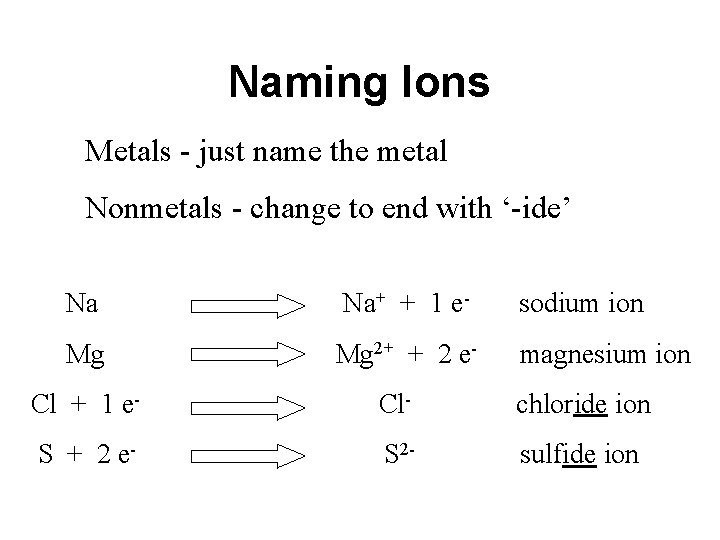
Naming Ions Metals - just name the metal Nonmetals - change to end with ‘-ide’ Na Na+ + 1 e- sodium ion Mg Mg 2+ + 2 e- magnesium ion Cl + 1 e- Cl- chloride ion S + 2 e- S 2 - sulfide ion
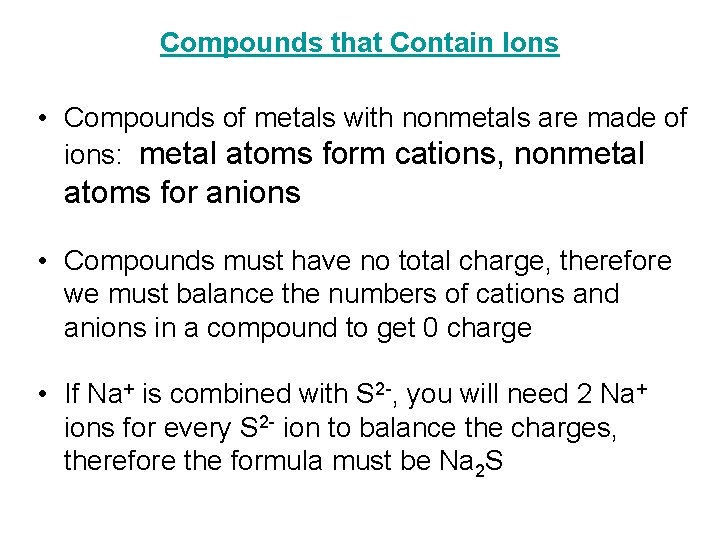
Compounds that Contain Ions • Compounds of metals with nonmetals are made of ions: metal atoms form cations, nonmetal atoms for anions • Compounds must have no total charge, therefore we must balance the numbers of cations and anions in a compound to get 0 charge • If Na+ is combined with S 2 -, you will need 2 Na+ ions for every S 2 - ion to balance the charges, therefore the formula must be Na 2 S
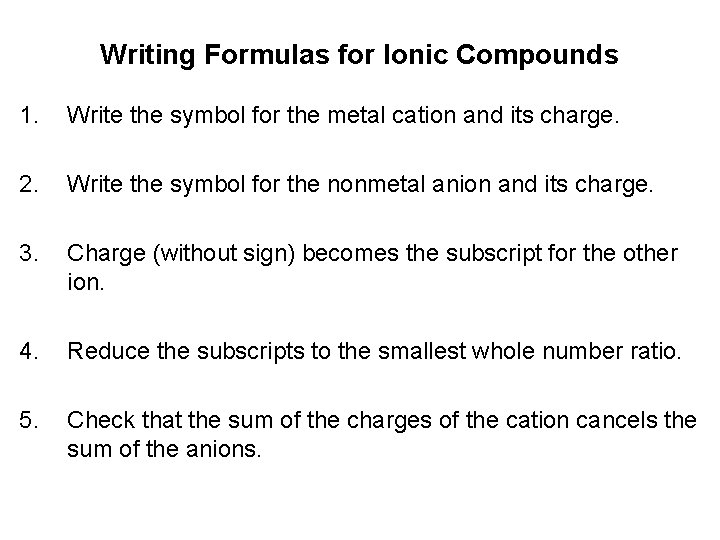
Writing Formulas for Ionic Compounds 1. Write the symbol for the metal cation and its charge. 2. Write the symbol for the nonmetal anion and its charge. 3. Charge (without sign) becomes the subscript for the other ion. 4. Reduce the subscripts to the smallest whole number ratio. 5. Check that the sum of the charges of the cation cancels the sum of the anions.
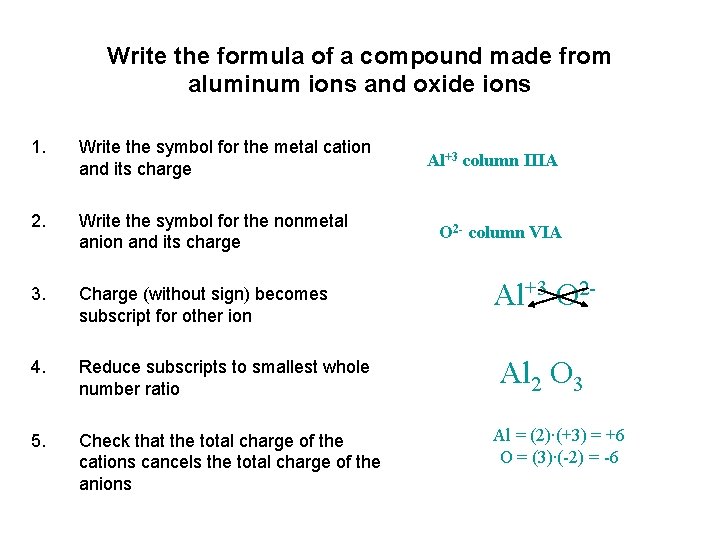
Write the formula of a compound made from aluminum ions and oxide ions 1. Write the symbol for the metal cation and its charge 2. Write the symbol for the nonmetal anion and its charge 3. Charge (without sign) becomes subscript for other ion 4. Reduce subscripts to smallest whole number ratio 5. Check that the total charge of the cations cancels the total charge of the anions Al+3 column IIIA O 2 - column VIA Al+3 O 2 Al 2 O 3 Al = (2)∙(+3) = +6 O = (3)∙(-2) = -6
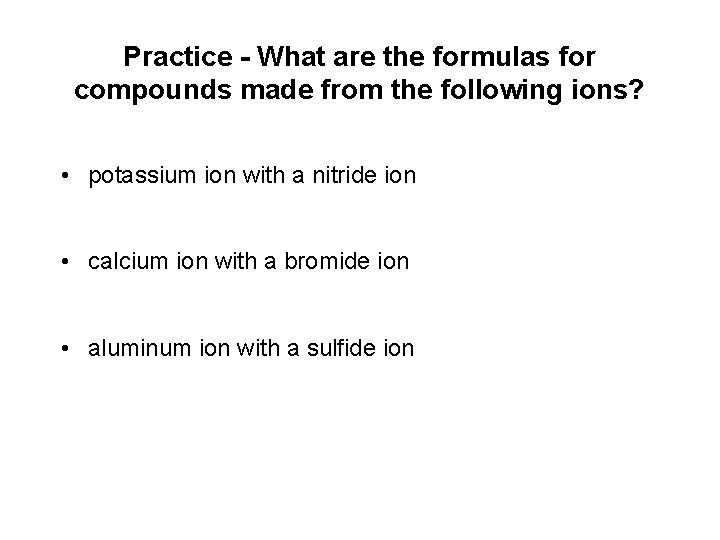
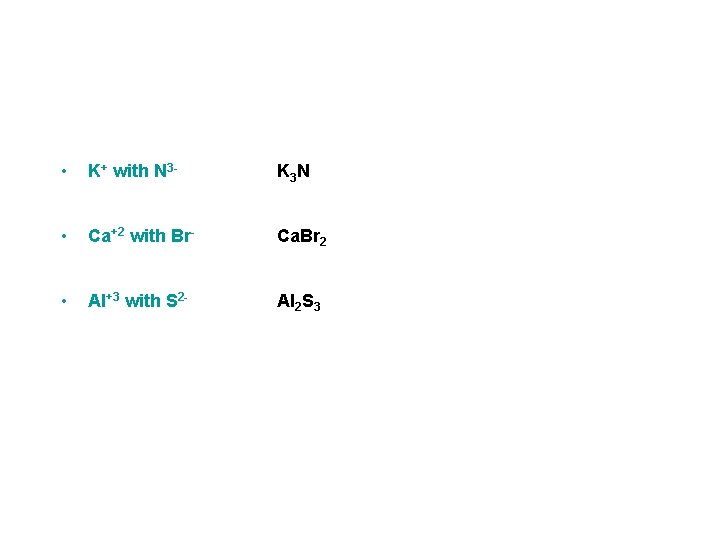
Practice - What are the formulas for compounds made from the following ions? • potassium ion with a nitride ion • calcium ion with a bromide ion • aluminum ion with a sulfide ion
• K+ with N 3 - K 3 N • Ca+2 with Br- Ca. Br 2 • Al+3 with S 2 - Al 2 S 3