
Elements and Principles of Design Line a path


- Slides: 19
Elements and Principles of Design
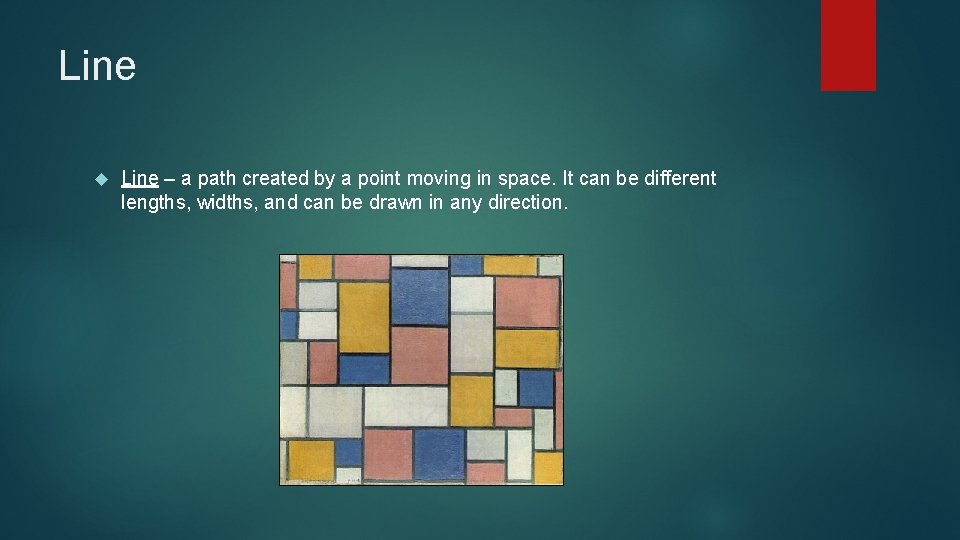
Line – a path created by a point moving in space. It can be different lengths, widths, and can be drawn in any direction.
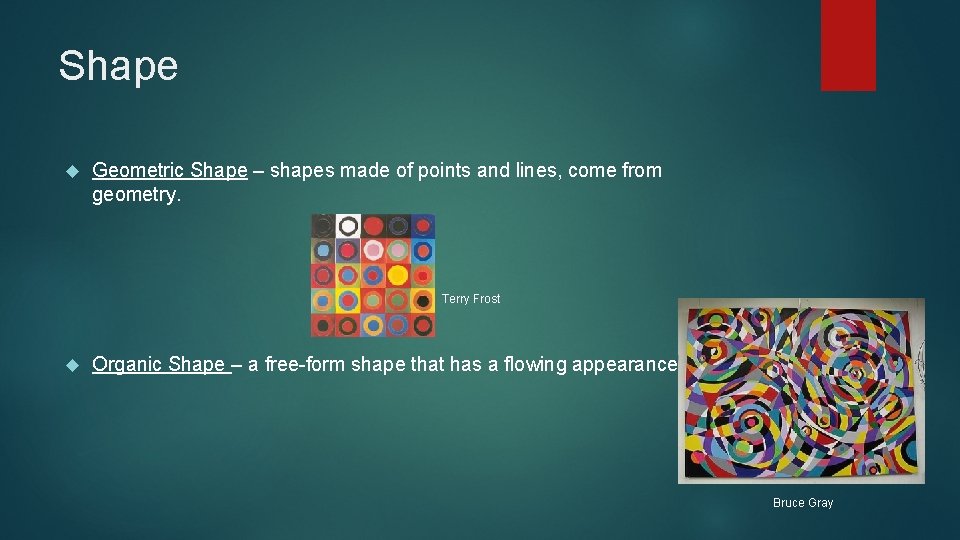
Shape Geometric Shape – shapes made of points and lines, come from geometry. Terry Frost Organic Shape – a free-form shape that has a flowing appearance. Bruce Gray
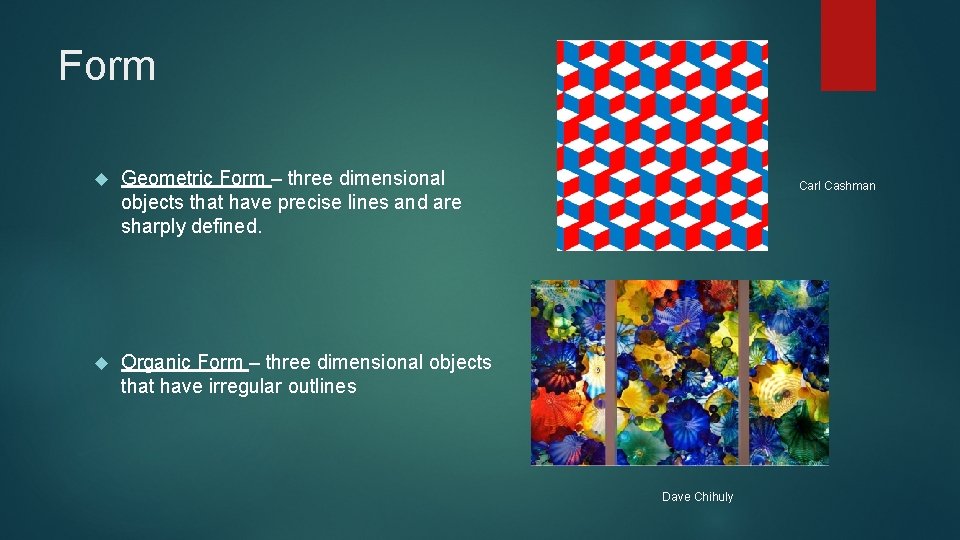
Form Geometric Form – three dimensional objects that have precise lines and are sharply defined. Organic Form – three dimensional objects that have irregular outlines Carl Cashman Dave Chihuly
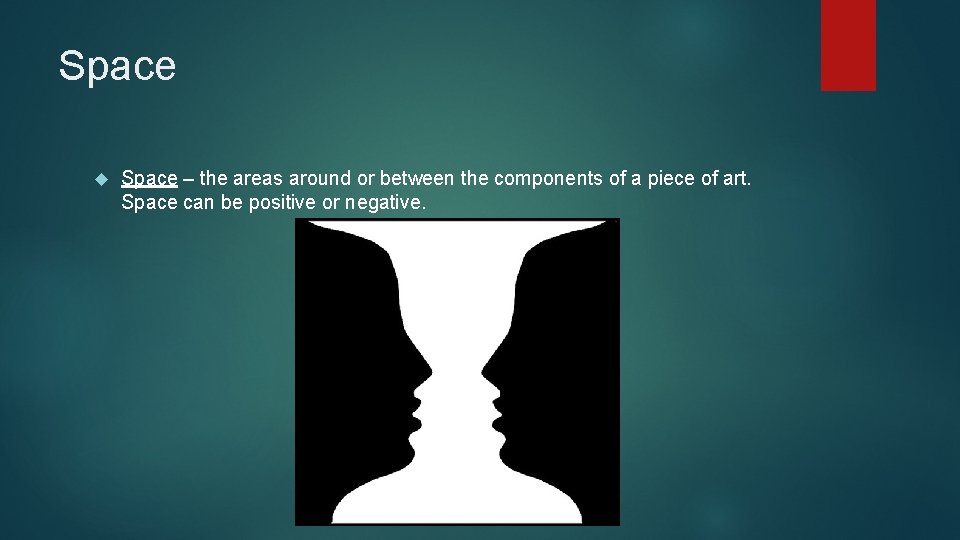
Space – the areas around or between the components of a piece of art. Space can be positive or negative.
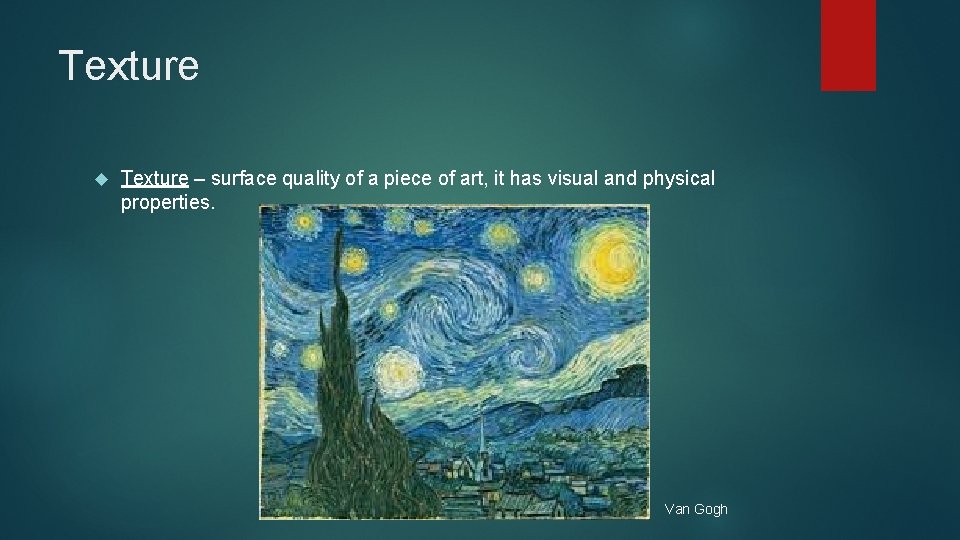
Texture – surface quality of a piece of art, it has visual and physical properties. Van Gogh
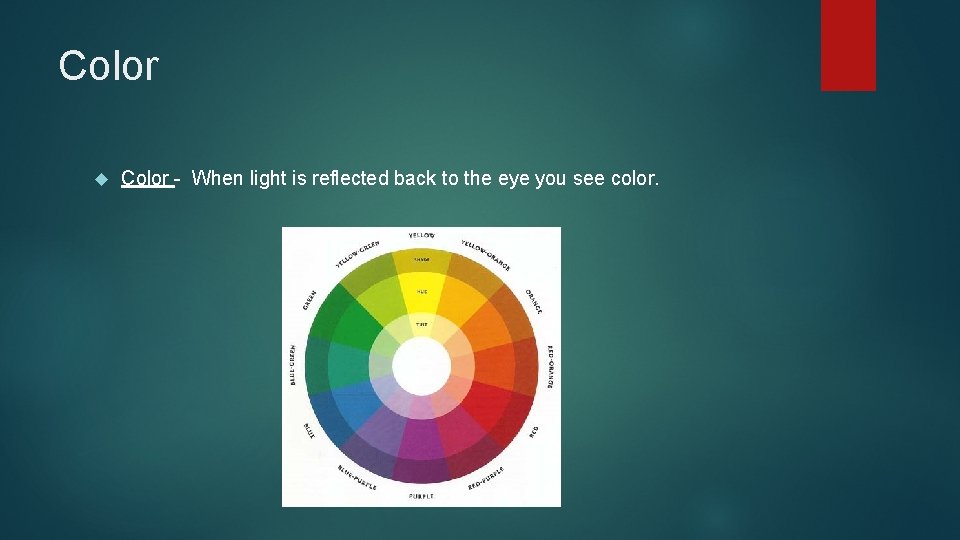
Color - When light is reflected back to the eye you see color.
Color Primary Colors – the 3 main colors (red, yellow, blue) that make up the rest of the colors when mixed.
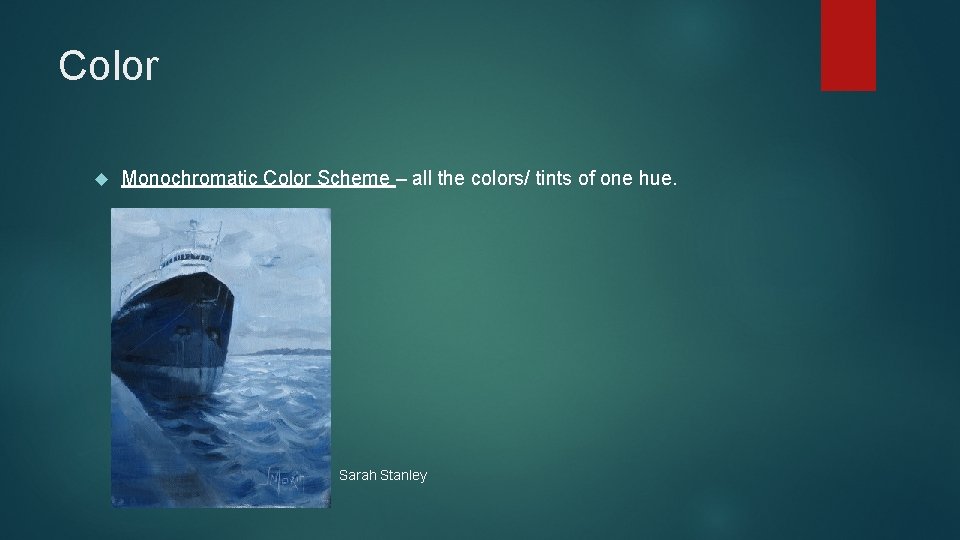
Color Monochromatic Color Scheme – all the colors/ tints of one hue. Sarah Stanley
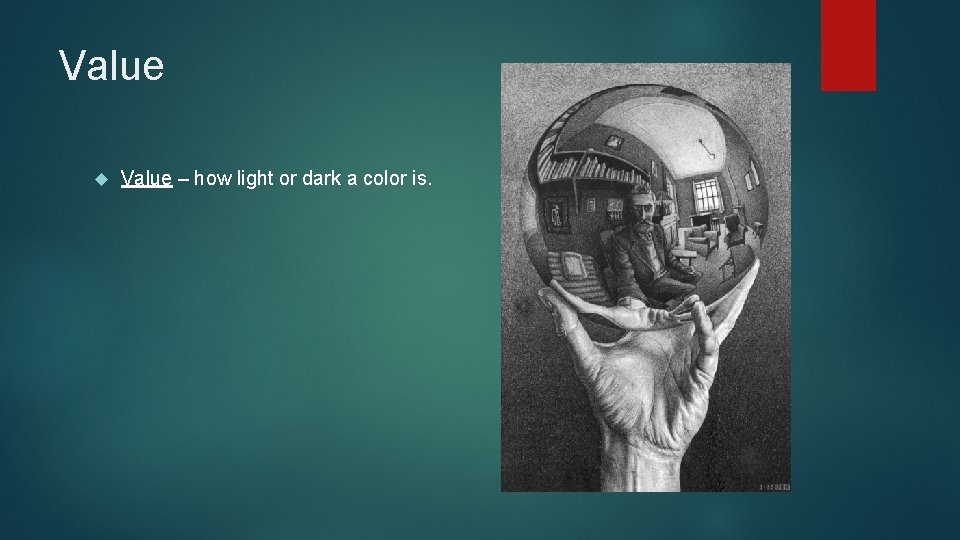
Value – how light or dark a color is.
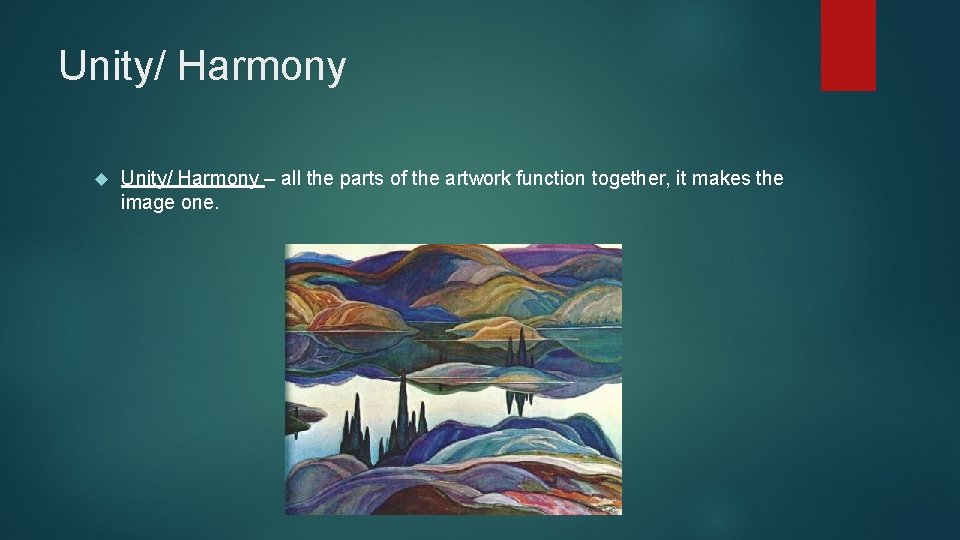
Unity/ Harmony – all the parts of the artwork function together, it makes the image one.
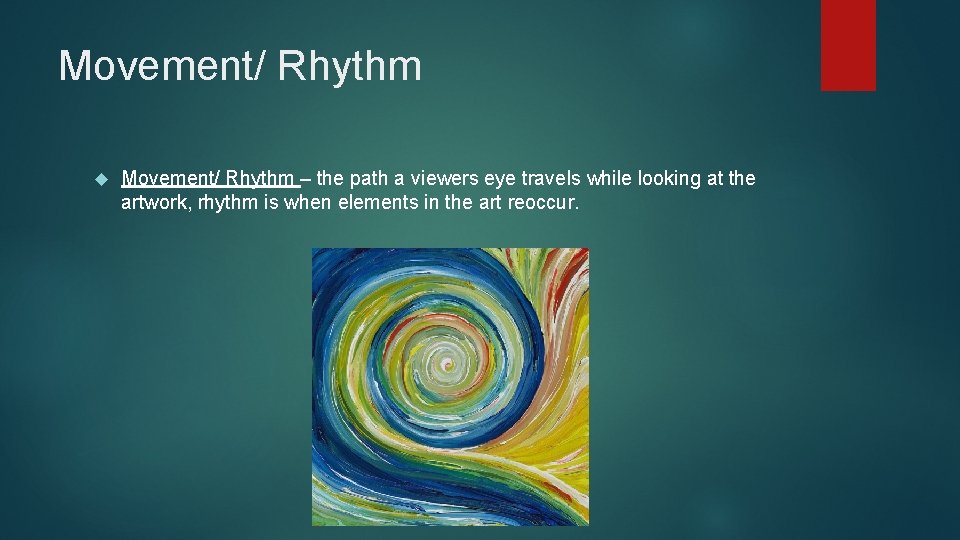
Movement/ Rhythm – the path a viewers eye travels while looking at the artwork, rhythm is when elements in the art reoccur.
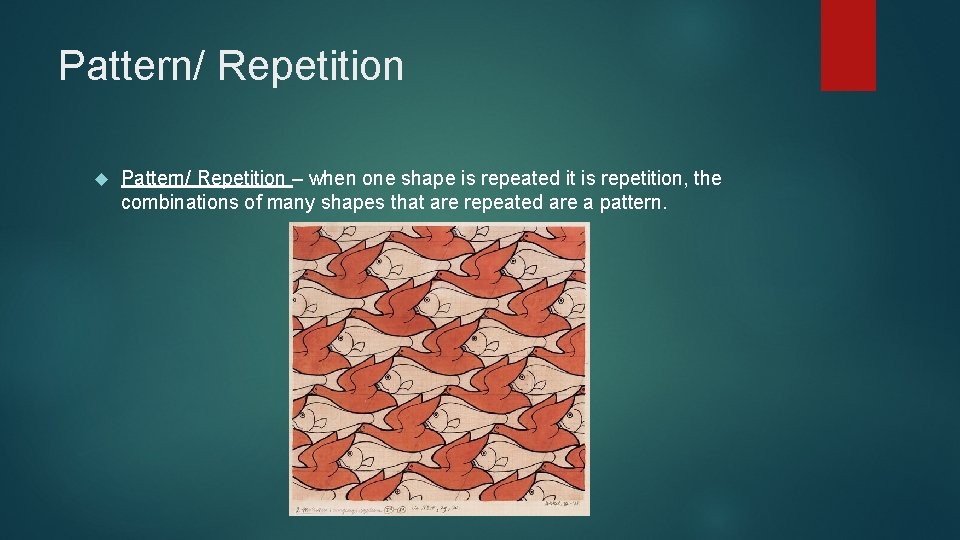
Pattern/ Repetition – when one shape is repeated it is repetition, the combinations of many shapes that are repeated are a pattern.
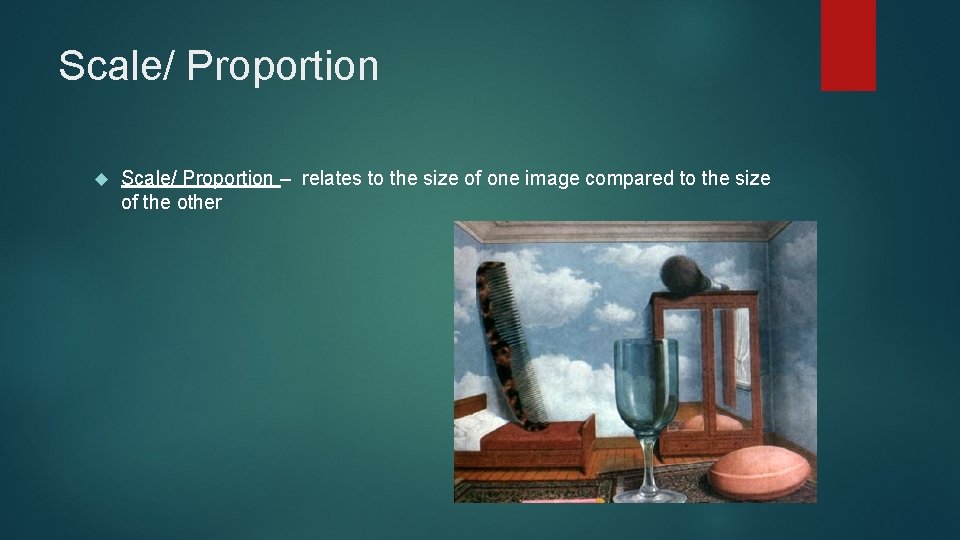
Scale/ Proportion – relates to the size of one image compared to the size of the other
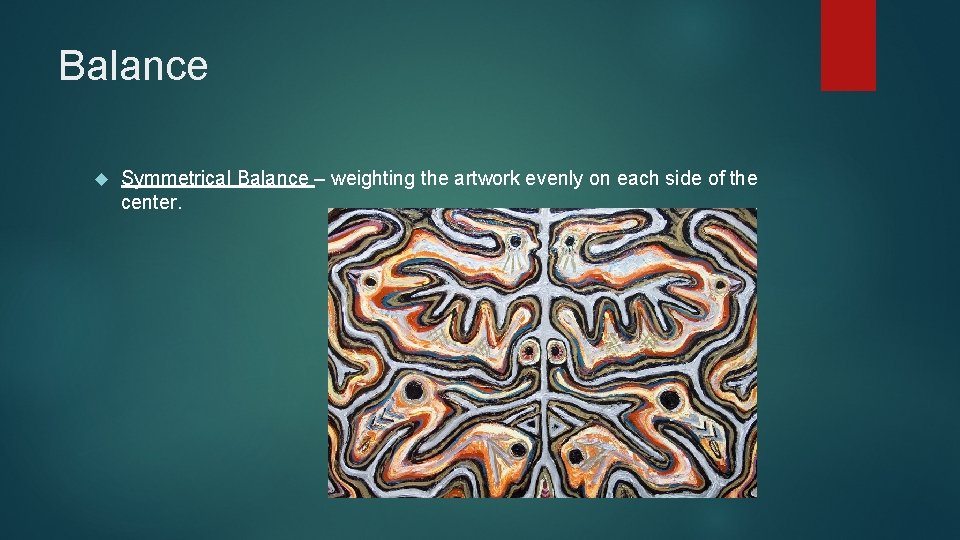
Balance Symmetrical Balance – weighting the artwork evenly on each side of the center.
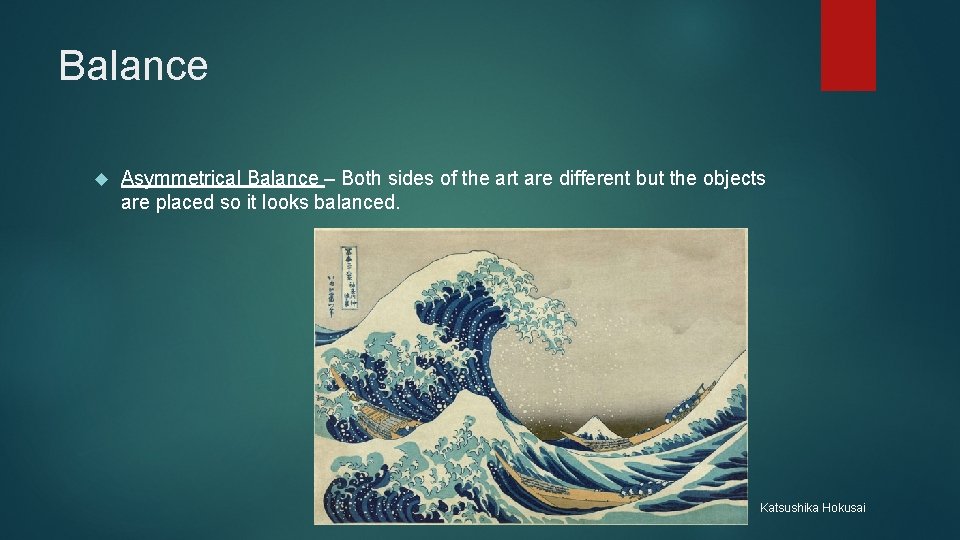
Balance Asymmetrical Balance – Both sides of the art are different but the objects are placed so it looks balanced. Katsushika Hokusai
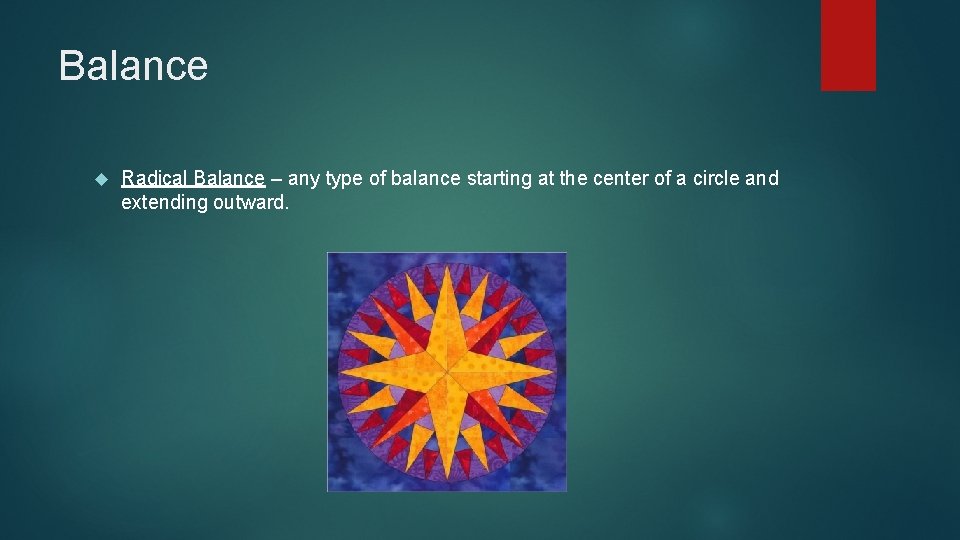
Balance Radical Balance – any type of balance starting at the center of a circle and extending outward.
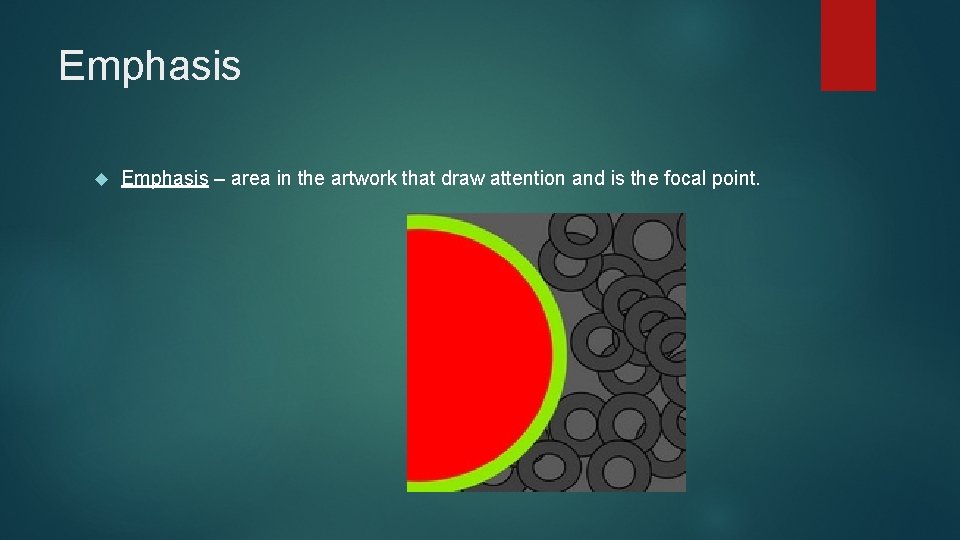
Emphasis – area in the artwork that draw attention and is the focal point.
Contrast – the arrangement of opposites in artwork