
Elements and Principles of Art Line Color Texture
- Slides: 43
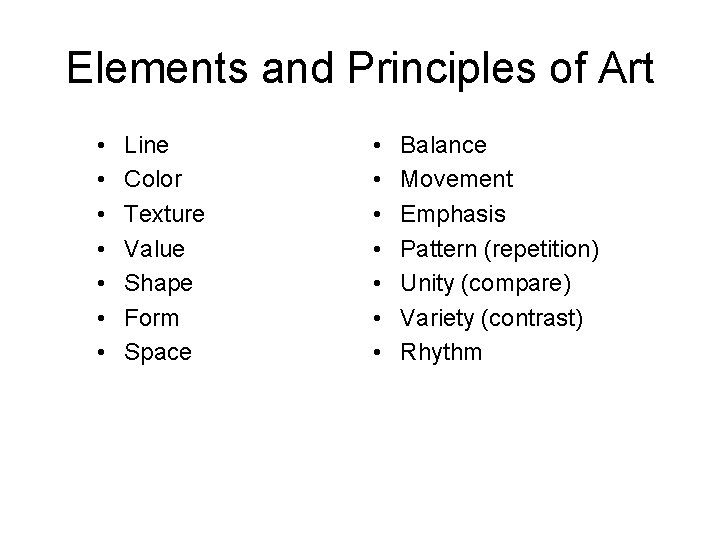
Elements and Principles of Art • • Line Color Texture Value Shape Form Space • • Balance Movement Emphasis Pattern (repetition) Unity (compare) Variety (contrast) Rhythm
Elements • • Line Color Texture Value Shape Form Space
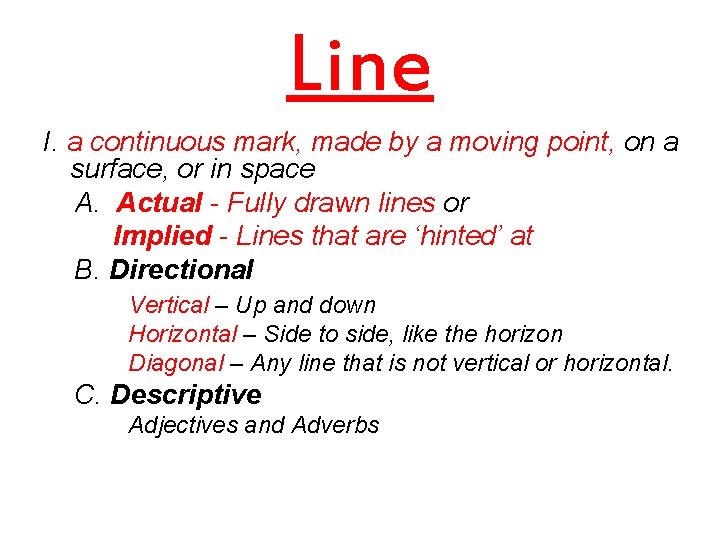
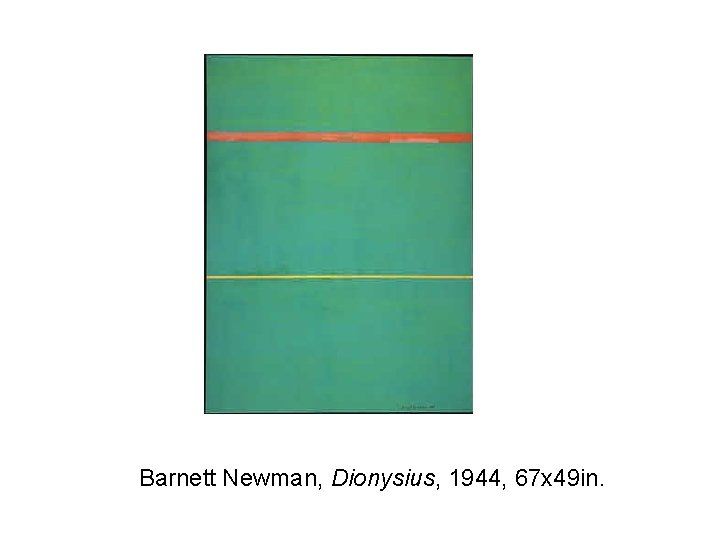
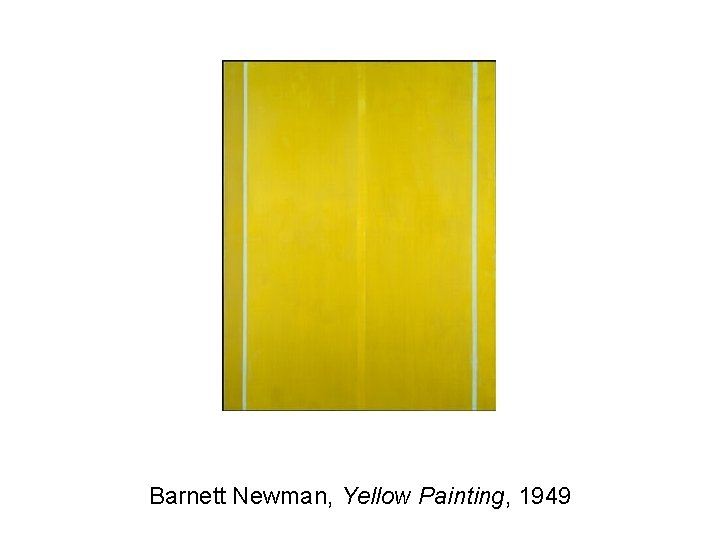
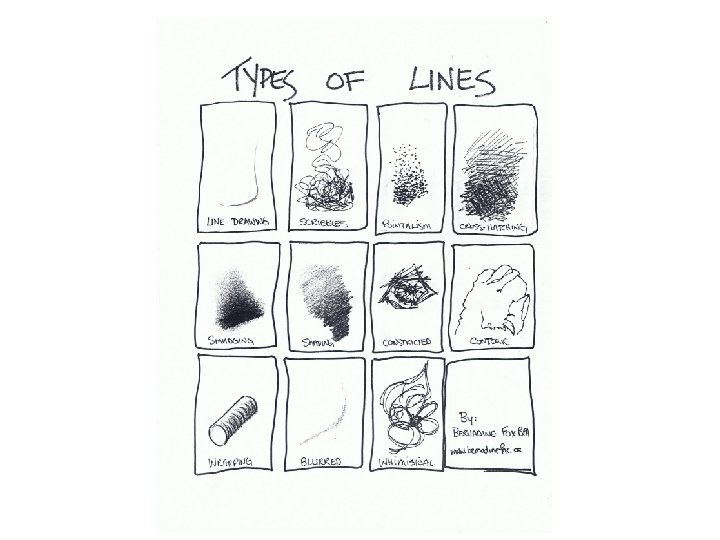
Line I. a continuous mark, made by a moving point, on a surface, or in space A. Actual - Fully drawn lines or Implied - Lines that are ‘hinted’ at B. Directional Vertical – Up and down Horizontal – Side to side, like the horizon Diagonal – Any line that is not vertical or horizontal. C. Descriptive Adjectives and Adverbs
The Obvious STRAIGHT HORIZONTAL VERTICAL DIAGONAL
Barnett Newman, Dionysius, 1944, 67 x 49 in.
Barnett Newman, Yellow Painting, 1949
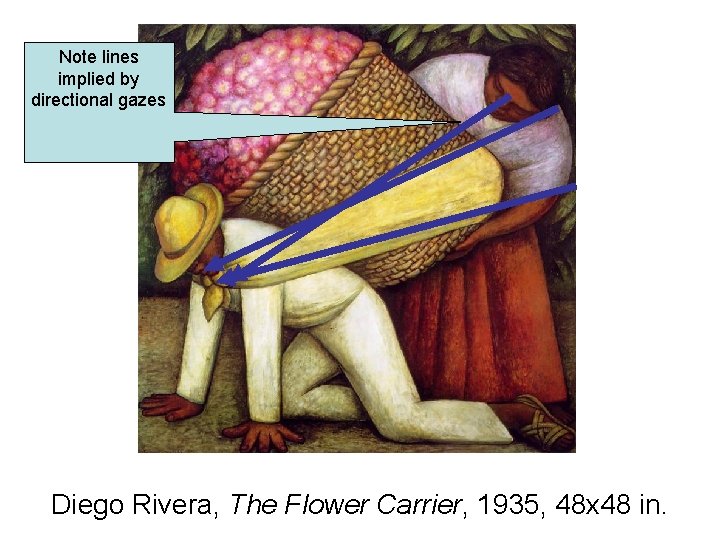
Note lines implied by directional gazes Diego Rivera, The Flower Carrier, 1935, 48 x 48 in.
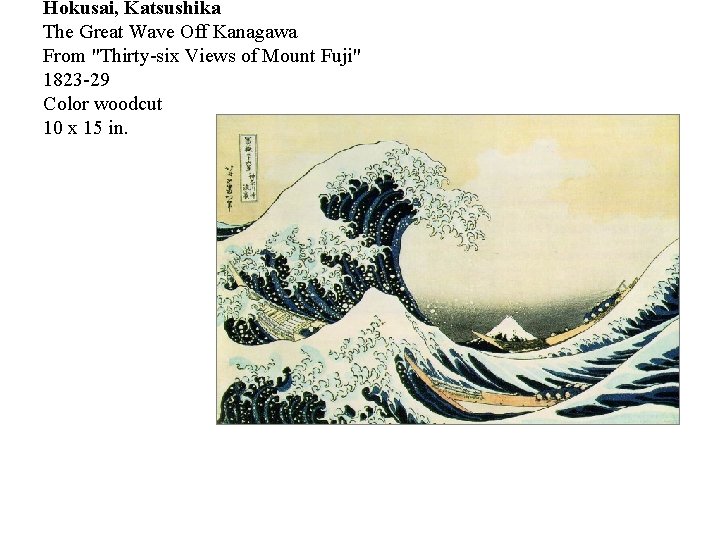
Hokusai, Katsushika The Great Wave Off Kanagawa From "Thirty-six Views of Mount Fuji" 1823 -29 Color woodcut 10 x 15 in.
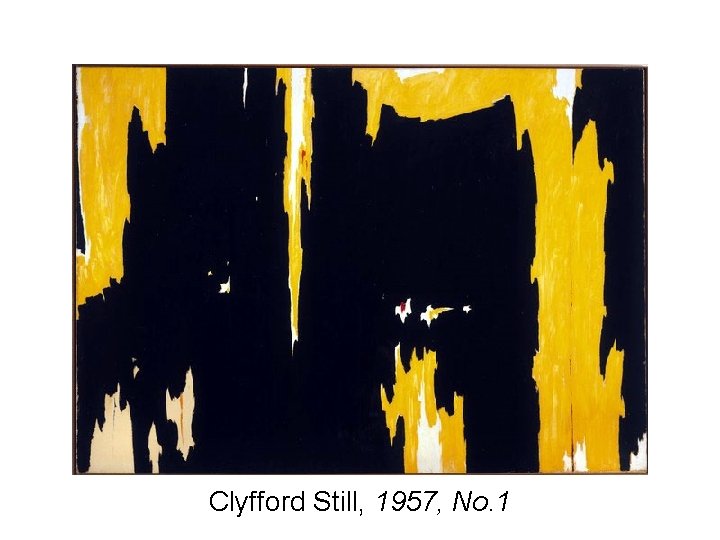
Clyfford Still, 1957, No. 1
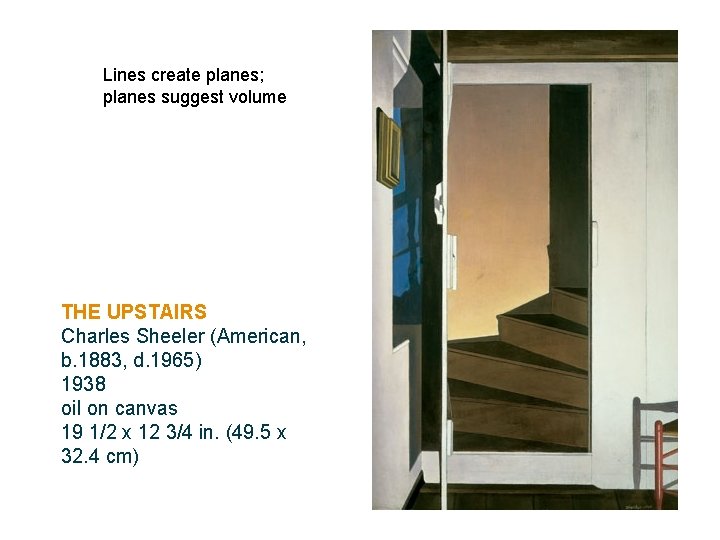
Lines create planes; planes suggest volume THE UPSTAIRS Charles Sheeler (American, b. 1883, d. 1965) 1938 oil on canvas 19 1/2 x 12 3/4 in. (49. 5 x 32. 4 cm)
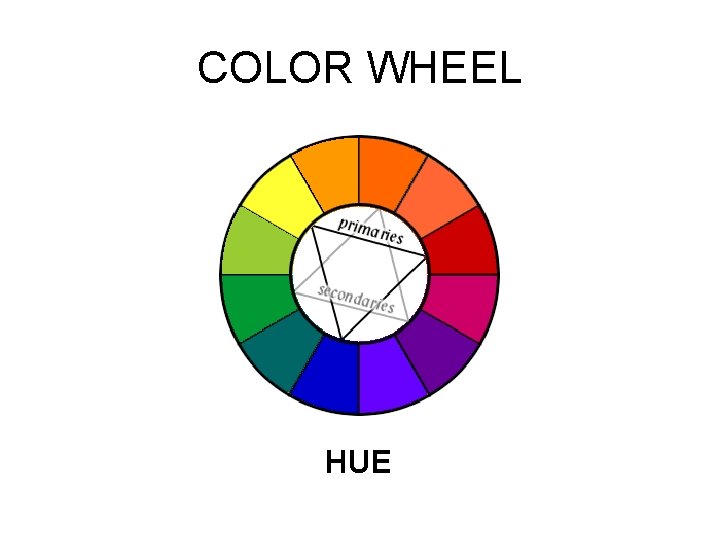
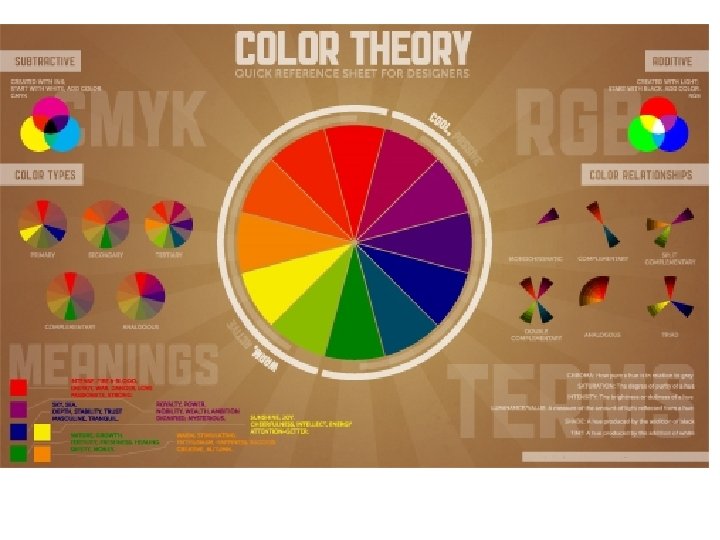
Color I. produced when light, striking an object, is reflected back to the eye. II. All hues on the color spectrum, even hues not on the spectrum such as black and white. A. Hue - the name we give to a color (red, yellow, etc. ).
B. Intensity - the strength and vividness of the color. Describe the color blue as (bright, rich, vibrant) or "dull" (grayed). C. Value-light or darkness of a color
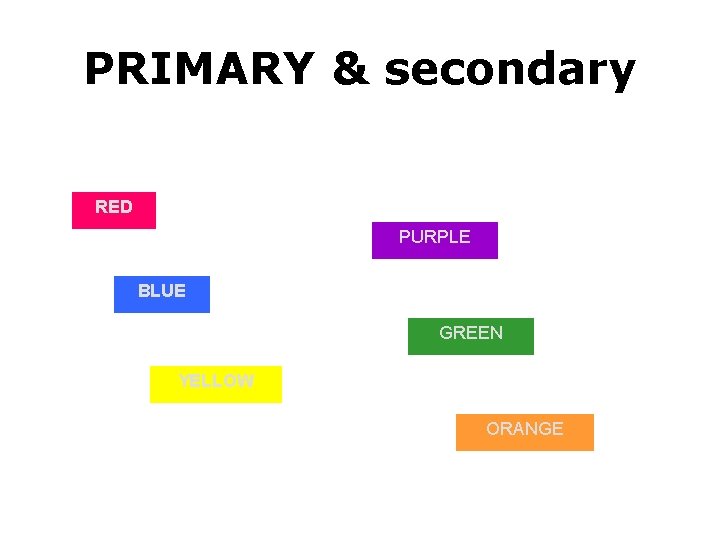
PRIMARY & secondary RED PURPLE BLUE GREEN YELLOW ORANGE
COLOR WHEEL HUE
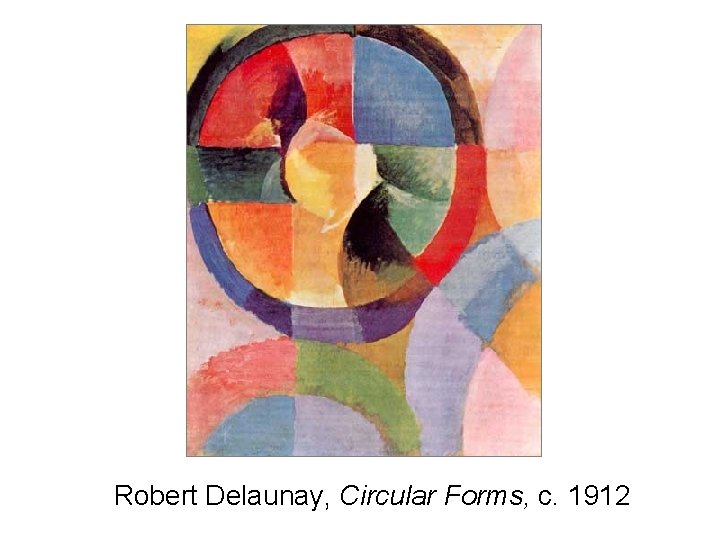
Robert Delaunay, Circular Forms, c. 1912
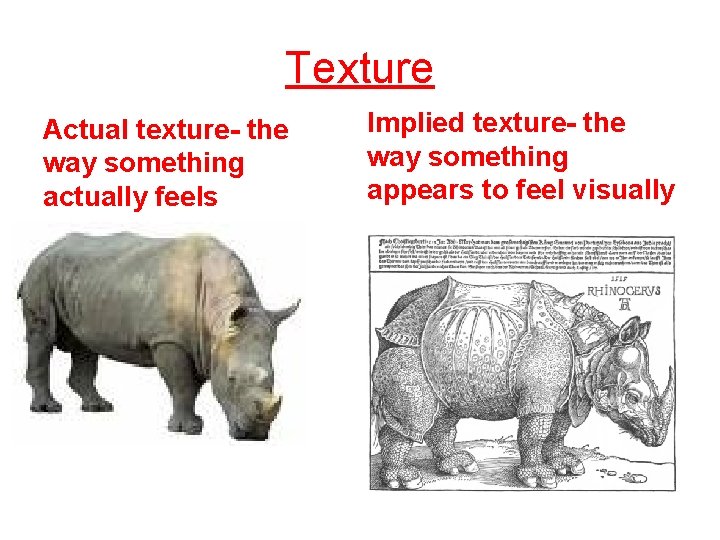
Texture Actual texture- the way something actually feels Implied texture- the way something appears to feel visually
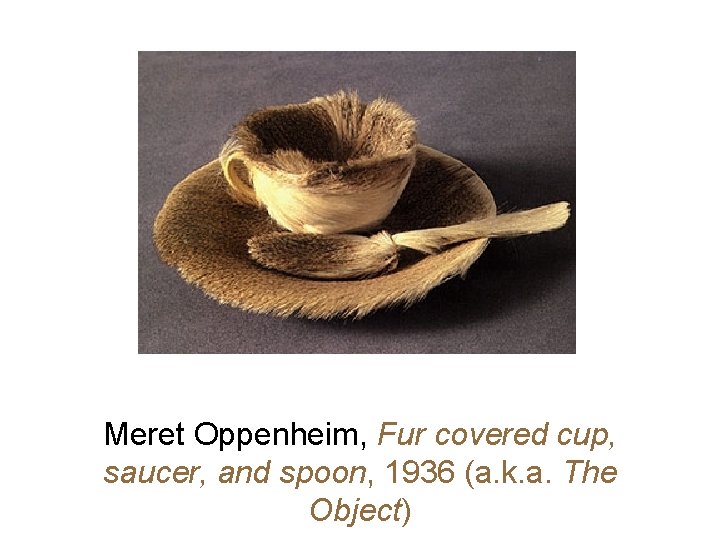
Meret Oppenheim, Fur covered cup, saucer, and spoon, 1936 (a. k. a. The Object)
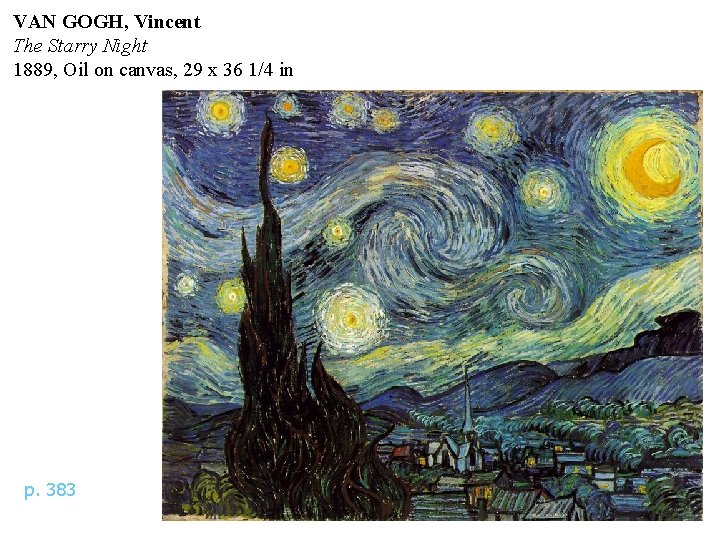
VAN GOGH, Vincent The Starry Night 1889, Oil on canvas, 29 x 36 1/4 in p. 383
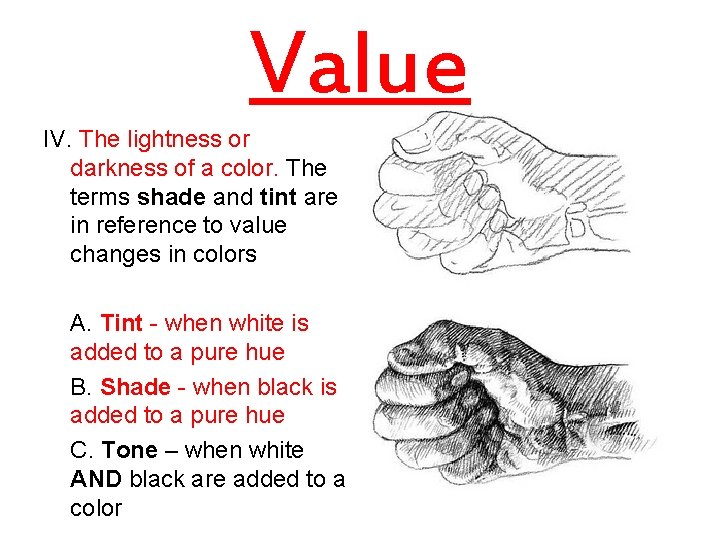
Value IV. The lightness or darkness of a color. The terms shade and tint are in reference to value changes in colors A. Tint - when white is added to a pure hue B. Shade - when black is added to a pure hue C. Tone – when white AND black are added to a color
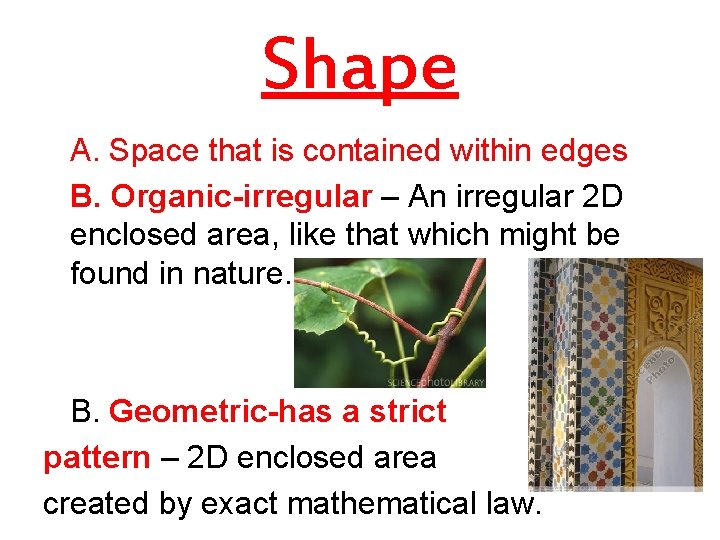
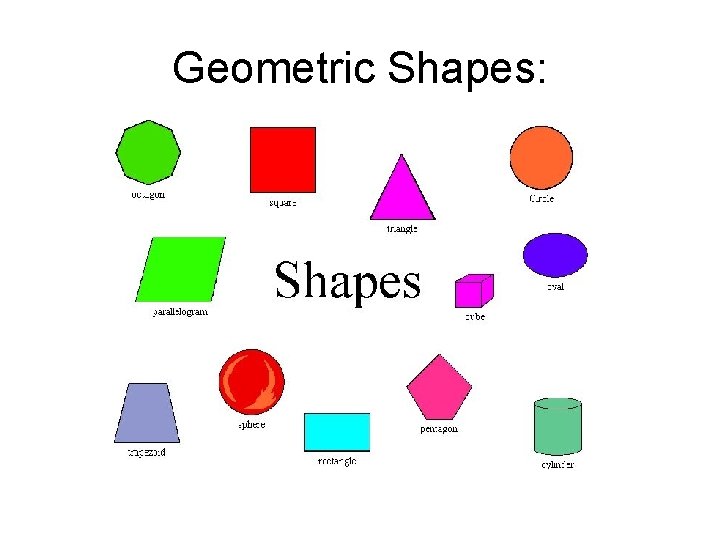
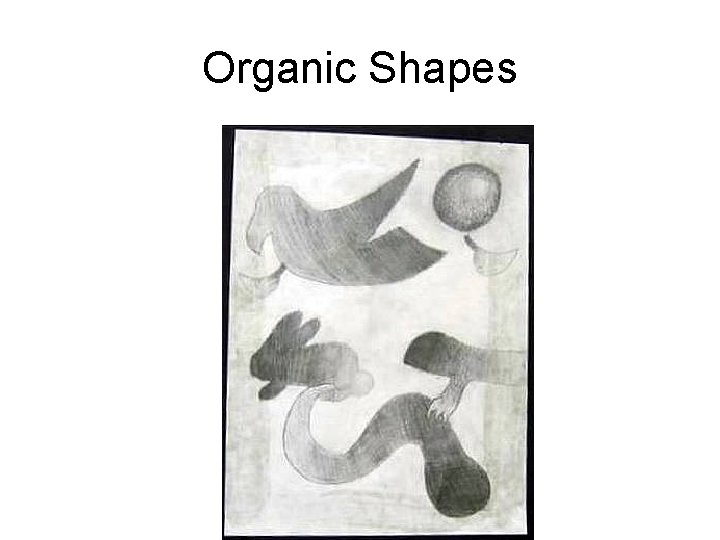
Shape A. Space that is contained within edges B. Organic-irregular – An irregular 2 D enclosed area, like that which might be found in nature. B. Geometric-has a strict pattern – 2 D enclosed area created by exact mathematical law.
Geometric Shapes:
Organic Shapes
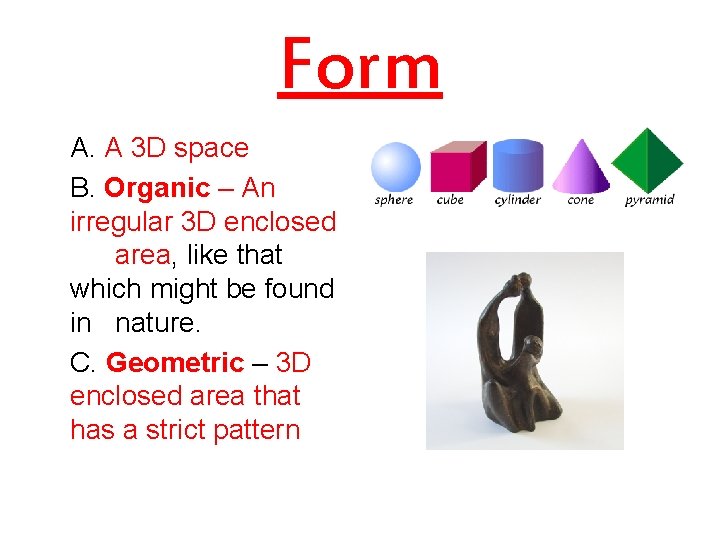
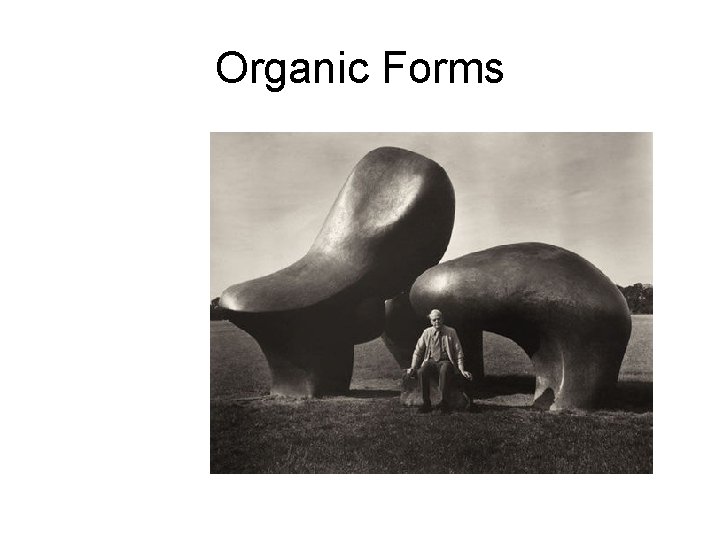
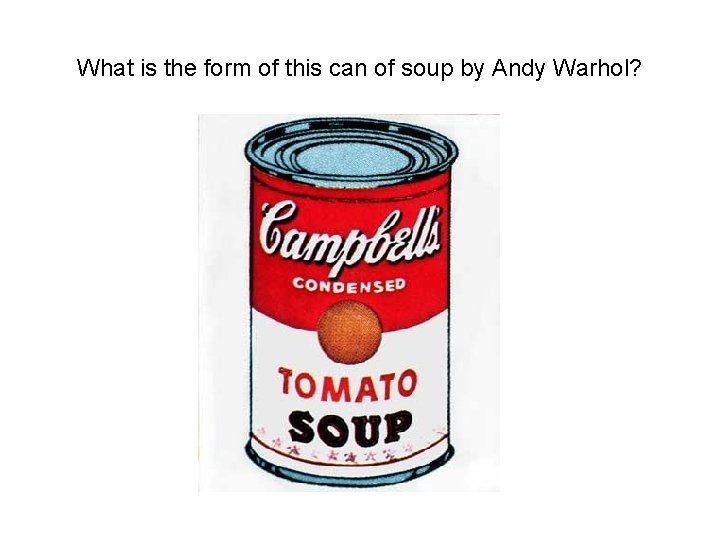
Form A. A 3 D space B. Organic – An irregular 3 D enclosed area, like that which might be found in nature. C. Geometric – 3 D enclosed area that has a strict pattern
Organic Forms
VOLUME LINE SHAPE VOLUME Implied in painting; actual in sculpture
What is the form of this can of soup by Andy Warhol?
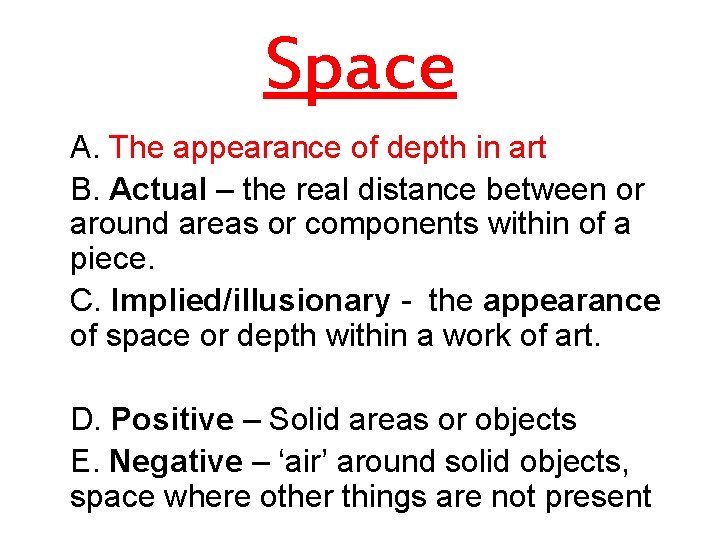
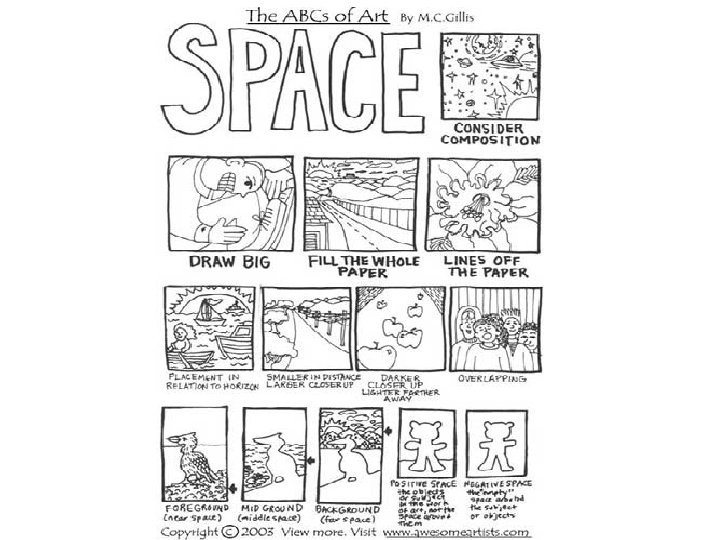
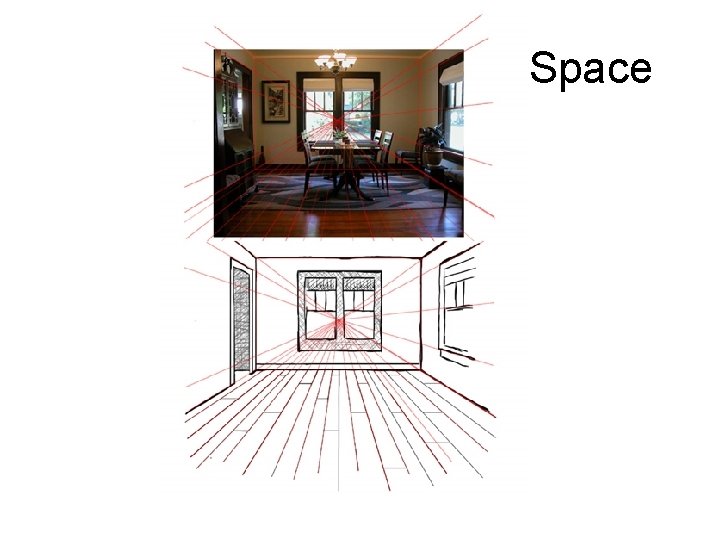
Space A. The appearance of depth in art B. Actual – the real distance between or around areas or components within of a piece. C. Implied/illusionary - the appearance of space or depth within a work of art. D. Positive – Solid areas or objects E. Negative – ‘air’ around solid objects, space where other things are not present
Space
Principles • • Balance Movement Emphasis Pattern (repetition) Unity (compare) Variety (contrast) Rhythm
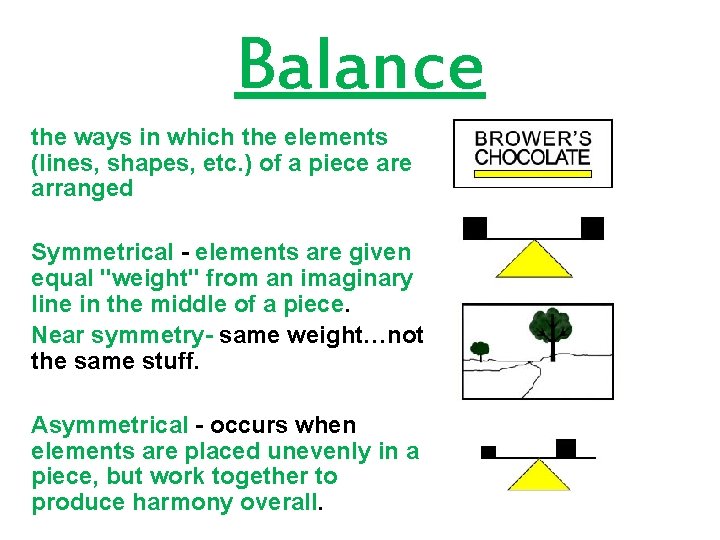
Balance the ways in which the elements (lines, shapes, etc. ) of a piece arranged Symmetrical - elements are given equal "weight" from an imaginary line in the middle of a piece. Near symmetry- same weight…not the same stuff. Asymmetrical - occurs when elements are placed unevenly in a piece, but work together to produce harmony overall.
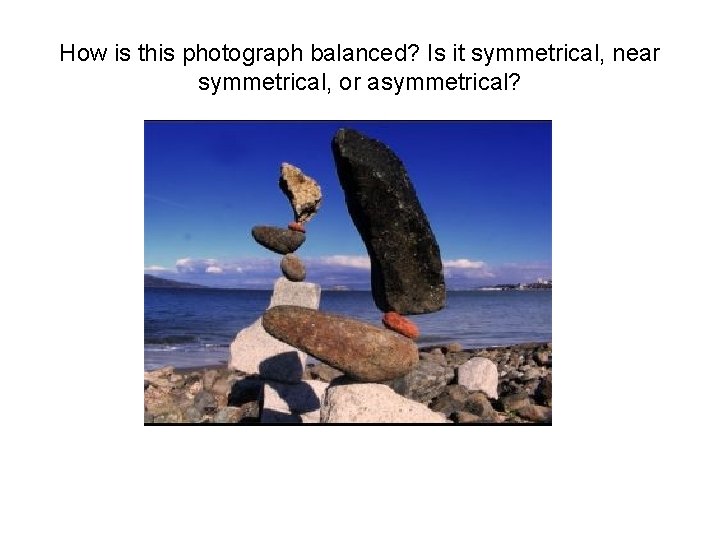
How is this photograph balanced? Is it symmetrical, near symmetrical, or asymmetrical?
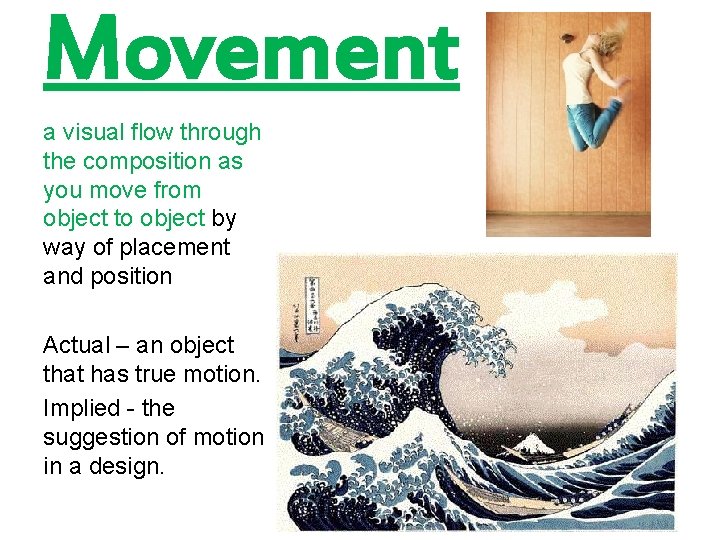
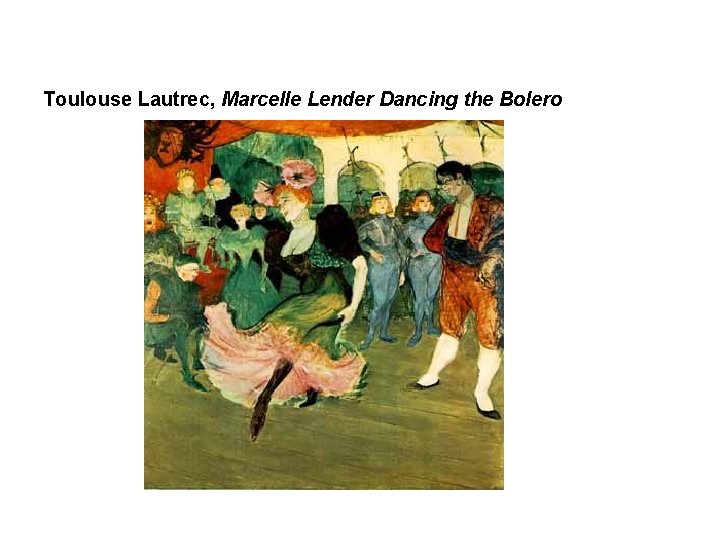
Movement a visual flow through the composition as you move from object to object by way of placement and position Actual – an object that has true motion. Implied - the suggestion of motion in a design.
Toulouse Lautrec, Marcelle Lender Dancing the Bolero
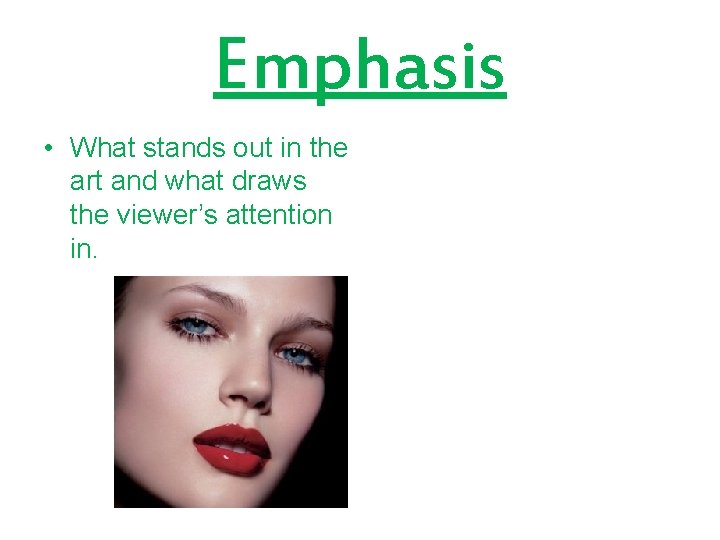
Emphasis • What stands out in the art and what draws the viewer’s attention in.
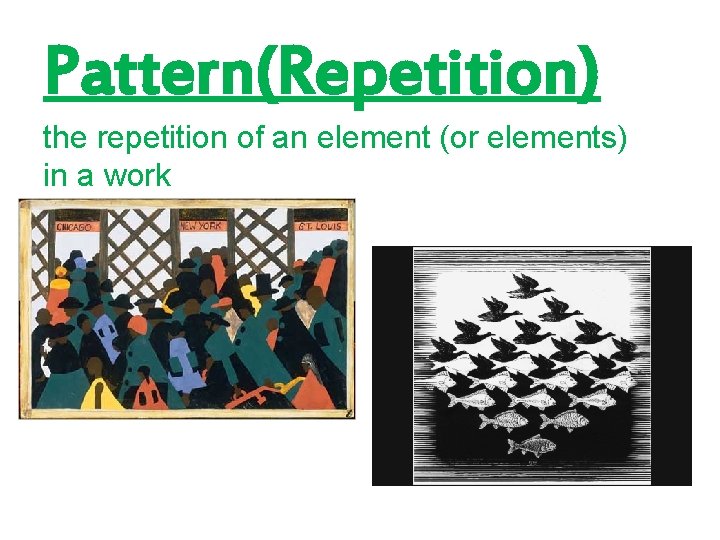
Pattern(Repetition) the repetition of an element (or elements) in a work
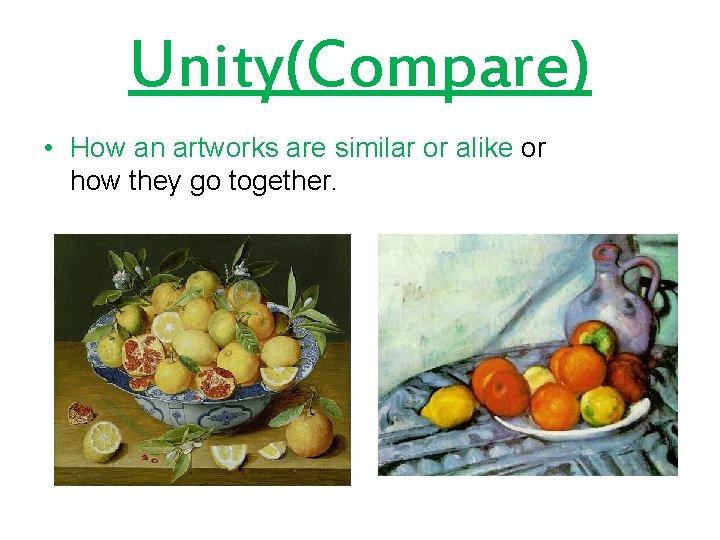
Unity(Compare) • How an artworks are similar or alike or how they go together.
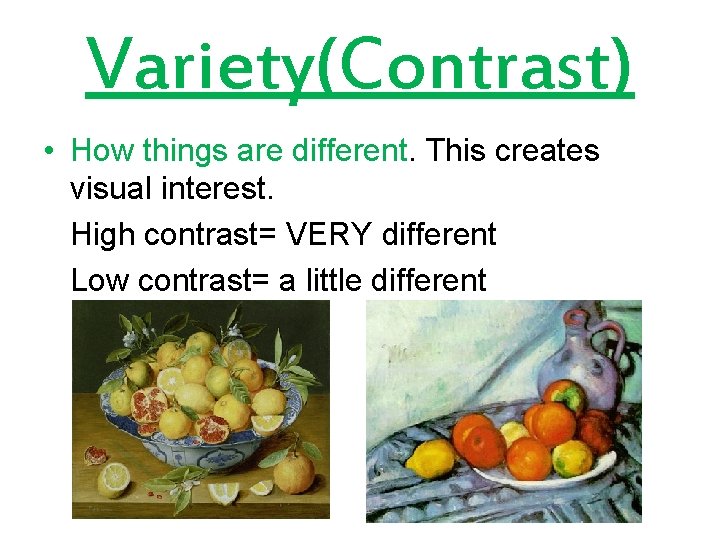
Variety(Contrast) • How things are different. This creates visual interest. High contrast= VERY different Low contrast= a little different
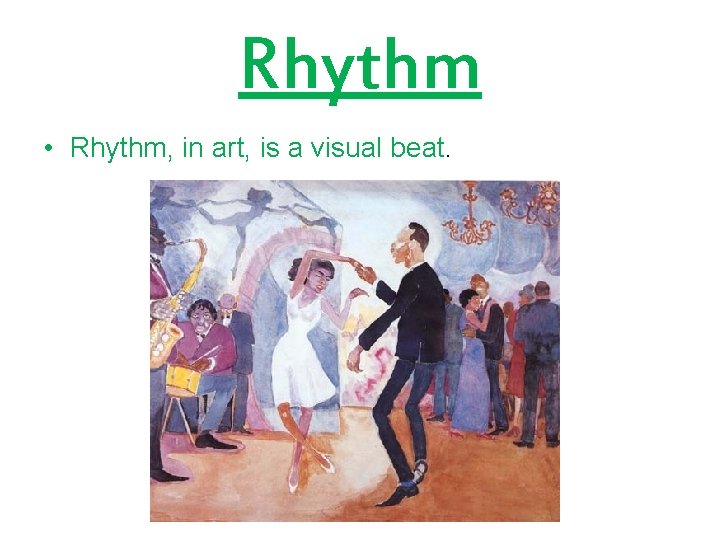
Rhythm • Rhythm, in art, is a visual beat.
Bibliography • http: //www. princetonol. com/groups/iad/Files/elements 2. htm • http: //arthistory. about. com/od/glossary/Art_History_Glossary. htm • http: //www. sculpture-painting. co. uk/art_terms. htm