
ELEMENT PROPERTI ES ISOTOPES Everett Atomic Number 2
ELEMENT PROPERTI ES & ISOTOPES Everett
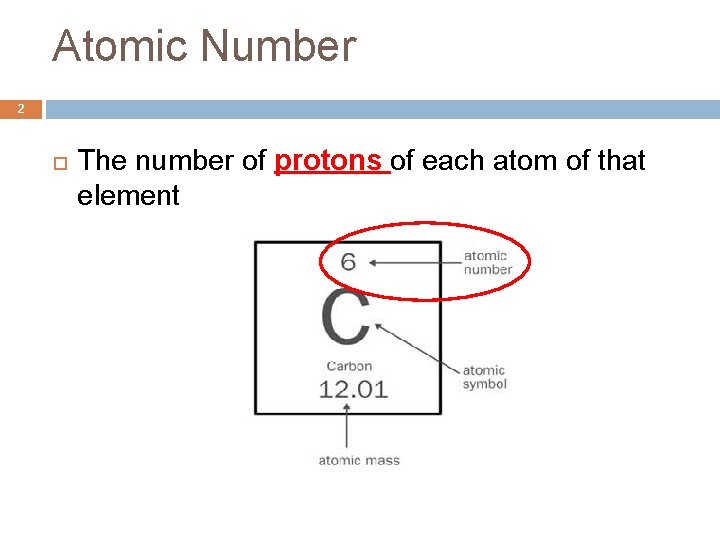
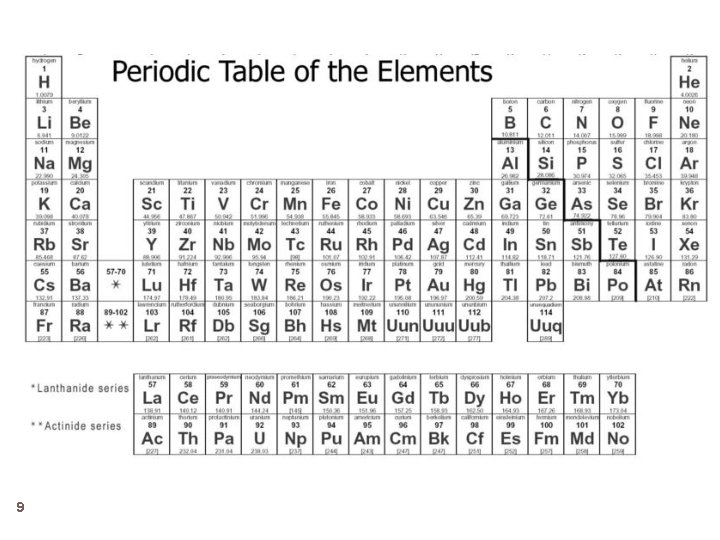
Atomic Number 2 The number of protons of each atom of that element
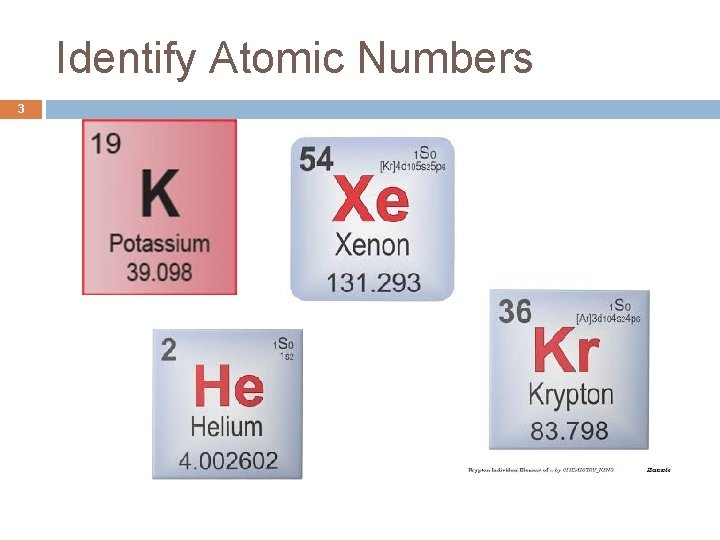
Identify Atomic Numbers 3
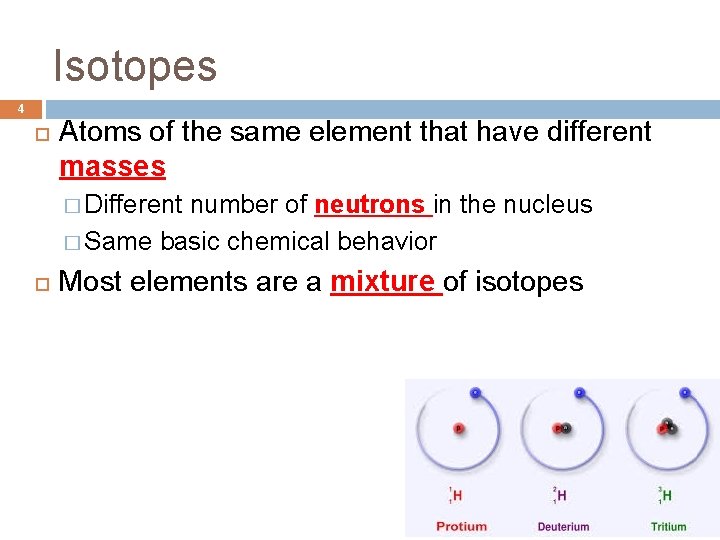
Isotopes 4 Atoms of the same element that have different masses � Different number of neutrons in the nucleus � Same basic chemical behavior Most elements are a mixture of isotopes
Isotopes 5 � Nuclide = a specific isotope of an element � Example: Hydrogen Protium is the most common = 99. 985% Hydrogen’s atomic mass = 1. 008 amu Amu=1/12 the mass of one atom of C-12
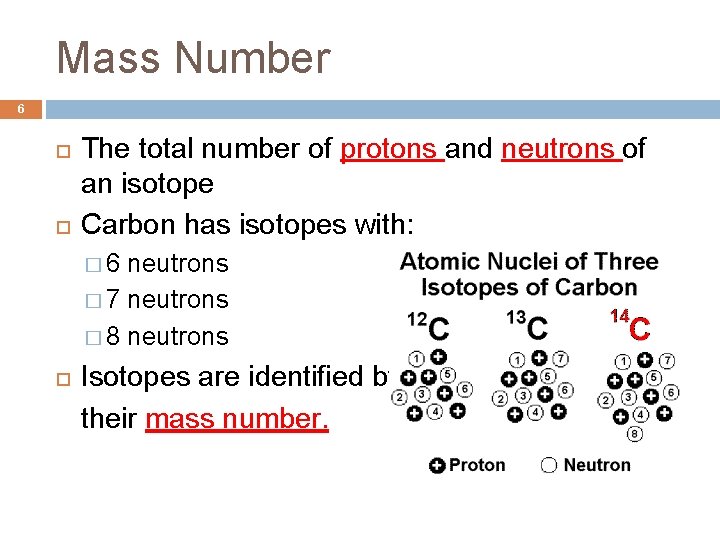
Mass Number 6 The total number of protons and neutrons of an isotope Carbon has isotopes with: � 6 neutrons � 7 neutrons � 8 neutrons Isotopes are identified by their mass number.
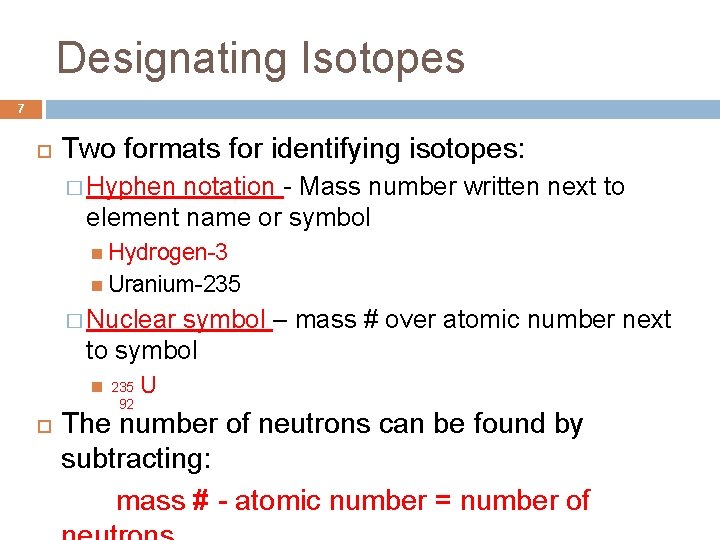
Designating Isotopes 7 Two formats for identifying isotopes: � Hyphen notation - Mass number written next to element name or symbol Hydrogen-3 Uranium-235 � Nuclear symbol – mass # over atomic number next to symbol 235 92 U The number of neutrons can be found by subtracting: mass # - atomic number = number of
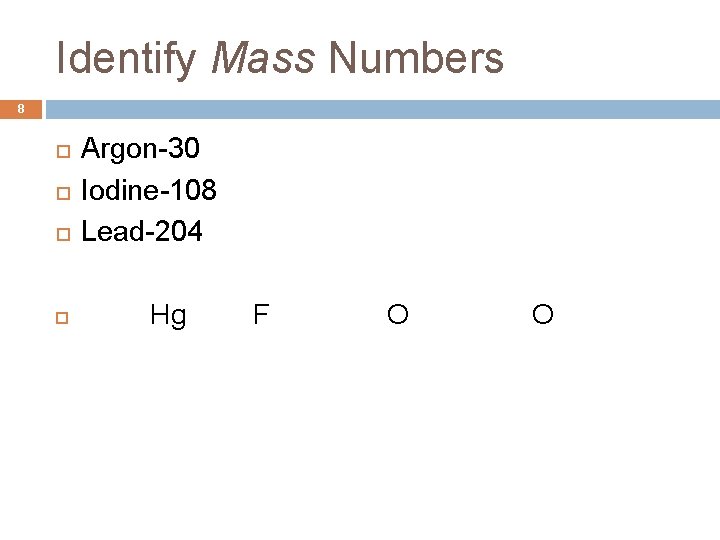
Identify Mass Numbers 8 Argon-30 Iodine-108 Lead-204 Hg F O O
9
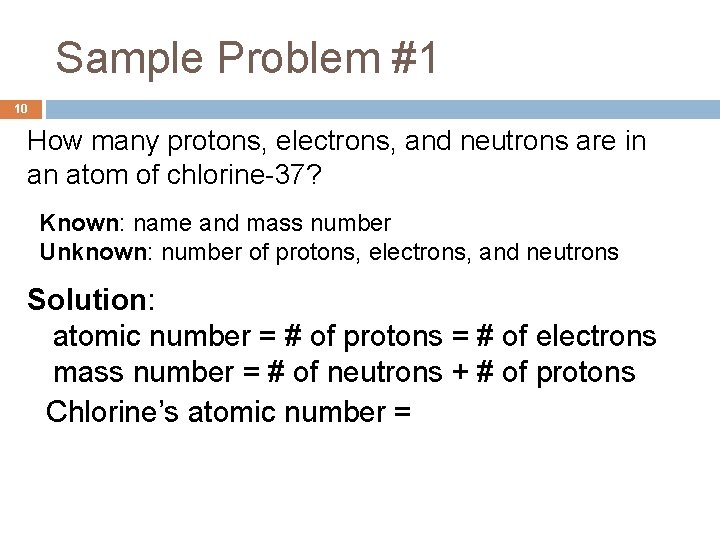
Sample Problem #1 10 How many protons, electrons, and neutrons are in an atom of chlorine-37? Known: name and mass number Unknown: number of protons, electrons, and neutrons Solution: atomic number = # of protons = # of electrons mass number = # of neutrons + # of protons Chlorine’s atomic number =
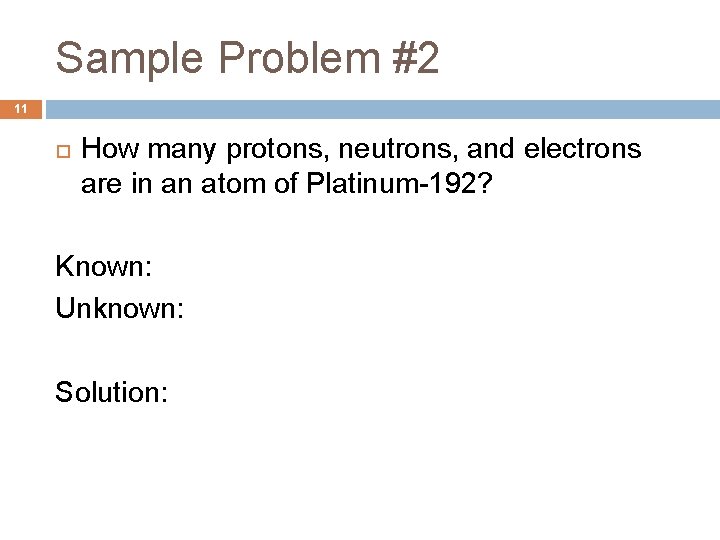
Sample Problem #2 11 How many protons, neutrons, and electrons are in an atom of Platinum-192? Known: Unknown: Solution:
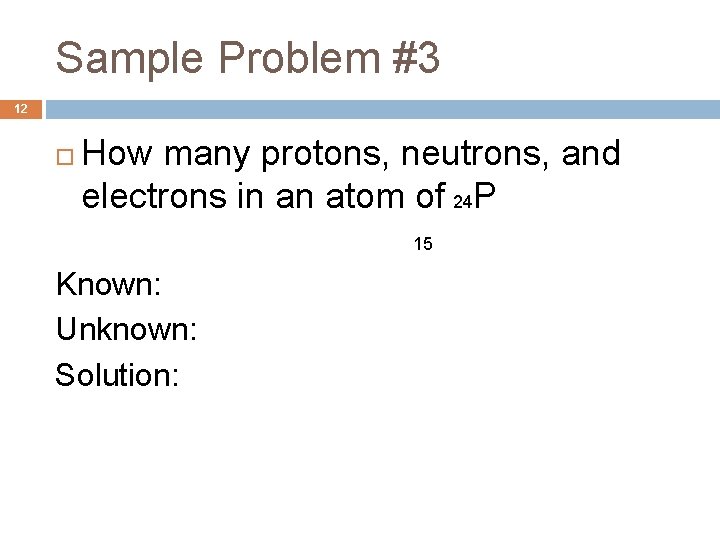
Sample Problem #3 12 How many protons, neutrons, and electrons in an atom of 24 P 15 Known: Unknown: Solution:
Radiation Drawing 13 Alpha Decay Beta Decay Gamma Decay
Average Atomic Masses of Elements 14 Most elements are a mixture of isotopes Average atomic mass = weighted average of atomic masses of naturally occurring isotopes of an element � Depends on mass and relative abundance of isotopes Makes it possible to know how many atoms of an element are present in a sample with a measureable mass
Calculating Averages 15 1. Weigh each one and divide by total number 2. Weigh one of each type and average them 3. Find average mass of each, multiply by abundance, and add totals together
- Slides: 15