
Electrostatics Also Known As Static Electricity Chemistry Refresher
- Slides: 18
Electrostatics Also Known As Static Electricity
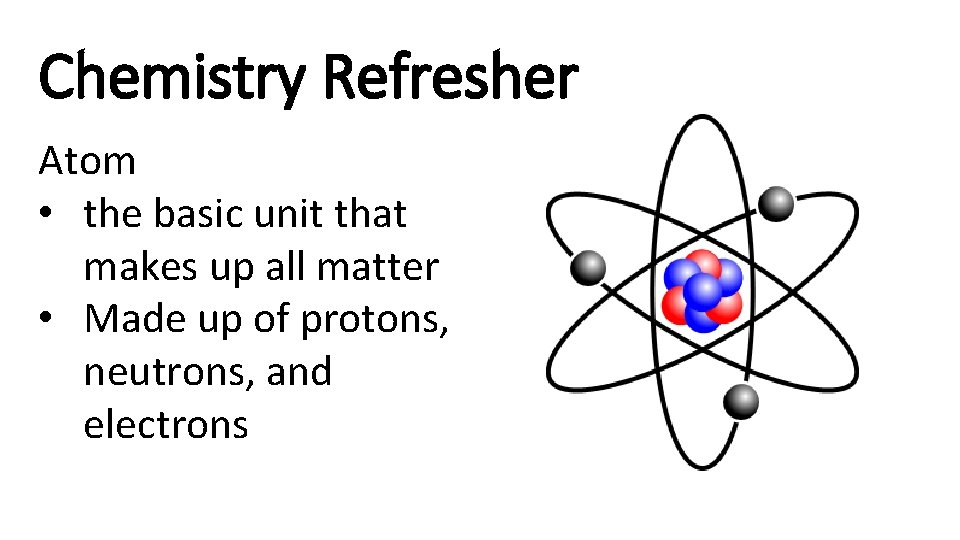
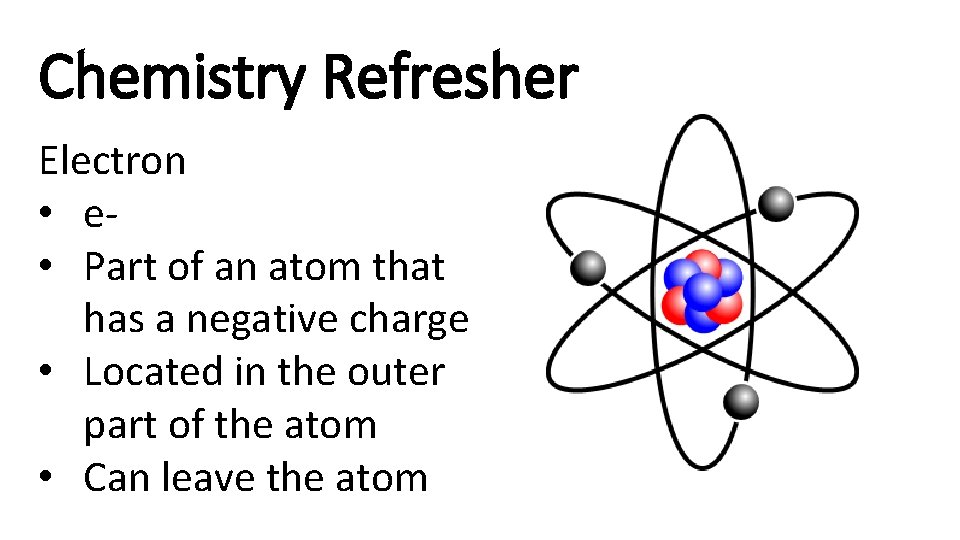
Chemistry Refresher Atom • the basic unit that makes up all matter • Made up of protons, neutrons, and electrons
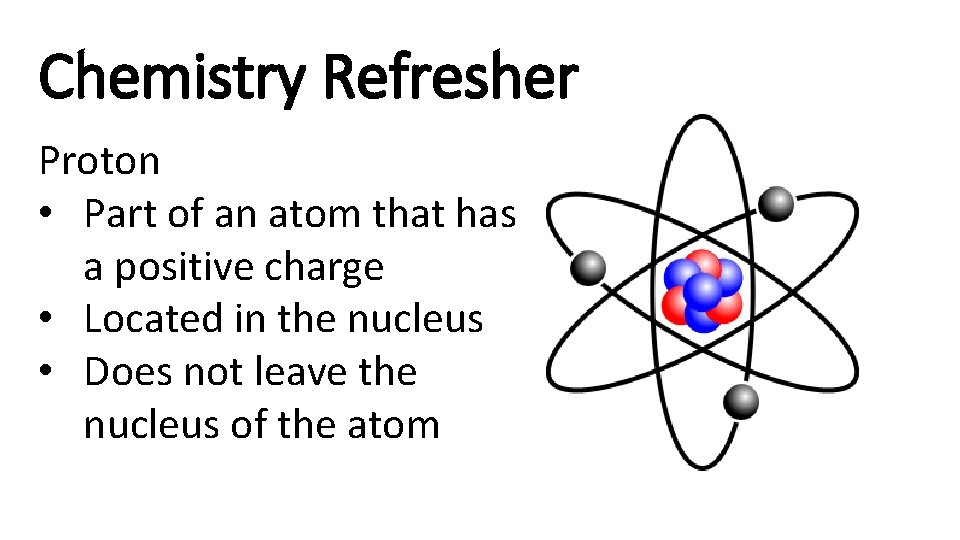
Chemistry Refresher Proton • Part of an atom that has a positive charge • Located in the nucleus • Does not leave the nucleus of the atom
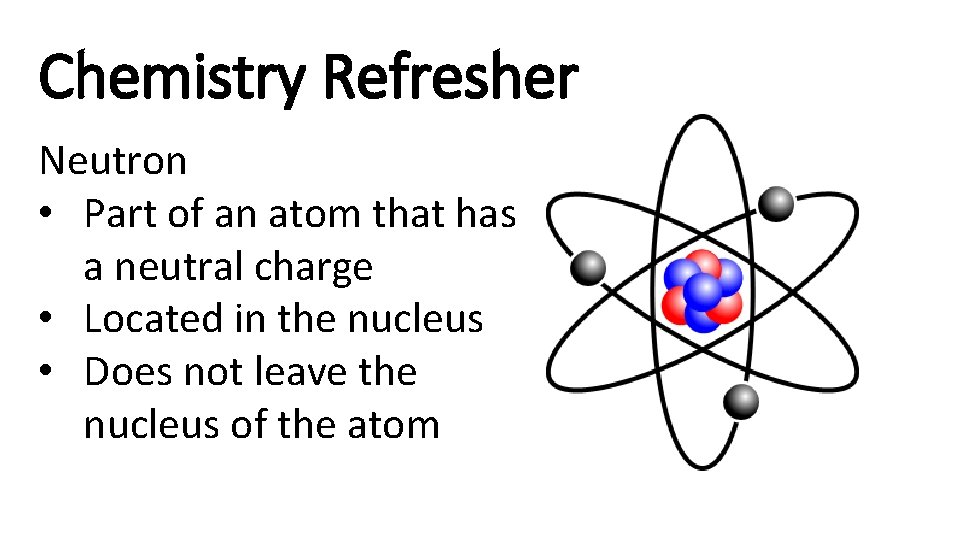
Chemistry Refresher Neutron • Part of an atom that has a neutral charge • Located in the nucleus • Does not leave the nucleus of the atom
Chemistry Refresher Electron • e • Part of an atom that has a negative charge • Located in the outer part of the atom • Can leave the atom
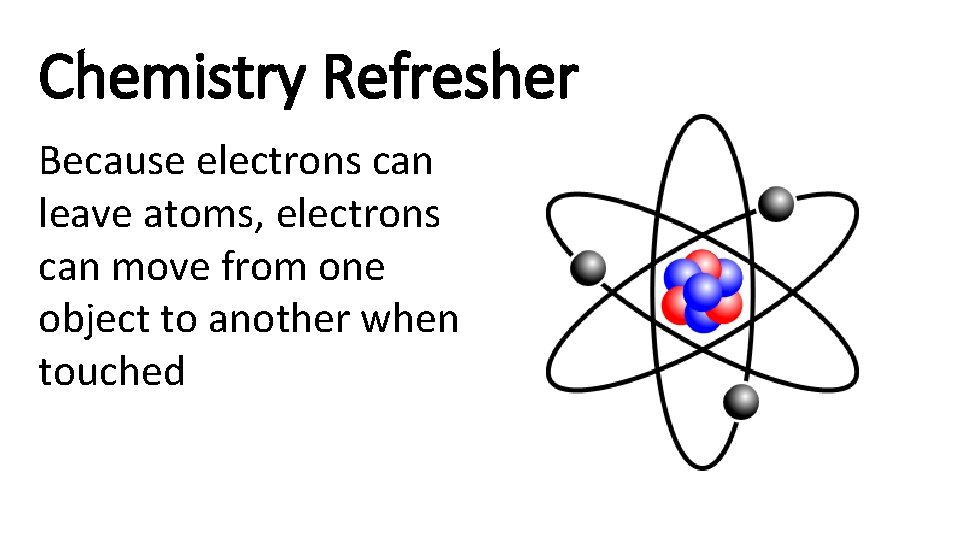
Chemistry Refresher Because electrons can leave atoms, electrons can move from one object to another when touched
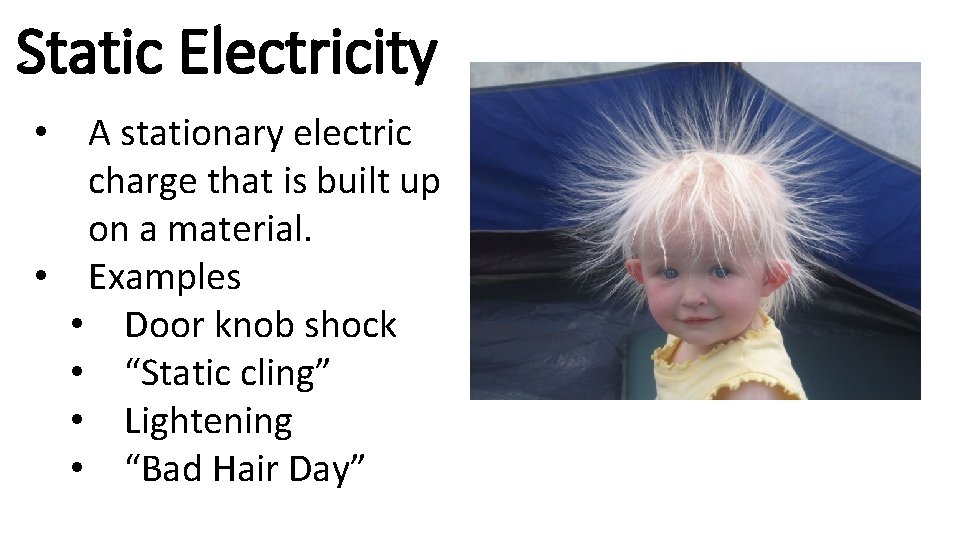
Static Electricity • A stationary electric charge that is built up on a material. • Examples • Door knob shock • “Static cling” • Lightening • “Bad Hair Day”
Charge • q • A characteristic of a unit of matter that expresses the extent to which it has more or fewer electrons than protons.
Charge continued • In atoms, the electron carries a negative charge and the proton carries a positive charge. The two types of charge are equal and opposite. • The amount of charge carried by an atom is always a multiple of the elementary charge, that is, the charge carried by a single electron or a single proton.
Elementary Charge • e • the electrical charge carried by a single electron • measured in Coulombs
Coulomb • the standard unit of electric charge in the International System of Units (SI). • 1 C is equal to approximately 6. 24 x 18 10 e • 1 e = 1. 60 x 10 -19 C
Force • A push or a pull • Contact forces (friction, tension, etc. ) • Non-contact forces (gravity, electromagnetic forces, etc. ) • Measured in Newtons (N)
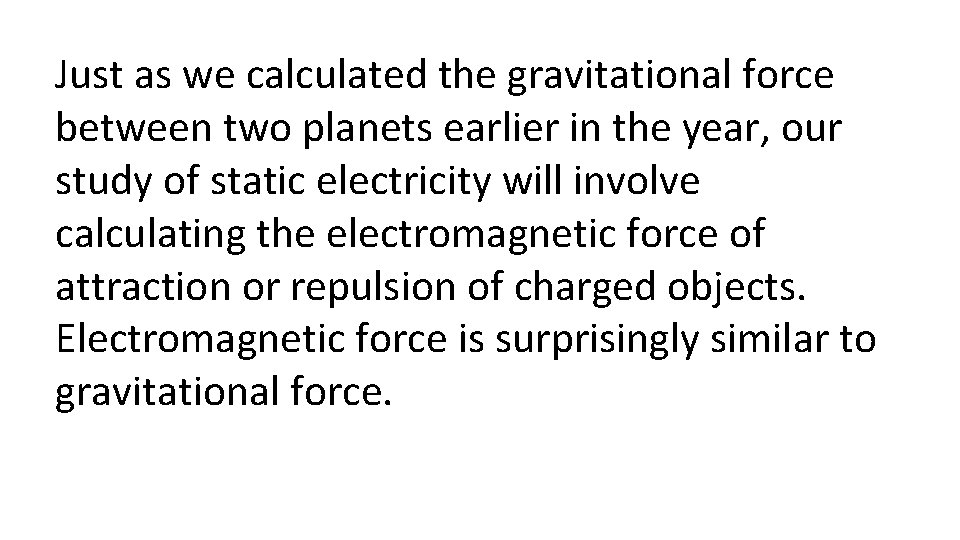
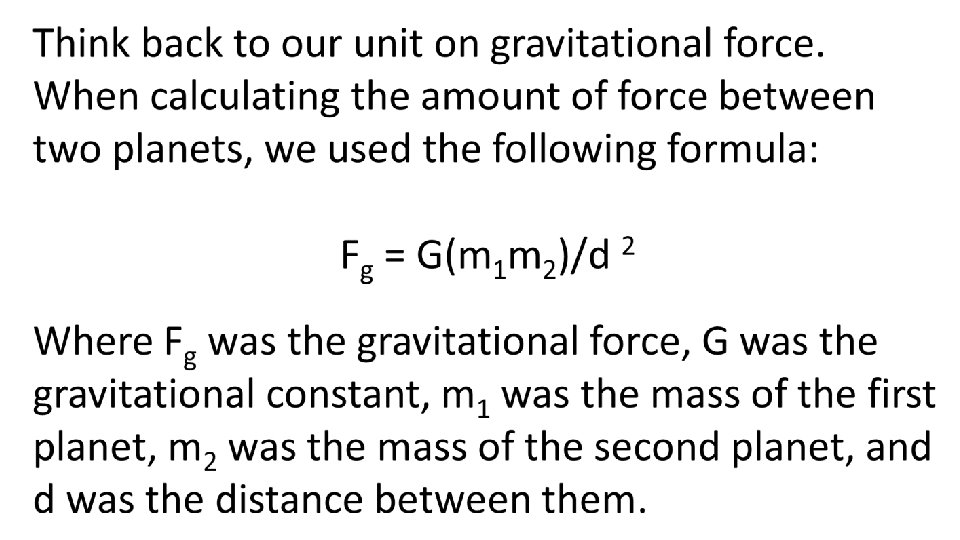
Just as we calculated the gravitational force between two planets earlier in the year, our study of static electricity will involve calculating the electromagnetic force of attraction or repulsion of charged objects. Electromagnetic force is surprisingly similar to gravitational force.
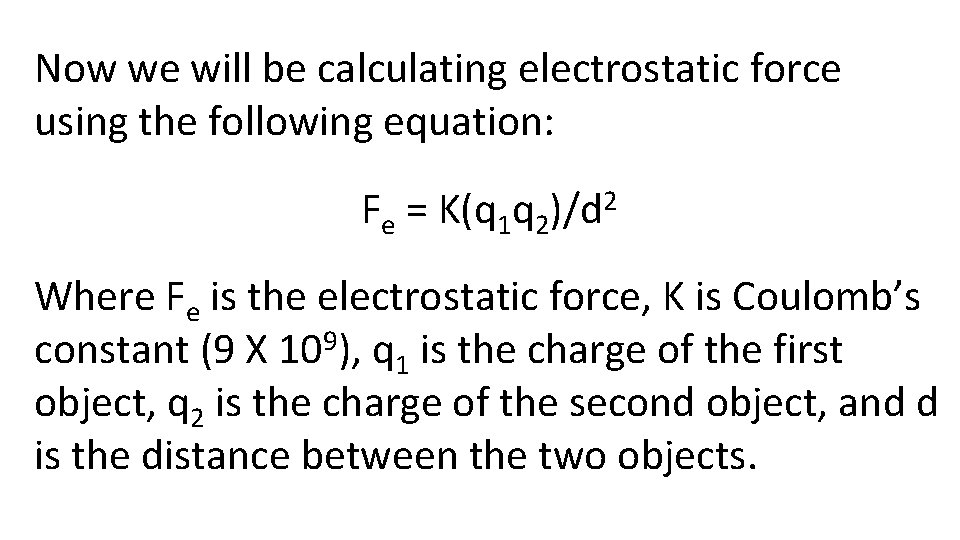
Now we will be calculating electrostatic force using the following equation: Fe = K(q 1 q 2)/d 2 Where Fe is the electrostatic force, K is Coulomb’s constant (9 X 10⁹), q 1 is the charge of the first object, q 2 is the charge of the second object, and d is the distance between the two objects.
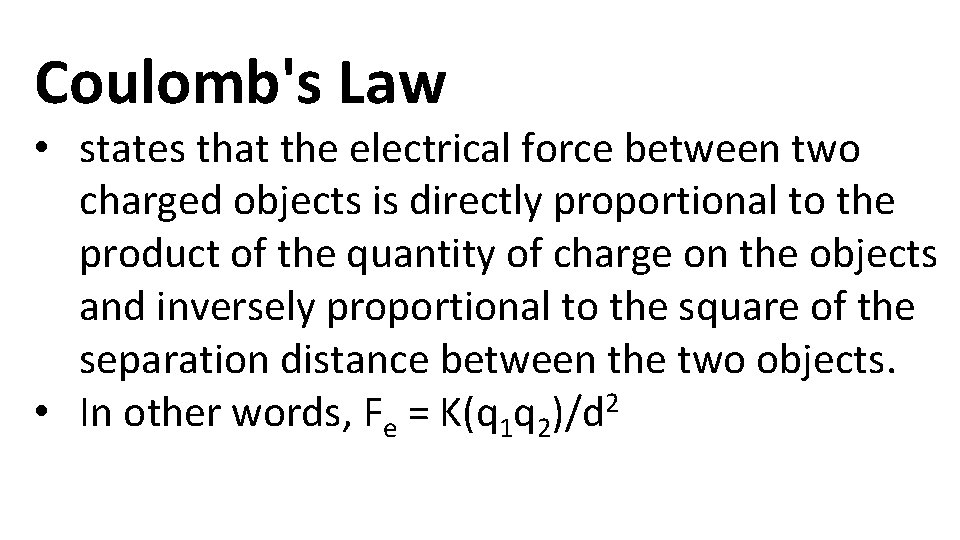
Coulomb's Law • states that the electrical force between two charged objects is directly proportional to the product of the quantity of charge on the objects and inversely proportional to the square of the separation distance between the two objects. • In other words, Fe = K(q 1 q 2)/d 2
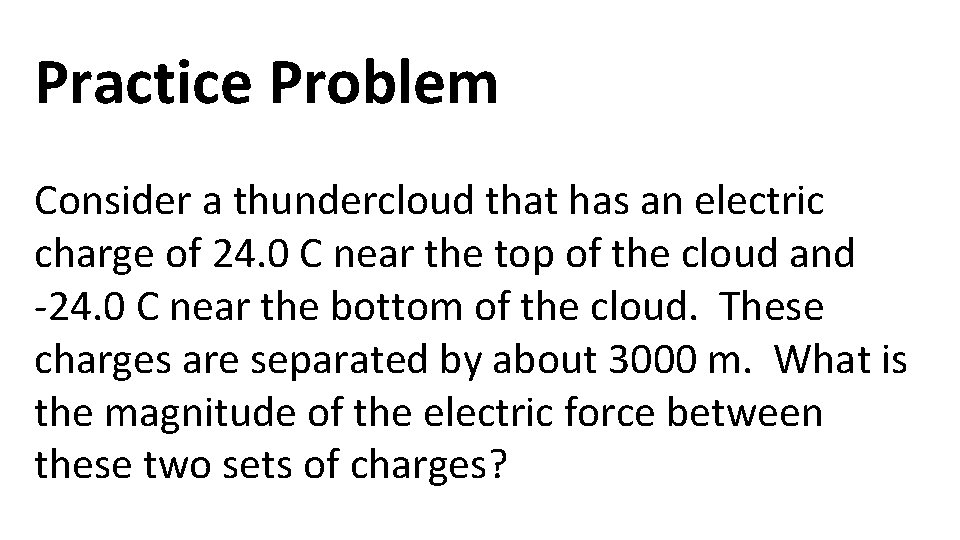
Practice Problem Consider a thundercloud that has an electric charge of 24. 0 C near the top of the cloud and -24. 0 C near the bottom of the cloud. These charges are separated by about 3000 m. What is the magnitude of the electric force between these two sets of charges?
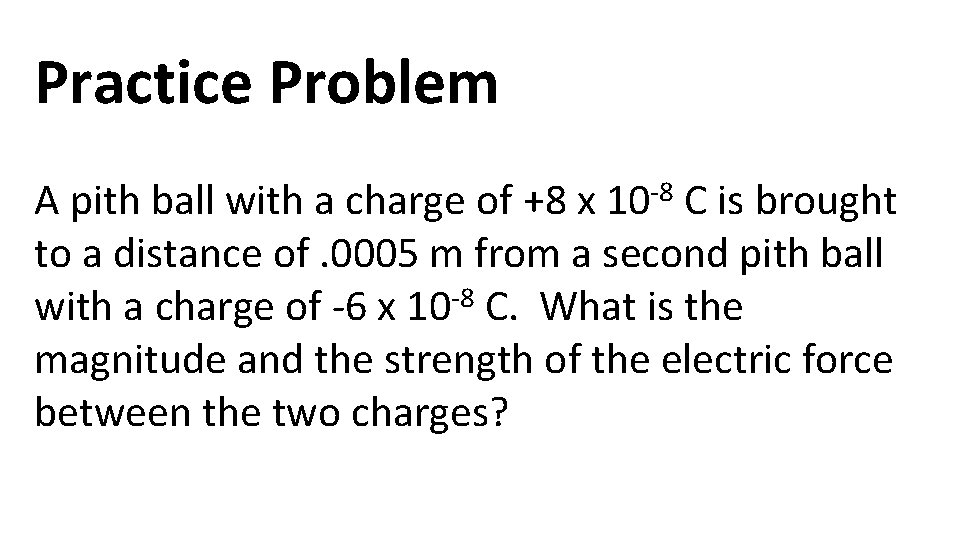
Practice Problem A pith ball with a charge of +8 x 10 -8 C is brought to a distance of. 0005 m from a second pith ball with a charge of -6 x 10 -8 C. What is the magnitude and the strength of the electric force between the two charges?