
Electrostatics 30 Nov20 Objective To understand how electrostatic
Electrostatics 30 -Nov-20 Objective To understand how electrostatic charges occur.
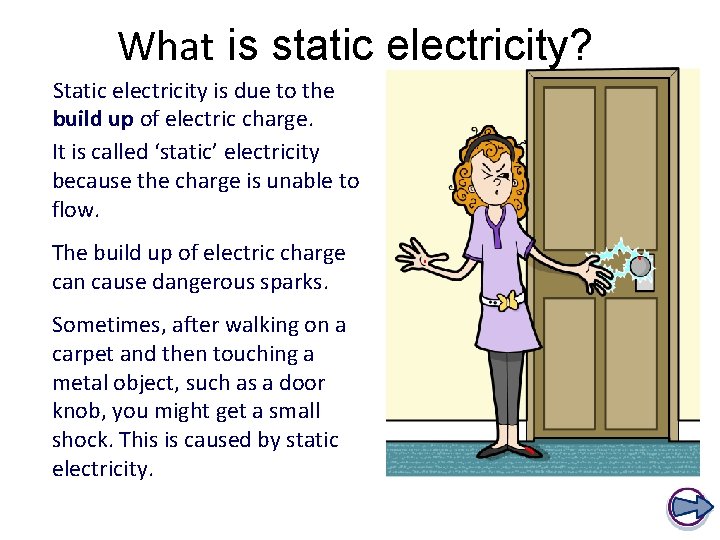
What is static electricity? Static electricity is due to the build up of electric charge. It is called ‘static’ electricity because the charge is unable to flow. The build up of electric charge can cause dangerous sparks. Sometimes, after walking on a carpet and then touching a metal object, such as a door knob, you might get a small shock. This is caused by static electricity.
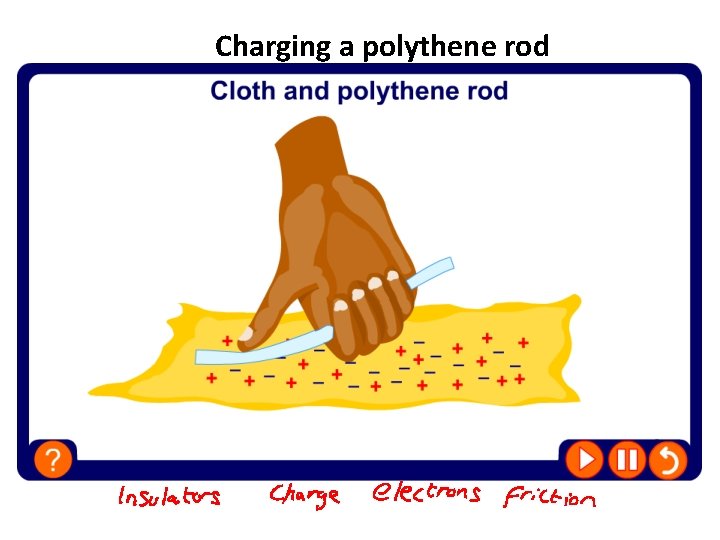
Charging a polythene rod
There are 2 types of electrical charge, positive and ………. . Like charges repel and unlike charges ………. . . Eg. If we rub some electrons off the surface of a balloon it will become …………. . charged. If we then hold it near to a wall, the ……… charges in the wall are attracted to the balloon and it sticks to the wall. Electrostatic charges are caused by the movement of. . .
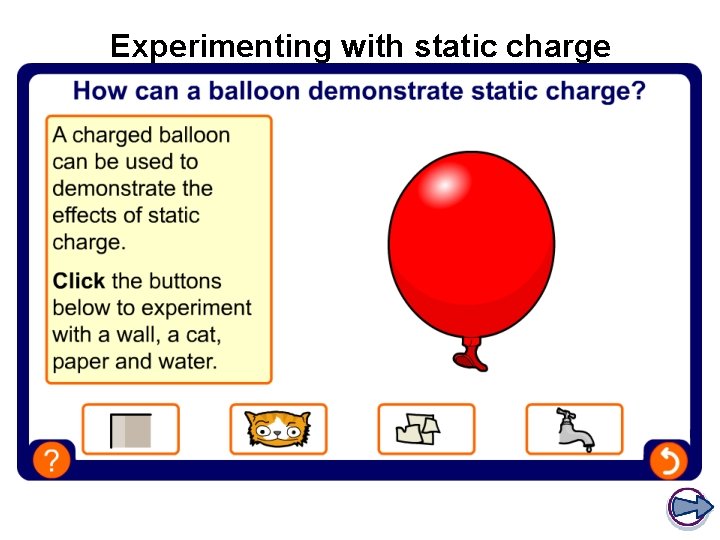
Experimenting with static charge
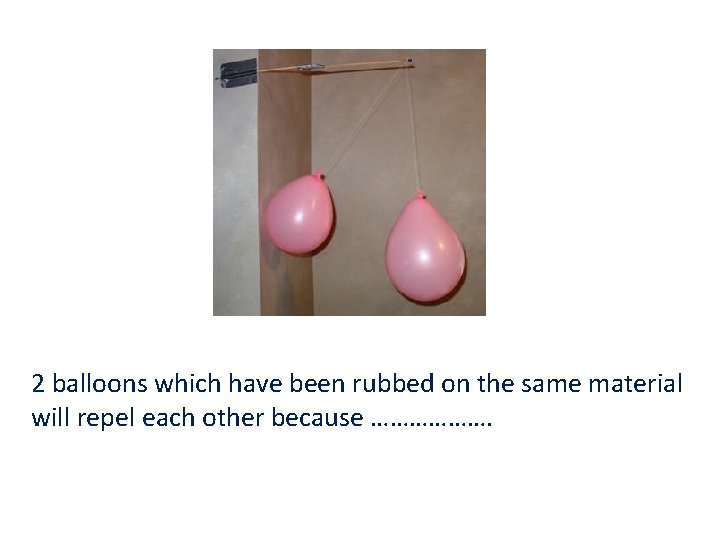
2 balloons which have been rubbed on the same material will repel each other because ……………….
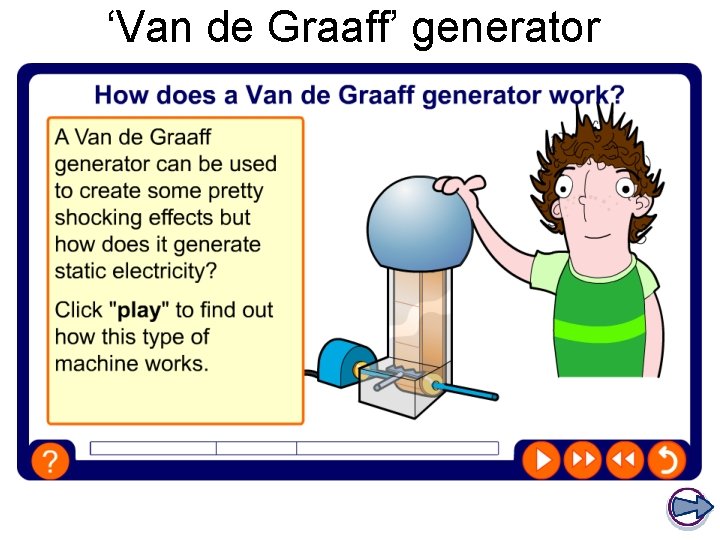
‘Van de Graaff’ generator
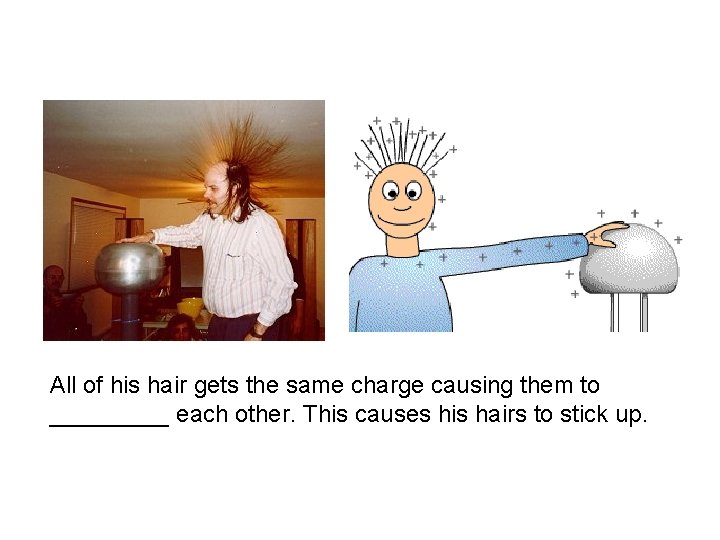
All of his hair gets the same charge causing them to _____ each other. This causes his hairs to stick up.
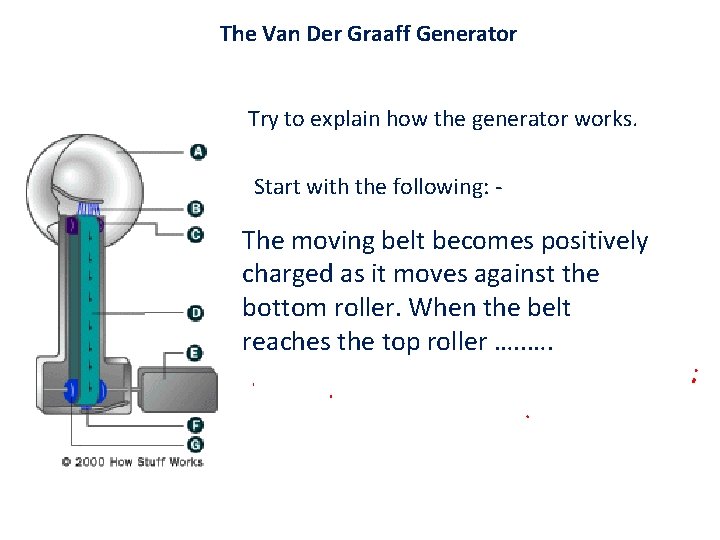
The Van Der Graaff Generator Try to explain how the generator works. Start with the following: - The moving belt becomes positively charged as it moves against the bottom roller. When the belt reaches the top roller ….
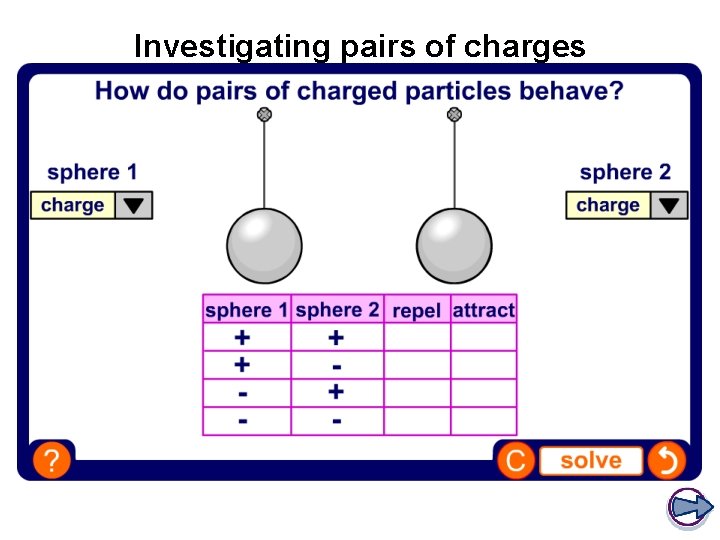
Investigating pairs of charges
Electrostatics 2 30 -Nov-20 Objective To understand how electrostatic charges can be nuisances and dangerous.
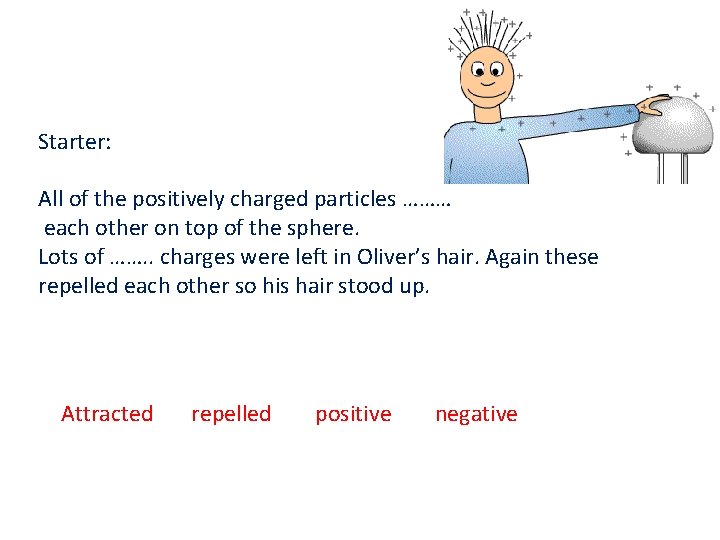
Starter: All of the positively charged particles ……… each other on top of the sphere. Lots of ……. . charges were left in Oliver’s hair. Again these repelled each other so his hair stood up. Attracted repelled positive negative
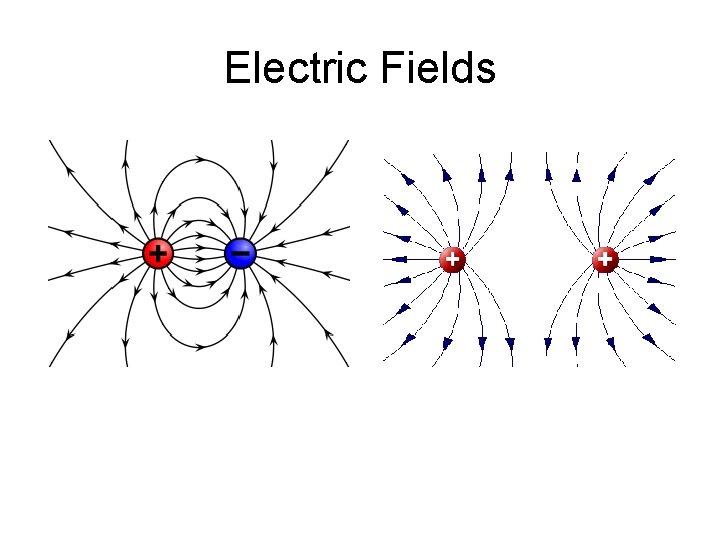
Electric Fields
How static charges can be a nuisance or dangerous Static charges can be a nuisance. For example: 1: Attracting Dust 2: Clothing clings 3: Shocks from door handles
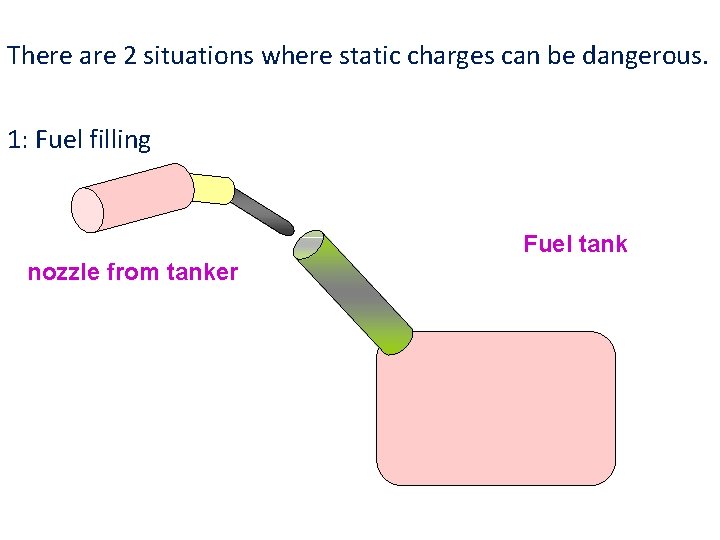
There are 2 situations where static charges can be dangerous. 1: Fuel filling Fuel tank nozzle from tanker
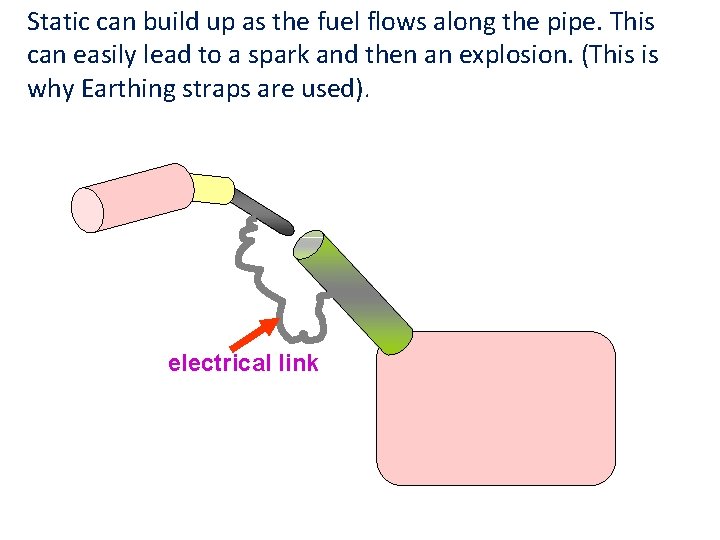
Static can build up as the fuel flows along the pipe. This can easily lead to a spark and then an explosion. (This is why Earthing straps are used). electrical link
2: Moving flour or grain Similarly, the movement of flour or grain can result in an explosive build up of charge.
Sparks The electric field causes the surrounding air to become separated into positive ions and electrons -- the air is ionized. Keep in mind that the ionization does not mean that there is more negative charge (electrons) or more positive charge (positive atomic nuclei / positive ions) than before. This ionisation only means that the electrons and positive ions are further apart than they were in their original molecular or atomic structure.
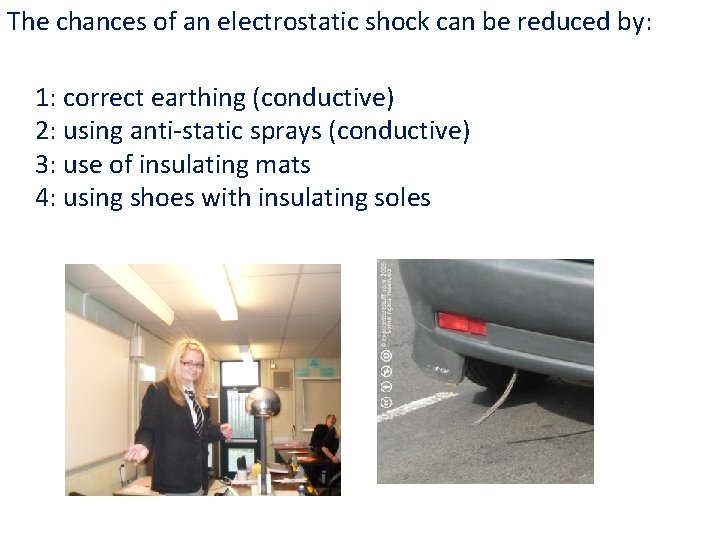
The chances of an electrostatic shock can be reduced by: 1: correct earthing (conductive) 2: using anti-static sprays (conductive) 3: use of insulating mats 4: using shoes with insulating soles
Uses of Static Electricity 30 -Nov-20 • To be able to describe some of the uses of static electricity
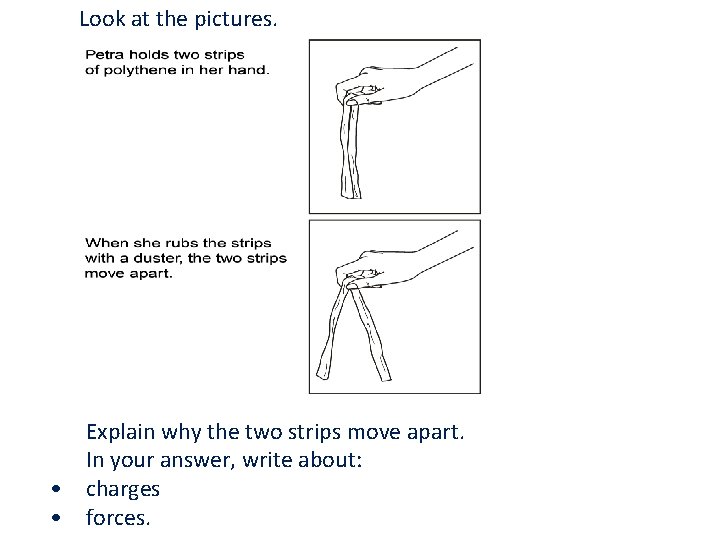
Look at the pictures. • • Explain why the two strips move apart. In your answer, write about: charges forces.

Uses of static electricity Static electricity can be dangerous but it can also be useful, as long as it is used carefully. Examples of uses of static electricity are: Photocopiers and printers 1. __________ Spray painting 2. __________ Pollutant removers 3. __________ Defibrillators 4. __________
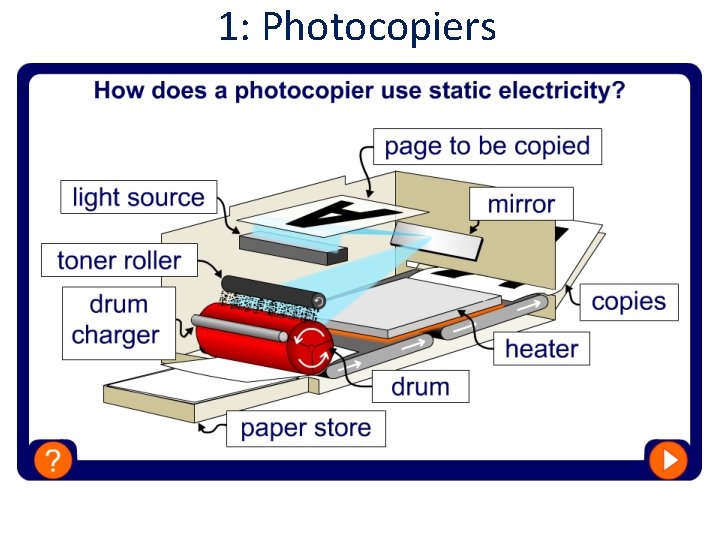
1: Photocopiers
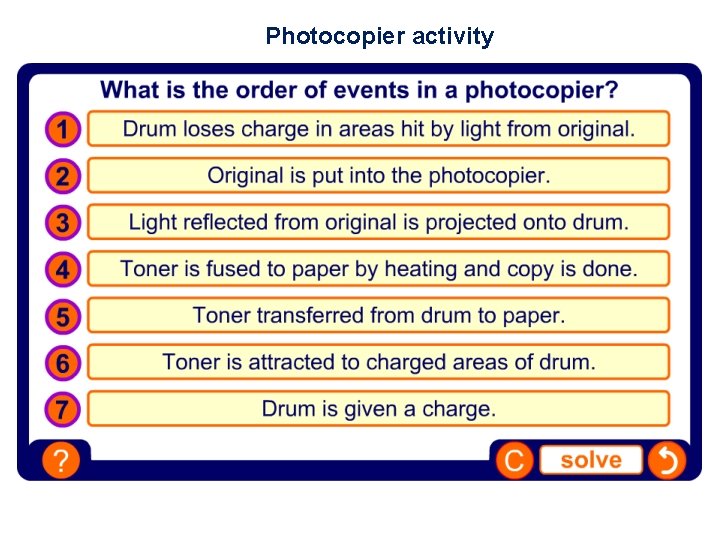
Photocopier activity
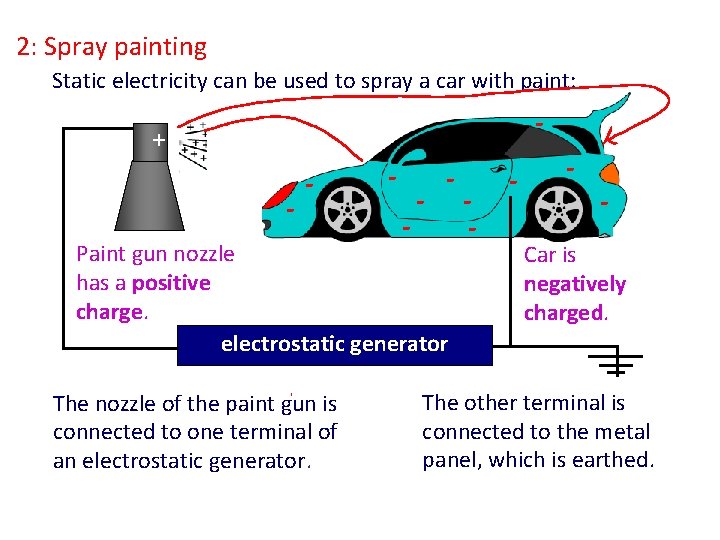
2: Spray painting Static electricity can be used to spray a car with paint: - + - - - - - Paint gun nozzle has a positive charge. electrostatic generator The nozzle of the paint gun is connected to one terminal of an electrostatic generator. - - Car is negatively charged. The other terminal is connected to the metal panel, which is earthed.
Spray Painting Advantages: 1. Wastes less paint 2. Even distribution - Repulsion 3. Lack of paint shadows
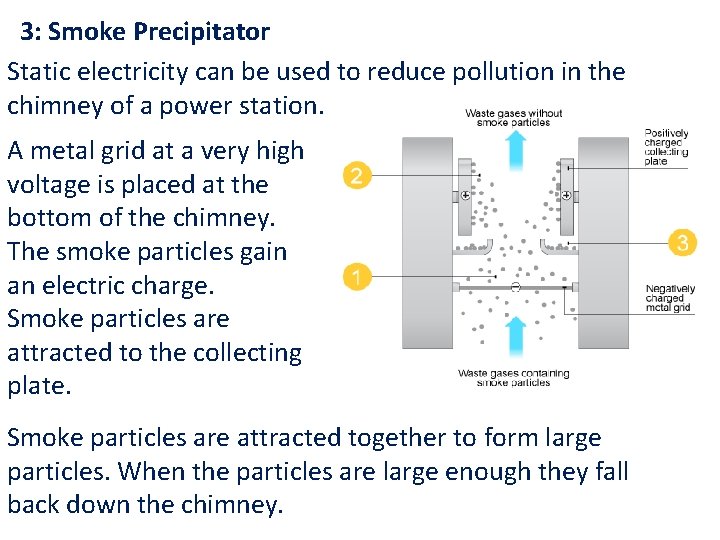
3: Smoke Precipitator Static electricity can be used to reduce pollution in the chimney of a power station. A metal grid at a very high voltage is placed at the bottom of the chimney. The smoke particles gain an electric charge. Smoke particles are attracted to the collecting plate. Smoke particles are attracted together to form large particles. When the particles are large enough they fall back down the chimney.
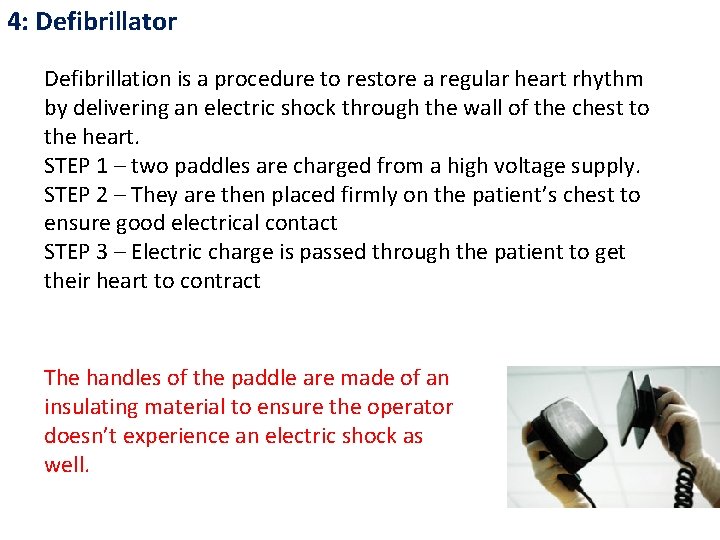
4: Defibrillator Defibrillation is a procedure to restore a regular heart rhythm by delivering an electric shock through the wall of the chest to the heart. STEP 1 – two paddles are charged from a high voltage supply. STEP 2 – They are then placed firmly on the patient’s chest to ensure good electrical contact STEP 3 – Electric charge is passed through the patient to get their heart to contract The handles of the paddle are made of an insulating material to ensure the operator doesn’t experience an electric shock as well.
Uses of electrostatics 1 Ian is a doctor and uses a defibrillator to restart a patient’s heart when it has stopped. (a)Describe how this is done. (b) What safety precautions need to be taken when using a defibrillator? 2 Large car companies use electrostatics to paint cars. They charge the spray gun and the car body. (a)Why do they charge the spray gun? (b) Why do they charge the car? (c) What is the advantage of using this method of painting? 3 Electrostatics has many uses. Write down two.
Charge, Current and Time Objectives • To know the formula relating these three variables. • To be able to apply the formula to simple and complex problems.
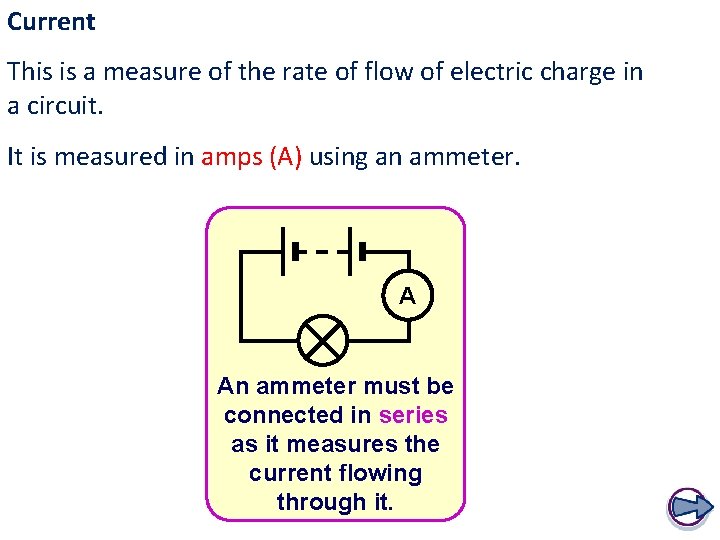
Current This is a measure of the rate of flow of electric charge in a circuit. It is measured in amps (A) using an ammeter. A An ammeter must be connected in series as it measures the current flowing through it.
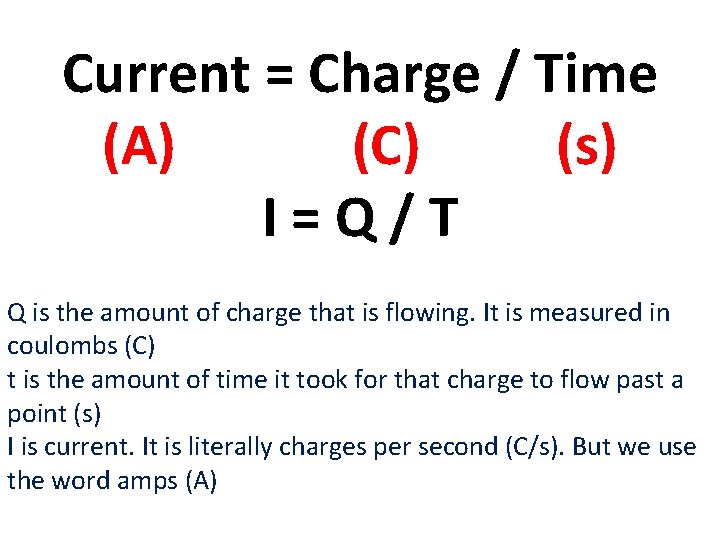
Current = Charge / Time (A) (C) (s) I=Q/T Q is the amount of charge that is flowing. It is measured in coulombs (C) t is the amount of time it took for that charge to flow past a point (s) I is current. It is literally charges per second (C/s). But we use the word amps (A)
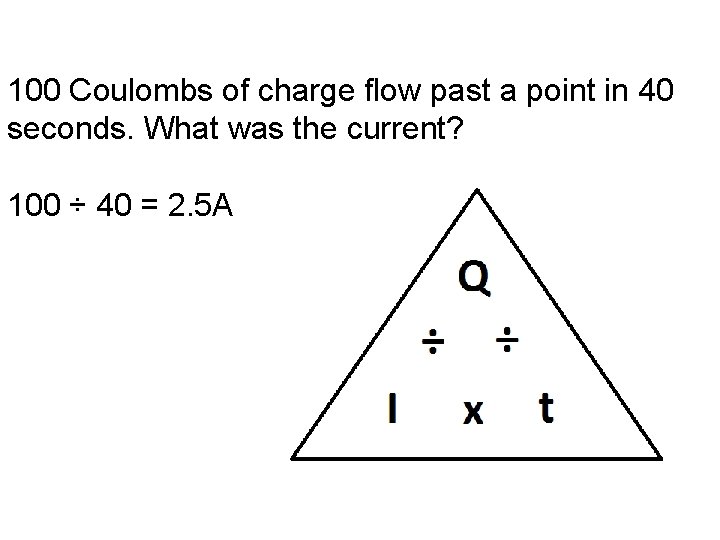
100 Coulombs of charge flow past a point in 40 seconds. What was the current? 100 ÷ 40 = 2. 5 A
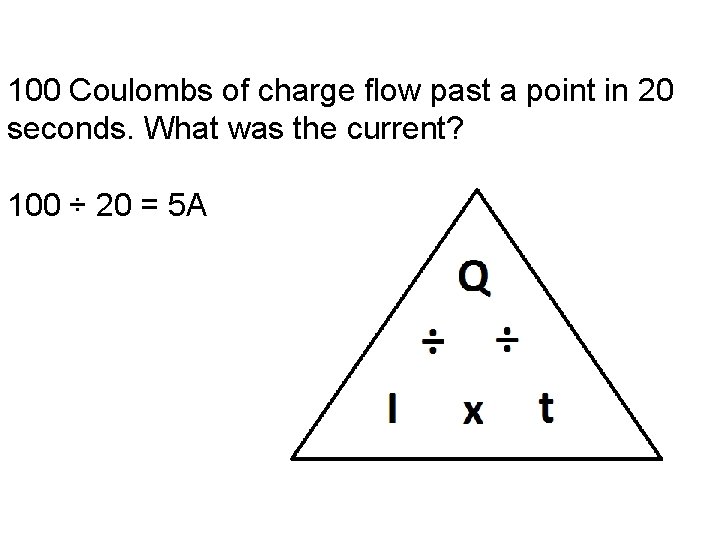
100 Coulombs of charge flow past a point in 20 seconds. What was the current? 100 ÷ 20 = 5 A
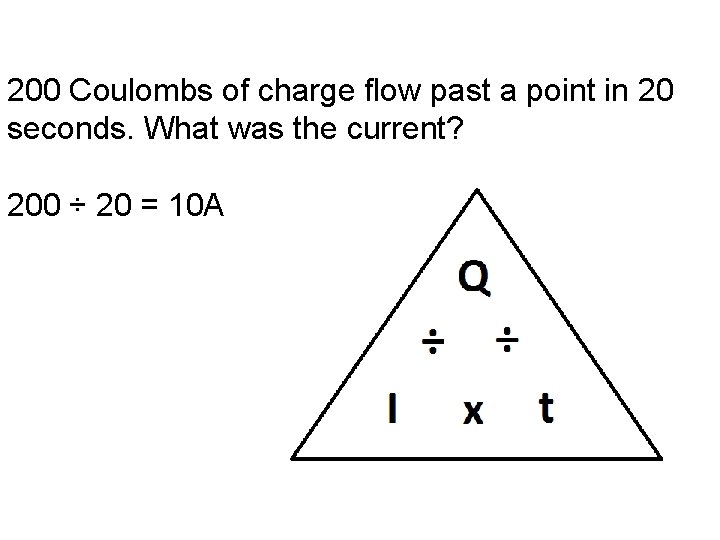
200 Coulombs of charge flow past a point in 20 seconds. What was the current? 200 ÷ 20 = 10 A
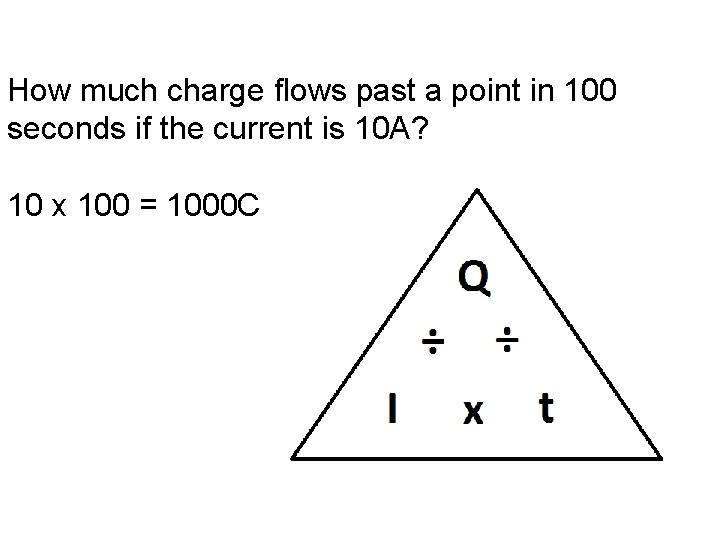
How much charge flows past a point in 100 seconds if the current is 10 A? 10 x 100 = 1000 C
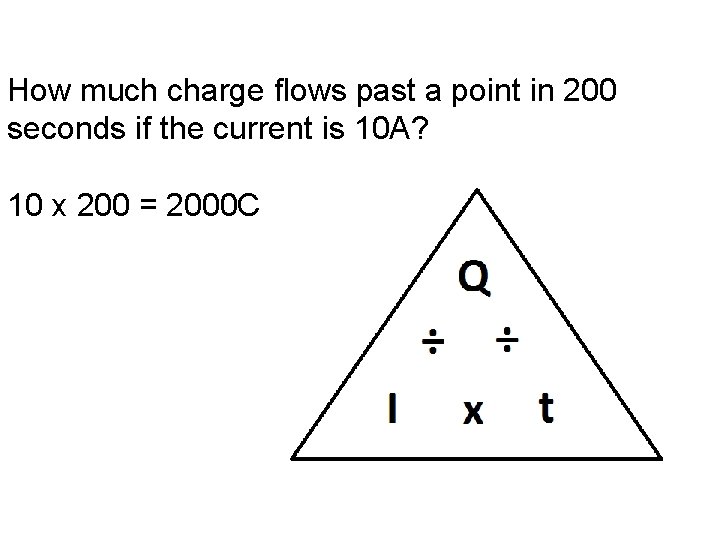
How much charge flows past a point in 200 seconds if the current is 10 A? 10 x 200 = 2000 C
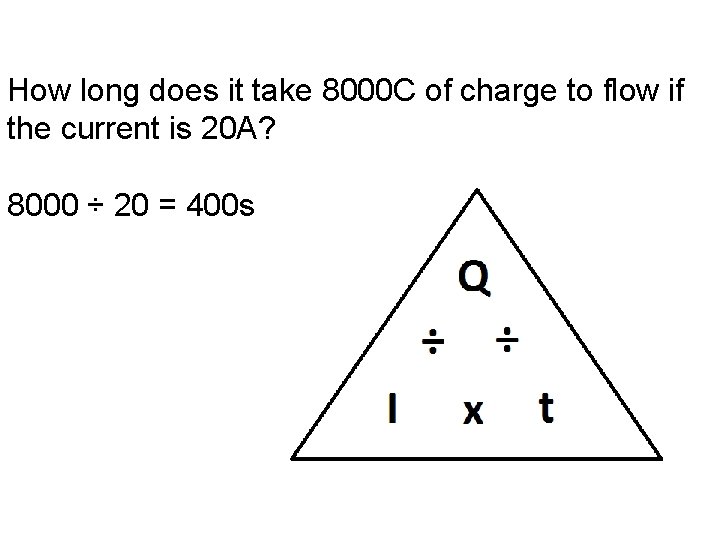
How long does it take 8000 C of charge to flow if the current is 20 A? 8000 ÷ 20 = 400 s
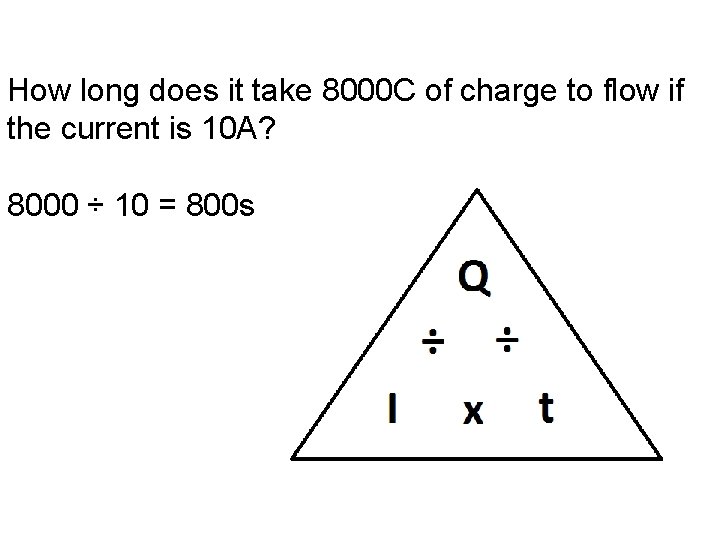
How long does it take 8000 C of charge to flow if the current is 10 A? 8000 ÷ 10 = 800 s
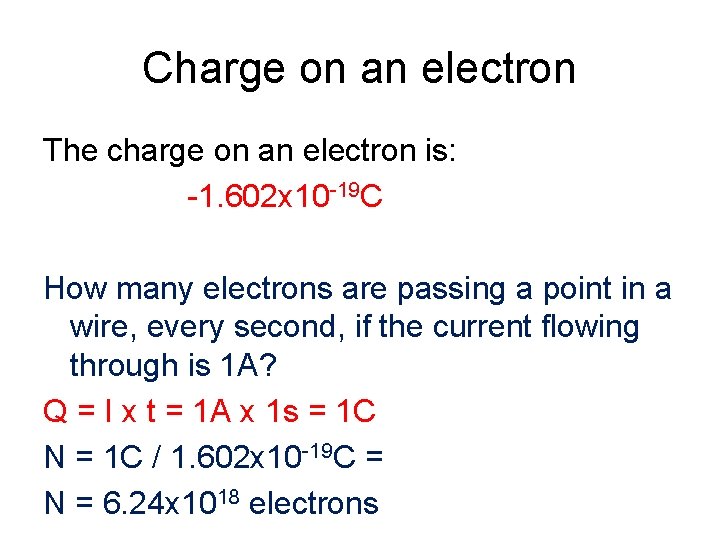
Charge on an electron The charge on an electron is: -1. 602 x 10 -19 C How many electrons are passing a point in a wire, every second, if the current flowing through is 1 A? Q = I x t = 1 A x 1 s = 1 C N = 1 C / 1. 602 x 10 -19 C = N = 6. 24 x 1018 electrons
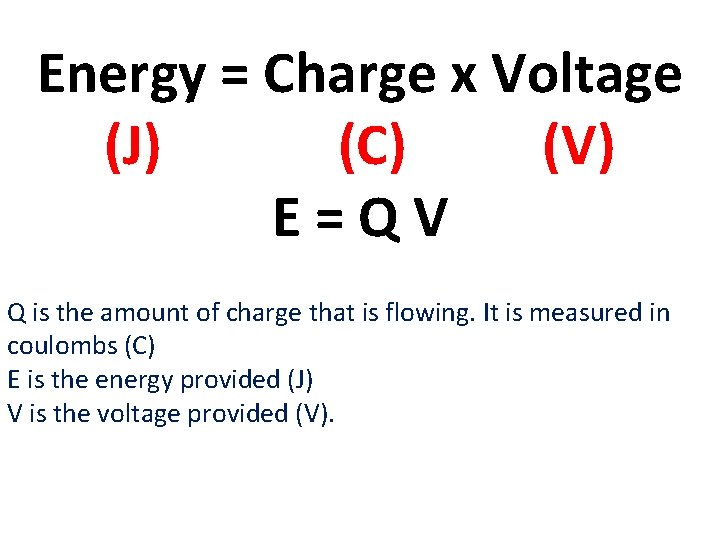
Energy = Charge x Voltage (J) (C) (V) E=QV Q is the amount of charge that is flowing. It is measured in coulombs (C) E is the energy provided (J) V is the voltage provided (V).
- Slides: 41