
Electrophotographic Cascade Development Test Rig Detailed Design Review





- Slides: 53
Electrophotographic Cascade Development Test Rig Detailed Design Review November 18 th, 2014 Dalton Mead Michael Warren Thomas Wossner Bridget Kearney Ruishi Shen Zachary Foggetti
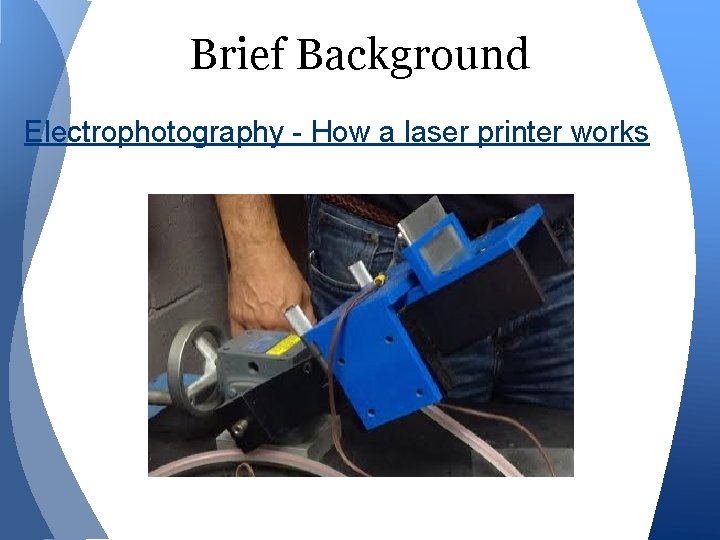
Brief Background Electrophotography - How a laser printer works
What are we looking for today? ● Discuss any risks we may not have thought about ● Thoughts from new points of view ● Initial reaction on the viability of what we are proposing
Outline ● Process Flow Diagram ● Designs for Each Subsystem: ● Hopper ● Transfer Surface ● Development Zone ● Angle Adjustment System ● Recirculation System ● Lab. VIEW Program Outline ● Flow Down Diagrams ● Budget Considerations ● Project Plan ● What We’ve Learned
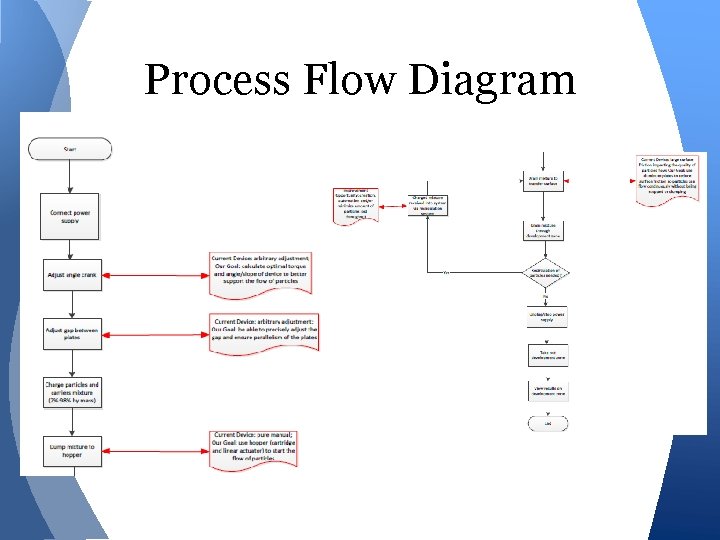
Process Flow Diagram
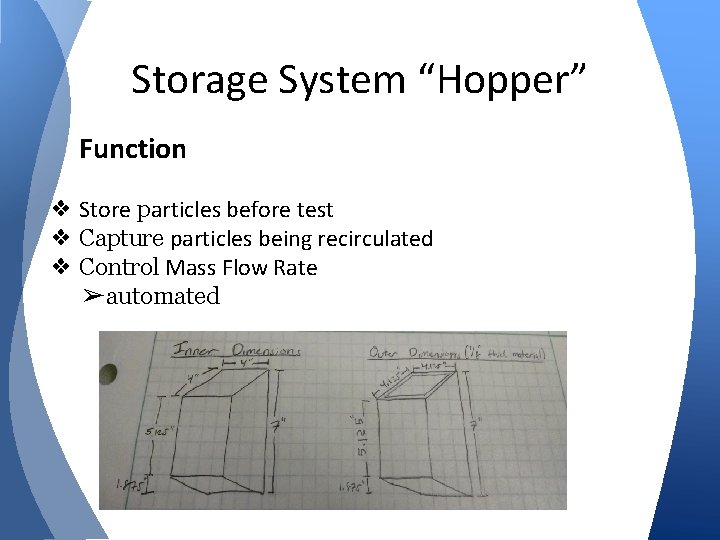
Storage System “Hopper” Function ❖ Store particles before test ❖ Capture particles being recirculated ❖ Control Mass Flow Rate ➢automated (replace below with assembly of hopper)
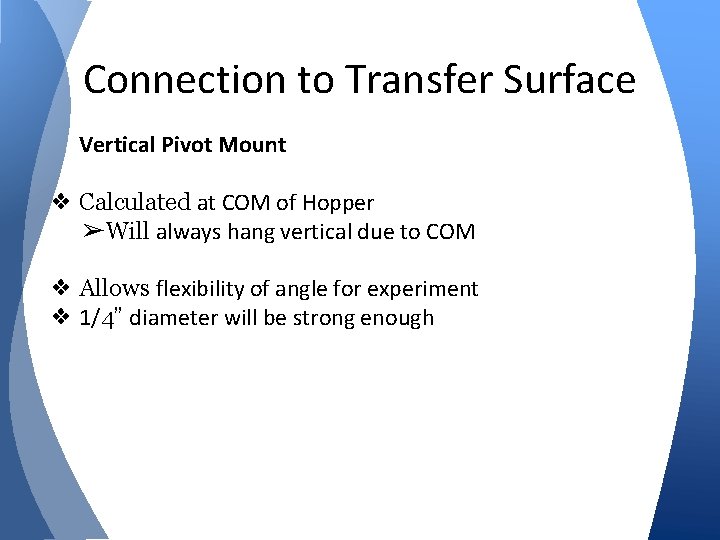
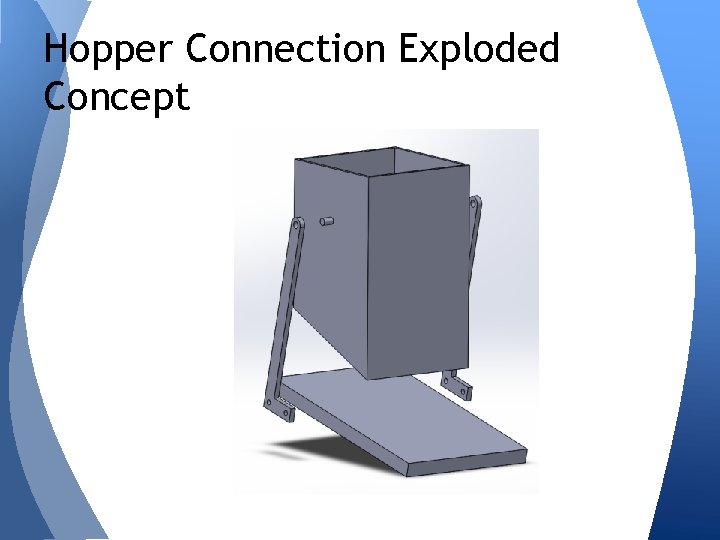
Connection to Transfer Surface Vertical Pivot Mount ❖ Calculated at COM of Hopper ➢Will always hang vertical due to COM ❖ Allows flexibility of angle for experiment ❖ 1/4” diameter will be strong enough
Hopper Connection Exploded Concept
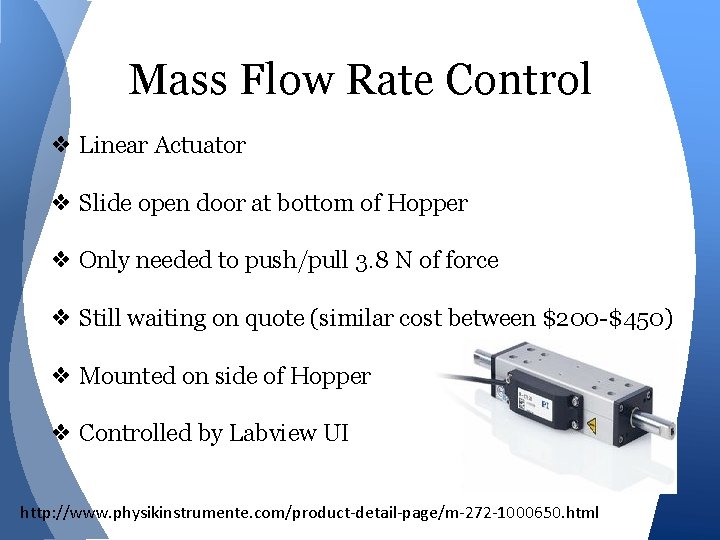
Mass Flow Rate Control ❖ Linear Actuator ❖ Slide open door at bottom of Hopper ❖ Only needed to push/pull 3. 8 N of force ❖ Still waiting on quote (similar cost between $200 -$450) ❖ Mounted on side of Hopper ❖ Controlled by Labview UI http: //www. physikinstrumente. com/product-detail-page/m-272 -1000650. html
Next Steps ❖ Work with Recirculation for correct transfer system ❖ Design Motor Mount System ❖ Finalize linear actuator choice ➢waiting on companies response
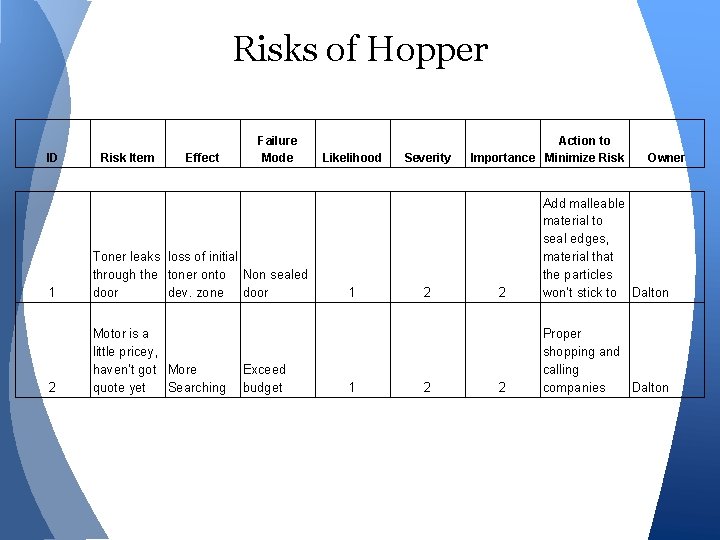
Risks of Hopper ID Risk Item Effect Failure Mode 1 Toner leaks loss of initial through the toner onto Non sealed door dev. zone door 2 Motor is a little pricey, haven’t got More quote yet Searching Exceed budget Likelihood 1 1 Severity 2 2 Action to Importance Minimize Risk Owner 2 Add malleable material to seal edges, material that the particles won’t stick to Dalton 2 Proper shopping and calling companies Dalton
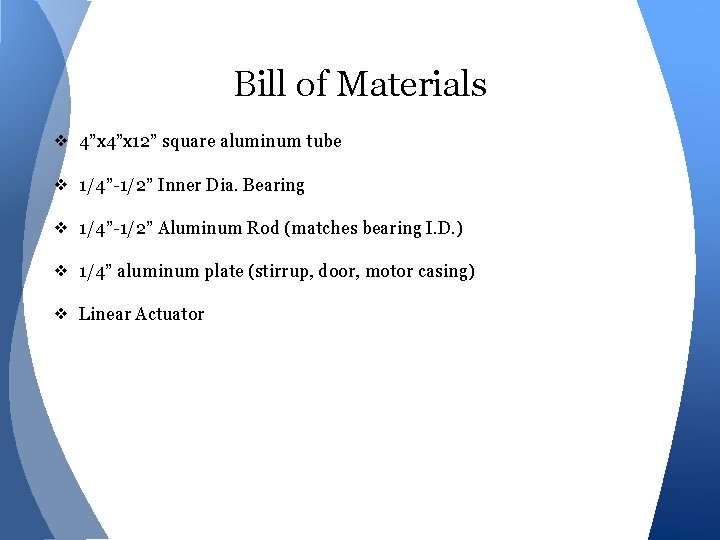
Bill of Materials ❖ 4”x 12” square aluminum tube ❖ 1/4”-1/2” Inner Dia. Bearing ❖ 1/4”-1/2” Aluminum Rod (matches bearing I. D. ) ❖ 1/4” aluminum plate (stirrup, door, motor casing) ❖ Linear Actuator
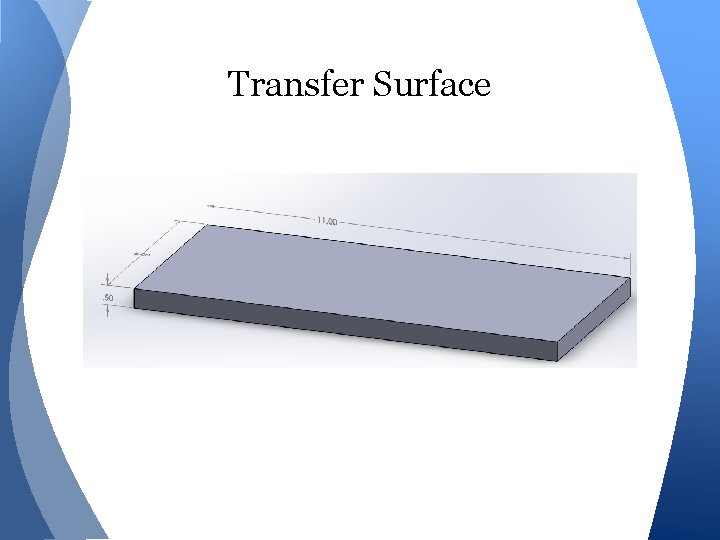
Transfer Surface
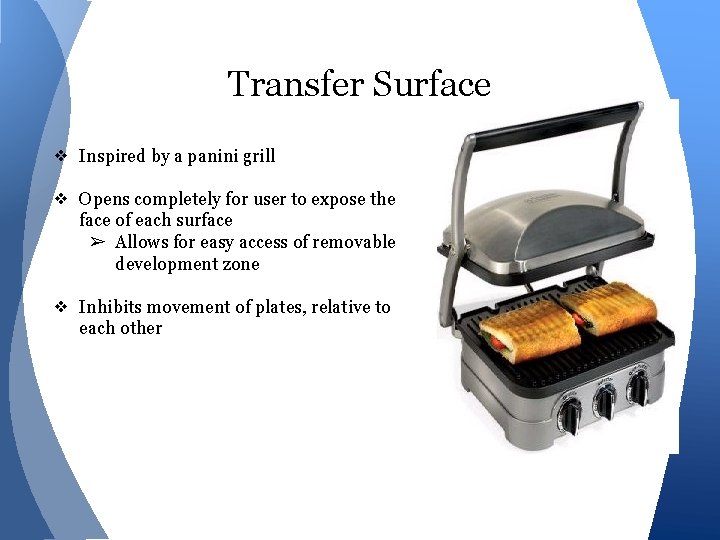
Transfer Surface ❖ Inspired by a panini grill ❖ Opens completely for user to expose the face of each surface ➢ Allows for easy access of removable development zone ❖ Inhibits movement of plates, relative to each other
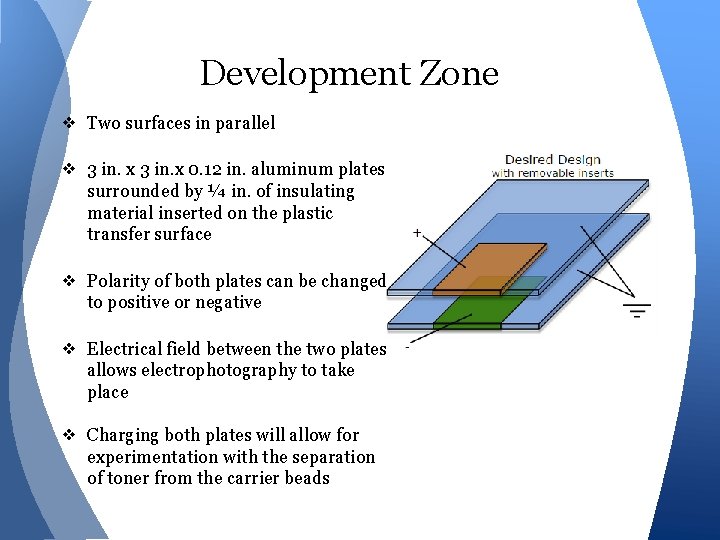
Development Zone ❖ Two surfaces in parallel ❖ 3 in. x 0. 12 in. aluminum plates surrounded by ¼ in. of insulating material inserted on the plastic transfer surface ❖ Polarity of both plates can be changed to positive or negative ❖ Electrical field between the two plates allows electrophotography to take place ❖ Charging both plates will allow for experimentation with the separation of toner from the carrier beads
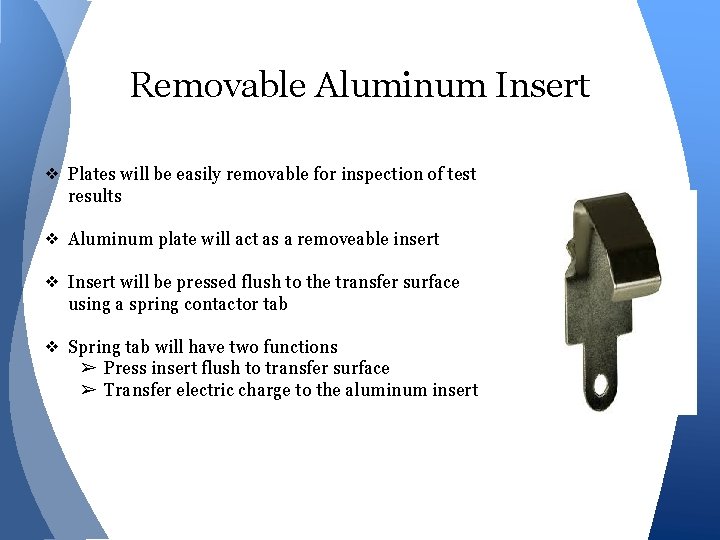
Removable Aluminum Insert ❖ Plates will be easily removable for inspection of test results ❖ Aluminum plate will act as a removeable insert ❖ Insert will be pressed flush to the transfer surface using a spring contactor tab ❖ Spring tab will have two functions ➢ Press insert flush to transfer surface ➢ Transfer electric charge to the aluminum insert
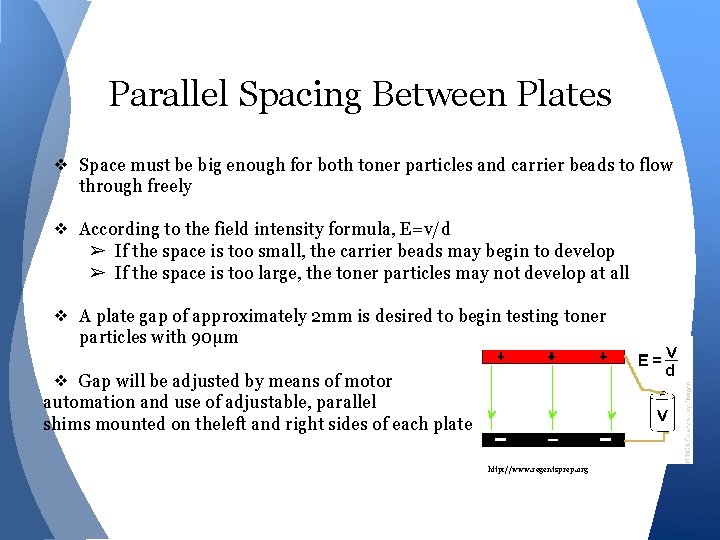
Parallel Spacing Between Plates ❖ Space must be big enough for both toner particles and carrier beads to flow through freely ❖ According to the field intensity formula, E=v/d ➢ If the space is too small, the carrier beads may begin to develop ➢ If the space is too large, the toner particles may not develop at all ❖ A plate gap of approximately 2 mm is desired to begin testing toner particles with 90μm ❖ Gap will be adjusted by means of motor automation and use of adjustable, parallel shims mounted on theleft and right sides of each plate http: //www. regentsprep. org
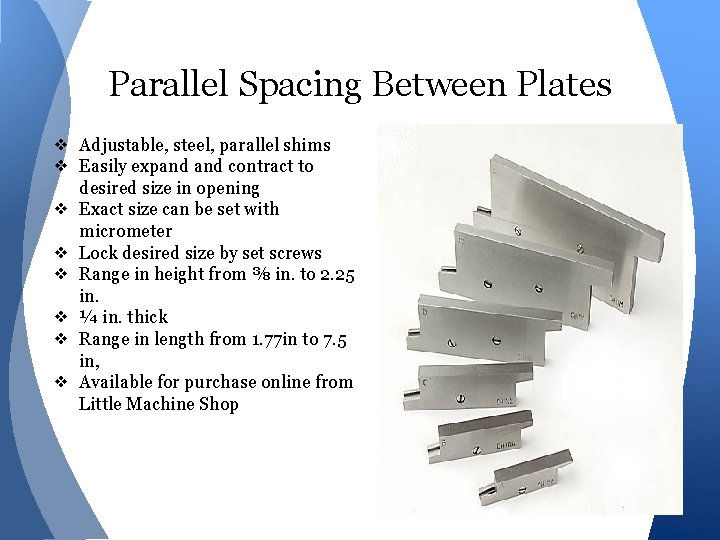
Parallel Spacing Between Plates ❖ Adjustable, steel, parallel shims ❖ Easily expand contract to desired size in opening ❖ Exact size can be set with micrometer ❖ Lock desired size by set screws ❖ Range in height from ⅜ in. to 2. 25 in. ❖ ¼ in. thick ❖ Range in length from 1. 77 in to 7. 5 in, ❖ Available for purchase online from Little Machine Shop
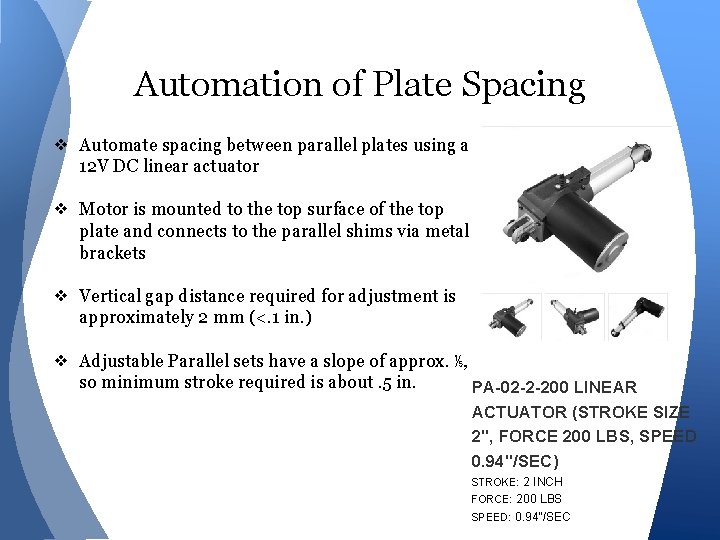
Automation of Plate Spacing ❖ Automate spacing between parallel plates using a 12 V DC linear actuator ❖ Motor is mounted to the top surface of the top plate and connects to the parallel shims via metal brackets ❖ Vertical gap distance required for adjustment is approximately 2 mm (<. 1 in. ) ❖ Adjustable Parallel sets have a slope of approx. ⅕, so minimum stroke required is about. 5 in. PA-02 -2 -200 LINEAR ACTUATOR (STROKE SIZE 2", FORCE 200 LBS, SPEED 0. 94"/SEC) STROKE: 2 INCH FORCE: 200 LBS SPEED: 0. 94"/SEC
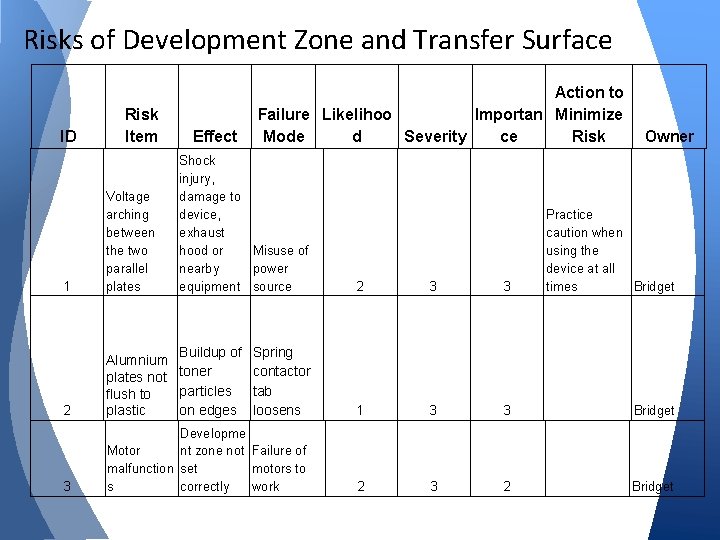
Risks of Development Zone and Transfer Surface ID Risk Item Effect Action to Failure Likelihoo Importan Minimize Mode d Severity ce Risk Shock injury, damage to device, exhaust hood or Misuse of power nearby equipment source 1 Voltage arching between the two parallel plates 2 Buildup of Alumnium plates not toner particles flush to on edges plastic 3 Developme Motor nt zone not Failure of malfunction set motors to s correctly work Spring contactor tab loosens Owner 2 3 3 Practice caution when using the device at all times Bridget 1 3 3 Bridget 2 3 2 Bridget
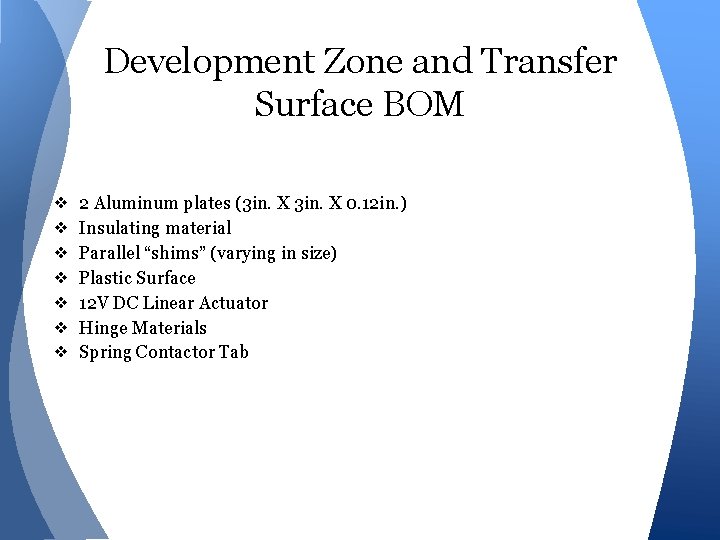
Development Zone and Transfer Surface BOM ❖ ❖ ❖ ❖ 2 Aluminum plates (3 in. X 0. 12 in. ) Insulating material Parallel “shims” (varying in size) Plastic Surface 12 V DC Linear Actuator Hinge Materials Spring Contactor Tab
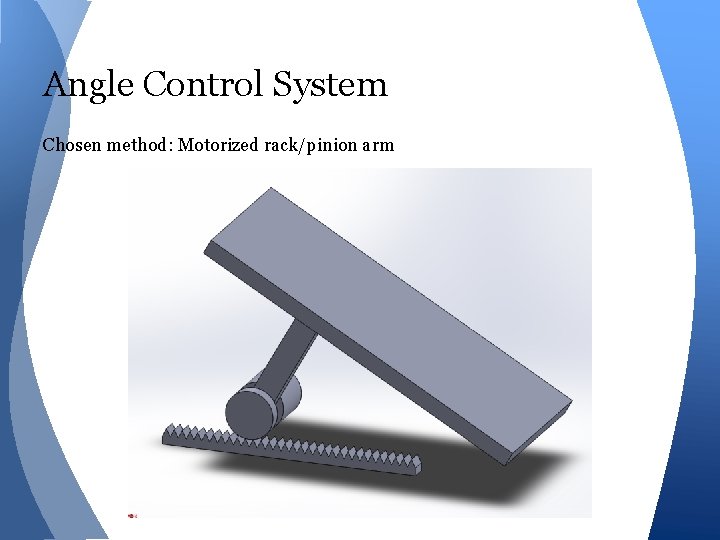
Angle Control System Chosen method: Motorized rack/pinion arm
Reasoning ❖ Rack rests on ground surface -- prevents slipping ❖ Low torque required to hold position ❖ Stepper motors inexpensive
Requirements ❖ Must be able to generate enough torque to hold position or raise transfer surface angle (est: 11 Nm for hold) ❖ Gear teeth must not slip ❖ Should minimize space necessary under transfer surface ❖ Lift arm must bear some load
Design Process
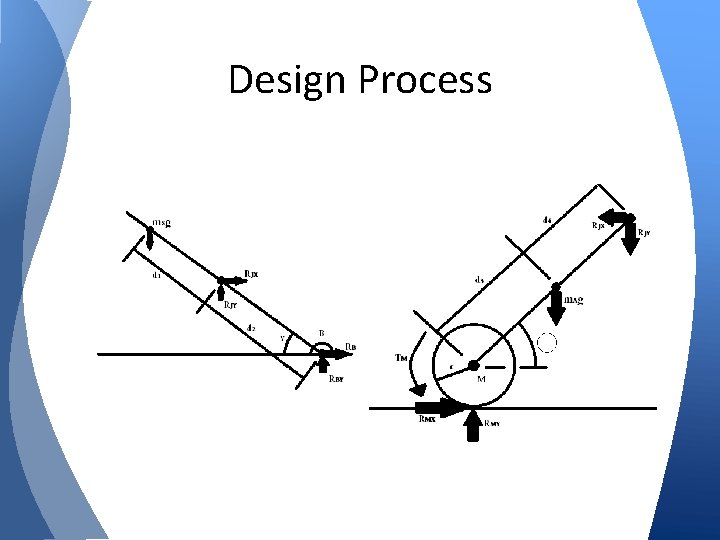
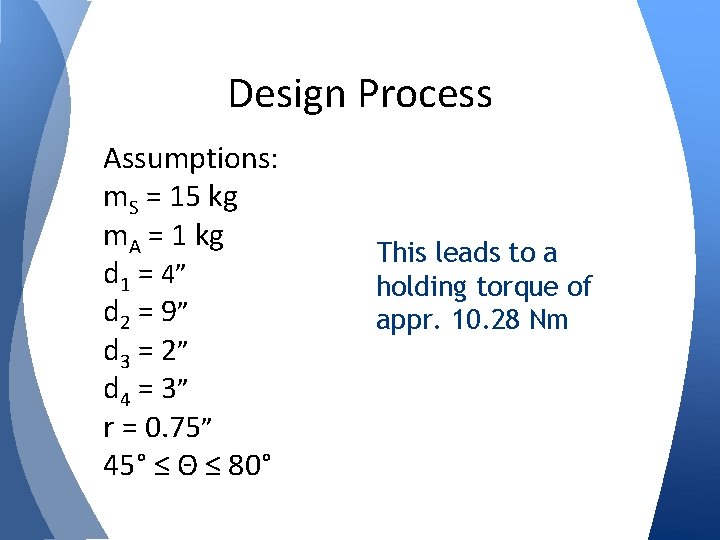
Design Process Assumptions: m. S = 15 kg m. A = 1 kg d 1 = 4” d 2 = 9 ” d 3 = 2 ” d 4 = 3 ” r = 0. 75” 45° ≤ Θ ≤ 80° This leads to a holding torque of appr. 10. 28 Nm
Feasibility Technical: - Motors with the required power exist - Motor heat should not be a problem Fabrication: - Motors with estimated torque are available - Simple rack/pinion setups are also available
Potential Part Solutions ❖ Motor: Kollmorgen KM series ❖ Rack/pinion gearing: Mc. Master-Carr ❖ Lift arm: machined aluminum (stock from Mc. Master-Carr)
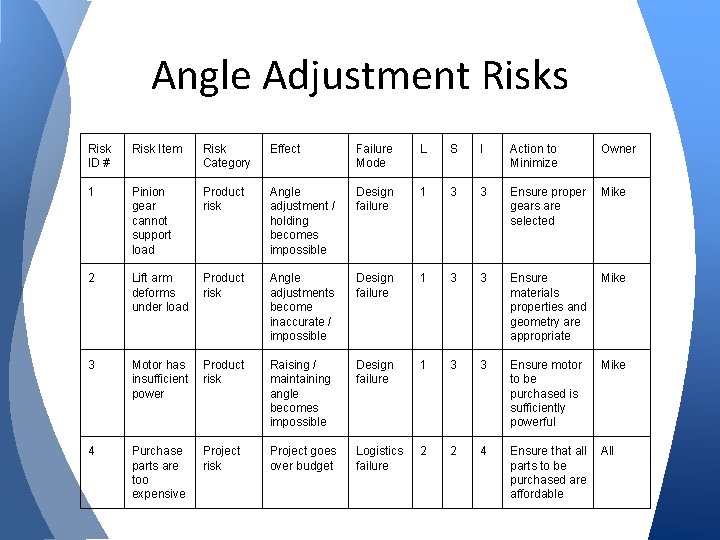
Angle Adjustment Risks Risk ID # Risk Item Risk Category Effect Failure Mode L S I Action to Minimize Owner 1 Pinion gear cannot support load Product risk Angle adjustment / holding becomes impossible Design failure 1 3 3 Ensure proper gears are selected Mike 2 Lift arm deforms under load Product risk Angle adjustments become inaccurate / impossible Design failure 1 3 3 Ensure materials properties and geometry are appropriate Mike 3 Motor has insufficient power Product risk Raising / maintaining angle becomes impossible Design failure 1 3 3 Ensure motor to be purchased is sufficiently powerful Mike 4 Purchase parts are too expensive Project risk Project goes over budget Logistics failure 2 2 4 Ensure that all parts to be purchased are affordable All
Angle Adjustment - Next Steps ❖ Determine prices for potential purchase parts ❖ Determine mass properties of design’s components ❖ Determine motor torque required
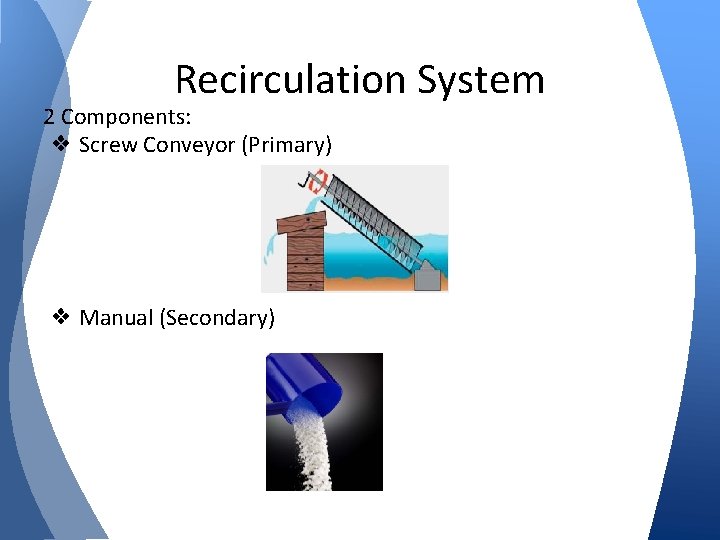
Recirculation System 2 Components: ❖ Screw Conveyor (Primary) ❖ Manual (Secondary)
Why Both Systems? ❖Screw system is a lofty goal ❖Manual system provides reliable backup ❖At very steep angles (>70 degrees), screw becomes unreliable
Needs Screw Conveyor: -Needs to move 1. 3 L/min of toner at a 70 degree slope -Must not strip particles of charge → must be insulative -Must not be so large that it interferes with testing Manual System (Bucket): -Must maximize the run time before recirculation is required (>1 min) -Must not strip particles of charge → must be insulative -Must not be so large that it interferes with testing -Must prevent particle overflow
Well that sounds nice, but this screw thing is hard to visualize. . . http: //www. youtube. com/watch? v=_OZv 2 kf_SCs (1: 43)
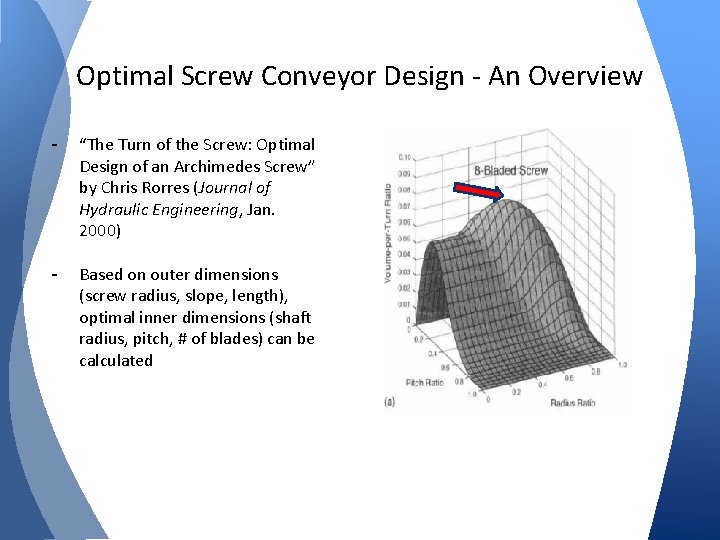
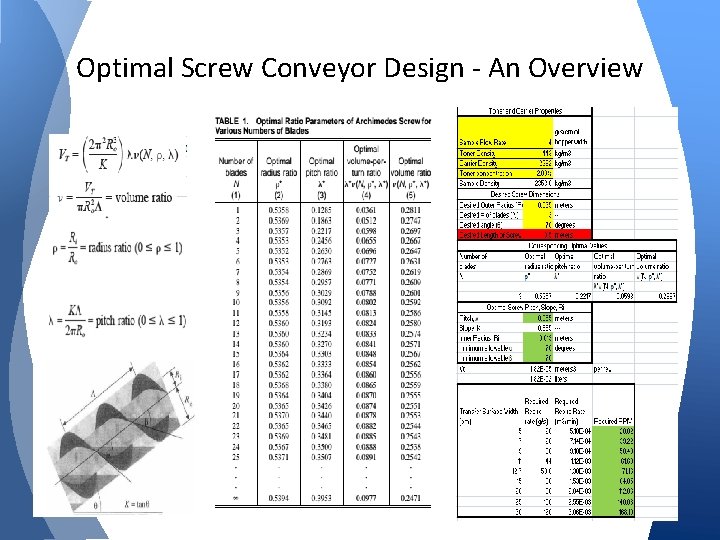
Optimal Screw Conveyor Design - An Overview - “The Turn of the Screw: Optimal Design of an Archimedes Screw” by Chris Rorres (Journal of Hydraulic Engineering, Jan. 2000) - Based on outer dimensions (screw radius, slope, length), optimal inner dimensions (shaft radius, pitch, # of blades) can be calculated
Optimal Screw Conveyor Design - An Overview
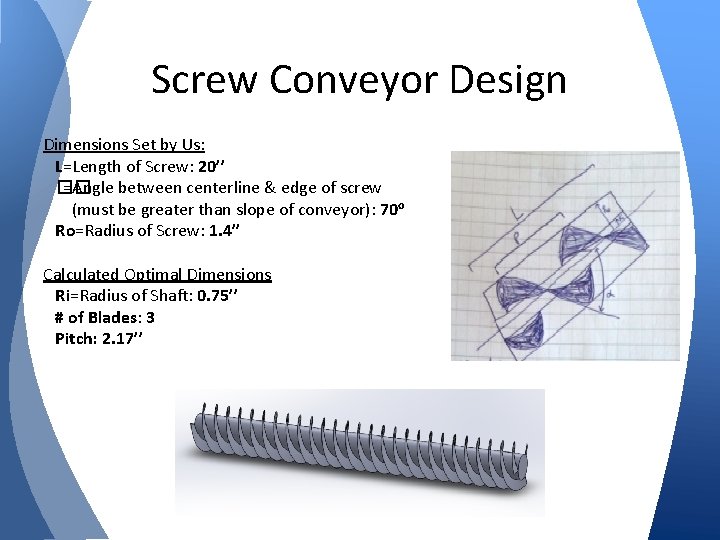
Screw Conveyor Design Dimensions Set by Us: L=Length of Screw: 20’’ �� =Angle between centerline & edge of screw (must be greater than slope of conveyor): 70 o Ro=Radius of Screw: 1. 4’’ Calculated Optimal Dimensions Ri=Radius of Shaft: 0. 75’’ # of Blades: 3 Pitch: 2. 17’’
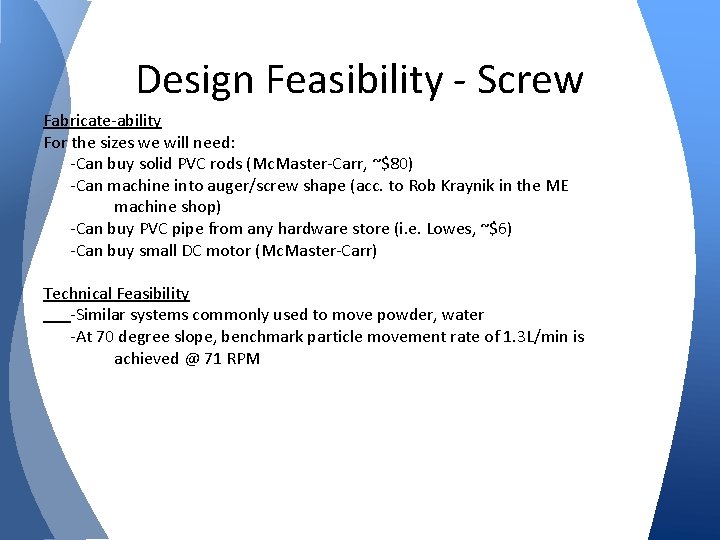
Design Feasibility - Screw Fabricate-ability For the sizes we will need: -Can buy solid PVC rods (Mc. Master-Carr, ~$80) -Can machine into auger/screw shape (acc. to Rob Kraynik in the ME machine shop) -Can buy PVC pipe from any hardware store (i. e. Lowes, ~$6) -Can buy small DC motor (Mc. Master-Carr) Technical Feasibility -Similar systems commonly used to move powder, water -At 70 degree slope, benchmark particle movement rate of 1. 3 L/min is achieved @ 71 RPM
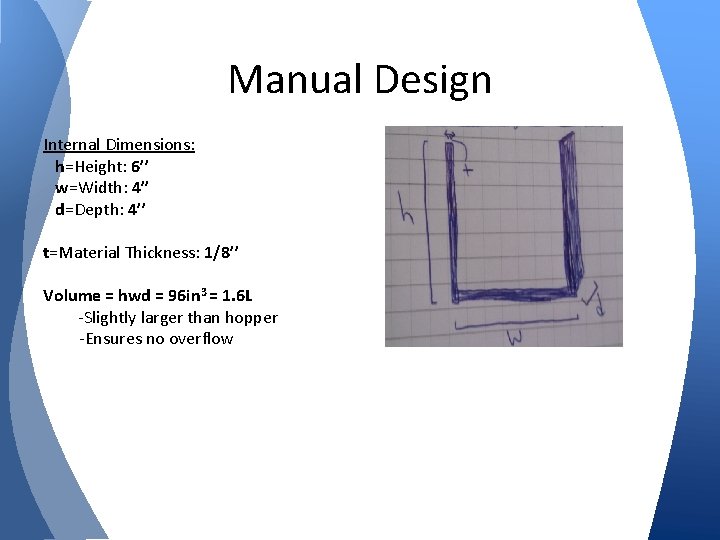
Manual Design Internal Dimensions: h=Height: 6’’ w=Width: 4’’ d=Depth: 4’’ t=Material Thickness: 1/8’’ Volume = hwd = 96 in 3 = 1. 6 L -Slightly larger than hopper -Ensures no overflow
Design Feasibility - Bucket Fabricate-ability -It’s a bucket, so not difficult Technical Feasibility -Volume of 1. 6 L is slightly larger than hopper, preventing overflow -At benchmark flow rate of 1. 3 L/min, recirculation interval is ~1 min 20 sec
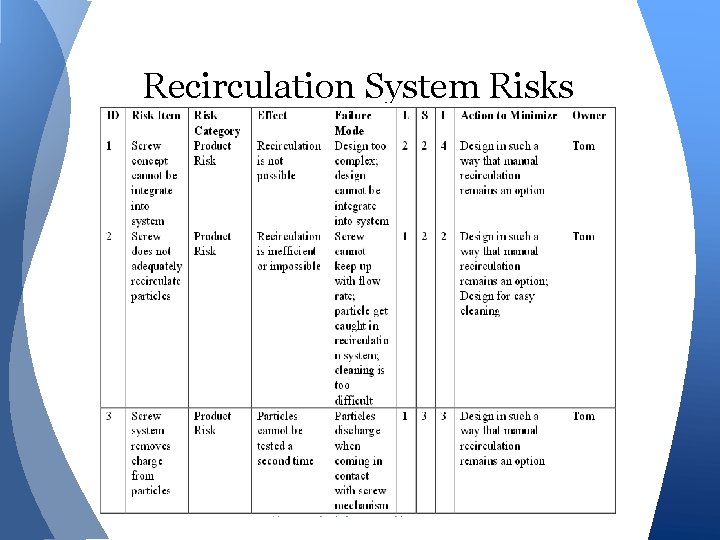
Recirculation System Risks
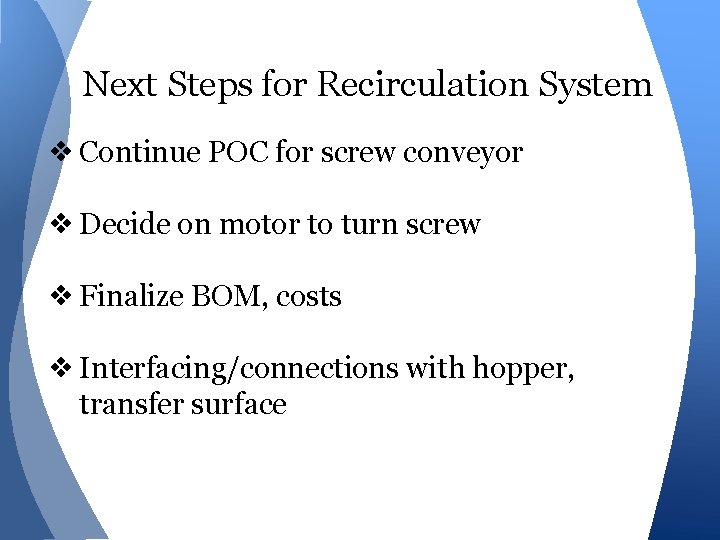
Next Steps for Recirculation System ❖ Continue POC for screw conveyor ❖ Decide on motor to turn screw ❖ Finalize BOM, costs ❖ Interfacing/connections with hopper, transfer surface
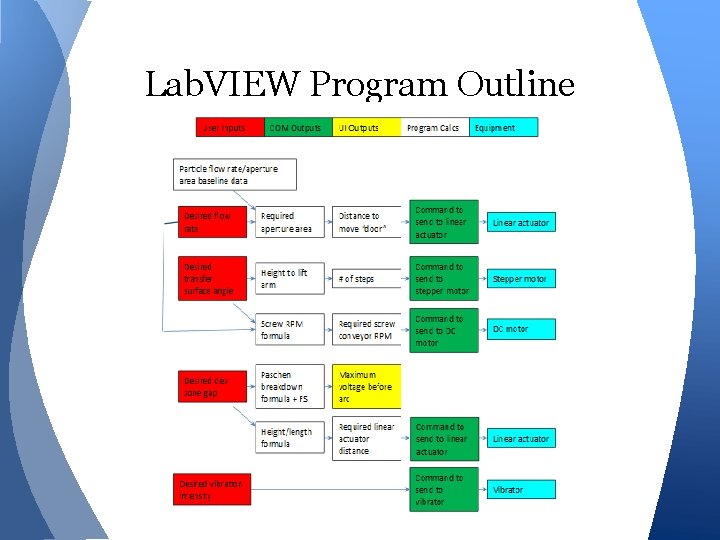
Lab. VIEW Program Outline
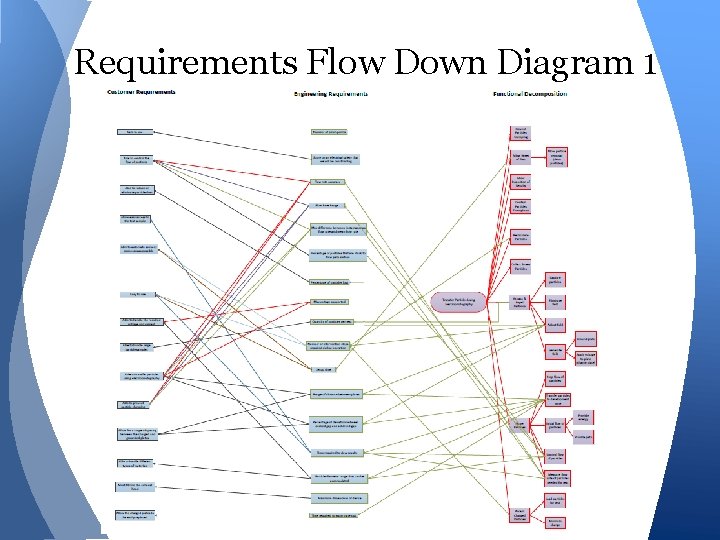
Requirements Flow Down Diagram 1
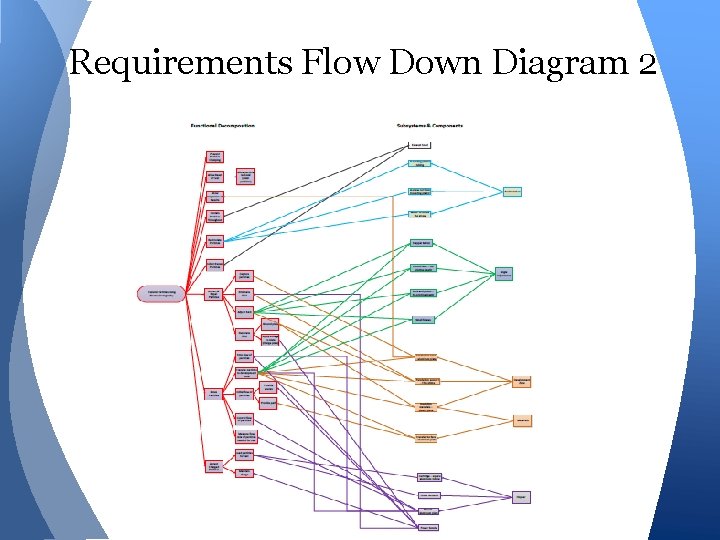
Requirements Flow Down Diagram 2
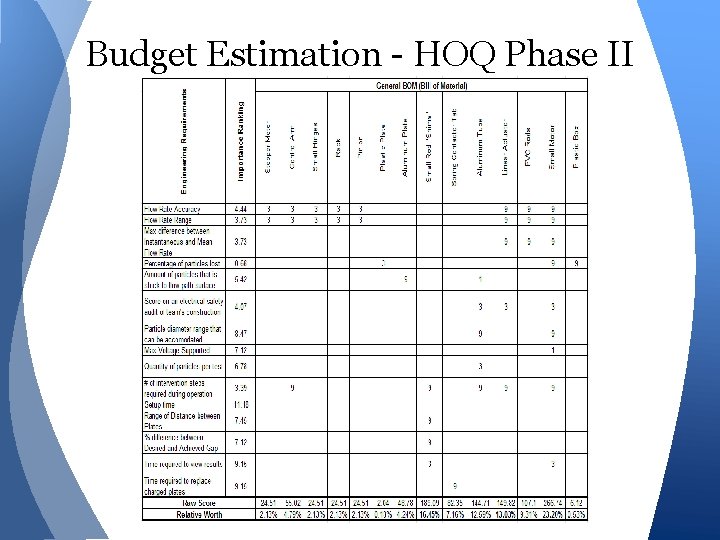
Budget Estimation - HOQ Phase II
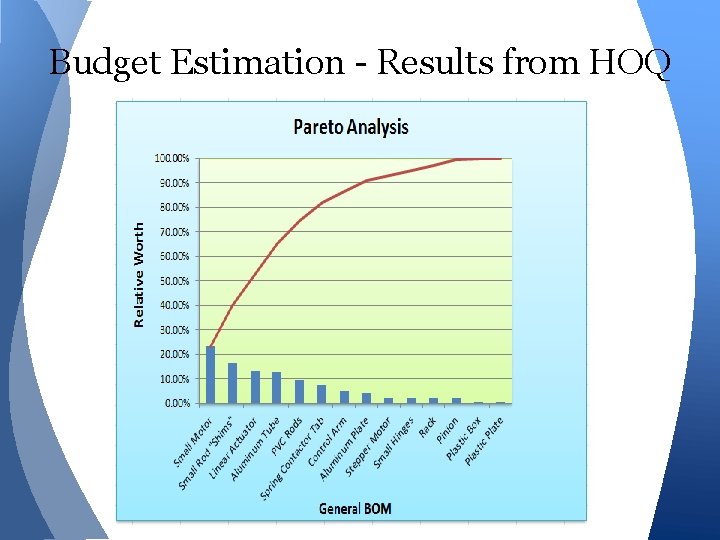
Budget Estimation - Results from HOQ
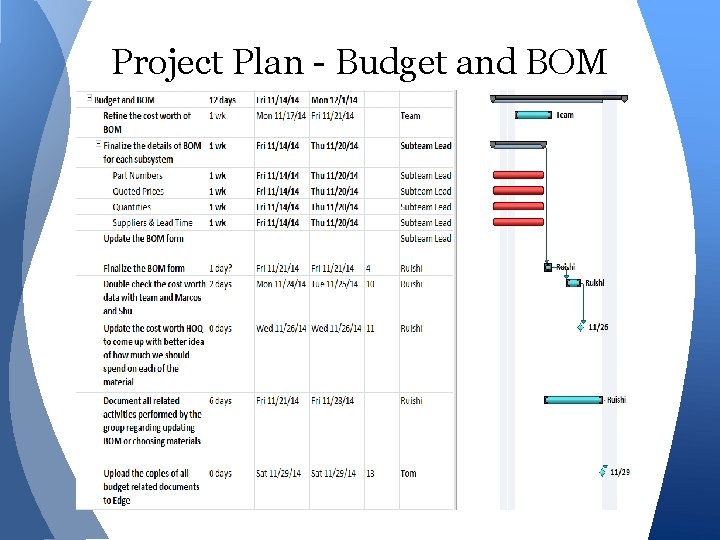
Project Plan - Budget and BOM
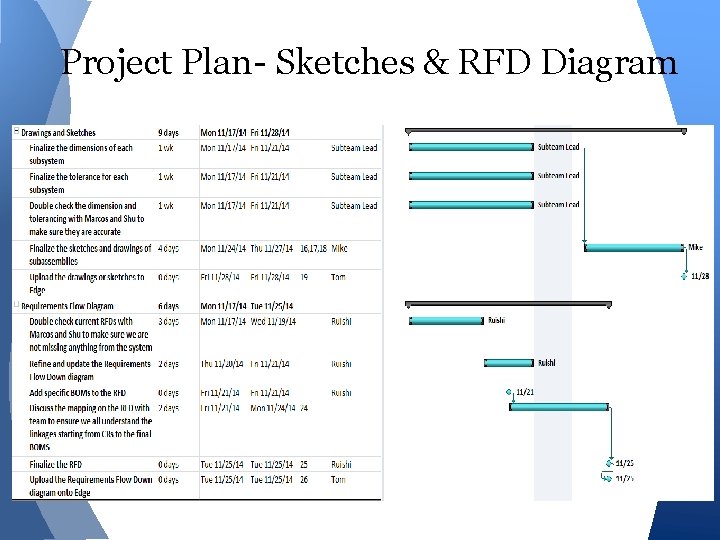
Project Plan- Sketches & RFD Diagram
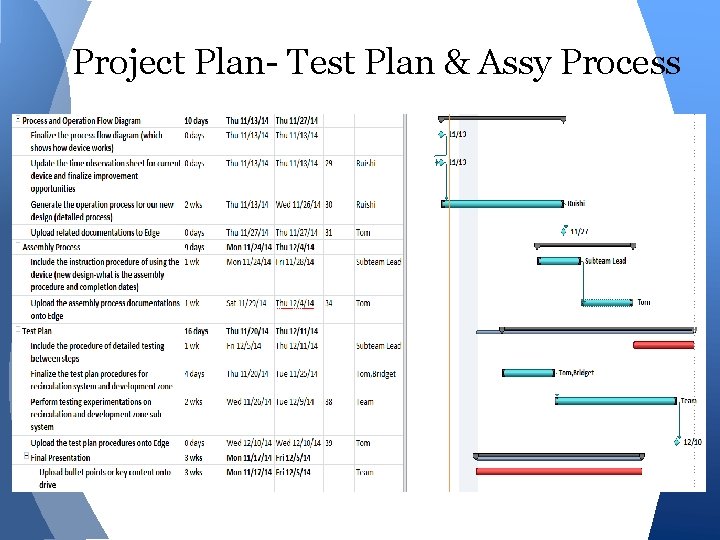
Project Plan- Test Plan & Assy Process
What We’ve Learned ● Be braced for changes in CRs ● Thorough project plans are beneficial ● High-level system requirements are easily neglected when working at the subsystem level
Summary ● Process Flow Diagram ● Designs for Each Subsystem: ● Hopper ● Transfer Surface ● Development Zone ● Angle Adjustment System ● Recirculation System ● Lab. VIEW Program Outline ● Flow Down Diagrams ● Budget Considerations ● Project Plan ● What We’ve Learned
Questions?