
Electrophilic Addition Reactions Alkenes Electrophilic Addition Reactions Alkenes
- Slides: 20
Electrophilic Addition Reactions: Alkenes
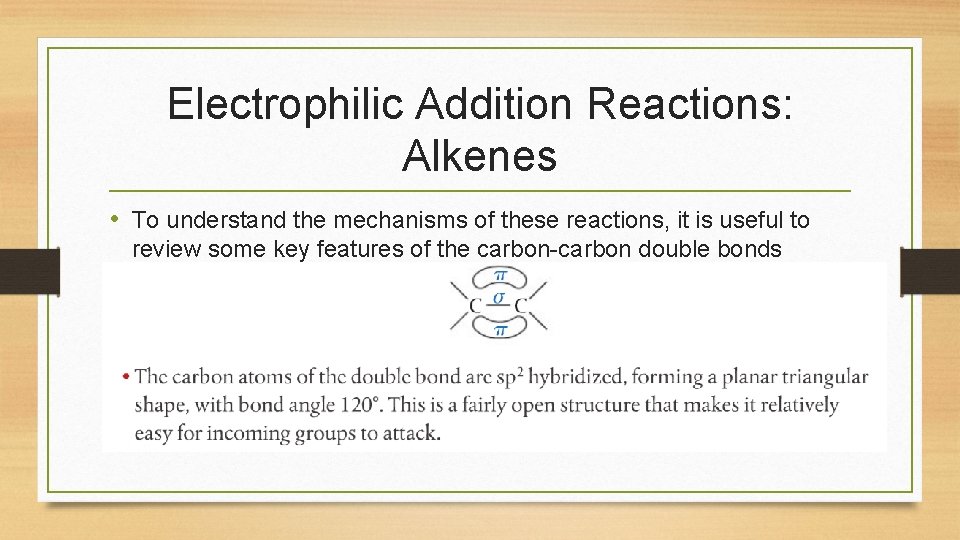
Electrophilic Addition Reactions: Alkenes • To understand the mechanisms of these reactions, it is useful to review some key features of the carbon-carbon double bonds
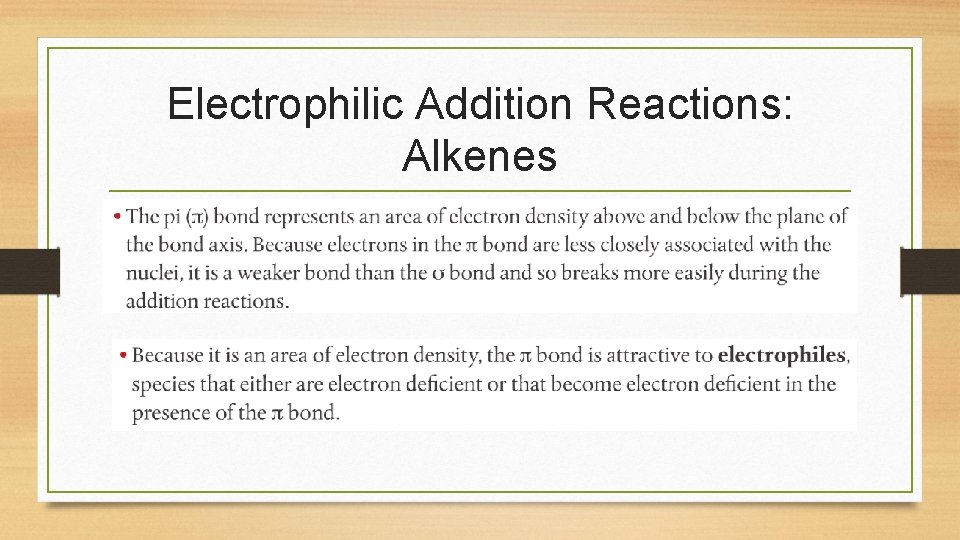
Electrophilic Addition Reactions: Alkenes
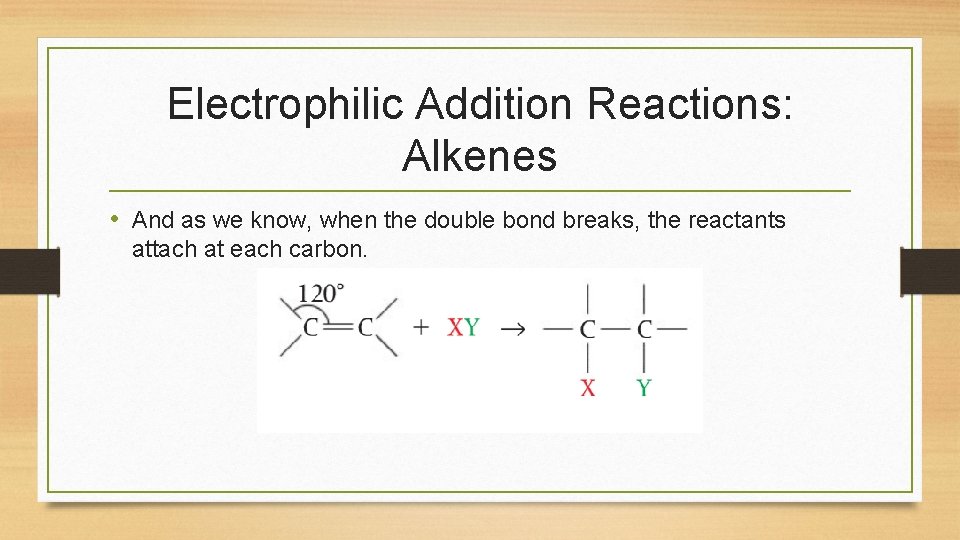
Electrophilic Addition Reactions: Alkenes • And as we know, when the double bond breaks, the reactants attach at each carbon.
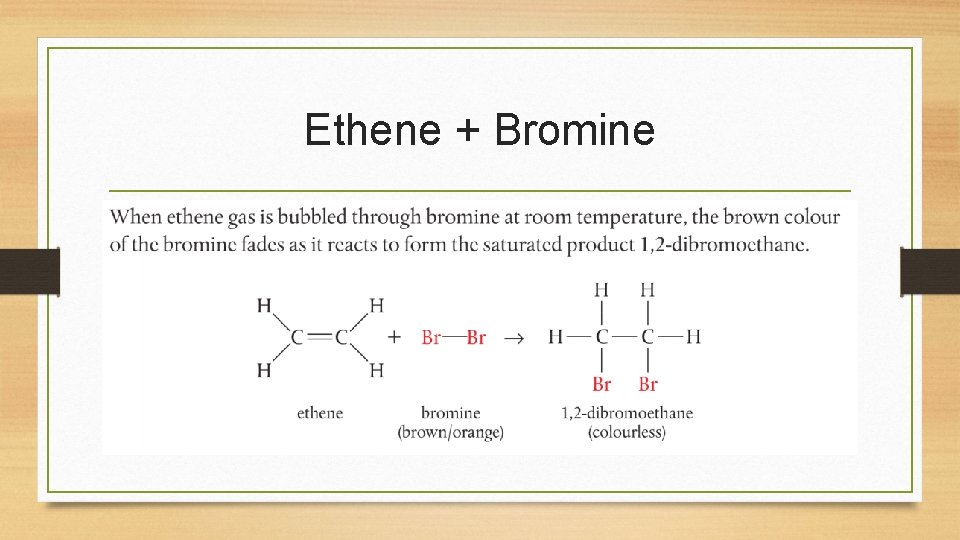
Ethene + Bromine
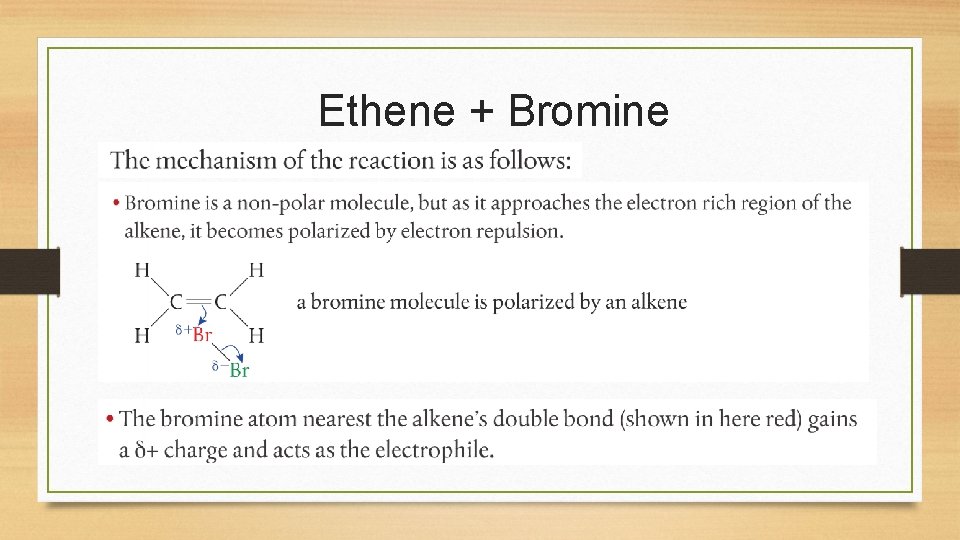
Ethene + Bromine
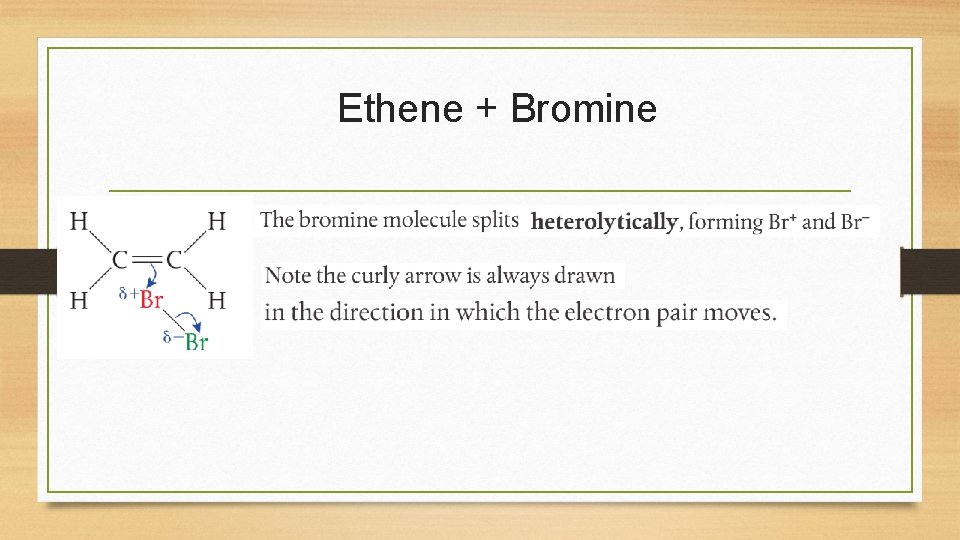
Ethene + Bromine
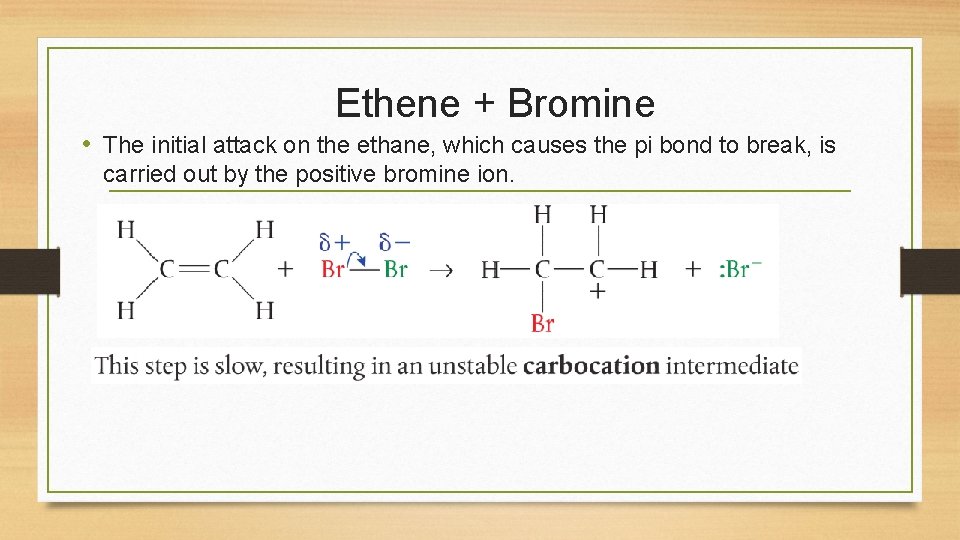
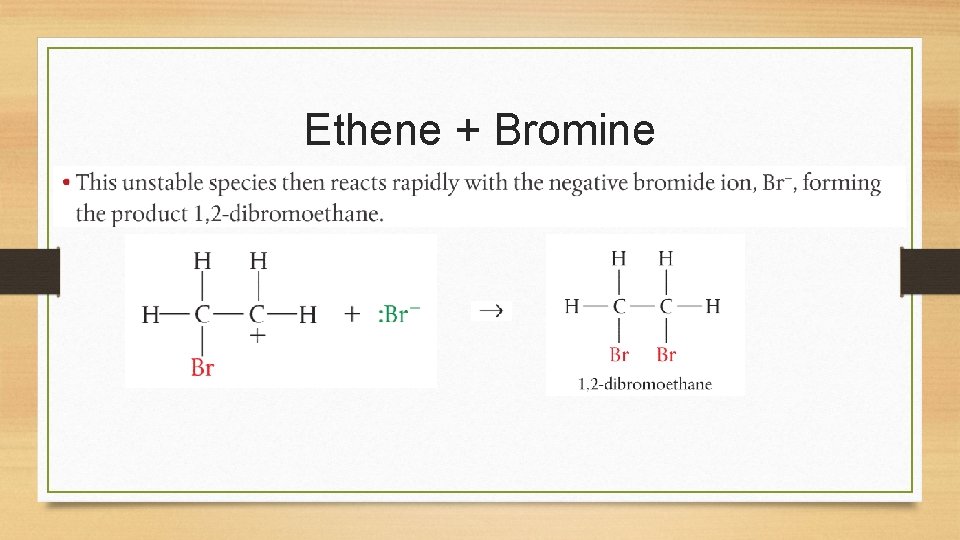
Ethene + Bromine • The initial attack on the ethane, which causes the pi bond to break, is carried out by the positive bromine ion.
Ethene + Bromine
Ethene + Hydrogen Bromide
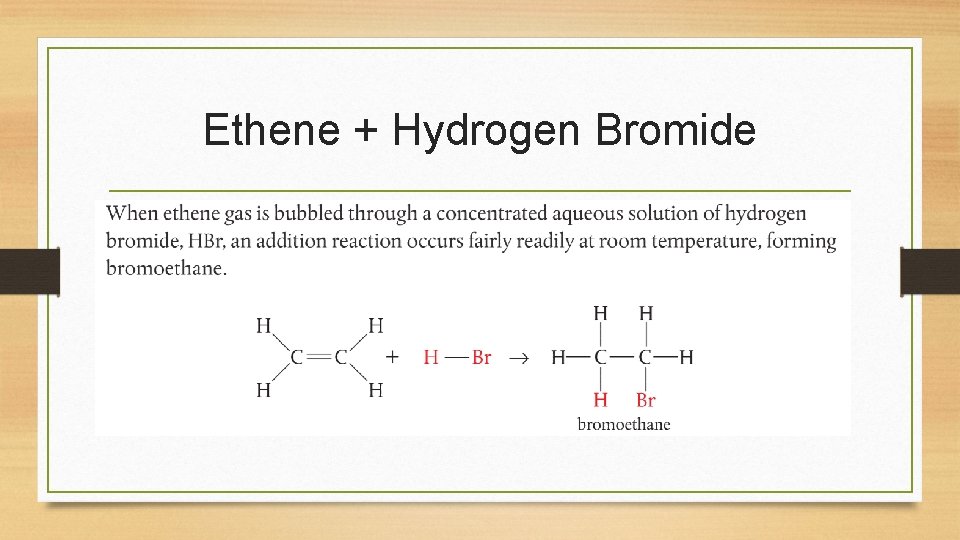
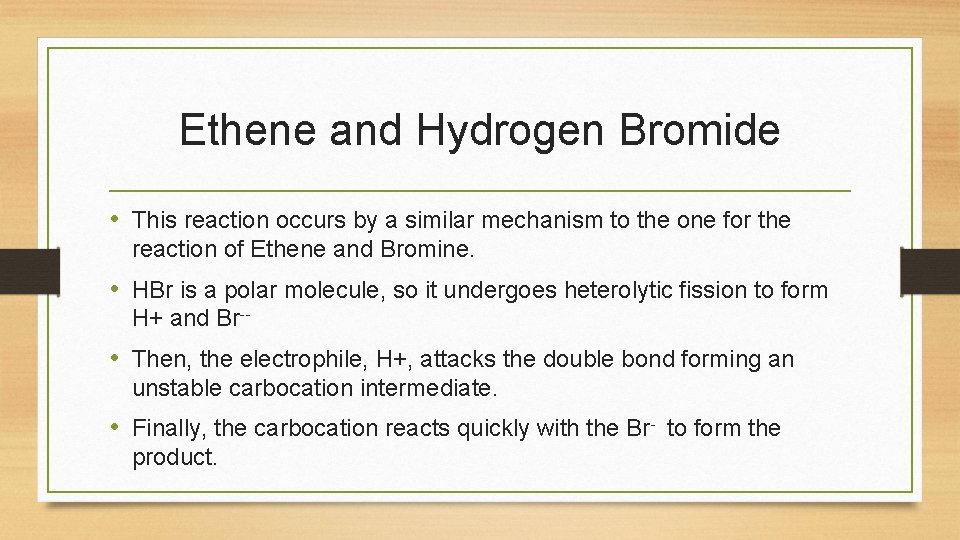
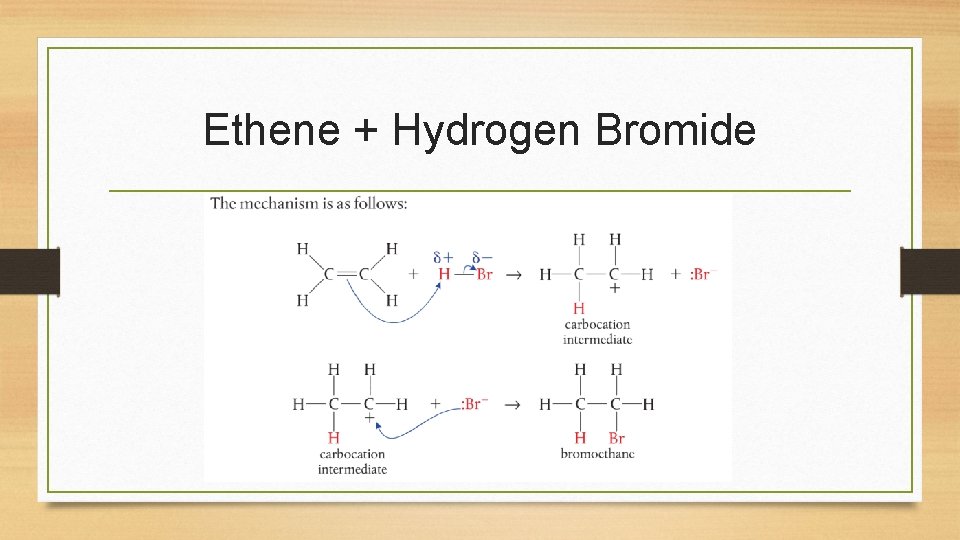
Ethene and Hydrogen Bromide • This reaction occurs by a similar mechanism to the one for the reaction of Ethene and Bromine. • HBr is a polar molecule, so it undergoes heterolytic fission to form H+ and Br-- • Then, the electrophile, H+, attacks the double bond forming an unstable carbocation intermediate. • Finally, the carbocation reacts quickly with the Br- to form the product.
Ethene + Hydrogen Bromide
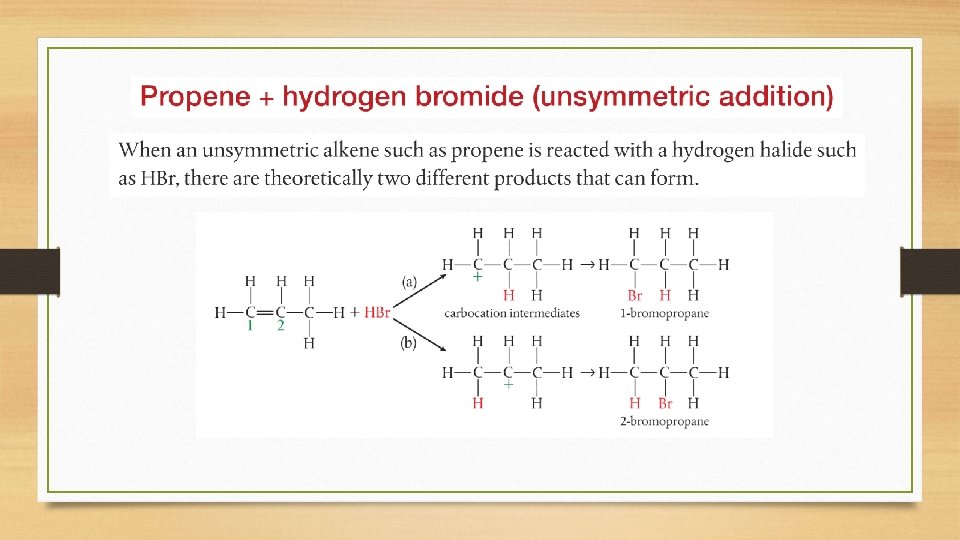
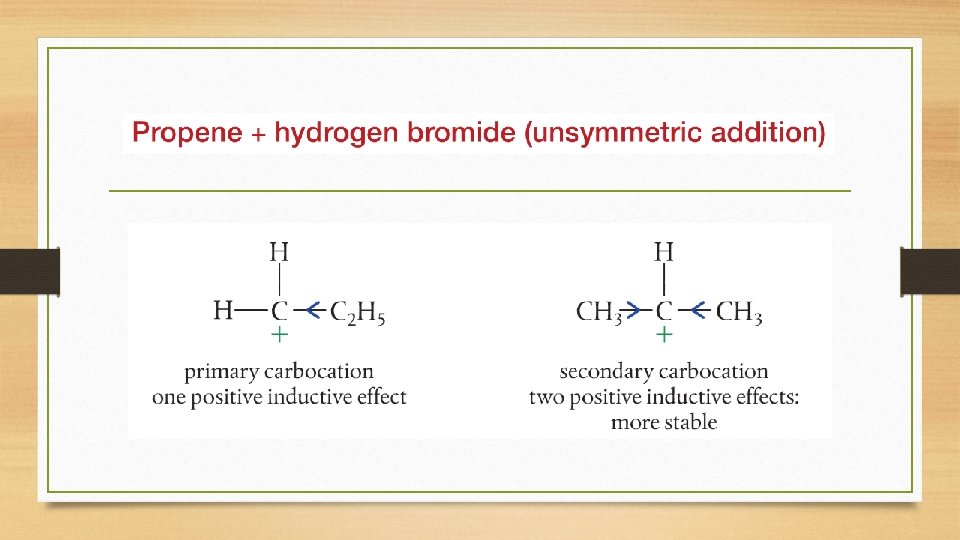
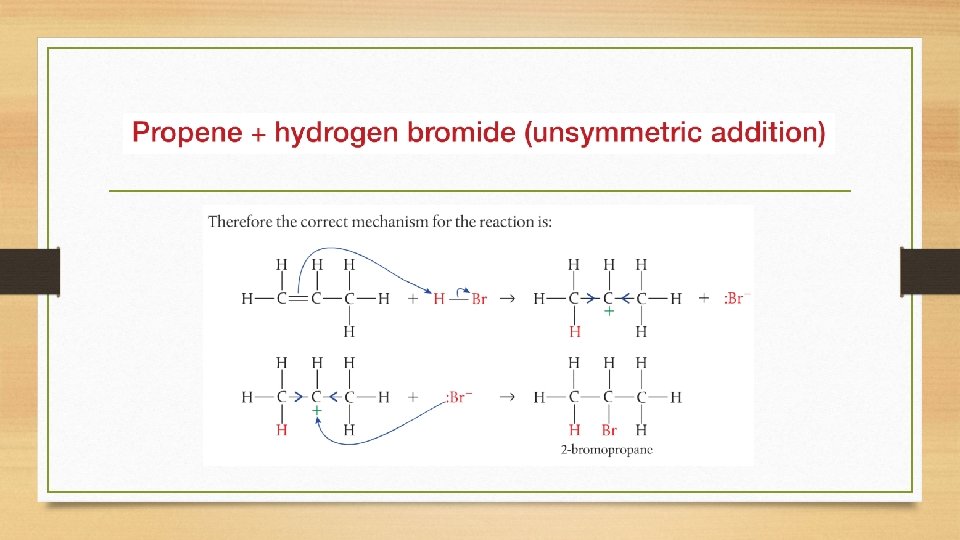
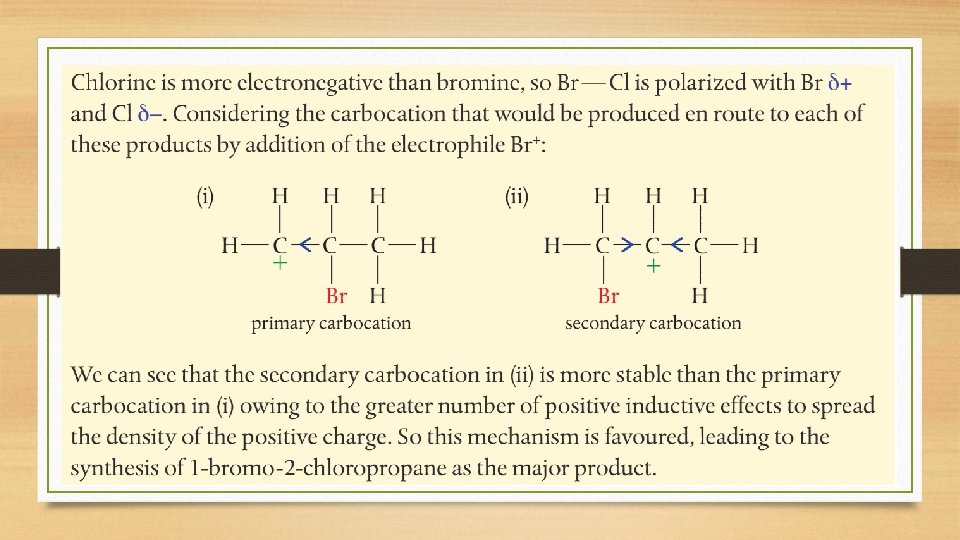
• The product that will form is the one that produces the more stable carbocation during the addition process. • Since alkyl groups around a carbocation stabilize it somewhat due to their positive inductive effects, meaning that they push electron density away from themselves to lessen the density of the positive charge on the carbocation (friendly support), the most stable carbocation is the one the has more alkyl groups around it.
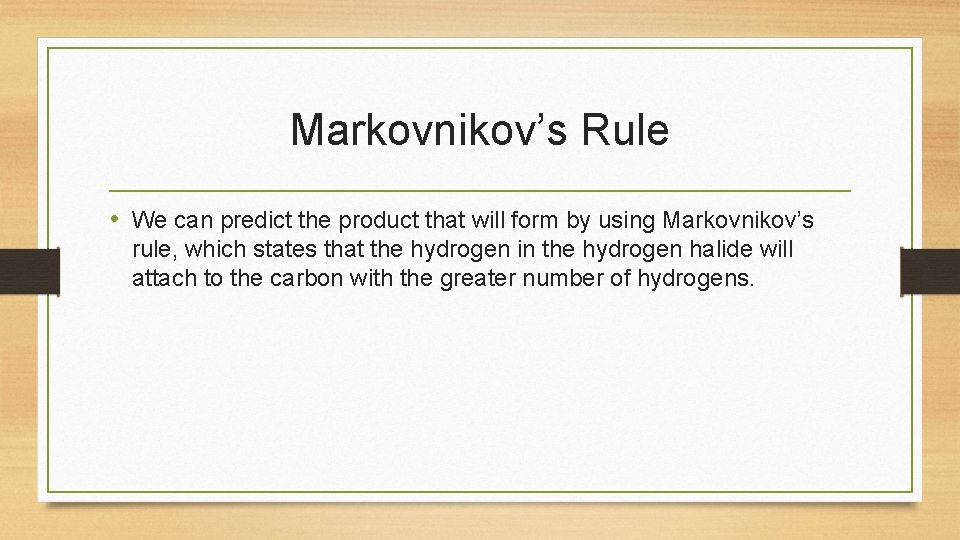
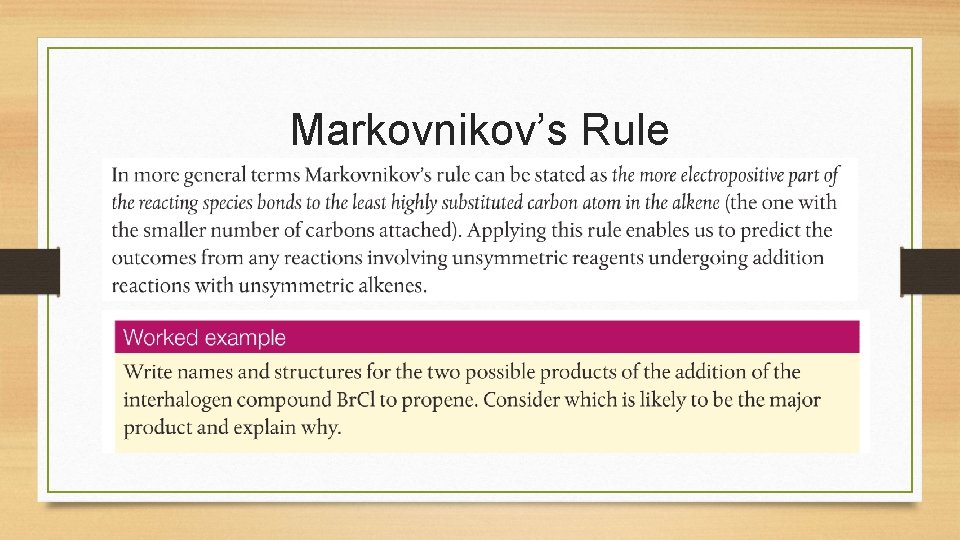
Markovnikov’s Rule • We can predict the product that will form by using Markovnikov’s rule, which states that the hydrogen in the hydrogen halide will attach to the carbon with the greater number of hydrogens.
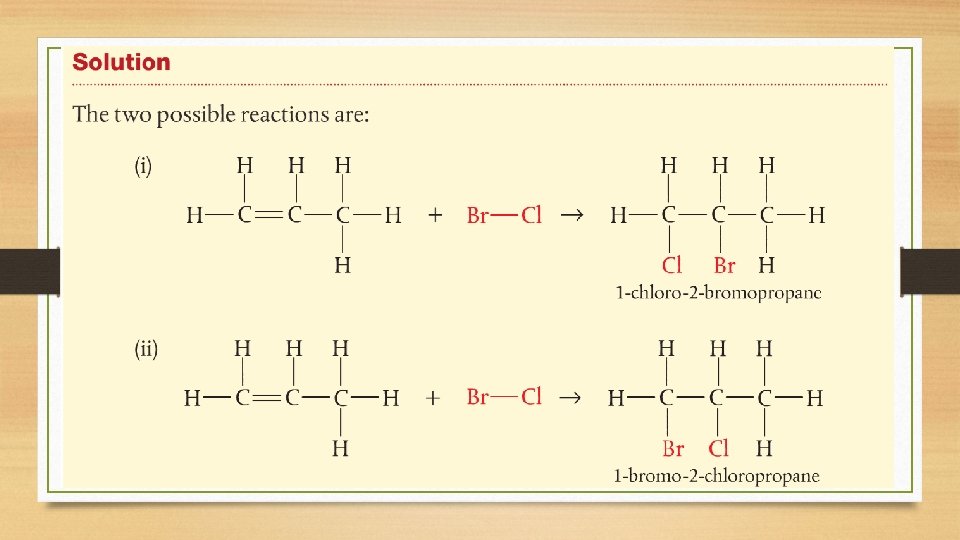
Markovnikov’s Rule