
Electrons in metals Jellium model Electron sees effective
- Slides: 14
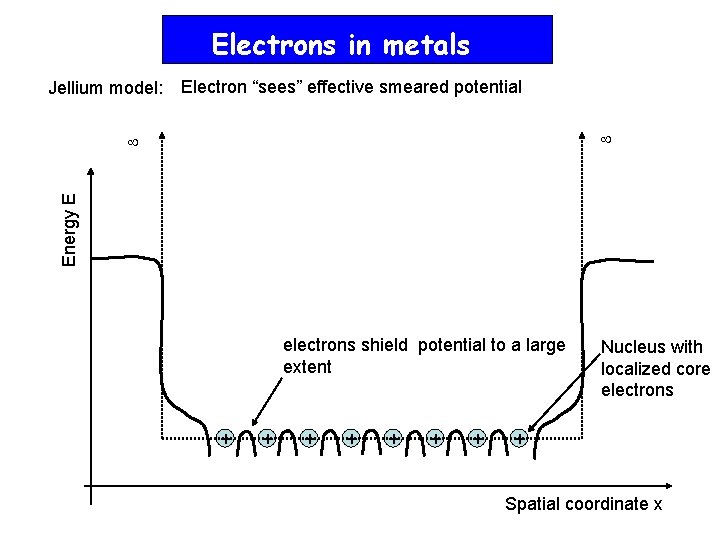
Electrons in metals Jellium model: Electron “sees” effective smeared potential Energy E electrons shield potential to a large extent + + + + Nucleus with localized core electrons + Spatial coordinate x
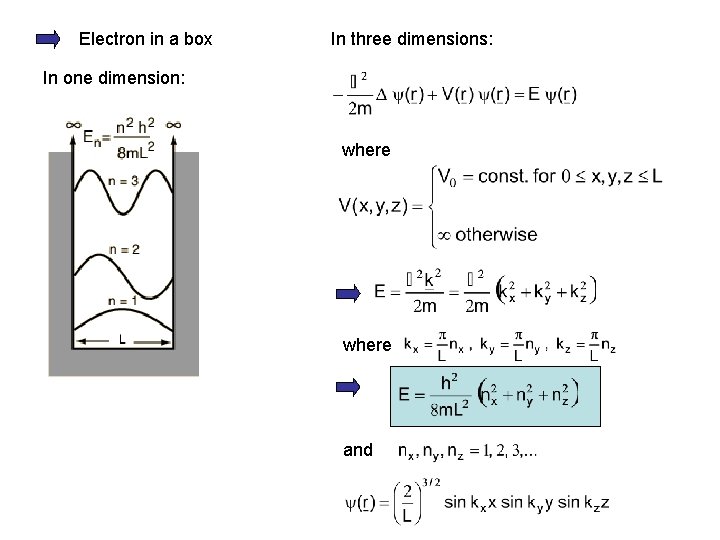
Electron in a box In three dimensions: In one dimension: where and
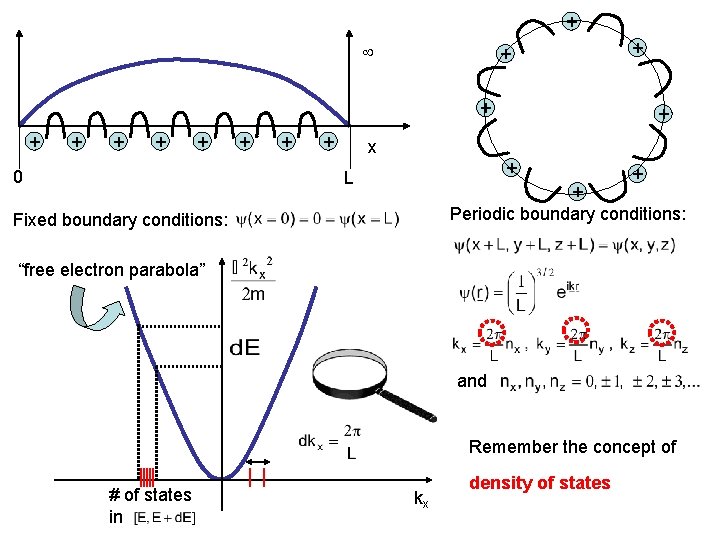
+ + + + + 0 + + x + L + + Periodic boundary conditions: Fixed boundary conditions: “free electron parabola” and Remember the concept of # of states in kx density of states
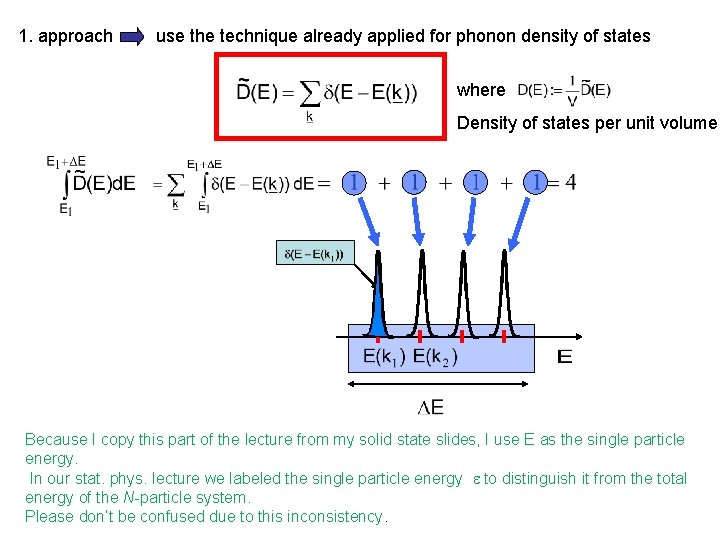
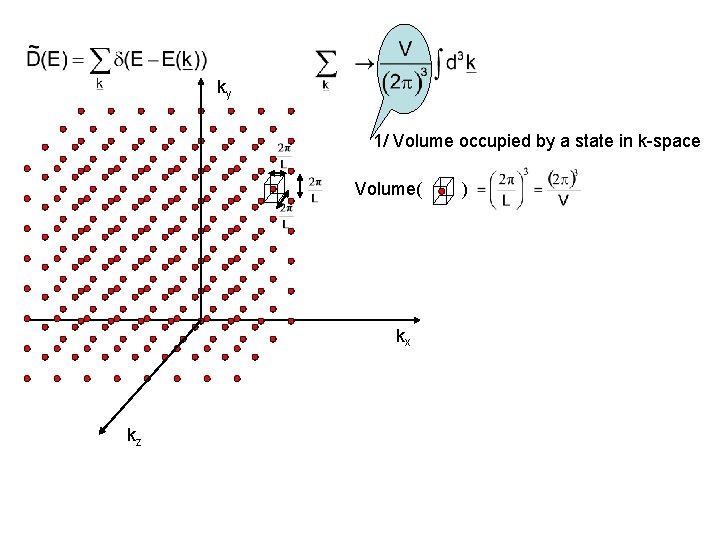
1. approach use the technique already applied for phonon density of states where Density of states per unit volume Because I copy this part of the lecture from my solid state slides, I use E as the single particle energy. In our stat. phys. lecture we labeled the single particle energy to distinguish it from the total energy of the N-particle system. Please don’t be confused due to this inconsistency.
ky 1/ Volume occupied by a state in k-space Volume( kx kz )
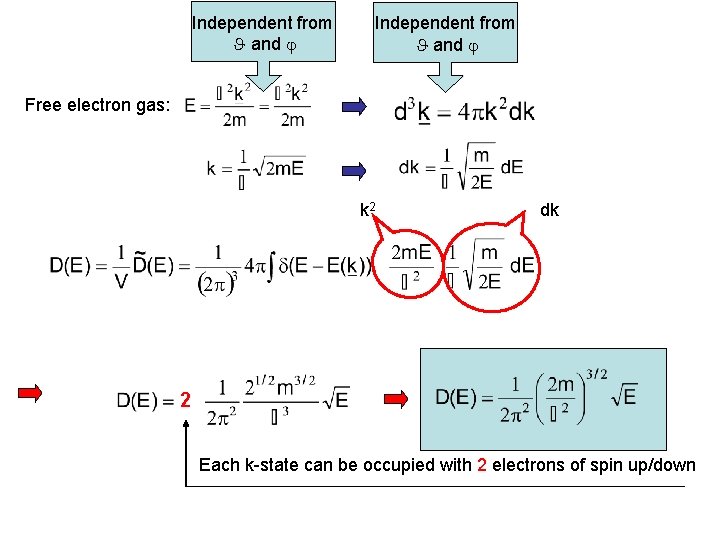
Independent from and Free electron gas: k 2 dk 2 Each k-state can be occupied with 2 electrons of spin up/down
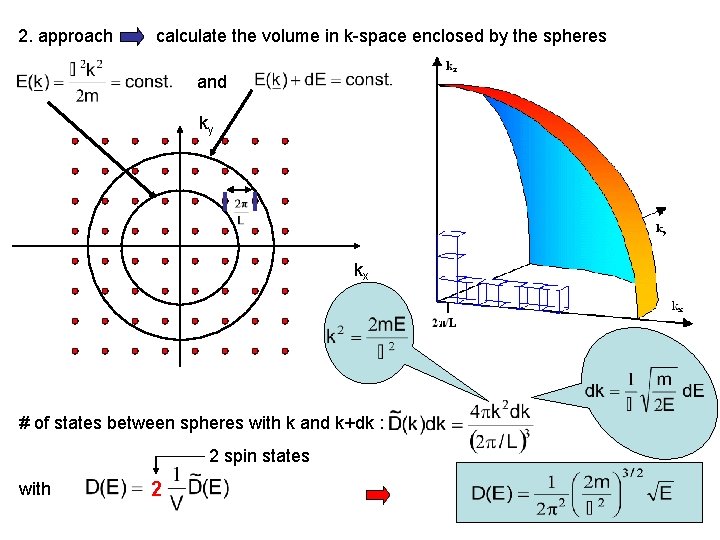
2. approach calculate the volume in k-space enclosed by the spheres and ky kx # of states between spheres with k and k+dk : 2 spin states with 2
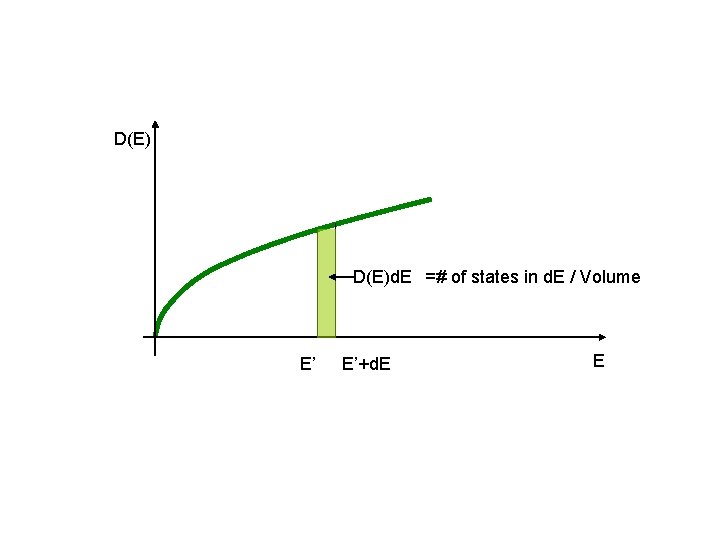
D(E)d. E =# of states in d. E / Volume E’ E’+d. E E
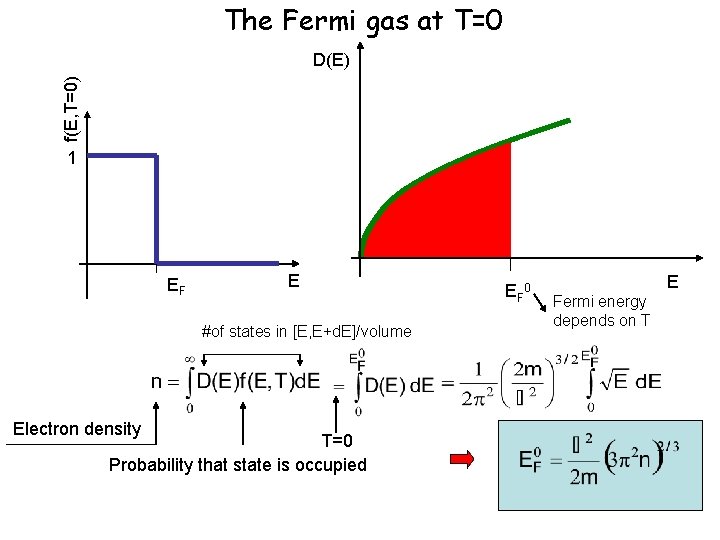
The Fermi gas at T=0 f(E, T=0) D(E) 1 EF E #of states in [E, E+d. E]/volume Electron density T=0 Probability that state is occupied E F 0 E Fermi energy depends on T
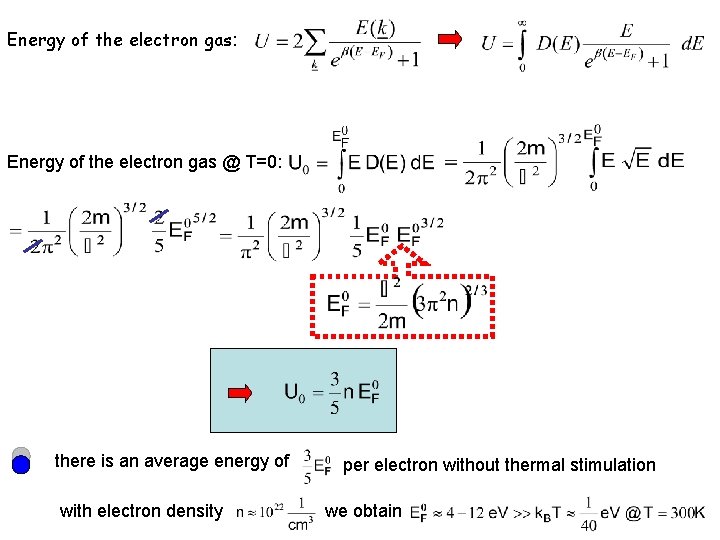
Energy of the electron gas: Energy of the electron gas @ T=0: there is an average energy of with electron density per electron without thermal stimulation we obtain
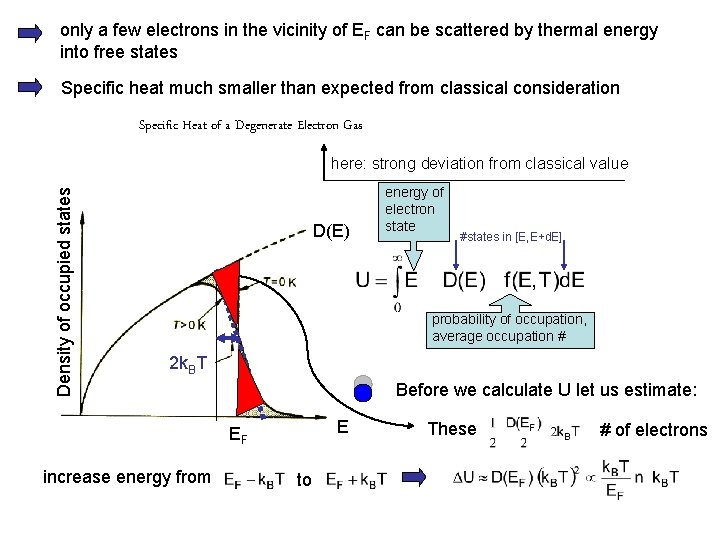
only a few electrons in the vicinity of EF can be scattered by thermal energy into free states Specific heat much smaller than expected from classical consideration Specific Heat of a Degenerate Electron Gas Density of occupied states here: strong deviation from classical value D(E) energy of electron state #states in [E, E+d. E] probability of occupation, average occupation # 2 k. BT Before we calculate U let us estimate: E EF increase energy from to These # of electrons
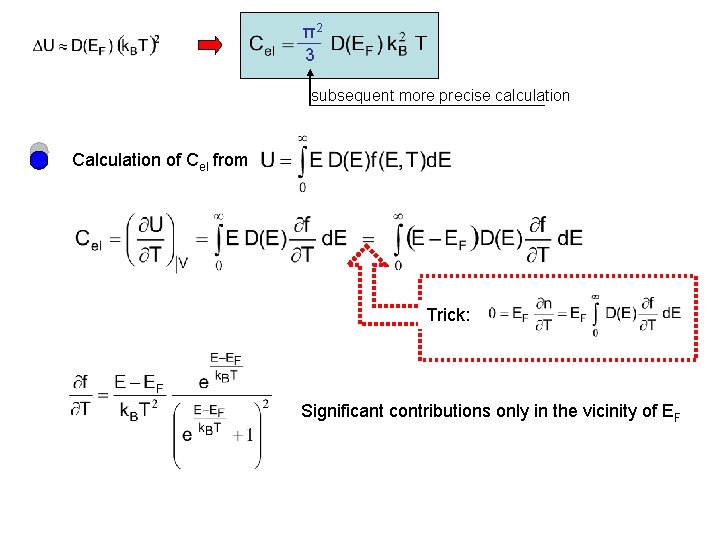
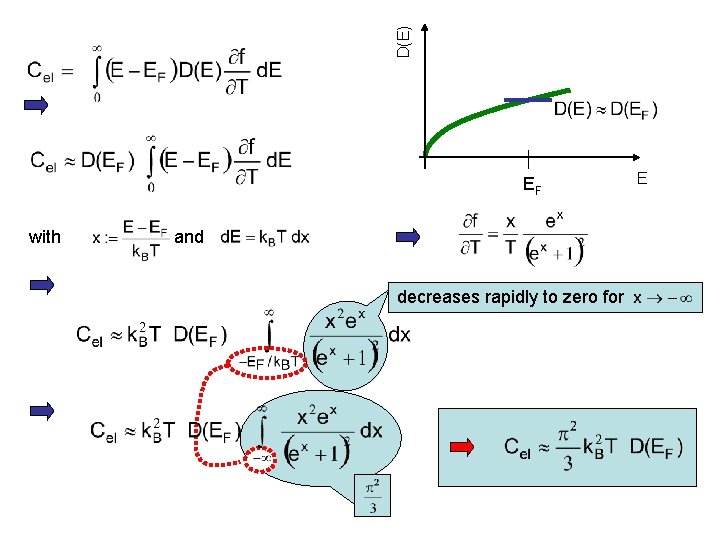
π2 3 subsequent more precise calculation Calculation of Cel from Trick: Significant contributions only in the vicinity of EF
D(E) EF with and decreases rapidly to zero for E
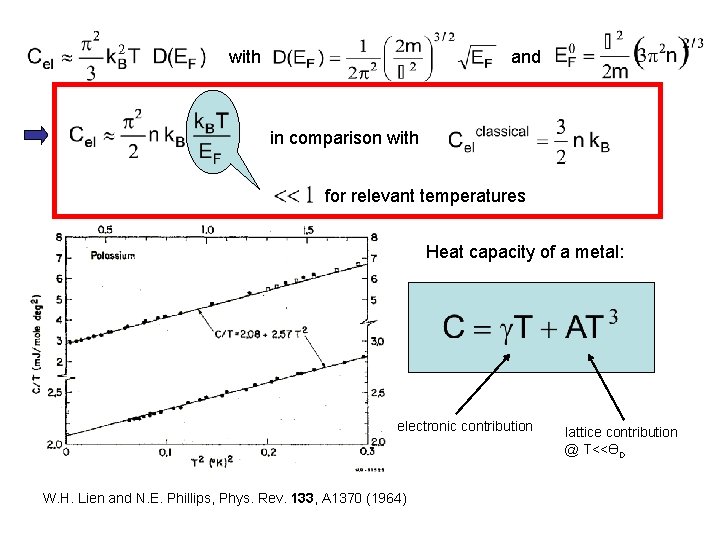
with and in comparison with for relevant temperatures Heat capacity of a metal: electronic contribution W. H. Lien and N. E. Phillips, Phys. Rev. 133, A 1370 (1964) lattice contribution @ T<<ӨD