
ELECTRONICS AN INTRODUCTION TO BASIC ELECTRONICS WHAT IS
ELECTRONICS AN INTRODUCTION TO BASIC ELECTRONICS
WHAT IS ELECTRONICS? • Electronics is the science of how to control electric energy • We use this in electronic circuits • We use electronic circuits in computers, cell phones and many other devices
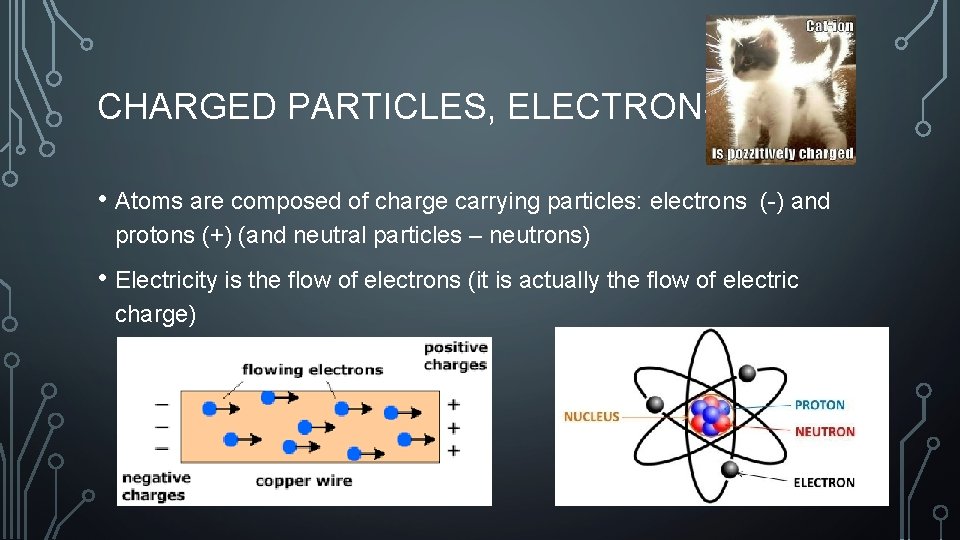
CHARGED PARTICLES, ELECTRONS • Atoms are composed of charge carrying particles: electrons (-) and protons (+) (and neutral particles – neutrons) • Electricity is the flow of electrons (it is actually the flow of electric charge)
STATIC VS CURRENT • Static electricity exists when there is a build-up of opposite charges on objects separated by an insulator (lightning, the balloon on your head expt) • Current electricity exists when charges are able to constantly flow • In order to flow, current electricity requires a circuit: a closed, neverending loop of conductive material
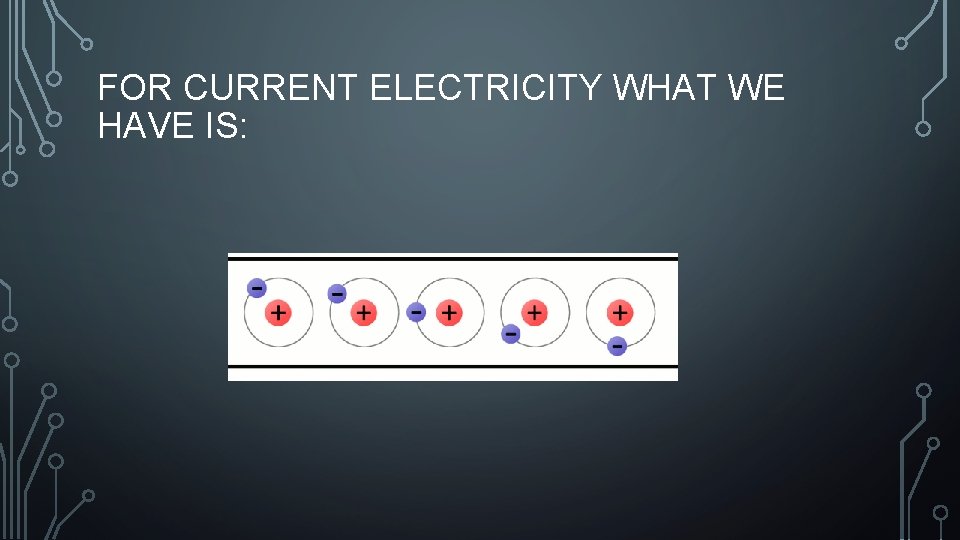
FOR CURRENT ELECTRICITY WHAT WE HAVE IS:
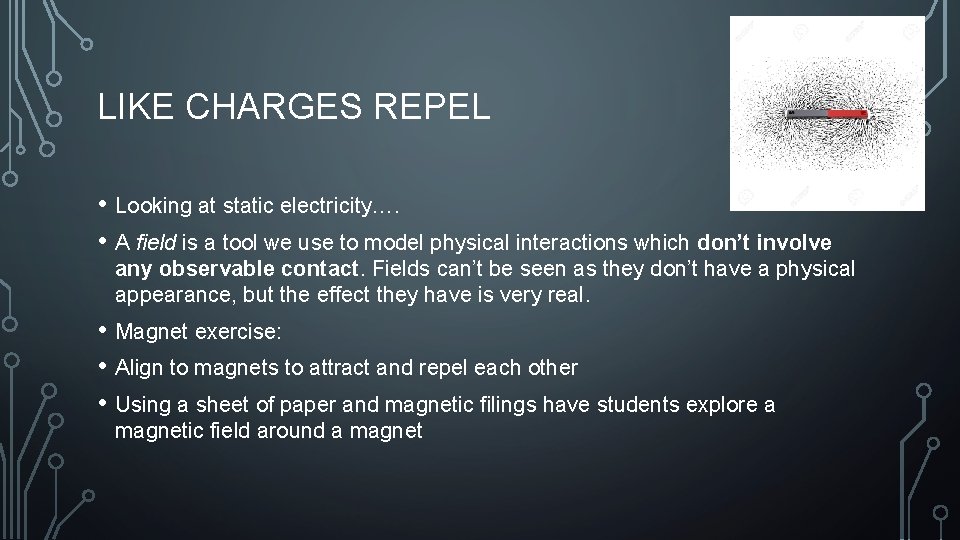
LIKE CHARGES REPEL • Looking at static electricity…. • A field is a tool we use to model physical interactions which don’t involve any observable contact. Fields can’t be seen as they don’t have a physical appearance, but the effect they have is very real. • Magnet exercise: • Align to magnets to attract and repel each other • Using a sheet of paper and magnetic filings have students explore a magnetic field around a magnet

STATIC CHARGES • Demonstration: rubbing a balloon (and/or a glass rod and feathers)
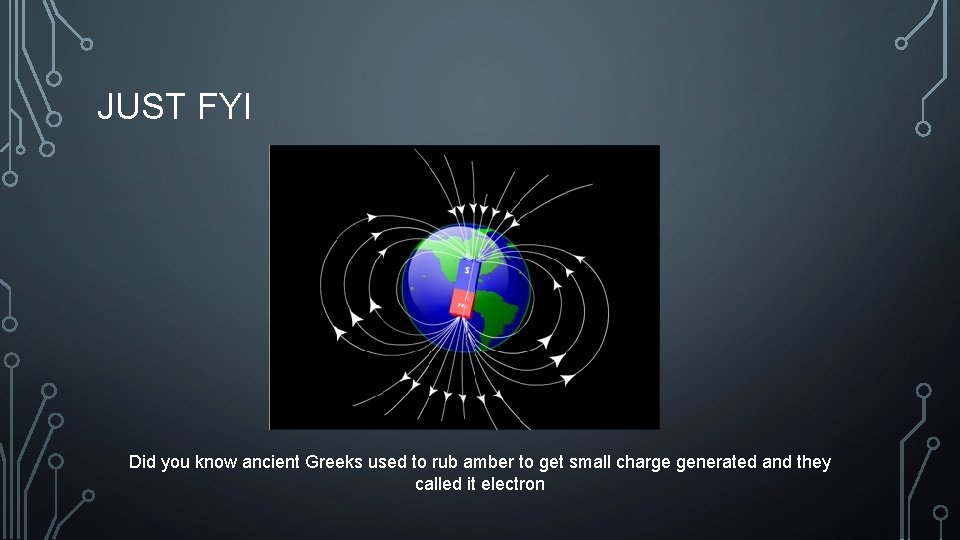
JUST FYI Did you know ancient Greeks used to rub amber to get small charge generated and they called it electron
MAGNET CAR • Using a combination of magnetic fields and electricity flow lets make our own magnet car: • http: //www. kjmagnetics. com/blog. asp? p=AA-motor&utm_source=K%26 J+Magnetics+Newsletter&utm_campaign=17 d 4 ab 196 f 2016_01_January_Newsletter&utm_medium=email&utm_term=0_73 e 0031 e 12 -17 d 4 ab 196 f-244070225
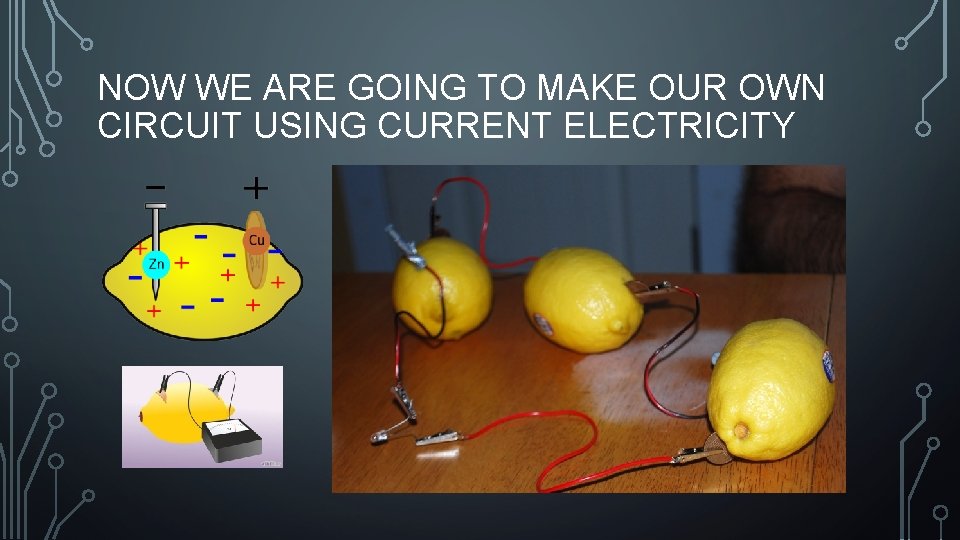
NOW WE ARE GOING TO MAKE OUR OWN CIRCUIT USING CURRENT ELECTRICITY
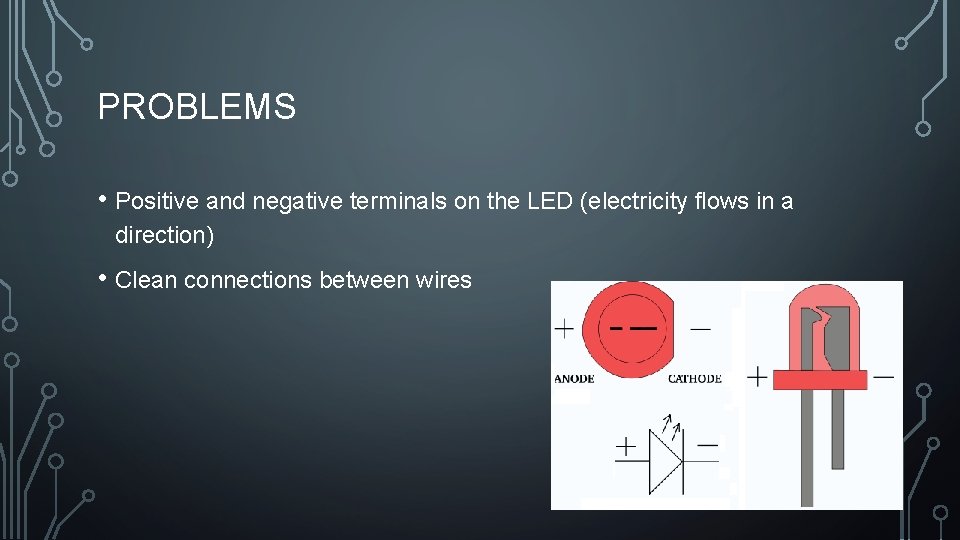
PROBLEMS • Positive and negative terminals on the LED (electricity flows in a direction) • Clean connections between wires
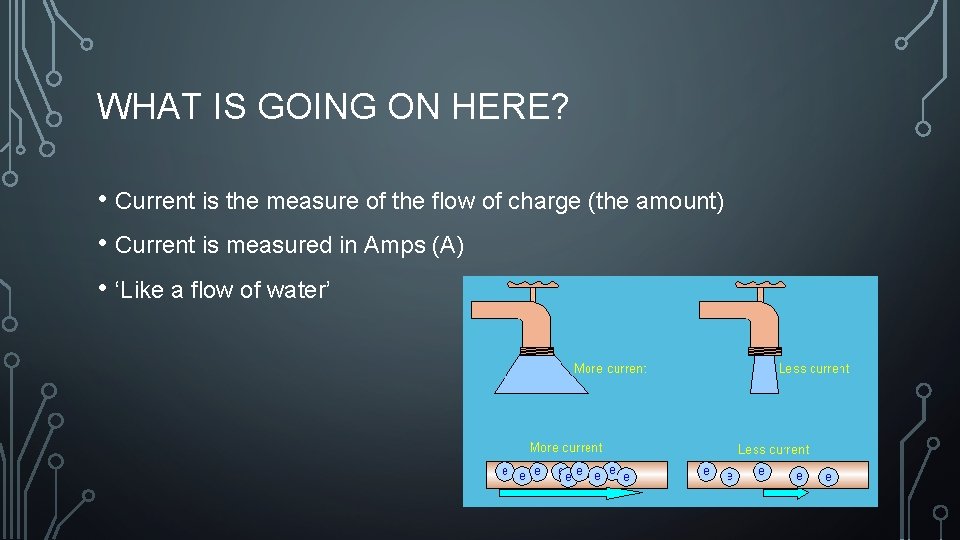
WHAT IS GOING ON HERE? • Current is the measure of the flow of charge (the amount) • Current is measured in Amps (A) • ‘Like a flow of water’
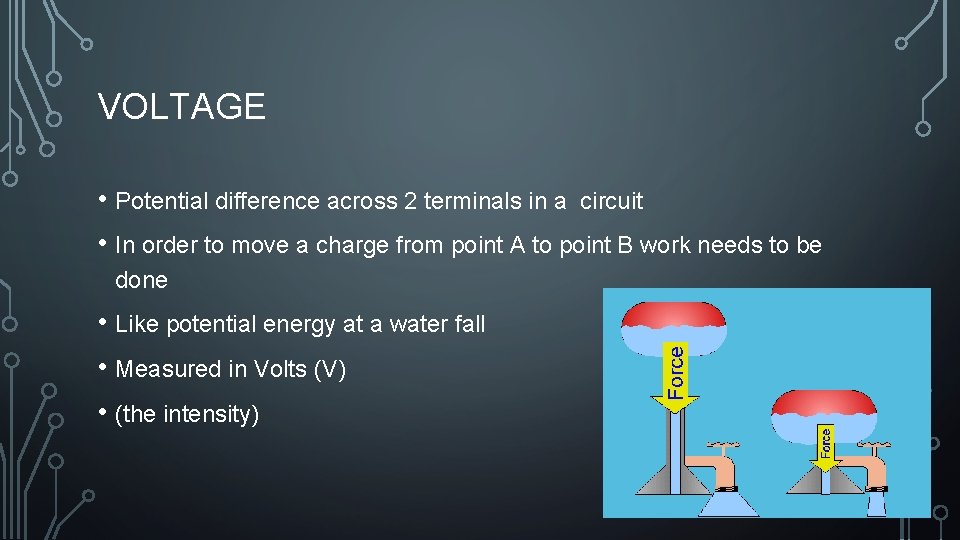
VOLTAGE • Potential difference across 2 terminals in a circuit • In order to move a charge from point A to point B work needs to be done • Like potential energy at a water fall • Measured in Volts (V) • (the intensity)
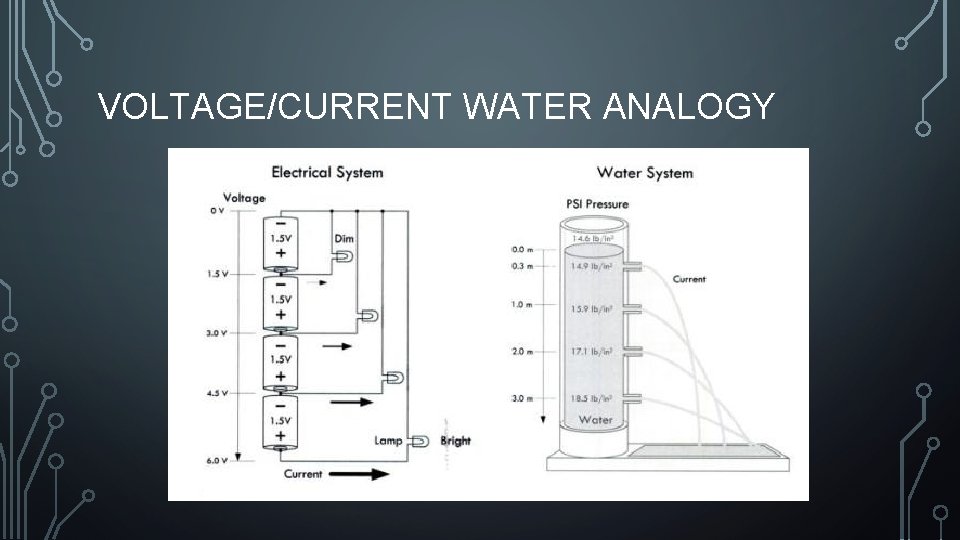
VOLTAGE/CURRENT WATER ANALOGY
- Slides: 14