
ELECTRONIC RECORDS MANAGEMENT FOR ON AND OFFBOARDING EMPLOYEES
ELECTRONIC RECORDS MANAGEMENT FOR ON- AND OFF-BOARDING EMPLOYEES RECORDS MANAGEMENT SERVICES FEBRUARY 2017
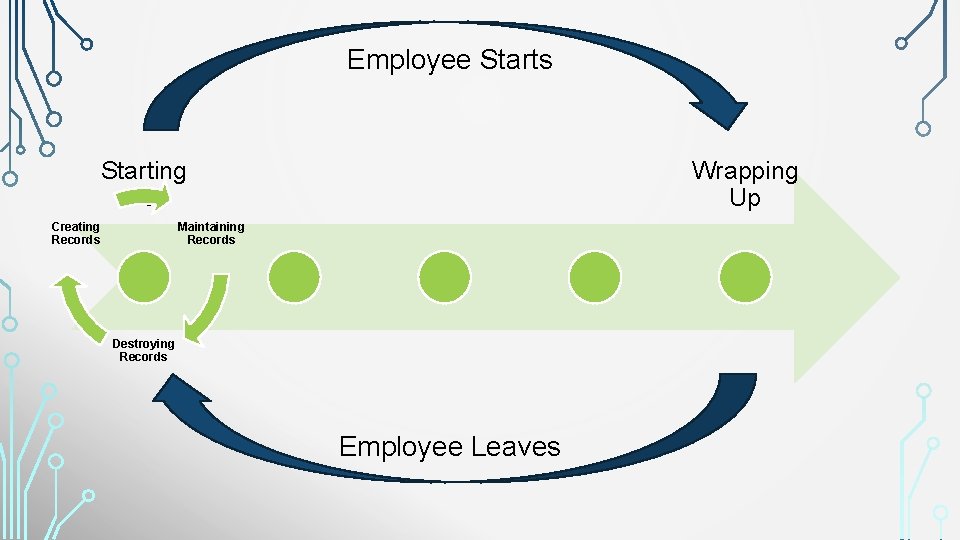
Employee Starts Starting Out Creating Records Wrapping Up Maintaining Records Destroying Records Employee Leaves

WHY RECORDS MANAGEMENT? The Revised Code of Washington (RCW) is the compilation of all permanent laws now in force in Washington State. Title 40, Chapter 14 of the RCW: Defines a record Establishes authority for records retention and destruction Requires a Records Management program at all state agencies
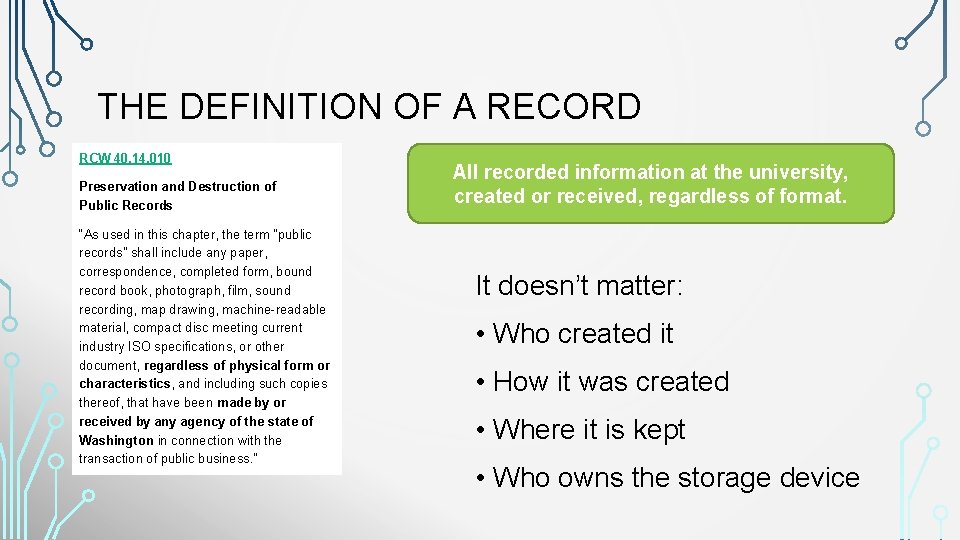
THE DEFINITION OF A RECORD RCW 40. 14. 010 Preservation and Destruction of Public Records “As used in this chapter, the term "public records" shall include any paper, correspondence, completed form, bound record book, photograph, film, sound recording, map drawing, machine-readable material, compact disc meeting current industry ISO specifications, or other document, regardless of physical form or characteristics, and including such copies thereof, that have been made by or received by any agency of the state of Washington in connection with the transaction of public business. ” All recorded information at the university, created or received, regardless of format. It doesn’t matter: • Who created it • How it was created • Where it is kept • Who owns the storage device
WHAT DO I NEED TO DO? 1. Retention 2. Preservation & Production 3. Disposition
WHAT DO I NEED TO DO? 1. Retention 2. Preservation & Production 3. Disposition
WHAT DO I NEED TO DO? 1. Retention 2. Preservation & Production 3. Disposition
WHAT DO I NEED TO DO? 1. Retention 2. Preservation & Production 3. Disposition
AN ENDURING OBLIGATION RCW 40. 14 again: “All public records shall be and remain the property of the state of Washington. They shall be delivered by outgoing officials and employees to their successors and shall be preserved, stored, transferred, destroyed or disposed of, and otherwise managed, only in accordance with the provisions of this chapter. ”
THERE ARE ONLY 24 HOURS IN A DAY New hires should sit down with either their supervisor or departmental records officer to go over: 1. 2. 3. Basic records management requirements The various types of records and where they live The importance of organization

1. BASIC RECORDS MANAGEMENT REQUIREMENTS As a state agency, the UW and its employees are required to practice records management. Any recorded information, regardless of medium or format, is a record. All records are the property of the state of Washington. Records must be retained according to the applicable university and departmental records retention schedules. Throughout their retention period, records must remain both accessible and readable. Once the retention period has ended, records should disposed of appropriately.
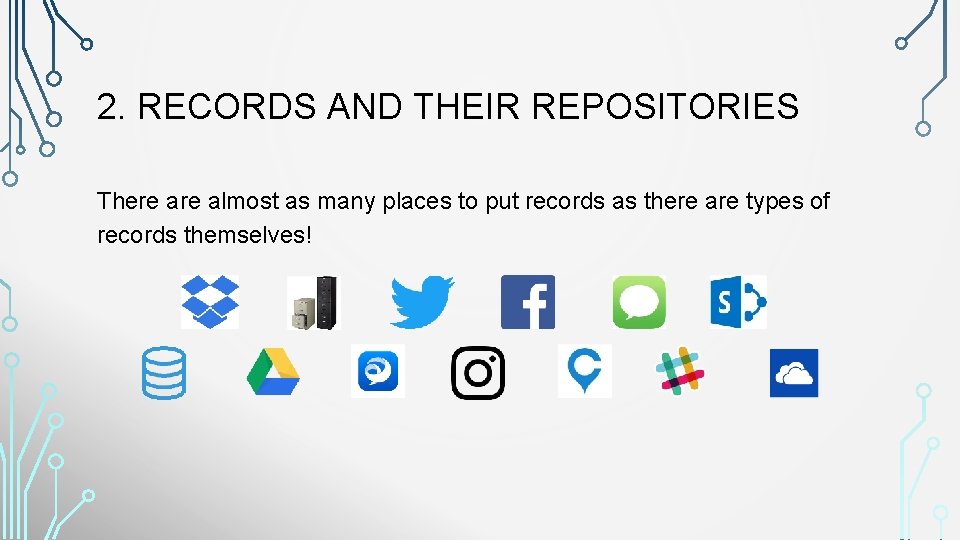
2. RECORDS AND THEIR REPOSITORIES There almost as many places to put records as there are types of records themselves!
MAKING SOME (NOT SO) TOUGH DECISIONS • Just because you CAN doesn’t mean you SHOULD • Decide which repositories you’re going to use and for what types of records – be explicit and document it • Security vs Access • How easy is it to search, find, and manage records?
SET SOME GROUND RULES • Just say no to information silos • Printing is not the answer • Scanning might not be either • Who “owns” the repository? • BYOD
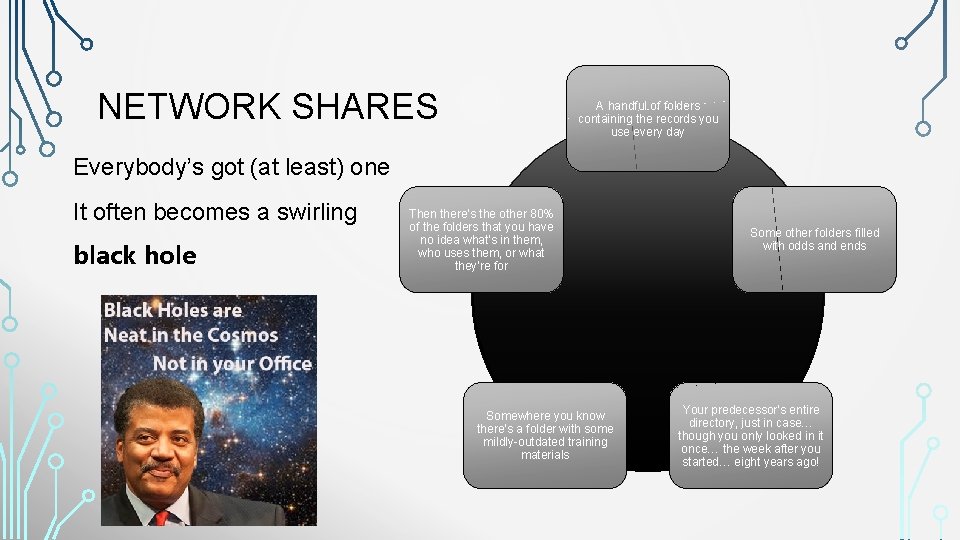
NETWORK SHARES A handful of folders containing the records you use every day Everybody’s got (at least) one It often becomes a swirling black hole Then there’s the other 80% of the folders that you have no idea what’s in them, who uses them, or what they’re for Somewhere you know there’s a folder with some mildly-outdated training materials Some other folders filled with odds and ends Your predecessor’s entire directory, just in case… though you only looked in it once… the week after you started… eight years ago!
A SHARED BURDEN In many cases: • Everyone creates folders as they choose • No one deletes anything • Cleanup is a rare event • If you’re lucky, there’s pizza in the conference room.
A PROBLEM SHARED IS A PROBLEM HALVED! • Use shared folders • Assign a custodian • Document the plan • Agree on folder/file names
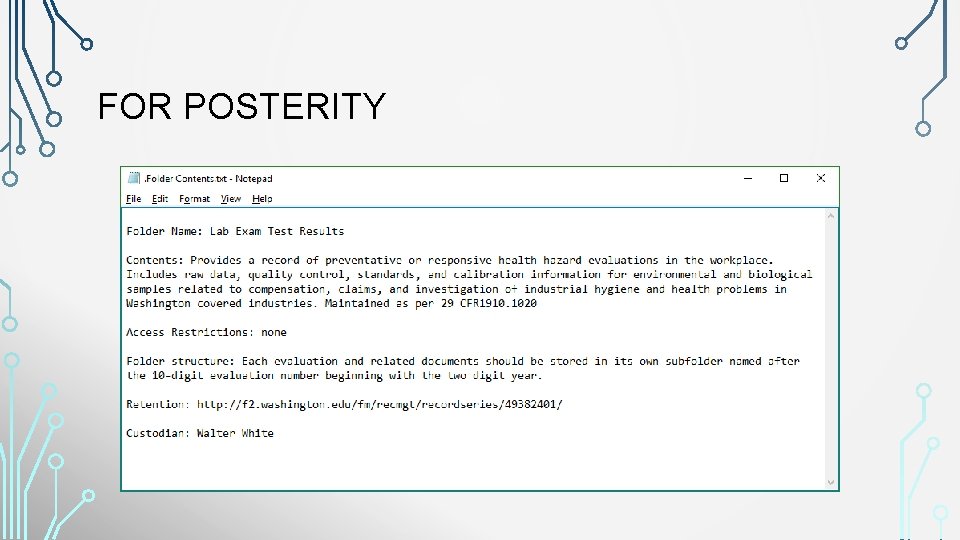
FOR POSTERITY
3. THE IMPORTANCE OF ORGANIZATION A commonly used metric among records managers is, “Can you find the record you’re looking for in less than 30 seconds? ” If you can answer “yes” more often than not, you’re off to a good start! But now ask yourself, “How long would it take for someone else to find that record if I wasn’t around to ask? ” Is the answer still less than 30 seconds?
ORGANIZATIONAL EXCELLENCE Filing structures and naming conventions • How will someone look for it? • How will someone get rid of it? • Think about alphabetization • Think about performing a search • Eliminate redundancy • Eliminate ambiguity In records management, the “cut‑off” is the trigger that starts the • Don’t overdo it! clock on the retention period.
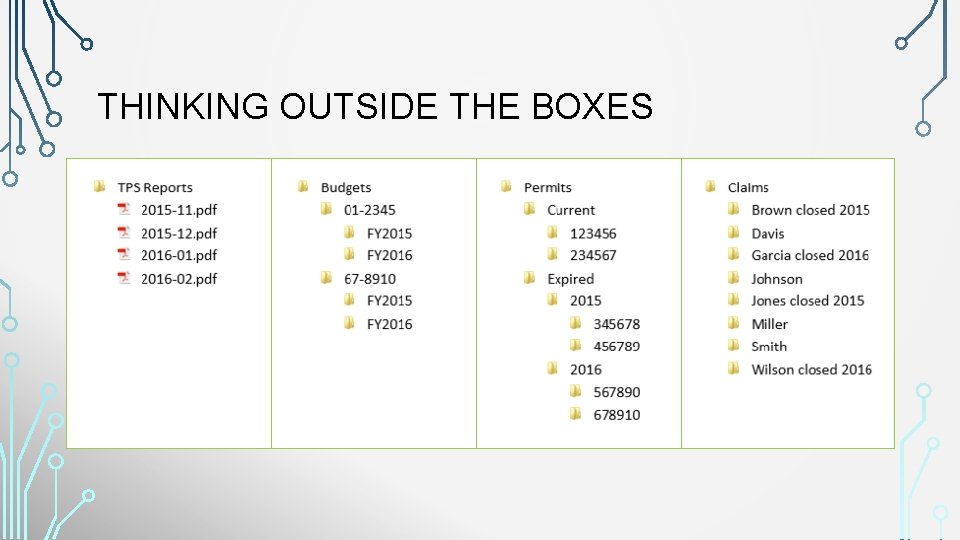
THINKING OUTSIDE THE BOXES
BELABORING THE ‘POINT • Nearly anything I’ve said about shared drives is equally applicable to Share. Point • One additional bonus, AUTOMATED RETENTION If you’re interested, please contact our office. We’re happy to do an on-site consult.
ISSUES WITH EMAIL • Single owner • Duplication of records • Difficult to share • Retention as an afterthought • It encourages us to save EVERYTHING indefinitely
THE RIGHT TOOL FOR THE JOB Example: You email your boss with a request; your boss replies giving you approval. • Email makes more sense than paper or some other method • The record only exists within email • There’s a business need to retain • It’s unlikely to need review by anyone else for the life of the record • Easy to file, retain, delete • No desire to keep it longer than necessary
IT’S A LITTLE KNOWN FACT • Like in Share. Point, you can assign retention periods in Outlook to automate retention. • http: //f 2. washington. edu/fm/recmgt/ Outlook. Retention • And just like with Share. Point, if you’re interested, please contact our office. We’re happy to do an on-site consult.
SPENDING A LITTLE TO SAVE A LOT • Reduced clutter in the workspace (physical and electronic) • Less time spent looking for records • Easier to manage public records requests, litigation discovery, audits • Fewer “re-sends” of emails • Make clean-up days faster and easier • Faster on-boarding of new employees • Easier for employees transitioning out
QUESTIONS? We're always here to answer any questions you have about records – just click, email, or call. And we’re happy to come out to meet with your group in person! Records Management Services http: //f 2. washington. edu/fm/recmgt/ Barbara Benson bbenson@uw. edu 543 -7950 Cara Ball ballc 2@uw. edu 543 -6512 Michael Mooney mmooney@uw. edu 543 -6190 Anna Sgarlato annasgar@uw. edu 543 -0573
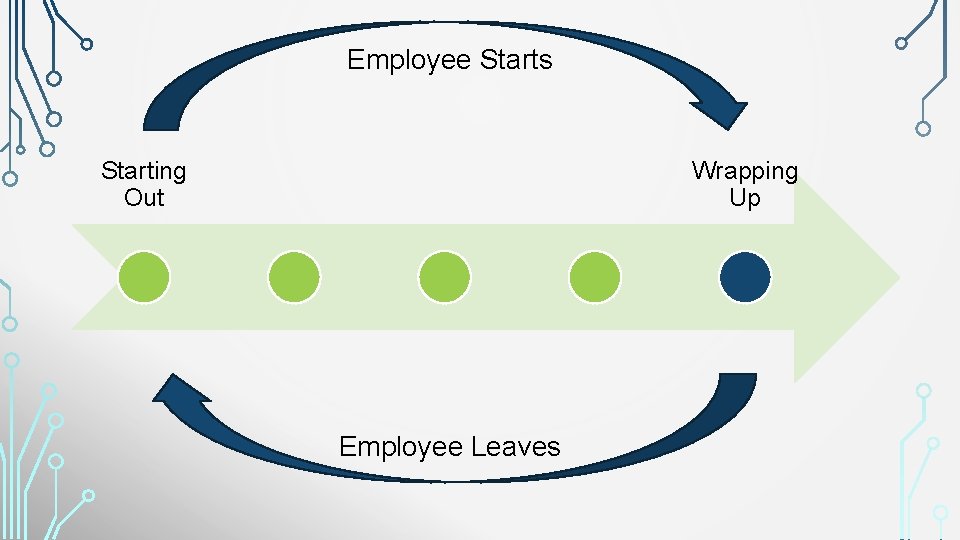
Employee Starts Starting Out Wrapping Up Employee Leaves
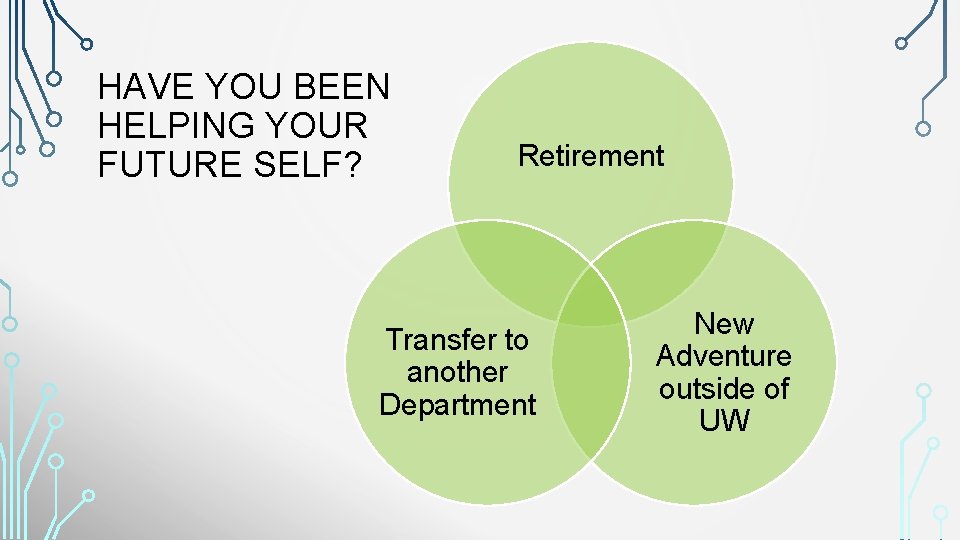
HAVE YOU BEEN HELPING YOUR FUTURE SELF? Retirement Transfer to another Department New Adventure outside of UW
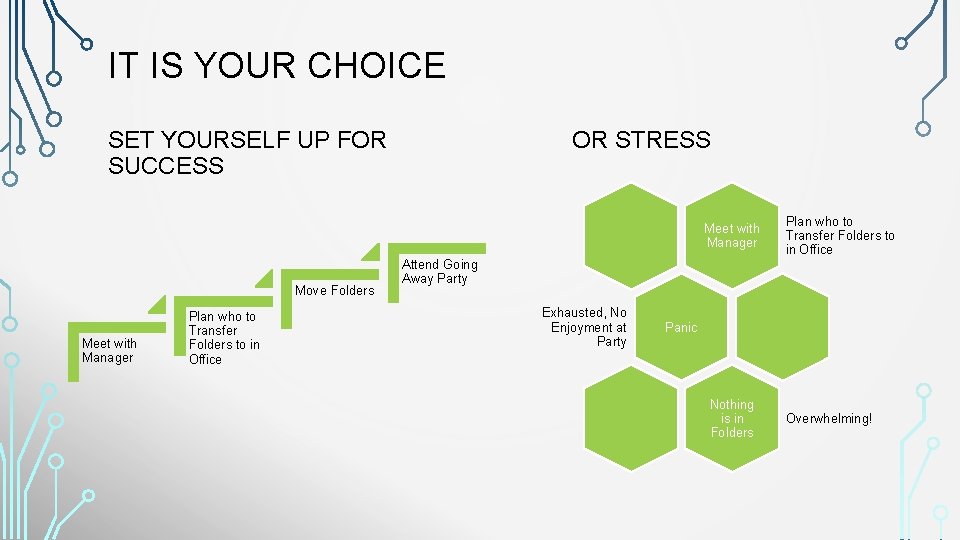
IT IS YOUR CHOICE SET YOURSELF UP FOR SUCCESS OR STRESS Meet with Manager Move Folders Meet with Manager Plan who to Transfer Folders to in Office Attend Going Away Party Exhausted, No Enjoyment at Party Plan who to Transfer Folders to in Office Panic Nothing is in Folders Overwhelming!
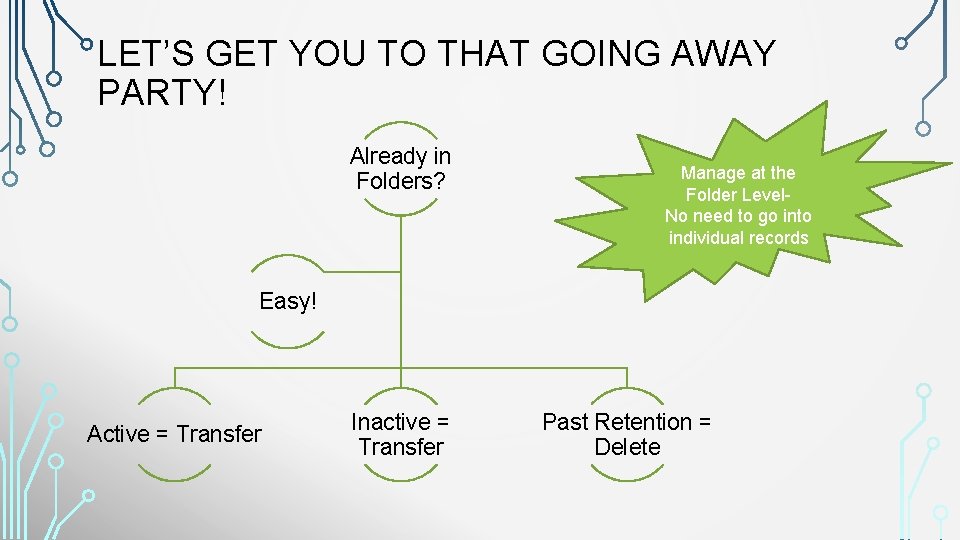
LET’S GET YOU TO THAT GOING AWAY PARTY! Already in Folders? Manage at the Folder Level. No need to go into individual records Easy! Active = Transfer Inactive = Transfer Past Retention = Delete
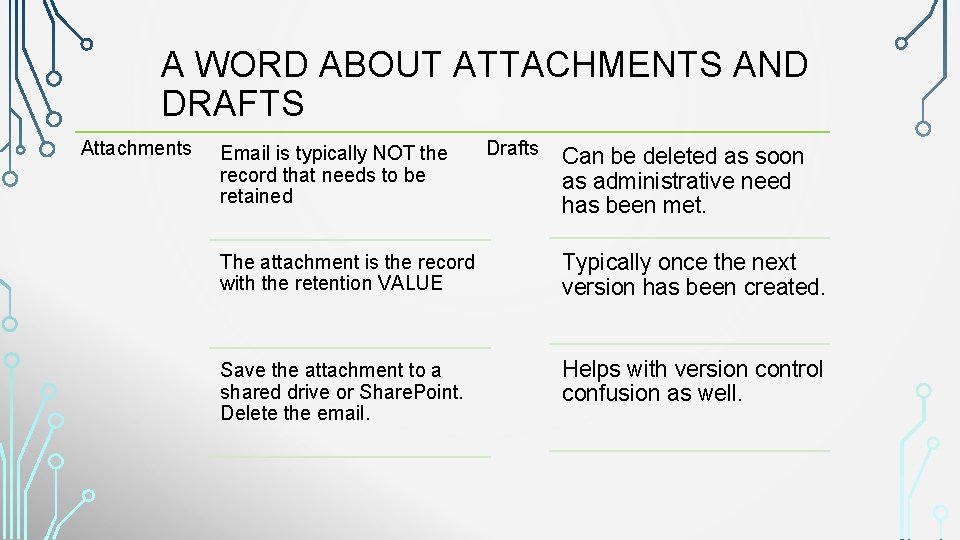
A WORD ABOUT ATTACHMENTS AND DRAFTS Attachments Email is typically NOT the record that needs to be retained Drafts Can be deleted as soon as administrative need has been met. The attachment is the record with the retention VALUE Typically once the next version has been created. Save the attachment to a shared drive or Share. Point. Delete the email. Helps with version control confusion as well.
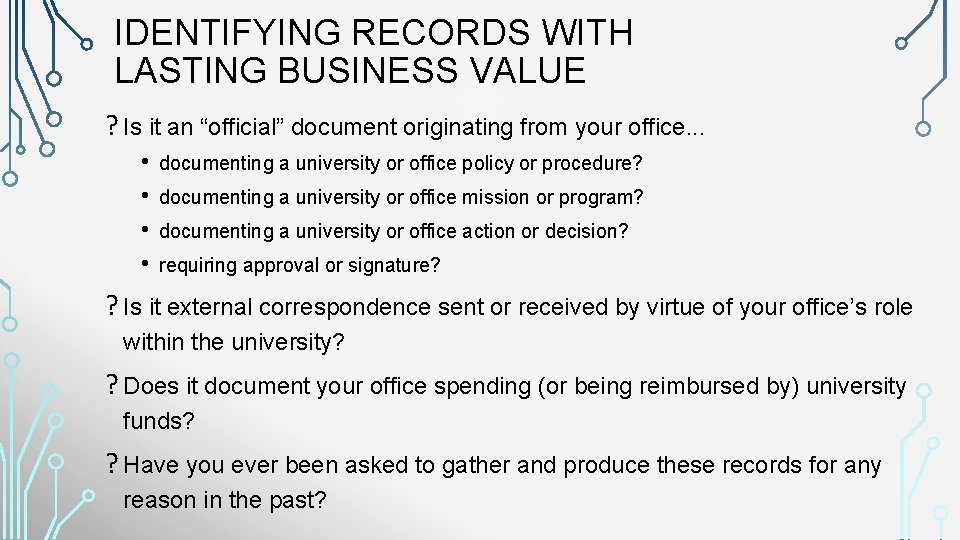
IDENTIFYING RECORDS WITH LASTING BUSINESS VALUE ? Is it an “official” document originating from your office. . . • • documenting a university or office policy or procedure? documenting a university or office mission or program? documenting a university or office action or decision? requiring approval or signature? ? Is it external correspondence sent or received by virtue of your office’s role within the university? ? Does it document your office spending (or being reimbursed by) university funds? ? Have you ever been asked to gather and produce these records for any reason in the past?
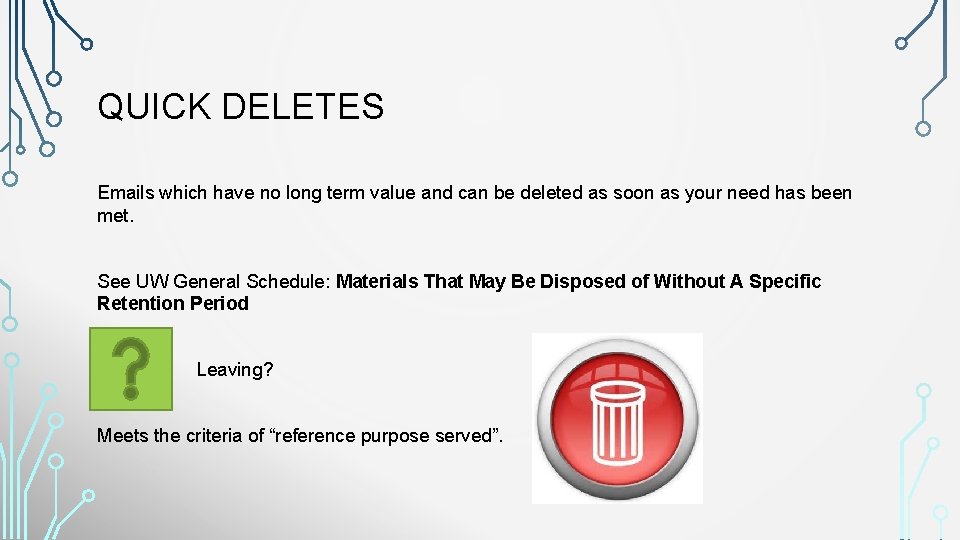
QUICK DELETES Emails which have no long term value and can be deleted as soon as your need has been met. See UW General Schedule: Materials That May Be Disposed of Without A Specific Retention Period Leaving? Meets the criteria of “reference purpose served”.
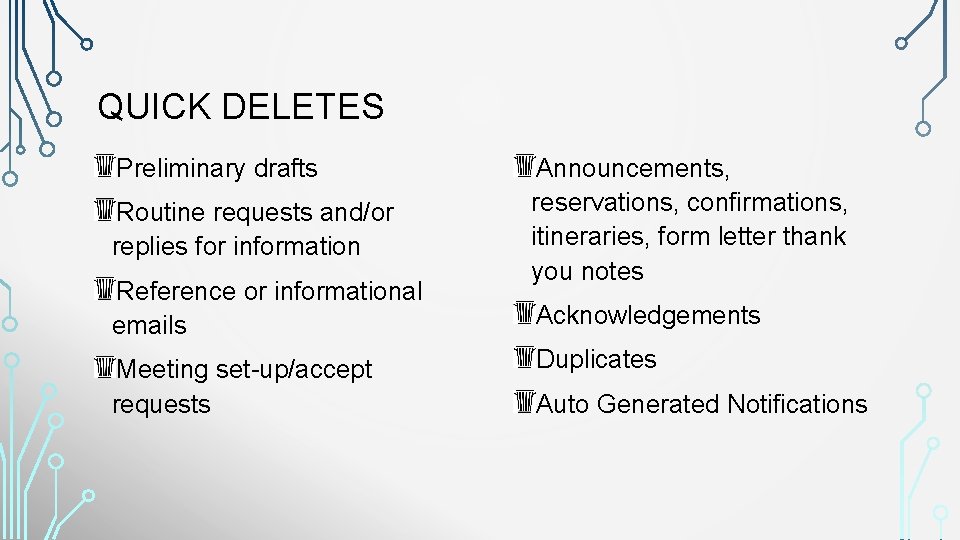
QUICK DELETES Preliminary drafts Routine requests and/or replies for information Reference or informational emails Meeting set-up/accept requests Announcements, reservations, confirmations, itineraries, form letter thank you notes Acknowledgements Duplicates Auto Generated Notifications
FOLDERS ARE EASY…WHAT ABOUT THAT INBOX? Set a timer for 20 minutes and go to town! Timer goes off – CELEBRATE!
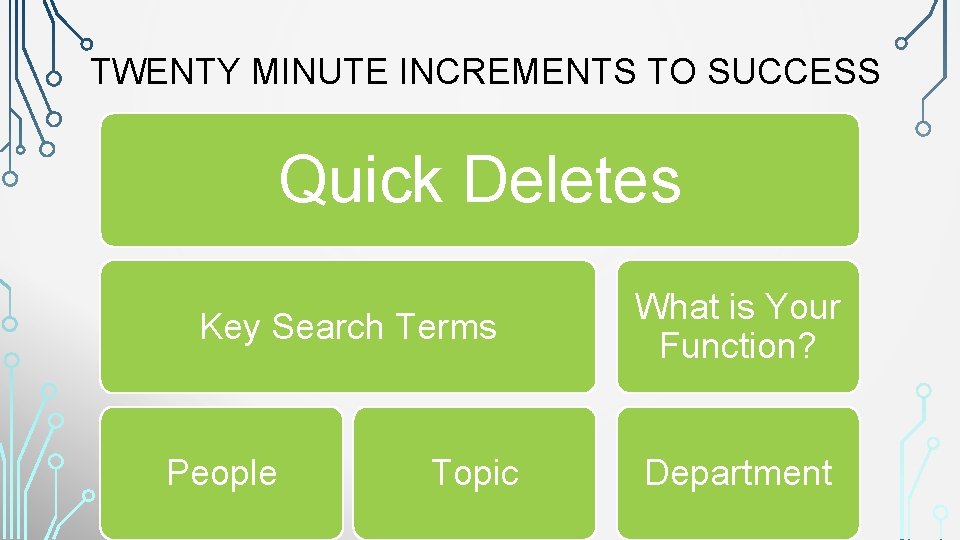
TWENTY MINUTE INCREMENTS TO SUCCESS Quick Deletes Key Search Terms People Topic What is Your Function? Department
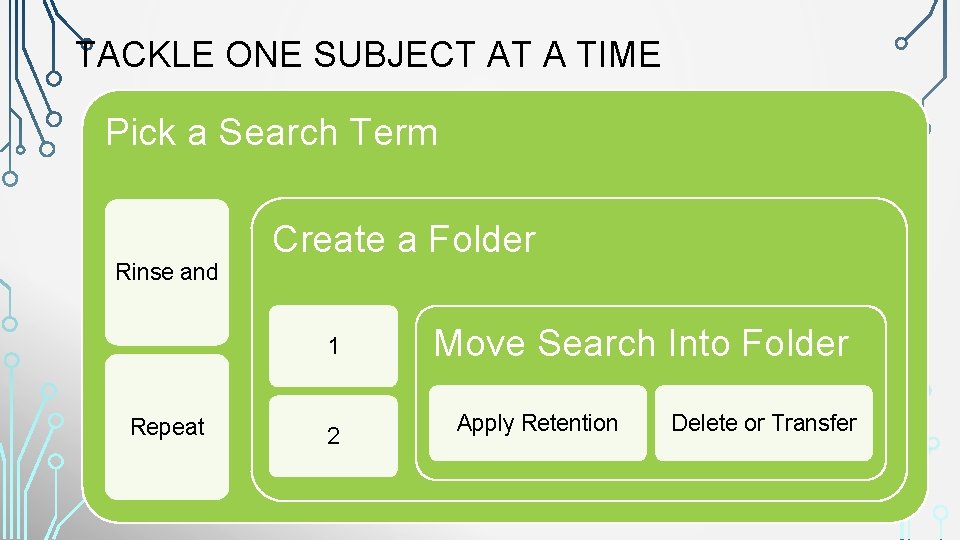
TACKLE ONE SUBJECT AT A TIME Pick a Search Term Rinse and Create a Folder 1 Repeat 2 Move Search Into Folder Apply Retention Delete or Transfer
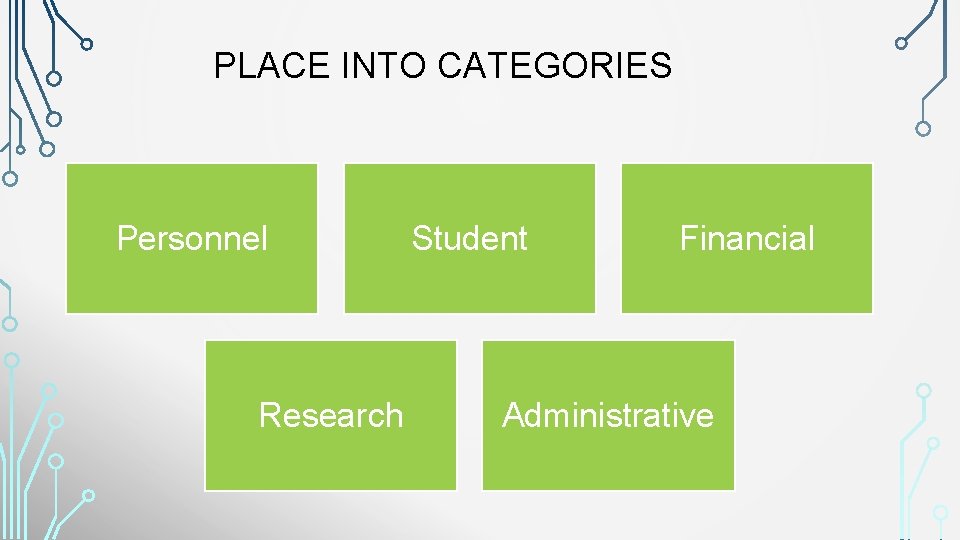
PLACE INTO CATEGORIES Personnel Research Student Financial Administrative
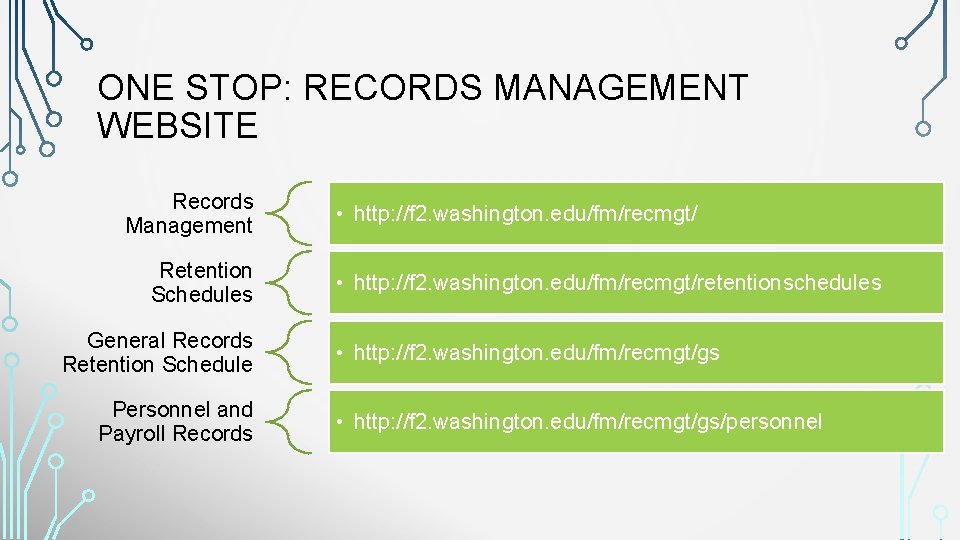
ONE STOP: RECORDS MANAGEMENT WEBSITE Records Management Retention Schedules General Records Retention Schedule Personnel and Payroll Records • http: //f 2. washington. edu/fm/recmgt/retentionschedules • http: //f 2. washington. edu/fm/recmgt/gs/personnel
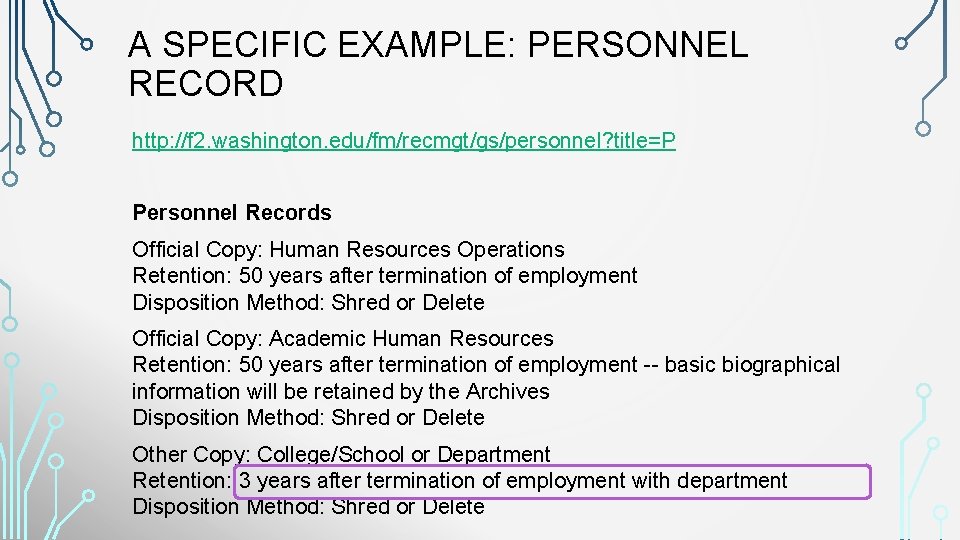
A SPECIFIC EXAMPLE: PERSONNEL RECORD http: //f 2. washington. edu/fm/recmgt/gs/personnel? title=P Personnel Records Official Copy: Human Resources Operations Retention: 50 years after termination of employment Disposition Method: Shred or Delete Official Copy: Academic Human Resources Retention: 50 years after termination of employment -- basic biographical information will be retained by the Archives Disposition Method: Shred or Delete Other Copy: College/School or Department Retention: 3 years after termination of employment with department Disposition Method: Shred or Delete
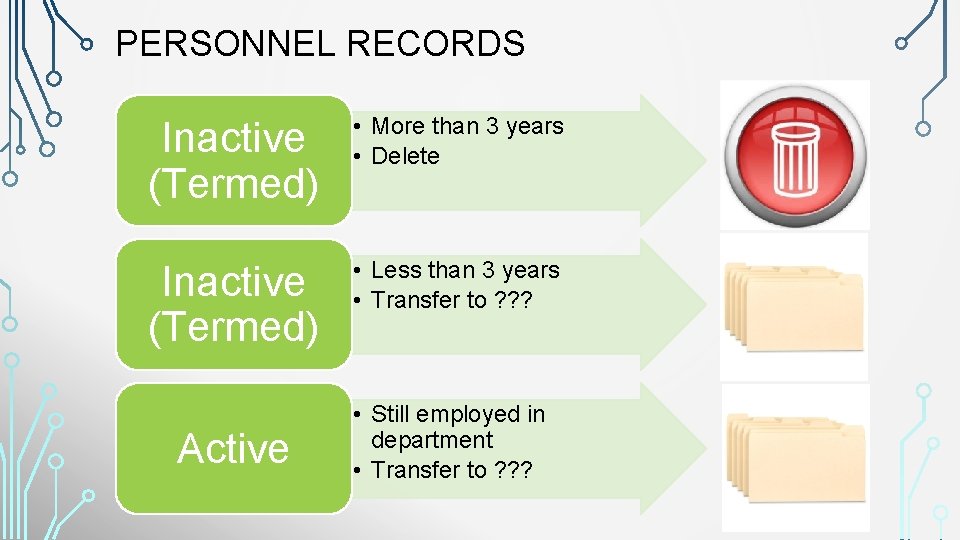
PERSONNEL RECORDS Inactive (Termed) • More than 3 years • Delete Inactive (Termed) • Less than 3 years • Transfer to ? ? ? Active • Still employed in department • Transfer to ? ? ?
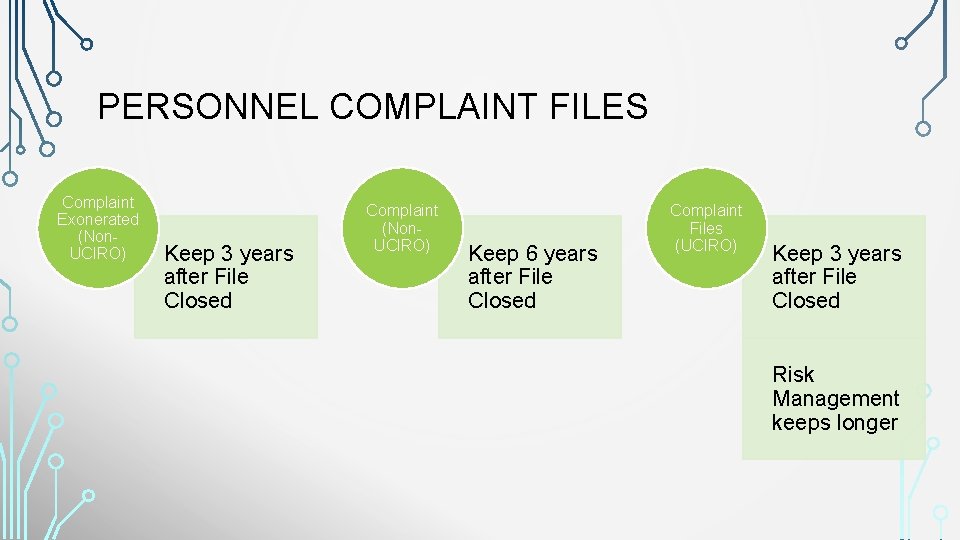
PERSONNEL COMPLAINT FILES Complaint Exonerated (Non. UCIRO) Keep 3 years after File Closed Complaint (Non. UCIRO) Keep 6 years after File Closed Complaint Files (UCIRO) Keep 3 years after File Closed Risk Management keeps longer
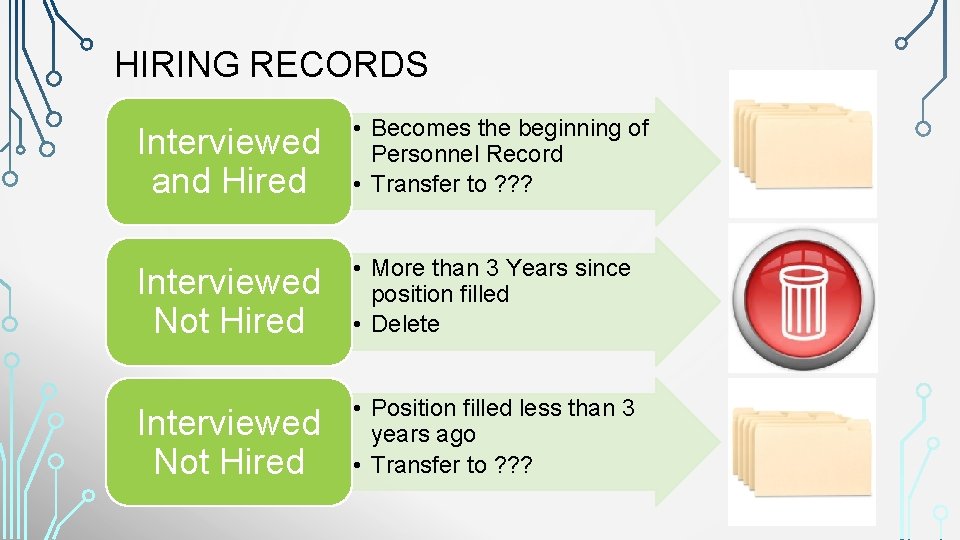
HIRING RECORDS Interviewed and Hired • Becomes the beginning of Personnel Record • Transfer to ? ? ? Interviewed Not Hired • More than 3 Years since position filled • Delete Interviewed Not Hired • Position filled less than 3 years ago • Transfer to ? ? ?
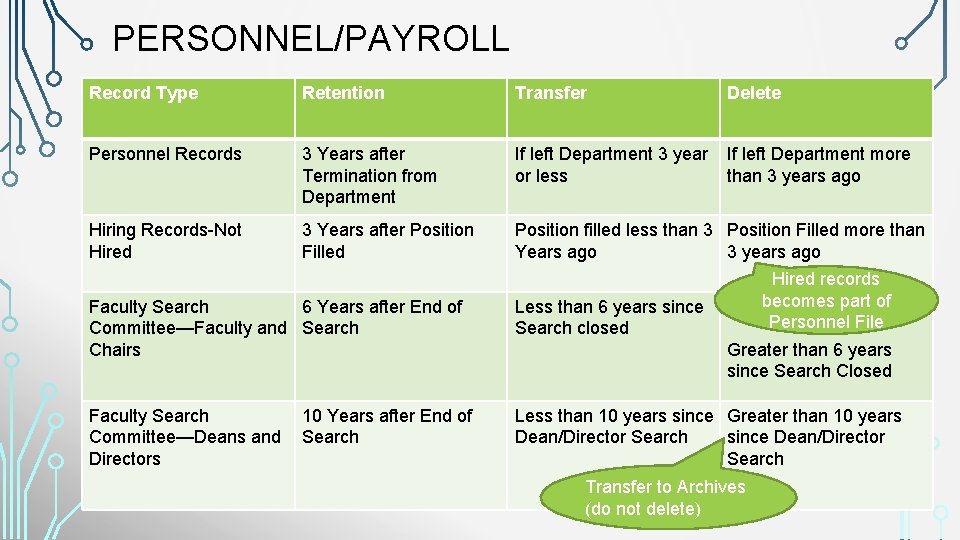
PERSONNEL/PAYROLL Record Type Retention Transfer Delete Personnel Records 3 Years after Termination from Department If left Department 3 year or less If left Department more than 3 years ago Hiring Records-Not Hired 3 Years after Position Filled Position filled less than 3 Position Filled more than Years ago 3 years ago Hired records becomes part of Personnel File Faculty Search 6 Years after End of Committee—Faculty and Search Chairs Less than 6 years since Search closed Faculty Search Committee—Deans and Directors Less than 10 years since Greater than 10 years Dean/Director Search since Dean/Director Search 10 Years after End of Search Greater than 6 years since Search Closed Transfer to Archives (do not delete)
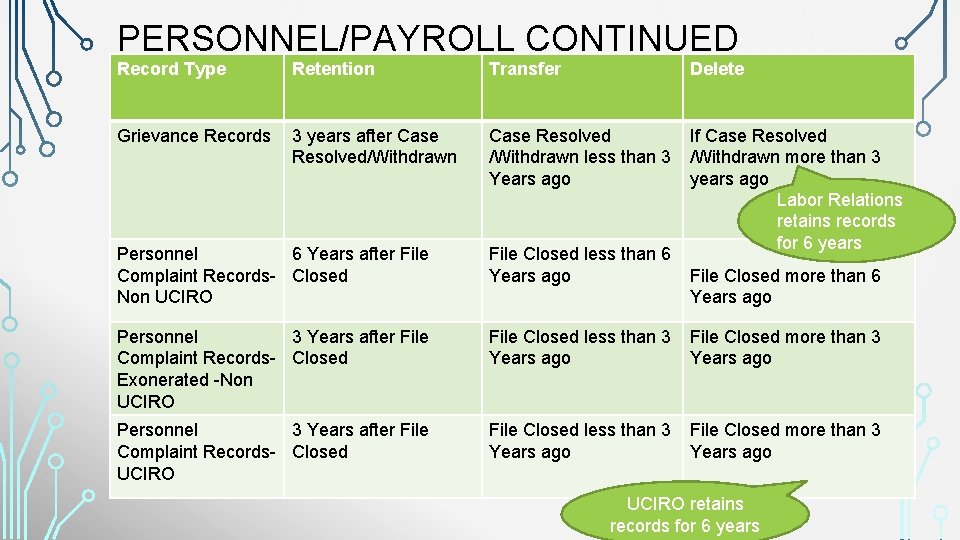
PERSONNEL/PAYROLL CONTINUED Record Type Retention Transfer Delete Grievance Records 3 years after Case Resolved/Withdrawn Case Resolved /Withdrawn less than 3 Years ago If Case Resolved /Withdrawn more than 3 years ago Labor Relations retains records for 6 years Personnel 6 Years after File Complaint Records- Closed Non UCIRO File Closed less than 6 Years ago Personnel 3 Years after File Complaint Records- Closed Exonerated -Non UCIRO File Closed less than 3 Years ago File Closed more than 3 Years ago Personnel 3 Years after File Complaint Records- Closed UCIRO File Closed less than 3 Years ago File Closed more than 6 Years ago UCIRO retains records for 6 years
QUESTIONS? Records Management Services http: //f 2. washington. edu/fm/recmgt/ Barbara Benson bbenson@uw. edu 543 -7950 Cara Ball ballc 2@uw. edu 543 -6512 Michael Mooney mmooney@uw. edu 543 -6190 Anna Sgarlato annasgar@uw. edu 543 -0573
- Slides: 47