
Electronic Prescribing Planning and Implementation to Achieve Success
Electronic Prescribing: Planning and Implementation to Achieve Success and Maximize Value Jonathan Teich Pat Hale Peter Basch Bob Elson Rick Ratliff
www. ehealthinitiative. org/initiatives/erx 2
Electronic Prescribing: Introduction - the Value - Stages of e. Rx Jonathan Teich, MD, Ph. D SVP and Chief Medical Officer Healthvision Chair, e. HI Electronic Prescribing Project
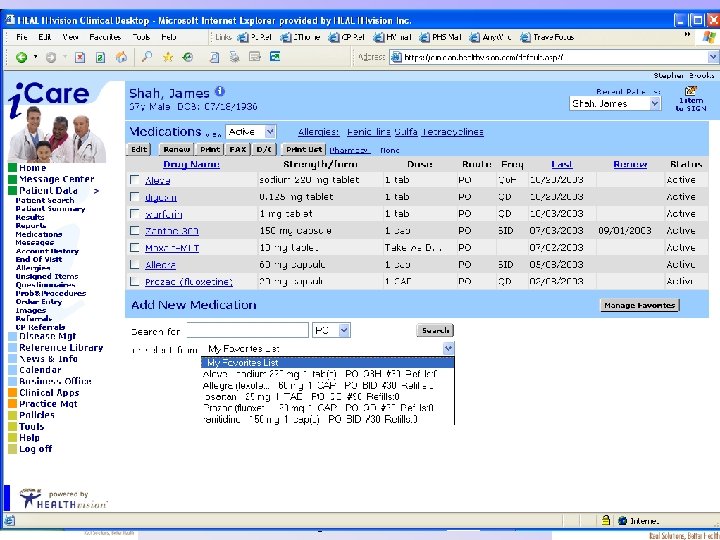
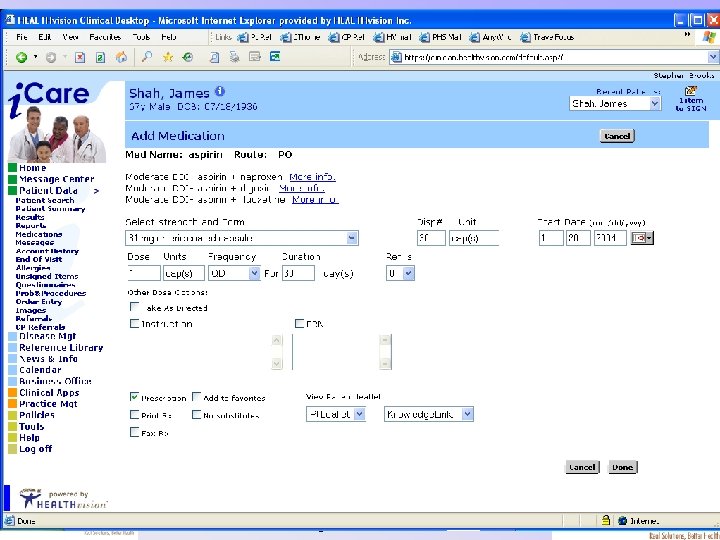
What is electronic prescribing? “Electronic prescribing” or “Computerized prescribing” = all systems that use a computer to enter, modify, review, and communicate drug prescriptions. 4
5
6
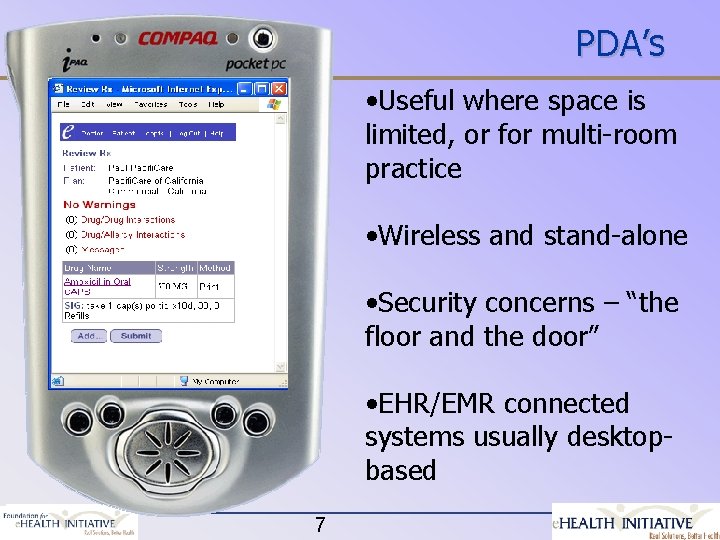
PDA’s • Useful where space is limited, or for multi-room practice • Wireless and stand-alone • Security concerns – “the floor and the door” • EHR/EMR connected systems usually desktopbased 7
8
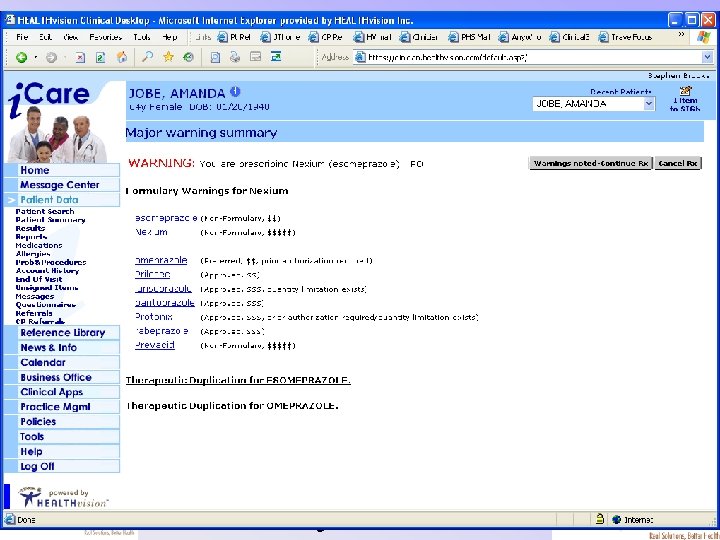
Formulary Checking 9
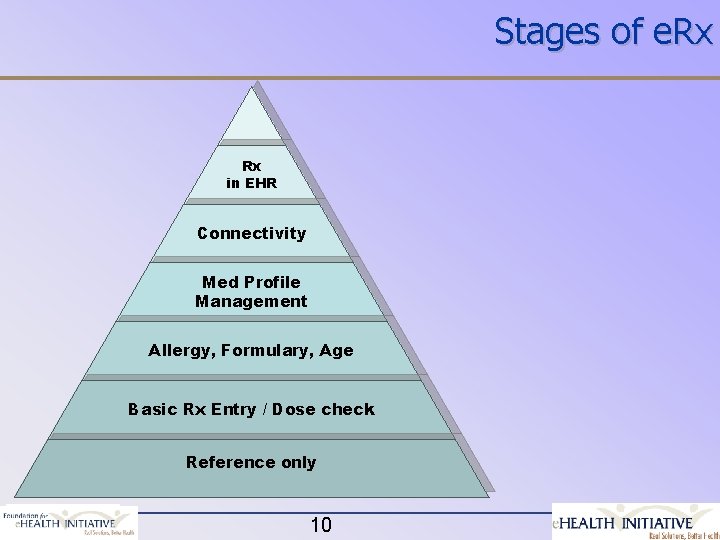
Stages of e. Rx Rx in EHR Connectivity Med Profile Management Allergy, Formulary, Age Basic Rx Entry / Dose check Reference only 10
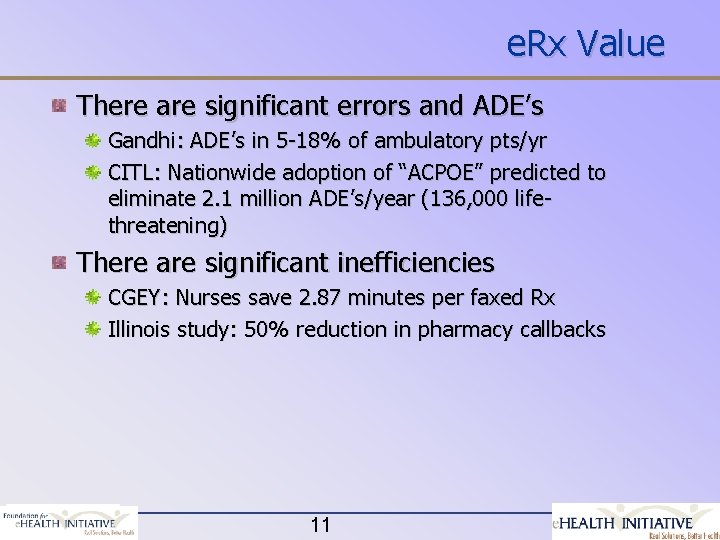
e. Rx Value There are significant errors and ADE’s Gandhi: ADE’s in 5 -18% of ambulatory pts/yr CITL: Nationwide adoption of “ACPOE” predicted to eliminate 2. 1 million ADE’s/year (136, 000 lifethreatening) There are significant inefficiencies CGEY: Nurses save 2. 87 minutes per faxed Rx Illinois study: 50% reduction in pharmacy callbacks 11
Electronic Prescribing: Planning and Implementation to Achieve Success and Maximize Value A Provider’s Perspective Peter Basch, MD Medical Director Med. Star e-Health Initiative
Med. Star’s e-Health Initiative Med. Star Health – 7 -hospital system in the Baltimore-Washington corridor Me. HI started in 2000 to Provide guidance to physicians from physicians, on practical e-health technologies Syndicate selected e-health products and services e-Prescribing was an early target for syndication Far easier and cheaper than inpatient CPOE, a “near term doable” Goals – enhance patient safety while improving workflow within the physician’s practice (as well as wins for other stakeholders) 13
Me. HI’s approach to e. Rx – 2001 Investigated market Used a consultant to do a preliminary vendor analysis Demos + “demo-lition derby” Selectively engaged with finalist vendors Far easier to do in an emerging market with startups Became part of process / political redesign Better product Align costs / benefits 14
Me. HI’s approach to e. Rx – 2003 -now Preferred pricing arrangements for any MD affiliated with our hospitals with 2 vendors Participation in the e. Health Initiative report on e. Rx 1 -yr pilot with Dr. First and CAQH 4 of every 1000 prescriptions (~2/day) were deemed by the prescriber to be significant mistakes (and were changed before being sent to the pharmacy) 93% of meds were written as generic or allowed to be substituted 30% of meds were substituted for a formulary alternative Benefit for providers is less clear 15
Moving ahead with e. Rx… Getting clinicians’ attention Choosing a vendor A lingering question… standalone e. Rx vs. EHR? Incentives – aligning costs / benefits 16
Getting clinicians’ attention Creating the imperative Paper-based prescribing is fraught with error - sure there’s bad handwriting, missing decimal points, and just bad judgment… But if you want to be heard by doctors… • Exponential increase in new drugs • More patients with multiple conditions taking multiple meds • Multi-tasking is efficient but can lead to errors • e. Rx is the right thing to do, and can be done today • e. Rx will be the standard of care The challenge – busy clinicians still have to slow down to listen to this message 17
Choosing a vendor Design and usability Web-based for PC, tablet, and PDA use PDA issues • Pocket PC vs. Palm • Synchronous vs. asynchronous Consider incremental adoption if office ereadiness is low (start with refills, progress to point-of-care prescribing) Usability is critical Workflow Physician and staff workflow Integration with practice management system Robust bidirectional connectivity Information gateway Transactional gateway 18
Standalone e. Rx vs. EHR Standalone e. Rx is cheaper and easier than an EHR But it doesn’t do the functions that makes embedded e. Rx desirable (Rx + med list + chart documentation) To make it fit clinician workflow • Either keep medication database separate from the chart • Always print it for the chart, or • Always open the e. Rx application with the chart (for staff and doctors) Point-of-care prescribing and renewals should never be done in a vacuum Embedded e. Rx in an EHR Clear advantages to workflow and staff efficiency May not require any additional incentives 19
Summary Without mandates and/or incentives, getting clinician attention / engagement takes work Even with mandates, incentives are necessary to align costs and benefits Choosing a good vendor should make the work of implementation much easier While standalone e. Rx may work for some clinicians, for others it may make more sense to start by adopting e. Rx as part of an EHR 20
Electronic Prescribing: Managing Implementation Pointers and Pitfalls Patricia L. Hale, MD, Ph. D CMIO Glens Falls Hospital Chair of MISC - American College of Physicians
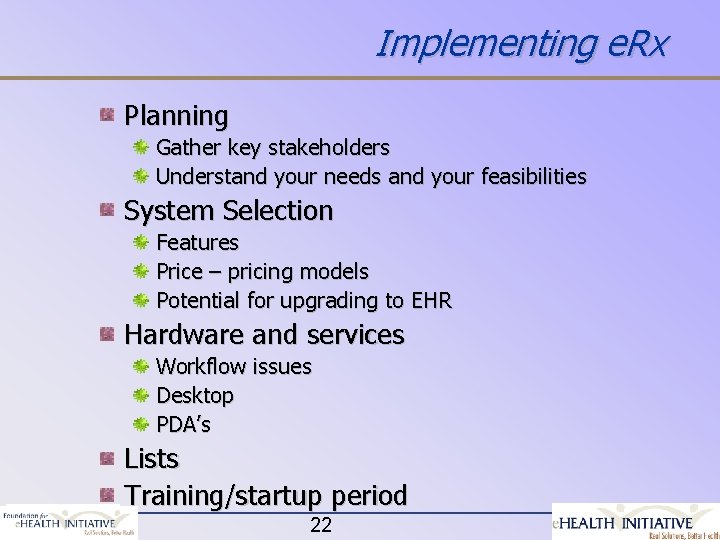
Implementing e. Rx Planning Gather key stakeholders Understand your needs and your feasibilities System Selection Features Price – pricing models Potential for upgrading to EHR Hardware and services Workflow issues Desktop PDA’s Lists Training/startup period 22
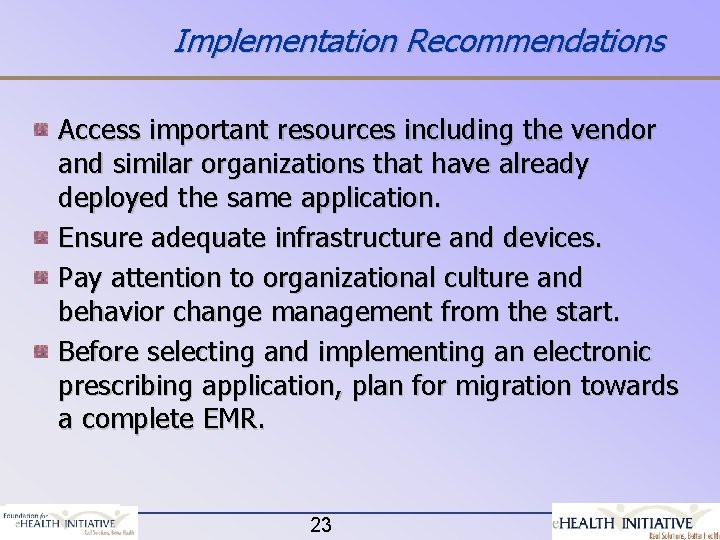
Implementation Recommendations Access important resources including the vendor and similar organizations that have already deployed the same application. Ensure adequate infrastructure and devices. Pay attention to organizational culture and behavior change management from the start. Before selecting and implementing an electronic prescribing application, plan for migration towards a complete EMR. 23
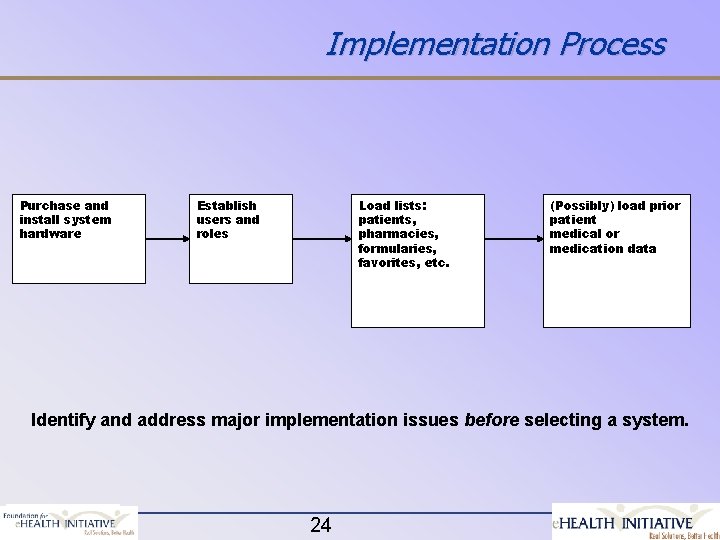
Implementation Process Purchase and install system hardware Load lists: patients, pharmacies, formularies, favorites, etc. Establish users and roles (Possibly) load prior patient medical or medication data Identify and address major implementation issues before selecting a system. 24
Implementation Issues Address startup and interface issues early: Integration with a practice management system to gain access to registration and schedule information, Loading patients’ initial medication lists from the previous system or from paper records; and Selecting and loading the appropriate payer and formulary information. Communication with pharmacies, health plans, etc. 25
Implementation Issues Identify Hardware and Service Needs: In-office siting and connections Networking / Internet / wireless Communications services (e. g. , to pharmacies) What are your pharmacies ready for? How will you access Health Plan information? Can you communicate with other providers? 26
Implementation Issues Prepare Lists: Users Patient load or PM connection Formularies Favorites Initial medication load 27
Implementation Issues Keys to Success: Strong leadership & commitment Incremental approaches High support staff involvement Medication history preload The “basics” well planned in advance PMS interface, network, devices, training & support 28
Implementation Issues Challenges: Good application not sufficient Cultural issues/managing behavior change Startup issues and problem resolution. Rollout timing and sequencing. Higher relative cost for small practices 29
Electronic Prescribing: Managing Implementation – Clinical Decision Support, Formulary, Medication Lists Bob Elson, MD, MS VP Medical Affairs Rx. Hub, LLC
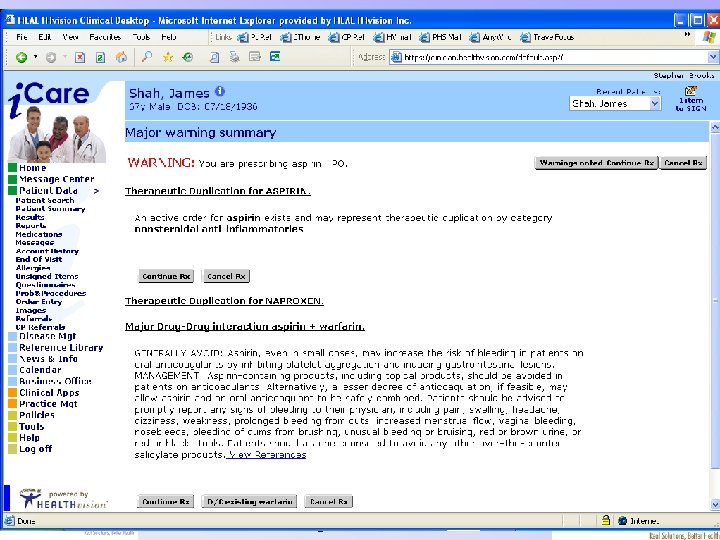
Implementation: Decision Support List maintenance Active medications, allergies, problems Other key data: weight, lab results Warnings management / workflow User roles / privileges Override justification / documentation De-activation / disabling of warnings Knowledge base updating Custom warnings? Understand decision support “holes” Application safety “czar” Bell, DS. A conceptual framework for evaluating e. Rx systems. JAMIA, 2004. 11: 60 -70. Fernando, B. Prescribing safety features of GP computer systems. BMJ. 2004; 328: 1171 31
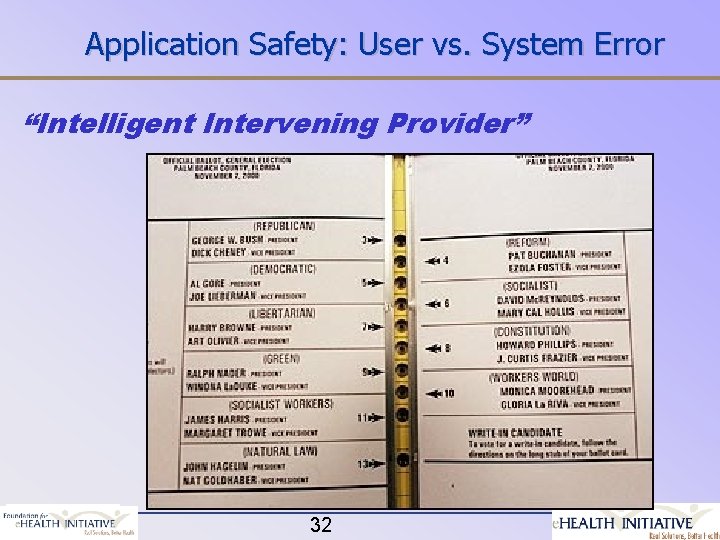
Application Safety: User vs. System Error “Intelligent Intervening Provider” 32
Implementation: Formulary Getting the data On vs. off-formulary, preferred, restrictions, copay Health plan coverage Data costs? Mapping a patient to the right formulary Workflow Pointers to preferred alternatives Overrides Prior authorization 33
Implementation: Medication Lists Building initial medication lists The “backfile conversion” problem Medication list maintenance “brown paper bag” intake Active vs. inactive meds Medications prescribed by other physicians Assessing compliance 34
Implementation: “Front-End” Connectivity Eligibility-driven formulary mapping Claims-based prescription history 35
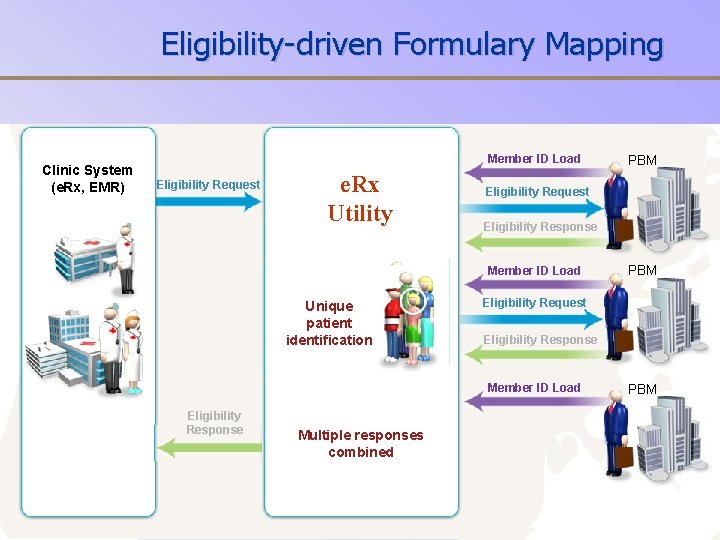
Eligibility-driven Formulary Mapping Clinic System (e. Rx, EMR) Member ID Load Eligibility Request e. Rx Utility Master Person Unique patient Index identification MPI Eligibility Request Eligibility Response Member ID Load Multiple responses combined 36 PBM Eligibility Request Eligibility Response Member ID Load Eligibility Response PBM
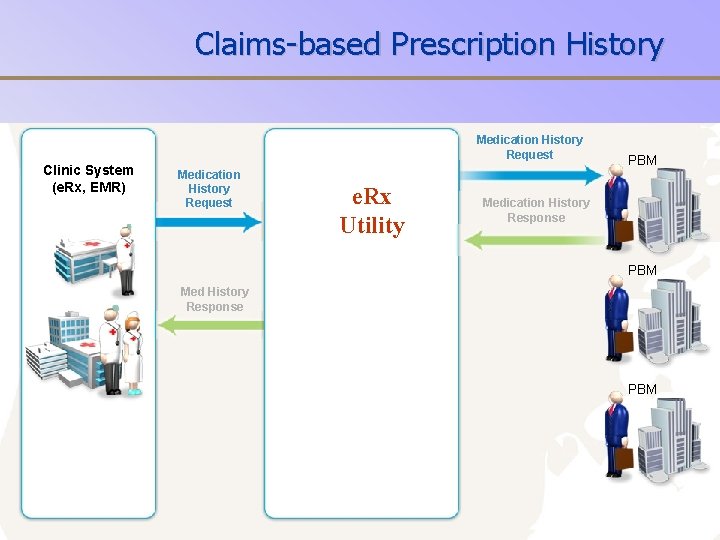
Claims-based Prescription History Medication History Request Clinic System (e. Rx, EMR) Medication History Request e. Rx Utility PBM Medication History Response PBM Med History Response PBM 37
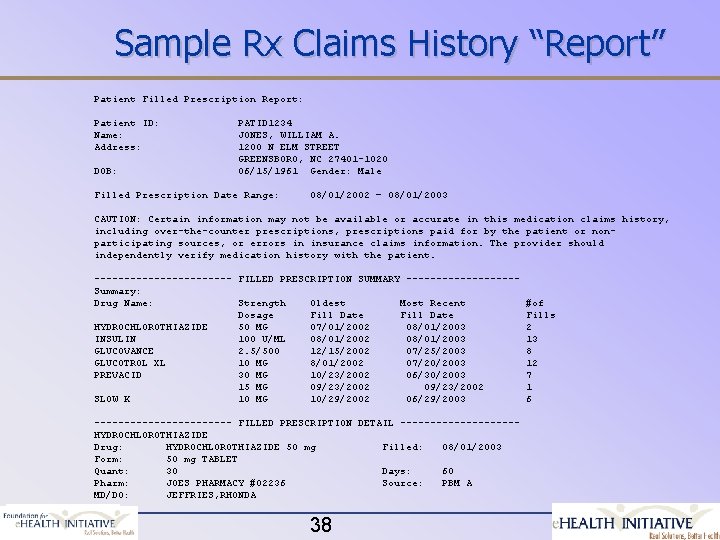
Sample Rx Claims History “Report” Patient Filled Prescription Report: Patient ID: PATID 1234 Name: JONES, WILLIAM A. Address: 1200 N ELM STREET GREENSBORO, NC 27401 -1020 DOB: 06/15/1961 Gender: Male Filled Prescription Date Range: 08/01/2002 – 08/01/2003 CAUTION: Certain information may not be available or accurate in this medication claims history, including over-the-counter prescriptions, prescriptions paid for by the patient or nonparticipating sources, or errors in insurance claims information. The provider should independently verify medication history with the patient. ------------ FILLED PRESCRIPTION SUMMARY ---------Summary: Drug Name: Strength Oldest Most Recent Dosage Fill Date HYDROCHLOROTHIAZIDE 50 MG 07/01/2002 08/01/2003 INSULIN 100 U/ML 08/01/2002 08/01/2003 GLUCOVANCE 2. 5/500 12/15/2002 07/25/2003 GLUCOTROL XL 10 MG 8/01/2002 07/20/2003 PREVACID 30 MG 10/23/2002 06/30/2003 15 MG 09/23/2002 SLOW K 10 MG 10/29/2002 06/29/2003 ------------ FILLED PRESCRIPTION DETAIL ----------HYDROCHLOROTHIAZIDE Drug: HYDROCHLOROTHIAZIDE 50 mg Filled: 08/01/2003 Form: 50 mg TABLET Quant: 30 Days: 60 Pharm: JOES PHARMACY #02236 Source: PBM A MD/DO: JEFFRIES, RHONDA 38 #of Fills 2 13 8 12 7 1 6
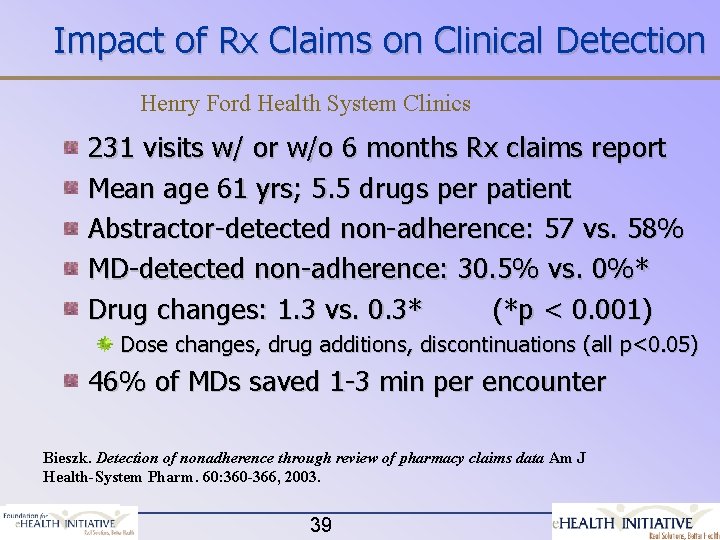
Impact of Rx Claims on Clinical Detection Henry Ford Health System Clinics 231 visits w/ or w/o 6 months Rx claims report Mean age 61 yrs; 5. 5 drugs per patient Abstractor-detected non-adherence: 57 vs. 58% MD-detected non-adherence: 30. 5% vs. 0%* Drug changes: 1. 3 vs. 0. 3* (*p < 0. 001) Dose changes, drug additions, discontinuations (all p<0. 05) 46% of MDs saved 1 -3 min per encounter Bieszk. Detection of nonadherence through review of pharmacy claims data Am J Health-System Pharm. 60: 360 -366, 2003. 39
Implementation: A Few Key Areas Decision Support Formulary Medication Lists 40
Electronic Prescribing: Physician - Pharmacy Issues; Building Community Initiatives Rick Ratliff Chief Operating Officer Sure. Scripts
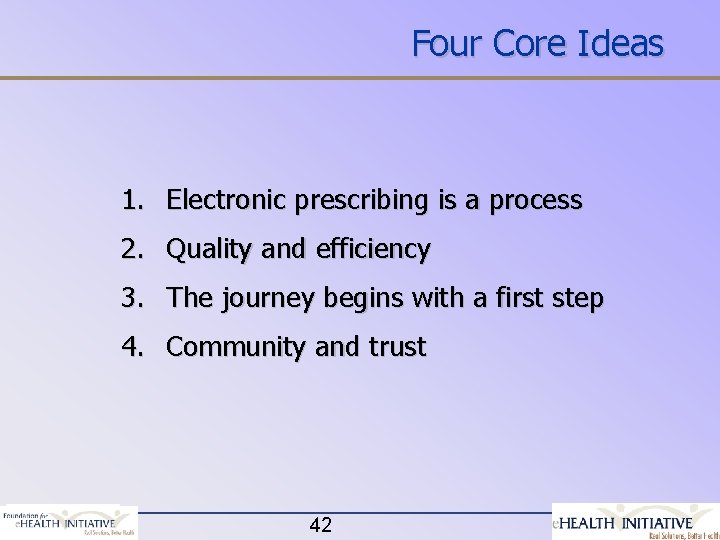
Four Core Ideas 1. Electronic prescribing is a process 2. Quality and efficiency 3. The journey begins with a first step 4. Community and trust 42
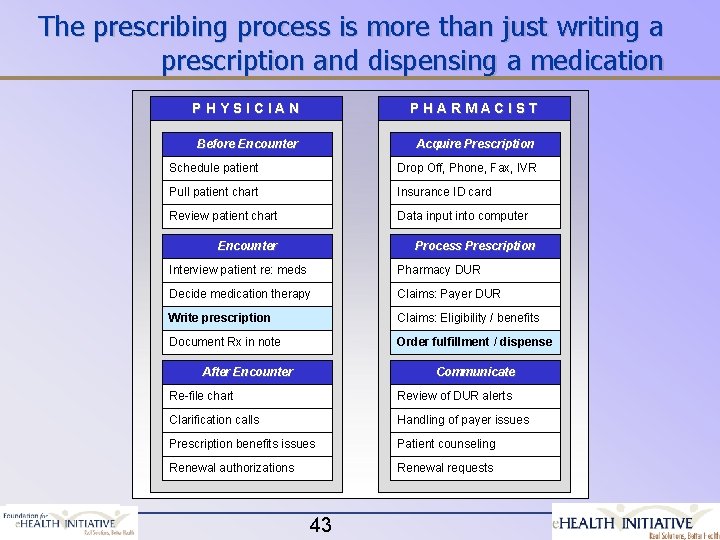
The prescribing process is more than just writing a prescription and dispensing a medication PHYSICIAN PHARMACIST Before Encounter Acquire Prescription Schedule patient Drop Off, Phone, Fax, IVR Pull patient chart Insurance ID card Review patient chart Data input into computer Encounter Process Prescription Interview patient re: meds Pharmacy DUR Decide medication therapy Claims: Payer DUR Write prescription Claims: Eligibility / benefits Document Rx in note Order fulfillment / dispense After Encounter Communicate Re-file chart Review of DUR alerts Clarification calls Handling of payer issues Prescription benefits issues Patient counseling Renewal authorizations Renewal requests 43
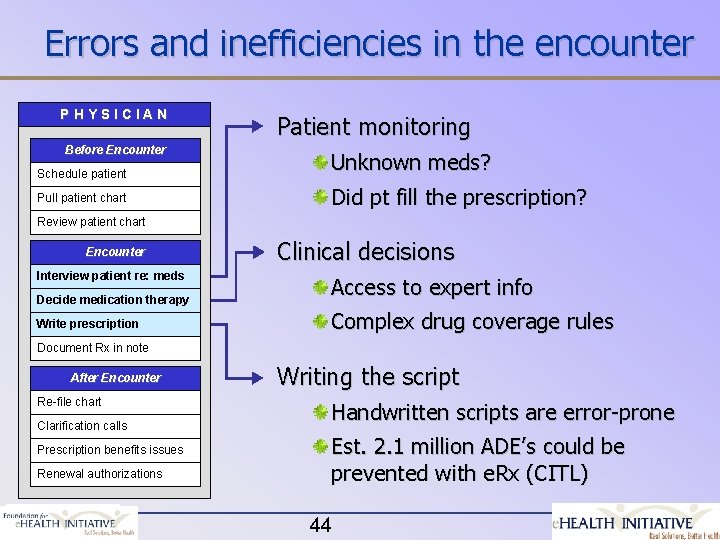
Errors and inefficiencies in the encounter PHYSICIAN Before Encounter Patient monitoring Schedule patient Unknown meds? Pull patient chart Did pt fill the prescription? Review patient chart Encounter Interview patient re: meds Decide medication therapy Write prescription Clinical decisions Access to expert info Complex drug coverage rules Document Rx in note After Encounter Re-file chart Clarification calls Prescription benefits issues Renewal authorizations Writing the script Handwritten scripts are error-prone Est. 2. 1 million ADE’s could be prevented with e. Rx (CITL) 44
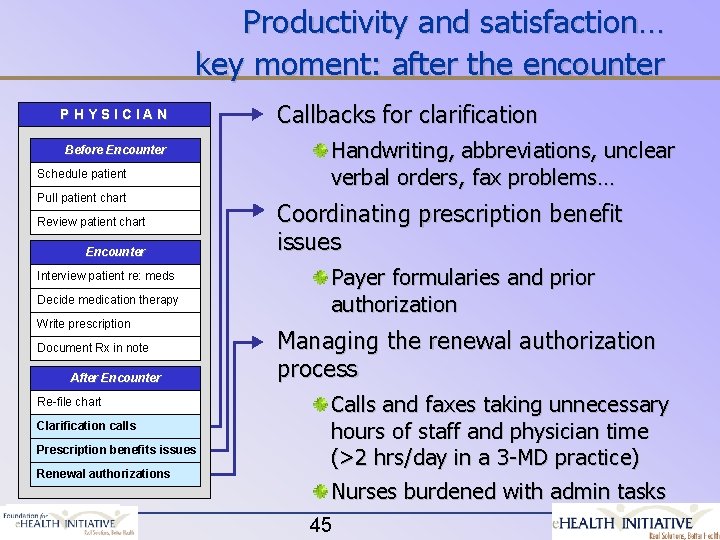
Productivity and satisfaction… key moment: after the encounter PHYSICIAN Before Encounter Schedule patient Pull patient chart Review patient chart Encounter Interview patient re: meds Decide medication therapy Write prescription Document Rx in note After Encounter Re-file chart Clarification calls Prescription benefits issues Renewal authorizations Callbacks for clarification Handwriting, abbreviations, unclear verbal orders, fax problems… Coordinating prescription benefit issues Payer formularies and prior authorization Managing the renewal authorization process Calls and faxes taking unnecessary hours of staff and physician time (>2 hrs/day in a 3 -MD practice) Nurses burdened with admin tasks 45
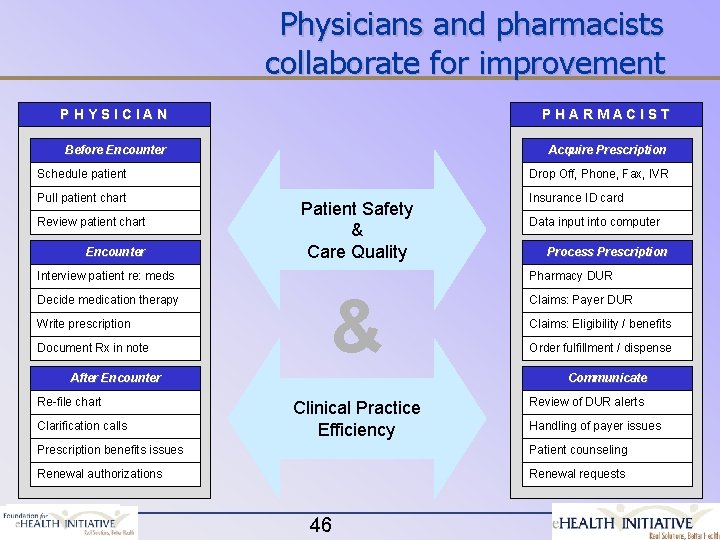
Physicians and pharmacists collaborate for improvement PHYSICIAN PHARMACIST Before Encounter Acquire Prescription Schedule patient Pull patient chart Review patient chart Encounter Drop Off, Phone, Fax, IVR Patient Safety & Care Quality Interview patient re: meds Decide medication therapy Write prescription Document Rx in note Clarification calls Data input into computer Process Prescription Pharmacy DUR & After Encounter Re-file chart Insurance ID card Claims: Payer DUR Claims: Eligibility / benefits Order fulfillment / dispense Communicate Clinical Practice Efficiency Review of DUR alerts Handling of payer issues Prescription benefits issues Patient counseling Renewal authorizations Renewal requests 46
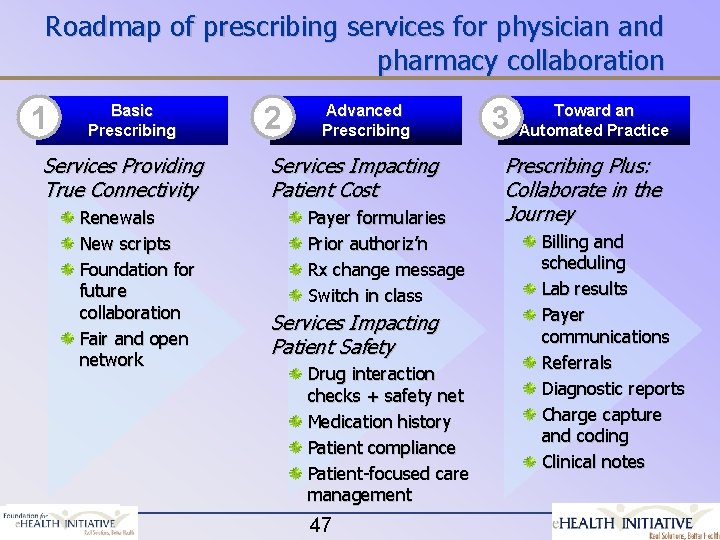
Roadmap of prescribing services for physician and pharmacy collaboration 1 Basic Prescribing Services Providing True Connectivity Renewals New scripts Foundation for future collaboration Fair and open network 2 Advanced Prescribing Services Impacting Patient Cost Payer formularies Prior authoriz’n Rx change message Switch in class Services Impacting Patient Safety Drug interaction checks + safety net Medication history Patient compliance Patient-focused care management 47 Toward an 3 Automated Practice Prescribing Plus: Collaborate in the Journey Billing and scheduling Lab results Payer communications Referrals Diagnostic reports Charge capture and coding Clinical notes
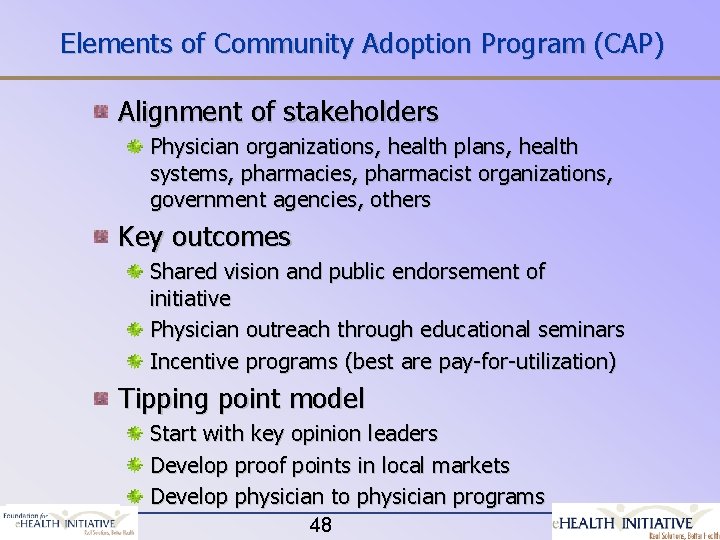
Elements of Community Adoption Program (CAP) Alignment of stakeholders Physician organizations, health plans, health systems, pharmacies, pharmacist organizations, government agencies, others Key outcomes Shared vision and public endorsement of initiative Physician outreach through educational seminars Incentive programs (best are pay-for-utilization) Tipping point model Start with key opinion leaders Develop proof points in local markets Develop physician to physician programs 48
Market Example: Rhode Island Electronic Prescribing Project Stakeholders engaged in the project by Rhode Island Quality Institute Physician involvement was driven by a core group of physicians who collaborated on the planning and implementation of the project Over 70% of the state’s retail pharmacies connected into the electronic prescribing network Approximately 300 physicians participating with an expectation of 50% of physicians within Rhode Island participating by end of Summer 2004 49
- Slides: 49