
Electronic Polarons in Narrow band Semiconductors and Metals
Electronic Polarons in Narrow band Semiconductors and Metals G. A. Sawatzky University of British Columbia
collaborators • • • Bayo Lao UBC Subhra Gupta UBC Hiroki Wadati UBC Ilya Elfimov UBC Mona Berciu UBC Andrea Damascelli UBC • Hao Tjeng Cologne/Dresden • Jeroen van den Brink Leiden/Dresden • Jan Zaanen Leiden
content • Very brief introduction to TM oxide electronic structure • Want happens at surfaces and interfaces • Surface band gaps, superexchange, orbital ordering , Polar surfaces • Non uniform polarizability; Range and sign of Coulomb interactions in ionic compounds • Strange short range Coulomb interactions in Fe Pnictides
Wide diversity of properties • • • Metals: Cr. O 2, Fe 3 O 4 T>120 K Insulators: Cr 2 O 3, Sr. Ti. O 3, Co. O Semiconductors: Cu 2 O Semiconductor –metal: VO 2, V 2 O 3, Ti 4 O 7 Superconductors: La(Sr)2 Cu. O 4, Li. Ti. O 4, YBCO Piezo and Ferroelectric: Ba. Ti. O 3 Catalysts: Fe, Co, Ni Oxides Ferro and Ferri magnets: Cr. O 2, gamma. Fe 2 O 3 Antiferromagnets: alfa Fe 2 O 3, Mn. O, Ni. O --Ionic conductors (batteries) Lix. Ni 1 -x. O Oxide fuel cells use Manganites and cobaltates Properties depend in detail on composition and structure
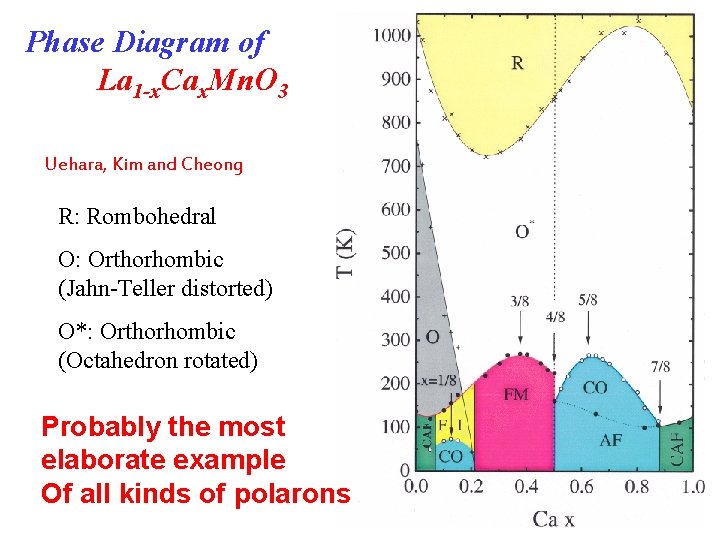
Phase Diagram of La 1 -x. Cax. Mn. O 3 Uehara, Kim and Cheong R: Rombohedral O: Orthorhombic (Jahn-Teller distorted) O*: Orthorhombic (Octahedron rotated) Probably the most elaborate example Of all kinds of polarons
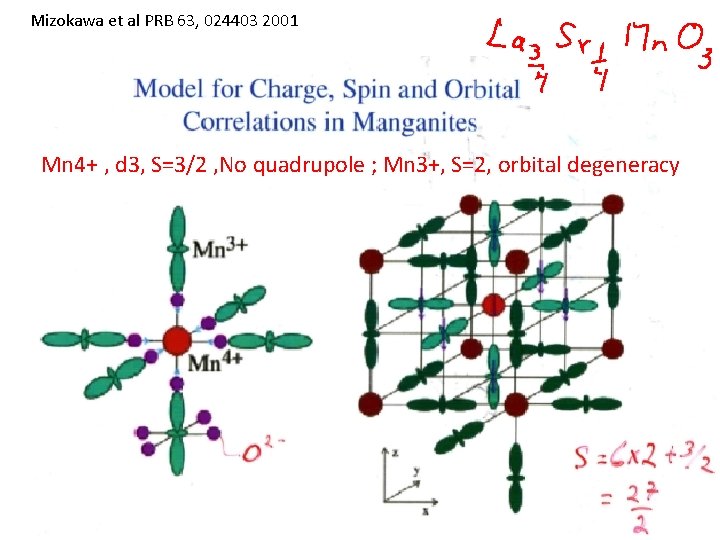
Mizokawa et al PRB 63, 024403 2001 Mn 4+ , d 3, S=3/2 , No quadrupole ; Mn 3+, S=2, orbital degeneracy
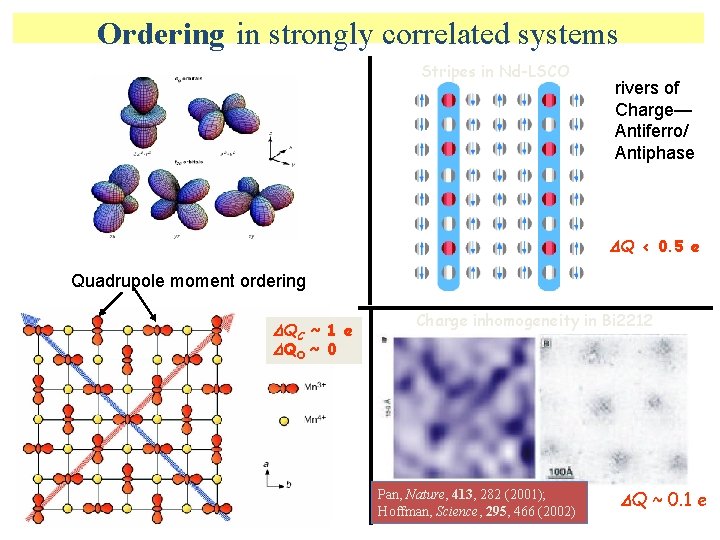
Ordering in strongly correlated systems Stripes in Nd-LSCO rivers of Charge— Antiferro/ Antiphase DQ < 0. 5 e Quadrupole moment ordering D QC ~ 1 e D QO ~ 0 Charge inhomogeneity in Bi 2212 Pan, Nature, 413, 282 (2001); Hoffman, Science, 295, 466 (2002) DQ ~ 0. 1 e
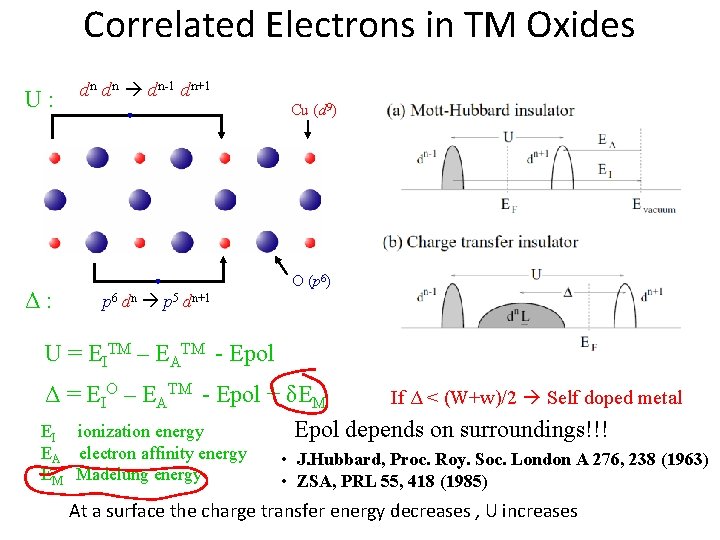
Correlated Electrons in TM Oxides U: Δ: dn dn dn-1 dn+1 Cu (d 9) O (p 6) p 6 dn p 5 dn+1 U = EITM – EATM - Epol Δ = EIO – EATM - Epol + δEM If Δ < (W+w)/2 Self doped metal EI ionization energy Epol depends on surroundings!!! EA electron affinity energy EM Madelung energy • J. Hubbard, Proc. Roy. Soc. London A 276, 238 (1963) • ZSA, PRL 55, 418 (1985) At a surface the charge transfer energy decreases , U increases
Interfaces between narrow band semiconductors and metals may be very different from broad band semiconductors like Si or Ga. As
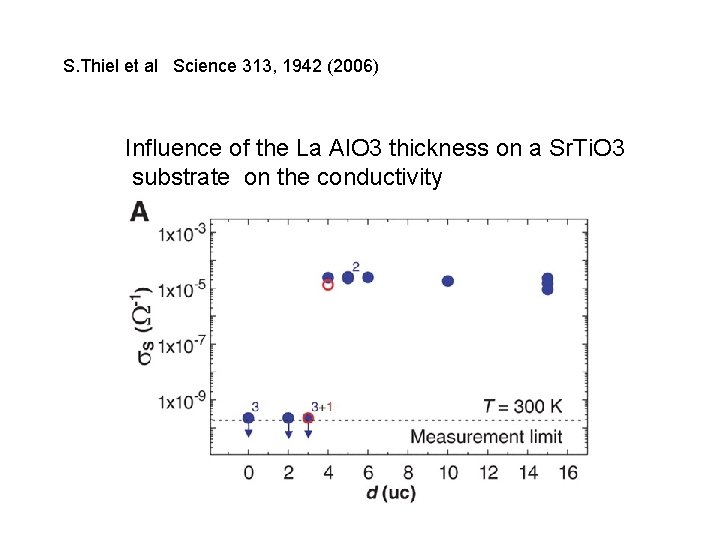
S. Thiel et al Science 313, 1942 (2006) Influence of the La Al. O 3 thickness on a Sr. Ti. O 3 substrate on the conductivity
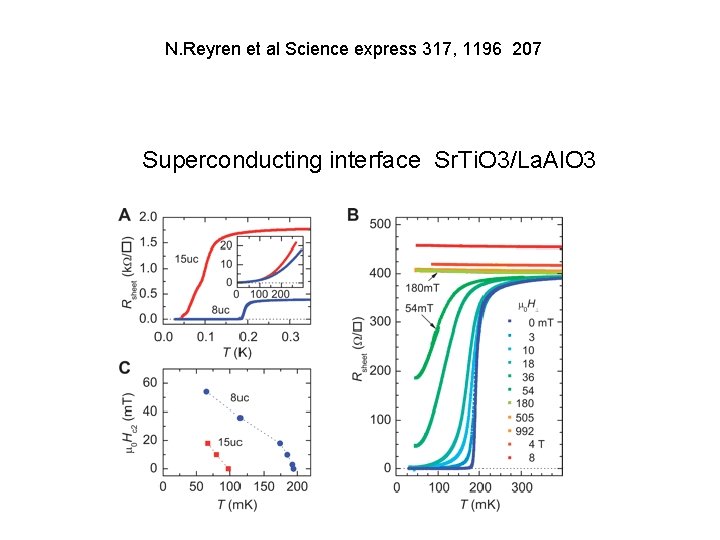
N. Reyren et al Science express 317, 1196 207 Superconducting interface Sr. Ti. O 3/La. Al. O 3
Narrow band width ultra thin layers on Polarizable media • correlated electron systems mostly have band widths of only 1 -2 e. V • Molecular solids have very small band widths of 1 e. V or less • Si, Ga. As have band widths of 20 -30 e. V and behave very differently at interfaces
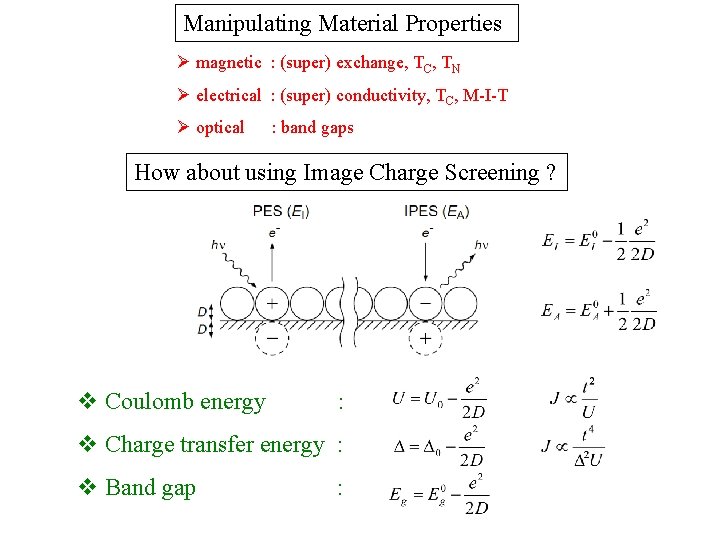
Manipulating Material Properties Ø magnetic : (super) exchange, TC, TN Ø electrical : (super) conductivity, TC, M-I-T Ø optical : band gaps How about using Image Charge Screening ? v Coulomb energy : v Charge transfer energy : v Band gap :
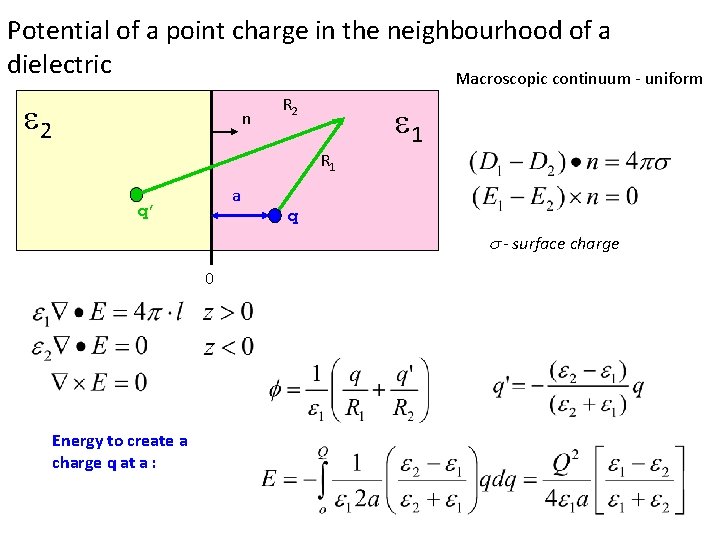
Potential of a point charge in the neighbourhood of a dielectric Macroscopic continuum - uniform 2 n R 2 1 R 1 a q’ q - surface charge 0 Energy to create a charge q at a :
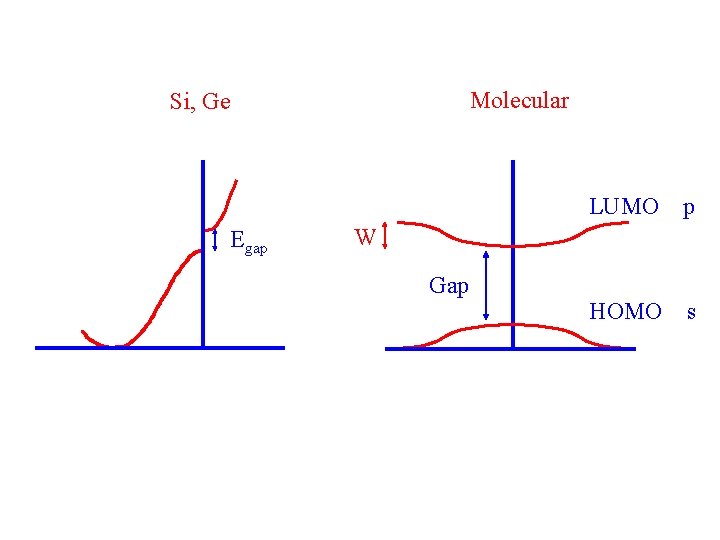
Molecular Si, Ge Egap LUMO p HOMO s W Gap
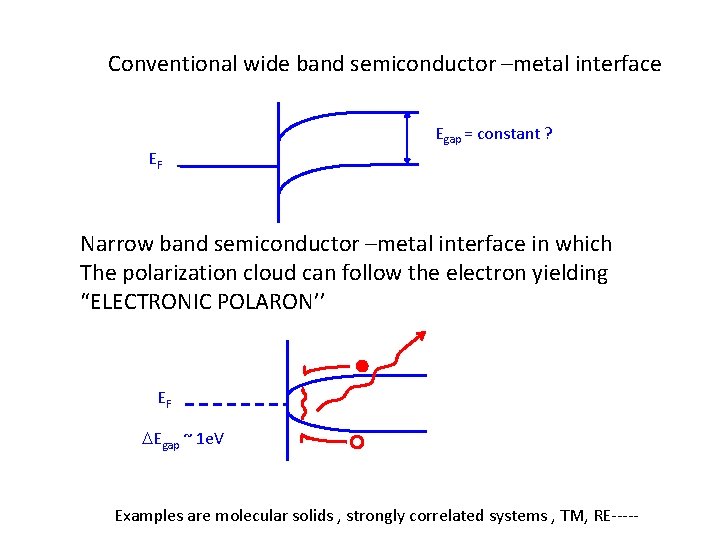
Conventional wide band semiconductor –metal interface Egap = constant ? EF Narrow band semiconductor –metal interface in which The polarization cloud can follow the electron yielding “ELECTRONIC POLARON’’ EF Egap ~ 1 e. V Examples are molecular solids , strongly correlated systems , TM, RE-----
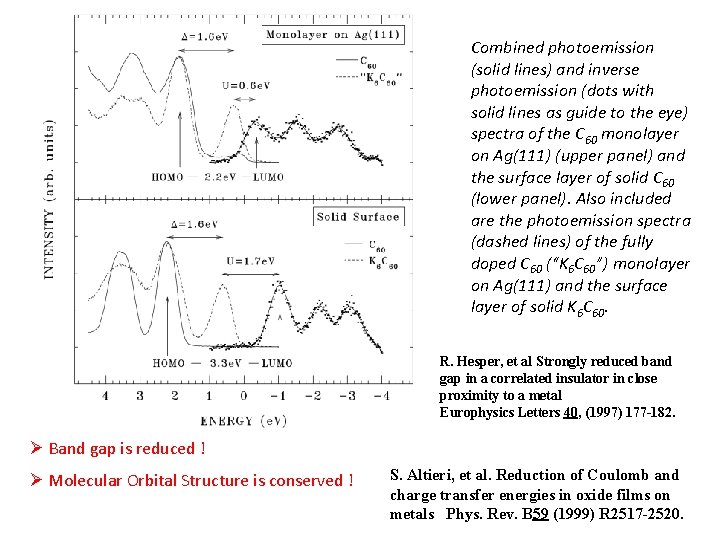
Combined photoemission (solid lines) and inverse photoemission (dots with solid lines as guide to the eye) spectra of the C 60 monolayer on Ag(111) (upper panel) and the surface layer of solid C 60 (lower panel). Also included are the photoemission spectra (dashed lines) of the fully doped C 60 (“K 6 C 60”) monolayer on Ag(111) and the surface layer of solid K 6 C 60. R. Hesper, et al Strongly reduced band gap in a correlated insulator in close proximity to a metal Europhysics Letters 40, (1997) 177 -182. Ø Band gap is reduced ! Ø Molecular Orbital Structure is conserved ! S. Altieri, et al. Reduction of Coulomb and charge transfer energies in oxide films on metals Phys. Rev. B 59 (1999) R 2517 -2520.
polarizability in TM compounds is very non uniform The dielectric constant is a function of r, r’, w and not only r-r’, w and so Is a function of q, q’, w Strong local field corrections for short range interactions Meinders et al PRB 52, 2484 (1995) Van den Brink et al PRL 75, 4658 (1995) J. van den Brink and G. A. Sawatzky EPL 50, 447 (2000) ar. Xiv: 0808. 1390 2008, EPL 86, 17006 (2009) Heavy anion solvation of polarity fluctuations in Pnictides G. A. Sawatzky, I. S. Elfimov, J. van den Brink, J. Zaanen Electronic polarons and bipolarons in Febased superconductors Mona Berciu, Ilya Elfimov and George A. Sawatzky ar. Xiv: 08110214 v 2008 PRB 79, 214507 (2009)
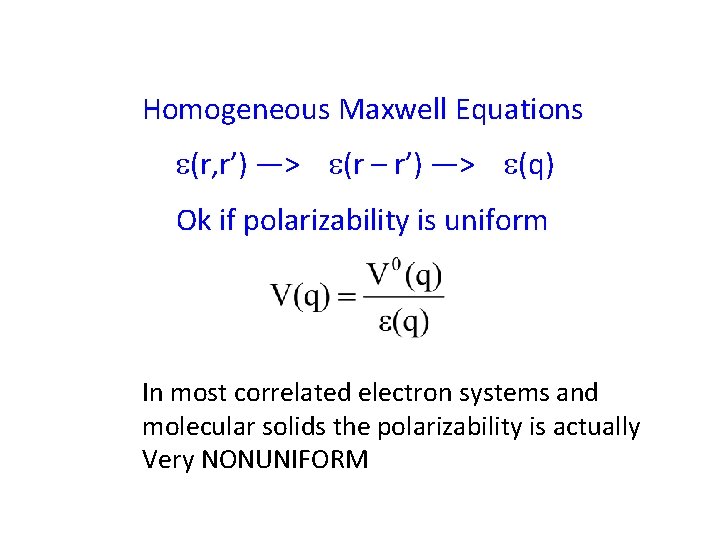
Homogeneous Maxwell Equations (r, r’) —> (r – r’) —> (q) Ok if polarizability is uniform In most correlated electron systems and molecular solids the polarizability is actually Very NONUNIFORM
Effective Hamiltonians can be misleading • Hubbard like models are based on the assumption that longer range coulomb interactions are screened and the short range on site interactions remain • However U for the atom is about 20 e. V but U as measured in the solid is only of order 5 e. V and for the pnictides even less than this • HOW IS THIS POSSIBLE?
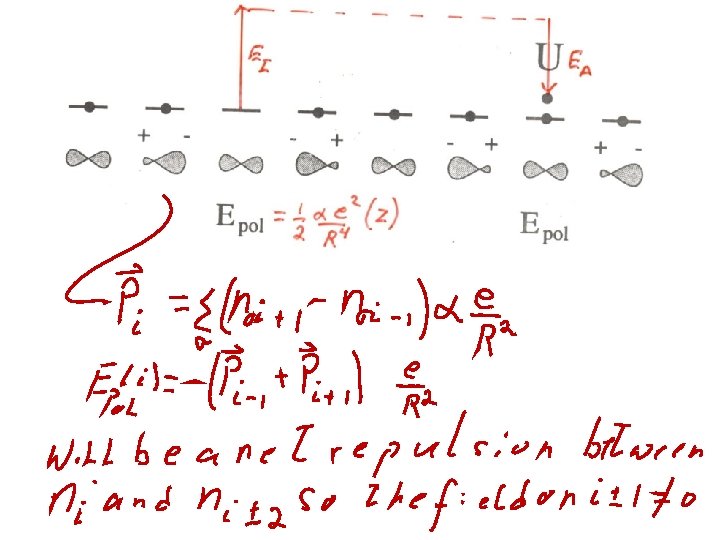
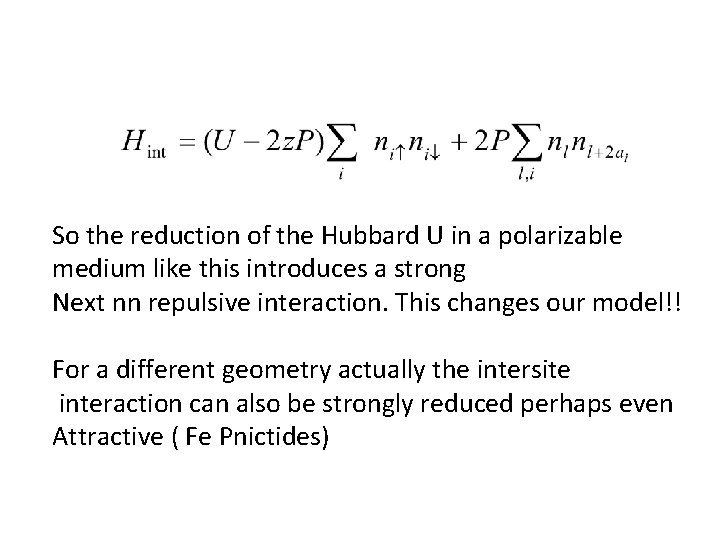
So the reduction of the Hubbard U in a polarizable medium like this introduces a strong Next nn repulsive interaction. This changes our model!! For a different geometry actually the intersite interaction can also be strongly reduced perhaps even Attractive ( Fe Pnictides)
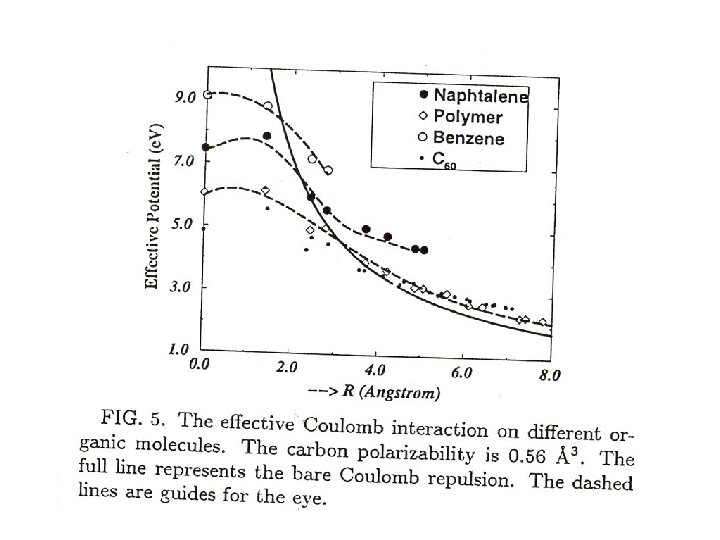
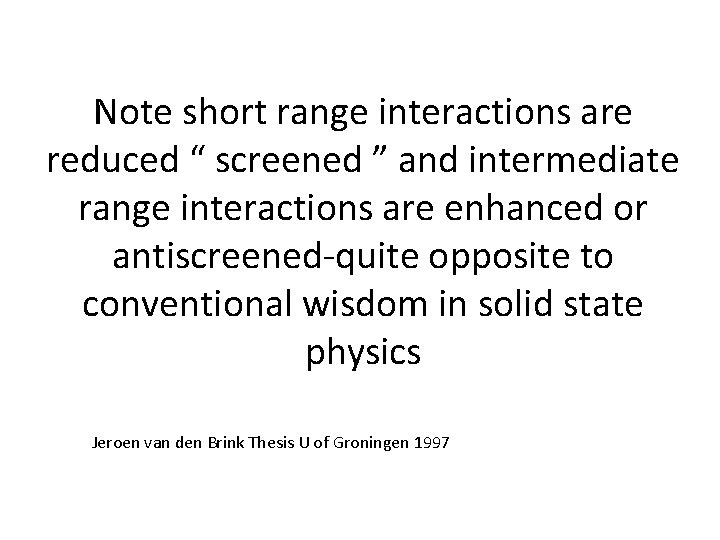
Note short range interactions are reduced “ screened ” and intermediate range interactions are enhanced or antiscreened-quite opposite to conventional wisdom in solid state physics Jeroen van den Brink Thesis U of Groningen 1997
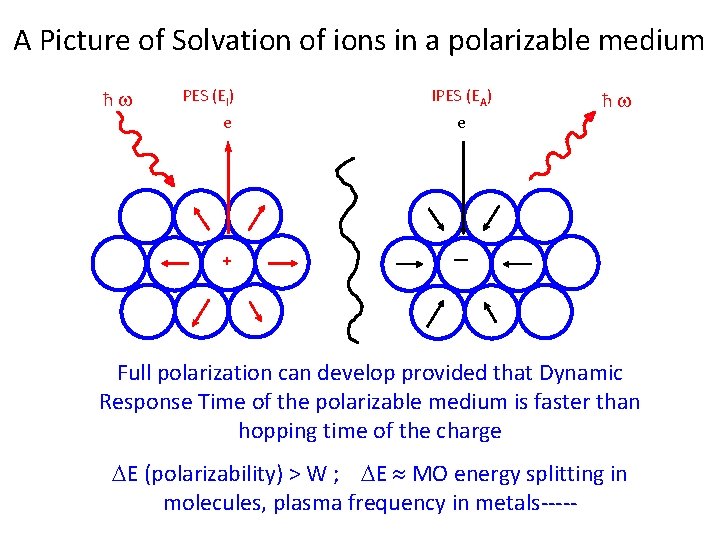
A Picture of Solvation of ions in a polarizable medium ћ PES (EI) e + IPES (EA) e ћ — Full polarization can develop provided that Dynamic Response Time of the polarizable medium is faster than hopping time of the charge E (polarizability) > W ; E MO energy splitting in molecules, plasma frequency in metals-----
We are alive because of Solvation Ions both positive and negative in our bodies regulate most everything
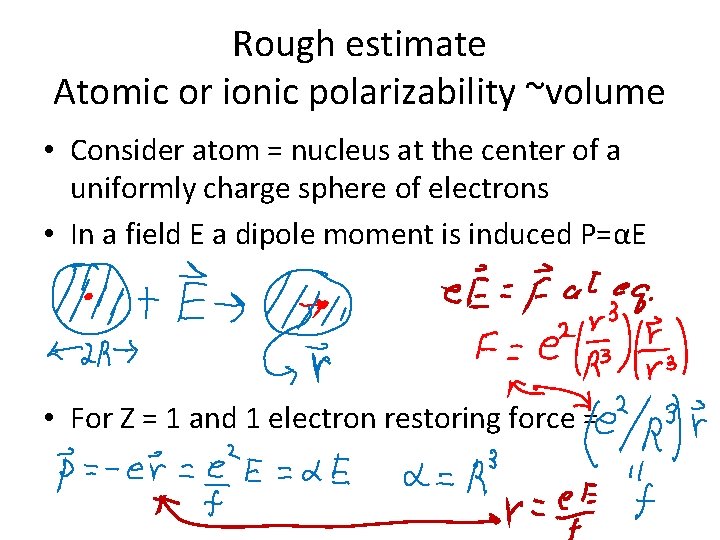
Rough estimate Atomic or ionic polarizability ~volume • Consider atom = nucleus at the center of a uniformly charge sphere of electrons • In a field E a dipole moment is induced P=αE • For Z = 1 and 1 electron restoring force =
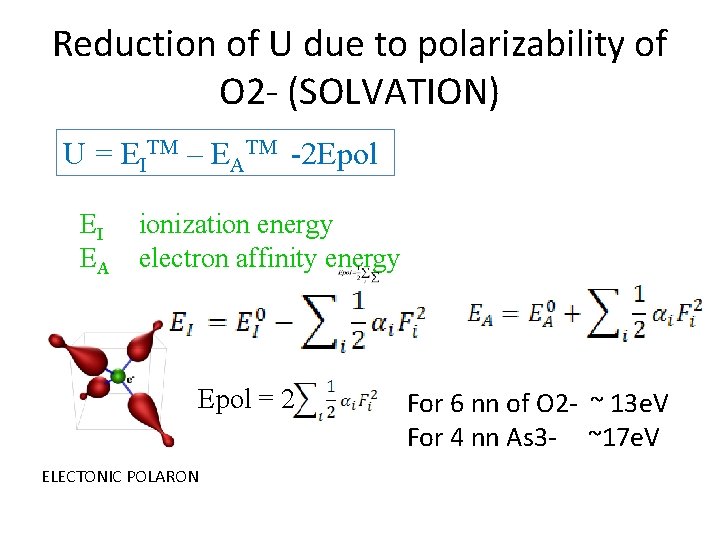
Reduction of U due to polarizability of O 2 - (SOLVATION) U = EITM – EATM -2 Epol EI ionization energy EA electron affinity energy Epol = 2 ELECTONIC POLARON For 6 nn of O 2 - ~ 13 e. V For 4 nn As 3 - ~17 e. V
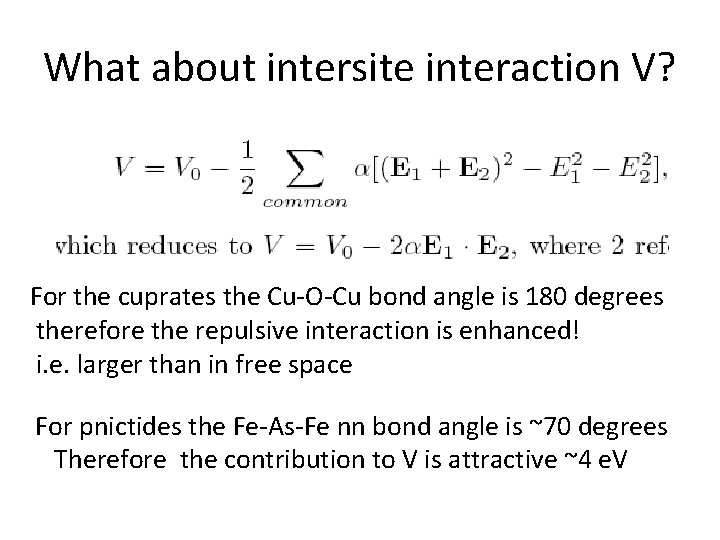
What about intersite interaction V? For the cuprates the Cu-O-Cu bond angle is 180 degrees therefore the repulsive interaction is enhanced! i. e. larger than in free space For pnictides the Fe-As-Fe nn bond angle is ~70 degrees Therefore the contribution to V is attractive ~4 e. V
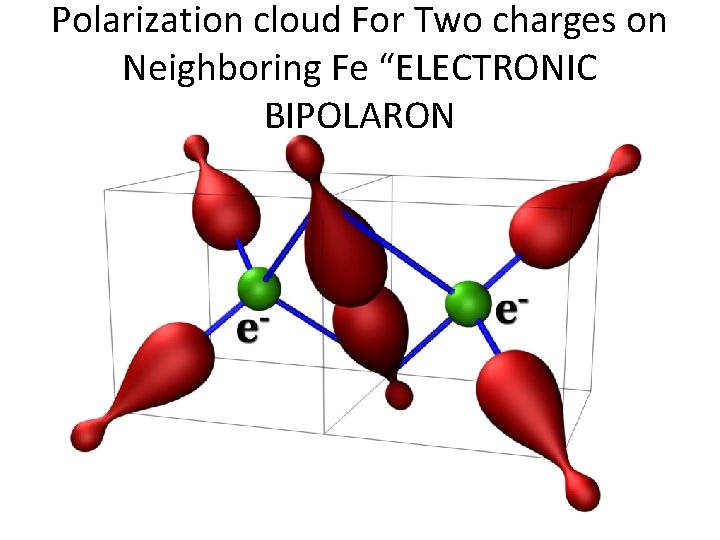
Polarization cloud For Two charges on Neighboring Fe “ELECTRONIC BIPOLARON
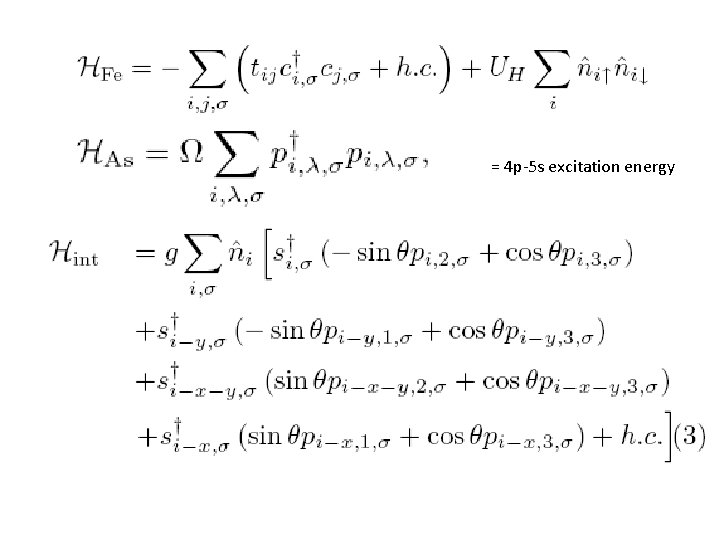
2 level model for the dynamic high frequency polarizability and motion of the polaron/bipolaron De Boer et al PRB 29, April 1984 Exitonic satellites in core level spectroscopies Electronic polarons and bipolarons in Fe-based superconductors Mona Berciu, Ilya Elfimov and George A. Sawatzky ar. Xiv: 08110214 v 2008 PRB 79, 214507 (2009)
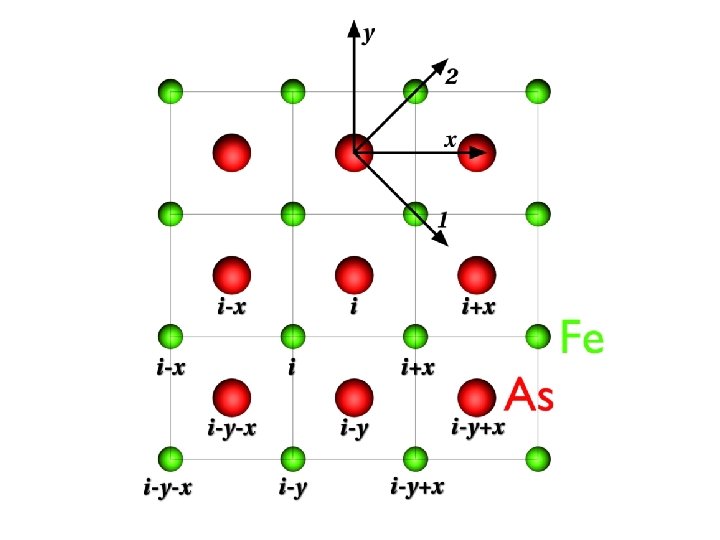
= 4 p-5 s excitation energy
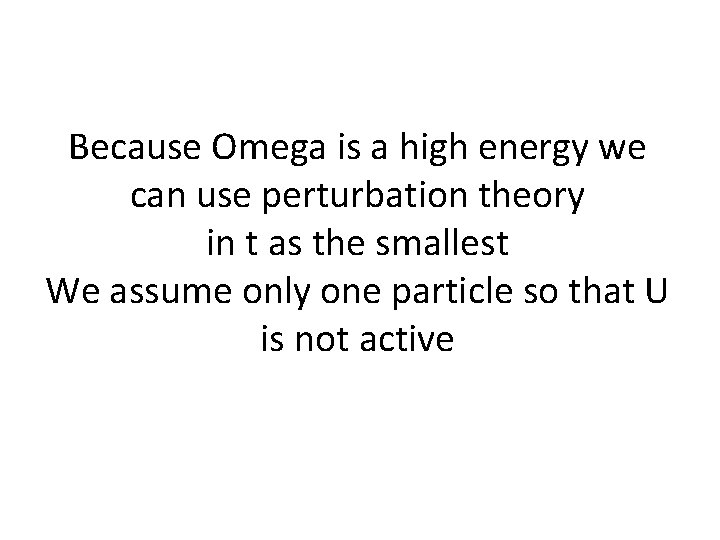
Because Omega is a high energy we can use perturbation theory in t as the smallest We assume only one particle so that U is not active
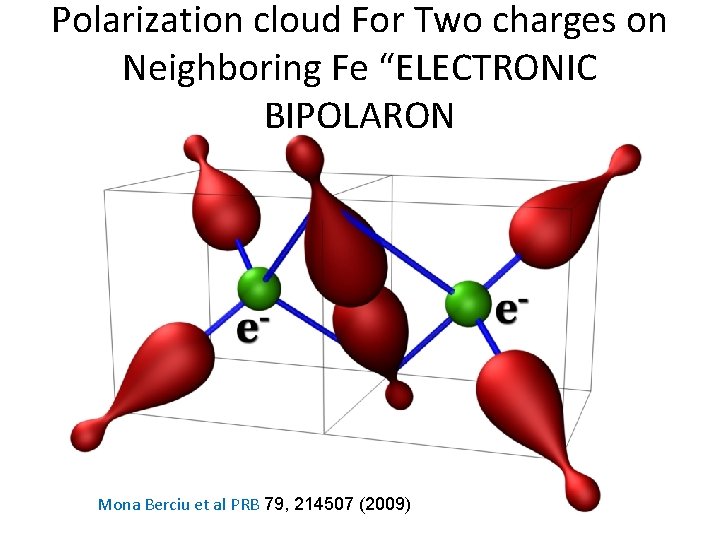
Polarization cloud For Two charges on Neighboring Fe “ELECTRONIC BIPOLARON Mona Berciu et al PRB 79, 214507 (2009)
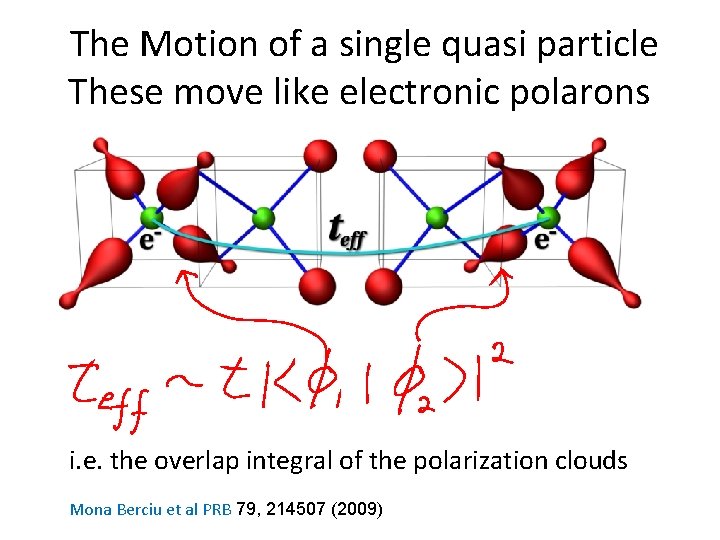
The Motion of a single quasi particle These move like electronic polarons i. e. the overlap integral of the polarization clouds Mona Berciu et al PRB 79, 214507 (2009)
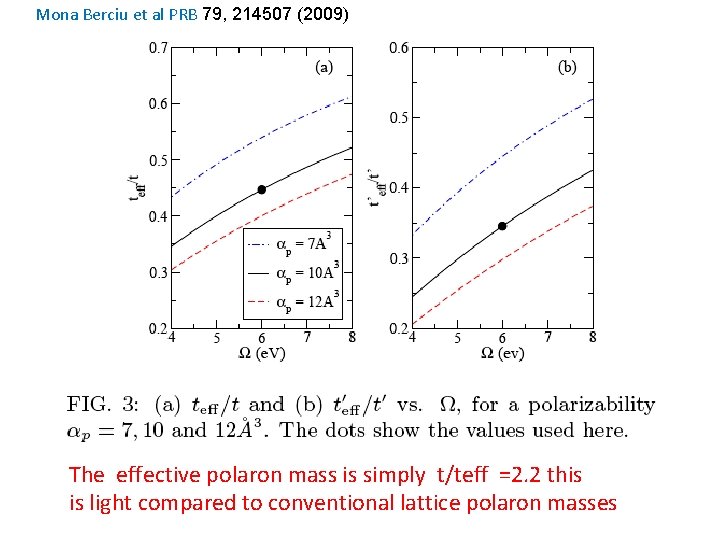
Mona Berciu et al PRB 79, 214507 (2009) The effective polaron mass is simply t/teff =2. 2 this is light compared to conventional lattice polaron masses
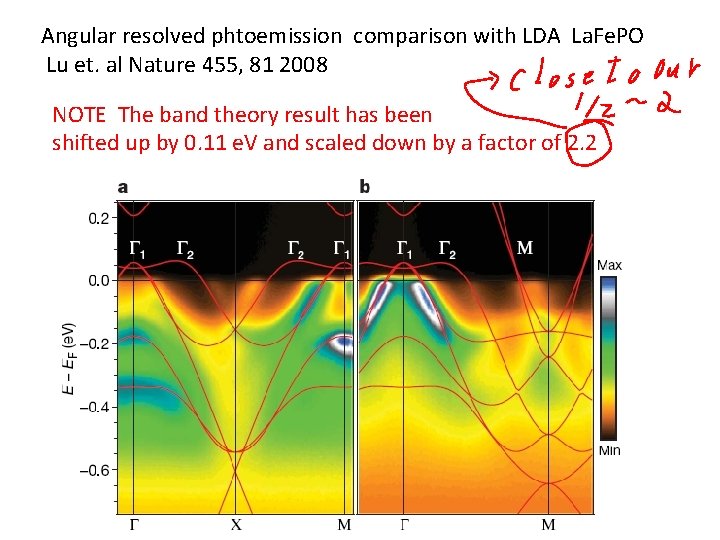
Angular resolved phtoemission comparison with LDA La. Fe. PO Lu et. al Nature 455, 81 2008 NOTE The band theory result has been shifted up by 0. 11 e. V and scaled down by a factor of 2. 2
What about the nn interaction? Can this lead to bipolaronic bound states? And if so what is their mass
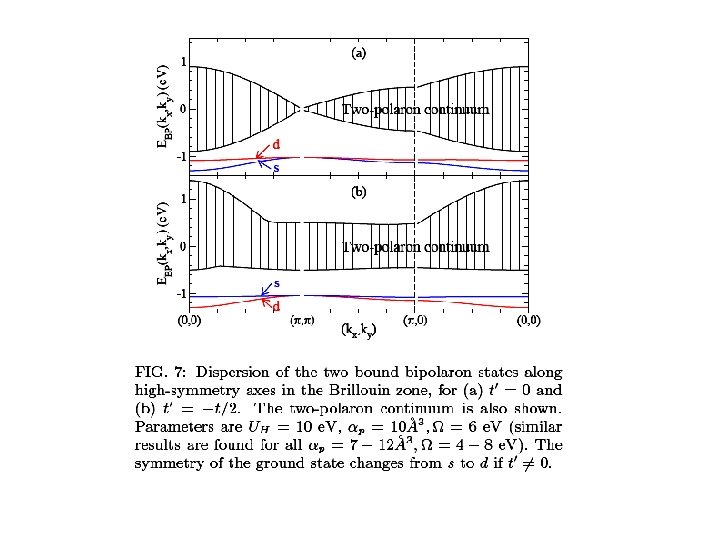
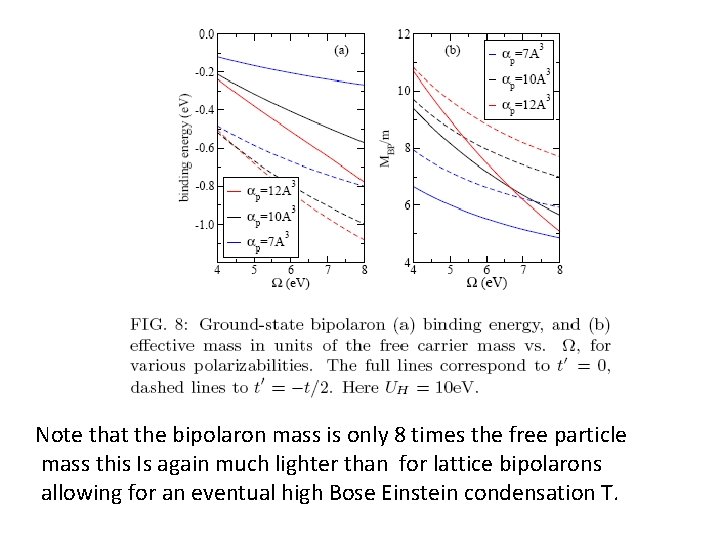
Note that the bipolaron mass is only 8 times the free particle mass this Is again much lighter than for lattice bipolarons allowing for an eventual high Bose Einstein condensation T.
Systematics of Tc • Tc variation with bond angles bond lengths and polarizabilities • Note that often the As-Fe-As bond angle is used or the orthorhombic distortion in the plane or the Fe-As-Fe diagonal bond angle is used for systematics. • Our model suggests rather using bond lengths and the Fe-As-Fe nearest neighbor bond angle
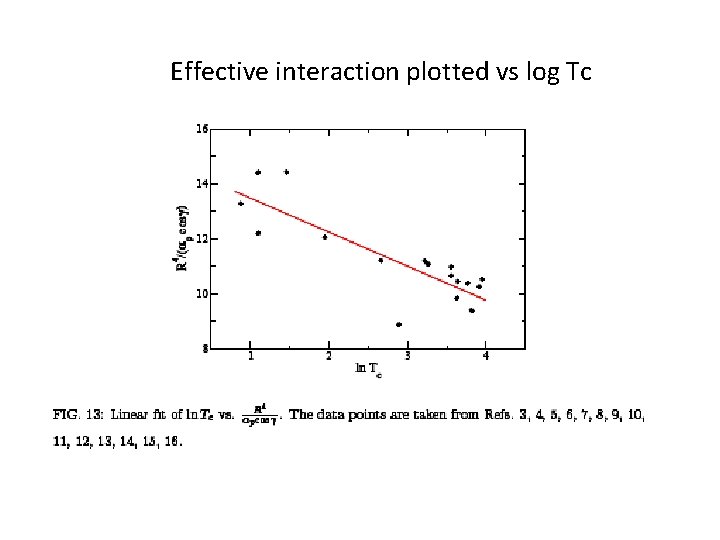
Effective interaction plotted vs log Tc
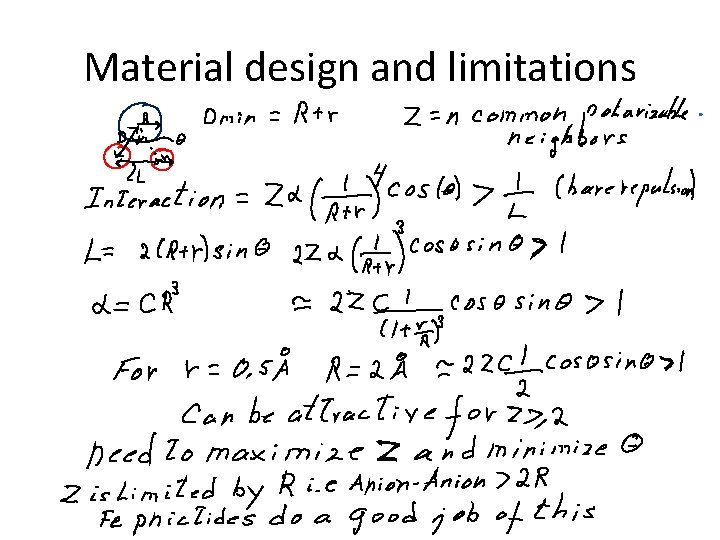
Material design and limitations
Summary • Ionic CT and MH systems behave very differently at interfaces and surfaces (self doping? ) • Electronic polaron effects for narrow band overlayers on highly polarizable systems • Non uniform polarizability leads to strong reduction of U and peculiar nearest neighbor interactions which could be either repulsive or attractive • DESIGN (ARTIFICIAL) STRUCTURES USING HIGHLY POLARIZABLE ATOMS OR SMALL MOLECULES ALTERNATING WITH NARROW BAND METAL FILM FOR HIGHER Tc’s?
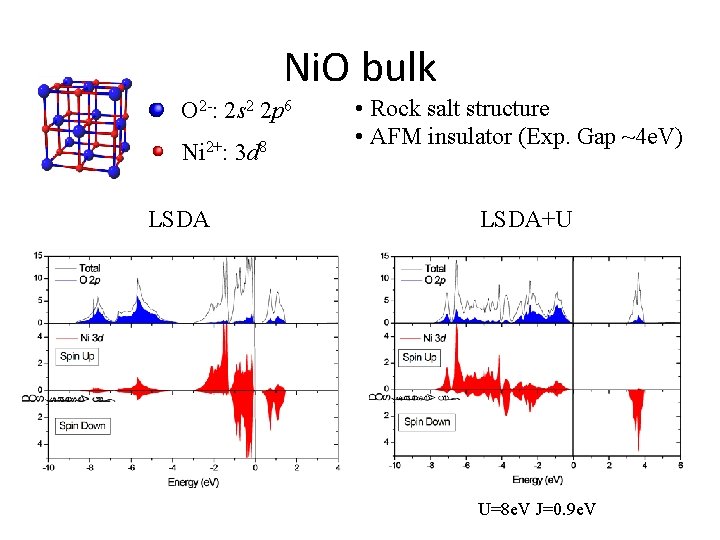
Ni. O bulk O 2 -: 2 s 2 2 p 6 Ni 2+: 3 d 8 LSDA • Rock salt structure • AFM insulator (Exp. Gap ~4 e. V) LSDA+U U=8 e. V J=0. 9 e. V
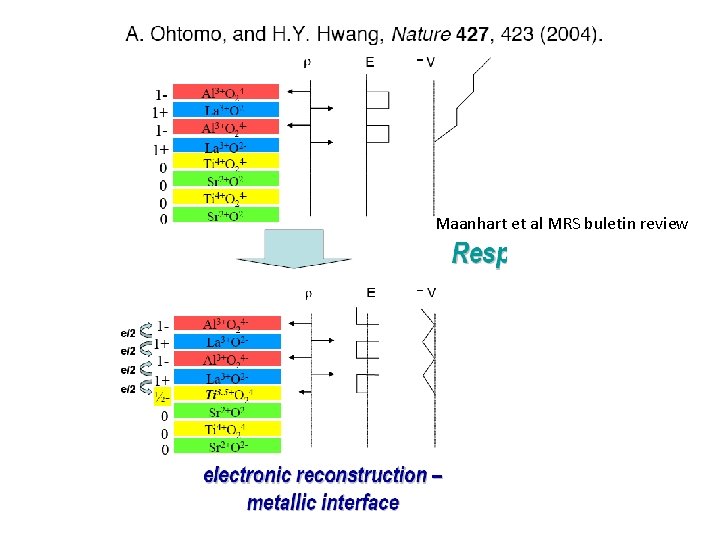
Some key papers on polar surfaces and interfaces • • R. Lacman, Colloq. Int. CNRS 152, 195 (1965) The stability of ionic crystal surfaces P. W. Tasker, J. Phys. C 12, 4977 (1979) • Reconstruction of Na. Cl surfaces D. Wolf, PRL 68, 3315 (1992) • Adsorption on Ordered Surfaces of Ionic solids ed. H. J. Freund and E. Umbach, Springer Series in Surface Science, Springer, Berlin, 1993, vol. 33. • Electronic reconstruction of polar surfaces in K 3 C 60: R. Hesper et al. , PRB 62, 16046 (2000) • High mobility electron gas at La. Al. O 3 /Sr. Ti. O 3 interface A. Ohtomo and H. Y. Hwang, Nature 427, 423 (2004)
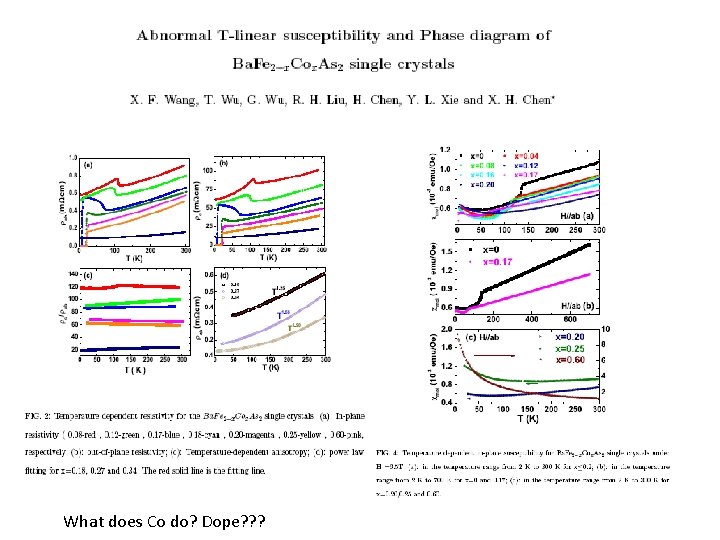
What does Co do? Dope? ? ?
Some other experimental results • Neutron scattering yields ordered moments ranging from very small to 0. 9 µ B • Magnetic ordering is antiferromagnetic SDW like 1 D ferromagnetic chains coupled antiferromagnetically • Neutron inelastic scattering yields a large spin wave velocity i. e. large J but also a large spin wave gap of 10 me. V and the spin waves are heavily damped above about 30 me. V. “ Stoner Continuum? ”
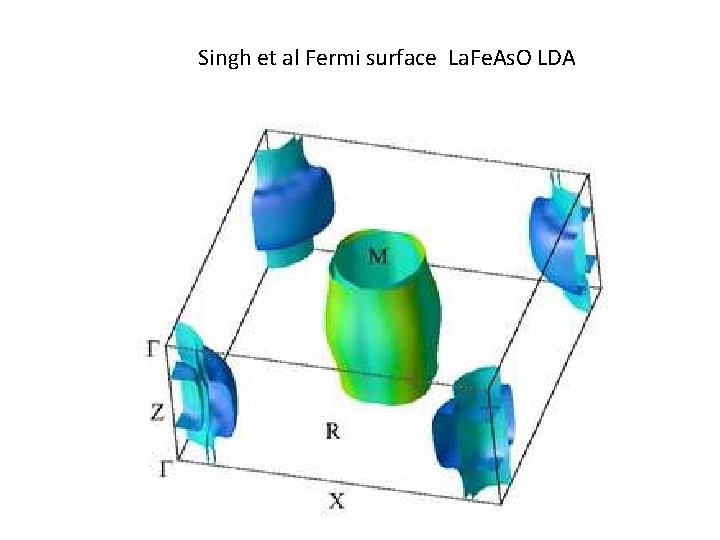
Singh et al Fermi surface La. Fe. As. O LDA
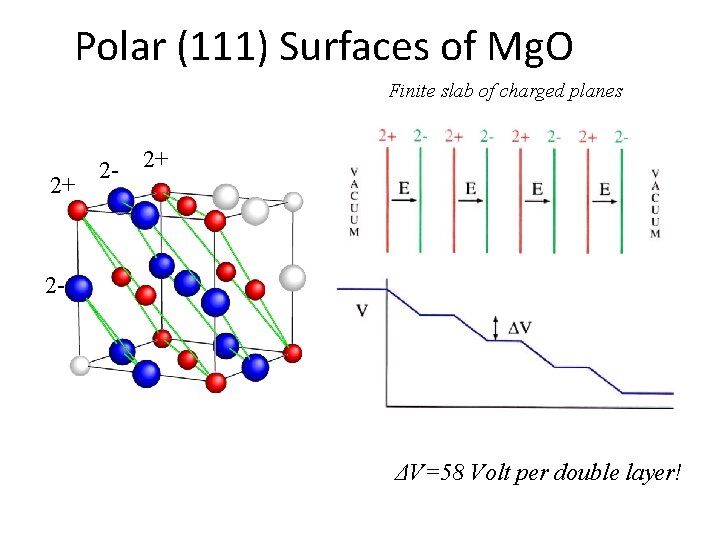
Ionic Materials can exhibit Polar surfaces and interfaces and They HAVE TO reconstruct
Polar (111) Surfaces of Mg. O Finite slab of charged planes 2+ 2 - ΔV=58 Volt per double layer!
Types of reconstruction Ionic Electronic +Q +Q/2 Chemical +Q/2 +Q -Q -Q -Q +Q +Q +Q -Q -Q/2 Rearrangement of electrons K 3 C 60: R. Hesper et al. , Phys. Rev. B 62, 16046 (2000). Rearrangement of Ions faceting Ni. O(111): D. Cappus et al. , Surf. Sci. 337, 268 (1995). Vacancies or add Ions (K+) or OHK-depositon: M. A. Hossain et al. , Nat. Phys. 4, 527 (2008). Ni. O(111): D. Cappus et al. , Surf. Sci. 337, 268 (1995).
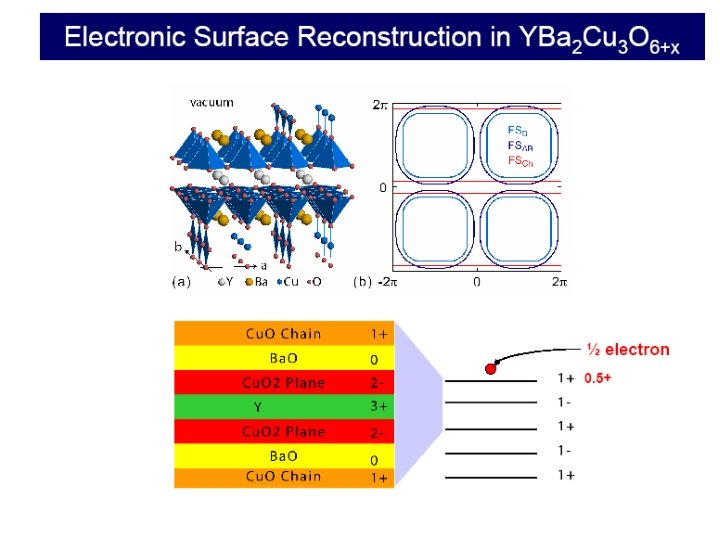
Super Conductors: YBa 2 Cu 3 O 6+δ (Cu) 1+ (Ba. O) 0 (Cu. O 2) 2(Y) 3+ Interesting materials in which electronic reconstruction can strongly alter properties and which can be used for interface engineering to develop new devices with exotic properties. (Cu. O 2 ) 2(Ba. O) 0 Perovskites: La. TMO 3 (Ti, V, Mn. . . ) Spin, charge and orbital ordering (Cu) 1+ (001) surface in trivalent compounds La. OFe. As 1+ Simple oxides: Sr. O, Ni. O, Mn. O. . . 11+ (110) surface (111) surface
Examples of non polar layer structures Ti. S 2 (S) 2(Ti) 4+ (S) 2 - Ti. OCl (Cl) 1(Ti. O)2 2+ (Cl) 1 -
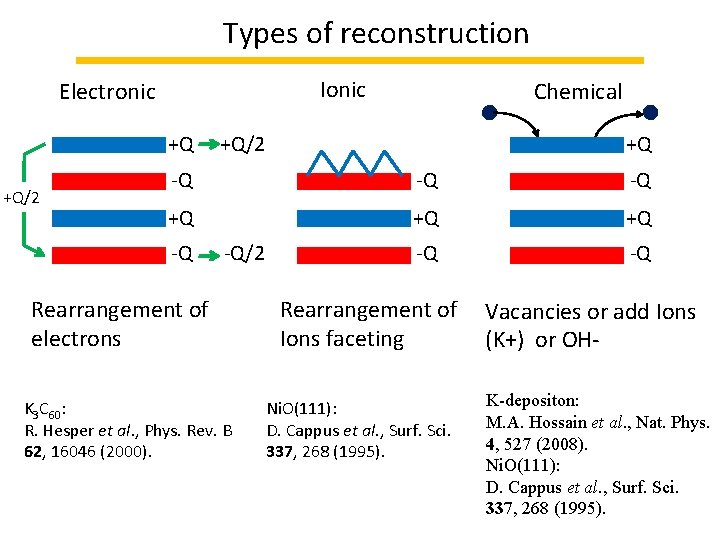
ad atom stabilization of Polar surfaces Important also for growth • Ni. O grown by MBE is covered by a monolayer of OH - =1/2 the charge of the Ni 2+ layer underneath and therefore stable • Mn. S single crystals grown with vapor transport methods yield large crystals with 111 facets? ? Covered by a single layer of I- and the crystal grows underneath. Like a surfactant • ½ Ba missing on the surface of Ba. Fe 2 As 2 • K+ ad ions on YBCO • Use add large ions as surfactants during growth of polar surface systems
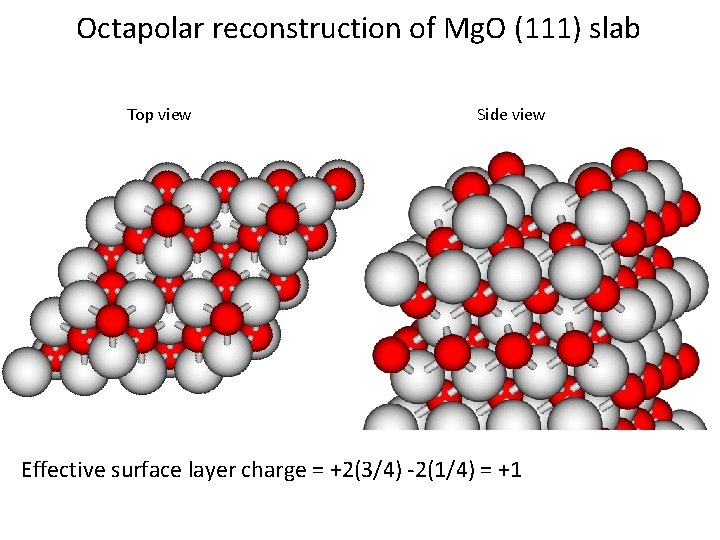
Octapolar reconstruction of Mg. O (111) slab Top view Side view Effective surface layer charge = +2(3/4) -2(1/4) = +1
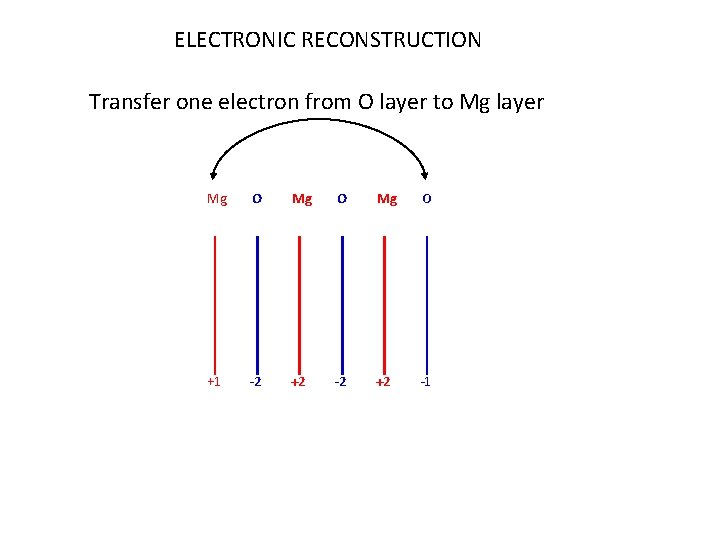
ELECTRONIC RECONSTRUCTION Transfer one electron from O layer to Mg layer Mg O +1 -2 +2 -1
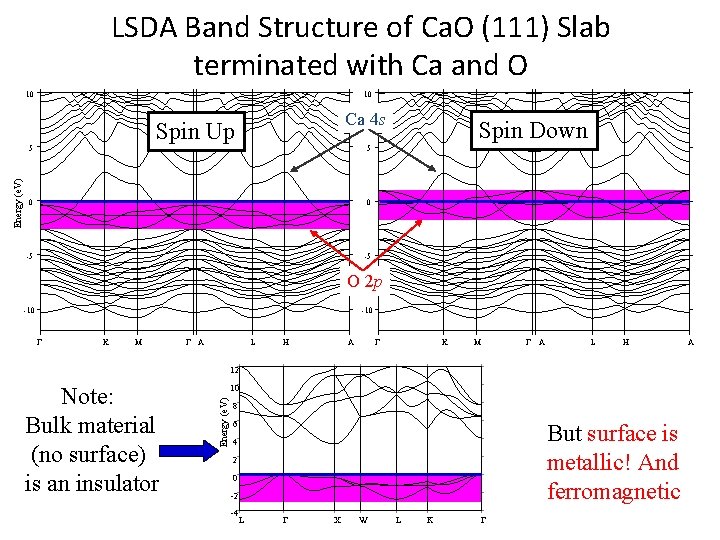
LSDA Band Structure of Ca. O (111) Slab terminated with Ca and O 10 10 5 Spin Down 5 0 0 -5 -5 O 2 p -10 Γ K M Γ A L A H Γ K M Γ A L H 12 Note: Bulk material (no surface) is an insulator 10 Energy (e. V) Ca 4 s Spin Up 8 6 But surface is metallic! And ferromagnetic 4 2 0 -2 -4 L X W L K A
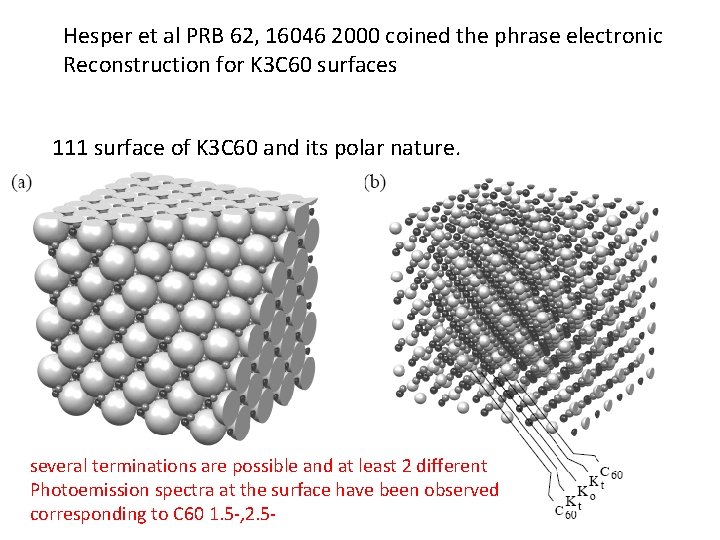
Hesper et al PRB 62, 16046 2000 coined the phrase electronic Reconstruction for K 3 C 60 surfaces 111 surface of K 3 C 60 and its polar nature. several terminations are possible and at least 2 different Photoemission spectra at the surface have been observed corresponding to C 60 1. 5 -, 2. 5 -
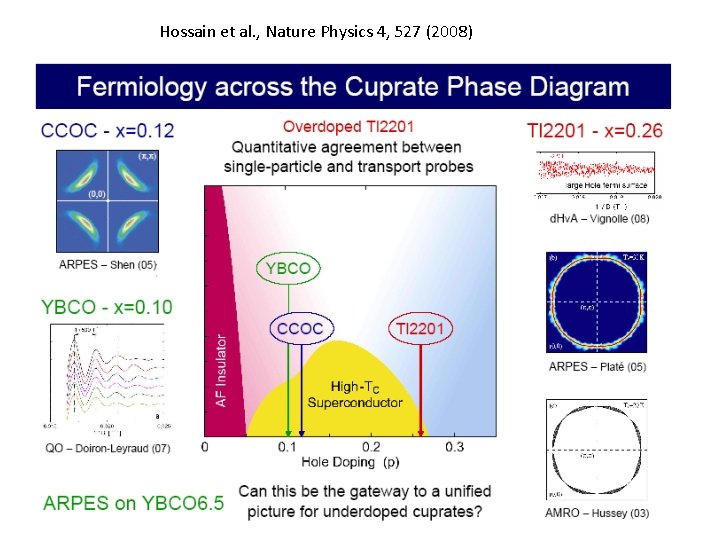
Hossain et al. , Nature Physics 4, 527 (2008)
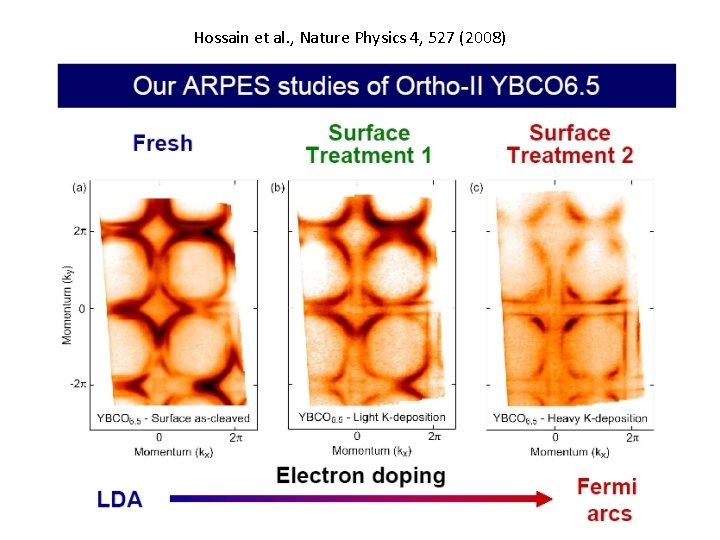
Hossain et al. , Nature Physics 4, 527 (2008)
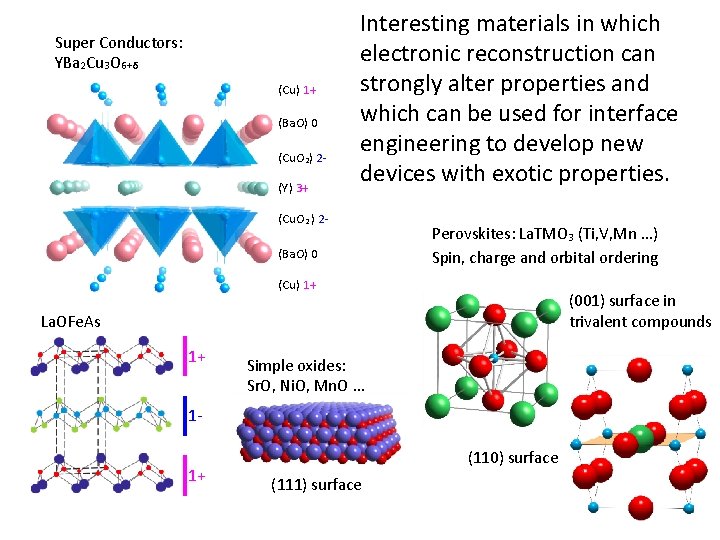
Electronic Reconstruction • Energetically favourable in ionic systems with small band gaps and in systems with multivalent components ( Ti, V, C 60, Ce, Eu ----)
Maanhart et al MRS buletin review
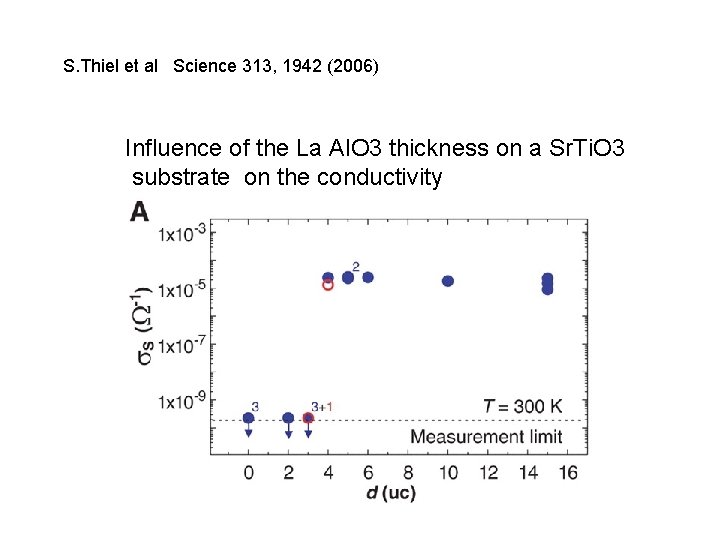
S. Thiel et al Science 313, 1942 (2006) Influence of the La Al. O 3 thickness on a Sr. Ti. O 3 substrate on the conductivity
- Slides: 66