
Electronic Lab Notebooks Building Data Management and Quantitative
Electronic Lab Notebooks: Building Data Management and Quantitative Reasoning Skills Natalie Stringer, Ph. D. Director of Content Development and Resident Professor nstringer@labarchives. com
What is an Electronic Lab Notebook? 1 • Digital record • Long-term storage • Reproducibility • Sharing • Promotes open science and collaboration • Protects IP • Ensures compliance • SOPs, FERPA, HIPPA • Searchable This Photo by Unknown Author is licensed under CC BY-SA
Flavors Lab notebook Discipline specific Discipline agnostic Notes only
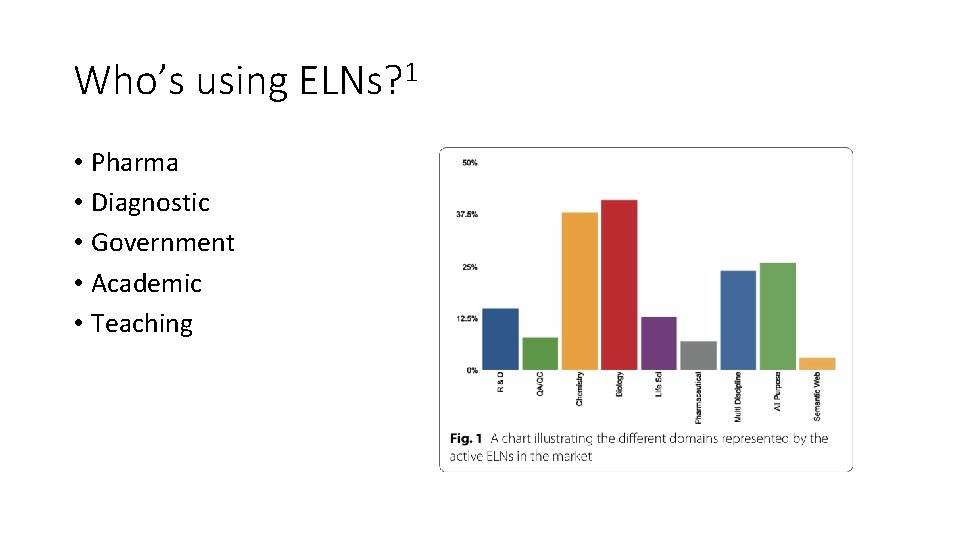
Who’s using ELNs? 1 • Pharma • Diagnostic • Government • Academic • Teaching
Outline SUPPORT FOR DIGITAL ELN OPTIONS BEST PRACTICES
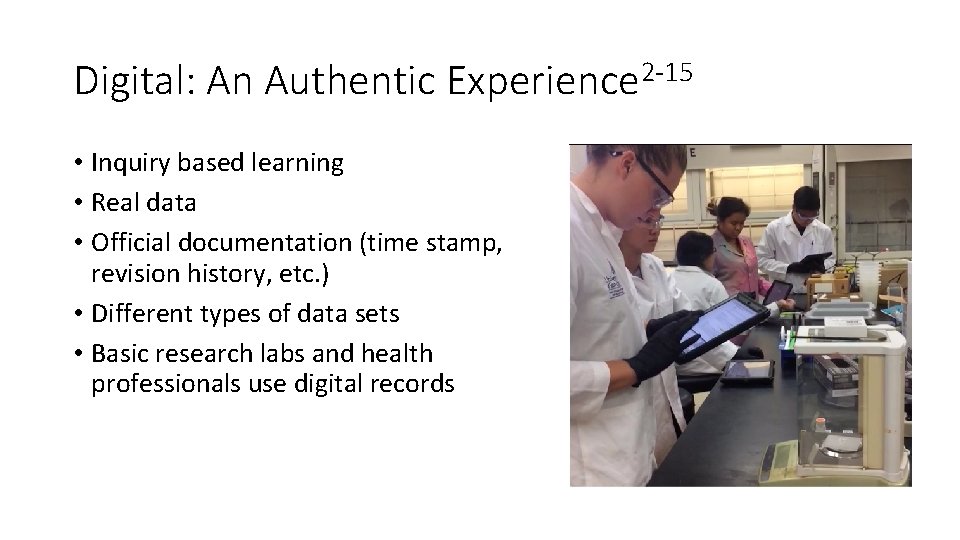
Digital: An Authentic Experience 2 -15 • Inquiry based learning • Real data • Official documentation (time stamp, revision history, etc. ) • Different types of data sets • Basic research labs and health professionals use digital records
How Students Learn 16 • Those who have learned via technology their entire lives learn differently • ~80% of current students prefer digital
Basic Options Open source/Free Hybrid* • Cy. Note • Jupyter • Google. Docs • My. Lab. Notebook • Chemotion ELN • Wiki/Blog • • • Lab. Archives RSpace Benchling Evernote Protocols. io** Learning Management Systems *Free and paid versions For Fee • Pebble. Pad • One. Note • e. Lab. Journal
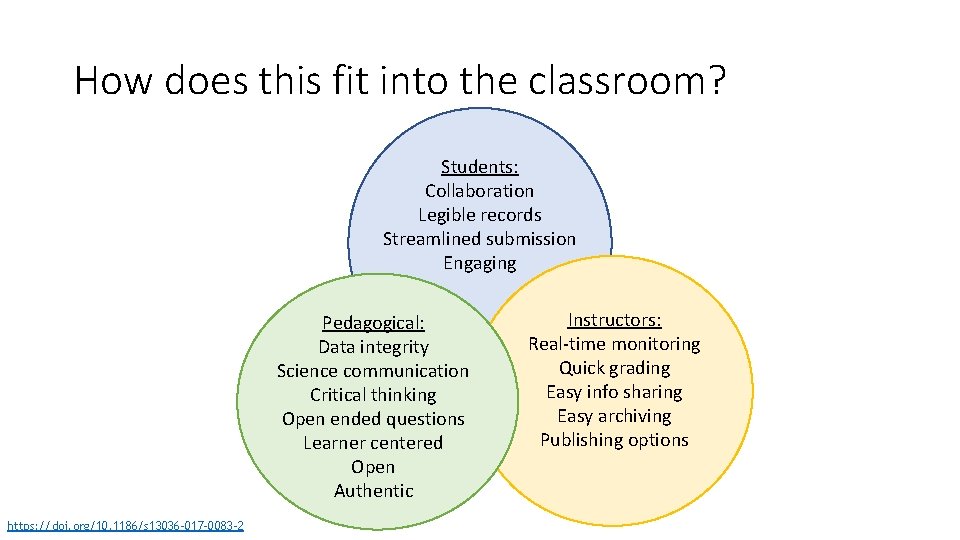
How does this fit into the classroom? Students: Collaboration Legible records Streamlined submission Engaging Pedagogical: Data integrity Science communication Critical thinking Open ended questions Learner centered Open Authentic https: //doi. org/10. 1186/s 13036 -017 -0083 -2 Instructors: Real-time monitoring Quick grading Easy info sharing Easy archiving Publishing options
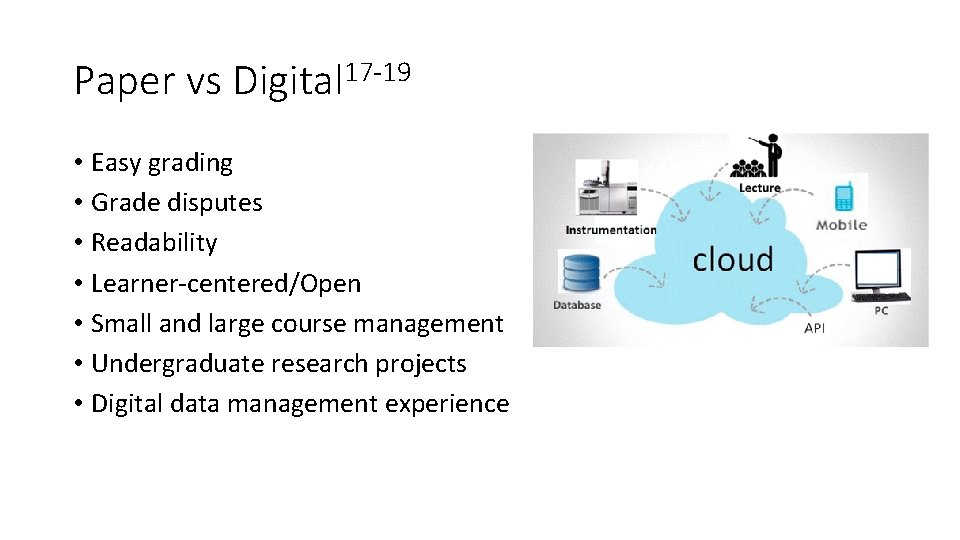
Paper vs Digital 17 -19 • Easy grading • Grade disputes • Readability • Learner-centered/Open • Small and large course management • Undergraduate research projects • Digital data management experience
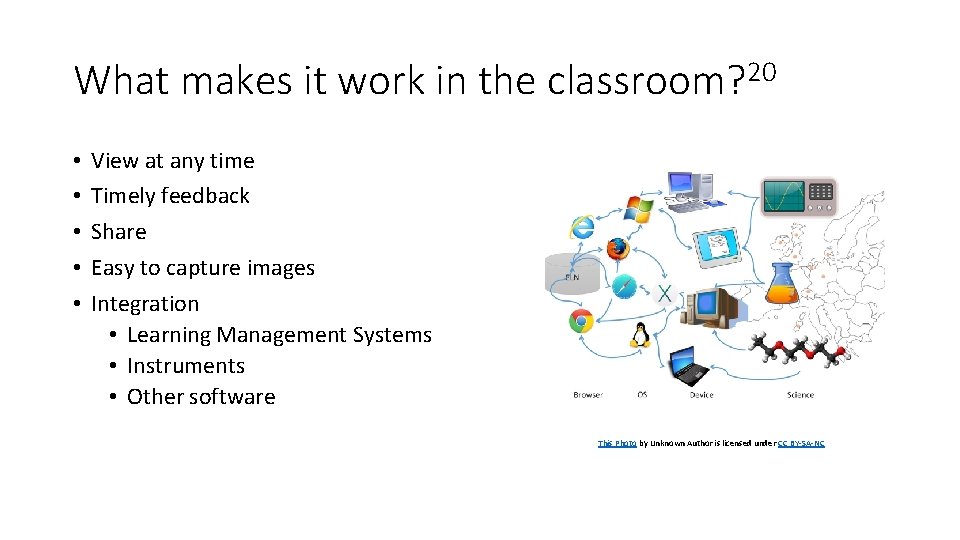
What makes it work in the classroom? 20 • • • View at any time Timely feedback Share Easy to capture images Integration • Learning Management Systems • Instruments • Other software This Photo by Unknown Author is licensed under CC BY-SA-NC
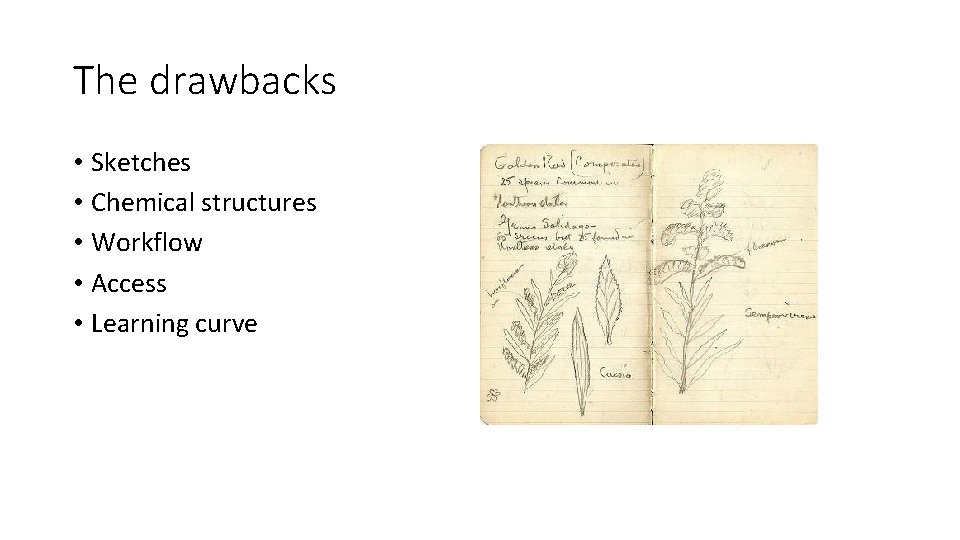
The drawbacks • Sketches • Chemical structures • Workflow • Access • Learning curve
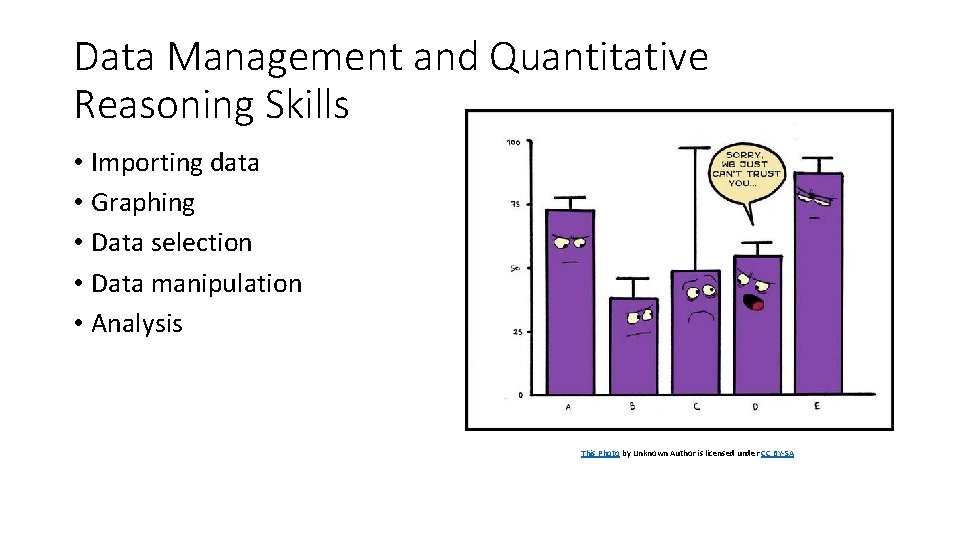
Data Management and Quantitative Reasoning Skills • Importing data • Graphing • Data selection • Data manipulation • Analysis This Photo by Unknown Author is licensed under CC BY-SA
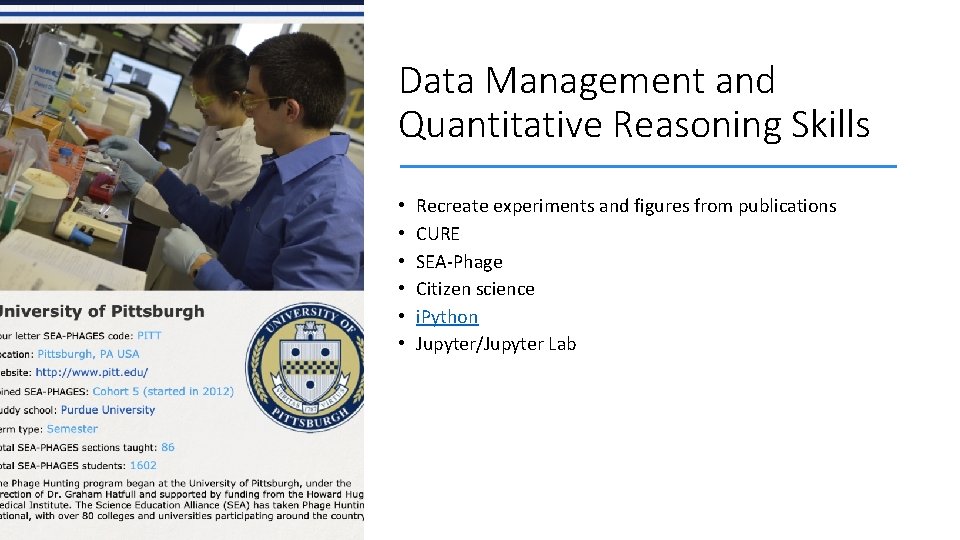
Data Management and Quantitative Reasoning Skills • • • Recreate experiments and figures from publications CURE SEA-Phage Citizen science i. Python Jupyter/Jupyter Lab
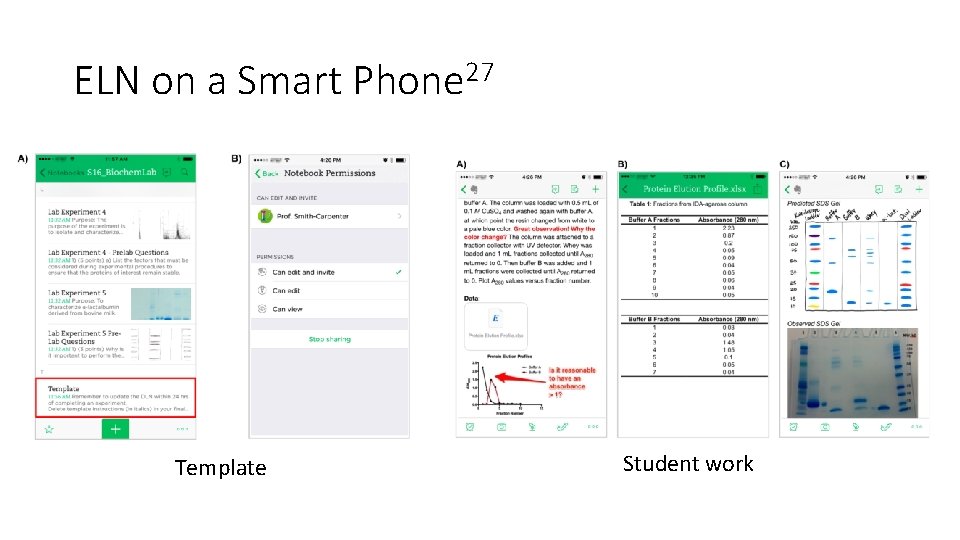
ELN on a Smart Phone 27 Template Student work
Safety Concerns Plastic bags Saran wrap 25 “Laptop stations” 70% Ethanol • Ramaydalis Keddis and Ines Rauschenbach– Rutgers University • Otterbox • Fabio Agnelli - University of San Diego • • This Photo by Unknown Author is licensed under CC BY
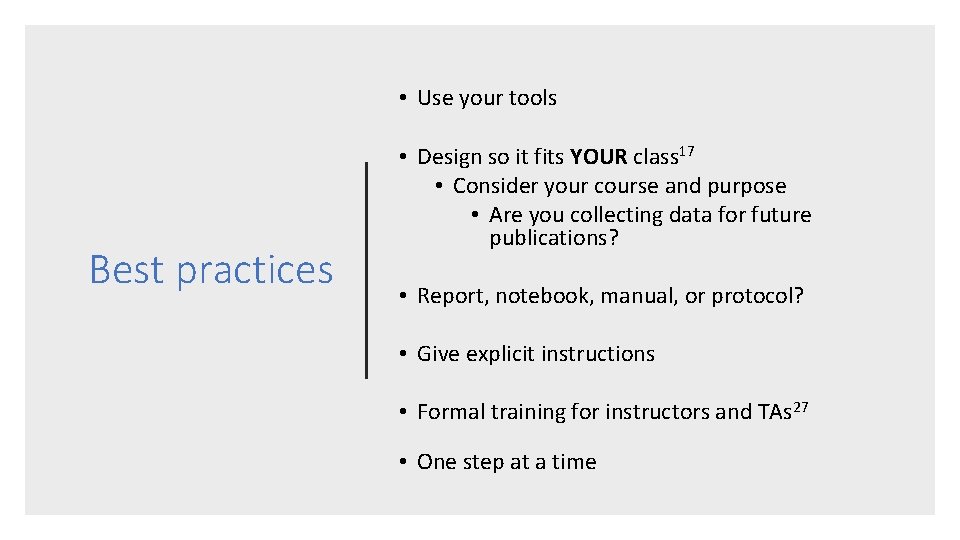
• Use your tools Best practices • Design so it fits YOUR class 17 • Consider your course and purpose • Are you collecting data for future publications? • Report, notebook, manual, or protocol? • Give explicit instructions • Formal training for instructors and TAs 27 • One step at a time
Summary GO DIGITAL LOTS OF OPTIONS MAKE IT WORK FOR YOU
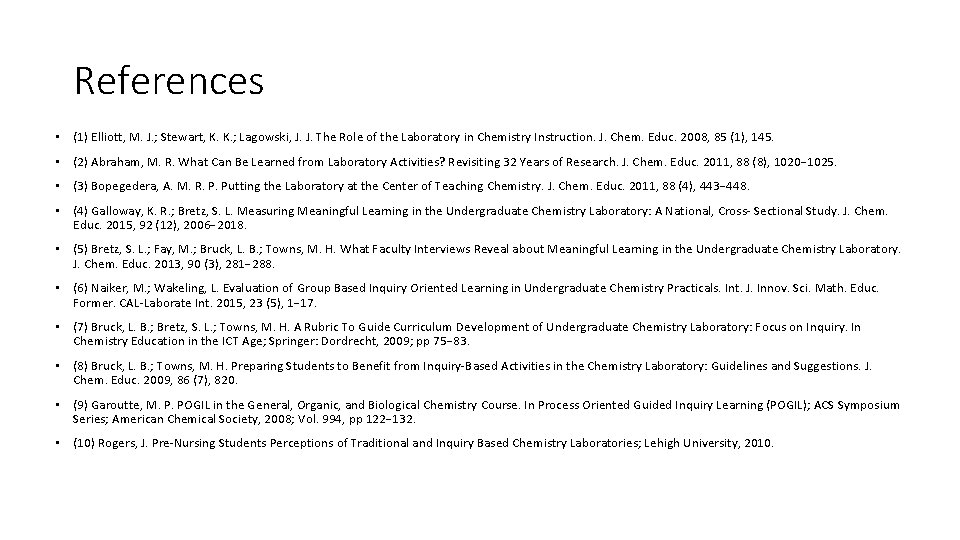
References • (1) Elliott, M. J. ; Stewart, K. K. ; Lagowski, J. J. The Role of the Laboratory in Chemistry Instruction. J. Chem. Educ. 2008, 85 (1), 145. • (2) Abraham, M. R. What Can Be Learned from Laboratory Activities? Revisiting 32 Years of Research. J. Chem. Educ. 2011, 88 (8), 1020− 1025. • (3) Bopegedera, A. M. R. P. Putting the Laboratory at the Center of Teaching Chemistry. J. Chem. Educ. 2011, 88 (4), 443− 448. • (4) Galloway, K. R. ; Bretz, S. L. Measuring Meaningful Learning in the Undergraduate Chemistry Laboratory: A National, Cross- Sectional Study. J. Chem. Educ. 2015, 92 (12), 2006− 2018. • (5) Bretz, S. L. ; Fay, M. ; Bruck, L. B. ; Towns, M. H. What Faculty Interviews Reveal about Meaningful Learning in the Undergraduate Chemistry Laboratory. J. Chem. Educ. 2013, 90 (3), 281− 288. • (6) Naiker, M. ; Wakeling, L. Evaluation of Group Based Inquiry Oriented Learning in Undergraduate Chemistry Practicals. Int. J. Innov. Sci. Math. Educ. Former. CAL-Laborate Int. 2015, 23 (5), 1− 17. • (7) Bruck, L. B. ; Bretz, S. L. ; Towns, M. H. A Rubric To Guide Curriculum Development of Undergraduate Chemistry Laboratory: Focus on Inquiry. In Chemistry Education in the ICT Age; Springer: Dordrecht, 2009; pp 75− 83. • (8) Bruck, L. B. ; Towns, M. H. Preparing Students to Benefit from Inquiry-Based Activities in the Chemistry Laboratory: Guidelines and Suggestions. J. Chem. Educ. 2009, 86 (7), 820. • (9) Garoutte, M. P. POGIL in the General, Organic, and Biological Chemistry Course. In Process Oriented Guided Inquiry Learning (POGIL); ACS Symposium Series; American Chemical Society, 2008; Vol. 994, pp 122− 132. • (10) Rogers, J. Pre-Nursing Students Perceptions of Traditional and Inquiry Based Chemistry Laboratories; Lehigh University, 2010.
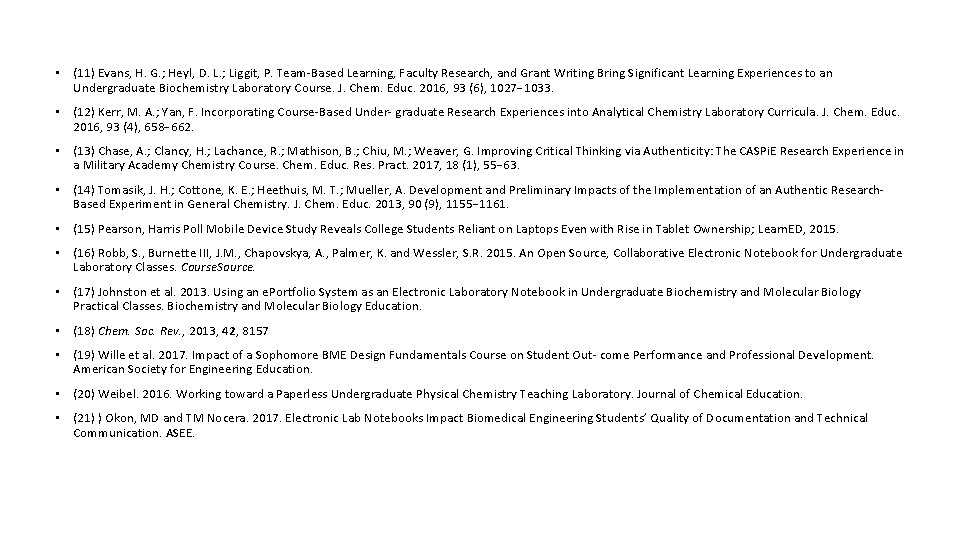
• (11) Evans, H. G. ; Heyl, D. L. ; Liggit, P. Team-Based Learning, Faculty Research, and Grant Writing Bring Significant Learning Experiences to an Undergraduate Biochemistry Laboratory Course. J. Chem. Educ. 2016, 93 (6), 1027− 1033. • (12) Kerr, M. A. ; Yan, F. Incorporating Course-Based Under- graduate Research Experiences into Analytical Chemistry Laboratory Curricula. J. Chem. Educ. 2016, 93 (4), 658− 662. • (13) Chase, A. ; Clancy, H. ; Lachance, R. ; Mathison, B. ; Chiu, M. ; Weaver, G. Improving Critical Thinking via Authenticity: The CASPi. E Research Experience in a Military Academy Chemistry Course. Chem. Educ. Res. Pract. 2017, 18 (1), 55− 63. • (14) Tomasik, J. H. ; Cottone, K. E. ; Heethuis, M. T. ; Mueller, A. Development and Preliminary Impacts of the Implementation of an Authentic Research. Based Experiment in General Chemistry. J. Chem. Educ. 2013, 90 (9), 1155− 1161. • (15) Pearson, Harris Poll Mobile Device Study Reveals College Students Reliant on Laptops Even with Rise in Tablet Ownership; Learn. ED, 2015. • (16) Robb, S. , Burnette III, J. M. , Chapovskya, A. , Palmer, K. and Wessler, S. R. 2015. An Open Source, Collaborative Electronic Notebook for Undergraduate Laboratory Classes. Course. Source. • (17) Johnston et al. 2013. Using an e. Portfolio System as an Electronic Laboratory Notebook in Undergraduate Biochemistry and Molecular Biology Practical Classes. Biochemistry and Molecular Biology Education. • (18) Chem. Soc. Rev. , 2013, 42, 8157 • (19) Wille et al. 2017. Impact of a Sophomore BME Design Fundamentals Course on Student Out- come Performance and Professional Development. American Society for Engineering Education. • (20) Weibel. 2016. Working toward a Paperless Undergraduate Physical Chemistry Teaching Laboratory. Journal of Chemical Education. • (21) ) Okon, MD and TM Nocera. 2017. Electronic Lab Notebooks Impact Biomedical Engineering Students’ Quality of Documentation and Technical Communication. ASEE.
• (22) DOI 10. 1002/bmb. 20769 • (23) Melissa Eblen-Zayas. 2015. Comparing Electronic and Traditional Lab Notebooks in the Advanced Lab. BFY Conference series • (24) Anderson, CS and TA Murray. 2013. Using Mobile Technology to Enhance Undergraduate Research. CURQ. • (25) DOI: 10. 1021/acs. jchemed. 8 b 00140 • (26) Puccinelli and Murphy. 2015. Bringing technology to the First Year Design Experience through the use of Electronic Design Notebooks. • (27) 10. 1021/acs. jchemed. 6 b 00622 •
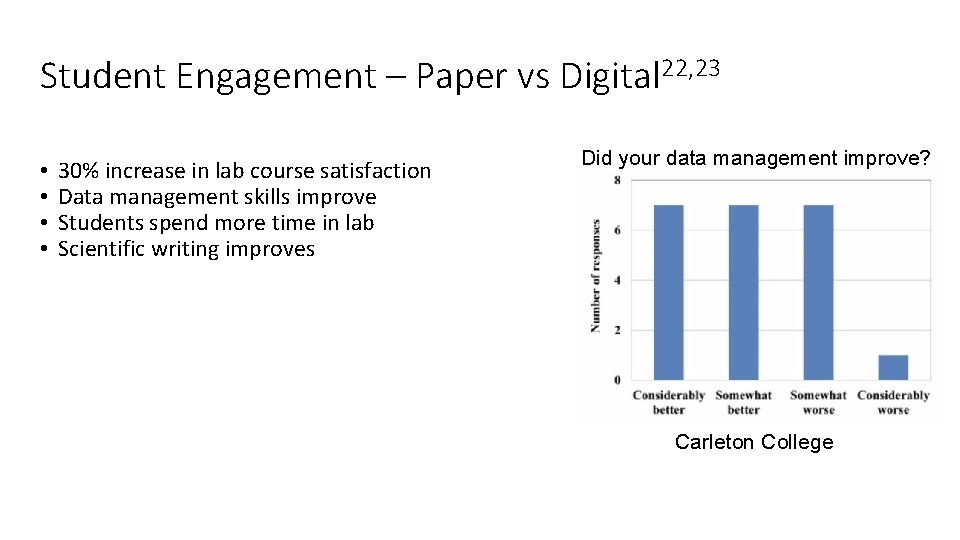
Student Engagement – Paper vs Digital 22, 23 • • 30% increase in lab course satisfaction Data management skills improve Students spend more time in lab Scientific writing improves Did your data management improve? Carleton College
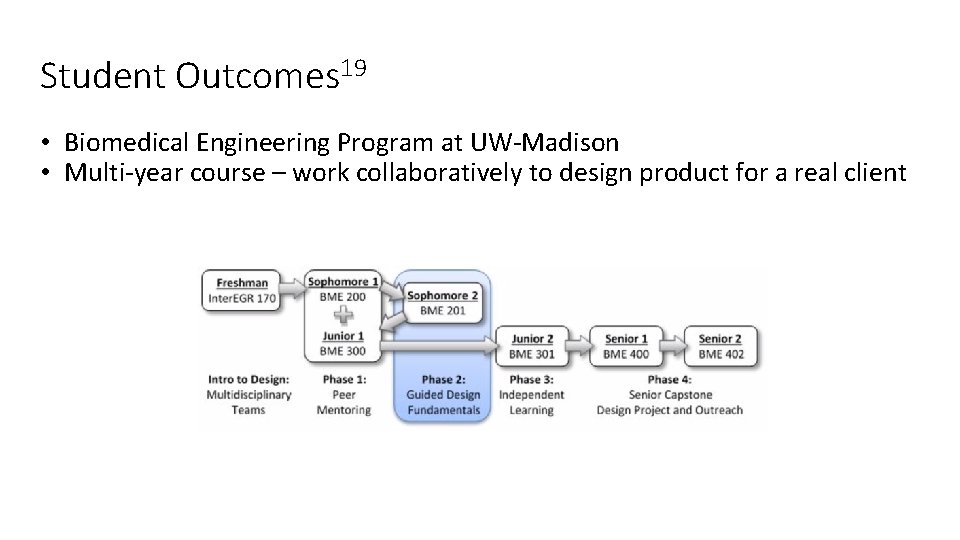
Student Outcomes 19 • Biomedical Engineering Program at UW-Madison • Multi-year course – work collaboratively to design product for a real client
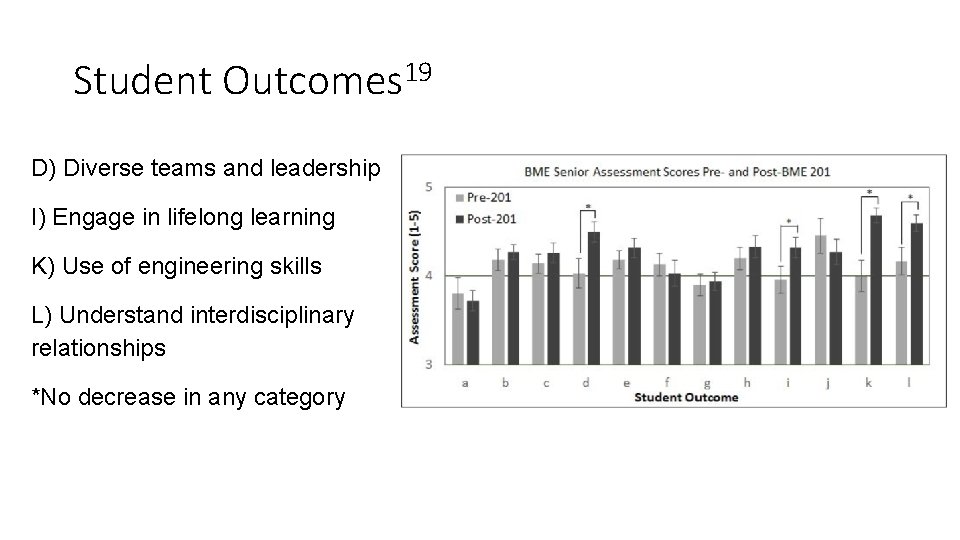
Student Outcomes 19 D) Diverse teams and leadership I) Engage in lifelong learning K) Use of engineering skills L) Understand interdisciplinary relationships *No decrease in any category
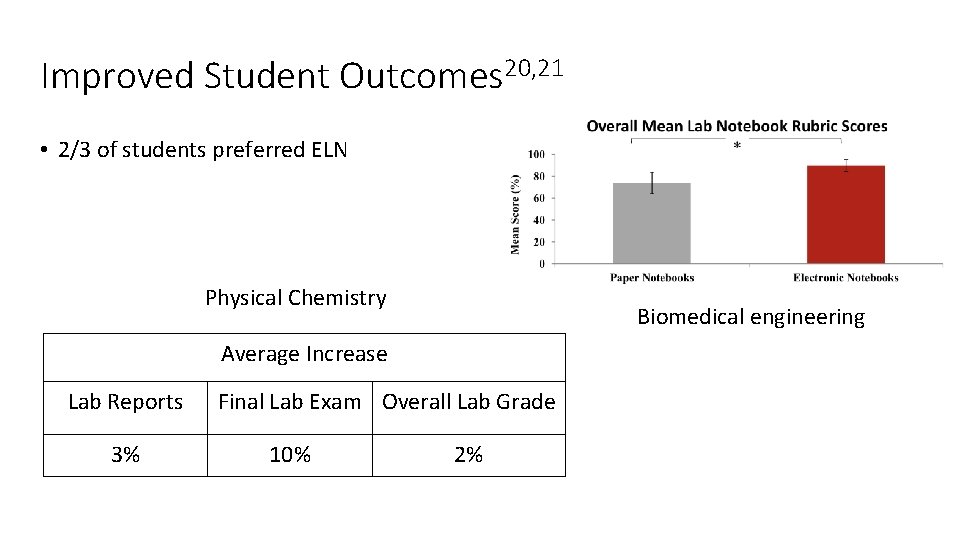
Improved Student Outcomes 20, 21 • 2/3 of students preferred ELN Physical Chemistry Biomedical engineering Average Increase Lab Reports 3% Final Lab Exam Overall Lab Grade 10% 2%
- Slides: 25