
Electron Transport Fermentation and Other Metabolic Pathways 9
Electron Transport, Fermentation and Other Metabolic Pathways 9. 4 – 9. 6 Lesson 5. 2
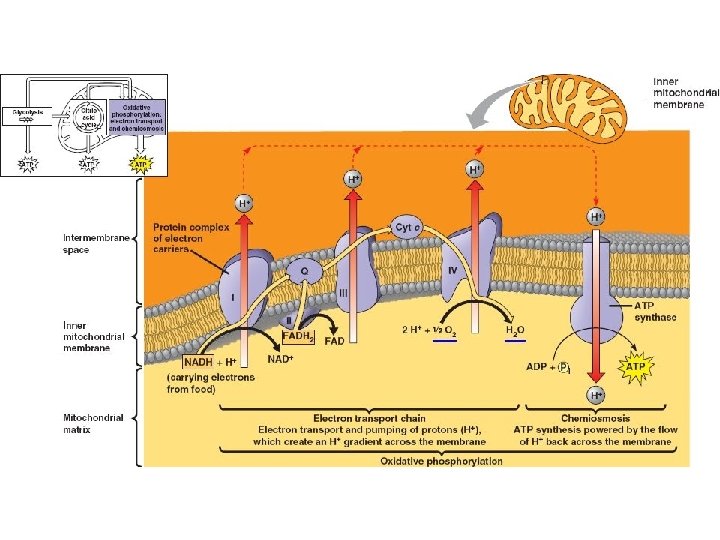
Electron Transport Chain • A series of molecules (mostly proteins) embedded in the inner membrane of the mitochondrion • Each of these proteins has a higher affinity for electrons than the protein above it, so the electrons are easily carried “downhill” • Cytochromes – name for most of the proteins in the chain that use an iron atom to accept and donate elctrons
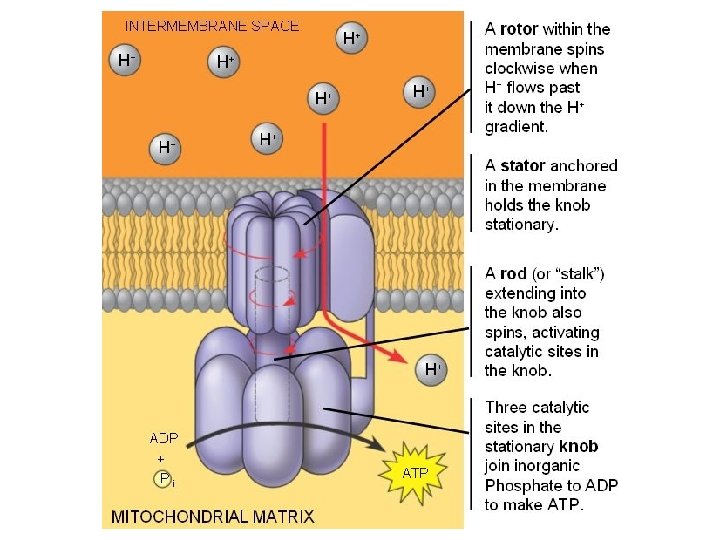
Chemiosmosis • ATP Synthase – protein in the inner membrane of mitochondria that makes ATP from ADP – Opposite of ion pumps using ATP as an energy source, ATP Synthase uses the difference in H+ concentration across a gradient to drive the production of ATP - Chemiosmosis
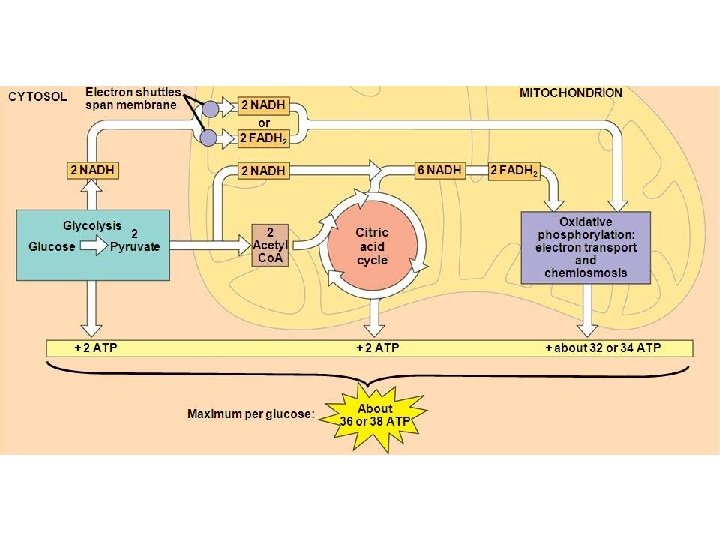
Fermentation • Oxygen is key to the cellular respiration process – Needed for oxidation • Fermentation provides a mechanism to get organic fuel without oxygen – Oxidation refers to a loss of electrons to any electron acceptor, not just oxygen • Aerobic – oxygen present • Anaerobic – oxygen not present • Fermentation – glycolysis plus reactions that regenerate NAD+
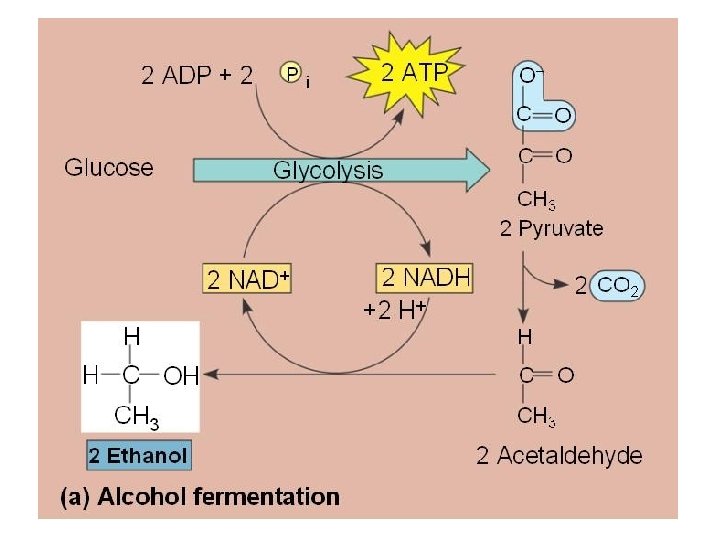
Types of Fermentation • Alcohol Fermentation – pyruvate is converted to ethanol (ethyl alcohol) in two steps – First step releases CO 2 from the pyruvate and converts it to a 2 -carbon compound – acetalhyde – Second step: acetalhyde is reduced by NADH to ethanol, regenerating NAD+ to continue glycolysis – ATP is released from the glycolysis portion of this, not the conversion to ethanol
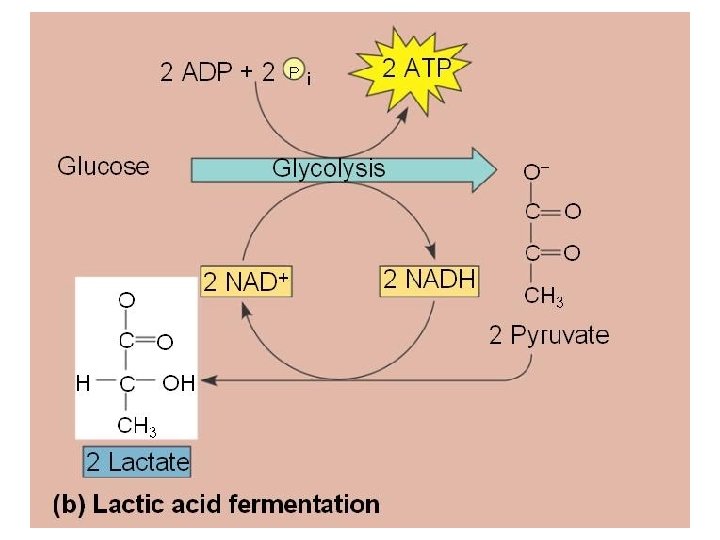
Types of Fermentation • Lactic Acid Fermentation – pyruvate is reduced directly by NADH to form lactate as an end product, with no release of CO 2 – again, NADH is oxidized back to NAD+ to be reused again
Comparing Cellular Respiration and Fermentation • Similarities: – Use glycolysis to oxidize glucose to pyruvate – Glycolysis yields 2 ATP – NAD+ is the oxidizing agent that accepts electrons from food during glycolysis • Differences: – Contrasting mechanisms for oxidizing NADH to NAD+ – Aerobic vs. anaerobic – Respiration yields 19 times more ATP per glucose than fermentation (up to 38 for CR and 2 for fermentation)
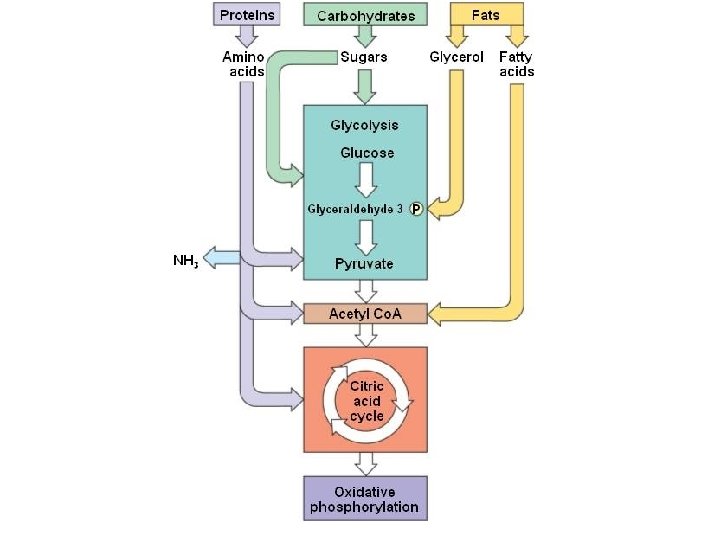
Biosynthesis • Not all organic fuel is used to produce ATP – some provide molecules for the cell to build products – Some of these must first go through parts of Cellular Respiration to get them in a usable form for biosynthesis – Ex: an intermediate compound generated during glycolysis, dihydroxyacetone phosphate, can be converted into one of the precursors of fats. If we eat more than we need, we store fat even if our diets are fat free.
- Slides: 15