
electron theory of magnetism Theory of magnetism was

- Slides: 11
electron theory of magnetism
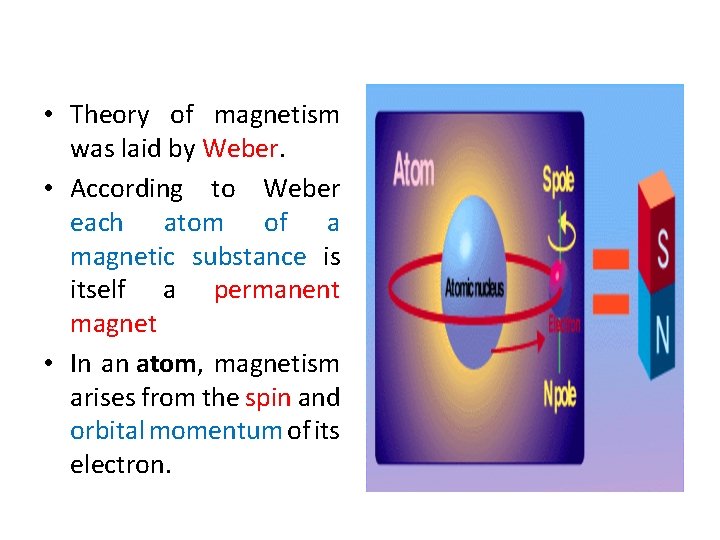
• Theory of magnetism was laid by Weber. • According to Weber each atom of a magnetic substance is itself a permanent magnet • In an atom, magnetism arises from the spin and orbital momentum of its electron.
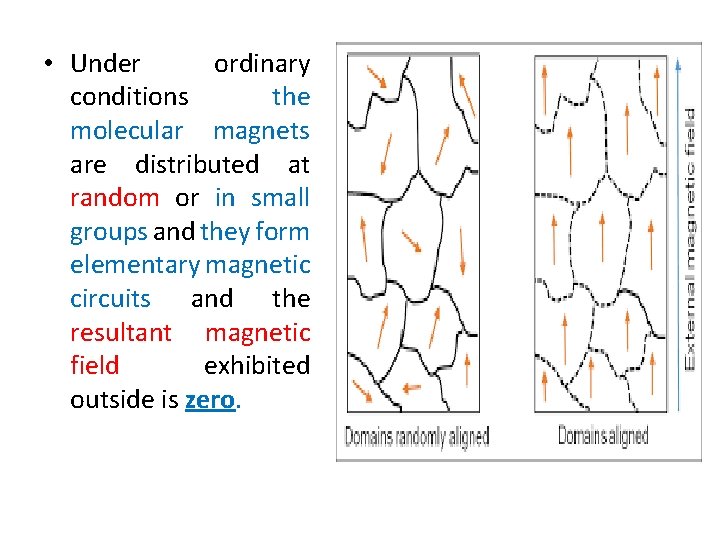
• Under ordinary conditions the molecular magnets are distributed at random or in small groups and they form elementary magnetic circuits and the resultant magnetic field exhibited outside is zero.
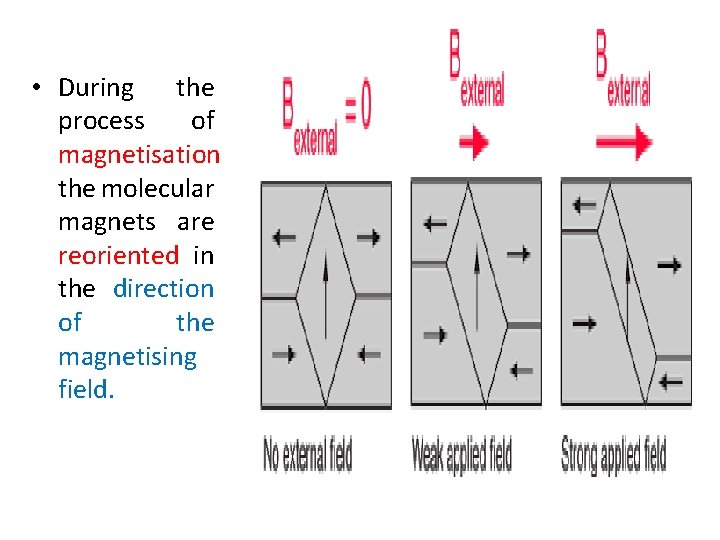
• During the process of magnetisation the molecular magnets are reoriented in the direction of the magnetising field.
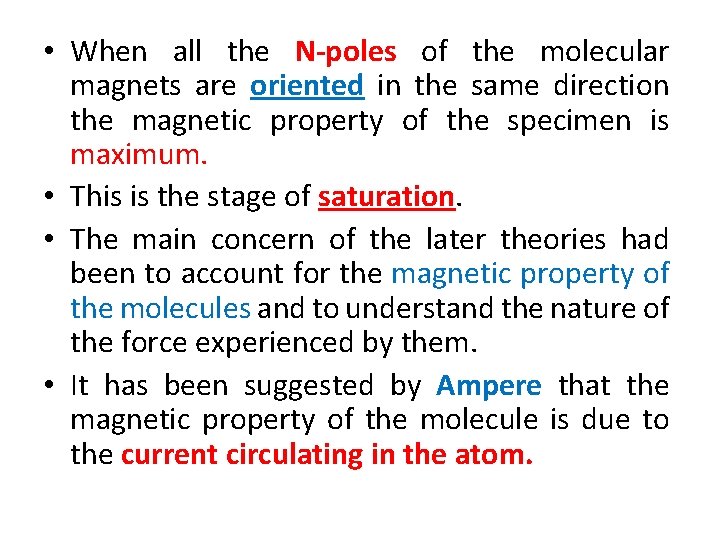
• When all the N-poles of the molecular magnets are oriented in the same direction the magnetic property of the specimen is maximum. • This is the stage of saturation. • The main concern of the later theories had been to account for the magnetic property of the molecules and to understand the nature of the force experienced by them. • It has been suggested by Ampere that the magnetic property of the molecule is due to the current circulating in the atom.
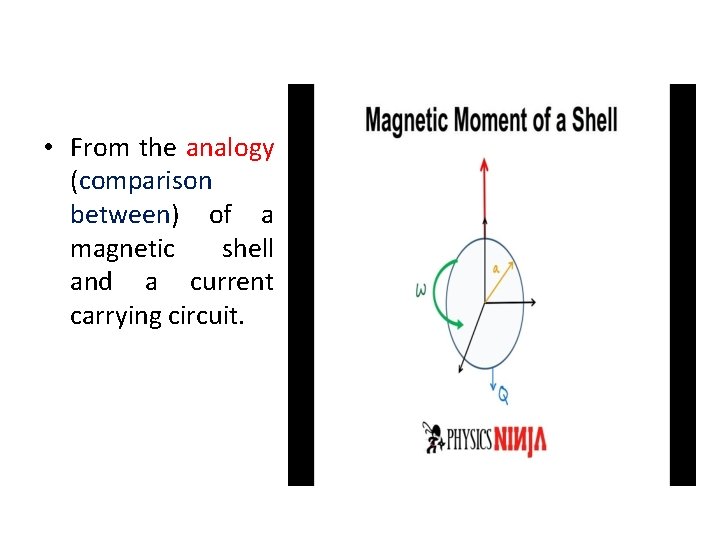
• From the analogy (comparison between) of a magnetic shell and a current carrying circuit.
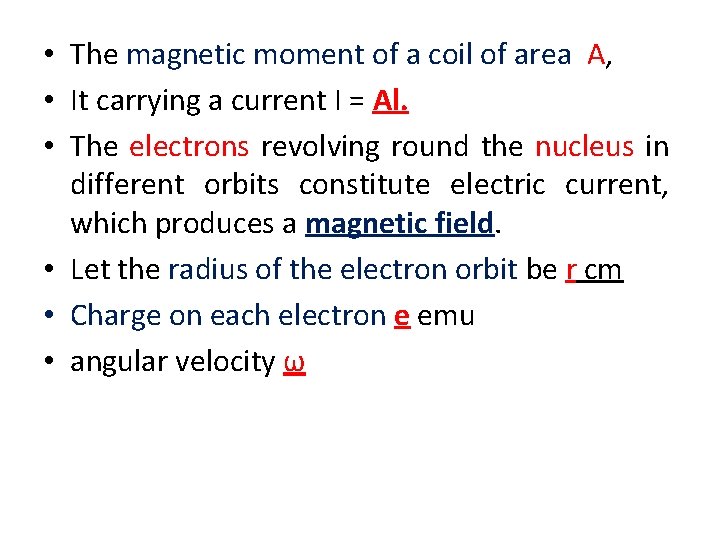
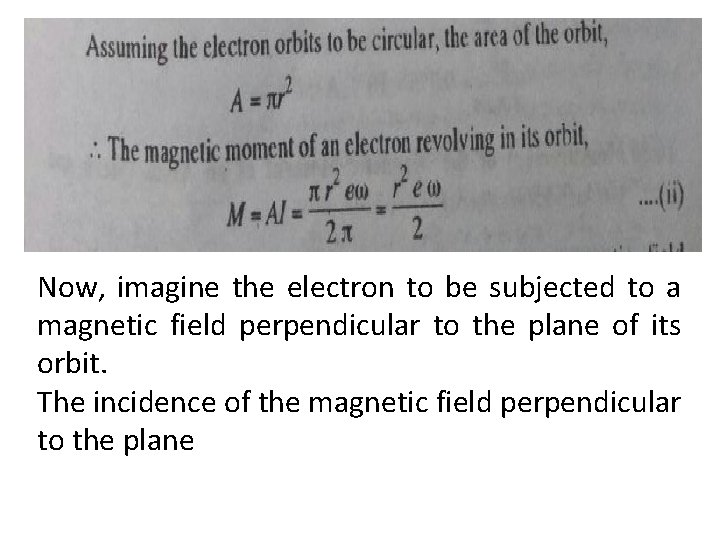
• The magnetic moment of a coil of area A, • It carrying a current I = Al. • The electrons revolving round the nucleus in different orbits constitute electric current, which produces a magnetic field. • Let the radius of the electron orbit be r сm • Charge on each electron e emu • angular velocity ω
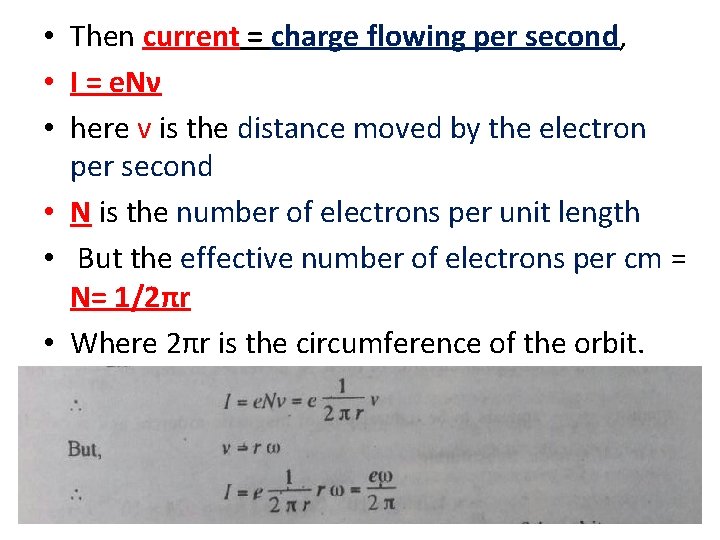
• Then current = charge flowing per second, • I = e. Nν • here v is the distance moved by the electron per second • N is the number of electrons per unit length • But the effective number of electrons per cm = N= 1/2πr • Where 2πr is the circumference of the orbit. •
Now, imagine the electron to be subjected to a magnetic field perpendicular to the plane of its orbit. The incidence of the magnetic field perpendicular to the plane
• It produces an induced current in the electron circuit which tends to go external magnetic field. • Thus, the susceptibility is negative and if this were only effect present, all substances will behave as diamagnetic materials. • Beside the above, the resultant magnetic moment of a molecule is largely dependent on the electron spin about an axis passing through its centre. • The ferromagnetic property of a material appears to be largely due to the electron spin.