
Electron dynamics with Synchrotron Radiation Lenny Rivkin Paul
- Slides: 55
Electron dynamics with Synchrotron Radiation Lenny Rivkin Paul Scherrer Institute (PSI) and Swiss Federal Institute of Technology Lausanne (EPFL) Electron Beam Dynamics, L. Rivkin, Intro to Accelerator Physics, Vysoke-Tatry
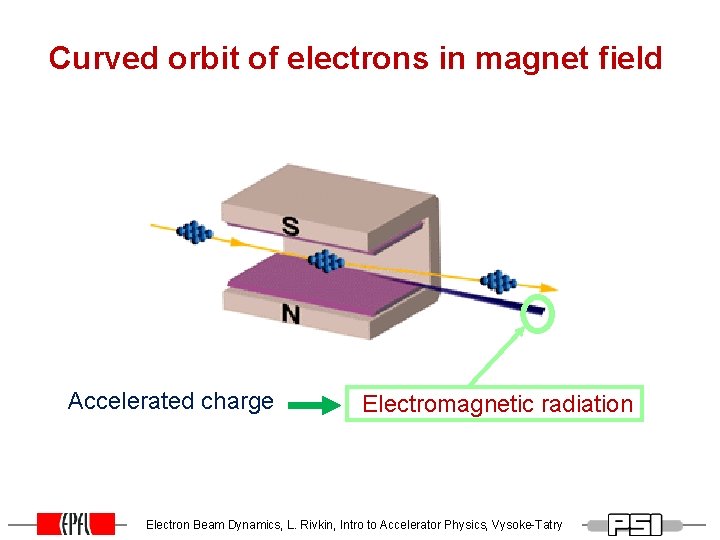
Curved orbit of electrons in magnet field Accelerated charge Electromagnetic radiation Electron Beam Dynamics, L. Rivkin, Intro to Accelerator Physics, Vysoke-Tatry
Electromagnetic waves Electron Beam Dynamics, L. Rivkin, Intro to Accelerator Physics, Vysoke-Tatry
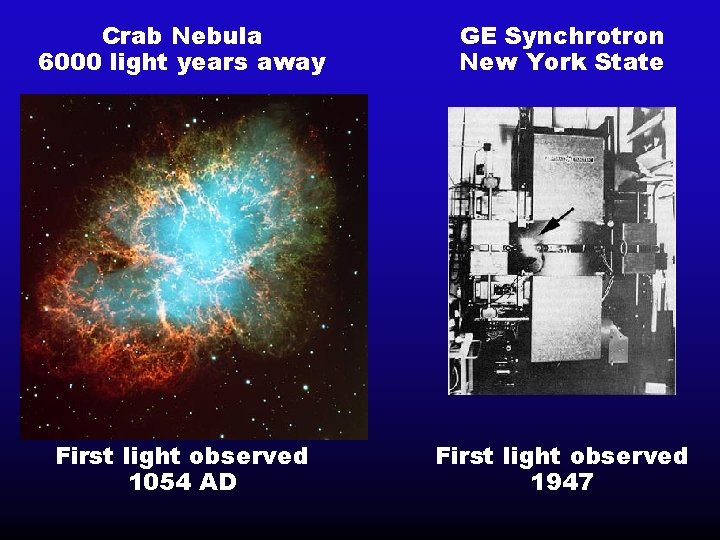
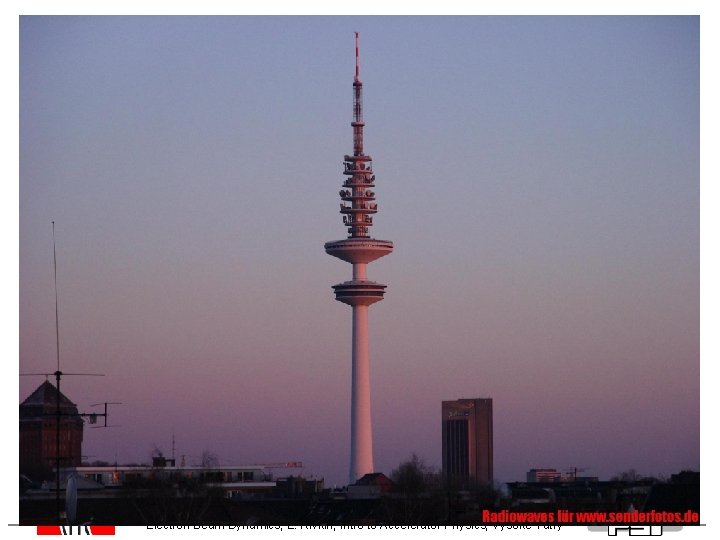
Crab Nebula 6000 light years away GE Synchrotron New York State First light observed 1054 AD First light observed 1947
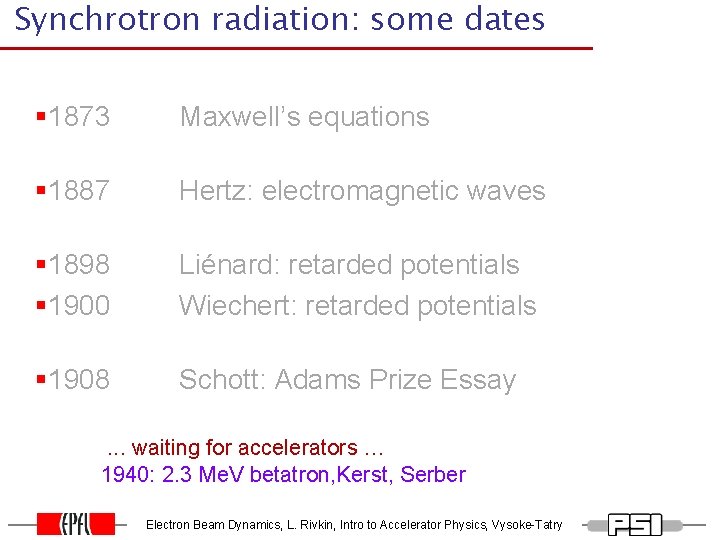
Click Synchrotron to edit Master radiation: titlesome style dates § 1873 Maxwell’s equations § 1887 Hertz: electromagnetic waves § 1898 § 1900 Liénard: retarded potentials Wiechert: retarded potentials § 1908 Schott: Adams Prize Essay . . . waiting for accelerators … 1940: 2. 3 Me. V betatron, Kerst, Serber Electron Beam Dynamics, L. Rivkin, Intro to Accelerator Physics, Vysoke-Tatry
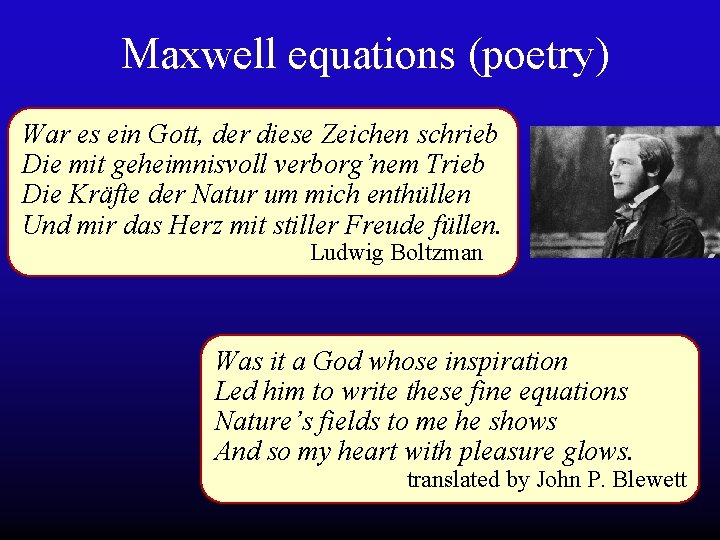
Maxwell equations (poetry) War es ein Gott, der diese Zeichen schrieb Die mit geheimnisvoll verborg’nem Trieb Die Kräfte der Natur um mich enthüllen Und mir das Herz mit stiller Freude füllen. Ludwig Boltzman Was it a God whose inspiration Led him to write these fine equations Nature’s fields to me he shows And so my heart with pleasure glows. translated by John P. Blewett
Click Synchrotron to edit Master radiation: titlesome style dates § 1873 Maxwell’s equations § 1887 Hertz: electromagnetic waves § 1898 § 1900 Liénard: retarded potentials Wiechert: retarded potentials § 1908 Schott: Adams Prize Essay . . . waiting for accelerators … 1940: 2. 3 Me. V betatron, Kerst, Serber Electron Beam Dynamics, L. Rivkin, Intro to Accelerator Physics, Vysoke-Tatry
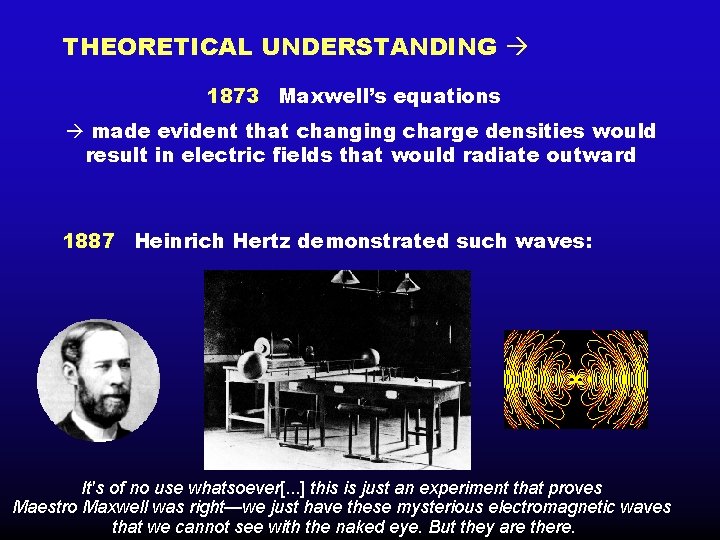
THEORETICAL UNDERSTANDING 1873 Maxwell’s equations made evident that changing charge densities would result in electric fields that would radiate outward 1887 Heinrich Hertz demonstrated such waves: It's of no use whatsoever[. . . ] this is just an experiment that proves Maestro Maxwell was right—we just have these mysterious electromagnetic waves that we cannot see with the naked eye. But they are there.
Electromagnetic waves Electron Beam Dynamics, L. Rivkin, Intro to Accelerator Physics, Vysoke-Tatry
Click Synchrotron to edit Master radiation: titlesome style dates § 1873 Maxwell’s equations § 1887 Hertz: electromagnetic waves § 1898 § 1900 Liénard: retarded potentials Wiechert: retarded potentials § 1908 Schott: Adams Prize Essay . . . waiting for accelerators … 1940: 2. 3 Me. V betatron, Kerst, Serber Electron Beam Dynamics, L. Rivkin, Intro to Accelerator Physics, Vysoke-Tatry
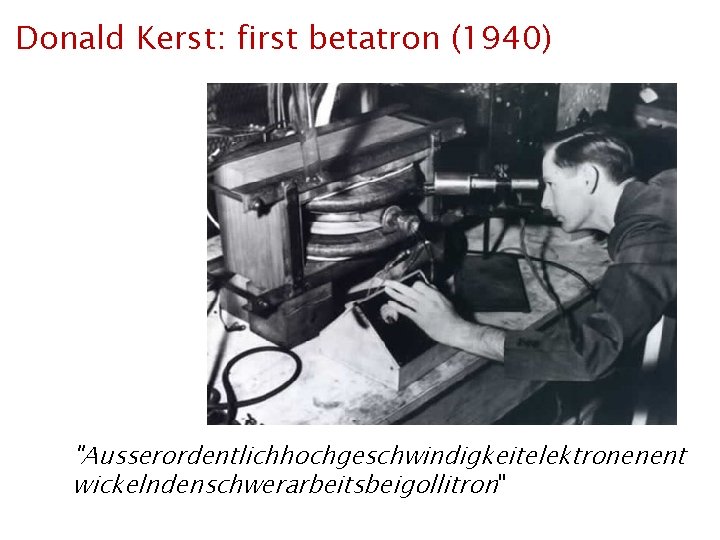
Donald Kerst: first betatron (1940) "Ausserordentlichhochgeschwindigkeitelektronenent wickelndenschwerarbeitsbeigollitron"
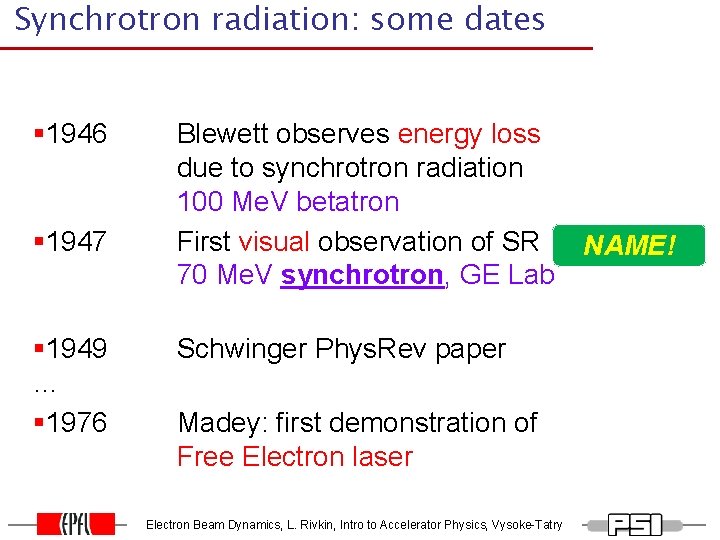
Click Synchrotron to edit Master radiation: titlesome style dates § 1946 § 1947 § 1949 … § 1976 Blewett observes energy loss due to synchrotron radiation 100 Me. V betatron First visual observation of SR 70 Me. V synchrotron, GE Lab Schwinger Phys. Rev paper Madey: first demonstration of Free Electron laser Electron Beam Dynamics, L. Rivkin, Intro to Accelerator Physics, Vysoke-Tatry NAME!
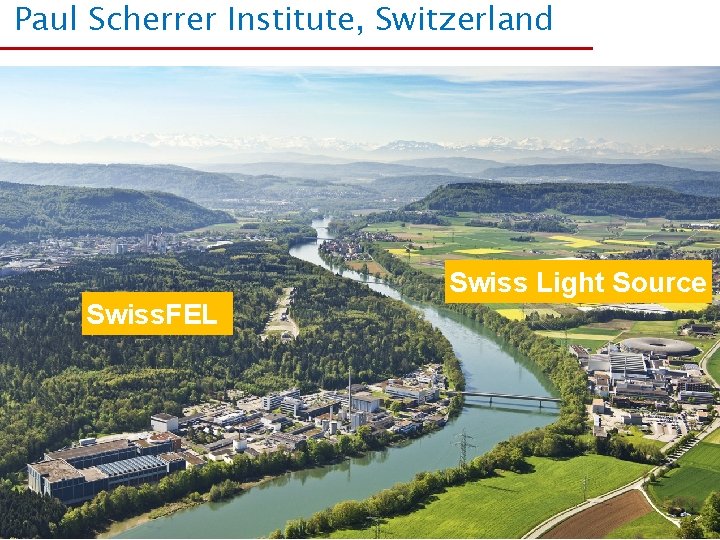
Click Paul Scherrer to edit Master Institute, title. Switzerland style Swiss Light Source Swiss. FEL Electron Beam Dynamics, L. Rivkin, Intro to Accelerator Physics, Vysoke-Tatry
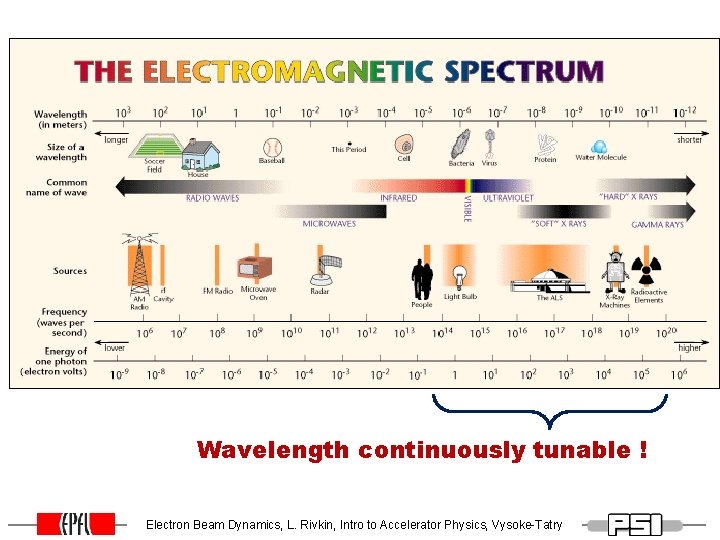
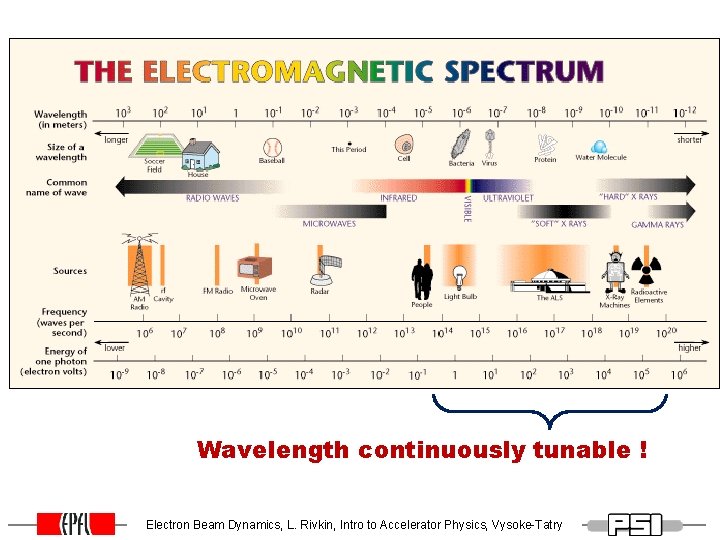
Wavelength continuously tunable ! Electron Beam Dynamics, L. Rivkin, Intro to Accelerator Physics, Vysoke-Tatry
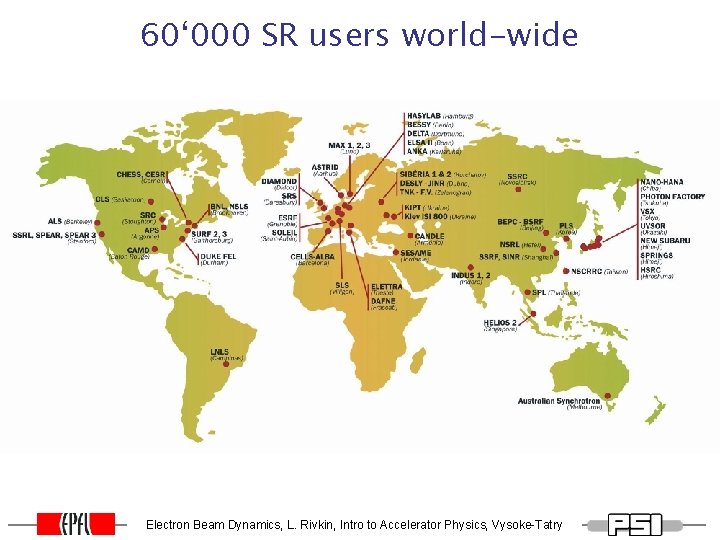
60‘ 000 SR users world-wide Electron Beam Dynamics, L. Rivkin, Intro to Accelerator Physics, Vysoke-Tatry
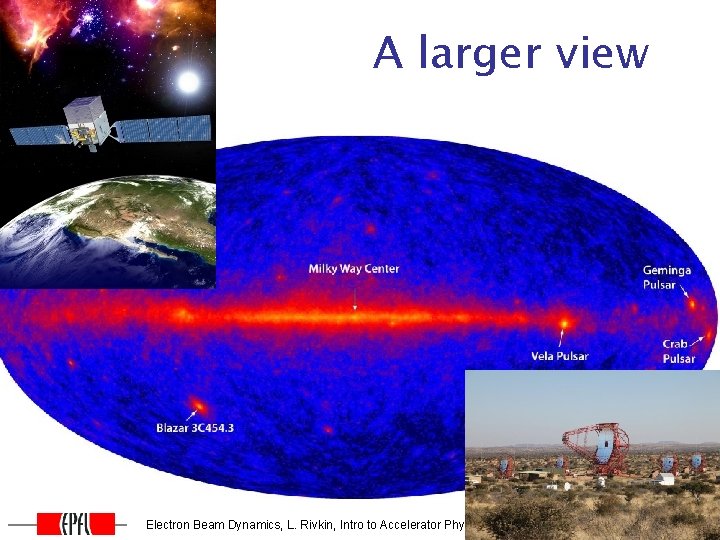
A larger view Electron Beam Dynamics, L. Rivkin, Intro to Accelerator Physics, Vysoke-Tatry
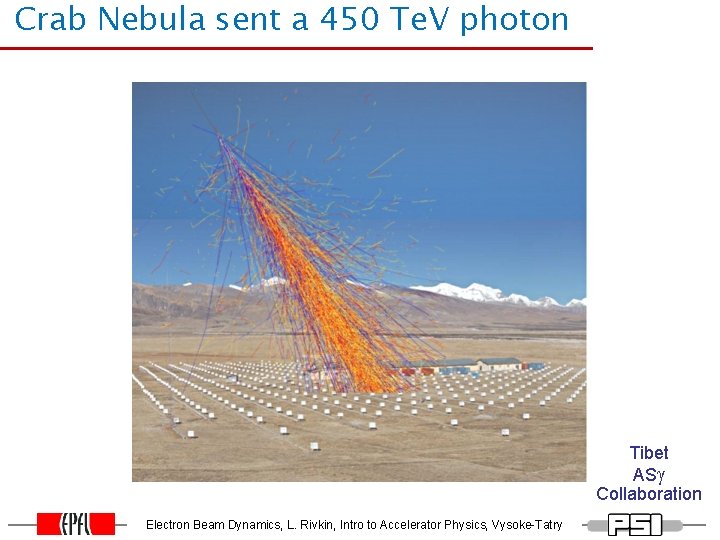
Click Crab to Nebula edit Master sent a title 450 style Te. V photon Tibet ASg Collaboration Electron Beam Dynamics, L. Rivkin, Intro to Accelerator Physics, Vysoke-Tatry
Why do they radiate? Electron Beam Dynamics, L. Rivkin, Intro to Accelerator Physics, Vysoke-Tatry
Synchrotron Radiation is not as simple as it seems … I will try to show that it is much simpler Electron Beam Dynamics, L. Rivkin, Intro to Accelerator Physics, Vysoke-Tatry
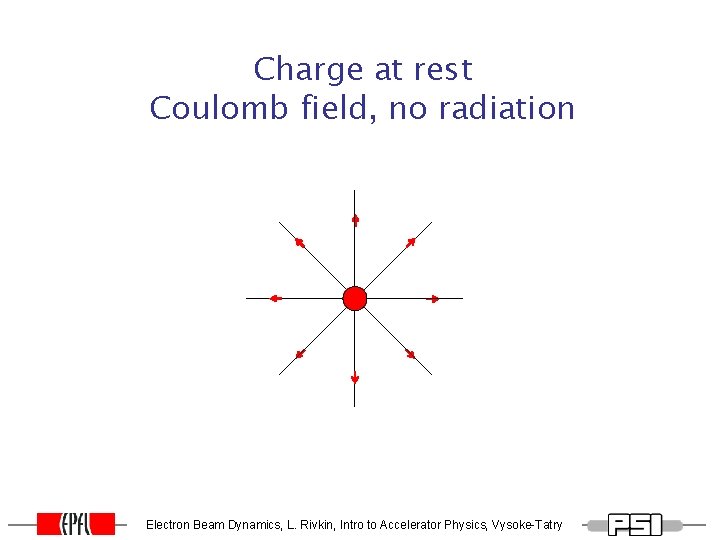
Charge at rest Coulomb field, no radiation Electron Beam Dynamics, L. Rivkin, Intro to Accelerator Physics, Vysoke-Tatry
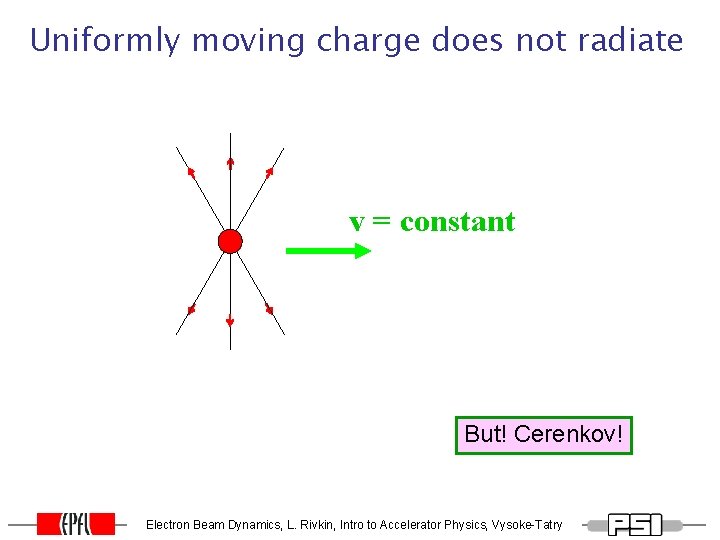
Uniformly moving charge does not radiate v = constant But! Cerenkov! Electron Beam Dynamics, L. Rivkin, Intro to Accelerator Physics, Vysoke-Tatry
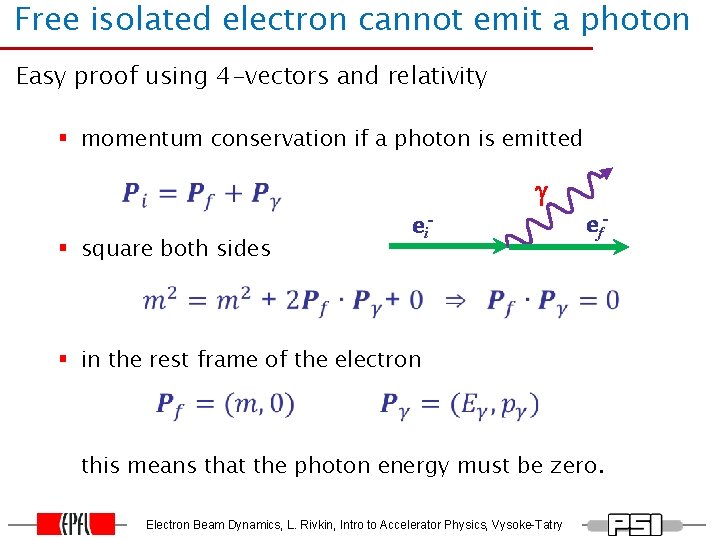
Click Free isolated to edit Master electron title cannot style emit a photon Easy proof using 4 -vectors and relativity § momentum conservation if a photon is emitted g e f- e i- § square both sides § in the rest frame of the electron this means that the photon energy must be zero. Electron Beam Dynamics, L. Rivkin, Intro to Accelerator Physics, Vysoke-Tatry
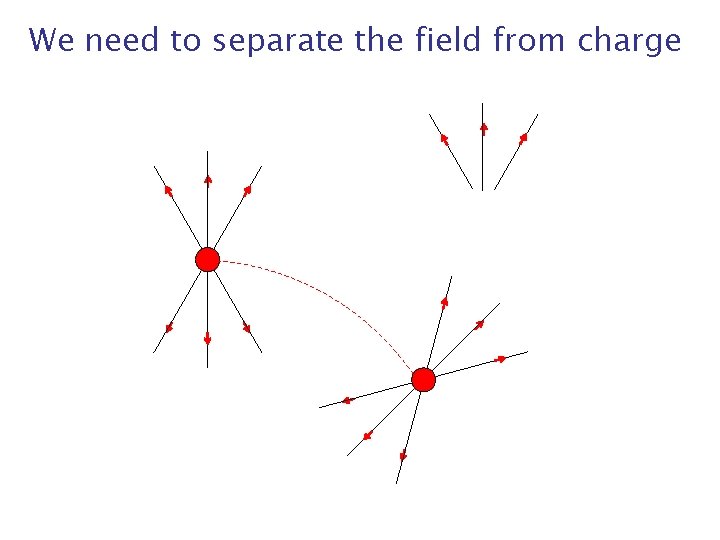
We need to separate the field from charge
Bremsstrahlung or “braking” radiation
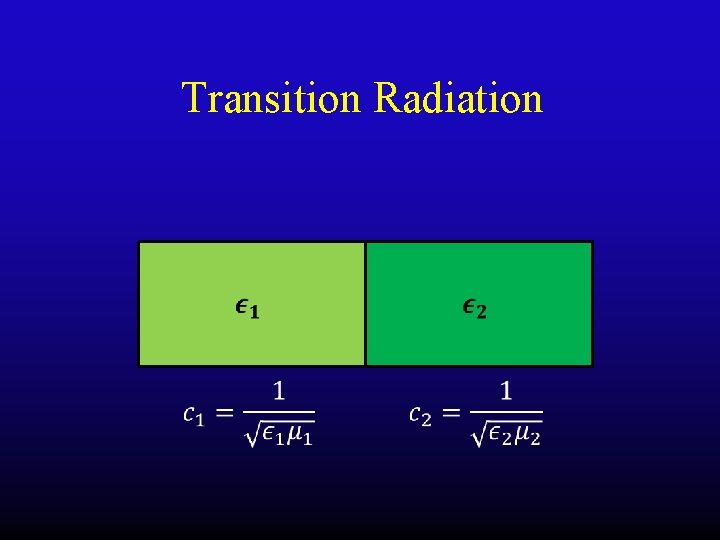
Transition Radiation
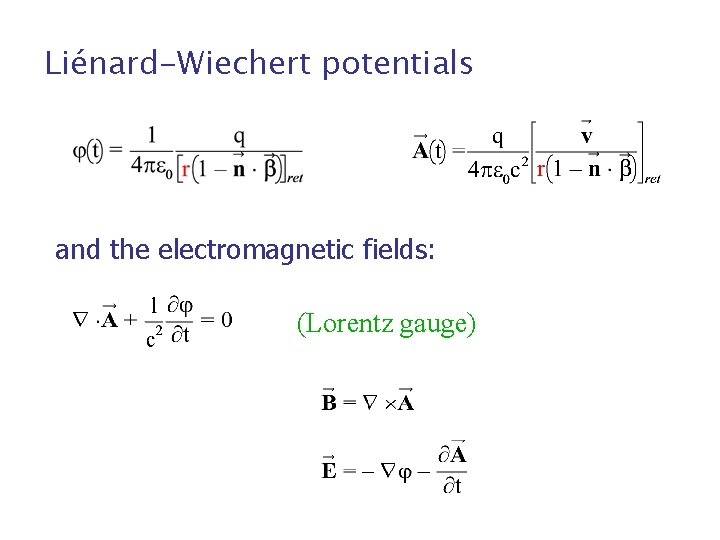
Liénard-Wiechert potentials and the electromagnetic fields: (Lorentz gauge)
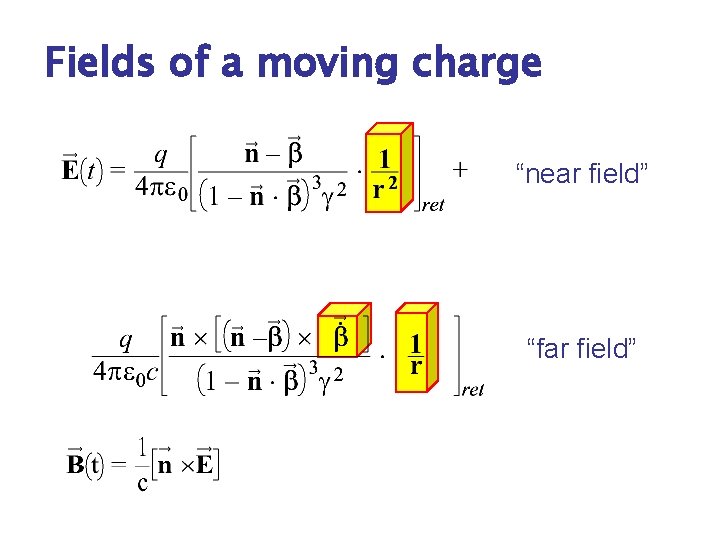
Fields of a moving charge “near field” “far field”
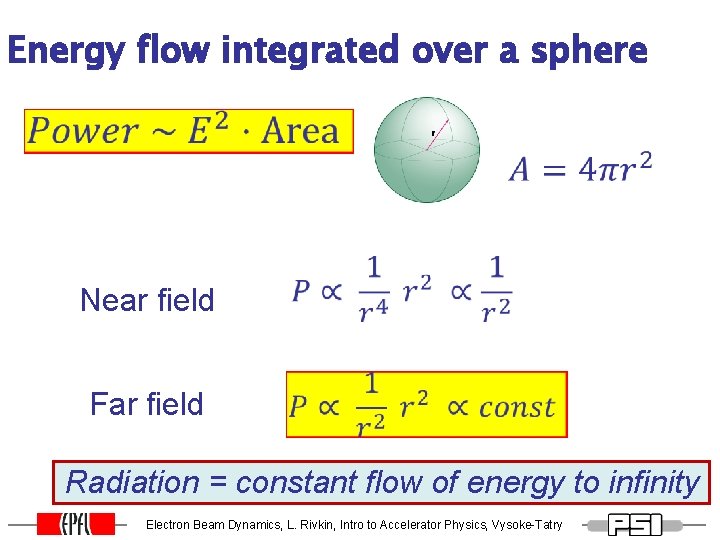
Energy flow integrated over a sphere Near field Far field Radiation = constant flow of energy to infinity Electron Beam Dynamics, L. Rivkin, Intro to Accelerator Physics, Vysoke-Tatry
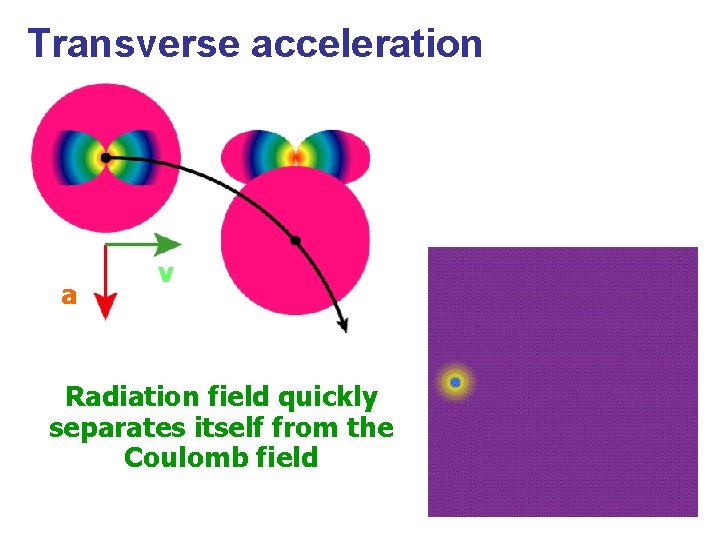
Transverse acceleration a v Radiation field quickly separates itself from the Coulomb field
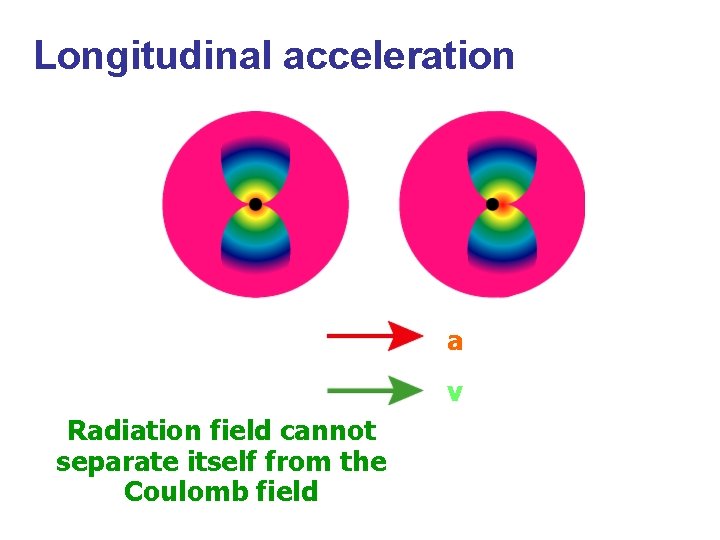
Longitudinal acceleration a v Radiation field cannot separate itself from the Coulomb field
Synchrotron Radiation Basic Properties Electron Beam Dynamics, L. Rivkin, Intro to Accelerator Physics, Vysoke-Tatry
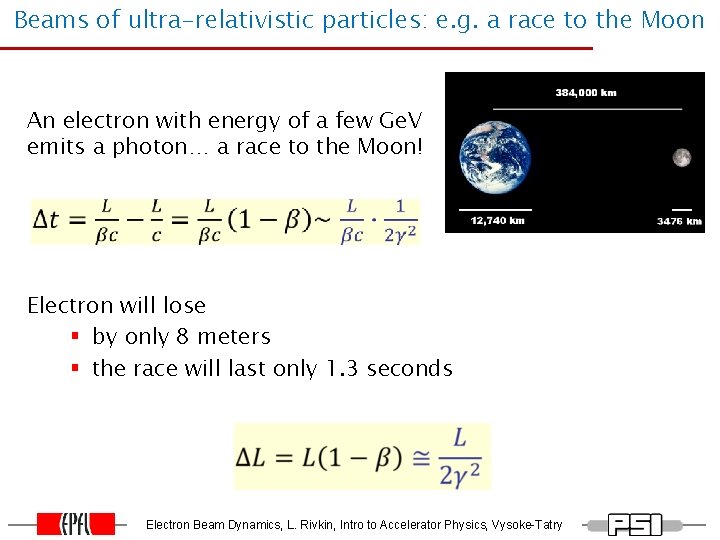
Beams to of ultra-relativistic particles: e. g. a race to the Moon Click edit Master title style An electron with energy of a few Ge. V emits a photon… a race to the Moon! Electron will lose § by only 8 meters § the race will last only 1. 3 seconds Electron Beam Dynamics, L. Rivkin, Intro to Accelerator Physics, Vysoke-Tatry
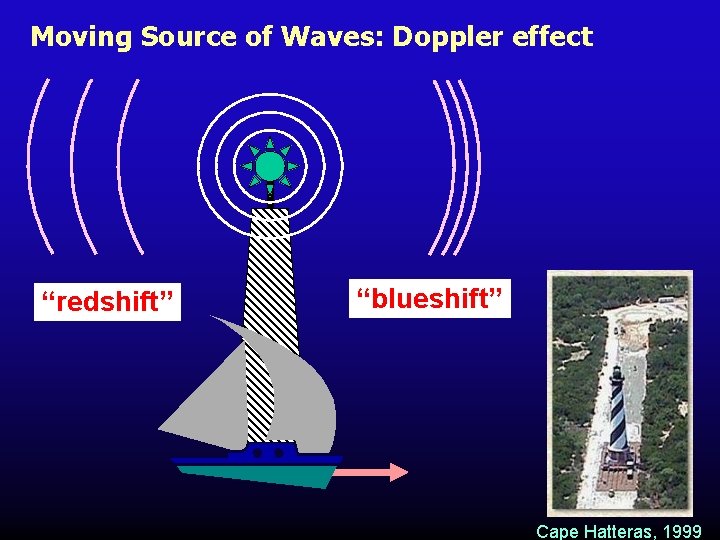
Moving Source of Waves: Doppler effect “redshift” “blueshift” Cape Hatteras, 1999
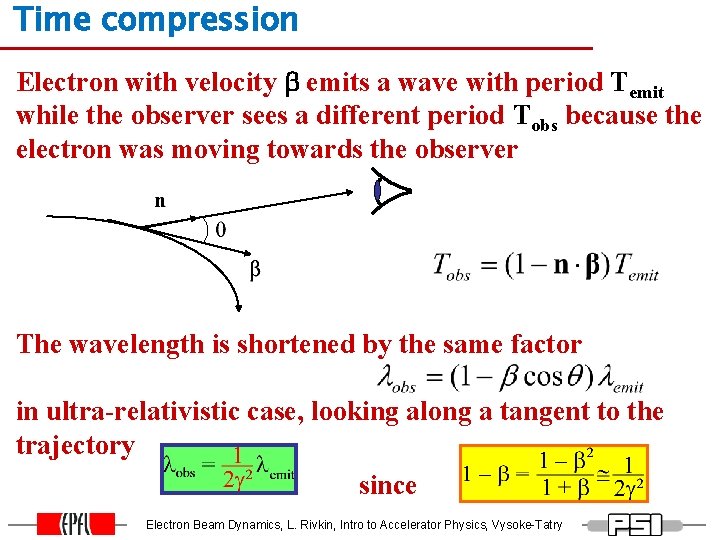
Click Time to compression edit Master title style Electron with velocity emits a wave with period Temit while the observer sees a different period Tobs because the electron was moving towards the observer The wavelength is shortened by the same factor in ultra-relativistic case, looking along a tangent to the trajectory since Electron Beam Dynamics, L. Rivkin, Intro to Accelerator Physics, Vysoke-Tatry
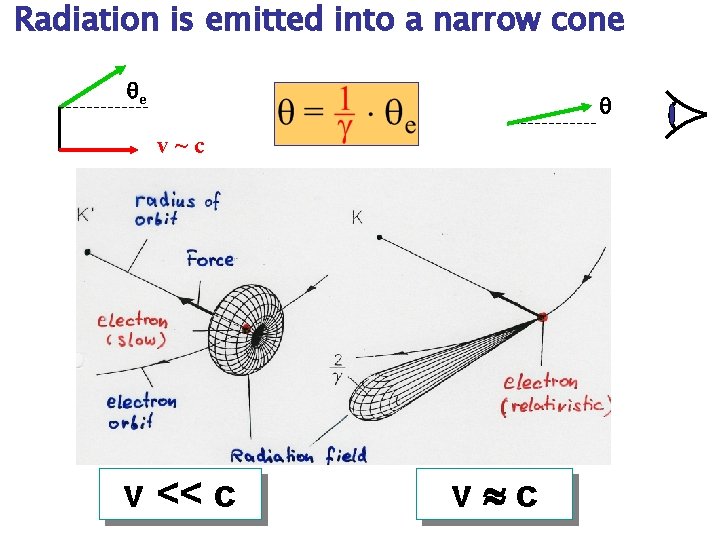
Radiation is emitted into a narrow cone qe q v~c v << c v » c
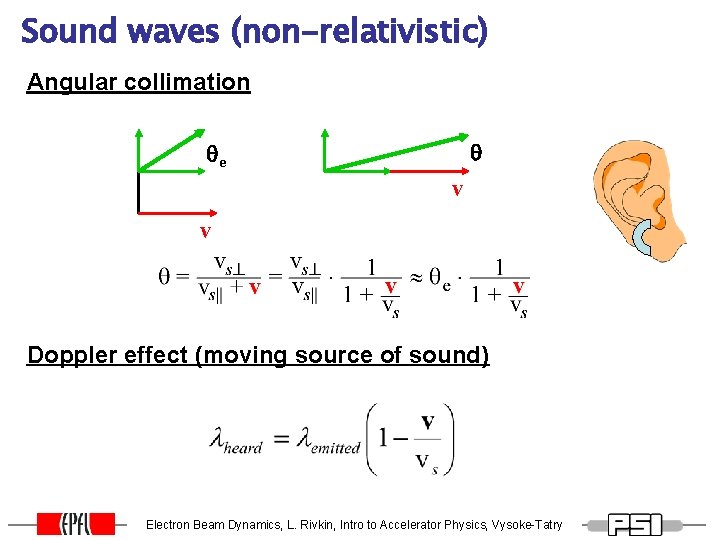
Sound waves (non-relativistic) Angular collimation q qe v v Doppler effect (moving source of sound) Electron Beam Dynamics, L. Rivkin, Intro to Accelerator Physics, Vysoke-Tatry
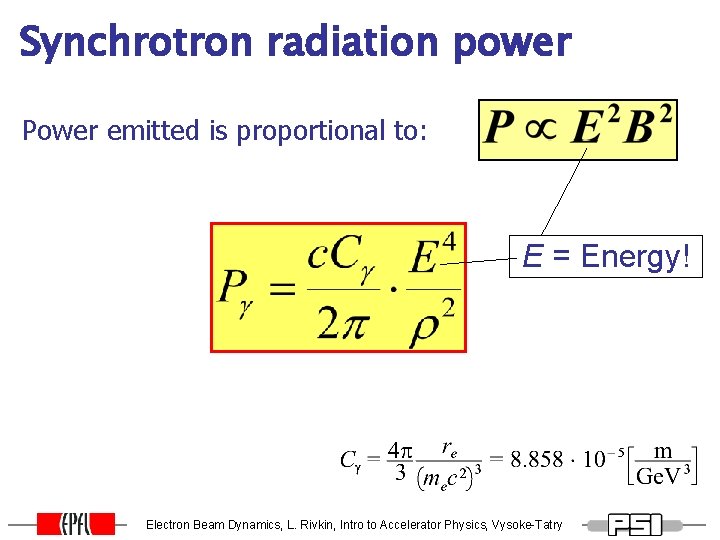
Synchrotron radiation power Power emitted is proportional to: E = Energy! Electron Beam Dynamics, L. Rivkin, Intro to Accelerator Physics, Vysoke-Tatry
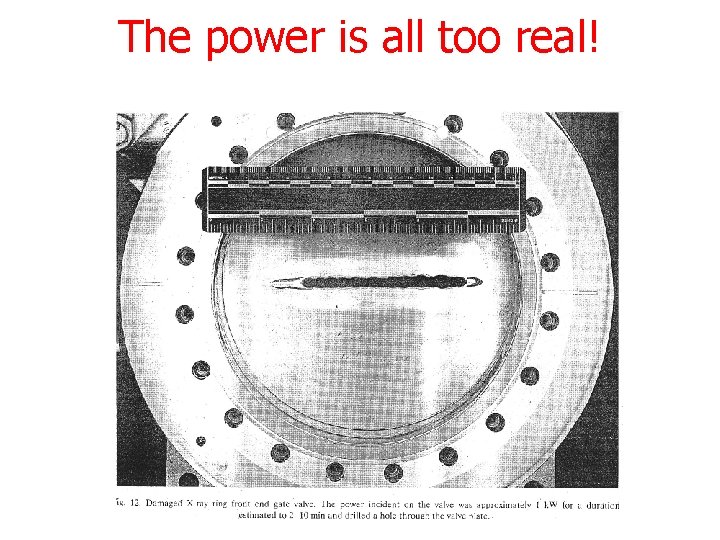
The power is all too real!
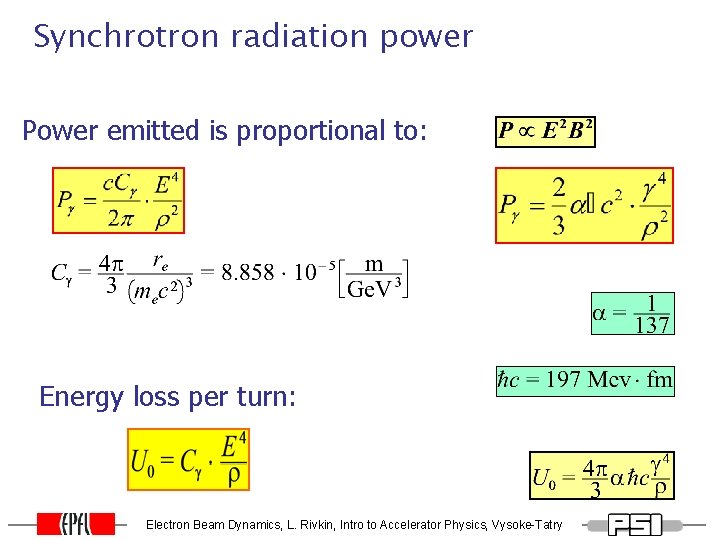
Synchrotron radiation power Power emitted is proportional to: Energy loss per turn: Electron Beam Dynamics, L. Rivkin, Intro to Accelerator Physics, Vysoke-Tatry
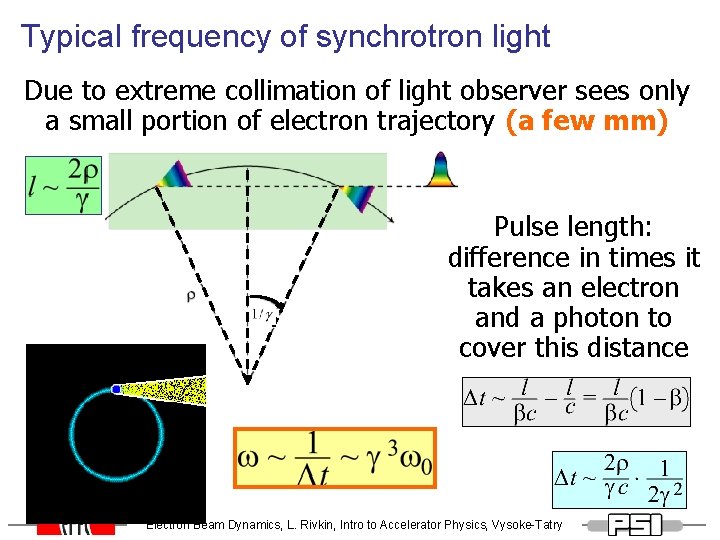
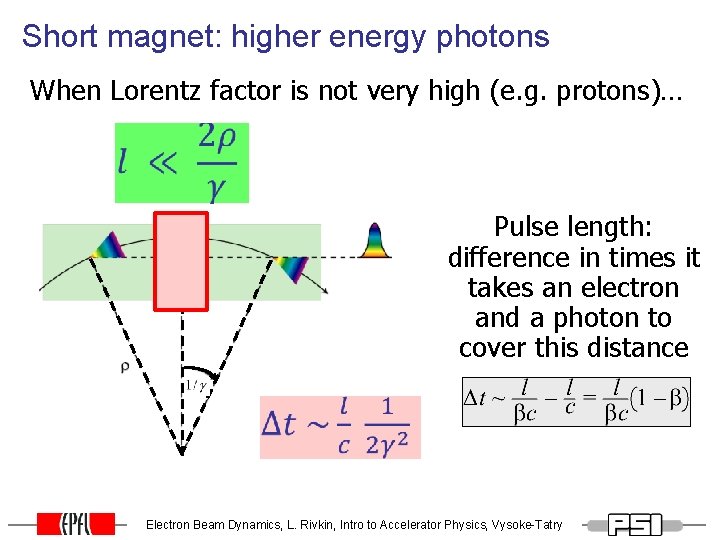
Typical frequency of synchrotron light Due to extreme collimation of light observer sees only a small portion of electron trajectory (a few mm) Pulse length: difference in times it takes an electron and a photon to cover this distance Electron Beam Dynamics, L. Rivkin, Intro to Accelerator Physics, Vysoke-Tatry
Short magnet: higher energy photons When Lorentz factor is not very high (e. g. protons)… Pulse length: difference in times it takes an electron and a photon to cover this distance Electron Beam Dynamics, L. Rivkin, Intro to Accelerator Physics, Vysoke-Tatry
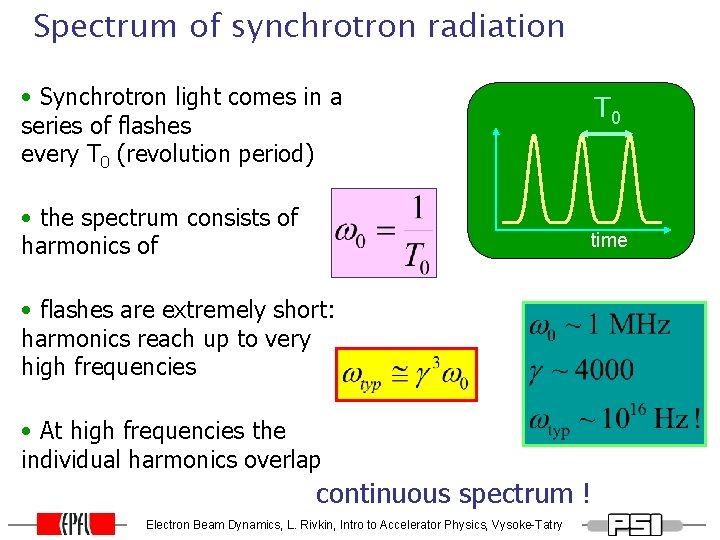
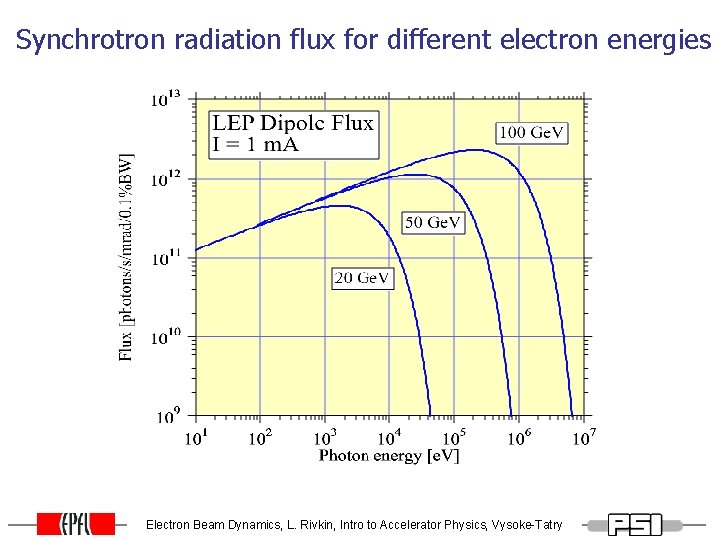
Spectrum of synchrotron radiation • Synchrotron light comes in a series of flashes every T 0 (revolution period) • the spectrum consists of harmonics of T 0 time • flashes are extremely short: harmonics reach up to very high frequencies • At high frequencies the individual harmonics overlap continuous spectrum ! Electron Beam Dynamics, L. Rivkin, Intro to Accelerator Physics, Vysoke-Tatry
Wavelength continuously tunable ! Electron Beam Dynamics, L. Rivkin, Intro to Accelerator Physics, Vysoke-Tatry
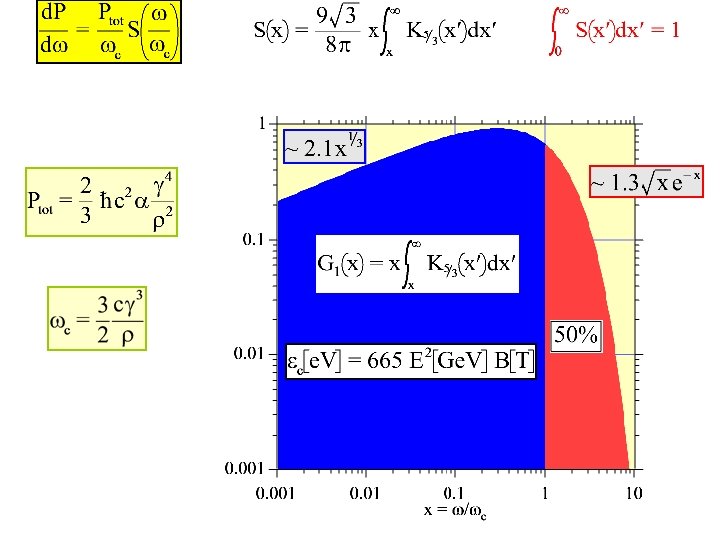
Synchrotron radiation flux for different electron energies Electron Beam Dynamics, L. Rivkin, Intro to Accelerator Physics, Vysoke-Tatry
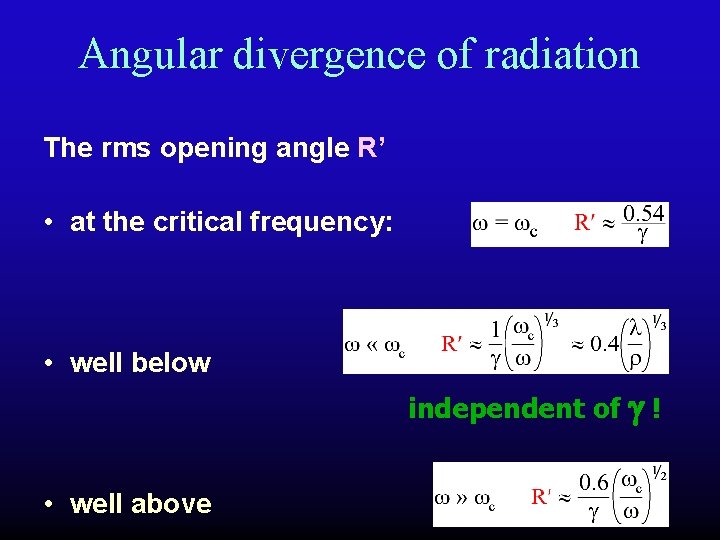
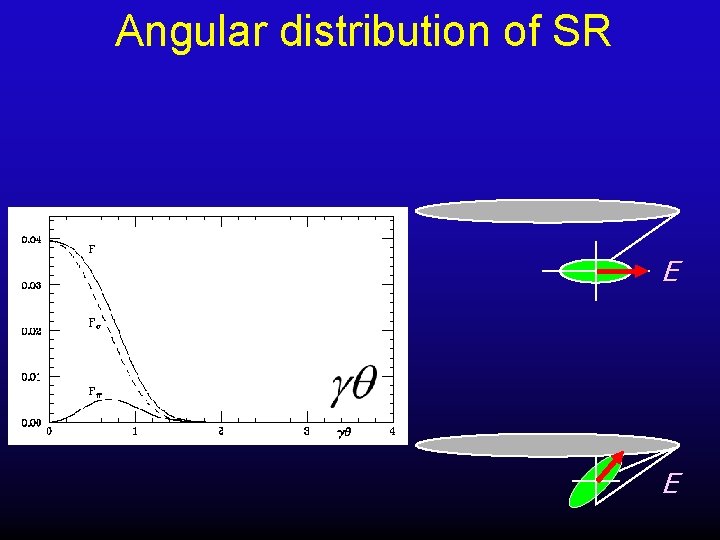
Angular divergence of radiation The rms opening angle R’ • at the critical frequency: • well below independent of g ! • well above
Synchrotron light polarization Electron Beam Dynamics, L. Rivkin, Intro to Accelerator Physics, Vysoke-Tatry
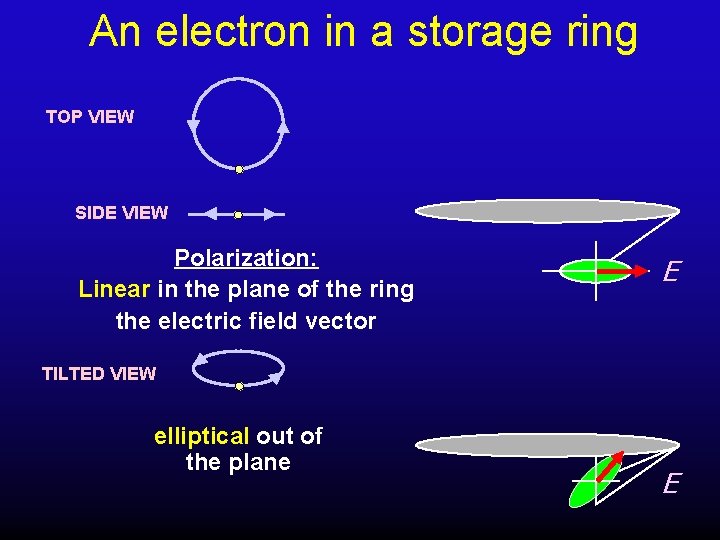
An electron in a storage ring TOP VIEW SIDE VIEW Polarization: Linear in the plane of the ring the electric field vector E TILTED VIEW elliptical out of the plane E
Angular distribution of SR E E
Synchrotron light based electron beam diagnostics Electron Beam Dynamics, L. Rivkin, Intro to Accelerator Physics, Vysoke-Tatry
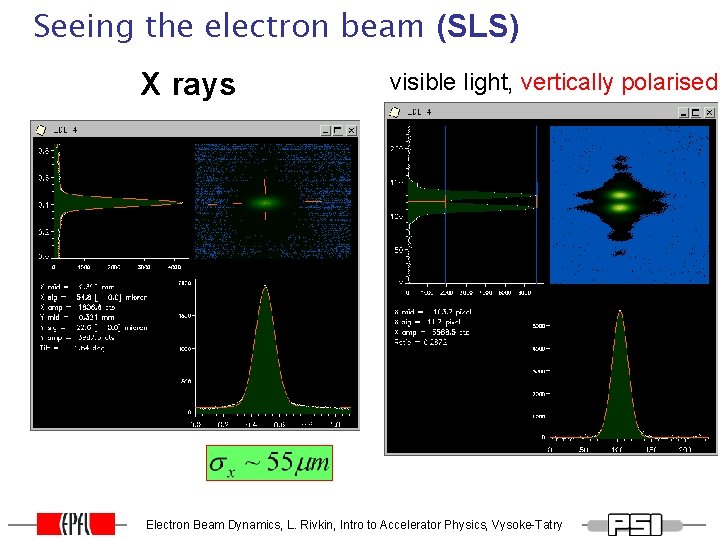
Seeing the electron beam (SLS) X rays visible light, vertically polarised Electron Beam Dynamics, L. Rivkin, Intro to Accelerator Physics, Vysoke-Tatry
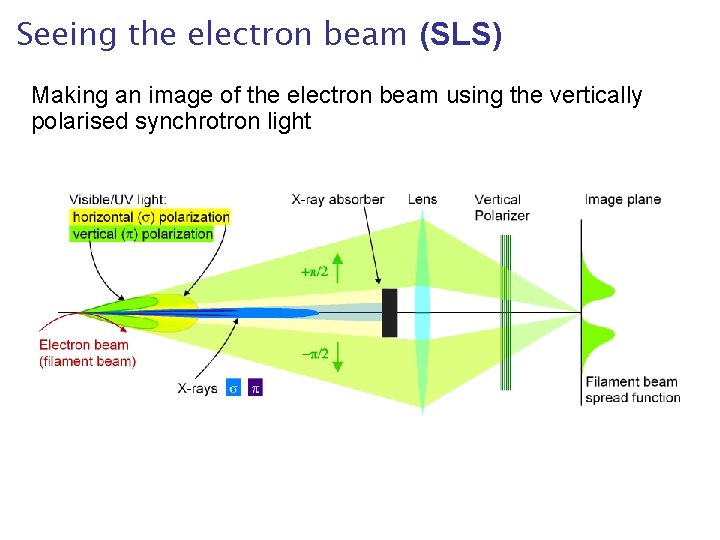
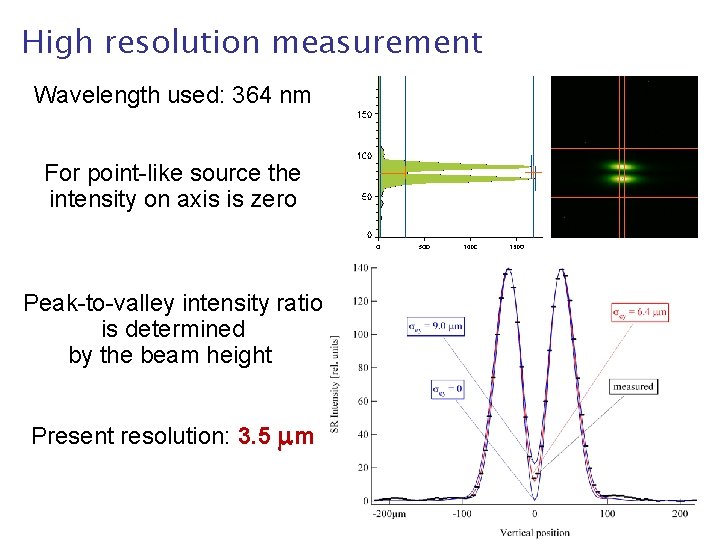
Seeing the electron beam (SLS) Making an image of the electron beam using the vertically polarised synchrotron light
High resolution measurement Wavelength used: 364 nm For point-like source the intensity on axis is zero Peak-to-valley intensity ratio is determined by the beam height Present resolution: 3. 5 mm
Click Useful tobooks edit Master and references title style H. Wiedemann, Synchrotron Radiation Springer-Verlag Berlin Heidelberg 2003 H. Wiedemann, Particle Accelerator Physics I and II Springer Study Edition, 2003 A. Hofmann, The Physics of Synchrotron Radiation Cambridge University Press 2004 A. W. Chao, M. Tigner, Handbook of Accelerator Physics and Engineering, World Scientific 1999 Electron Beam Dynamics, L. Rivkin, Intro to Accelerator Physics, Vysoke-Tatry
Click CERNto Accelerator edit Master. School title style Proceedings Synchrotron Radiation and Free Electron Lasers Grenoble, France, 22 - 27 April 1996 (A. Hofmann’s lectures on synchrotron radiation) CERN Yellow Report 98 -04 Brunnen, Switzerland, 2 – 9 July 2003 CERN Yellow Report 2005 -012 Previous CAS Schools Proceedings Electron Beam Dynamics, L. Rivkin, Intro to Accelerator Physics, Vysoke-Tatry