
Electron Configurations and Orbital diagrams When doing electron

Electron Configurations and Orbital diagrams
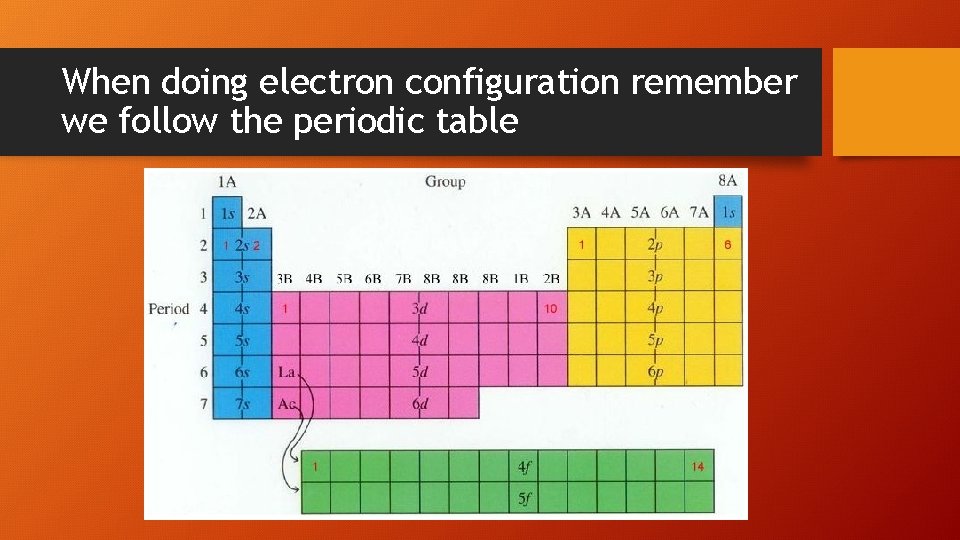
When doing electron configuration remember we follow the periodic table

So lets do the electron configuration for Sulfer • • • 1 s 2 2 p 6 3 s 2 3 p 4 1 s 22 p 63 s 23 p 4

So lets do the electron configuration for iron • • 1 s 2 2 p 6 3 s 2 3 p 6 4 s 1 1 s 22 p 63 s 23 p 64 s 1
When you have the larger elements such as Bromine or iodine, this could take a lot of writing. • Writing the configurations is very repetitive. • You just keep adding the elements and rows • Is there an easier way to write this. • Why yes there is • Noble Gases
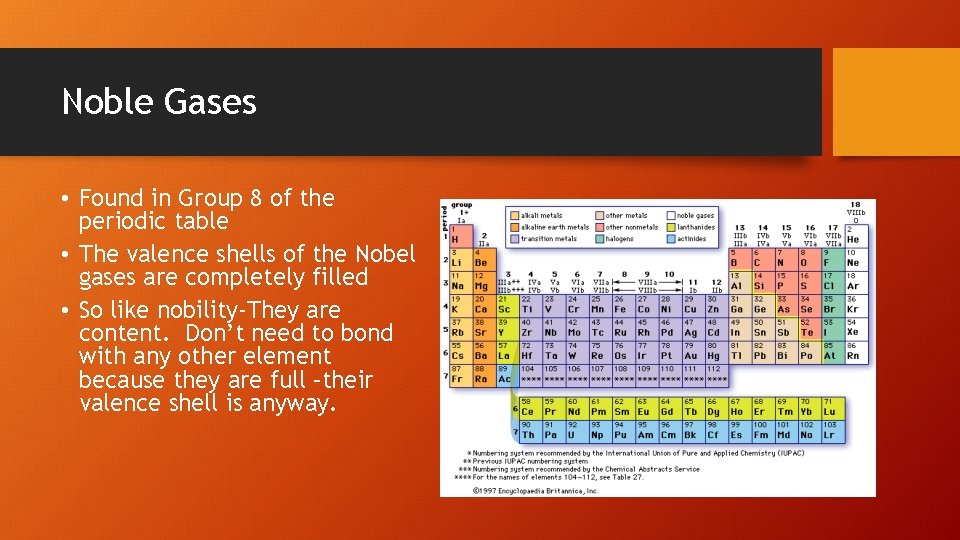
Noble Gases • Found in Group 8 of the periodic table • The valence shells of the Nobel gases are completely filled • So like nobility-They are content. Don’t need to bond with any other element because they are full –their valence shell is anyway.
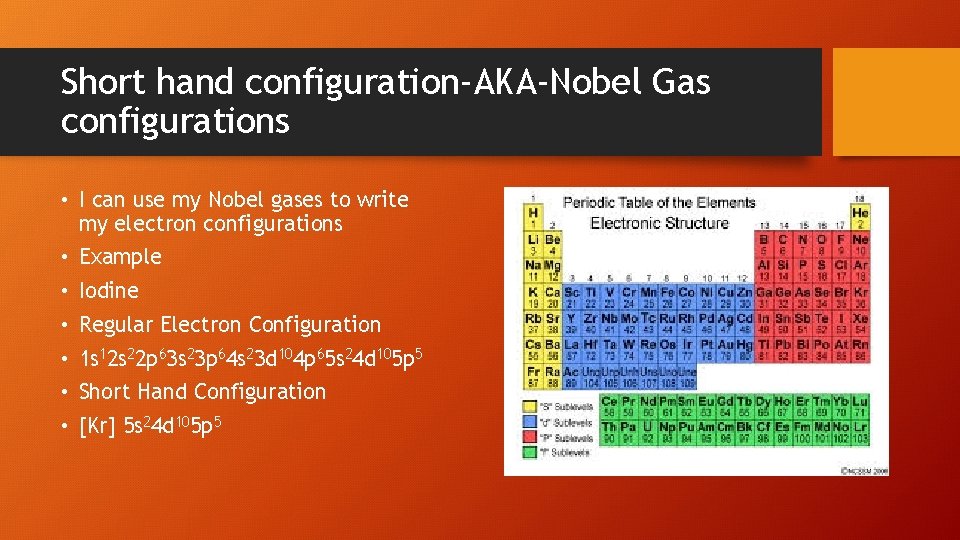
Short hand configuration-AKA-Nobel Gas configurations • I can use my Nobel gases to write my electron configurations • Example • Iodine • Regular Electron Configuration • 1 s 12 s 22 p 63 s 23 p 64 s 23 d 104 p 65 s 24 d 105 p 5 • Short Hand Configuration • [Kr] 5 s 24 d 105 p 5

Short hand configuration-AKA-Nobel Gas configurations • Write the shorthand configuration, or the Nobel Gas configuration for • Chlorine • [Ne] 3 s 23 p 5 • Bromine • [Ar]4 s 23 d 104 p 5
The Big Questions • Now that we know how electrons are arranged into atoms, how are they arranged into sublevels and orbitals? • How can we communicate the arrangement of atoms in orbitals?
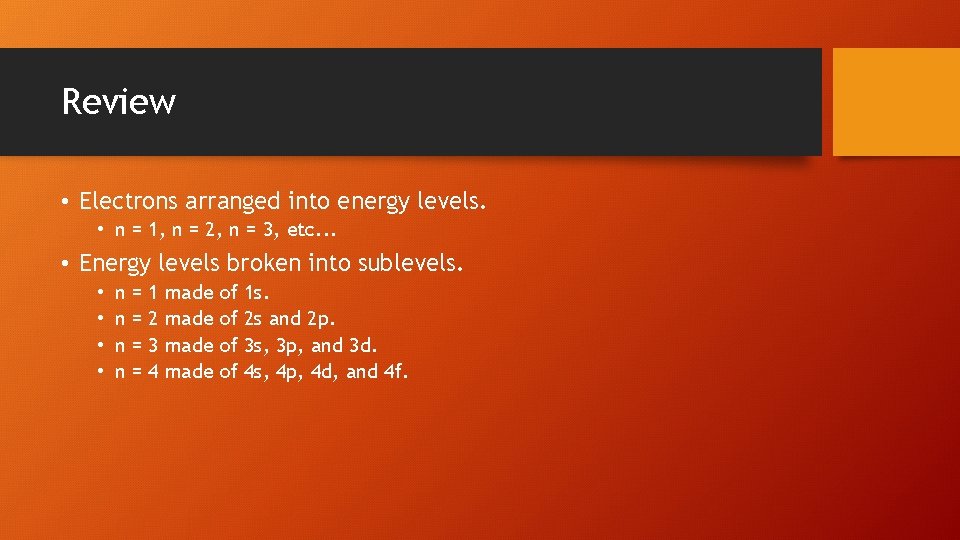
Review • Electrons arranged into energy levels. • n = 1, n = 2, n = 3, etc. . . • Energy levels broken into sublevels. • • n n = = 1 2 3 4 made of of 1 s. 2 s and 2 p. 3 s, 3 p, and 3 d. 4 s, 4 p, 4 d, and 4 f.
Review • In an atom, electrons fill the lowest sublevels first (aufbau principle). • Fill higher energy sublevels only when lower ones are already filled. • Order of filling is not as expected.
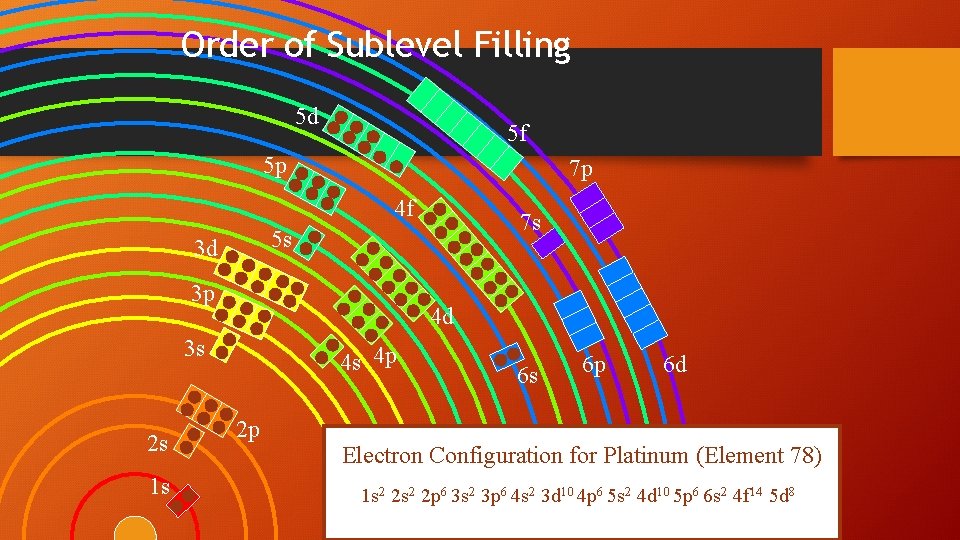
Order of Sublevel Filling 5 d 5 f 5 p 7 p 4 f 5 s 3 d 3 p 4 d 3 s 2 s 1 s 7 s 4 s 4 p 2 p 6 s 6 p 6 d Electron Configuration for Platinum (Element 78) 1 s 2 2 p 6 3 s 2 3 p 6 4 s 2 3 d 10 4 p 6 5 s 2 4 d 10 5 p 6 6 s 2 4 f 14 5 d 8

Hund’s Rule • In a sublevel, every orbital gets one electron before any orbital gets a pair. • Example: • Electron configuration for carbon: 1 s 2 2 p 2 sublevel 1 s 2 s 2 p energy level orbitals
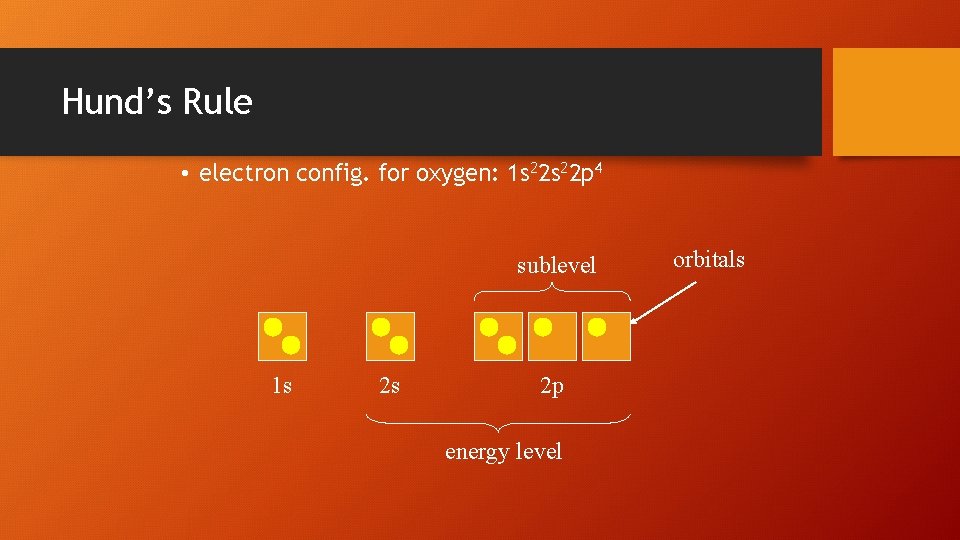
Hund’s Rule • electron config. for oxygen: 1 s 22 p 4 sublevel 1 s 2 s 2 p energy level orbitals
Orbital Diagrams • Show the arrangement of electrons in orbitals within an atom. • Use boxes to represent orbitals. • One arrow (↑) represents 1 electron. • 2 arrows (↑↓) rep. 2 electrons.
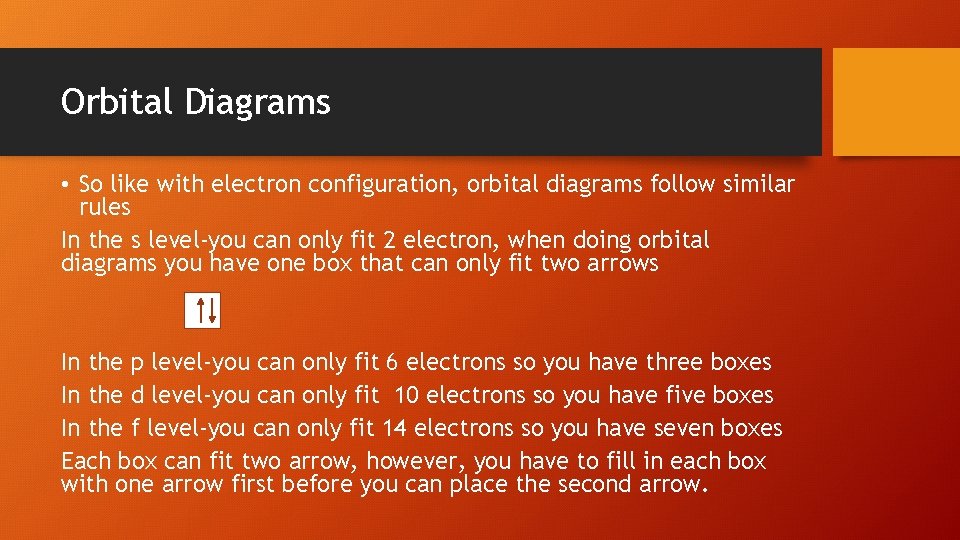
Orbital Diagrams • So like with electron configuration, orbital diagrams follow similar rules In the s level-you can only fit 2 electron, when doing orbital diagrams you have one box that can only fit two arrows In the p level-you can only fit 6 electrons so you have three boxes In the d level-you can only fit 10 electrons so you have five boxes In the f level-you can only fit 14 electrons so you have seven boxes Each box can fit two arrow, however, you have to fill in each box with one arrow first before you can place the second arrow.
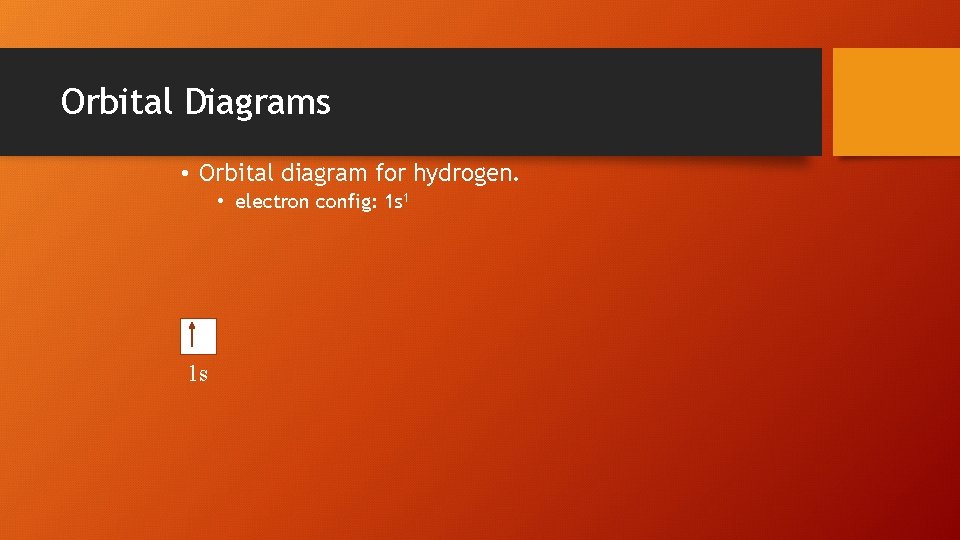
Orbital Diagrams • Orbital diagram for hydrogen. • electron config: 1 s 1 1 s
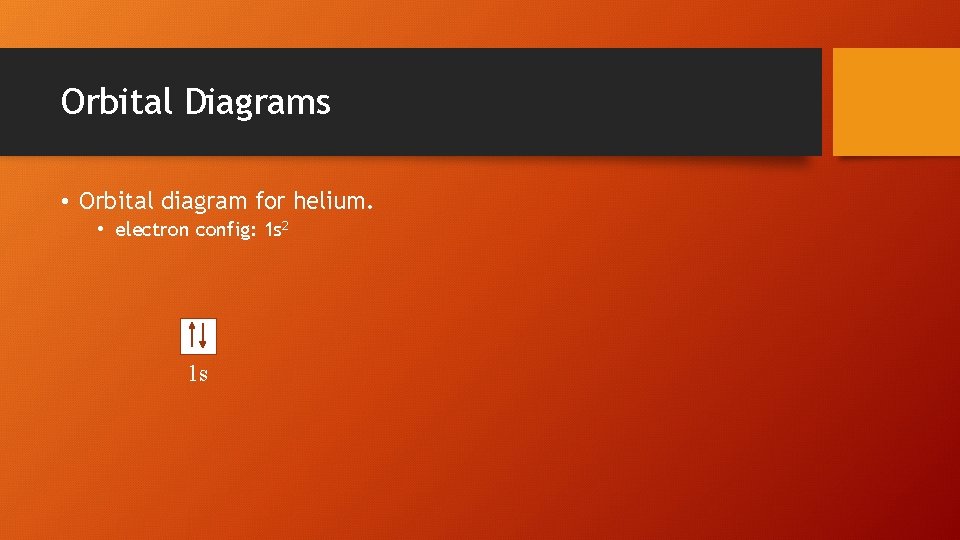
Orbital Diagrams • Orbital diagram for helium. • electron config: 1 s 2 1 s
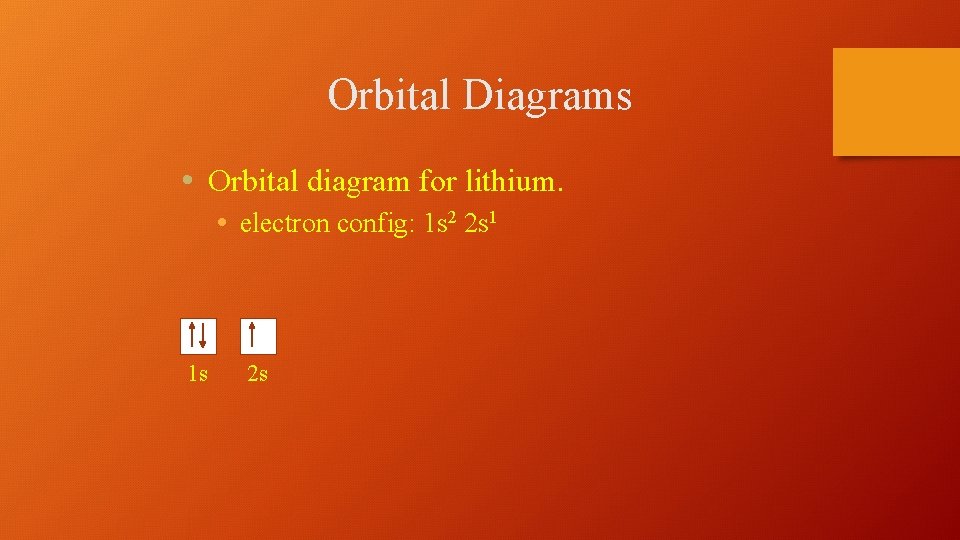
Orbital Diagrams • Orbital diagram for lithium. • electron config: 1 s 2 2 s 1 1 s 2 s
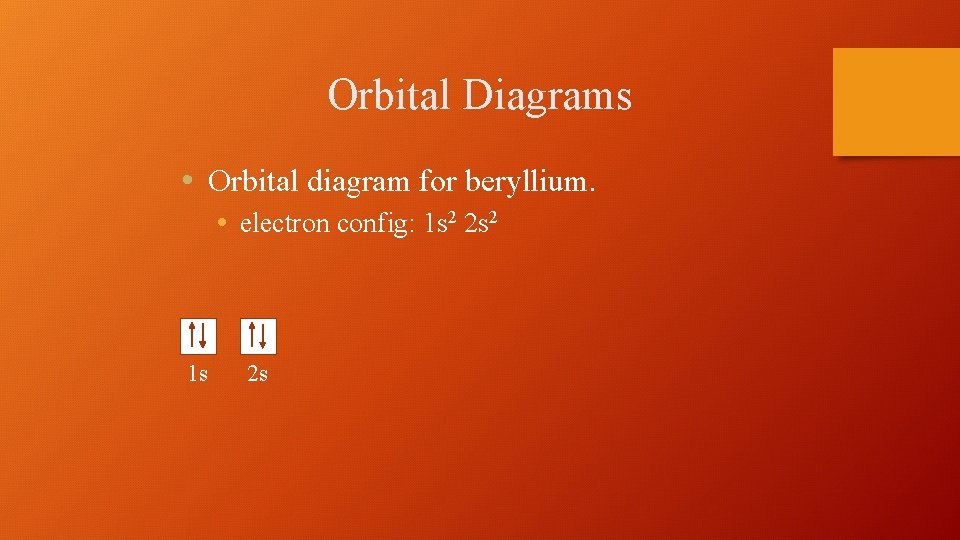
Orbital Diagrams • Orbital diagram for beryllium. • electron config: 1 s 2 2 s 2 1 s 2 s
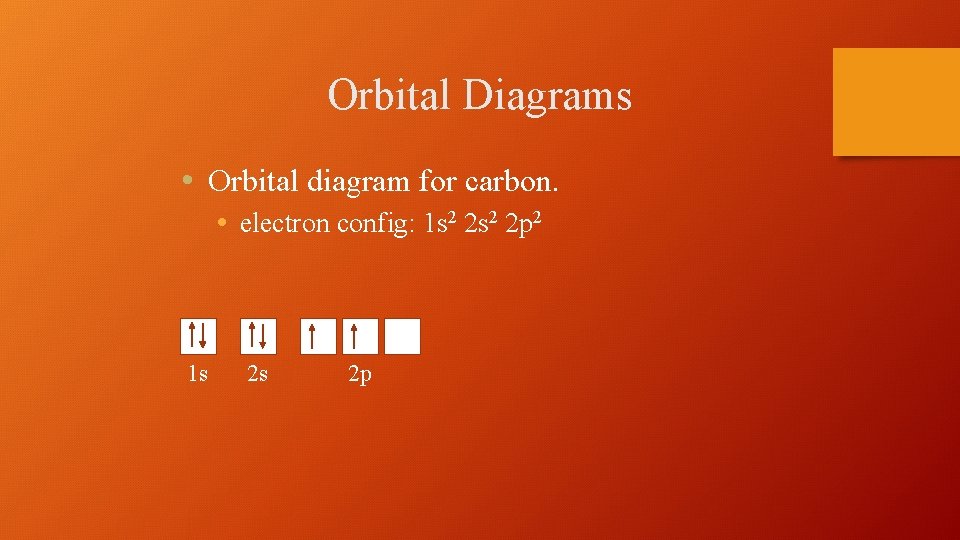
Orbital Diagrams • Orbital diagram for carbon. • electron config: 1 s 2 2 p 2 1 s 2 s 2 p
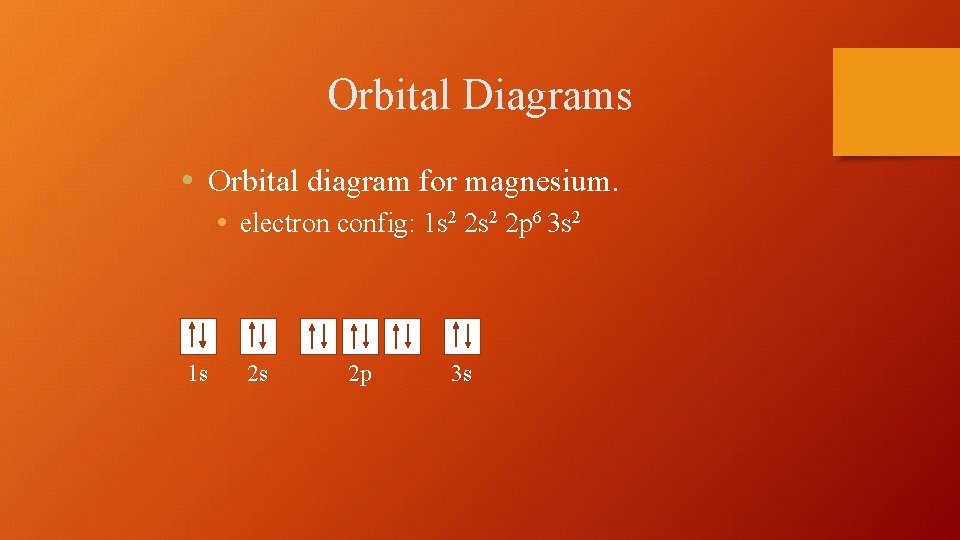
Orbital Diagrams • Orbital diagram for magnesium. • electron config: 1 s 2 2 p 6 3 s 2 1 s 2 s 2 p 3 s
- Slides: 22