
Electron Configuration The distribution of electrons among the
Electron Configuration • The distribution of electrons among the orbitals of an atom • Describes where the electrons are found and what energies they possess. • Determined by distributing the atom’s electrons among levels(n=1, 2, 3 etc. ), sublevels(1 s, 2 p, etc. ), and orbitals(s, p, d, f), based on a standard set of principles
Principles for Configurations 1) Aufbau Principle 2) Pauli Exclusion Principle 3) Hund’s Rule
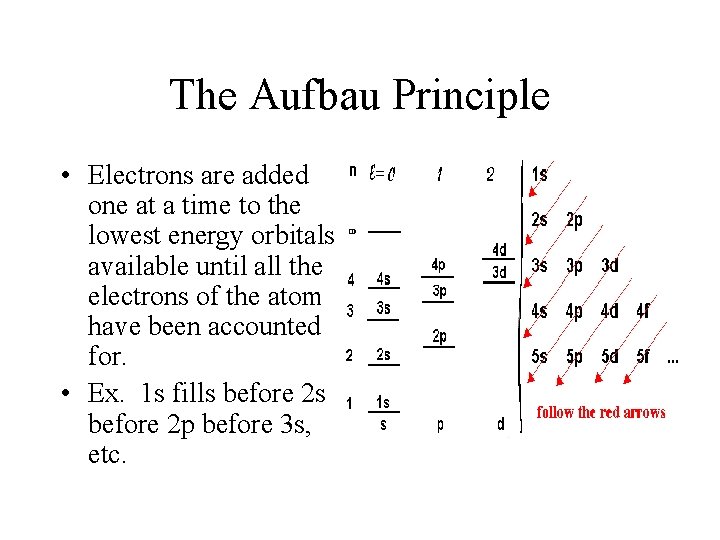
The Aufbau Principle • Electrons are added one at a time to the lowest energy orbitals available until all the electrons of the atom have been accounted for. • Ex. 1 s fills before 2 p before 3 s, etc.
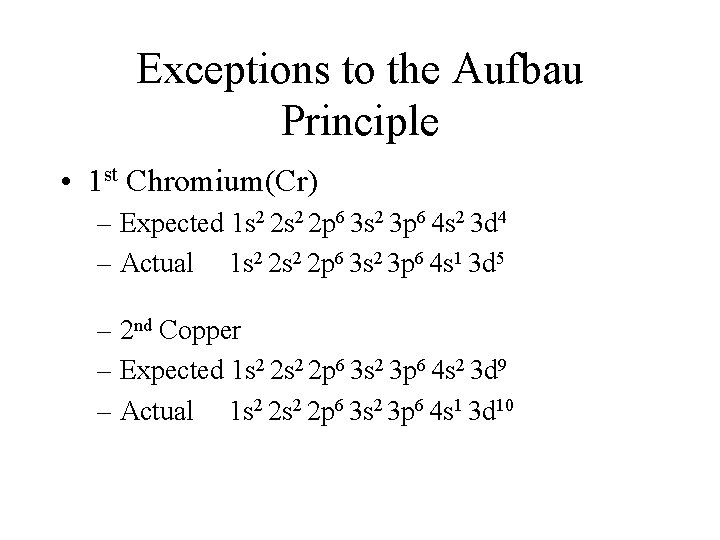
Exceptions to the Aufbau Principle • 1 st Chromium(Cr) – Expected 1 s 2 2 p 6 3 s 2 3 p 6 4 s 2 3 d 4 – Actual 1 s 2 2 p 6 3 s 2 3 p 6 4 s 1 3 d 5 – 2 nd Copper – Expected 1 s 2 2 p 6 3 s 2 3 p 6 4 s 2 3 d 9 – Actual 1 s 2 2 p 6 3 s 2 3 p 6 4 s 1 3 d 10
Pauli Exclusion Principle • An orbital can hold a maximum of 2 electrons and to occupy this orbital simultaneously they must have opposite spins.
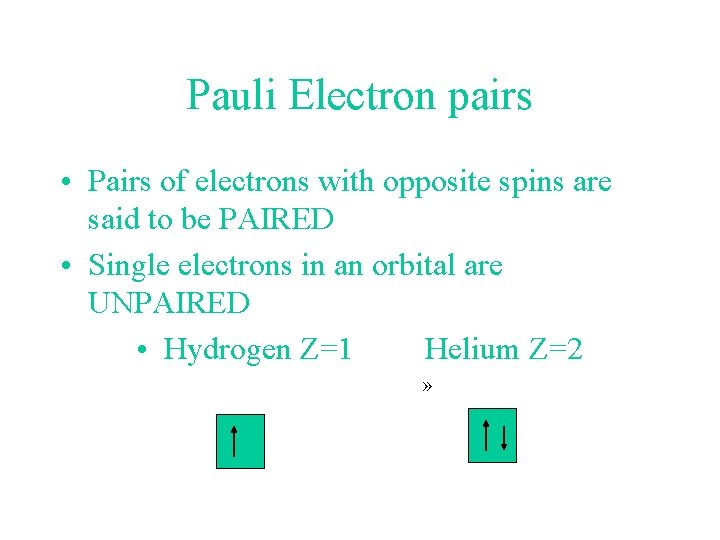
Pauli Electron pairs • Pairs of electrons with opposite spins are said to be PAIRED • Single electrons in an orbital are UNPAIRED • Hydrogen Z=1 Helium Z=2 »
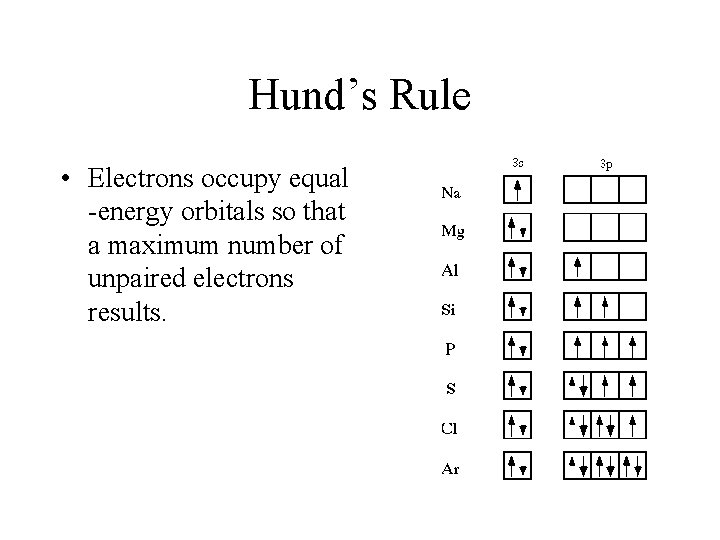
Hund’s Rule • Electrons occupy equal -energy orbitals so that a maximum number of unpaired electrons results.
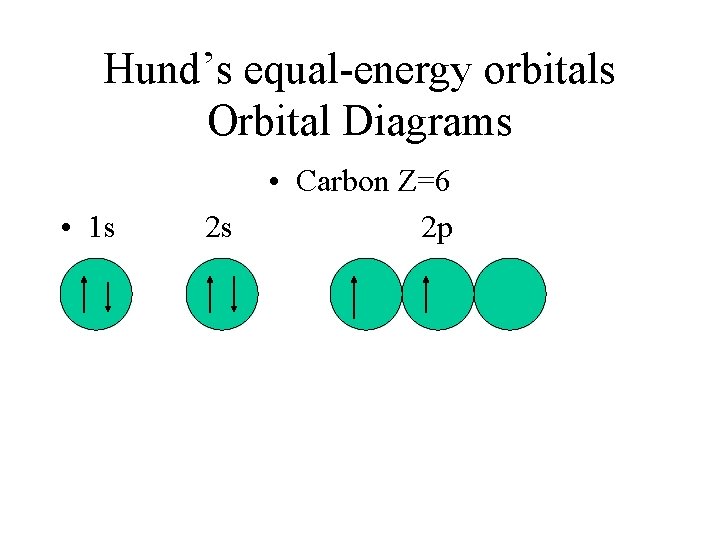
Hund’s equal-energy orbitals Orbital Diagrams • 1 s 2 s • Carbon Z=6 2 p
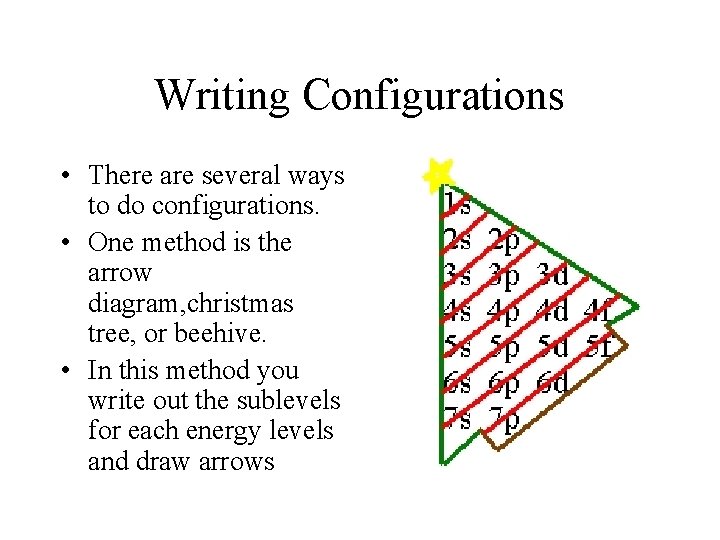
Writing Configurations • There are several ways to do configurations. • One method is the arrow diagram, christmas tree, or beehive. • In this method you write out the sublevels for each energy levels and draw arrows
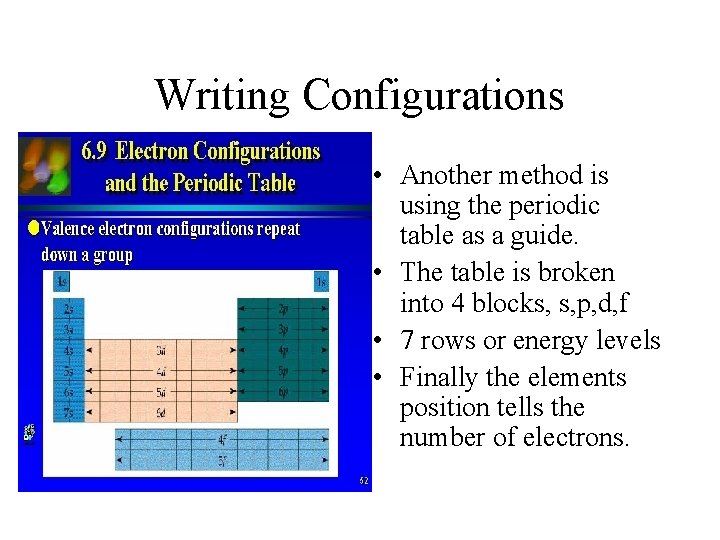
Writing Configurations • Another method is using the periodic table as a guide. • The table is broken into 4 blocks, s, p, d, f • 7 rows or energy levels • Finally the elements position tells the number of electrons.
- Slides: 10