
Electron Configuration Parts of electron configuration Energy Level
- Slides: 16
Electron Configuration
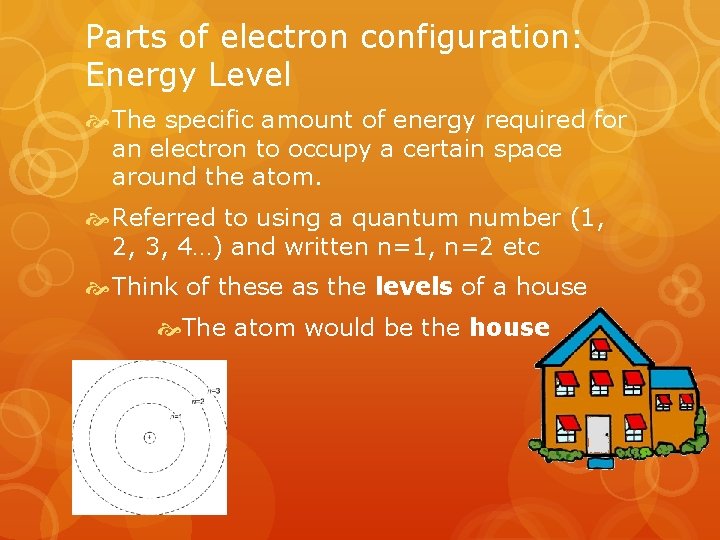
Parts of electron configuration: Energy Level The specific amount of energy required for an electron to occupy a certain space around the atom. Referred to using a quantum number (1, 2, 3, 4…) and written n=1, n=2 etc Think of these as the levels of a house The atom would be the house
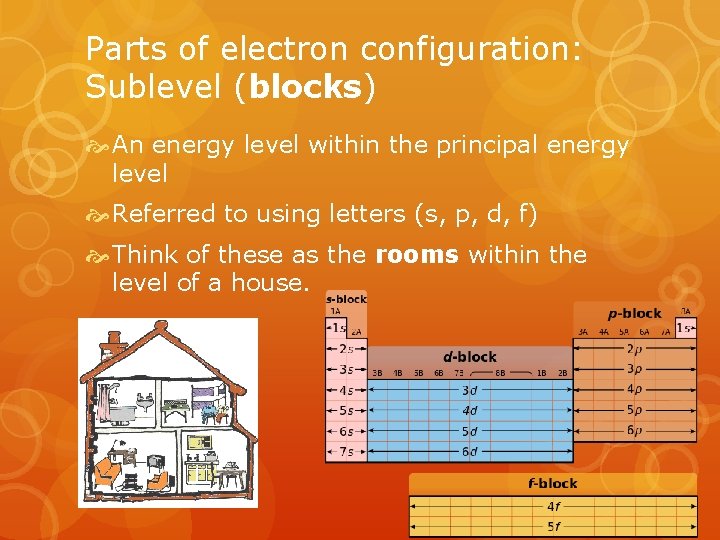
Parts of electron configuration: Sublevel (blocks) An energy level within the principal energy level Referred to using letters (s, p, d, f) Think of these as the rooms within the level of a house.
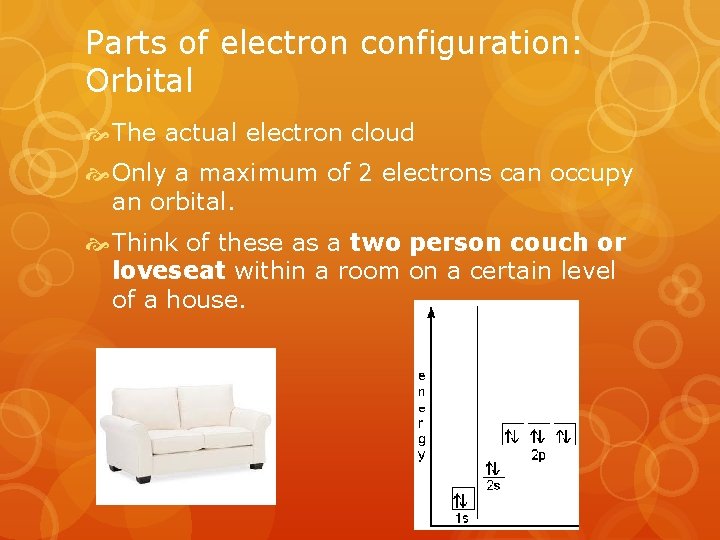
Parts of electron configuration: Orbital The actual electron cloud Only a maximum of 2 electrons can occupy an orbital. Think of these as a two person couch or loveseat within a room on a certain level of a house.
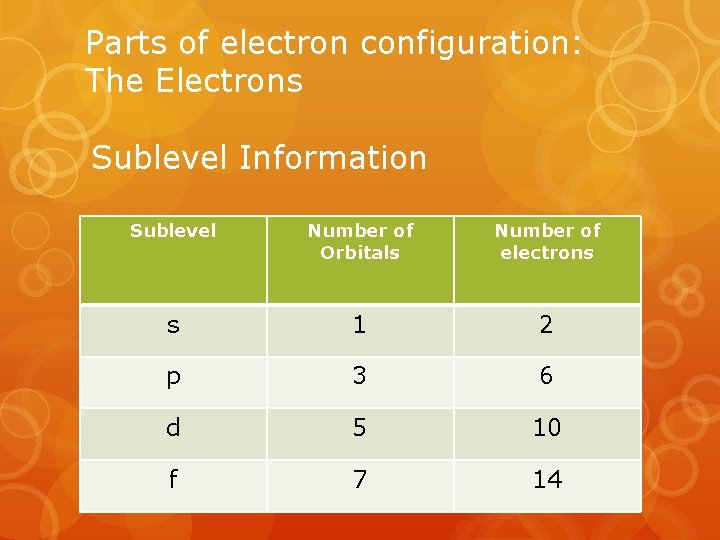
Parts of electron configuration: The Electrons Sublevel Information Sublevel Number of Orbitals Number of electrons s 1 2 p 3 6 d 5 10 f 7 14
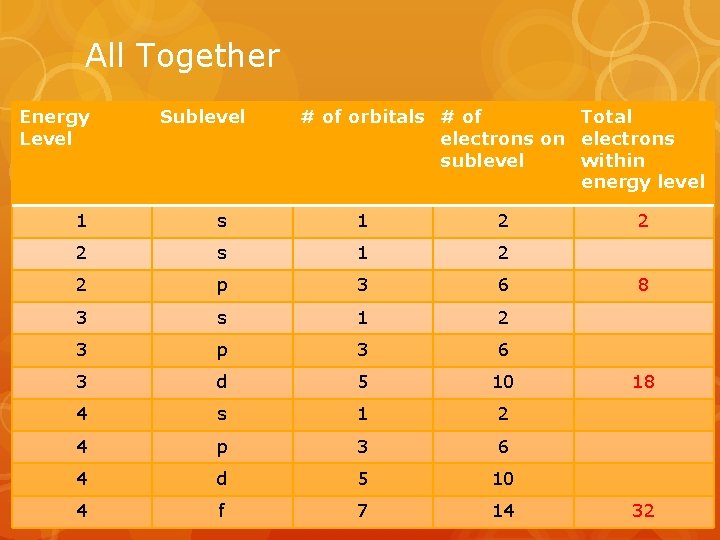
All Together Energy Level Sublevel # of orbitals # of Total electrons on electrons sublevel within energy level 1 s 1 2 2 p 3 6 3 s 1 2 3 p 3 6 3 d 5 10 4 s 1 2 4 p 3 6 4 d 5 10 4 f 7 14 2 8 18 32
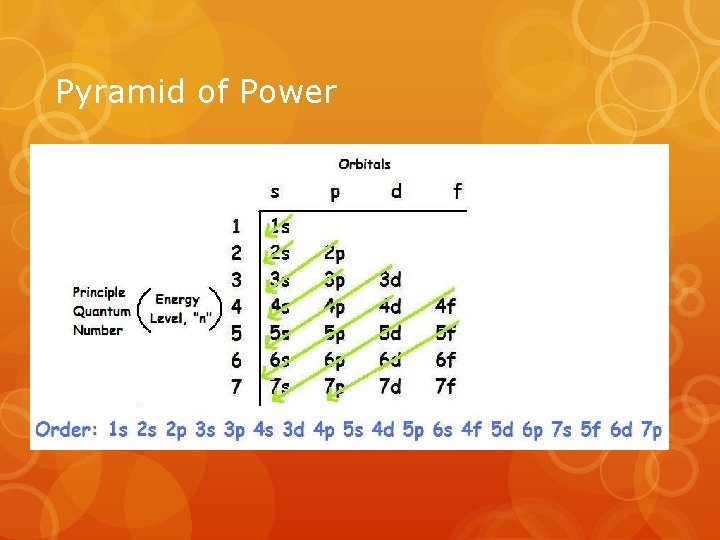
Pyramid of Power
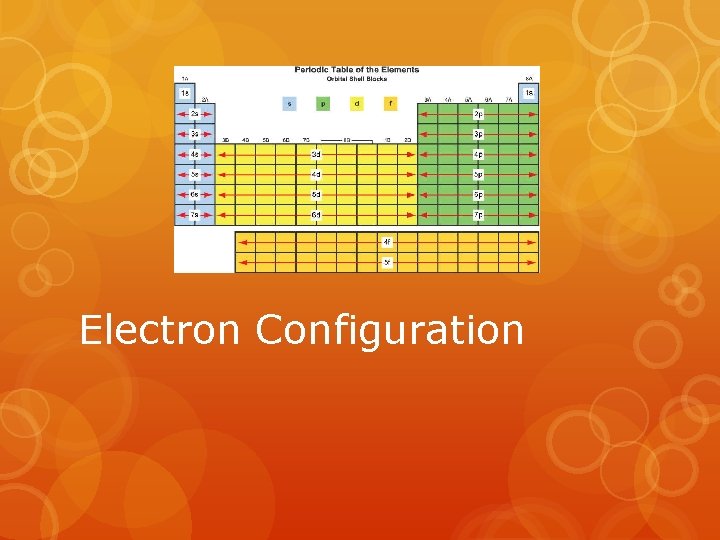
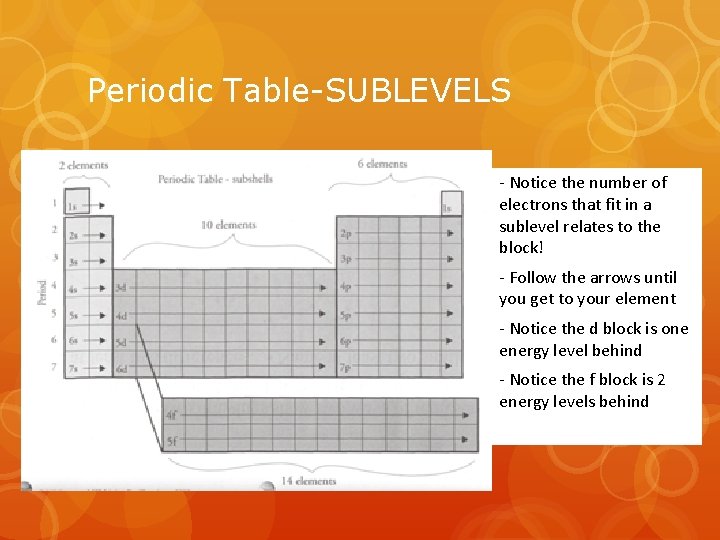
Periodic Table-SUBLEVELS - Notice the number of electrons that fit in a sublevel relates to the block! - Follow the arrows until you get to your element - Notice the d block is one energy level behind - Notice the f block is 2 energy levels behind
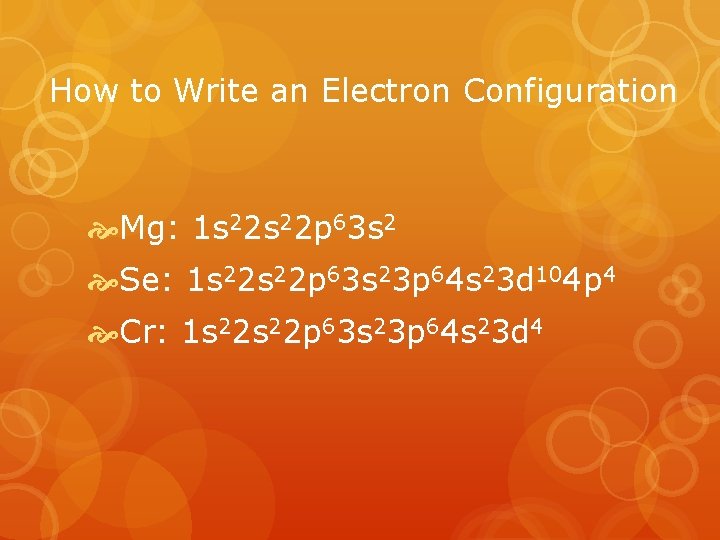
How to Write an Electron Configuration Mg: 1 s 22 p 63 s 2 Se: 1 s 22 p 63 s 23 p 64 s 23 d 104 p 4 Cr: 1 s 22 p 63 s 23 p 64 s 23 d 4
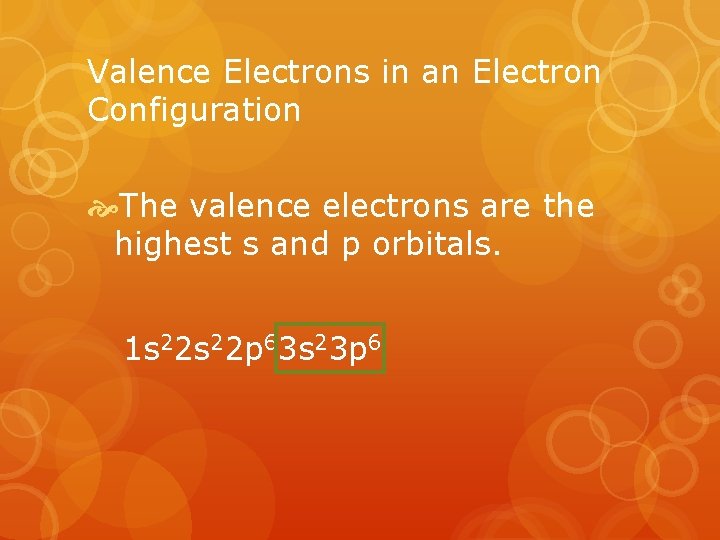
Valence Electrons in an Electron Configuration The valence electrons are the highest s and p orbitals. 1 s 22 p 63 s 23 p 6
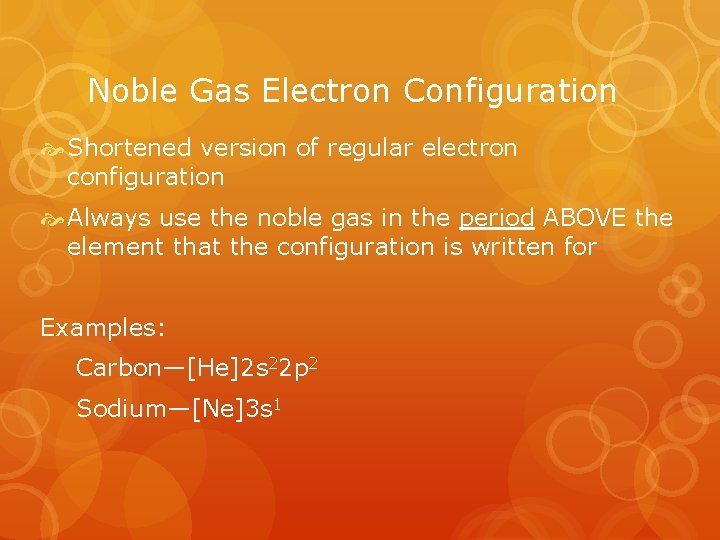
Noble Gas Electron Configuration Shortened version of regular electron configuration Always use the noble gas in the period ABOVE the element that the configuration is written for Examples: Carbon—[He]2 s 22 p 2 Sodium—[Ne]3 s 1
Complete in your notes Write a full electron configuration and Noble Gas configuration for each of the following elements. Phosphorus Manganese Yttrium Platinum
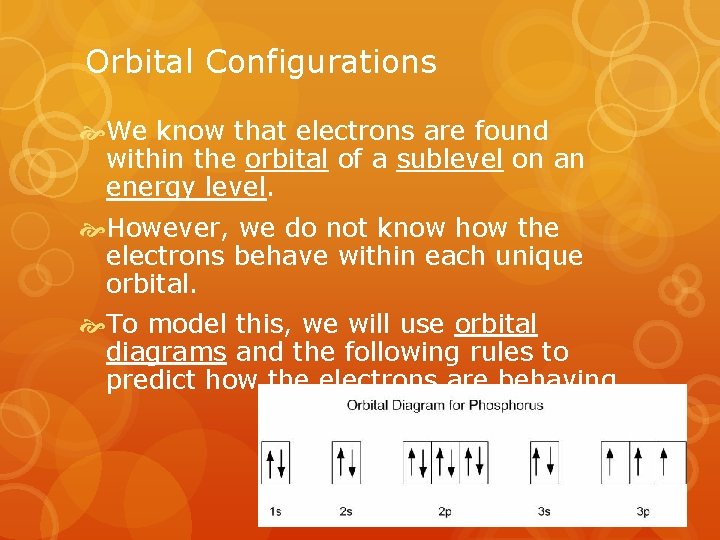
Orbital Configurations We know that electrons are found within the orbital of a sublevel on an energy level. However, we do not know how the electrons behave within each unique orbital. To model this, we will use orbital diagrams and the following rules to predict how the electrons are behaving.
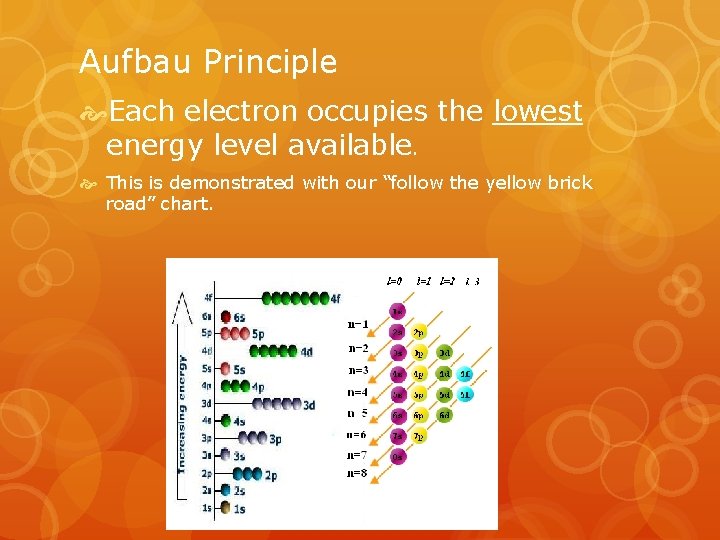
Aufbau Principle Each electron occupies the lowest energy level available. This is demonstrated with our “follow the yellow brick road” chart.
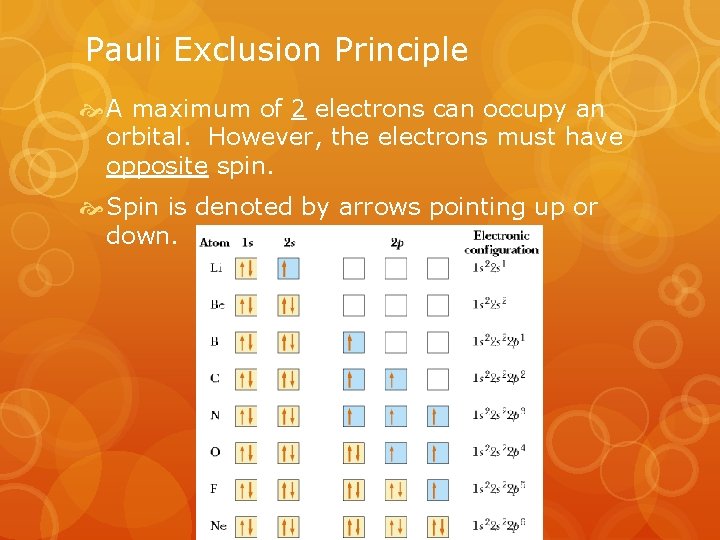
Pauli Exclusion Principle A maximum of 2 electrons can occupy an orbital. However, the electrons must have opposite spin. Spin is denoted by arrows pointing up or down.
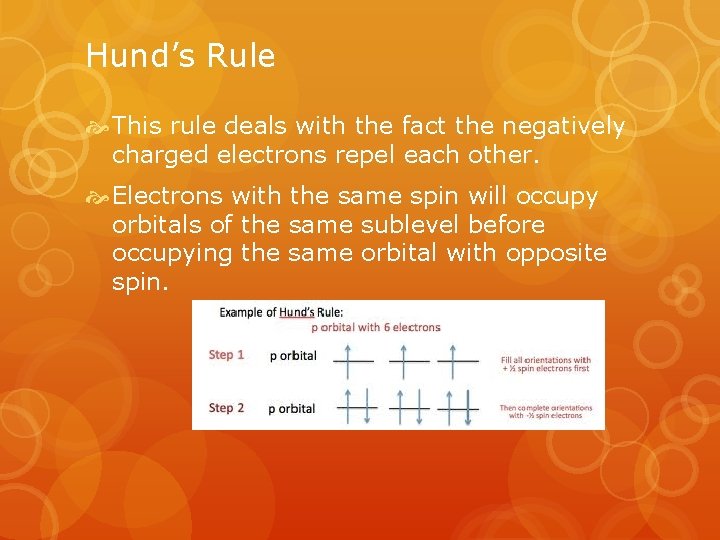
Hund’s Rule This rule deals with the fact the negatively charged electrons repel each other. Electrons with the same spin will occupy orbitals of the same sublevel before occupying the same orbital with opposite spin.