
Electron Configuration Na 1 s 2 2 p
- Slides: 20
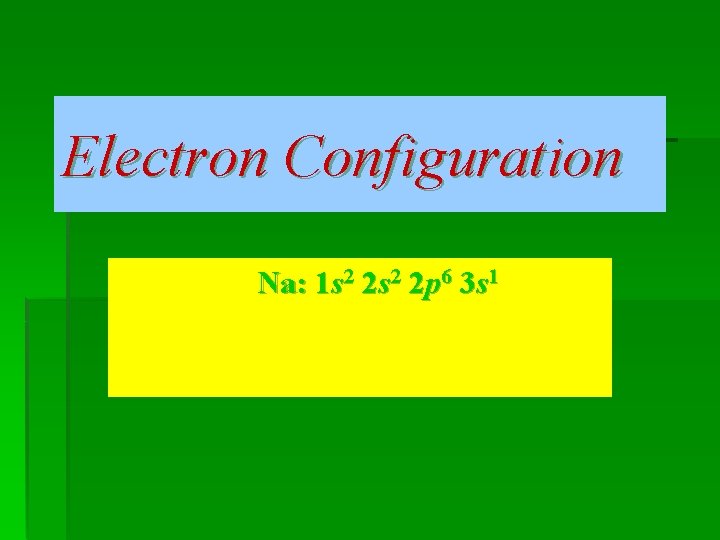
Electron Configuration Na: 1 s 2 2 p 6 3 s 1
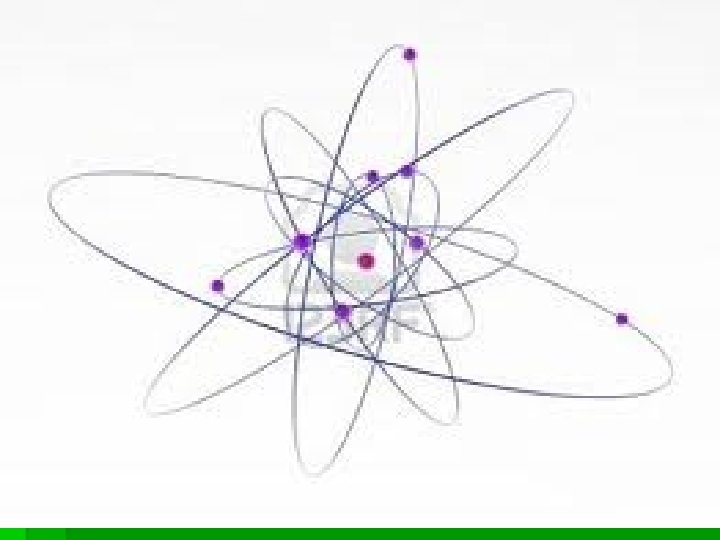
Electron Movement § Electrons orbit the nucleus of an atom in a cloud. § Electrons do not orbit in a sphere neatly around the nucleus, instead they tend to migrate in different shapes around the nucleus.
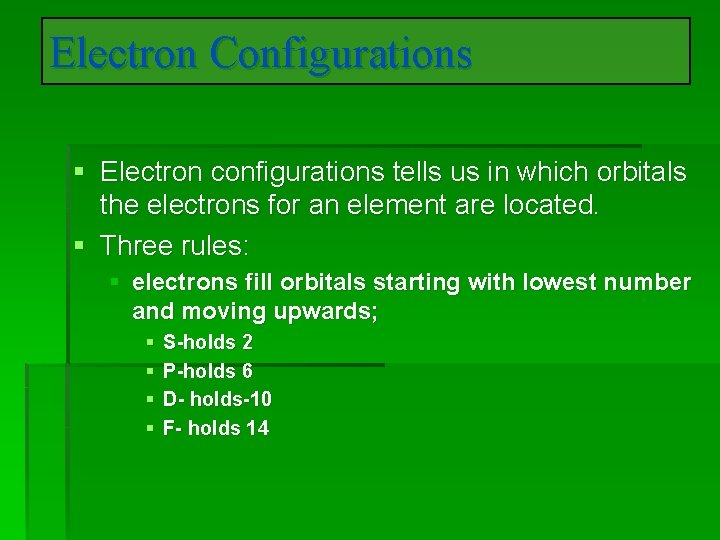
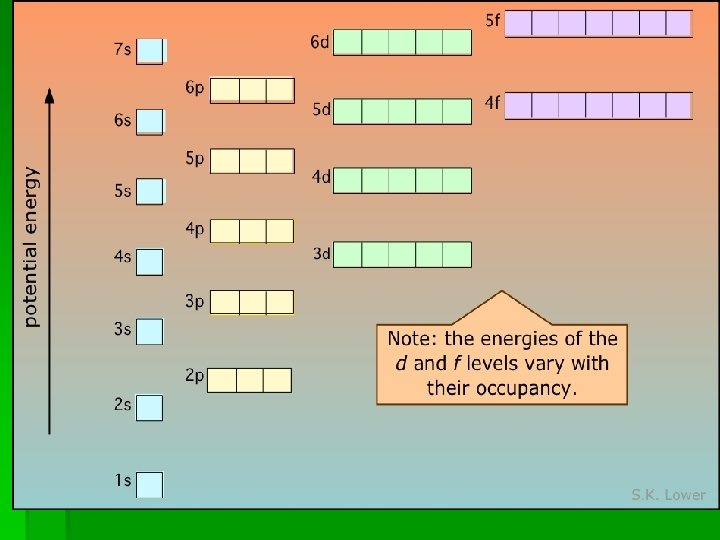
Electron Configurations § Electron configurations tells us in which orbitals the electrons for an element are located. § Three rules: § electrons fill orbitals starting with lowest number and moving upwards; § § S-holds 2 P-holds 6 D- holds-10 F- holds 14
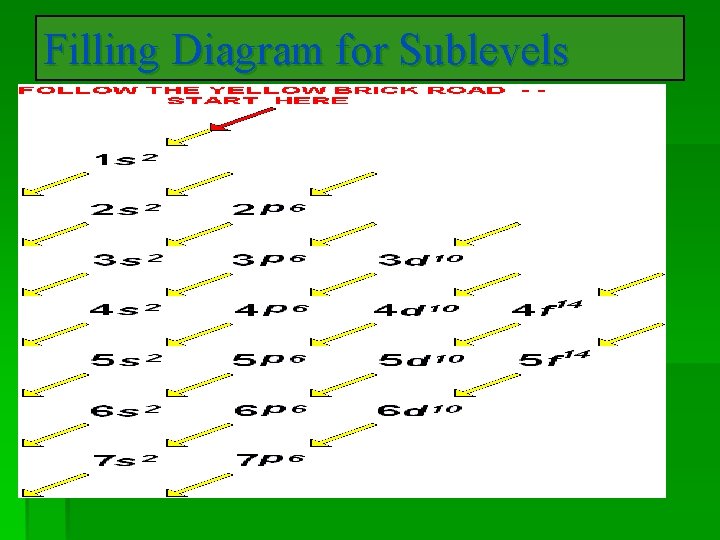
Filling Diagram for Sublevels
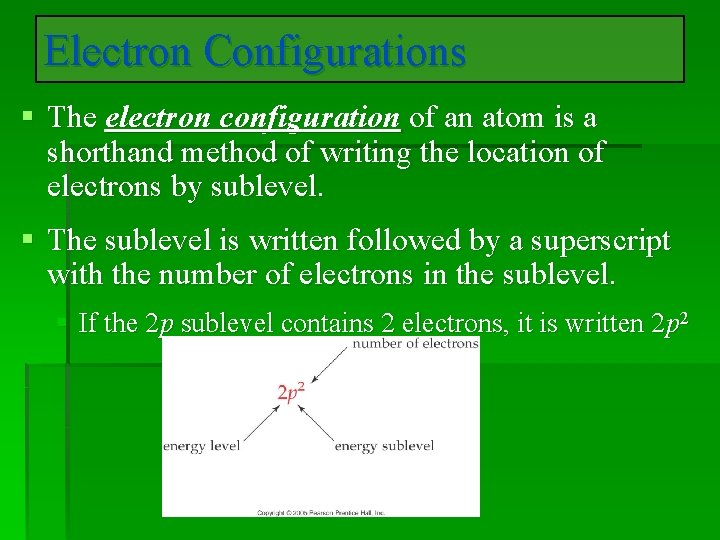
Electron Configurations § The electron configuration of an atom is a shorthand method of writing the location of electrons by sublevel. § The sublevel is written followed by a superscript with the number of electrons in the sublevel. § If the 2 p sublevel contains 2 electrons, it is written 2 p 2
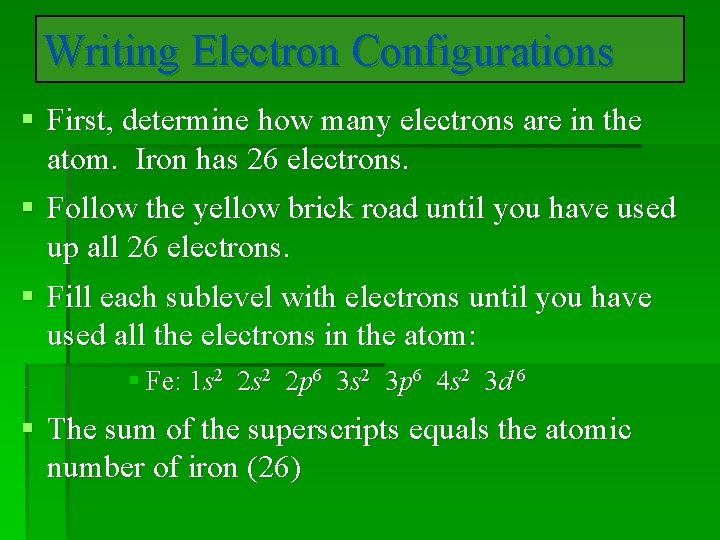
Writing Electron Configurations § First, determine how many electrons are in the atom. Iron has 26 electrons. § Follow the yellow brick road until you have used up all 26 electrons. § Fill each sublevel with electrons until you have used all the electrons in the atom: § Fe: 1 s 2 2 p 6 3 s 2 3 p 6 4 s 2 3 d 6 § The sum of the superscripts equals the atomic number of iron (26)
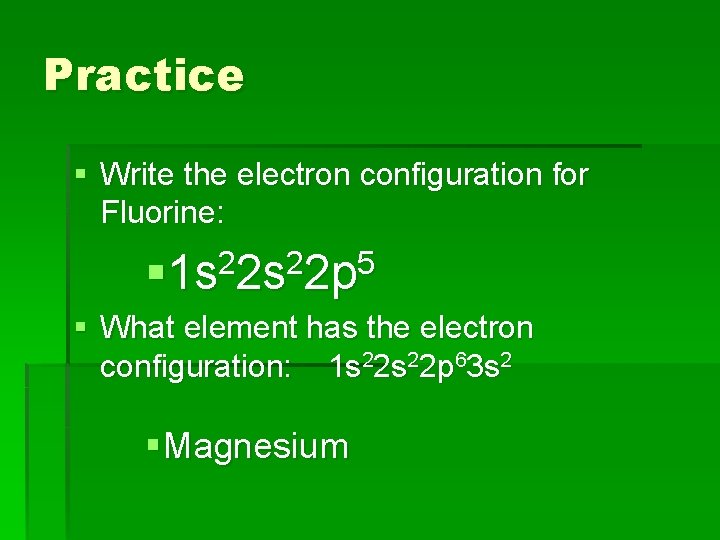
Practice § Write the electron configuration for Fluorine: 2 2 5 § 1 s 2 s 2 p § What element has the electron configuration: 1 s 22 p 63 s 2 § Magnesium
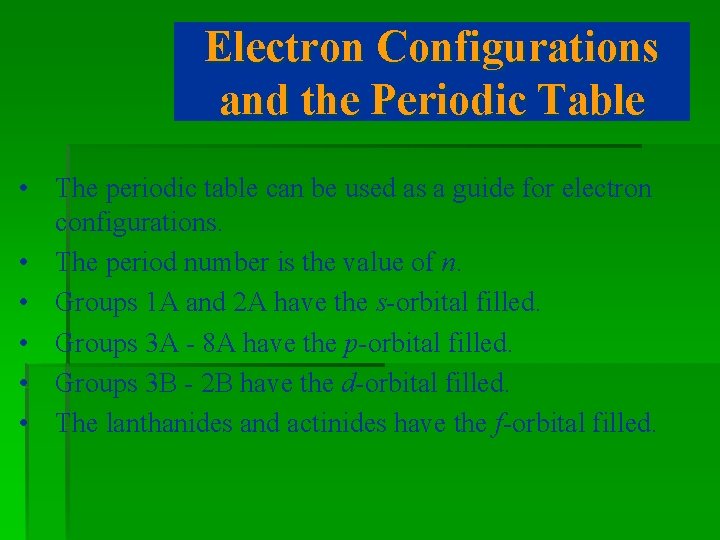
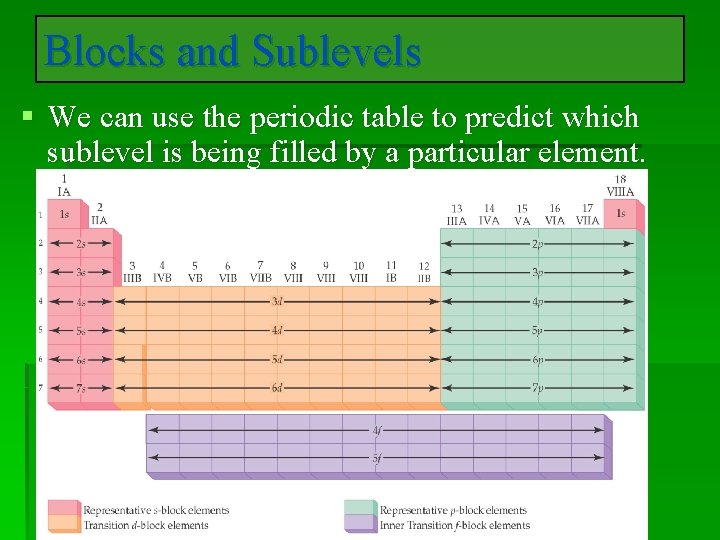
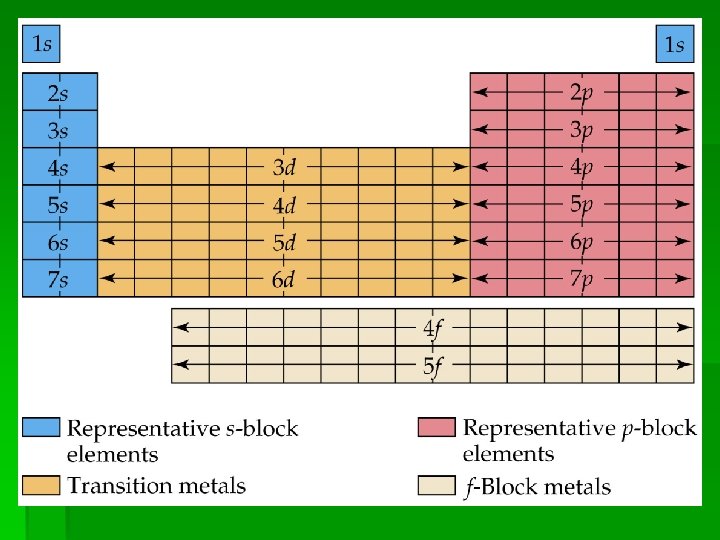
Electron Configurations and the Periodic Table • The periodic table can be used as a guide for electron configurations. • The period number is the value of n. • Groups 1 A and 2 A have the s-orbital filled. • Groups 3 A - 8 A have the p-orbital filled. • Groups 3 B - 2 B have the d-orbital filled. • The lanthanides and actinides have the f-orbital filled.
Blocks and Sublevels § We can use the periodic table to predict which sublevel is being filled by a particular element.
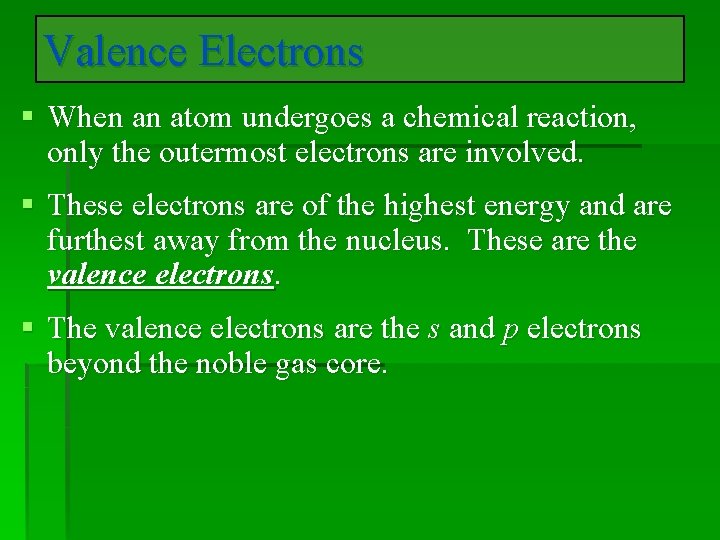
Valence Electrons § When an atom undergoes a chemical reaction, only the outermost electrons are involved. § These electrons are of the highest energy and are furthest away from the nucleus. These are the valence electrons. § The valence electrons are the s and p electrons beyond the noble gas core.
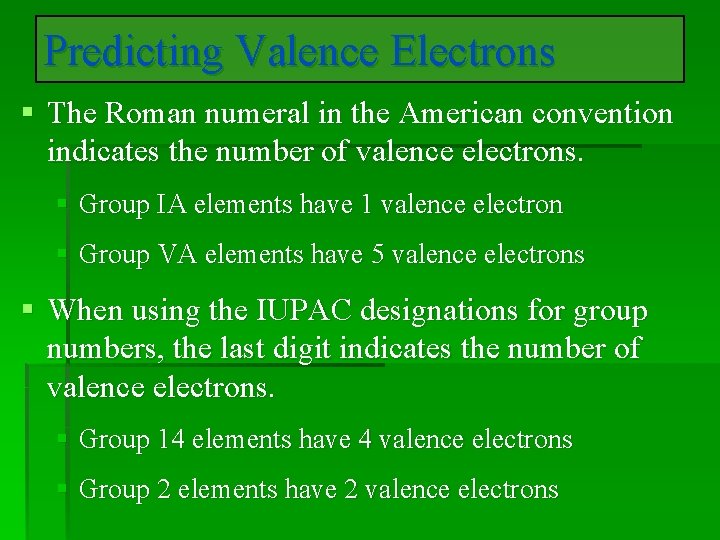
Predicting Valence Electrons § The Roman numeral in the American convention indicates the number of valence electrons. § Group IA elements have 1 valence electron § Group VA elements have 5 valence electrons § When using the IUPAC designations for group numbers, the last digit indicates the number of valence electrons. § Group 14 elements have 4 valence electrons § Group 2 elements have 2 valence electrons
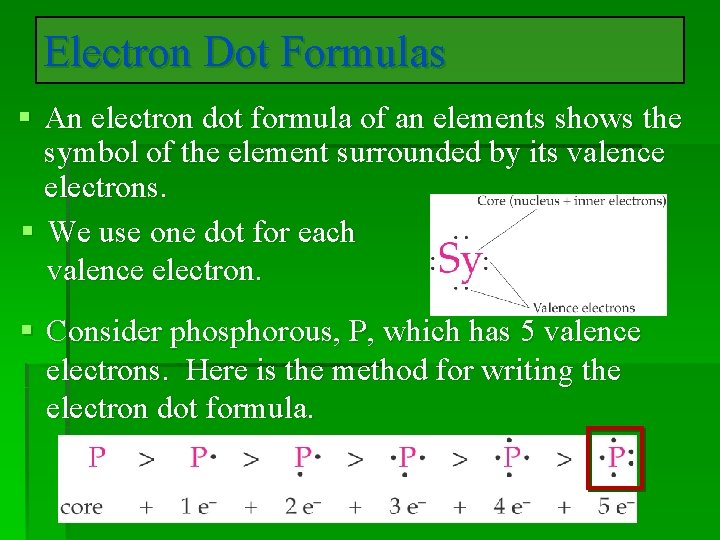
Electron Dot Formulas § An electron dot formula of an elements shows the symbol of the element surrounded by its valence electrons. § We use one dot for each valence electron. § Consider phosphorous, P, which has 5 valence electrons. Here is the method for writing the electron dot formula.
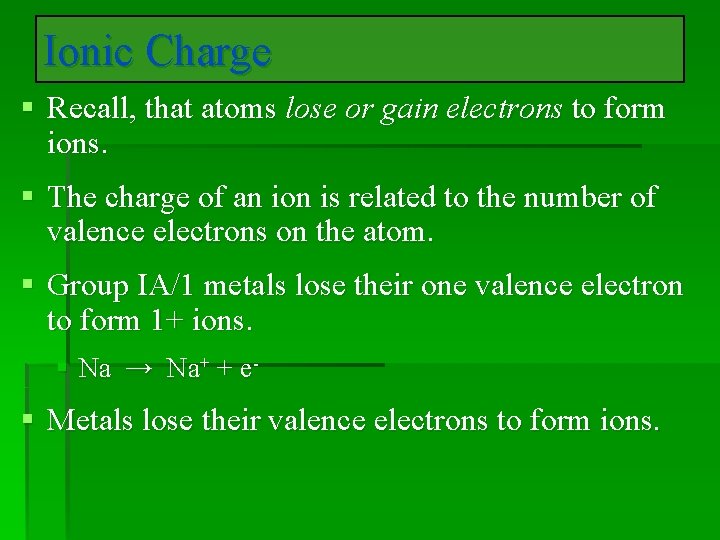
Ionic Charge § Recall, that atoms lose or gain electrons to form ions. § The charge of an ion is related to the number of valence electrons on the atom. § Group IA/1 metals lose their one valence electron to form 1+ ions. § Na → Na+ + e- § Metals lose their valence electrons to form ions.
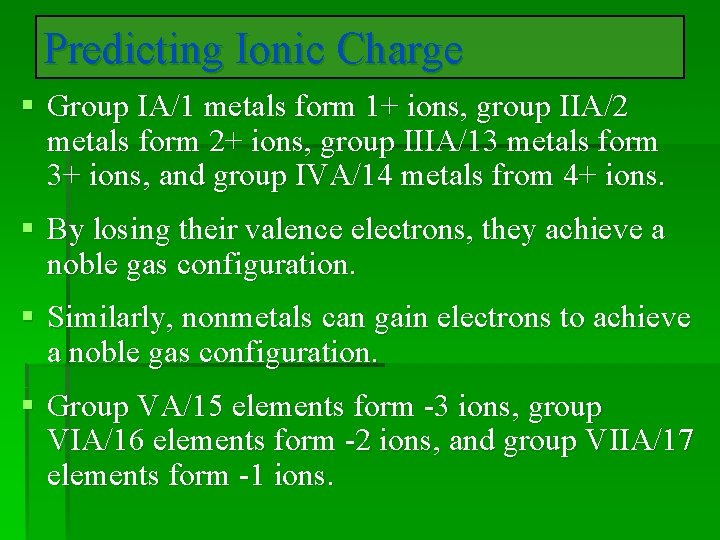
Predicting Ionic Charge § Group IA/1 metals form 1+ ions, group IIA/2 metals form 2+ ions, group IIIA/13 metals form 3+ ions, and group IVA/14 metals from 4+ ions. § By losing their valence electrons, they achieve a noble gas configuration. § Similarly, nonmetals can gain electrons to achieve a noble gas configuration. § Group VA/15 elements form -3 ions, group VIA/16 elements form -2 ions, and group VIIA/17 elements form -1 ions.
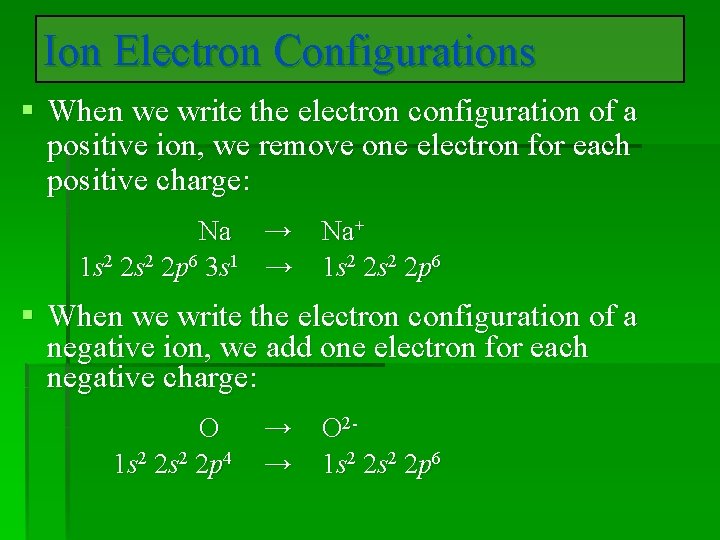
Ion Electron Configurations § When we write the electron configuration of a positive ion, we remove one electron for each positive charge: Na → 1 s 2 2 p 6 3 s 1 → Na+ 1 s 2 2 p 6 § When we write the electron configuration of a negative ion, we add one electron for each negative charge: O 1 s 2 2 p 4 → → O 21 s 2 2 p 6
Conclusions Continued § We can Write the electron configuration of an element based on its position on the periodic table. § Valence electrons are the outermost electrons and are involved in chemical reactions. § We can write electron dot formulas for elements which indicate the number of valence electrons.
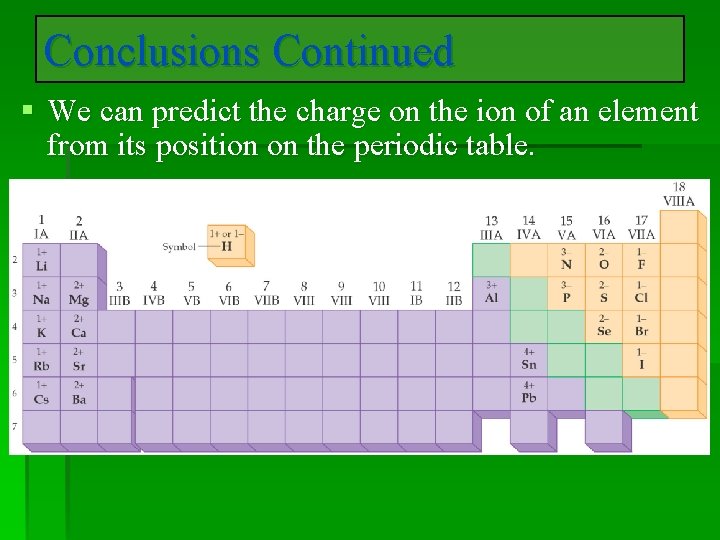
Conclusions Continued § We can predict the charge on the ion of an element from its position on the periodic table.