
Electron Arrangement What causes the different colors The
- Slides: 44
Electron Arrangement
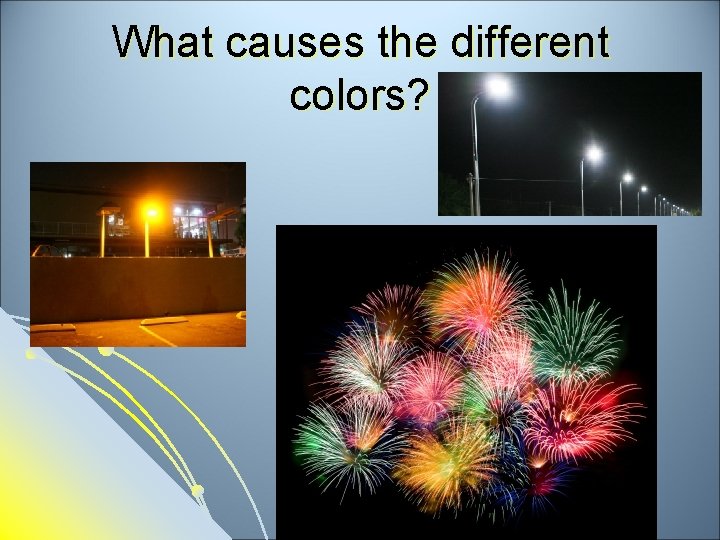
What causes the different colors?
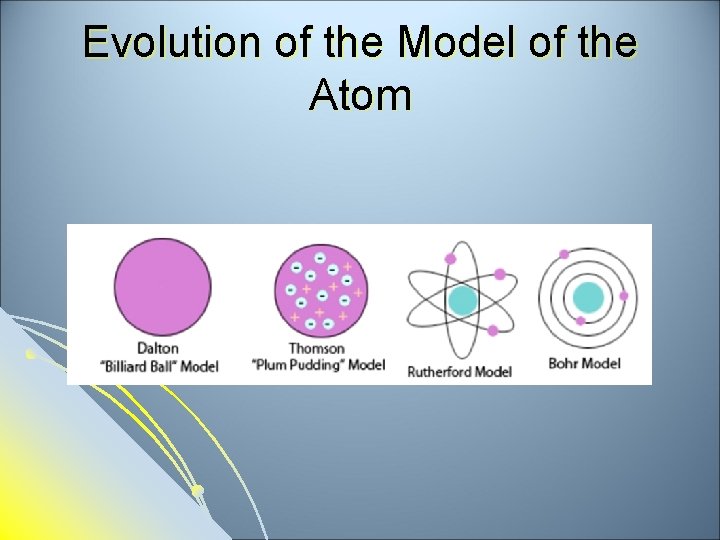
The Evolution of Models of the Atom We have previously described atoms using four different models. l Dalton l Thomson l Rutherford l Bohr
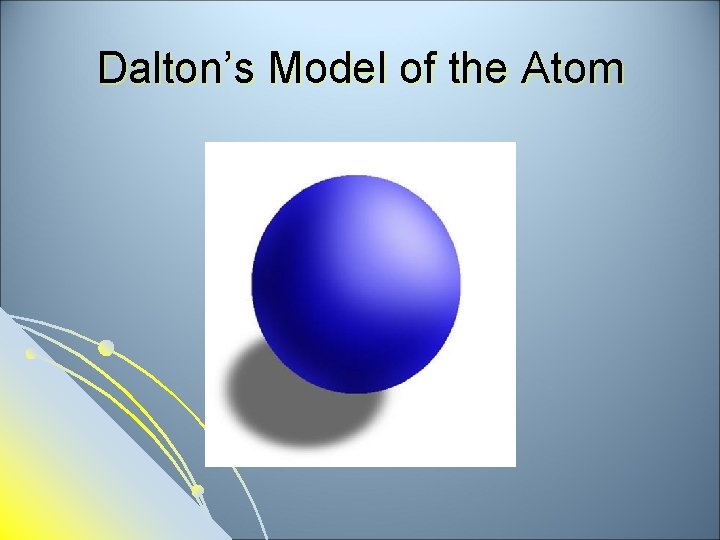
Dalton l Dalton gave us the basis of the modern atomic theory. - All matter are composed of tiny indivisible particles called atoms. - Atoms of the same element are identical. Atoms of different elements are different. - Atoms combine in simple, whole number ratios to form compounds. - Atoms are separated, rearranged, and recombined during chemical changes.
Dalton’s Model of the Atom
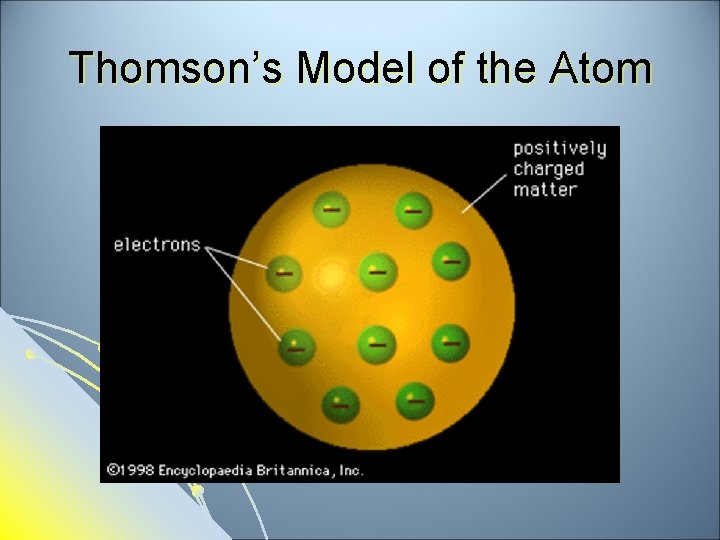
J. J. Thomson discovered the electron, a negatively charged particle, through his cathode ray tube experiment. l This discovery resulted in a revised model of the atom called the plum pudding model. - Atom was made of a positively charged material. -Negatively charged electrons were distributed throughout the atom. l
Thomson’s Model of the Atom
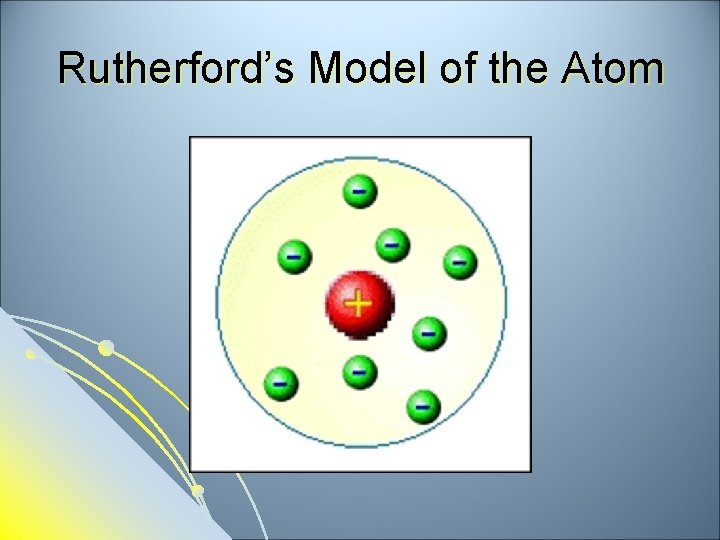
Rutherford After Rutherford’s discovery of the positively charged nucleus through his gold foil experiment, another revision of the model of the atom occurred. l He proposed that the protons were concentrated in a small dense nucleus and the electrons were located in the large space surrounding the nucleus. l
Rutherford’s Model of the Atom
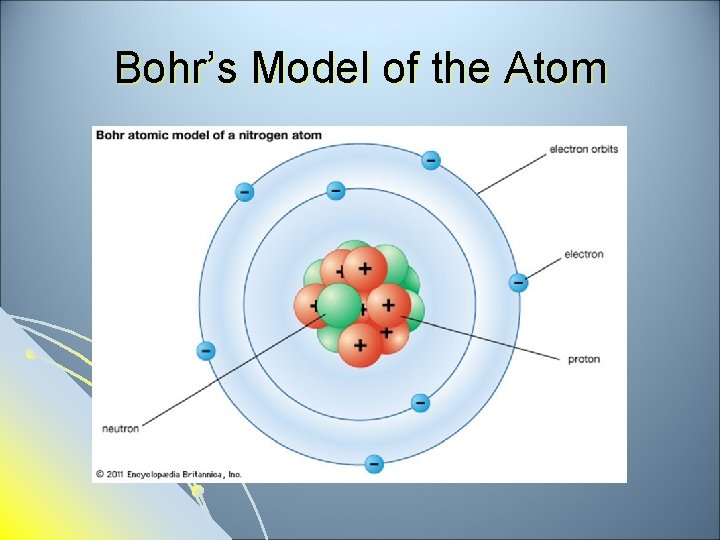
Bohr, a student of Rutherford, questioned how the electrons, being oppositely charged from the protons, did not fall into the nucleus due to the attraction that forms between opposite charges. l Bohr proposed that the negatively charged electrons must be moving in circular orbits around the nucleus, much like planets orbit the sun. l
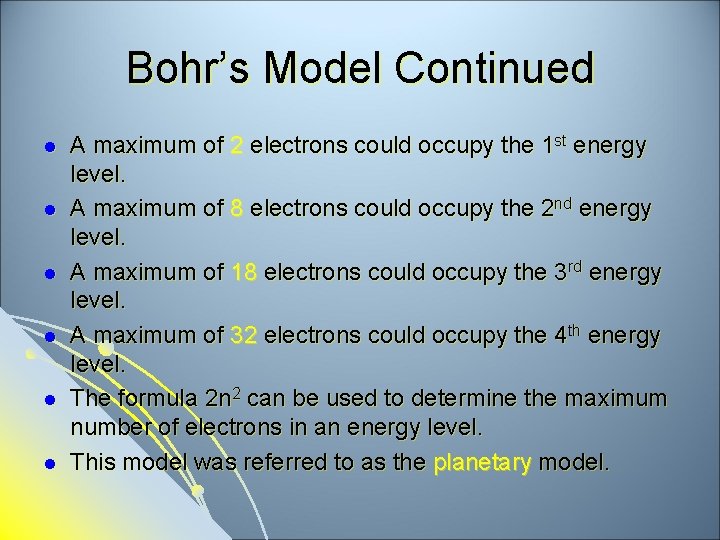
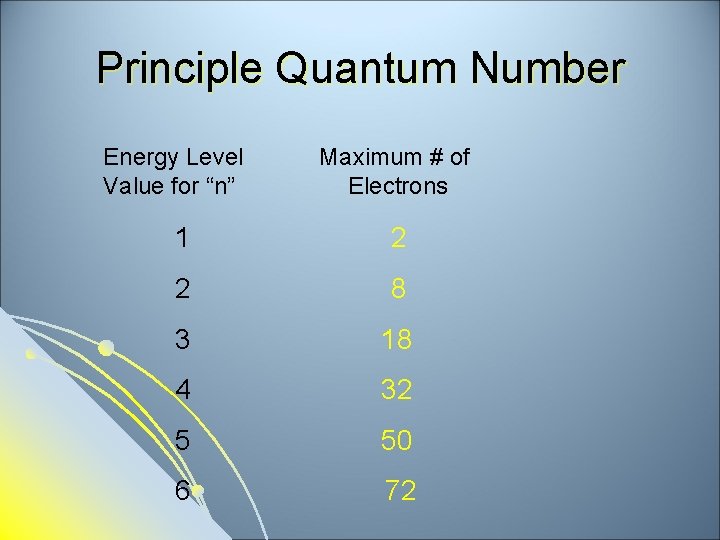
Bohr’s Model Continued l l l A maximum of 2 electrons could occupy the 1 st energy level. A maximum of 8 electrons could occupy the 2 nd energy level. A maximum of 18 electrons could occupy the 3 rd energy level. A maximum of 32 electrons could occupy the 4 th energy level. The formula 2 n 2 can be used to determine the maximum number of electrons in an energy level. This model was referred to as the planetary model.
Bohr’s Model of the Atom
Evolution of the Model of the Atom
The Atom and Unanswered Questions Bohr’s model did not address the differences and similarities in chemical behavior among the various elements. l His model also did not address the different binding energies that were observed among electrons in the same energy level within an atom. l
Electron Cloud Model l In this model, a cloud is used to represent the area surrounding the nucleus in which the electrons are located.
Heisenberg l Unlike Bohr’s model, Heisenberg stated that it is impossible to know both the location and the momentum of an electron at the same time. l This is commonly referred to as the Heisenberg Uncertainty Principle.
Schroedinger developed a mathematical equation. l The solution to the equation was a set of four quantum numbers for each electron in an atom. l This set of numbers was used to describe the area in the electron cloud in which the electron has the greatest probability of being located. l
Quantum Numbers Principle Quantum Number (n)-indicates the size of the electron cloud and is commonly referred to as the energy level. l Each energy level has a maximum number of electrons. (2 n 2) l Values for the Principle Quantum Number are integers; 1, 2, 3, 4, etc. l
Principle Quantum Number Energy Level Value for “n” Maximum # of Electrons 1 2 2 8 3 18 4 32 5 50 6 72
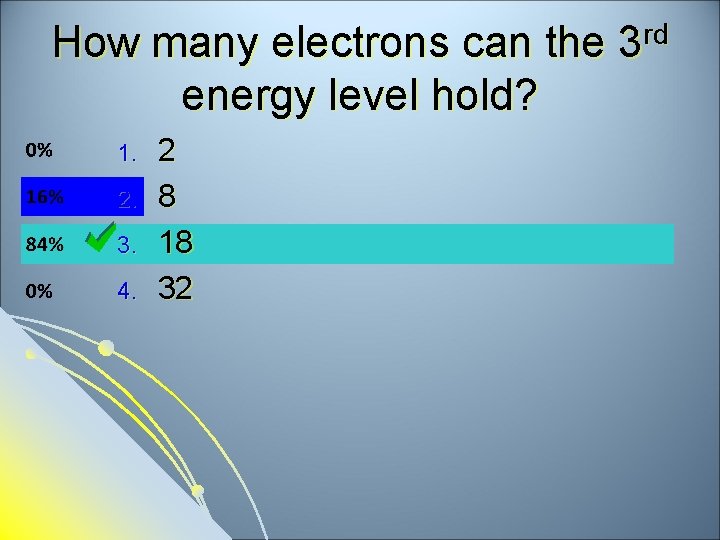
How many electrons can the energy level hold? 1. 2. 3. 4. 2 8 18 32 rd 3
How many electrons can the level hold? 1. 2. 3. 4. 32 49 98 125 th 7
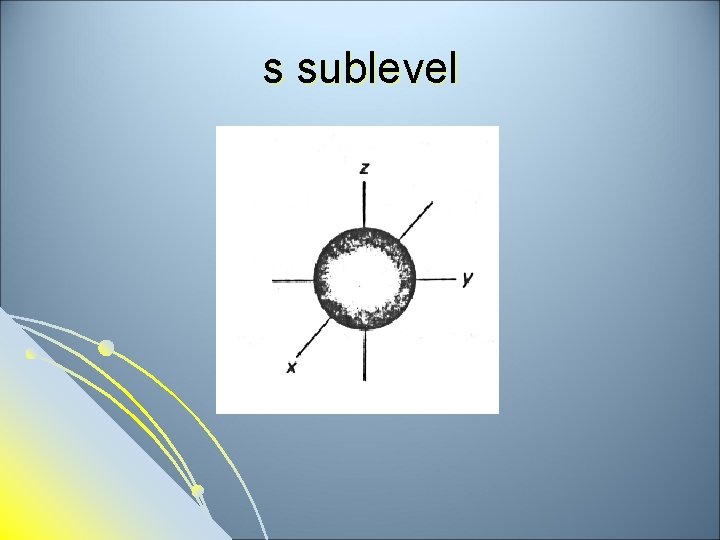
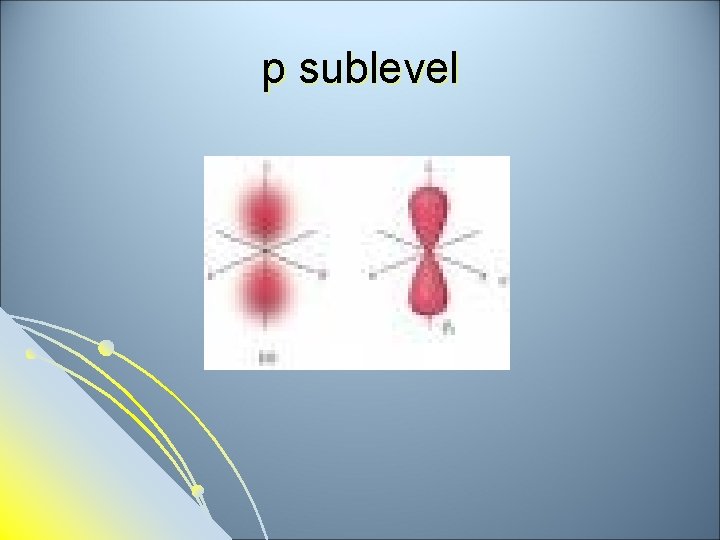
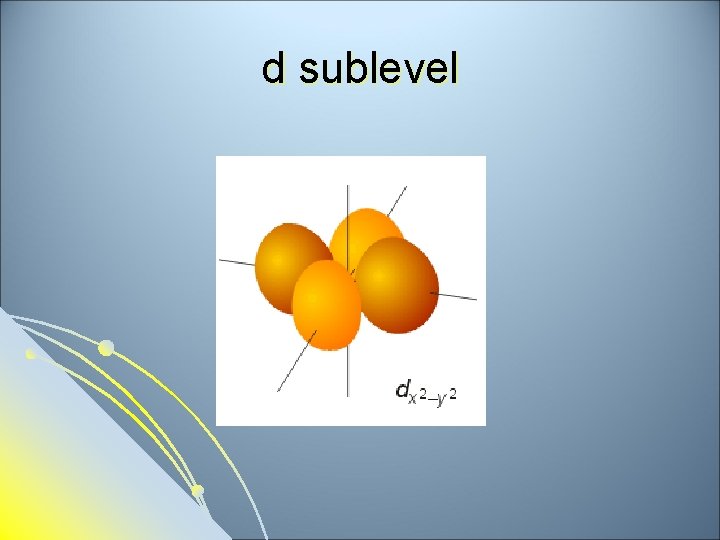
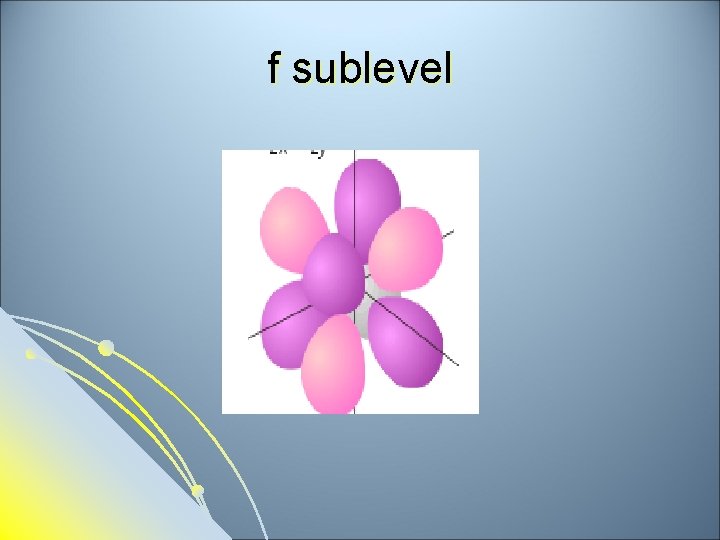
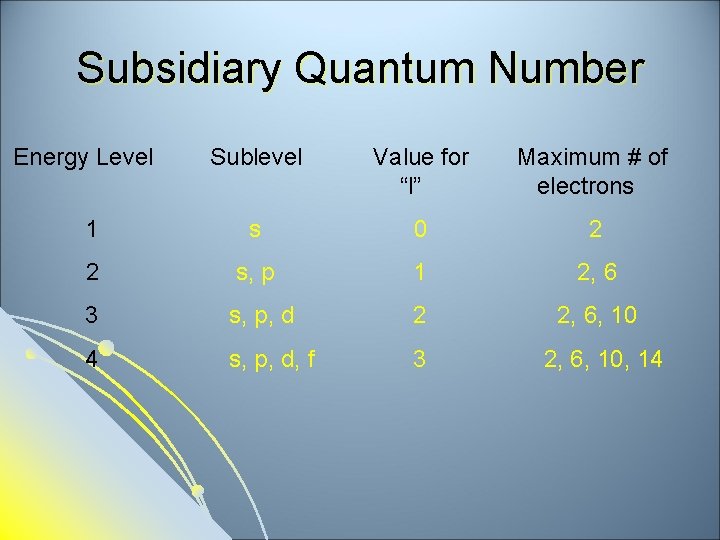
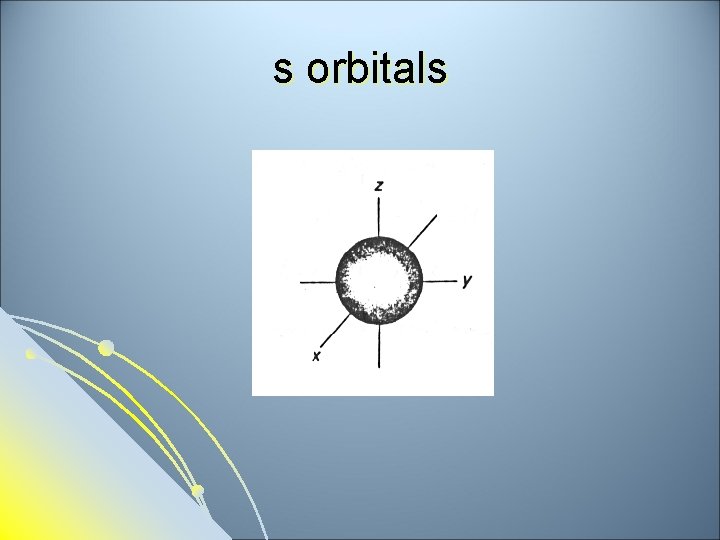
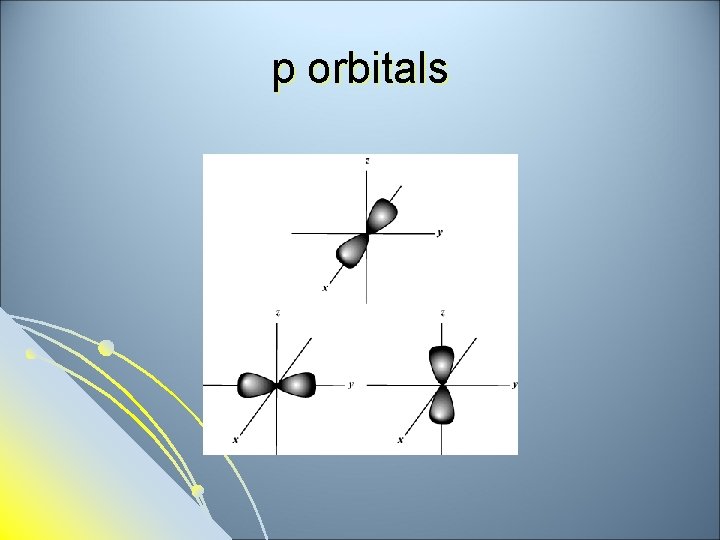
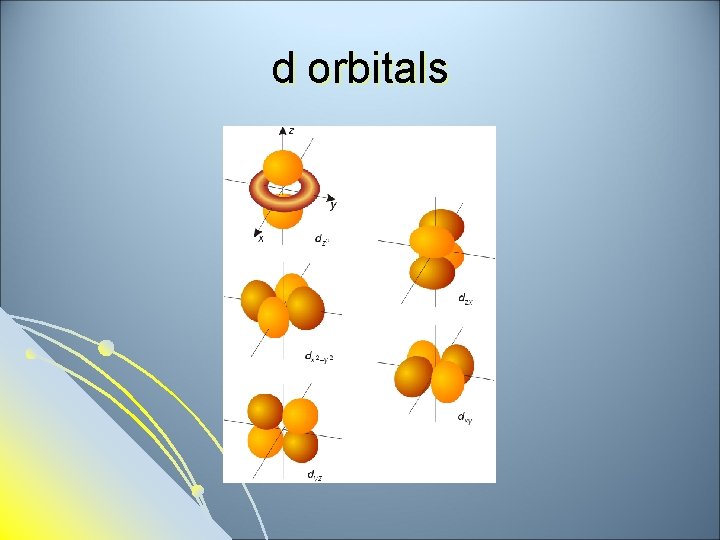
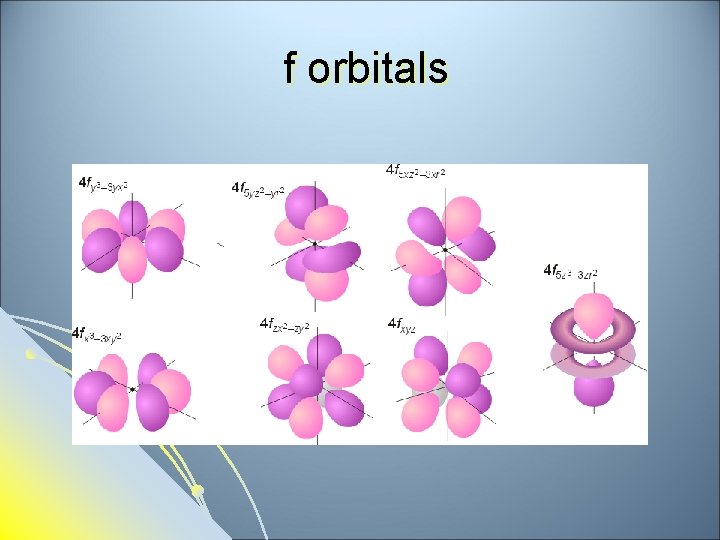
Subsidiary Quantum Number l l l Subsidiary Quantum Number (l)- indicates the shape of the electron cloud and is commonly referred to as the sublevel. Sublevels are represented by the letters s, p, d, and f. The s sublevel is spherical, the p sublevel is shaped like a dumbbell (2 lobes), the d sublevel has 4 lobes, and the f sublevel has 8 lobes. Each sublevel can hold a maximum number of electrons. Each energy level is made up of a maximum number of sublevels.
s sublevel
p sublevel
d sublevel
f sublevel
Subsidiary Quantum Number Energy Level Sublevel Value for “l” Maximum # of electrons 1 s 0 2 2 s, p 1 2, 6 3 s, p, d 2 2, 6, 10 4 s, p, d, f 3 2, 6, 10, 14
The p sublevel is what shape? 1. 2. 3. 4. Spherical Dumbbell 2 lobed 4 lobed
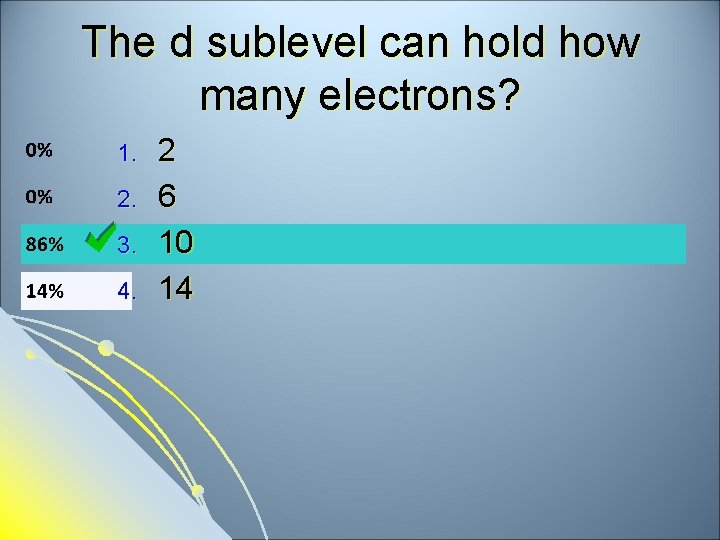
The d sublevel can hold how many electrons? 1. 2. 3. 4. 2 6 10 14
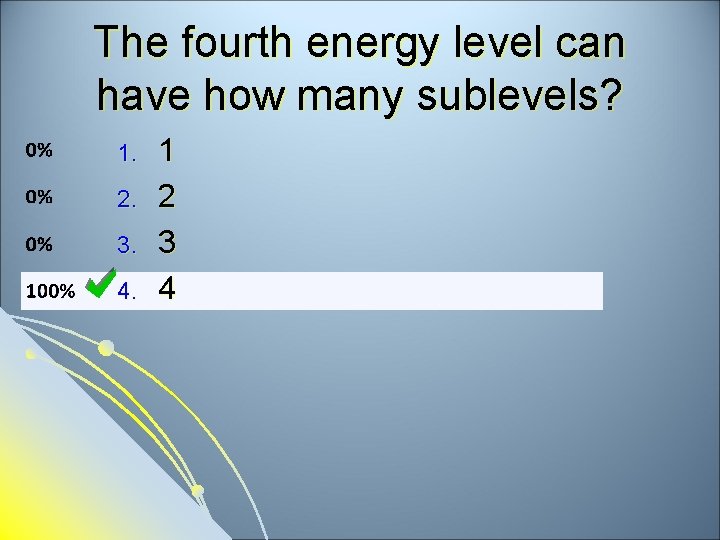
The fourth energy level can have how many sublevels? 1. 2. 3. 4. 1 2 3 4
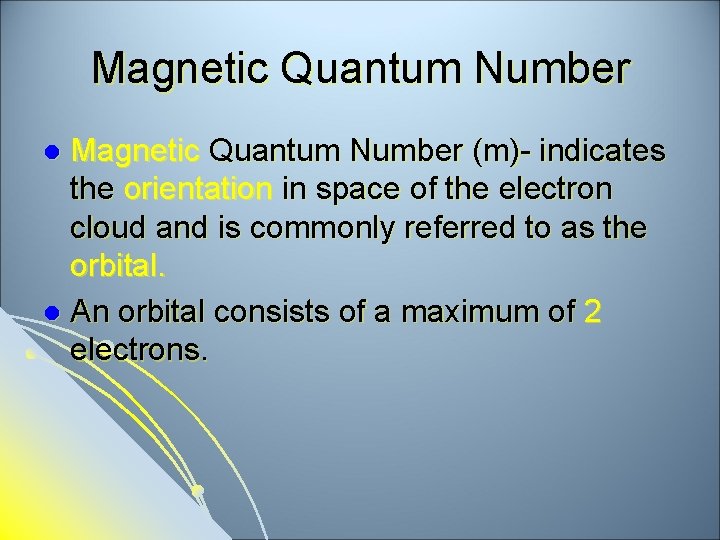
Magnetic Quantum Number (m)- indicates the orientation in space of the electron cloud and is commonly referred to as the orbital. l An orbital consists of a maximum of 2 electrons. l
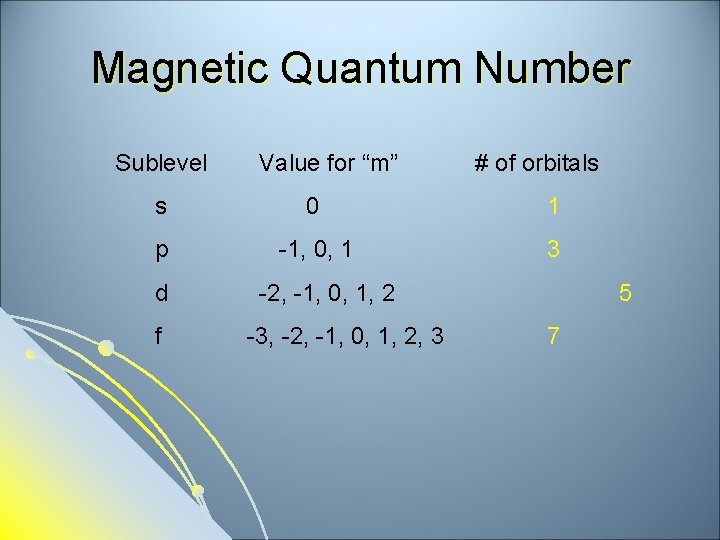
Magnetic Quantum Number Sublevel Value for “m” # of orbitals s 0 1 p -1, 0, 1 3 d f -2, -1, 0, 1, 2 -3, -2, -1, 0, 1, 2, 3 5 7
s orbitals
p orbitals
d orbitals
f orbitals
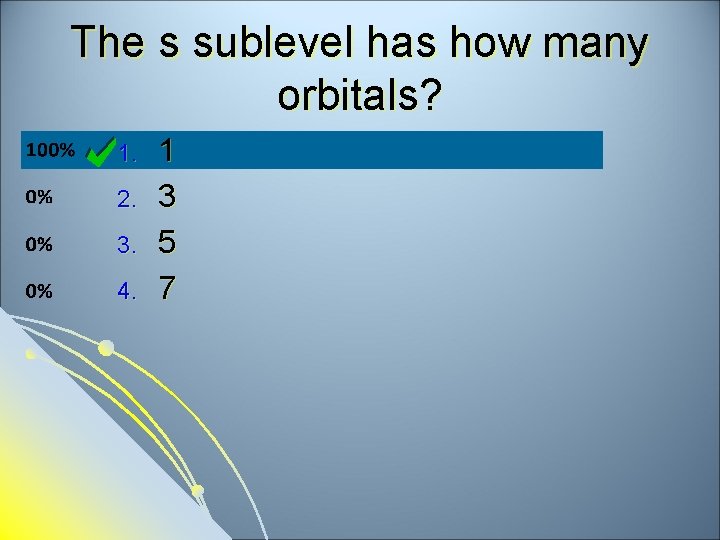
The s sublevel has how many orbitals? 1. 2. 3. 4. 1 3 5 7
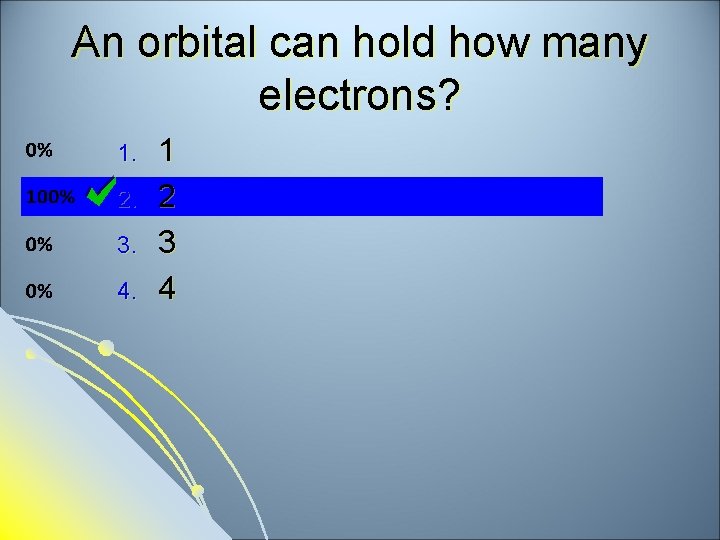
An orbital can hold how many electrons? 1. 2. 3. 4. 1 2 3 4
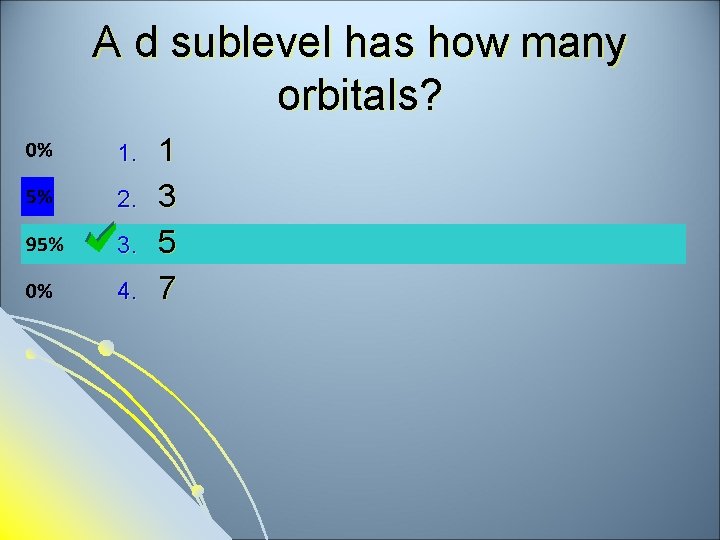
A d sublevel has how many orbitals? 1. 2. 3. 4. 1 3 5 7
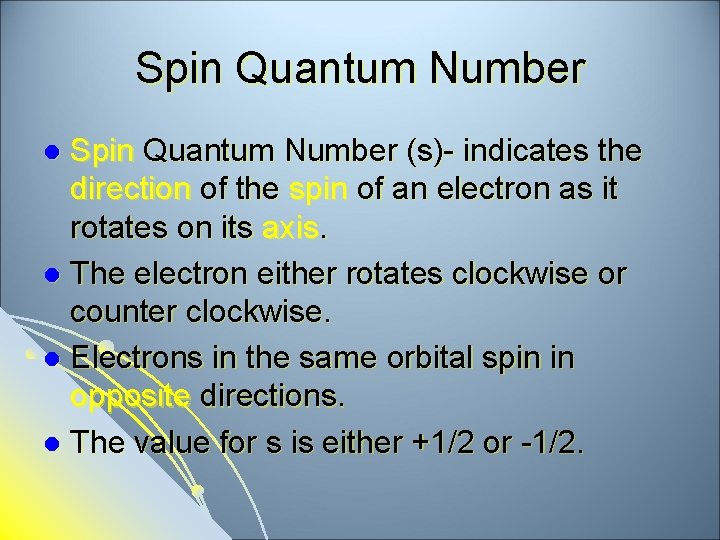
Spin Quantum Number (s)- indicates the direction of the spin of an electron as it rotates on its axis. l The electron either rotates clockwise or counter clockwise. l Electrons in the same orbital spin in opposite directions. l The value for s is either +1/2 or -1/2. l
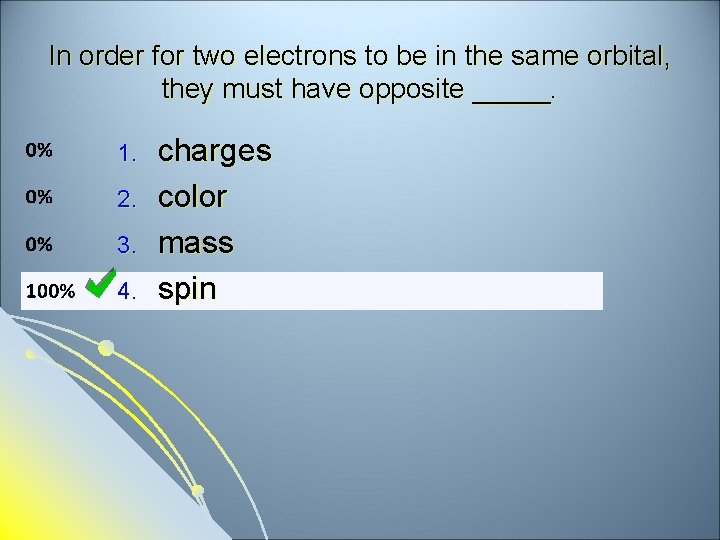
In order for two electrons to be in the same orbital, they must have opposite _____. 1. 2. 3. 4. charges color mass spin
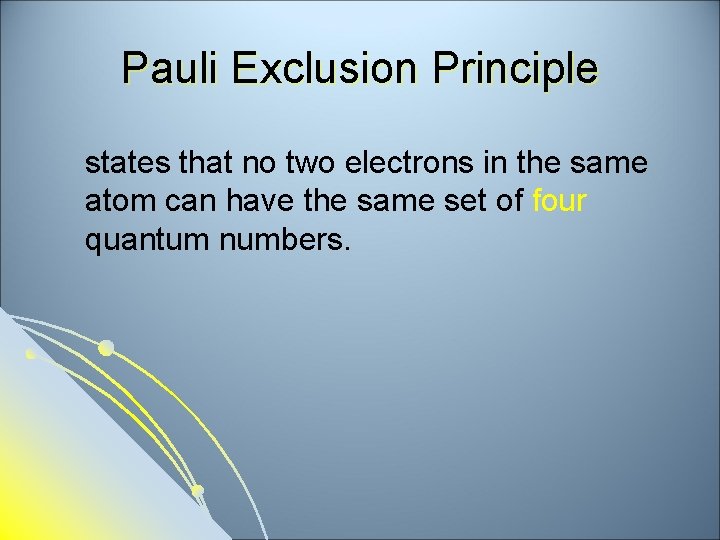
Pauli Exclusion Principle states that no two electrons in the same atom can have the same set of four quantum numbers.
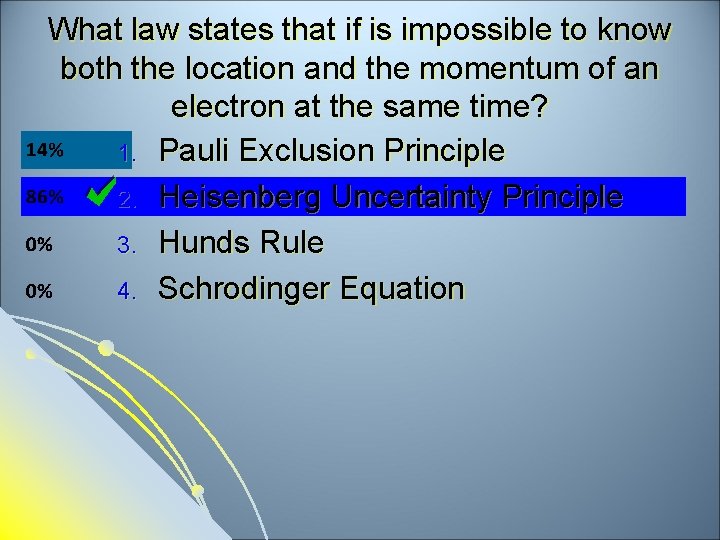
What law states that if is impossible to know both the location and the momentum of an electron at the same time? 1. Pauli Exclusion Principle 2. Heisenberg Uncertainty Principle 3. Hunds Rule 4. Schrodinger Equation
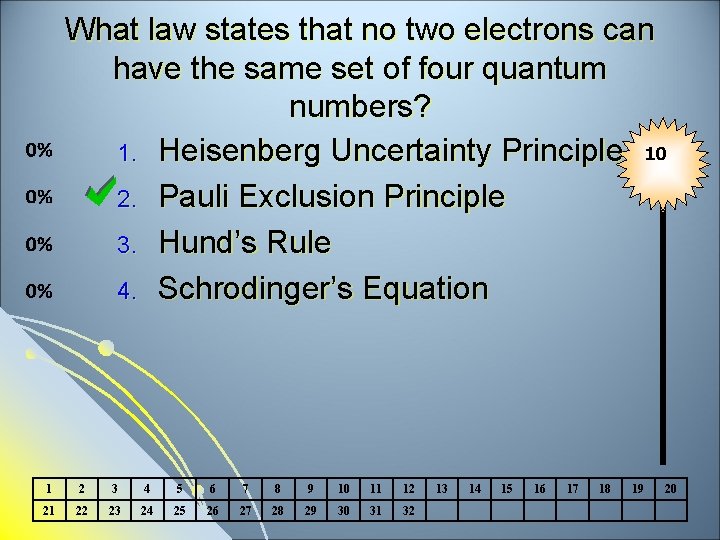
What law states that no two electrons can have the same set of four quantum numbers? 1. Heisenberg Uncertainty Principle 10 2. Pauli Exclusion Principle 3. Hund’s Rule 4. Schrodinger’s Equation 1 2 3 4 5 6 7 8 9 10 11 12 21 22 23 24 25 26 27 28 29 30 31 32 13 14 15 16 17 18 19 20